An American Pope Makes Catholic Teaching a U.S. Political Force
 Josh Good
 Paul Elie
 Sophia Gates
 Christine Emba
 Kayla Bartsch
 Luis Parrales
 Amy Ortiz
 Aleja Hertzler-McCainThe Aspen InstituteWednesday, September 16, 202615 min read
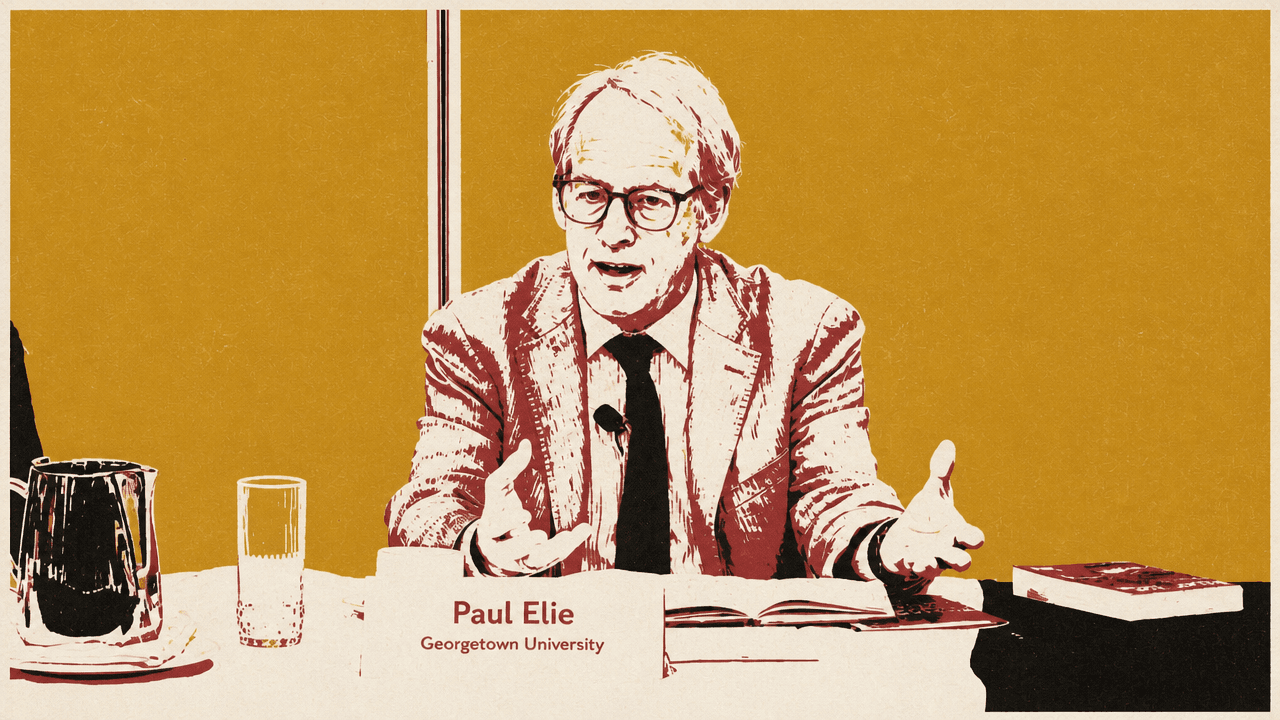
Paul Elie and Christine Emba argue that Pope Leo XIV has made longstanding Catholic teaching newly consequential in U.S. politics not by changing it, but by making it harder to ignore. As an American pope confronting an American administration, Leo has become a legible moral countervoice on war, migration, technological power, and human dignity, while his restrained style leaves unresolved the Church’s own disputes over authority, gender, and tradition.
An American pope makes continuity a political event
The Holy See’s positions on war, migration, and human dignity may be more continuous across recent pontificates than U.S. political labels suggest. What has changed under Pope Leo XIV, Paul Elie argues, is the public force of those positions: an American pope speaking into an American political conflict, amid a media culture built to amplify every provocation.
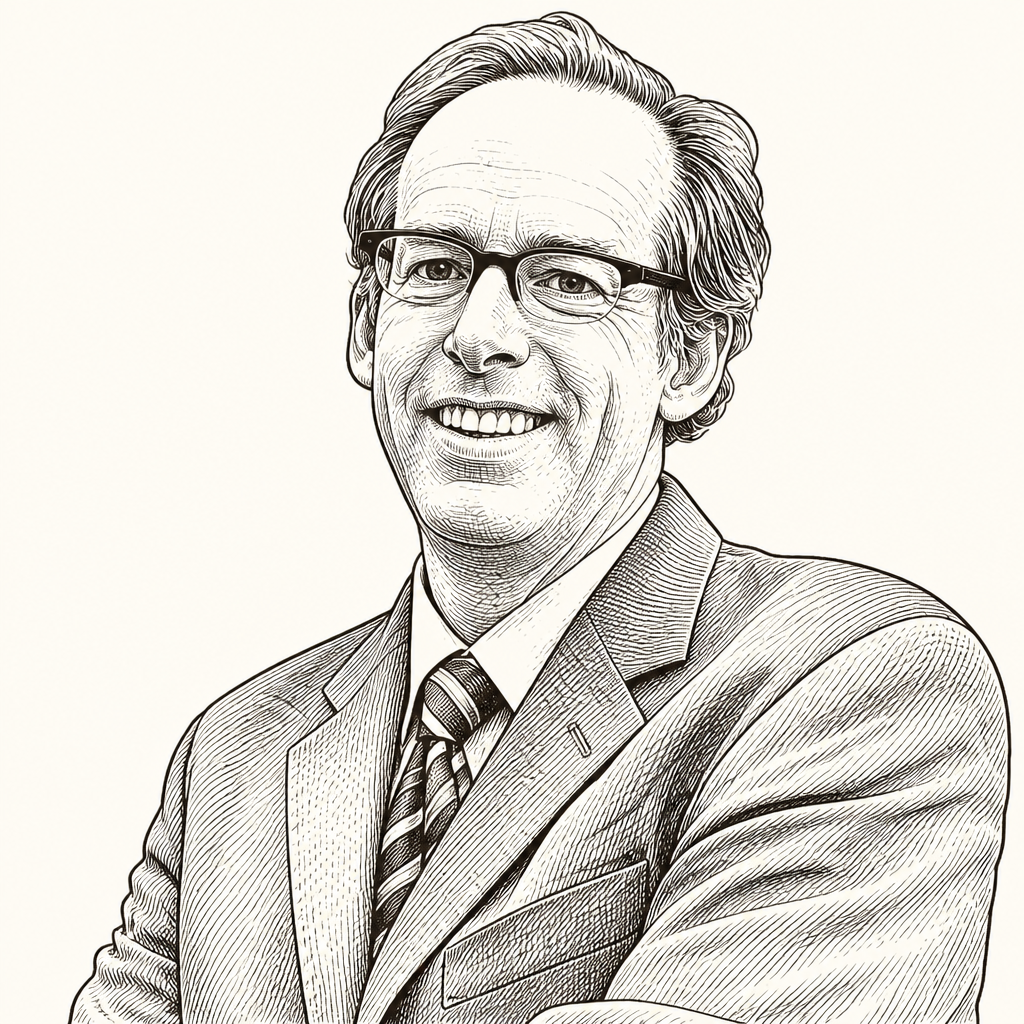
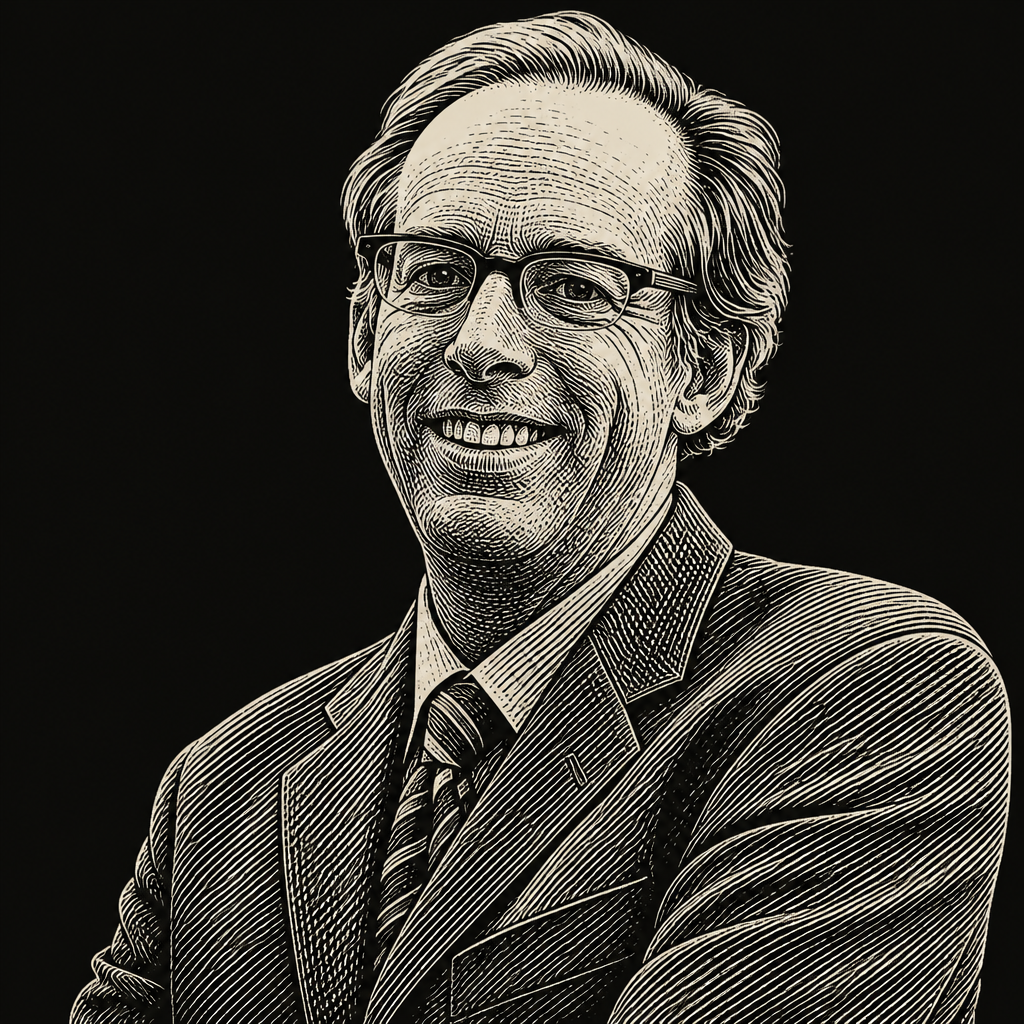
That distinction matters for understanding Leo’s clashes with President Trump and Vice President Vance. Christine Emba described Leo as unusually “legible” to American audiences: a Chicagoan who likes sports, has a brother who voted for Trump, and remains recognizably connected to ordinary family life. Elie agreed with the term but stressed that Leo’s appeal is not primarily charismatic. He has less of the exceptional magnetism associated with Francis or John Paul II. His authority, Elie said, rests more in being comprehensible than overpowering.
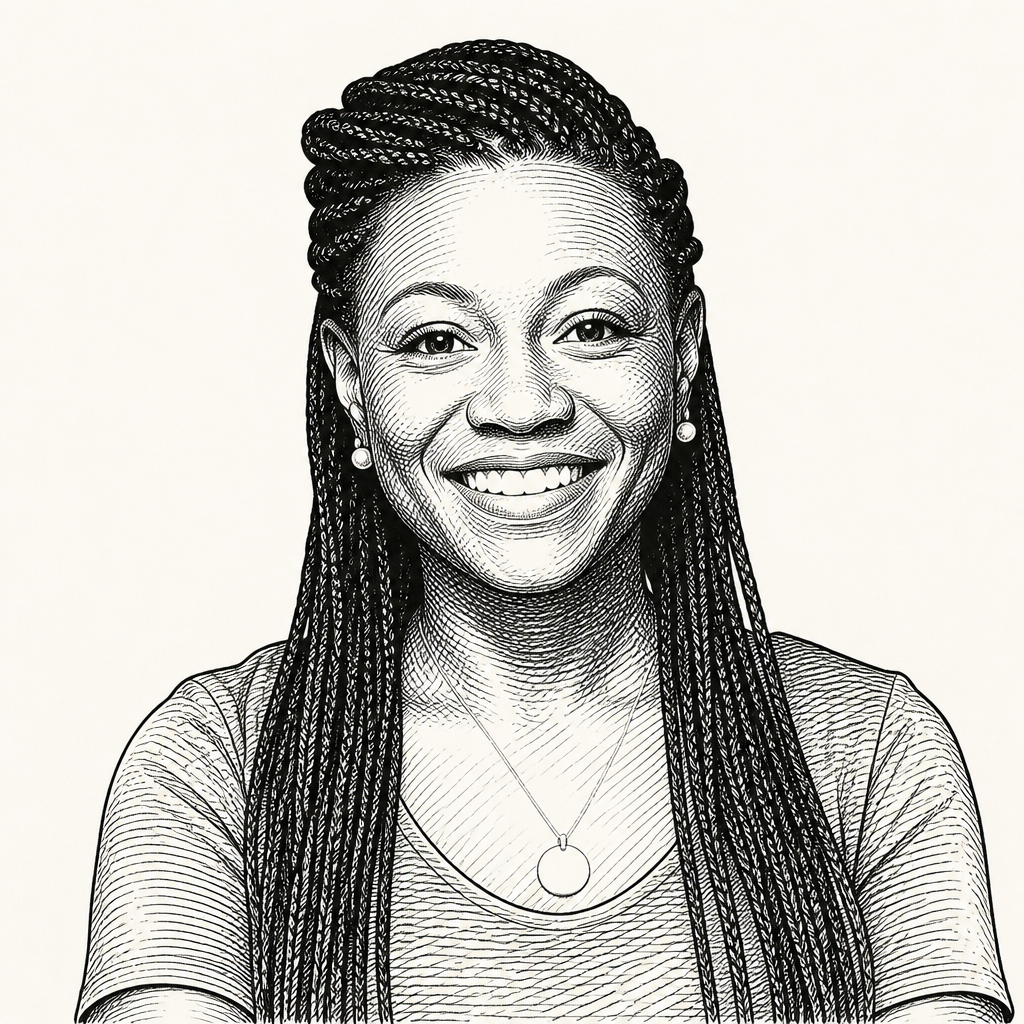
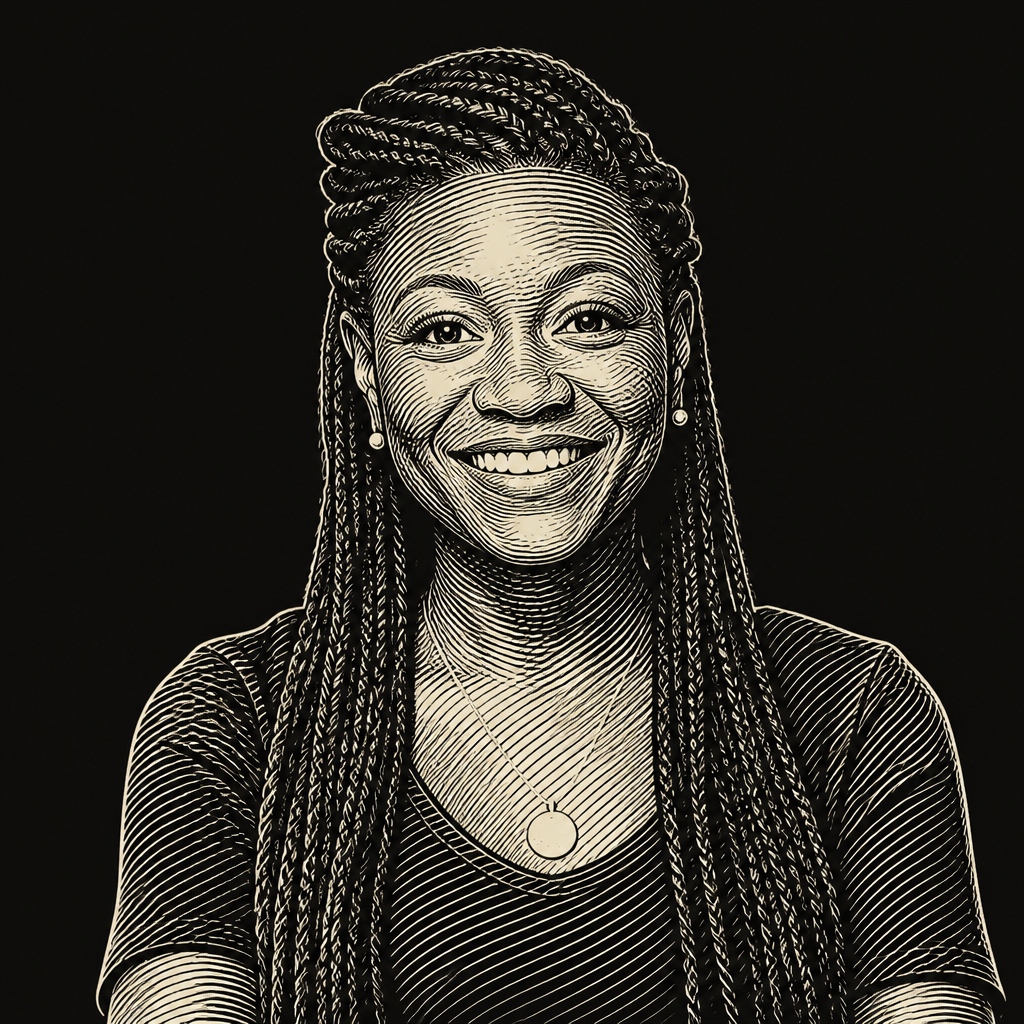
That legibility made Leo’s response to the Iran war politically potent, in Emba’s account. Leo initially seemed intent on avoiding offense, she said, but then spoke first obliquely and later directly against the war and the moral rationale offered for it. His intervention addressed claims about the war’s justice and language about decimating an entire civilization. At a moment when Emba saw officials in the United States and elsewhere accommodating Trump, the pope’s willingness to say that some acts were good and others bad registered as an unusual moral countervoice.
The linking of that moral language to a legible figure like the pope and then an institution like the Catholic Church really held unexpected appeal.
Emba pointed to the response to Trump’s image of himself as a doctor-like healer. Many Americans, she said, called the image blasphemous, using religious language to register political discontent even when they were not formally religious. For Emba, that reaction suggested a residual demand for moral categories in a culture that often defaults to power, strategy, and personal preference.
Elie’s account of the modern papacy helps explain why the office can carry that kind of force. The Second Vatican Council sought, among other things, to elevate lay Catholics and diminish the relative role of clergy and hierarchy. Yet, Elie argued, the pope became more important after the council rather than less so. John XXIII convened Vatican II; Paul VI dramatically began the era of modern papal travel; John Paul II made the office a sustained global media presence; Benedict XVI resigned; Francis adopted a freer, more face-to-face style while creating significant consultative roles for laypeople and appointing women to leadership positions in Vatican dicasteries. Leo’s election as the first North American-born pope continued a run of changes that earlier generations would not have expected.
For Elie, the consequential institutional development is that the papacy, mediated by mass media, has become a connection between individual Catholics and the worldwide Church. Earlier mediating structures included family, parochial school, parish, neighborhood, ethnicity, sodalities, and organizations such as the Knights of Columbus. Many weakened substantially after Vatican II. The public papacy, he said, now sustains interest, gives outsiders an occasion for religious literacy, and helps hold together Catholics who disagree sharply with one another.
That does not make the Church’s public standing uncomplicated. Elie said the position of women in the Church needs to change far more than it has, and recalled living through and writing about the sexual-abuse crisis. Still, he sees the heightened prominence of the papacy as part of the explanation for how a Church once closely associated with scandal can, in some circumstances, appear as a source of common sense amid political disorder.
The broader setting is what Elie calls a post-secular moment: religion can be surging and in decline at once, both under threat and perceived as threatening. He dates the beginning of that condition to 1979, when the Moral Majority was founded, Islamic fundamentalists established a theocratic republic in Iran and held U.S. hostages, and Bob Dylan became an evangelical Christian. Immigration after the 1960s had also made the United States multi-religious at a new demographic scale, changing Christianity’s public position. Catholic and evangelical leaders responded partly by attempting to reassert Christian claims in the public square, sometimes finding common cause after decades of mutual hostility.
In response to a question from Luis Parrales, Elie agreed that John Paul II had defended migrant rights and opposed wars led by both Presidents Bush, while Benedict XVI had raised questions about preemptive war and the application of just-war theory. The underlying Vatican positions, in other words, were not necessarily new under Francis or Leo. What changed was the context in which they were received.
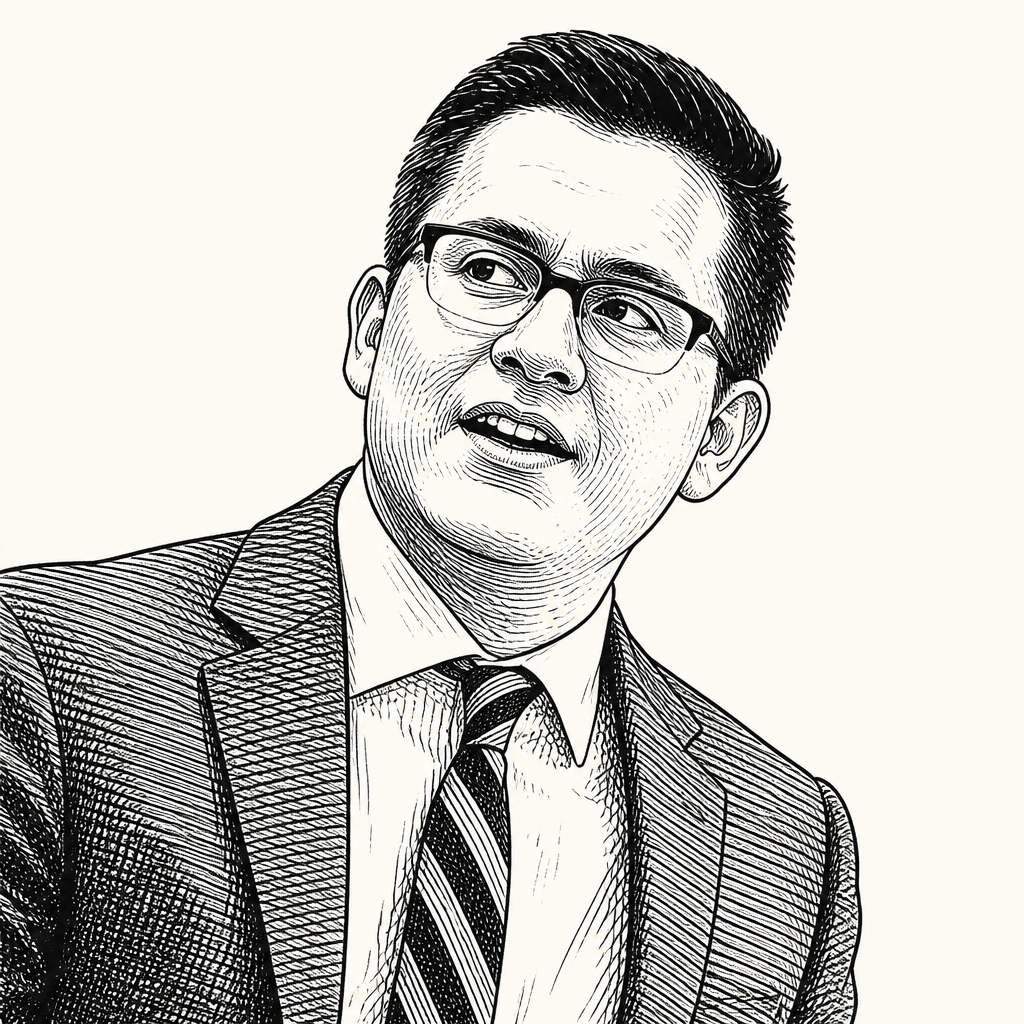
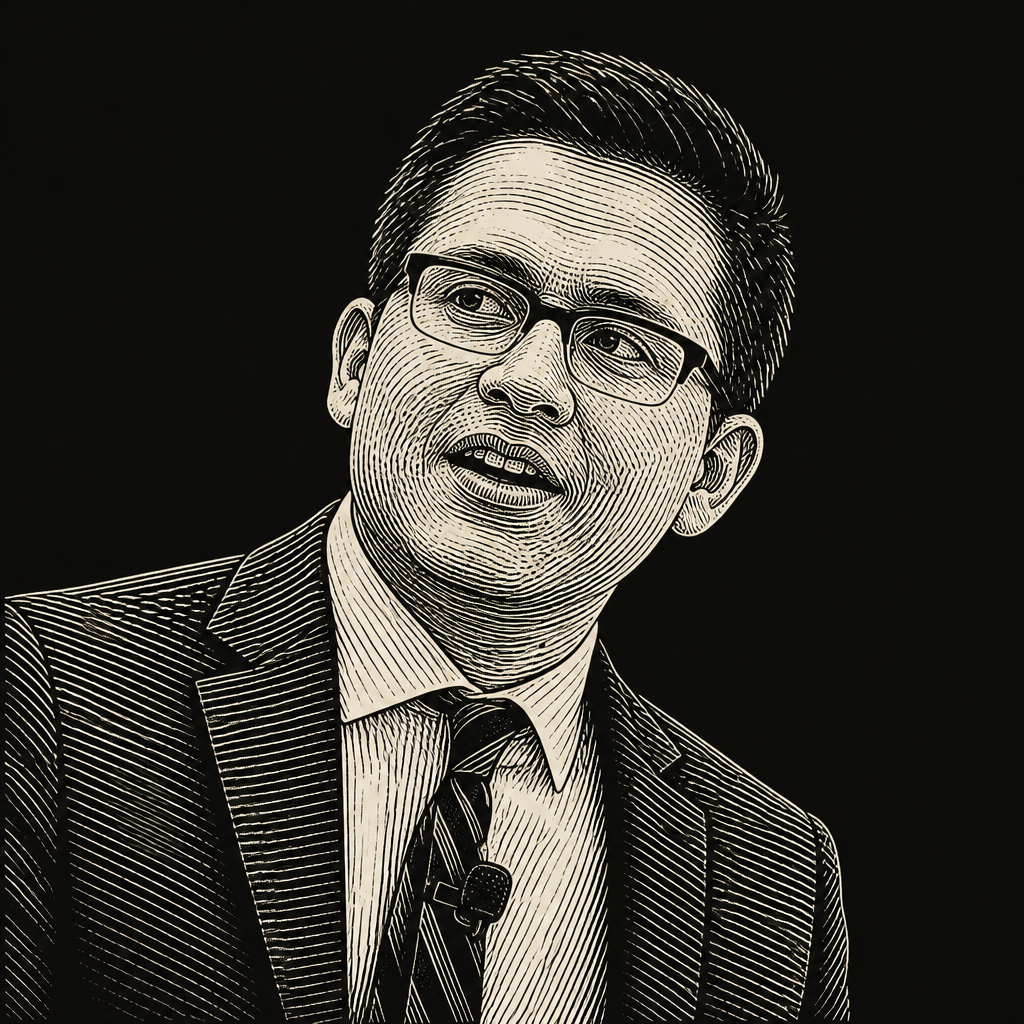
A president and vice president who answer criticism publicly, a social-media culture organized around amplification, and the fact that the pope is American made substantially similar positions front-page news for days, Elie said. Timing mattered as well. Trump’s attack on Leo came just before Leo’s first major apostolic journey, with journalists traveling on the papal plane. Francis had established a more regular practice of speaking with reporters on those trips, giving journalists an immediate opportunity to ask Leo about the dispute. Without that encounter, Elie said, the conflict might have faded within hours.
Leo’s restraint reflects a life spent carrying out missions
Elie sees Leo’s measured style not as passivity but as the product of Robert Prevost’s institutional formation. Before becoming pope, Prevost spent his career carrying out missions assigned by others: entering the Augustinians, studying canon law, assisting the Augustinian mission in Chulucanas, Peru, after a devastating flood, leading the Augustinian order, becoming bishop of Chiclayo, and later serving as head of the Dicastery for Bishops under Francis.
Each role involved a defined task and competing interests. As leader of the Augustinians, Elie said, Prevost tried to globalize an order associated heavily with North American men. As a bishop in Peru, he worked in a region where Opus Dei had been influential and was expected to serve as a mediating figure among factions of bishops. At the Dicastery for Bishops, he carried out Francis’s project of diversifying the episcopate.
His years in Peru are central to Elie’s explanation of Leo’s capacity for restraint and reconciliation. Prevost succeeded three Chiclayo bishops connected to Opus Dei while being neither a member of Opus Dei nor Peruvian himself. He arrived as an outsider who had to establish why people should listen to him rather than regard him as an “imperialist overlord.” In Elie’s account, he earned authority through humility and through reconciling competing Catholic constituencies.
Elie’s reporting in the region also complicated the familiar American divide between progressive and traditional liturgy. At the annual pilgrimage for the Cross of Chalpón, north of Chiclayo, he saw crowds filling the streets for Mass; altar servers in identical formal clothes; traditional instruments and a brass band accompanying the liturgy; and a military helicopter passing overhead. The Mass was traditional in broad form, but it belonged to a local devotional world that did not map neatly onto disputes in Chicago or Washington over the Latin Mass.
Prevost’s choice of papal name, Elie said, also reflects a long-standing connection to Leo XIII. As a student in Augustinian institutions in Chicago and Michigan, Prevost would have encountered images of St. Rita of Cascia, an Augustinian saint canonized by Leo XIII. Elie also said that Leo’s extended account of Catholic social teaching in Magnifica Humanitas resembles an introduction Prevost wrote for a Spanish-language book on the same subject roughly a decade earlier. The framework was not, in Elie’s view, improvised upon becoming pope.
Elie mentioned an unverified anecdote that Chicago’s cardinal archbishop may have helped prompt Rerum Novarum by describing the city’s industrial upheavals to someone in the Vatican. Elie said he had heard the story but had not traced it fully. The symmetry nonetheless appealed to him: an encyclical associated with industrial society may have had a Chicago connection, and more than a century later a Chicago-born pope has made technological change the subject of his own first encyclical.
For the first time, however, Leo has had to define the mission as well as execute it. Elie believes an AI encyclical would likely have emerged under many possible successors to Francis because preparatory work on the subject had already accumulated. But no one had anticipated the particular mission of an American pope confronting an American president and vice president during a period of bellicose rhetoric.
Leo was able to respond, Elie suggested, because he had not announced an overly fixed personal program at the outset. He waited, watched, and retained room to define the task when events made it clear. In that sense, restraint is part of his effectiveness: it keeps him from treating the papacy as a personal platform while leaving him able to intervene when the office itself demands a judgment.
AI makes human dignity the Vatican’s opening question
Christine Emba reads Magnifica Humanitas as Leo’s signal that technological change, especially AI, will be a priority of his papacy. By choosing the name Leo, she said, the pope aligned himself with Leo XIII, whose Rerum Novarum addressed labor and social conditions during industrialization. The new encyclical is not simply a statement about software; in Emba’s reading, it brings Catholic social teaching into a technological age.
Its first half, Emba noted, reintroduces the core principles of that tradition: the human person as made in the image of God and entitled to equal rights and dignity; the common good; the universal destination of goods; subsidiarity; solidarity; and social justice. For Emba, that emphasis indicates a pope trying to position the Church as responsive to contemporary concerns without reducing it to either traditionalist practice or political conservatism.
The document’s technical discussion of AI is comparatively light. Josh Good observed that its doctrinal opening is dense while its later treatment of AI neither defines the technology in detail nor offers the kind of concrete social assessment Leo XIII could make after industrialization had already transformed society. The difference, the panel suggested, is partly one of timing: the Church is addressing a technology whose effects remain unsettled.
Elie did not regard that limitation as an argument for silence. After attending an AI conference in Rome, he recalled riding through the city with participants whose language he found nearly unintelligible. The encyclical’s appropriate response, in his view, is collective discernment and a clear account of what AI is not.
I don't use the term artificial intelligence. I don't dignify that with that term. It's algorithmic imitation.
Elie described AI as mathematical models imitating human linguistic behavior. Such systems do not have feelings, cannot grow through experience in the human sense, and lack capacities for wisdom and remorse. The distinction is moral as much as semantic: persuasive language should not lead people to mistake a machine for a human moral subject.
Emba’s reading is that the encyclical’s strongest intervention is implicit rather than technical. Its questions are what a human person is, what dignity requires, and what people owe one another. Its treatment of subsidiarity—the principle that decisions should remain with individuals and local communities where possible—also contains, she said, a critique of technological organizations taking on functions of the state and subsuming individual decision-making.
Technology companies have reason to seek a place in the moral debate
The Vatican’s moral vocabulary gives technology companies reason to seek influence over how AI is discussed. Emba said Chris Solla of Anthropic was the only technology representative present at the launch of Magnifica Humanitas. His presence was quiet, but Emba took it as evidence of industry interest in ensuring that the Church does not turn decisively against AI.
Her assessment of the commercial logic was direct. Catholics around the world may take the Church’s view seriously when deciding whether to use these systems. A judgment that AI is harmful or should be avoided could limit adoption, and companies therefore have an incentive to encourage a neutral or favorable institutional view.
Emba called that a mercenary motive, but not the only one she sees. In her reporting and personal observation in Silicon Valley, she has encountered growing interest in spiritual or quasi-spiritual questions: whether a materialist account of reality is enough, how a future society should be ordered, and whether AI itself has a humanlike status. Anthropic, she said, has cultivated an image as a particularly moral AI company and has sought counsel from religious groups and thinkers on how to make a moral AI.
Emba further said that Solla appears, in smaller settings rather than readily identifiable public statements, to have expressed a quasi-spiritual belief that AI is human. She also sees renewed interest in Catholicism and conservative Christianity among some people in technology—sometimes as belief, sometimes as a source of Western civilizational order, and sometimes as a way into networks associated with founders and investors such as Peter Thiel. Whether those motives represent durable conviction, she said, remains unresolved.
The tension, in Emba’s account, is that the Vatican has a global institution capable of framing questions of dignity, responsibility, and power, while technology companies possess specialized knowledge Church leaders may need to understand rapidly changing systems. Her concern is that technical expertise can become leverage. Technologists may make themselves indispensable to the conversation and thereby shape the terms of moral judgment. She expects them to try, though she said she hopes they do not succeed.
Belonging for men can expose unequal authority for women
Christine Emba described a tension at the center of contemporary religious interest: defined male roles can offer young men direction and community while intensifying women’s sense that authority remains unequally distributed.
Emba said many young men feel that the meaning of manhood has become undefined. They seek roles and models in a range of places, some “frankly terrible.” Traditionalist Catholicism and Orthodoxy can offer a different proposition: a long institutional history, clear expectations, paths of growth, and male communities. In Catholicism, priests, bishops, and popes are men; boys can become altar servers; men can find fellowship through organizations such as the Knights of Columbus.
The same structure is contested by women within and outside the Church. Responding to an audience member who described capable women feeling small in religious institutions, Emba said women are leaving religious organizations and traditionalist religion as men join them. She placed that pattern alongside a broader divergence in which women are moving left while men remain in the center or move right.
Women who have become accustomed to exercising power, Emba said, are increasingly resentful of institutions that appear to constrain it. She described the reversal of Roe v. Wade as a radicalizing event for many women around autonomy, while pointing to rhetoric from some men that treated limits on women’s autonomy as “refreshing if not healing.”
Emba said the Church often responds by holding that different roles do not entail unequal human worth and that women have religious vocations and forms of authority. Yet she acknowledged that many lay Catholics remain dissatisfied with the restriction of the priesthood to men and with the sense that male roles carry higher status. Her own position as a lay Catholic is not to claim authority to remake the Church from top to bottom, but to remain committed to equal human dignity and human rights even where roles differ. It is, she said, a daily struggle for many Catholics, including herself.
She also identified a related phenomenon of “functional” conversion. Some public figures, she said, describe conversion less as an encounter with faith than as an embrace of the Catholic Church as a bastion of Western tradition or a bulwark against progressivism. Catholics may question such motivations, but Emba said the Church itself has not clearly rejected this pathway. It rests, she suggested, on the hope that grace, faith, and tradition can change people after they enter.
Unity does not mean yielding every claim made in the name of tradition
Leo’s handling of liturgical traditionalists illustrates a narrower question of institutional unity: how to welcome Catholics attached to older practices without validating demands that reject the Church’s post-Vatican II settlement.
Christine Emba said Leo celebrated one of the first recent Latin Masses in the Vatican. But she also said he allowed the excommunication of the Society of Saint Pius X after it sought to ordain four bishops independently and rejected the larger Vatican II project. He also allowed excommunications of other priests, including one in the United States who had called Francis and Leo usurpers in disputes over the Latin Mass and other traditional practices.
Emba interpreted these moves as an effort to preserve unity, carried out quietly enough to avoid inflaming either side. Leo’s subdued manner can distinguish him from the constant noise of political and media life, but it does not settle the underlying contest over who belongs, what tradition requires, or how authority should be shared.
Elie’s experience in Peru offered a different context for the same terms. At the pilgrimage for the Cross of Chalpón, he encountered a broadly traditional Mass embedded in local devotional life rather than in an American political argument about liturgy. Prevost’s experience there, Elie suggested, may have trained him to see that traditional practices do not carry the same factional meaning everywhere—and to approach internal conflict with more patience than ideological sorting permits.
Religious journalism begins by making commitments legible
Christine Emba described the work of writing about religion as translation. In a more secular culture, many readers no longer possess ambient knowledge of religious language, religious obligations, or the reasons faith affects how people act. A journalist’s task is to make those commitments legible without collapsing them into partisan shorthand.
For Emba, reporting from within Catholicism requires particular discipline. She converted in college after an evangelical upbringing, drawn first to the reverence and beauty of the liturgy and then to what she found a substantial intellectual tradition. Writing about converts and traditionalist Catholic networks can mean covering people she knows or circles close to her own experience. Her obligation, she said, is to report what people say and do rather than substitute suspicions about their motives.
The work has also become a form of self-scrutiny. Reporting on people whose conversions, attachments to tradition, or political movements may overlap with her own background forces her to reconsider why she became Catholic and why she remains so. It is a reminder, she said, that the Church is spacious and that people arrive within it through very different routes.
Paul Elie wants religious reporting to extend beyond Vatican statements and headline disputes. He admires the reporting represented by Tracy Kidder’s account of Paul Farmer in Haiti: work that stays with someone trying to enact a demanding moral or religious vocation in difficult circumstances. Writing about Rome, Elie said, has been the easy route. The harder journalistic task is to tell stories about faith as people live it.