SpaceX, OpenAI, and Anthropic Face Different IPO Story Tests
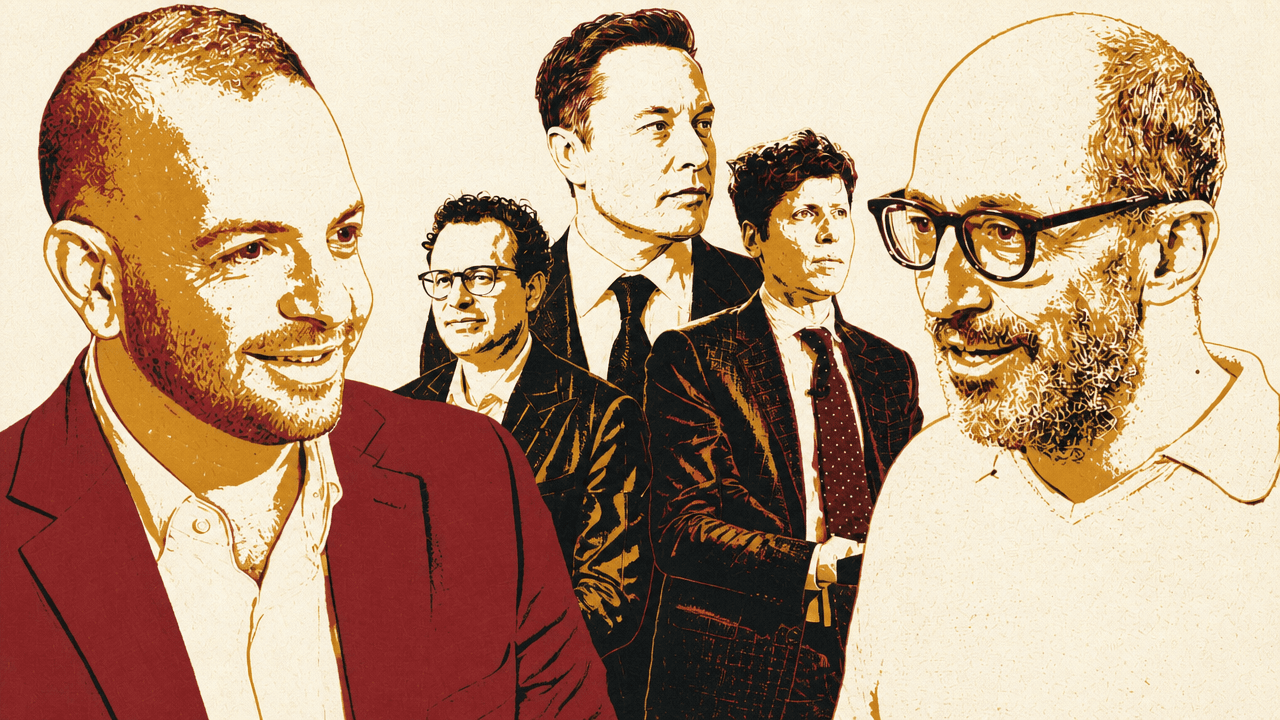
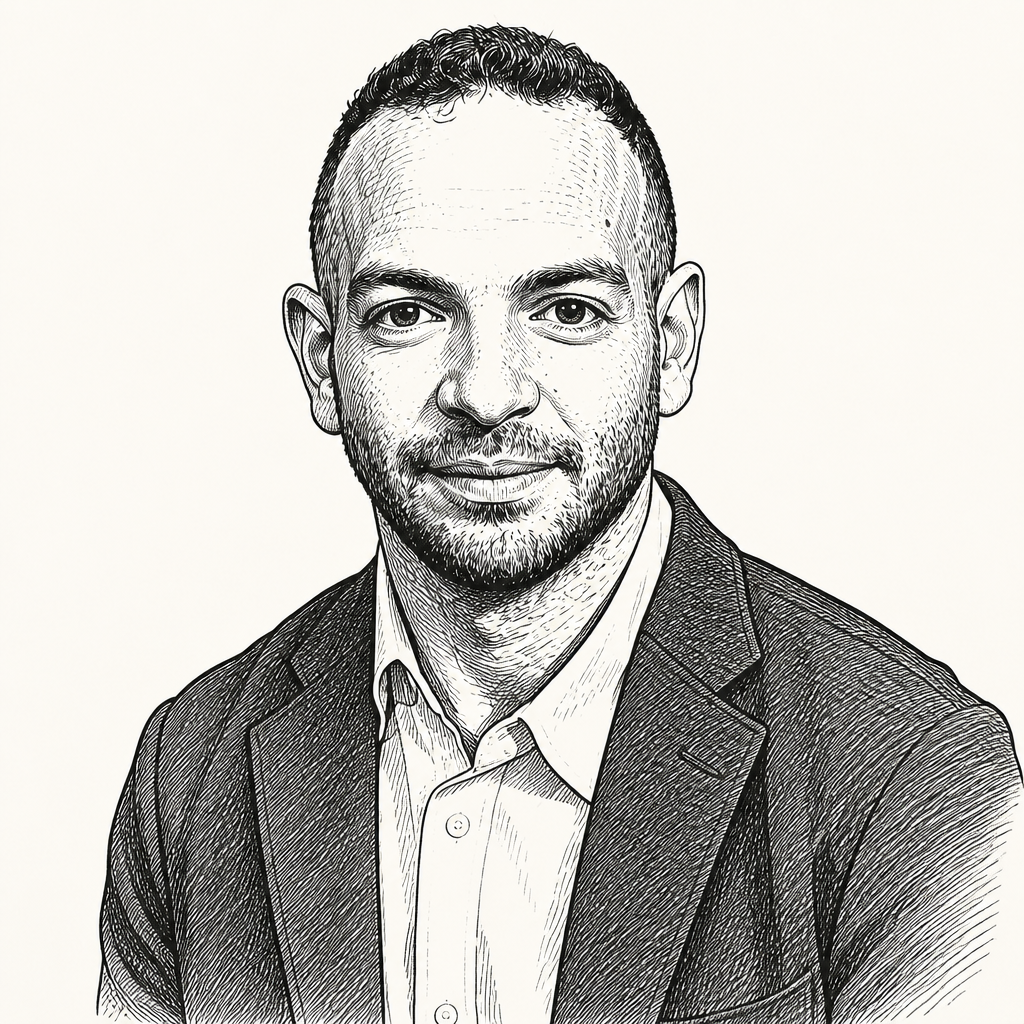
Dick Costolo, the former Twitter chief executive and managing partner at 01 Advisors, argues on Big Technology Podcast that SpaceX, OpenAI and Anthropic will be judged in the public markets as much by their IPO narratives as by their financials. In his view, SpaceX can lean on Elon Musk’s ability to sell a long-term story, OpenAI faces a harder test because its compute and data-center promises already carry specific dollar commitments, and Anthropic may have the cleanest case if it can present itself first as the enterprise AI company.
The IPO story will decide which numbers matter
The public-market test for SpaceX, OpenAI, and Anthropic will not be only whether their revenue, margins, compute plans, or product usage can support trillion-dollar valuations. Dick Costolo’s central warning is that an IPO changes the operating environment before it changes the business: once a company is public, the story management tells determines which numbers investors, employees, and analysts treat as proof that the company is still on track.

In private markets, valuation is periodically reset by financing rounds. Employees may think of their options as moving from one round’s price to the next, but there is no daily public verdict on the company’s worth. After an IPO, the stock can move sharply on days when nothing meaningful has happened inside the company.
You need to prep the team for, hey, we're about to go into a world where the price of the stock can change, even though nothing particularly happened today. Like the stock can go up by 15, 20% in value based on nothing, or down 15, 20% in value based on nothing.
The issue, for Costolo, is not only investor relations. It is internal management. Employees accustomed to a private-market narrative can suddenly experience “whiplash” as public-market pricing swings around them.
Twitter was his example. Before taking Twitter public, Costolo said he told GE’s Jeffrey Immelt that Twitter would keep focusing on the long term after the IPO. The audience laughed. The point of the reaction, as Costolo recalled it, was that public-company management brings a new cadence of pressure: sell-side analysts, quarterly questions, and a constant demand to reconcile the long-term story with near-term reported numbers.
Alex Kantrowitz pressed the point through Twitter’s IPO messaging. Twitter had gone public with a story that it could become a global service with a path toward a billion users. That message, Kantrowitz argued, became the standard against which the company was judged. Costolo agreed that even when Twitter beat top-line and EBITDA expectations, a miss on monthly active users could punish the stock. Conversely, he said Twitter once missed top-line revenue by about 1%, but because monthly active users came in above consensus, the stock rose.
The lesson he drew is not that numbers do not matter. It is that the chosen narrative determines which numbers matter most. Public investors do not simply buy the current financials; they buy a promised future, then use each quarter to test whether management is still on the route it advertised.
That dynamic becomes more consequential if SpaceX, OpenAI, and Anthropic reach the public markets at the scale Kantrowitz described. He framed the coming period as a possible run of major listings, perhaps within months, with valuations that could reach $1.5 trillion or $2 trillion for SpaceX and perhaps $1 trillion each for OpenAI and Anthropic. Costolo did not dispute the scale of the hype. His distinction was that the three companies would arrive in public markets with very different stories, leaders, and vulnerabilities.
SpaceX can sell a future that does not yet foot
Dick Costolo expects SpaceX to benefit from Elon Musk’s unusual ability to maintain a long-term public-market narrative even when present-day numbers do not support the implied valuation. Costolo said Musk has already learned how to operate in that environment through Tesla. Whether or not investors like Musk’s management style, Costolo argued, he is effective at redirecting attention from today’s misses to tomorrow’s possibility.
Tesla was the model in Costolo’s account. Delivery numbers can be hit or missed, robotaxi progress can fall far short of prior public expectations, and yet Musk can keep the story centered on where the company is supposedly going. Costolo’s view is that Musk has done this not only with retail investors and fans, but also with analysts, hedge funds, and broader public-market audiences.
That matters because Costolo does not think SpaceX’s initial public valuation will easily reconcile with the amount of productive space infrastructure the company would need to justify it. Alex Kantrowitz joked that, forgetting Mars, SpaceX would “have to get to Neptune” to justify the valuation. Costolo’s answer was essentially that Musk can survive that gap for some time. If investors ask whether Starlink can grow enough over the next decade to make the valuation sensible, Musk’s response will be to draw the time horizon out further.
Costolo said SpaceX could end up worth more than $2 trillion on day one, though he cautioned that the day-one price could be “fake” in the sense that a limited float and intense demand could drive an extreme opening price. His understanding is that the amount of stock available to trade may be small relative to total shares. If demand is very high and float is limited, the market price can move to “some insane number” without requiring enormous new capital from sovereign funds or other large investors.
The likely SpaceX story, in Costolo’s view, starts with Starlink: a vision of powering broad internet connectivity. He also expected a more speculative extension into data and data centers in space. But he treated that second claim as distant. He compared it to Musk’s full self-driving promises: potentially directionally right over a long enough horizon, but many years away from the original timing.
Kantrowitz challenged the basic feasibility of space-based data centers, imagining routine hardware problems that on Earth would be solved by plugging in a cable but in orbit might require astronauts. Costolo did not endorse Kantrowitz’s absolute skepticism, but he did say the required physical scale is enormous. He said the amount of equipment needed to launch and power even a one-gigawatt data center in space “foots out” to something like 16 acres of infrastructure, and that current launch capacity cannot support that.
Still, for SpaceX as a public company, the relevant question is not whether data centers in space are near-term reality. It is whether the market will allow Musk to sell them as part of the long-term arc. Costolo thinks it will, at least for a while.
Kantrowitz offered a related theory: Tesla retail shareholders, after years of shifting stories around electric vehicles, self-driving, and the Optimus robot, may move money into SpaceX because SpaceX has a cleaner story. Costolo agreed that this was “probably true” and repeated his belief that SpaceX will buy Tesla.
The implication is that SpaceX may not be evaluated like a conventional infrastructure, telecom, or aerospace company. Costolo’s expectation is that Musk’s credibility with a large investor base, combined with constrained supply of shares, can sustain an extraordinary valuation even if the immediate operating math is difficult to defend.
OpenAI’s problem is that its promises have dollar signs attached
Dick Costolo sees OpenAI as facing a different and more difficult public-market test. He did not argue that Sam Altman cannot sell a vision. The problem, as Costolo put it, is that OpenAI’s vision has already been translated into large compute commitments, data-center commitments, and public commentary about spending levels. That gives investors something harder and more immediate to interrogate.
Sam has made monetary commitments, right? "Here's how much so-and-so's going to put into the company. This is the deal for this particular data center. This is the deal for this kind of compute." Actual dollar figures attached to them and commitments.
Costolo described the narrative around OpenAI as one in which Altman has “written checks” that Sarah Friar, OpenAI’s CFO, and the rest of the organization now have to cash. He was not speaking only about metaphorical ambition. He referred to commitments that add up, in his telling, to more than a trillion dollars, without a revenue model or growth trajectory yet visible enough to satisfy skeptical public investors.
The difference from Musk is the specificity. Musk can talk about things four or five years out and maintain a broad destination story. OpenAI has put actual dollar figures around compute, data centers, and financing. Once the company files an S-1 and goes on a roadshow, executives will have to answer the question Costolo imagined investors asking: how do the dollar commitments map to revenue, and when does profitability appear?
Costolo still expects OpenAI to do “really, really well” on day one if it goes public. Demand for scarce exposure will be intense. Investors who could not buy secondary shares may decide they need to own it. The company may be treated as the next must-own technology listing. But he thinks OpenAI will face a stricter quarter-to-quarter microscope than SpaceX. He called that unfair but likely.
Alex Kantrowitz relayed Altman’s counterargument: people have difficulty understanding exponentials. OpenAI’s current revenue may look insufficient next to planned spending, but Altman’s view, as Kantrowitz described it, is that the business is moving through an exponential phase. Recent capacity constraints at Anthropic, Kantrowitz suggested, make OpenAI’s aggressive planning look wiser rather than reckless.
Costolo agreed with part of that case. He said people are “generally innumerate” and often fail to understand exponential growth. He pointed to the shift over a six-month period: people had warned that too many data centers were being built and that the capacity would never be used; then agentic coding, Codex, Claude Code, and rising token usage made more capacity seem necessary. On that score, he said, Altman has been proven correct so far.
But Costolo did not think that resolves the IPO problem. The commitments remain enormous. The debt loads that some parties may take on to fulfill them remain material. The gap between those commitments and current OpenAI revenue growth remains the core question. Costolo’s formulation was that OpenAI’s executives will have a hard time helping investors “map how you get from here to here.”
One product trend could help OpenAI: Codex. Costolo said that a month earlier, Google Trends and user chatter seemed to show Claude Code breaking out while Codex was “bumbling along.” More recently, he had heard more people say teams that were overwhelmingly using Claude Code were beginning to move meaningfully toward Codex. If agentic coding continues growing and Codex reaches something like a 50-50 or 60-40 competitive balance, he said, that could become one of the things that “saves OpenAI.”
That observation was not a full defense of OpenAI’s economics. It was an example of how quickly the revenue side might change if a major use case accelerates. Costolo’s view is that the public-market burden will be to show that these unlocks are not isolated surges but part of a path toward justifying the commitments already made.
Anthropic may benefit from being the least theatrical story
Dick Costolo placed Anthropic between SpaceX’s “castles in the sky” and OpenAI’s hard-dollar compute burden. His view is that Anthropic has a cleaner, more consistent story because it has been focused on enterprise customers and has not been the lead horse under the brightest public spotlight.
He said Anthropic’s posture may partly reflect being behind OpenAI in public attention. Rather than dominate the consumer imagination, it built around enterprise use. Claude Code then became the most important narrative asset. Costolo said his understanding from people inside Anthropic is that the company initially did not plan to release Claude Code broadly because it was seen as a major internal productivity advantage. Anthropic later decided to release it, in part because outside users would find problems that internal users would miss, improving the product.
Even after noting Codex’s recent momentum, Costolo said the public perception of Claude Code remains powerful: it is viewed as a major unlock and potential game changer. That perception, combined with enterprise focus, may let Anthropic tell the most “middle of the road” story among the three companies.
Alex Kantrowitz questioned whether the financials would really differ much. The AI labs may all show large losses. Costolo’s answer went back to his experience as a public-company executive: the narrative and the company’s ability to help the market think about the business in the intended way can be as important as the quarterly numbers themselves. He added that this is more true now than it was during his public-company period.
Anthropic’s advantage, then, is not necessarily that its income statement will look dramatically safer. It is that its public-market story may sound more disciplined. SpaceX can rely on Musk’s long-horizon charisma. OpenAI will be forced to reconcile specific spending commitments against revenue. Anthropic can present itself as the enterprise AI company with a consistent focus and a flagship coding product that has already changed perceptions of developer work.
That is why Costolo thinks IPO order matters. Going first lets Anthropic tell its story before being directly compared with OpenAI’s compute commitments or SpaceX’s market reception. If OpenAI goes first and investors hear about its data-center spending, Anthropic may then be asked why it does not need to spend at the same scale. If SpaceX goes first and absorbs investor attention, others will be forced to operate in its wake.
I think it would be great for Anthropic if they can go first.
Costolo also offered a speculative reading of Musk’s litigation against OpenAI. Referring to a verdict that he said had been announced, he suggested part of Musk’s aim may have been to “throw some wrenches in the works” and slow OpenAI down so that Musk could reach the public markets first and “suck a little bit of the air out of the room.”
There is not infinite capital for three trillion-dollar stories
Alex Kantrowitz raised a practical question behind the valuations: even if market capitalization is not the same thing as cash invested at IPO, the money has to come from somewhere. If SpaceX, OpenAI, and Anthropic all arrive near trillion-dollar scale, how much public-market capital can absorb them?
Going first matters because capital and attention are finite, Dick Costolo argued. Investors may want exposure to one or two of the companies, but not all three. The first company has access to the broadest liquidity. The second has access to what remains. The third may encounter investors already capped out by allocations to earlier offerings or by internal limits on public-equity exposure.
Kantrowitz suggested that public-market investors would surely plan for the possibility of all three listings. If a fund fails to reserve capital and another investor gets OpenAI cheaply, that would be a serious mistake. Costolo allowed that this could happen, but kept returning to the magnitude of the numbers and the limits of capital. Even when only a small float is sold, these are still unusually large valuation stories.
The second-order effect could be a venture-capital reopening. Private markets have been illiquid, leaving university endowments, venture limited partners, and other investors without the large distributions they expected. If SpaceX, Anthropic, and OpenAI generate liquidity, those investors may suddenly receive distributions and regain capacity to commit to new venture funds.
Costolo gave the example of an LP whose SpaceX position has been marked up so much that it has grown from a planned 7% or 8% of the portfolio to 15%. While illiquid, that concentration can prevent the LP from investing in new venture funds. Once the position becomes liquid and distributions arrive, the LP can redeploy capital. Costolo predicted that six to 12 months after these liquidity events could be a strong time to raise venture capital from LPs.
Kantrowitz immediately pointed to the harder question for venture investors: what can they fund that will not be eaten by the very AI companies creating those distributions? Costolo agreed that this is something venture investors have to think about.
That exchange identified a tension in the coming IPO cycle. The offerings could unlock capital for the startup ecosystem. They could also strengthen companies whose platforms, models, and distribution threaten to compress the opportunity set for startups built around them.
The AI IPO story can break on margins, compute, or public permission
Alex Kantrowitz proposed one way the AI-company valuation story could unravel: pricing power may be weaker than bulls expect. He said he had assumed that because AI tools create significant economic value, companies such as OpenAI and Anthropic could raise prices materially and customers would pay. An investor challenged that view, arguing the major AI products are close enough to parity that a price war is more likely than broad price increases. Kantrowitz said he had come to agree with that concern.
Dick Costolo agreed with the sentiment, but said he sees a bigger challenge: public backlash against data centers. These companies need compute, and compute requires physical infrastructure. The question is whether data centers that have been approved by local officials will actually keep getting built as resistance grows.
I think there's actually going to be a growing, there is a growing backlash against, hey, not in my backyard on these data centers. And well, I mean, the compute has to come from somewhere, these things have to get built.
Costolo focused on a Utah data-center project north of Salt Lake City that he said had been in the news and was associated publicly with Kevin O’Leary. Costolo said he did not know who was actually behind the money, but questioned why O’Leary had been chosen as the public face. In Costolo’s account, O’Leary had gone on high-profile interviews, including with Tucker Carlson, and was not prepared. Costolo said opposition now cuts across ideological lines: people on the right do not want the project built, while progressives and others object to environmental impact, limited job creation, and local disruption.
Kantrowitz added several examples of the political risk. He said a recent Gallup poll found seven out of ten Americans do not want data centers. He pointed to AI backlash in public settings, including Eric Schmidt being booed during a commencement speech after discussing AI. He also said moratorium politics could emerge by 2028, and described a proposed data-center moratorium in Maine that he said was vetoed by the governor.
Costolo’s view is that AI leaders are failing to make the public case for why the infrastructure matters. While Silicon Valley gossips about conflicts among Musk, Altman, Greg Brockman, and others, the more important task is explaining to Americans why the United States needs to build. He framed the argument in geopolitical terms: if the United States does not build the infrastructure, China wins; if China wins, the United States loses the ability to shape what happens next.
Kantrowitz challenged that as too abstract for a college student worried about employment. If a student has no job lined up and hears about AI, he said, the instinct may be to boo rather than accept a strategic competition argument. Costolo conceded the emotional force of that point but said the story still has to be told. The current public image, in his telling, is of rich technology leaders fighting in court while also asking to build enormous facilities near people’s homes. That is “a bad look.”
The public-permission issue loops back to the IPO story. If the AI labs need data centers to meet the demand that justifies their valuations, and if voters or local governments begin blocking those data centers, the growth narrative weakens. Costolo’s warning is that the companies cannot assume infrastructure approval is a background detail. It may become a central constraint.
A platform that captures most startup revenue is not really a platform
Alex Kantrowitz raised a second economic challenge: whether OpenAI and Anthropic create enough value for others, rather than absorbing the value themselves. He cited Chamath Palihapitiya’s recollection of Bill Gates defining a platform as a system where the collective revenue of participants exceeds the revenue of the platform itself. Kantrowitz said he liked the definition because it means the platform is useful enough that the companies building on it make more money than the platform owner.
He then cited an article in The Information reporting that Anthropic and OpenAI’s share of AI startup revenue had risen to 89%. Under the Gates definition, Kantrowitz argued, that is not a platform.
Dick Costolo agreed with the logic: “not wrong.” But he did not think the conclusion necessarily limits the AI labs’ success. If these companies increase productivity across Fortune 500 companies and beyond by orders of magnitude rather than by 10% or 20%, he said, the value created is extraordinary even if the platform ecosystem does not resemble older software platforms.
Kantrowitz asked whether public companies have shown corresponding increases in earnings. Costolo’s answer was again that the trajectory can change quickly. Six months earlier, bearish arguments about unused compute and unprofitability looked stronger. Then agentic coding appeared and shifted demand upward. Costolo said it is easy to imagine two, three, or four more unlocks that have not yet arrived.
Kantrowitz suggested that coding may simply be the first work category where the pattern is visible, and that similar gains may spread to other forms of work. Costolo agreed that this is possible.
The unresolved tension is important. If AI labs remain suppliers that capture most of the economics from startups building on them, they may not become platforms in the classic sense. But if their tools produce broad productivity gains inside large enterprises, they may still support enormous businesses. The public-market question will be whether those gains show up in customers’ willingness to pay, in the labs’ margins, and in measurable earnings impact across the economy.
A skeptical listener comment gave Costolo another version of the same concern: Microsoft and Apple’s partial distance from the frontier-model race, the commenter argued, showed that large incumbents recognized LLMs as expensive and risky. Costolo rejected that interpretation. He said Apple’s lag in areas such as Siri and iMessage looks less like a wise refusal to participate and more like either a choice or an inability to move quickly. He found it surprising that AI startups with small teams can perform much better than Siri at tasks such as speech-to-text, citing Granola as an example.
On Microsoft, Costolo said a pullback from OpenAI likely reflects Satya Nadella’s understanding of the dynamics inside OpenAI, Microsoft’s relationship with OpenAI, and where Nadella wants to take Microsoft. He did not treat it as evidence that OpenAI and Anthropic are “grifting.”
Management narratives fail when employees feel spun
The same narrative discipline that matters in an IPO also matters inside a company under pressure. Alex Kantrowitz used Meta as the management case: a company that was Twitter’s central competitor when Costolo ran Twitter, and one now facing layoffs, AI pressure, and internal anxiety. He described Meta as lacking state-of-the-art models and lacking an obvious Claude Code or Codex equivalent, while the broader consumer AI use case remains unsettled.
Kantrowitz also read a Meta employee comment he attributed to the SF Standard, describing work at the company as a painful calculation among Bay Area costs, personal sacrifice, privilege, money, and the question of where one’s line is.
Dick Costolo was cautious about drawing too much from one employee’s comment. There are always people inside a company who like it but do not love it, or who have local frustrations. But on Meta itself, he said Mark Zuckerberg is “extraordinarily sharp” and strategic, and what surprised him was the “death by a thousand cuts” pattern of repeated reductions in force.
Costolo’s management point was that layoffs can be explained once. A leader can stand in front of the company, explain why the reduction is happening, acknowledge the pain, and ask the remaining team to focus. Employees may be sad, but they can understand the decision. The second, third, and fourth rounds have a different effect. People begin to assume another one is coming. They wonder whether they are next. Anxiety spreads across the company.
That effect worsens when each layoff comes with a slightly different explanation, or when management reuses explanations that no longer feel credible. Employees begin to feel “spun.” In an organization, Costolo argued, few things are more corrosive. Leaders can make mistakes and admit them; employees can tolerate that a couple of times a year. What they cannot tolerate is the sense that management thinks they are fooled.
The same theme connects back to the IPO discussion: a company’s narrative is not only for investors. It is also for employees deciding whether management is leveling with them. Repeated layoffs with shifting explanations can cause people to “turn off,” Costolo said, just as public-market overpromising can cause investors to focus on the wrong metric forever.
Meta and Twitter also illustrated a narrower durability question: what survives when the original category shifts? Kantrowitz asked whether Meta is still a social network or whether it has become Reels plus an AI project. He asked whether Twitter, too, is still social media or a mix of short video, text posts, and an AI side project.
Costolo said Twitter’s text-post format has been extraordinarily resilient despite changes in how people use TikTok, Reels, and other social products. Kantrowitz pushed back by reading his own home feed: images, videos, a fight video, then text. Costolo joked that Kantrowitz had a strange algorithmic feed, but maintained that Twitter’s usefulness as a text-based medium has survived.
Costolo credited some of Twitter/X’s recent product success to Nikita Bier, whom he described as having an extraordinary instinct for product, comparable in rare cases to Kevin Systrom or Evan Spiegel’s early product instincts. The point was not only biographical. It was an example of how a product can remain vital through repeated strategic and market narratives if the core use case still works.
On monetization, Costolo defended advertising as “undefeated” as a business model. Average revenue per user from advertising, he said, is much higher than what a premium subscription can usually produce. When Kantrowitz asked whether telling advertisers to “F themselves” and shifting to subscriptions was therefore a poor strategy, Costolo answered that telling customers to go away had never worked for him.
The AI wealth split is becoming a political problem, not just a personal one
Alex Kantrowitz closed with a post Costolo had sent him about the mood in San Francisco. The post described frantic vibes and a severe divide in outcomes: roughly 10,000 people at companies such as Anthropic, OpenAI, xAI, Nvidia, Meta, and others had reached retirement-level wealth above $20 million, while everyone outside that group felt they could work a well-paid but sub-$500,000 job forever and never get there. The post also pointed to layoffs, software engineers wondering whether their life skill remains useful, and AI changing day-to-day work overnight. Kantrowitz framed it as the “permanent underclass” meme in Silicon Valley: lottery-ticket winners at frontier AI companies and everyone else.
Dick Costolo answered first at the level of personal psychology. Living by comparison, he said, is a losing strategy no matter where someone sits in the stack. There is always someone with more. He used Musk as an example: even someone on a path to extraordinary wealth can still be consumed by conflict and grievance.
Costolo argued that Silicon Valley has too much functional expertise and too little broad appreciation for the humanities and the human condition. He invoked a Winston Churchill quote, which he admitted he would likely botch, about functional expertise being no match for a broader understanding of human joy and suffering. Literature, he said, is full of reminders to stop “chasing ghosts” and stop assuming the next status marker will resolve the problem. He named Virginia Woolf’s To the Lighthouse and Dickens’s Great Expectations as examples of works that cultivate that broader sense.
His point was not that the distributional issue is imaginary. He acknowledged that it is worse for the person who did not join Anthropic and does not now have enormous wealth. Kantrowitz added that even people earning a few hundred thousand dollars can face real pressure if AI-lab windfalls raise housing prices and rents, whether in San Francisco or New York. Costolo agreed.
But he tied the issue back to the public narrative around AI. If Dario Amodei, Sam Altman, and other AI leaders do not explain why AI is good for the country, Costolo said, a lot of the data centers they need will not get built. The wealth split, the job anxiety, the housing pressure, and the infrastructure backlash are not separate from the IPO story. They are part of the political environment into which these companies would go public.