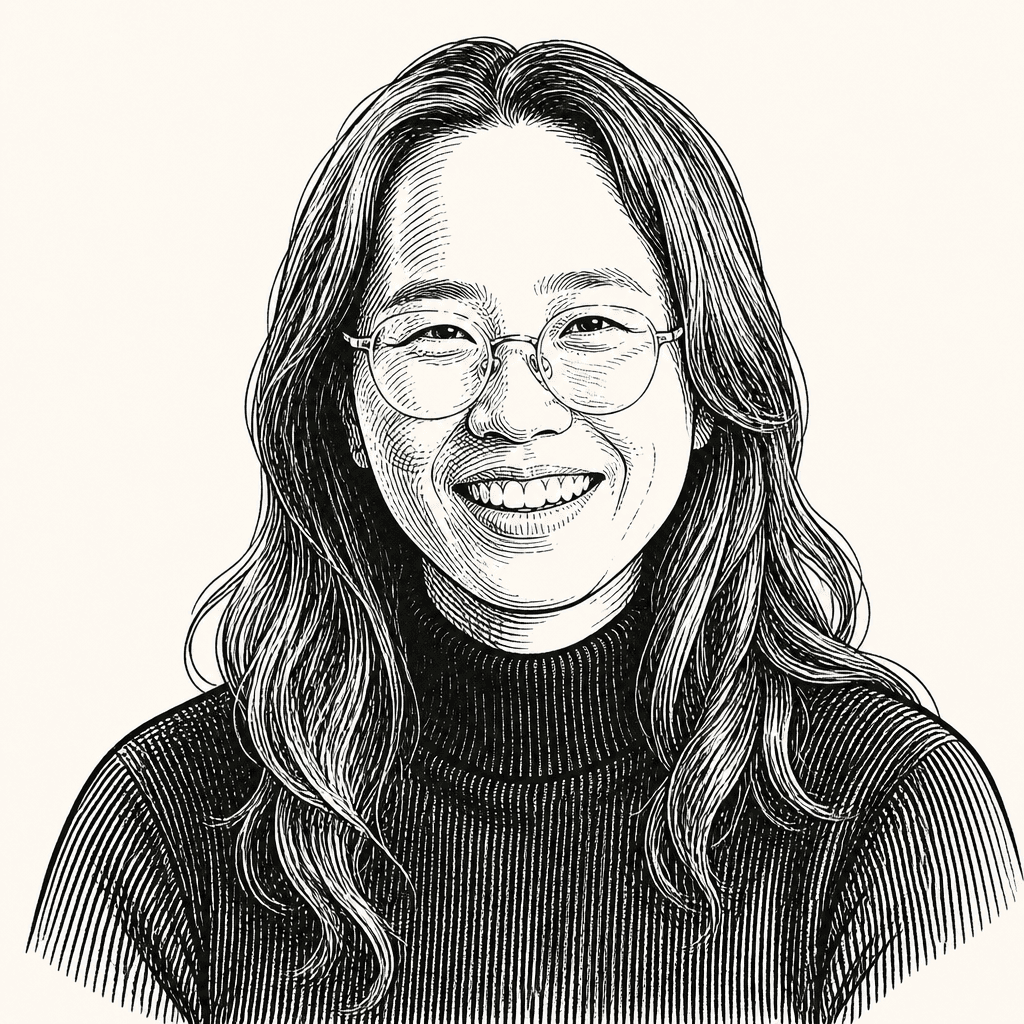
Diana Hu
Managing Partner at Y Combinator. She co-founded and served as CTO of Escher Reality, acquired by Niantic, then led Niantic’s AR platform; she holds BS and MS degrees from Carnegie Mellon focused on computer vision and machine learning and works with founders in AI, robotics, and hard tech.
Hard-Tech Startups Rise as AI Lowers the Cost of Building
Y Combinator partners Garry Tan, Jared Friedman, Diana Hu and Harj Taggar argue that AI is reducing the software labor needed to build both physical and digital businesses, helping drive a rise in hard-tech startups and faster early revenue among YC companies. They say the opportunity is shifting toward companies that build physical capacity, own specialized data or take full responsibility for customer workflows—not software that merely records or assists work. AI also makes it easier for founders to start alone, they contend, while increasing the premium on judgment about what to build.
Orbital Data Centers Bet on Falling Launch Costs
StarCloud co-founder and CEO Philip Johnston argues that falling launch costs could make orbital data centers a practical alternative to terrestrial facilities constrained by power, permitting and local opposition. The company’s first satellite demonstrated that an NVIDIA H100 can operate in orbit; its next systems are meant to sell processing capacity to satellite operators before pursuing larger deployments for hyperscale customers. Johnston’s case remains conditional on cheap, high-cadence launch capacity and on StarCloud solving heat rejection, radiation tolerance and connectivity at infrastructure scale.
The 1% Rule for Finding Durable AI Opportunities
Google chief scientist Jeff Dean argues that AI founders should test frontier models on the workflows they hope to build around: if a general model already succeeds meaningfully, rapid model improvement may erase the opportunity. More durable openings, he says, are tasks where the model succeeds only 0% or 1% of the time and where a small team can add private context, distinct data, specialized models or better evaluation loops. The larger question is whether that advantage will persist long enough—and whether solving the problem matters.
Stronger Models Require Smaller Agent Harnesses
Claude Code creator Boris Cherny argues that as models such as Opus 5 become more capable, AI products should remove inherited prompts, tools and workflow constraints rather than accumulate them. He says builders should test models on problems beyond their assumed limits, supply clear guardrails and ways to verify results, and use observed failures—not old model workarounds—to decide what to add back.
YC Says Internal Agents Need Shared Context, Tools, and Trust
YC’s Pete Koomen argues that building “superintelligence” inside a company requires more than adding AI features to existing software: agents need access to the organization’s shared context, tools and accumulated work. In a Lightcone discussion with Garry Tan, Jared Friedman, Diana Hu and Harj Taggar, Koomen describes how YC’s internal agent system became useful once it could query a unified company database, reuse hundreds of internal tools and turn repeated judgment into improving skills. The broader claim is that AI-native organizations will depend as much on trust, transparency and broad access as on model capability.
AI-Native Startups Are Replacing Teams With Agentic Operating Systems
In a Stanford CS153 Frontier Systems lecture, Y Combinator CEO Garry Tan and general partner Diana Hu argue that AI agents are changing the basic production unit of a startup from a team to a founder operating through skills, memory, evals and customer feedback loops. Tan frames agentic coding as a programmable company architecture, while Hu says AI-native companies are becoming closed-loop systems with far higher revenue per employee and less need for traditional managerial coordination.
Personal AI Lets One Builder Do the Work of Teams
Y Combinator CEO Garry Tan argues that personal AI is reaching a stage comparable to the early personal computer: powerful enough to let one person build software that once required a team, but still brittle enough to demand technical ownership. Drawing on his work with Claude Code, OpenClaw and his GStack workflow, Tan makes the case for heavy token use, Markdown-encoded “skills” and multiple coding agents under one accountable human operator. The larger question, he says, is whether users will control their own AI tools, data and prompts, or work inside opaque systems controlled by others.