AI’s Growth Case Hinges on Adoption Beyond Coding
Box CEO Aaron Levie argues that agents could make more kinds of business work practical, while Anthropic CFO Krishna Rao describes long-term compute commitments built around anticipated demand. Demonstrations and connector guidance show possible workflows and deployment requirements, but reliability, adoption speed and organizational readiness remain open questions.

The growth case depends on work beyond coding
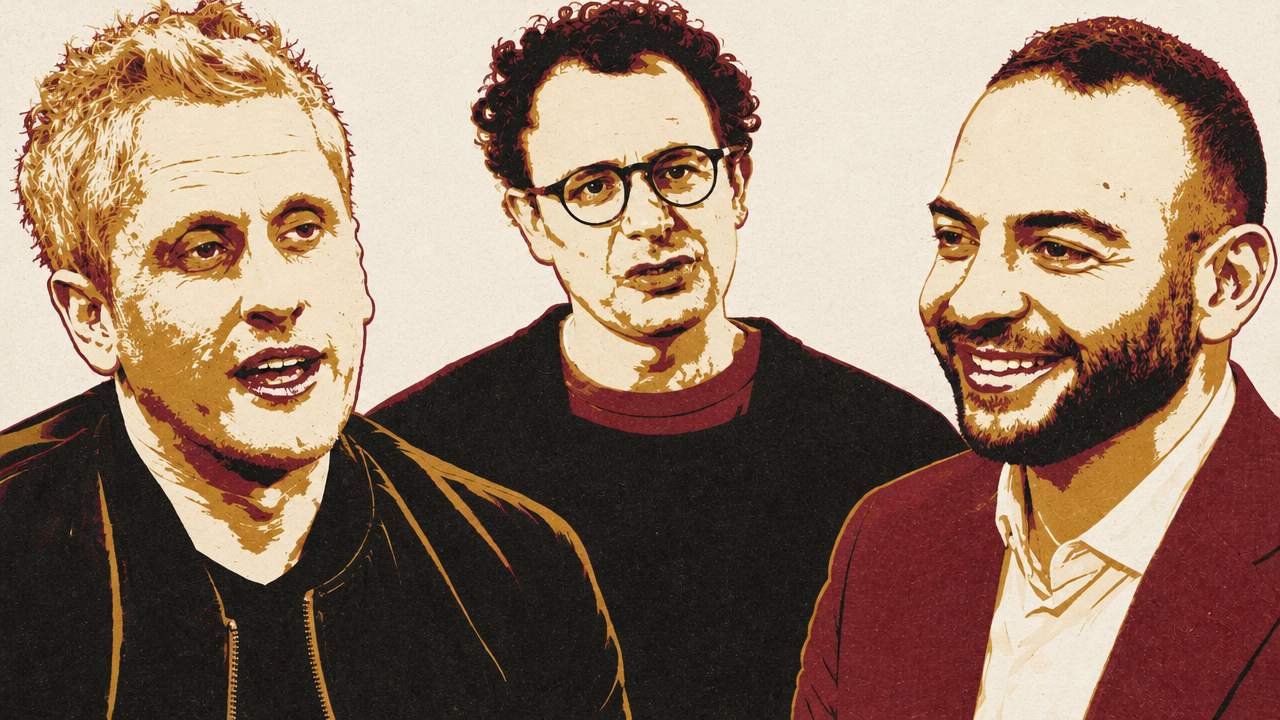
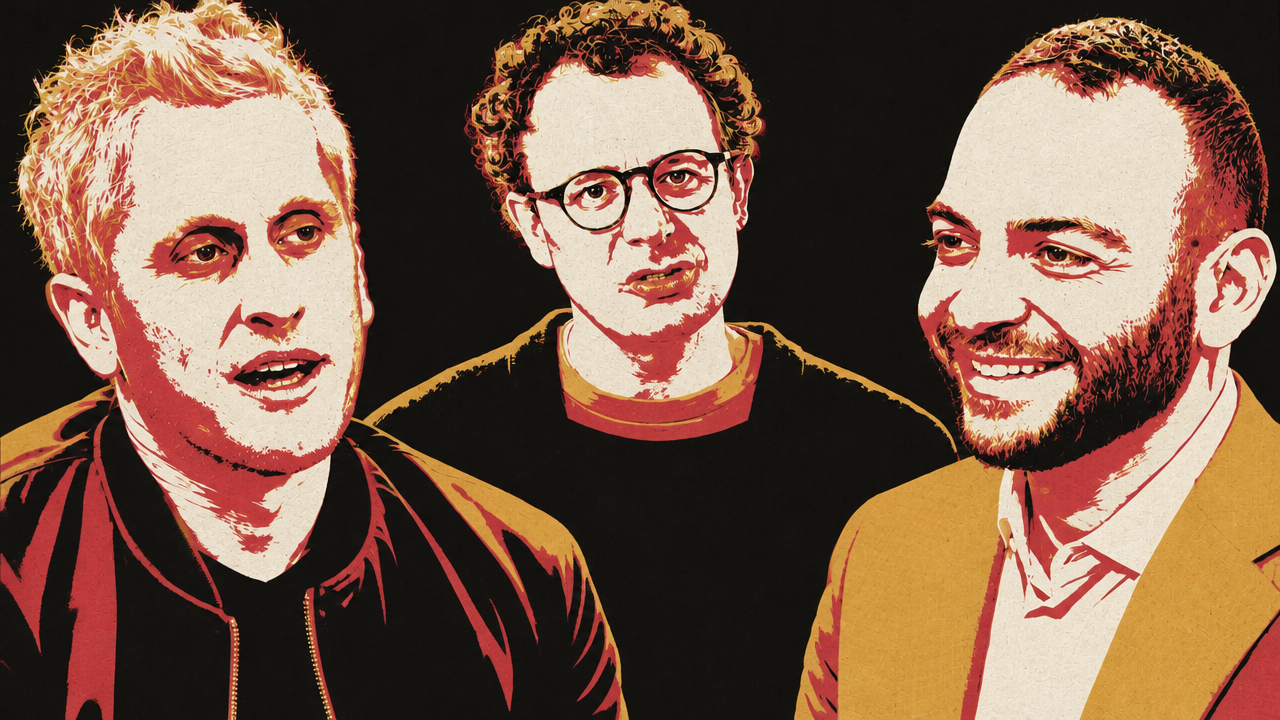
The central business question is whether AI agents can make enough additional work practical to sustain demand beyond coding, the use most visible in current revenue growth. Box CEO Aaron Levie argues that agents able to use computers, call tools and check results could extend models into cybersecurity, IT operations, sales, legal work, manufacturing and product design. In this account, coding is an early example, not a limit: many kinds of work can be framed as a goal, broken into tasks and carried out through software.
The economic claim is broader than saving time on tasks companies already perform. Levie’s thesis is that cheaper, more capable systems could make previously uneconomic work worth doing. He offered a hypothetical audit that might cost $100,000 with an expensive approach but $25,000 using a frontier model for planning and judgment alongside cheaper models to process documents. If the work were worth $35,000, the lower-cost workflow could make it viable. Those figures illustrate his argument; they are not observed costs or evidence of audits running at scale.
That distinction matters to the investment case. Levie sees agents expanding the work organizations might ask models to do, with cheaper models complementing frontier systems rather than simply replacing them. But the chain from capability to revenue still depends on better models, suitable software and changes to how organizations work. He describes broad adoption as a multiyear process, not an accomplished shift.
Reliability is another condition. A model that helps with research or product prototyping may still fail at a seemingly simple task: Levie cited an editing system that confused a breath with the word “yeah.” Performance does not automatically transfer from one task to another; task-specific training and commercial incentives may matter. Levie’s confidence in agents rests partly on his experience using models for product prototypes and research synthesis, but those examples do not establish dependable performance across enterprise workflows.
The business case therefore has two linked uncertainties: whether agents can do enough useful work, and whether organizations will adopt them quickly enough to support the infrastructure being built for them. Levie acknowledges that slower adoption could leave spending ahead of revenue even as he argues that rising demand and compute constraints point to room for growth.
Levie uses the growing customer base as evidence that organizations are finding enough utility to commit substantial budgets. It does not settle how much of that spending can become durable value across a wider range of work. His thesis is that agents could make more digital activity practical; the breadth and reliability of that activity remain open questions.


Compute commitments make the forecast concrete
The demand thesis has a physical counterpart: infrastructure companies commit to build or reserve in anticipation of future use. Anthropic CFO Krishna Rao described $901 billion in future compute commitments, a headline that needs its timing and composition before it can be read as a measure of near-term spending.
Half of the compute, Rao said, is expected to come online after 2030. The total includes cloud commitments and data-center leases lasting 15 to 20 years; it is not a single bill due now. Rao said Anthropic assesses likely needs over six-, 12- and 24-month horizons, weighing expected revenue, research requirements and efficiency. His account describes a process for matching nearer-term demand to available capacity, rather than treating the full long-range figure as an immediate purchase.
The supply strategy is diversified. Rao described Anthropic as drawing on Amazon Trainium, Google TPUs, Nvidia and AMD GPUs, as well as cloud providers and directly leased data centers and chips. An internal orchestration layer is intended to route workloads across that mix. Rao’s argument is that a broader pool gives the company flexibility to match compute to work and respond to changing conditions.
That flexibility is a management approach, not proof that future demand will absorb the commitments. Rao said 75% of Anthropic’s compute capacity was allocated to research and development, and cited improved margins and positive free cash flow as support for further investment. Those figures describe the company’s position as he presented it; they do not establish that adoption will arrive quickly enough to justify every long-term commitment.
Levie’s account supplies the counter-scenario. If agents extend into more business activity, demand could grow enough to support very large infrastructure plans. If adoption is slow, the same commitments could become a serious liability. Rao’s emphasis on long horizons, diversified supply and efficiency explains how Anthropic says it is managing the bet; Levie’s warning clarifies what happens if the demand forecast falls short.
The commitment is also not equivalent to an announced financing or acquisition plan. Rao described cash, revenue, an undrawn revolver and IPO proceeds as resources available to the company, but did not commit to buying distressed cloud or data-center assets or give a timetable for debt issuance. His account is about maintaining options while investing, not a stated next transaction.


A business workflow shows what deployment can look like
A sales walkthrough using fictional Acme data offers a smaller picture of what connected AI tools can produce. The example starts with a quarterly headline—sales rose 20.5% from Q2 to Q3—and asks what drove it. Industrial manufacturing and Construction accounted for 97.7% of the increase. The breakdown changes the meeting question from whether sales grew to which parts of the business account for that growth.
The analysis then combines sales figures with orders and account notes to distinguish three kinds of follow-up. Copperline Fleet Services had placed no October orders, but the example linked that gap to an unresolved credit issue and a buyer waiting for a delivery timeline. Alder Creek Manufacturing had asked for weekly delivery options and a point-of-use stock quote. Blue Mesa Construction’s lower October sales were partly explained by a one-time September project, making a routine-needs check more appropriate than treating the comparison as an urgent warning.
Those differences are the useful part of the demonstration: a sales decline does not mean the same thing for every customer. Context can distinguish a blocked order from an expansion request or a comparison distorted by a one-off project. The tool also carried its findings into a short presentation with suggested actions and owners.
The example uses synthetic data. It shows a tool producing a segment analysis, customer-specific recommendations and a presentation from connected information; it does not show a production deployment, improved sales or a general productivity gain. That boundary matters when set against Levie’s broader demand thesis. The walkthrough demonstrates a possible sequence—connect data and notes, generate differentiated analysis, hand off actions—but not that organizations can reliably repeat it at scale.
The workflow also makes the implementation conditions visible. Its usefulness depends on the quality and accessibility of underlying information and on people being able to review and act on recommendations. A demonstration can show what a system produces when the data is available; it cannot, by itself, establish that the necessary connections, controls and operating practices are in place across an organization.




Access and security are part of the product
The distance between a useful demonstration and a working organizational system is not just a matter of model performance. It also depends on which systems a tool can reach, who configures that access and whether the organization can manage the risks.
OpenAI’s setup guidance separates making ChatGPT’s Data plugin available from configuring a specific connection, such as a Snowflake app or a custom MCP server. Workspace access determines who can install the plugin; it does not make a data source ready to use. An administrator still has to configure and publish the organization-specific connector, choose how people authenticate and set its availability.
The security distinction is equally important: a verified connector template is not the same as a reviewed organization server. The setup screen warns that an untrusted server could access information shared through the app or induce unintended actions, including changing or deleting data. A team-built server follows a different setup path, but still requires connection-specific settings and risk review. Connecting more context may improve answers, while also expanding what has to be governed.
The same tension appears in critical infrastructure. Former NSA and Cyber Command director Tim Haugh and a16z partner Anne Neuberger argue that AI could help identify vulnerabilities in old code, accelerate patch development and assist with systems that cannot safely be patched. They also stress that networks already carry technical debt, that rapid updates can themselves cause outages and that people and organizational leadership must remain involved in risk decisions.
Readiness is uneven. Some financial organizations have more security staff and resources, while many infrastructure operators face limited budgets and lack specialist personnel. Haugh’s example is a local water provider maintained by four people, none with cybersecurity in their job title. Neuberger proposes concentrating initial effort on several hundred operators whose disruption could have broad effects, with technical work coordinated through sector leaders. That is a proposed approach, not evidence that AI alone can secure those systems or that every operator can move at the same pace.
Together, the connector walkthrough and the infrastructure discussion make organizational capacity part of the deployment question. Data access, identity management, staff, governance and incident planning shape what an AI system can safely do—and who can put it to work. More capability may create new uses, but it does not remove the uneven conditions under which organizations adopt it.