Anthropic’s $901 Billion Compute Commitments Stretch Beyond 2030
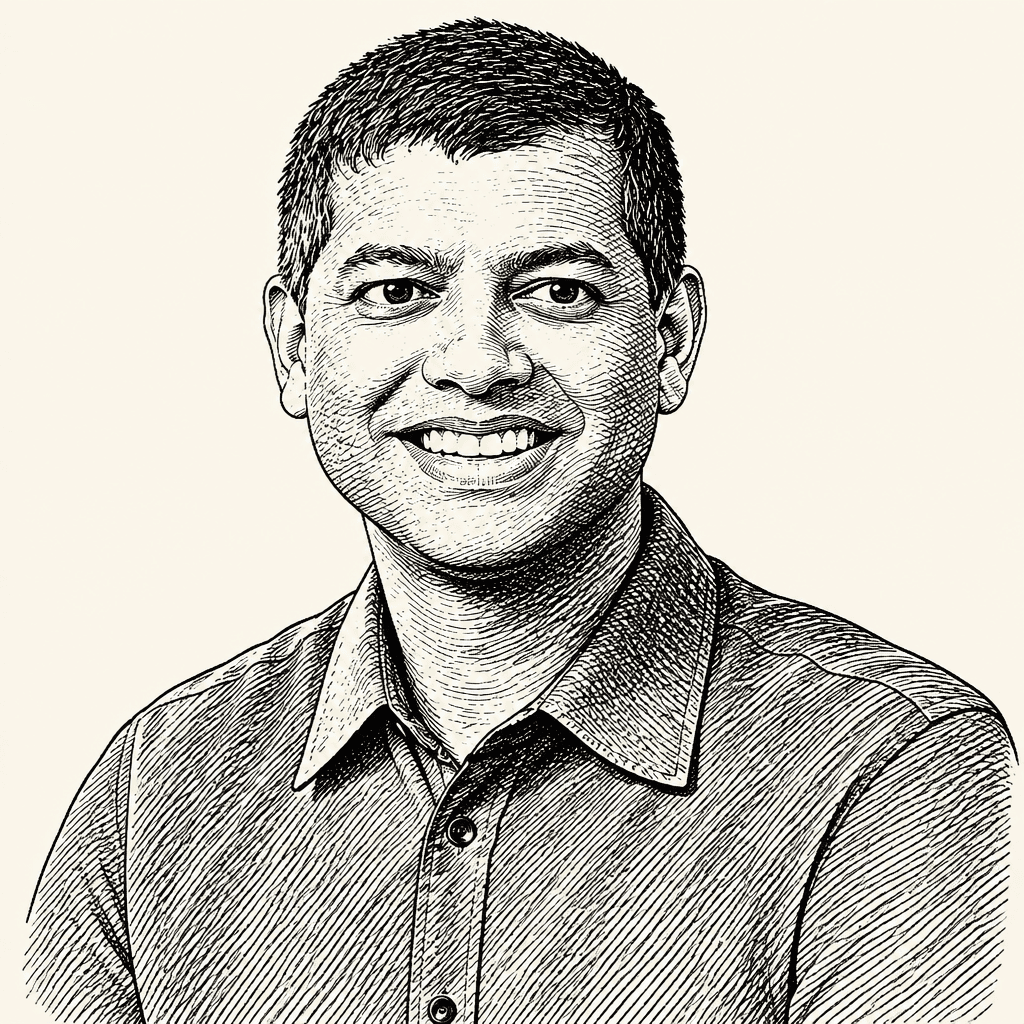

Anthropic CFO Krishna Rao argues that the company’s public listing is about more than raising capital: it broadens access to its stock and gives the fast-growing AI company room to fund a costly, uncertain expansion. He says Anthropic intends to invest heavily in compute while preserving financial flexibility, using a mix of providers and measuring commitments against expected demand, revenue and efficiency. Rao also presents safety as compatible with commercial growth, saying enterprise customers need both capable models and products they can trust.
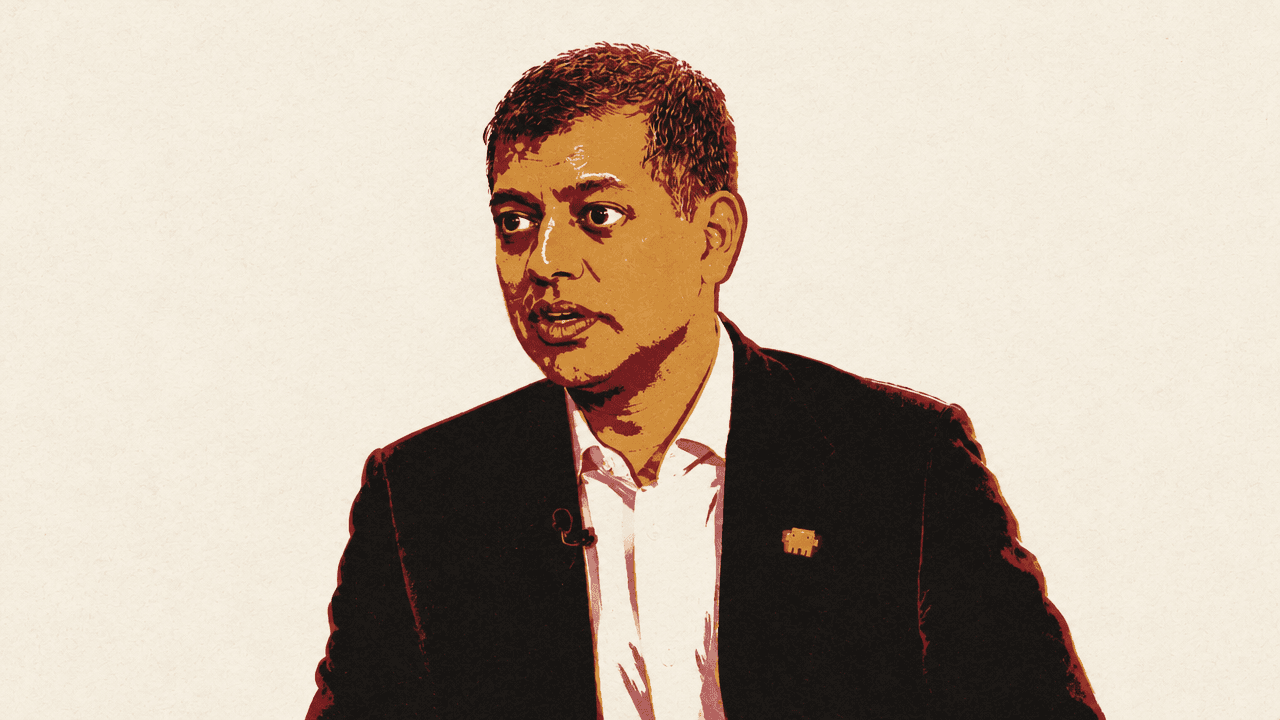
Going public was about more than raising cash
Krishna Rao described the listing as one step in a fast, capital-intensive buildout. Anthropic was not yet six years old, he said, and its first revenue came in the first quarter of 2023. By the month before the interview, its annualized run-rate revenue had passed $81 billion. Rao called the growth compressed, but said the company still needed to invest to remain at the frontier.
Access to capital was not the only reason to go public: Anthropic had already raised substantial amounts as a private company. A listing could also lower the cost of capital, make the company’s stock accessible to a broader group of investors, and fit its stated emphasis on transparency. Rao described that wider access as “democratizing” ownership beyond private markets. Building frontier models requires substantial investment, he said, even as Anthropic has tried to be disciplined about how it spends.
The balance between investing and preserving room to adjust ran through Rao’s account of the company’s finances. He called the future a “cone of uncertainty”: as Anthropic looks farther ahead, uncertainty widens around customer demand, revenue, and model capabilities. The company wants to make investments that position it for that range of possible futures, while retaining the flexibility to continue investing as business results and model capabilities become clearer.
The cash position gives Anthropic options, not a stated acquisition plan
Ludlow cited $233 billion in cash and short-term investments on the balance sheet after the offering and asked what the money would let Anthropic do differently. Rao pointed instead to a longstanding focus on efficiency. The founders had to hire a research team and secure compute, he said, while making efficient use of what they could obtain. He described the company as wanting to be forward-leaning on compute but conservative on its balance sheet.
That distinction also shaped his answer to whether Anthropic might buy distressed cloud or data-center assets. Rao did not commit to making such acquisitions. He said the company was well positioned to invest where needed and could be opportunistic as market conditions changed. Before the offering, he said, Anthropic had more than $130 billion in cash; in the context of the offering, it had raised almost $120 billion. He said this position should leave the company well placed in more or less volatile markets.
Rao likewise did not give a timeline or rating for possible debt issuance. He said Anthropic had gone public to increase access to capital and lower its cost, and pointed to the resources already available: cash, an undrawn revolver, IPO proceeds, revenue, and what he described as an efficient business model. When Ludlow asked about a future credit rating, Rao noted that the company was not yet trading. His answer emphasized present capacity rather than signaling a specific next financing move.
The $901 billion commitment is long-dated, and capacity depends on efficiency
The prospectus, Ludlow pointed out, listed $901 billion in future compute infrastructure commitments, including about $71 billion over the 12 months through September 2027. Rao stressed that the headline total was spread across many years: he said half of the compute would come online after 2030. He argued that the nearer-term amount compared well with Anthropic’s revenue and cash position.
The commitments are not all the same kind of obligation. Rao said they include cloud commitments as well as data-center leases lasting 15 to 20 years. The scale of the total therefore needs to be read alongside its timing and mix, rather than as a single near-term cash outlay. He said Anthropic evaluates expected needs over six-, 12-, and 24-month horizons, looking at likely revenue, compute efficiency, and the research and development needed to stay at the frontier. It then ranks available compute by price-performance and buys accordingly.
Rao described Anthropic’s effective capacity as a combination of physical compute and the efficiency with which the company uses it. In his view, that efficiency allows each unit to be directed to its most useful purpose and is part of the company’s competitive advantage.
The supply strategy is diversified across providers and arrangements. Rao said Anthropic uses four accelerator platforms and buys substantial compute through cloud partners. It is also expanding Anthropic Direct, a strategy under which the company leases data centers directly and separately leases chips. He described the resulting pool as fungible: workloads can be matched to different compute rather than tied to a single provider or platform.
Rao named Amazon Trainium, Google TPUs, Nvidia GPUs, and AMD GPUs as platforms in the fleet. Anthropic has built an internal orchestration layer to use compute across them, he said—a process that took a long time to do well. The aim is to match each unit to its best workload, whether customer-facing or internal, while retaining options when market conditions change.
R&D takes most of the fleet, while margins remain an investment decision
The allocation between model development and serving customers is one practical consequence of the “cone of uncertainty.” Rao said he discusses compute allocation several times a week with co-founder Tom Brown and their teams. To buy compute well, allocate it, and use it efficiently, Rao argued, a finance leader has to understand how the systems work and how the pieces fit together.
Rao said 75% of Anthropic’s compute capacity was allocated to research and development. He cautioned against treating R&D as one activity: it includes research into model capabilities and safety, discovering what the company calls compute multipliers, pre-training and post-training models, and internal use of Claude. That internal use, he said, was up 250 times since January 1. In his account, compute efficiency allows Anthropic to direct a substantial majority of its fleet to R&D while still serving strong growth in customer demand.
The margin figures Rao cited showed how quickly the business had changed. He said gross margin rose from 29% in the first nine months of 2025 to 85% in the first nine months of 2026. For those first nine months of 2026, he also cited a 12% adjusted operating margin and positive free cash flow. He said those results put the company in a position to invest in the future.
Ludlow asked what minimum margin Anthropic would accept as its plans and compute needs changed. Rao did not set a floor. He said the company was building for long-term growth and profitability, while attractive investment opportunities in the near term would lead it to keep investing. The figures, in Rao’s account, put Anthropic in a position to make those investments; he did not promise that margins would remain at a particular level.
Nvidia is an investor and supplier, but not Anthropic’s only compute partner
Ludlow raised Nvidia’s $10 billion investment and an additional $10 billion in the private placement, and asked about the company’s relationship with the chipmaker as both supplier and partner. Rao called Nvidia a great partner and said Anthropic was a big customer. Nvidia’s technology is part of the compute fleet, and Rao said Anthropic valued Nvidia both as a capital partner and as a partner in building out compute.
He also emphasized that Anthropic’s compute strategy is not dependent on Nvidia alone. Rao said the company expects to need significant compute in the future, and described its use of multiple platforms as a source of flexibility. The company can match different units of compute to customer or internal workloads, he said, using an orchestration layer it built internally. That wider platform mix is part of the compute strategy he said gives Anthropic options; Nvidia remains an important supplier and partner within it.
Anthropic says safety and capability reinforce enterprise trust
Ludlow asked how Anthropic would balance safety with commercial growth and shareholder returns, including whether the company might take a safety measure that cost revenue or affected the stock. Rao rejected the premise that safety and capability were necessarily in tension. He said Anthropic develops them together, and argued that enterprise customers want both capable models and safety and alignment.
At the end of the third quarter, Rao said, Anthropic had 11,900 enterprise customers, nearly eight times the number at the beginning of the year. He described them as some of the largest and most demanding companies in the world, deploying the technology in settings that touch employees, customers, and data. For those customers, he said, capability alone is not enough; they also need to trust the product. Rao presented safety as part of Anthropic’s mission and as something that matters commercially to its customers.
He pointed to Anthropic’s handling of its Mythos-class models as an example. The company had used the models internally and found them highly capable across domains, with cyber capabilities standing out as an area requiring care. Rather than release them broadly at once, Rao said, Anthropic created Project Glasswing to put the models in the hands of cyber defenders first, gather feedback, and build safeguards. He said that work was then cascaded to the Opus, Sonnet, and Haiku model families.
Rao acknowledged that broad release might have maximized revenue in the moment, but said he did not think it would have been good for the world or for customers. He pointed to cyber and life-sciences verification programs as steps needed as model capabilities advance quickly.
Maybe the revenue maximizing thing to do in the moment was just to release it to the world and see what happens, but that's not—I don't think that would have been good for the world. I also don't think it would have been good for our customers.
The IPO is one milestone in a much larger commercial test
Rao called the IPO “one stop on the train,” not the destination. Anthropic’s ultimate goal, he said, was to achieve its mission, which requires commercial success as well as attention to how the company builds. He framed the listing as a financing and ownership milestone within that longer effort.
The scale of growth was striking even by Rao’s account. Ludlow recalled that Anthropic’s annual recurring revenue was about $250 million when Rao joined; Rao agreed with the approximate figure and said the run rate had grown more than 320 times in a little over two and a half years. Asked what came next, Rao argued that the company was still at the beginning of the opportunity.
He pointed to the gap between current enterprise adoption and customers’ broader spending. About half of the Fortune 500 were Anthropic enterprise customers, he said. Among those customers, cloud spending represented less than 0.1% of total expenses; for the top ten Fortune 500 customers, it was less than 1%. Rao used those comparisons to explain why he saw room for further adoption, including in coding, knowledge work, life sciences, and robotics. He described the opportunity as helping customers see value from useful intelligence, which could support further investment as they realize a return.
His closing answer returned to the long-term frame. The share price, he said, would move from day to day. Anthropic’s focus would remain on where the business could go over the long term, a focus he said would also matter to its investors.