AI’s Narrowing US-China Gap Meets Constraints on Compute and Deployment
Eric Schmidt’s six-month estimate of the US-China AI gap sits alongside a patent study that measures a different kind of progress, without settling an overall ranking. Across compute, model costs and enterprise adoption, the Brief traces how power, supplier access, controls and proof of value shape whether AI capability can be put to work.

A narrowing gap, measured in different ways
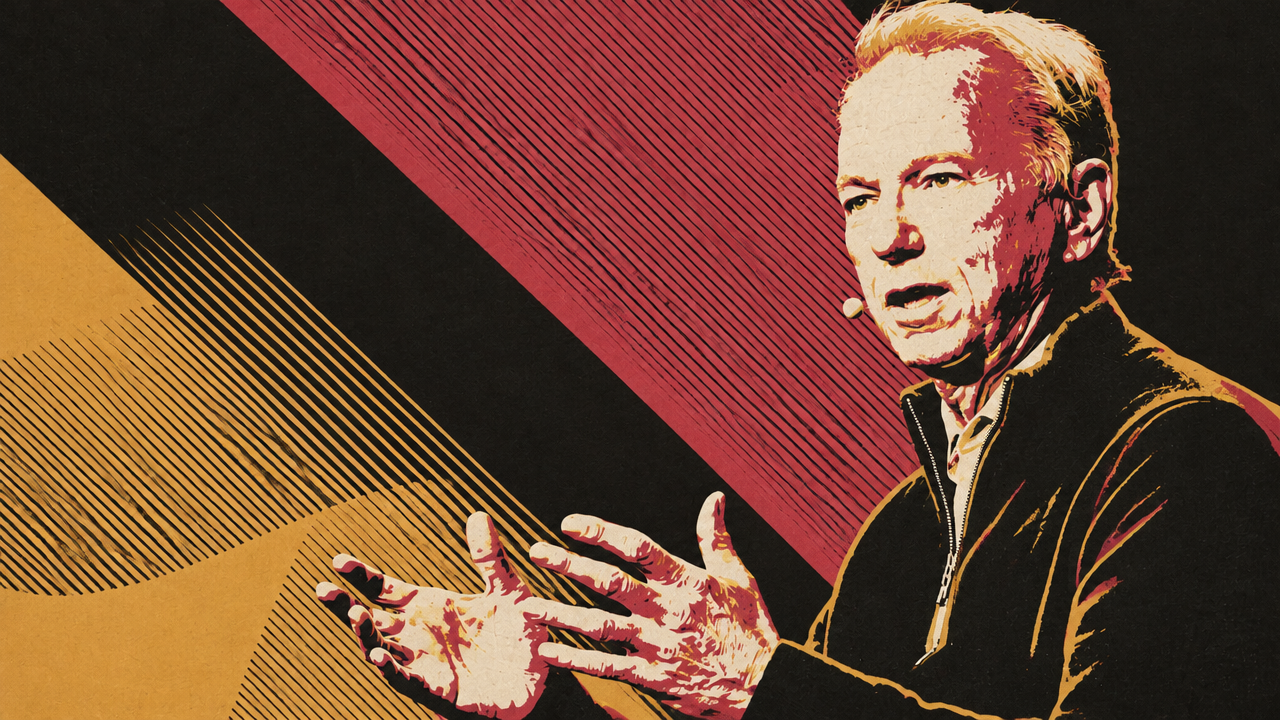
Eric Schmidt’s estimate puts the United States and China about six months apart in AI, down from the one- to two-year lead he had previously assigned the US. That is a judgment about a fast-moving contest, not a single, settled measure of national capability. Schmidt’s scorecard separates advantages the phrase “AI lead” can blur: he gives the US an edge in frontier model performance, talent and safety controls, while China leads on cost, energy and speed of deployment. He ends with an even score, but the categories matter more than the tally.
The two countries are not advancing through identical conditions. Schmidt says Chinese developers adapted to chip restrictions with algorithms that use much less energy, accepting some loss in performance. He describes the US as better positioned to attract talent and raise capital, but constrained by power and data-center construction. His estimate of a six-month gap therefore captures an assessment of relative progress, not a forecast that one country will win across every dimension.
A separate study by Josh Lerner and Amit Seru examines a longer-run indicator: patenting by domestic inventors from 1985 through 2023. The researchers count roughly 14 million major Chinese patents, compared with about three to four million US patents by US inventors. They do not treat that difference in volume as proof of superior overall capability. Instead, they test whether it reflects more than low-value filings, using comparisons with STEM graduates and scientific publications, and analyses of patent text and technical language. Across those checks, they find broad activity in critical technologies and rising patent quality.
The patent evidence also describes a different kind of innovation system from the one implied by a race between a few flagship labs. Lerner and Seru find a larger role for Chinese universities and a less concentrated distribution of patenting among companies than in the US. They say Chinese innovation rests overwhelmingly on homegrown talent; their findings do not support the simpler account that its progress is mainly the work of a few favored firms or returning US-trained researchers. But patents are not a comprehensive measure of innovation, and the researchers’ analysis does not establish why China’s activity is distributed this way.
Schmidt’s country scorecard and the patent study answer different questions. One compares current strengths across selected categories; the other tests whether a broad increase in patenting carries signs of technical substance. Neither supplies a definitive ranking of overall AI capability. Together, however, they shift the policy question from how to preserve a presumed US lead to how the US can compete while maintaining the research, talent and institutions that have supported its innovation.
The policy tension is concrete in Lerner and Seru’s account. They describe delays in commercializing clinical AI applications and warn that disruptions to university research can disperse specialized teams that are difficult to rebuild. Schmidt, from a different angle, argues that the US weakens its own position when it turns away highly skilled researchers. These are not claims that every institutional rule should stay as it is. They are warnings that competing with China may require improving US institutions without eroding research capacity or access to talent.







Compute demand is changing the supplier map
The gap between having capable researchers and deploying capable systems runs through the infrastructure question: power, chips and data-center capacity. Schmidt estimates the US will need 60 to 80 gigawatts of power to get through 2030 or 2031, and says connecting new power to the grid can take years. He contrasts that with China’s faster data-center construction and fewer constraints on grid connections. In his account, capital and talent do not overcome a shortage of electricity and facilities.
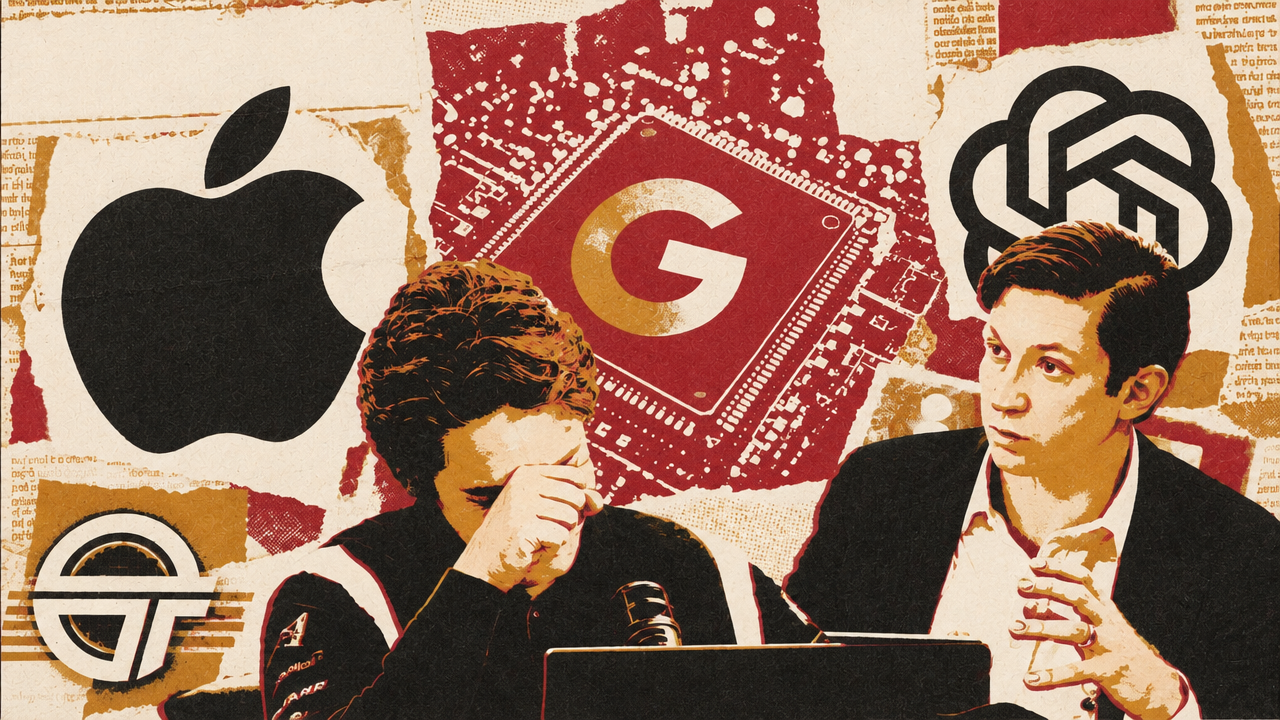
Reports that OpenAI plans to buy Google TPUs show how that pressure may reshape commercial relationships. John Coogan and Jordi Hays describe AI companies looking across chips, cloud providers and data-center operators rather than relying on one supplier. They report that Nvidia remains central, including as a backstop in the reported OpenAI arrangements. The point is not that Nvidia has been displaced: the market is still developing, and dependence on its hardware remains substantial. It is that growing demand may make old competitive boundaries less important than access to usable compute.
That expansion is visible in Microsoft’s results, but the headline growth leaves an important question open. Azure revenue rose 48%, while Microsoft reported $277 billion in remaining performance obligations, a measure of contracted future revenue. Bloomberg Intelligence analyst Anurag Rana says investors want to know whether new commitments are coming from customers beyond the major AI model companies. Microsoft reported that backlog grew 25% excluding OpenAI, but Rana’s question is narrower: whether enterprise demand is broadening beyond frontier labs.
| Signal | What it shows | What remains unclear | |---|---|---| | Azure revenue up 48% | Strong cloud growth | How much reflects broad enterprise demand | | $277 billion in remaining performance obligations | A large contracted backlog | How much new demand comes from non-frontier customers | | Reported OpenAI interest in Google TPUs | Compute needs crossing competitive lines | How far supply diversifies from Nvidia |
Microsoft’s results also distinguish two sources of cloud demand. Rana views hosting ChatGPT as potentially more durable than infrastructure used to train models: training spending could fall, while use of a deployed product may persist. He also sees Microsoft’s distribution role as valuable if customers can choose among OpenAI, Anthropic and other models in its products. That is a different bet from supplying the labs’ training needs. Yet the distinction does not answer whether the wider enterprise market is committing enough to support the scale of infrastructure investment.
The companies’ reported commitments and Microsoft’s revenue growth point to substantial demand, but they are not interchangeable evidence. A large agreement with a model developer shows one customer’s need for capacity; revenue growth shows cloud sales; a broadening backlog would offer a stronger signal that enterprise spending is spreading. The distinction matters to anyone assessing whether infrastructure is being built for a durable range of customers or concentrated demand from a small number of AI companies.







Lower cost is not the same as cheaper work
One way to ease compute pressure is to make capable models cheaper to use. DeepSeek V4.1 Flash 1017 offers a test of that proposition. Károly Zsolnai-Fehér points to substantial gains on software-generation and computer-use benchmarks, including improvements of 8.8 points on ProgramBench and 11.1 on Terminal-Bench 4.0. Demonstrations show a playable game and interactive 3D scenes. DeepSeek’s release notes attribute the improvement to reinforcement learning with self-feedback, despite no reported architectural change.
That explanation is plausible but not settled. Zsolnai-Fehér describes a training process in which a model evaluates its own output and uses that feedback to improve later attempts. A system might write a game, discover that collisions fail, revise the code and try again. The difficulty is evaluation: the model must recognize whether its work is good, and Zsolnai-Fehér cautions that it may not always judge correctly. Self-feedback is a proposed account of the gains, not a demonstrated explanation for every improvement.
The economics require the same care. DeepSeek’s listed output-token price is more than a dollar per million, which Zsolnai-Fehér says is 15 times cheaper than the comparator he discusses. But in his tests, DeepSeek used two to three times as many tokens as Claude Opus to complete the same task. A low price per token therefore does not translate directly into the same discount for finished work.
Cost per task is a better measure of the economics customers experience. Even after accounting for higher token use, Zsolnai-Fehér considers DeepSeek’s task cost attractive, though less dramatically so than its headline token price suggests. The model’s downloadable weights are free; running them locally still requires expensive hardware. Open weights can widen access to a model and give others something to build on, but they do not remove the cost of compute.
That is the connection to the larger infrastructure story: model efficiency and hardware availability interact. A cheaper model may serve routine, bounded work while frontier systems remain useful for harder tasks, as Schmidt argues. Whether the cheaper option truly reduces costs depends on the amount of compute required, the model’s performance on the task, and how much work it takes to produce a usable result.




Deployment depends on controls and proof of value
For enterprises, access to models and compute is only part of the path to adoption. Serval CEO Jake Stauch argues that coding agents can let IT teams and employees in departments such as HR, finance and legal build workflows in code, rather than relying on complex drag-and-drop tools. But code generation alone does not make those workflows safe to run across company systems. Serval’s product pairs agents with staging, testing, permissions, approval processes and audit trails.
That control layer is not incidental friction. Stauch says a personal agent may have too little access to do useful work across an organization; giving an enterprise agent broader credentials creates a different risk. Serval’s proposed route is to authorize specific actions for defined purposes, record them, and require approval where needed. As agents become more capable, he expects companies to be more cautious about permissions. The more an agent can do, the more consequential it becomes to know what it is allowed to touch.
The contrast with model progress is useful: better performance can make more workflows automatable, but it does not automatically make them deployable. Large organizations still need to decide which tasks to automate, adapt workflows to their systems, test changes and establish who is accountable. Serval’s deployment strategists and automation engineers reflect that work. The model may generate the code; customers still need to put it into production.
There is also a business case to prove. Stauch says customers want stronger evidence that AI spending produces a return, and that token usage alone is difficult to translate into economic value. Serval prices around workflows run, which he sees as closer to completed work than the amount of text a model generates. That does not settle whether a workflow saved labor or justified the cost, but it points to the measurement problem: adoption depends on connecting AI use to work completed and value realized.
Across the day’s arguments, capability is advancing, but the conditions for using it are not uniform. Schmidt’s account emphasizes power and national infrastructure; the compute reports show suppliers and customers adjusting to demand; DeepSeek illustrates how model price and task efficiency can diverge; Serval shows that enterprise controls and proof of value remain part of deployment. The practical question is not only which model performs best. It is who can afford to run it, build the systems around it, and use it safely enough to make the capability count.