The US and China Are Now Six Months Apart in AI

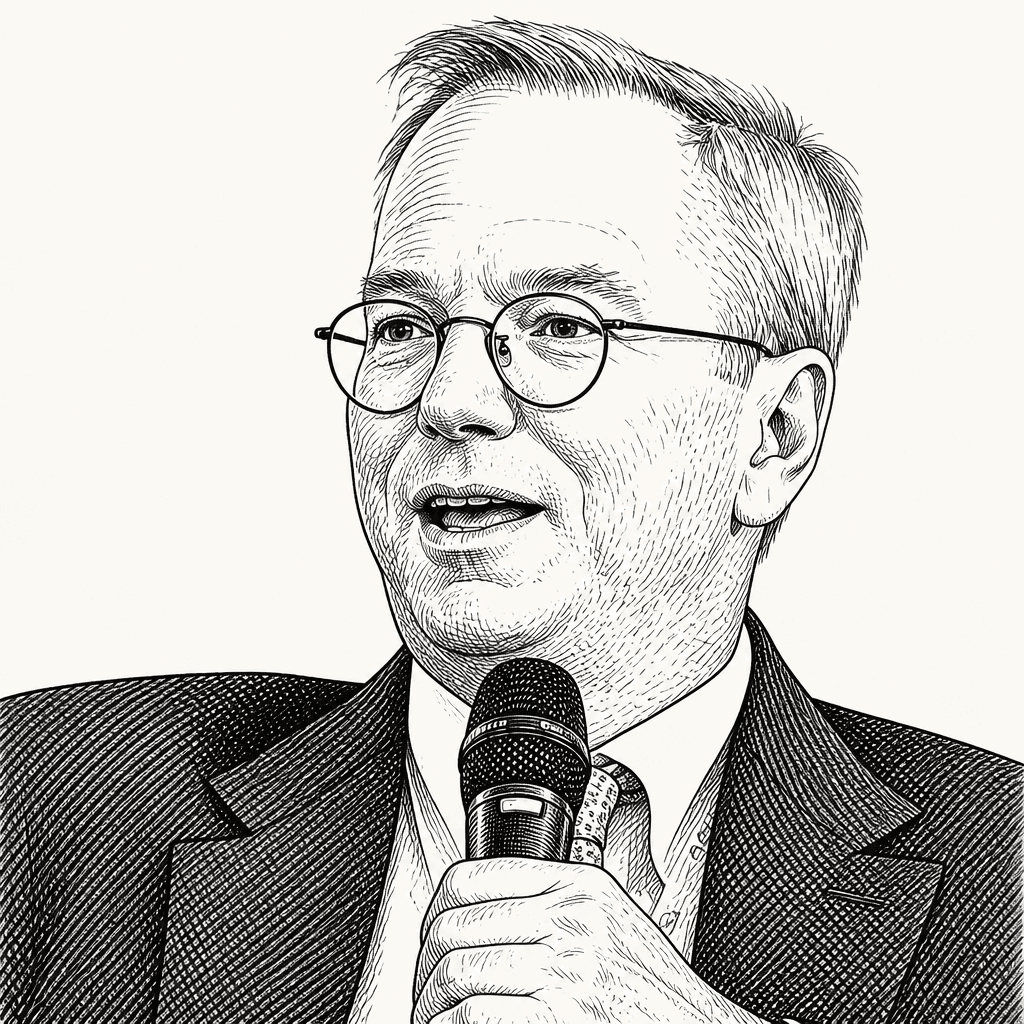
Eric Schmidt says the US and China are now about six months apart in AI, narrowing a gap he once put at one or two years. In a live Masters of Scale Summit interview, the former Google chief argues that China has made ground through cheaper models, abundant power and faster deployment, while the US retains advantages in frontier performance, talent and capital. His scorecard ties the two countries, but Schmidt says the contest need not be zero-sum—and warns that US restrictions on foreign researchers risk weakening its own position.
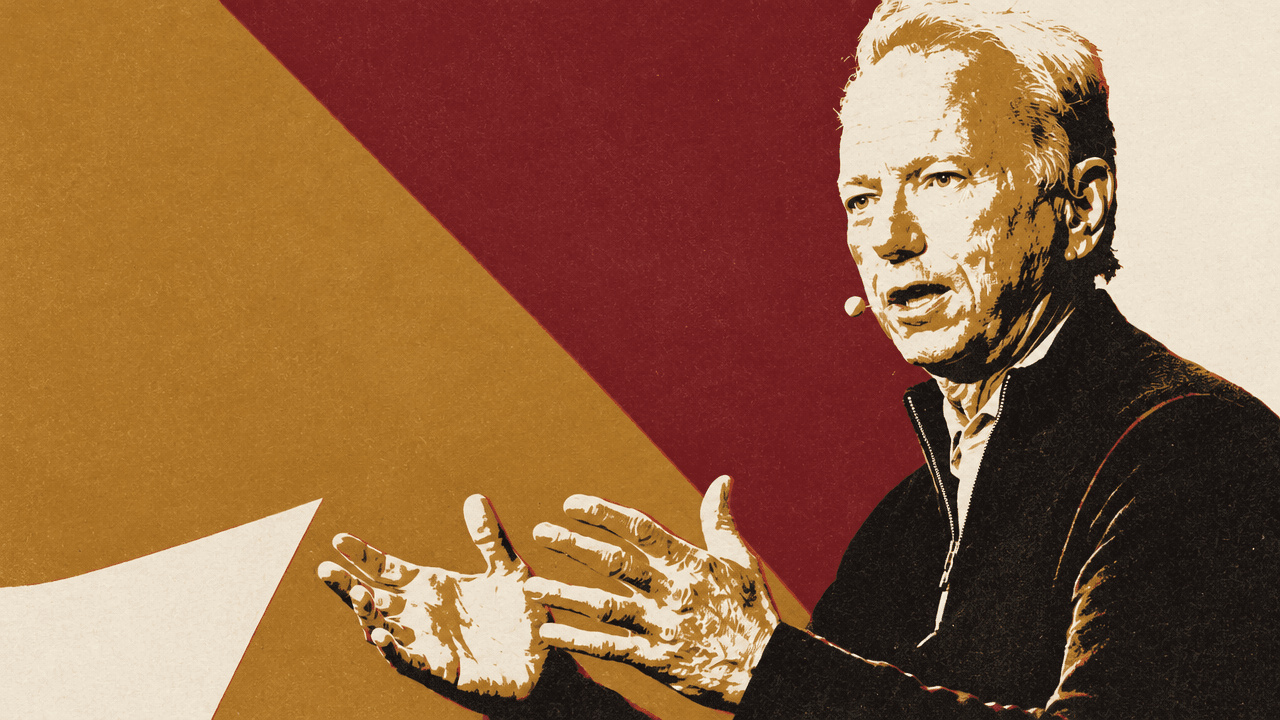
China has narrowed the AI gap by doing more with less
Eric Schmidt puts the US and China roughly six months apart in AI, down from the one- or two-year gap he had estimated earlier. He attributes the shift partly to the falling cost of software and partly to China’s ability to adapt to restricted access to advanced chips.

Schmidt said the cost of software has fallen from “very expensive to almost nothing.” As software gets cheaper, he expects far more of it to be built and used, including systems of agents that work together. The strategic contest is therefore not simply about which country has the best model today. Both countries are pursuing reasoning systems with capabilities beyond human performance, he said, and the systems being developed could shape the lives of future generations. He called the competition over intelligence “the race of a millennium.”
“A year ago or two years ago, it looked like China was a year or two behind. Now it looks like they're six months behind.”
Schmidt had been involved in imposing chip restrictions on China and expected them to constrain its progress for about a decade. Instead, Chinese researchers developed algorithms that, in his account, use roughly one-tenth the energy, while accepting some loss in performance. The gap has narrowed despite the restrictions. Schmidt said there is still debate over whether the difference between the countries will widen or narrow further, but at present he sees a two-horse race.
He dismissed the idea that China’s advances could be used simply as a pretext to delay AI regulation. China understands the technology’s dangers, he said, but it is not going to slow down. He questioned whether a coordinated pause could work: the US and China each have perhaps five to seven frontier labs, but American labs would need to agree voluntarily, while China’s government could direct its labs. Persuading China to slow down when it believes it is behind, Schmidt said, is “not happening.” The task, in his view, is to find ways to make AI safer while continuing to advance it.
The US has capital and talent; China is building infrastructure
Bob Safian framed the countries’ different systems as a contrast between China’s ability to coordinate nationally and America’s decentralized strengths. Schmidt’s answer was practical: China has moved faster on energy and data-center construction, while the US has stronger access to talent and capital.


He described China as having abundant energy, much of it renewable, and fewer constraints on connecting new power to the grid. He contrasted China’s construction pace with US interconnection waits that can stretch to seven years. China is building data centers at scale and has found ways to fund AI startups despite a more restricted financial system. DeepSeek, he said, was seeking funding and had recently completed a large raise. He had tried to invest but said US law made it illegal. Whether the funding came from private investors or the government was less clear to him; his contacts in China said it was private capital and that the economics could work.
The US, by contrast, has the researchers, deep funding markets and capacity to raise enormous sums quickly. Schmidt joked that it was hard to imagine anywhere else raising $50 billion “on a text message.” But money and expertise cannot substitute for electricity and data centers. His prescription was to build power systems alongside data centers, using available land rather than waiting for existing infrastructure to catch up. He invoked an old description of American strengths—land, optimism and the absence of a king—and argued that the country should use its available land for data centers and build power plants to serve them.
Schmidt estimated that the US would need somewhere between 60 and 80 gigawatts of power to “get through” 2030 or 2031. He said one gigawatt was about $50 billion in cost and compared one gigawatt to the output of a nuclear power plant, adding that the US was not building such plants at a high rate. In his account, the infrastructure constraint is not separate from the AI competition: without enough energy and data-center capacity, the US may have money and talent but still be unable to build at the pace he considers necessary.
Open weights trade control for reach and lower cost
Schmidt drew a distinction between open-source software and open-weight AI models. Open source makes code available for others to use and build on. Open weights make the numerical parameters produced by training available, after substantial investment in creating a model.
He characterized China’s approach as largely open source and open weight, and the US approach as largely closed. For American companies spending $100 million to $500 million to train a model, keeping it closed is commercially understandable. But Schmidt, who said he had argued for open source for decades, emphasized the countervailing value: an open platform can attract users and developers who build on top of it. He contrasted that model with closed-source software’s emphasis on the end user and the product a company sells.
The divide is not absolute. Schmidt pointed to US models that were available to download, including Reflection AI’s 500-billion-parameter model, Nvidia’s Nemotron and Google’s Gemma 4. China, he said, chose open source and open weights partly because it was behind and needed users quickly, and was willing to accept the risks that come with making models available. He said the strategy appeared to be helping it gain adoption and funding. Whether open or closed systems will ultimately prevail remains contested: US companies argue that closed models let them stay ahead; Chinese advocates argue that openness will do the same.
For businesses, the immediate calculation includes both price and capability. Running open-weight models on smaller servers can make token costs three to five times lower, Schmidt said. He also said the models used in that lower-cost approach were not as functional. He expects many companies to use less expensive models for bounded tasks that do not require frontier-level performance. Most businesses do not need the most advanced mathematical capabilities to handle financial accounting, he argued. By contrast, he sees frontier models as important for more demanding work in fields such as mathematics and chemistry. That creates a practical distinction: a company may use a cheaper model for routine work while turning to more capable systems where the task calls for them.
The price advantage does not settle the question of whether a business should use a Chinese model. Asked whether choosing one for lower cost was unpatriotic, Schmidt said American CEOs were patriotic “to a point” and also focused on money. He said using open-weight models was likely to be legal in the US, but whether it was a good idea depended in part on how a company weighed concerns about Chinese threats and espionage.
The security issue is not just where a model was developed. Schmidt said a closed model remains controlled by a company, whose leadership is subject to the laws of the country where it operates. Open weights can be modified: he described a technique called “obliteration” that can remove a model’s built-in guardrails and expose a less restricted system. He warned that such systems could be used for cyberattacks and said he did not know how to manage the risk if they reached terrorists.
That concern sits alongside the speed of capability development. Schmidt said the cost of software was approaching zero and that the rate at which software capabilities were expanding over the next few months was extraordinary. He described this as part of the reason some people were calling for a slowdown, though he had already argued that coordinating one with China would be difficult. He said many people believed there would be some kind of cyber event in the next 12 months that would illustrate the problem; he offered it as a possibility, not a certainty.
For a company considering an open-weight model, the trade-offs Schmidt described include lower token costs and wider access on one side, and weaker functionality, concerns about Chinese threats and espionage, and the possibility of removing safeguards on the other. The appropriate choice turns on the application’s requirements and the risks a business is prepared to accept.
The scorecard ties, but its categories reveal different kinds of advantage
In a live scorecard, Schmidt gave the US the edge in model performance. He said American models were ahead by the benchmarks and that the next models being developed by the labs appeared likely to be highly capable. He sees continued progress under the scaling law.
China got the point for model cost. Schmidt said its token costs were at least three times cheaper, in part because chip restrictions forced Chinese developers to find algorithmic improvements and other ways to economize. He added that when Chinese developers release an innovation as open source, American developers copy it.
China also got the edge in energy and compute. Schmidt cited 560 gigawatts of electricity produced in China the previous year, calling it an example of what industrial policy can accomplish in an authoritarian system. The US took the point for leadership and talent, though Schmidt immediately qualified that advantage: he called it “really stupid” to arrest or expel highly skilled people, deny them high-stakes visas, or educate foreign PhD students and then send them away.
As an example, Schmidt described someone who was leading China’s quantum program and had wanted to stay in the US, but whom the US had kicked out. Schmidt presented the case as a loss for the US in a field where he said China is its adversary.
Military and defense AI was less clear to Schmidt. He said the Chinese model was opaque to him. Studies indicated that Chinese models had been used by Russia, though not extensively, and he expected China to draw on its strength in consumer drones and move more quickly than the West if a war occurred. He judged the category “either zero-zero or slightly US.” The scorekeeper awarded the point to the US, moving the tally from 2–2 to 3–2.
The US then received the point for safety controls, bringing the score to 4–2. Schmidt said American labs had held meetings to exchange safety practices and expected governments to regulate AI as harmful outcomes emerge. He did not welcome regulation, but argued that AI’s reach through society made bad outcomes likely and safety—including alignment with human interests—an obvious focus.
China took the point for speed of deployment, narrowing the score to 4–3. Schmidt said the US was inventing at the frontier while China was deploying AI into digital and mechanical systems. He described the pace of deployment he had seen in China as astounding and encouraged hardware builders to visit and examine its demonstrations, saying there were products there with no American equivalent.
For global influence, Schmidt looked beyond current model performance to the next decade. He expected China to benefit from lower prices: many countries, he argued, could not afford the costs associated with powerful US models. Cheaper systems that are “good enough” could reach a much larger share of the world, while expensive, more capable models remain concentrated among wealthy users, large companies and research institutions. The scorecard ended at four points apiece. Its balance did not mean the countries had interchangeable strengths: Schmidt’s account paired US advantages in frontier performance, talent and safety with Chinese advantages in cost, energy, deployment and potential global reach.
Competition need not prevent cooperation on shared risks
Schmidt rejected the idea that AI is necessarily a zero-sum game and said China should not be treated as an enemy. He argued that rival firms can create a market larger than either would have made alone; competition between countries, too, need not rule out agreements that reduce risks.
His preferred scenario was a rational conversation between US and Chinese leaders about how to manage the technology. As an example, he described a “no surprise” rule for missile launches: a country notifies others, allowing them to verify the launch and track it. Drawing on his Pentagon work, Schmidt said the practice gives other countries a chance to confirm what happened and train their systems for watching launches. The point, he said, is to avoid uncertainty about where a missile is going. He sees comparable accommodations as possible in AI, though he said such a conversation was not possible under the current administration.
The stakes, in Schmidt’s view, extend beyond national advantage. He called AI the most important development likely to shape the rest of people’s lives, because he sees it as an underpinning of scientific progress, wealth creation and broader social well-being. He also made clear that he wants the US to lead. The innovations were arriving faster than he could keep up with, he said, and the opportunities did not remove the need to focus on the problems.
Test AI in ordinary business functions
Schmidt’s advice to business leaders was to start using AI rather than debating it at a distance. He said he asks people who talk to him about AI whether they have actually used it. A turning point for him came when he used a system for long chains of thought and deep reasoning. He did not claim to understand exactly what had changed, but said he recognized that the technology had arrived and that it changed how he thought about his life, work, investments and companies.
He urged leaders to test ordinary business functions, not only dramatic or technically advanced applications. Finance, he suggested, is tractable enough for AI to produce financial reports that a CFO can then discuss. He also raised manufacturing, inventory, security and cash forecasting as areas to explore. These may sound like routine tasks, Schmidt said, but trying them can change how leaders see the work and prompt further ideas.