AI Agents Move Into Work as Compute Costs and Returns Remain Unsettled
OpenAI CFO Sarah Friar describes a shift from prompting AI to delegating tasks, but adoption is uneven and the productivity gains remain unproven. Across compute providers, product builders and investors, the central question is whether agents can fit real workflows and turn growing infrastructure costs into durable results.

From asking questions to delegating work
AI is beginning to move from answering prompts to taking on work. OpenAI CFO Sarah Friar describes a progression from asking ChatGPT questions, to using agents, to relying on a proactive virtual coworker. The change is not just a more capable interface: it asks companies to reorganize tasks around systems that can use tools, draw on workplace information and act across steps.
The adoption gap is already visible in OpenAI’s own research. Friar said the top 10% of companies use about eight times as many agentic tokens as the average firm, up from a two-to-one ratio in January. OpenAI itself, she said, uses agentic tokens at 33 times the rate of frontier firms. Those figures are company-reported measures of use, not proof that agents have raised productivity across the economy. But they point to a divide in how firms are beginning to deploy the technology—and to the risk that companies with the skills and systems to adopt it will pull further ahead.
The practical opportunity, in Friar’s account, is work changing within jobs rather than disappearing wholesale. She said people use ChatGPT for about 40% of tasks associated with their job titles, while finance workers also use it for engineering and marketing work. Her examples of workers building tools or making sense of unfamiliar financial terms suggest a shift in who can attempt certain tasks. They do not, by themselves, establish the scale or durability of the resulting productivity gains.
For companies, the frontier may therefore be less about access to a leading model than the ability to identify useful work, connect systems to the right data and give people a way to supervise results. OpenAI says its enterprise business has reached one million paid users across 89 countries, while Friar described broad consumer access to ChatGPT. Those measures show reach; the harder test is whether deployment changes how work gets done and produces benefits that users, businesses and affected communities can see.




Agent workloads strain the compute business model
Delegating work to agents can make compute demand less predictable, not more. Modal CEO Erik Bernhardsson says many GPU contracts sell capacity in three-year blocks, often starting three to six months after a deal is signed. That arrangement asks customers to forecast demand well in advance, while their workloads may surge with a product launch, ebb as usage changes or shift to a different model.
Pooling capacity across customers, regions and providers can make the mismatch easier to manage. Modal combines workloads that rise and fall at different times, then reallocates compute as demand changes. Bernhardsson says customers can often get capacity on demand without a sales process. That flexibility is valuable where individual workloads are irregular, but it does not make the underlying hardware commitments disappear.
Instead, some of the risk moves to the infrastructure provider. Bernhardsson says Modal has entered multiyear rental agreements with significant upfront payments to secure supply. If GPU prices drop, demand weakens and buyers for spare capacity disappear together, a provider locked into high-cost contracts could be exposed. The possibility of reselling capacity is not a complete hedge if the market turns down at the same time.
The contrast is between what a customer needs and what a provider must promise to obtain it. A software team may want compute in short bursts; a cloud provider may need long commitments to finance or reserve the machines. Pooling can smooth utilization across a larger customer base, but it cannot fully erase price and demand risk. Modal’s account describes one attempt to bridge the gap, not evidence that the financing model is settled.
This matters as agents encourage more variable patterns of use. Bernhardsson expects short-lived sandboxes—environments that can be started for a task, paused and resumed—to make it easier to run many small jobs in parallel. He described a 100-millisecond startup as a target, not a general capability already achieved. If such systems become practical, the compute provider’s challenge will be to match even shorter bursts of work to infrastructure that may still be financed in years-long blocks.




The test is whether AI fits the work
For commodity traders, a faster summary is not necessarily a better tool. Moshi founder Anekha Sokhal says traders need information connected to their positions: a development in one company or market may affect oil indirectly, and the value lies in surfacing that link before the trader has to find it through repeated searches or prompts.
Moshi’s described product combines public market, news and fundamental information with optional customer-specific data, such as portfolios, internal records and sources a trader already trusts. Sokhal says the system cleans and organizes those inputs, analyzes them, and pushes portfolio-related information to users. A post shown during her discussion said Moshi processes 220,000 data points an hour. That is a company-reported processing figure, not independent evidence that the recommendations are accurate or improve trading results.
The product problem is not only analytical. Sokhal says a dashboard can be useful to the person who built it and still be difficult for someone else to discover or use. Her team is working on how insights should arrive in a trader’s workflow—through a dashboard, messages or recommendations that make relevant connections visible without overwhelming the user. That is a more demanding product test than generating a plausible answer: the system has to identify what matters, explain why it matters and reach the user at a useful moment.
Trust also means preserving uncertainty. Sokhal says Moshi can show when reports from different outlets disagree about events such as ship or aircraft movements, rather than collapsing them into one account. For a trader, disagreement may itself be a signal. That approach leaves the user with competing claims to assess instead of presenting a synthetic consensus as settled fact.
Moshi’s descriptions of its data pipeline, recommendations and customer-specific integrations are the company’s account of the product. The discussion does not independently validate the system’s accuracy, how well it handles different customers’ data or whether its recommendations improve trading decisions. Those unanswered questions are central to the application: the closer an AI tool gets to a real position and a consequential decision, the more its usefulness depends on reliable links between data, context and workflow.


More capable agents raise the bar for safeguards
The agent stack is expanding beyond the model. In his GTC Berlin keynote, NVIDIA CEO Jensen Huang described agents as combinations of models, runtimes, sandboxes, knowledge and tools. That framing makes the deployment problem concrete: a system that can act needs access to information and software, but those connections also create more places where mistakes or misuse can matter.
NVIDIA’s OpenShell is presented as a secure runtime that can restrict access to files, system calls and network connections. In the demonstration, a supervisor outside the agent’s sandbox applies permissions and handles credentials. NVIDIA Sentry, described as an optional hardware-isolated monitoring layer, is intended to detect and respond to activity that appears unsafe. These are vendor descriptions of an architecture and demonstration, not independent proof that the controls resolve the security risks of deploying agents.
The same practical framing applies to infrastructure. Huang argued that companies need systems for running agents’ reasoning, serving their knowledge and executing their tools—not only accelerators for the central model. He presented NVIDIA’s Vera Rubin rack-scale system as designed around those components and said it would deliver major performance and cost improvements. Such claims remain company claims until they are borne out in customer deployments and operating economics.
Huang also made the case that Europe should build local capacity across energy, compute, AI factories, models and applications, rather than relying only on imported AI services. He estimated that a one-gigawatt AI factory would cost about $50 billion. The figure conveys the scale of the ambition as he described it; it also underlines how much investment can be tied up before there is evidence of sustained demand and productive use.
For firms adopting agents, the infrastructure and security questions meet at the same point: what can the system do, what may it access, and how quickly can an operator detect a problem? Huang’s keynote offered one vendor’s answer to how the stack might be assembled. It did not establish that any single platform has resolved the operational, security or financing questions that come with putting agents to work.
Spending still needs a return story
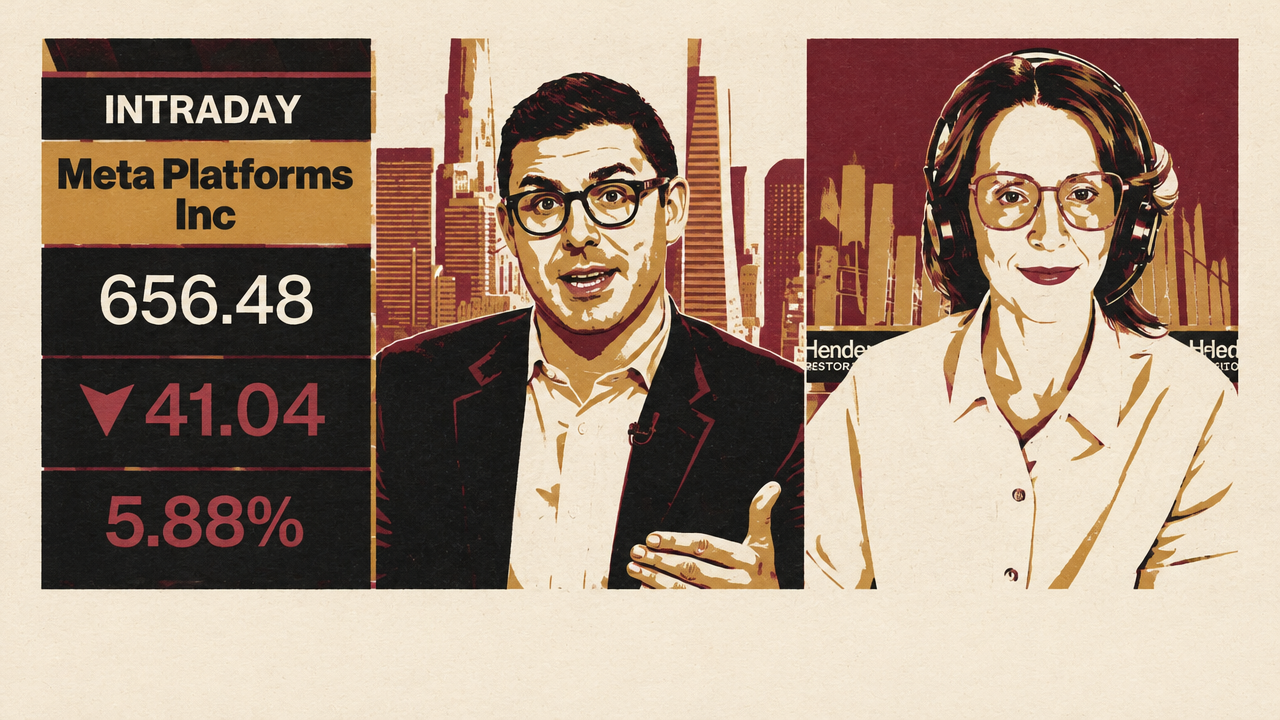
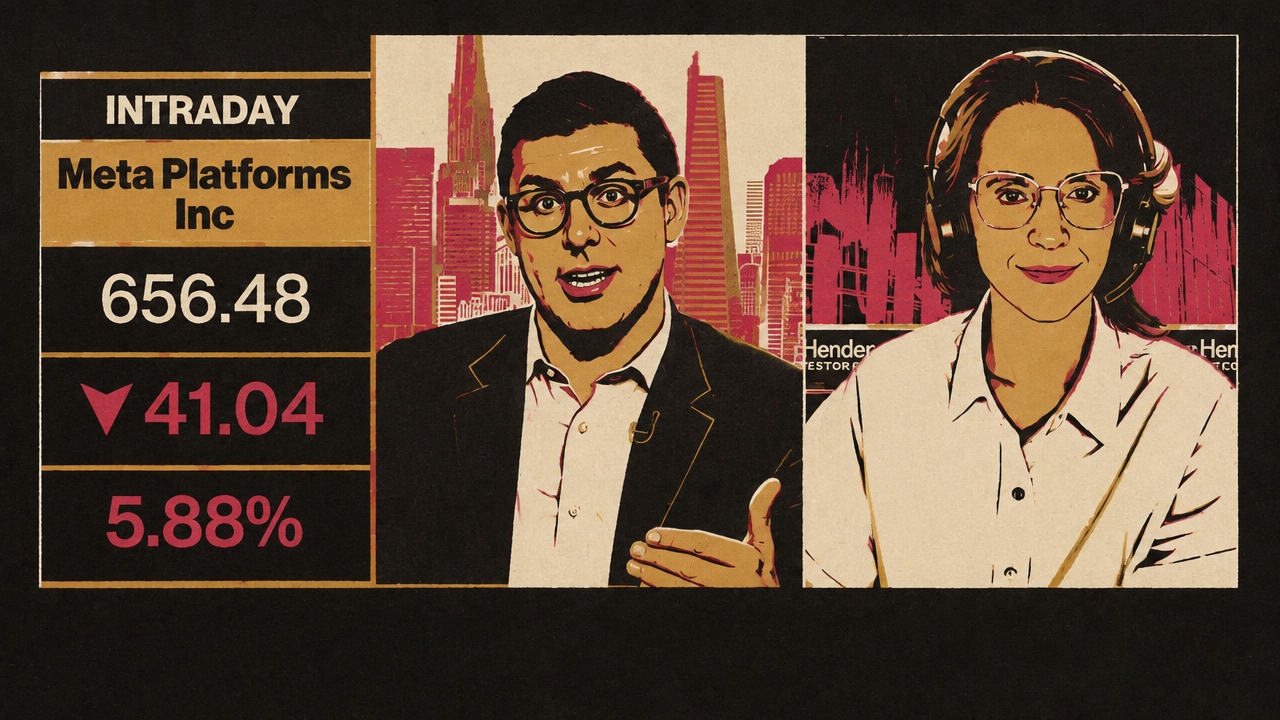
Meta illustrates the gap between financing an AI buildout and showing what it will earn. A new nonvoting share class could provide Mark Zuckerberg with liquidity while preserving his control; a possible capital raise is a separate matter. Janus Henderson portfolio manager Alison Porter said investors had expected Meta to raise capital to support its growth spending, and that uncertainty about the timing could weigh on the stock until the raise occurs.
The question is not only how Meta funds its plans, but how investors judge the spending. Porter said Meta’s advertising business is already benefiting from AI through engagement, ad pricing and ad volume. She also said the business needs to show how newer products such as Meta AI can be monetized. In her account, Meta’s established advertising engine offers a clearer revenue connection than its newer AI products.
Meta does not have a third-party cloud business to provide the same visibility into external compute demand that Porter sees at Amazon and Alphabet. That leaves investors with less direct evidence for assessing what its AI spending will yield. The reported $825 billion in spending commitments cited in the discussion should not be confused with a new capital-expenditure forecast: Meta had not yet guided for 2027 CapEx.
Porter’s broader investment argument is that AI spending needs to translate into revenue growth, improved efficiency or stronger margins. She expects applications and platforms that demonstrate those results to matter more as investors become selective. That is an investor’s framework, not a finding that Meta’s investments—or those of other companies—will produce such returns.
The practical test running through these developments is therefore not whether organizations can buy more compute or announce more capable agents. It is whether flexible infrastructure, secure deployment and products fitted to real work can turn rising costs into durable business results. The evidence remains uneven: usage is widening fastest at frontier firms, vendors are making large system claims, and companies are still working out how to monetize new AI products. The return question is open.