AI Adoption Is Widening the Gap Between Frontier Firms and Their Peers
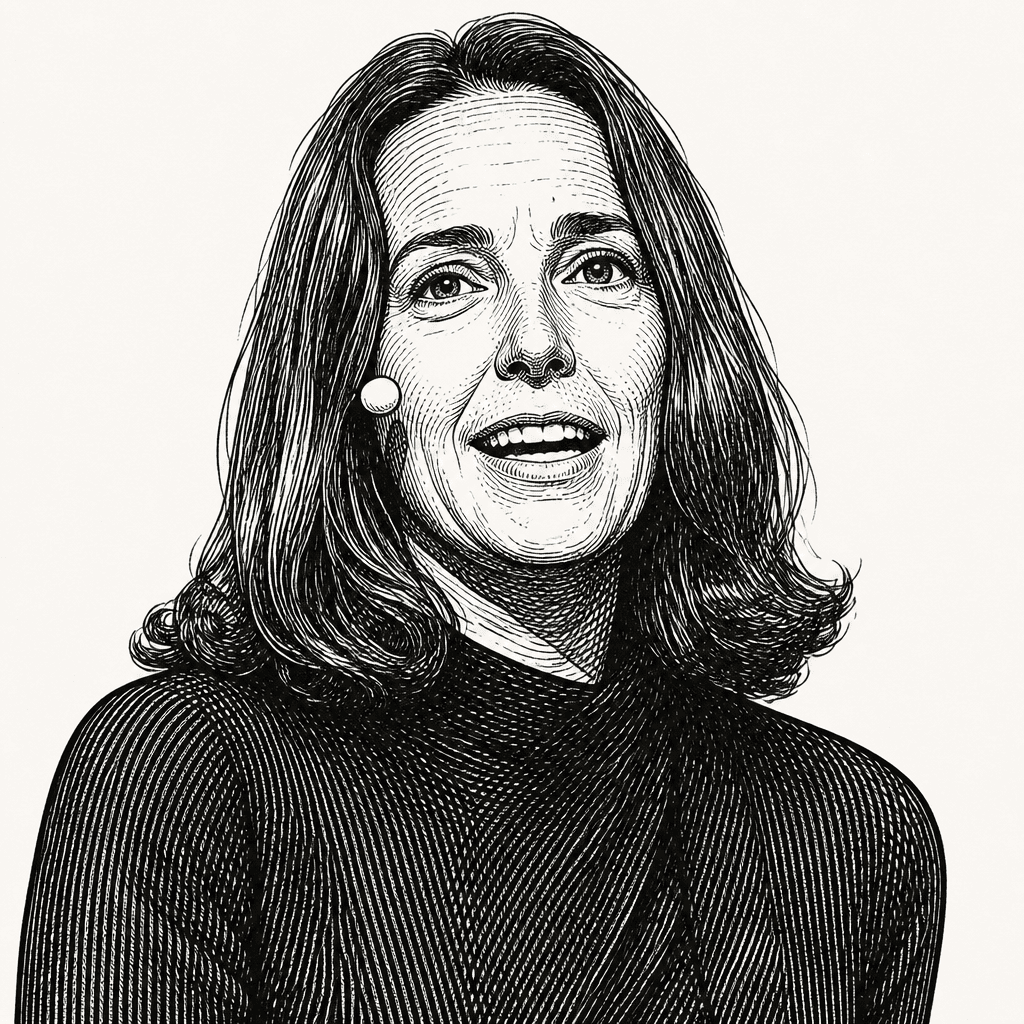
OpenAI CFO Sarah Friar argues that expanding access to AI and managing its risks are inseparable: the company’s mission requires it to make powerful tools available while sometimes holding back models until safety concerns are addressed. In a conversation with Reid Hoffman, she also contends that AI is changing work within jobs, with leading companies adopting agents faster than their peers. Friar says public trust will depend on demonstrated benefits—in healthcare and business, and for communities hosting data centers—rather than assurances alone.
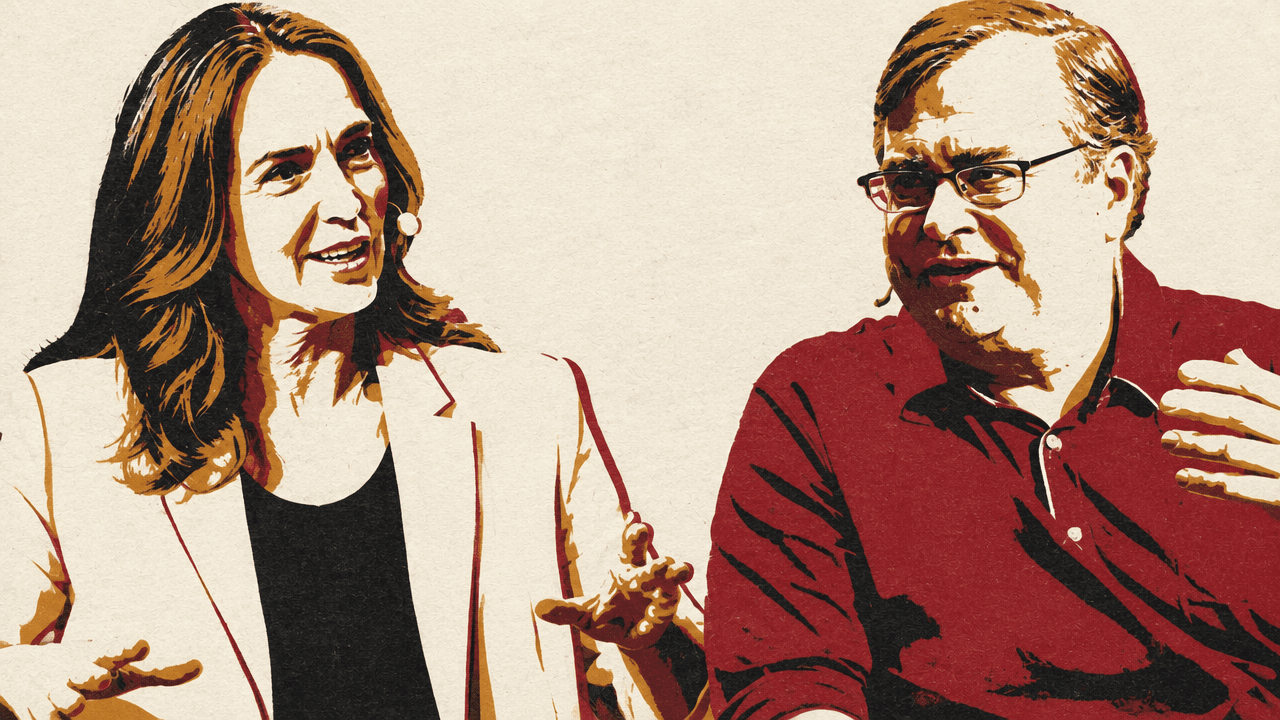
AI’s promise depends on who can use it—and who bears its risks
For Sarah Friar Sarah Friar, the age of AI is more than a new industrial revolution. It is an early shift from asking software questions to asking it to do work, and eventually to having a proactive virtual coworker. She described that transition as reaching from everyday tasks into science and business operations.
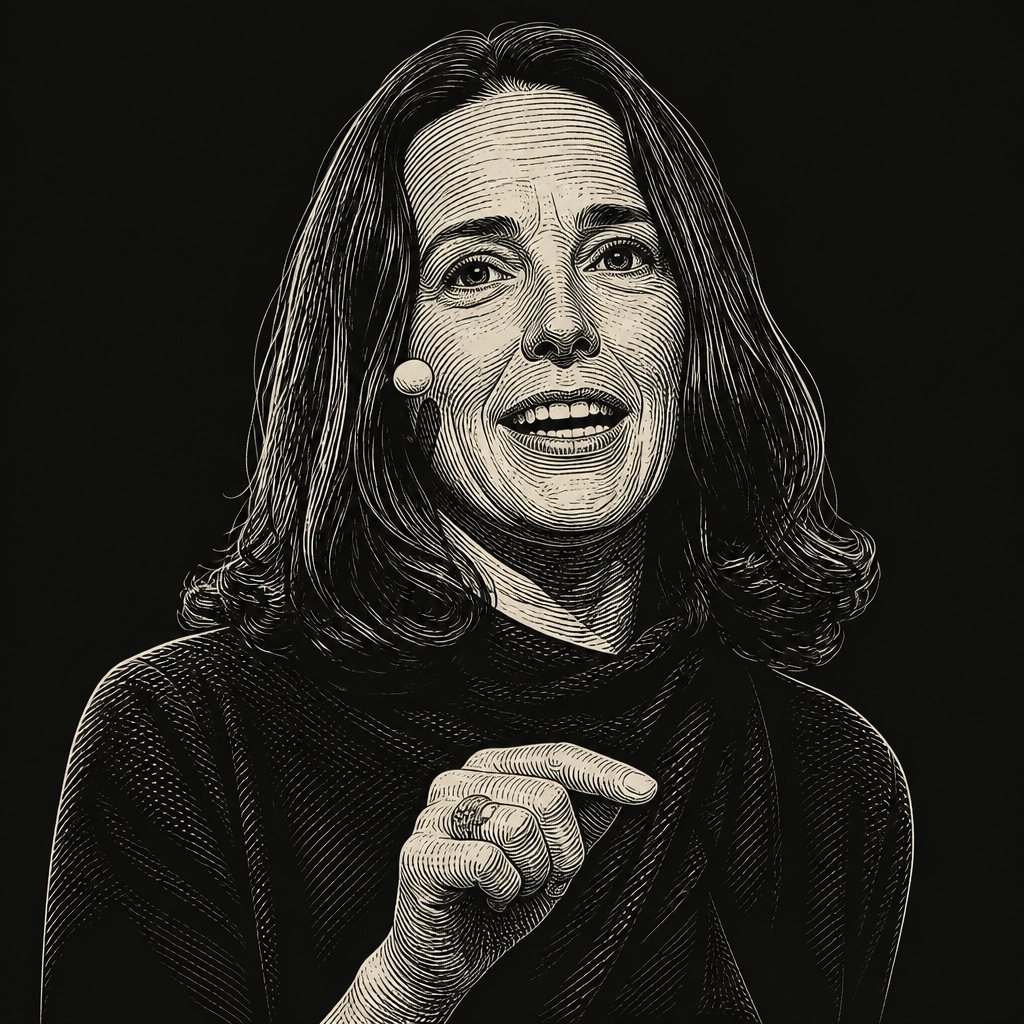
OpenAI’s scale gives the shift a public dimension. Friar said 250 million people use ChatGPT each week—about 3% of the world’s population—and that 90% can use it for free. She connected that access to the company’s mission: “AGI for the benefit of humanity,” not only for people who can pay or work inside corporations. OpenAI is building what she called a durable business model behind free access. The company is also seeing an inflection in its business, she said, with one million paid enterprise users across 89 countries.
The transition from asking to doing brings opportunity and risk together. Friar described people moving from asking ChatGPT questions to using agents, and then toward a proactive virtual coworker. Uses range from asking what to make for a picky child to working on drug discovery and delivery. The same increasingly capable systems can also be used in cybersecurity.
Friar said OpenAI had used an o1 model, before its release, to find vulnerabilities in PHP, and had worked with its maintainers since the end of the summer to fix them before attackers found them. The vulnerabilities, she said, could have affected around 70% of websites. OpenAI had completed that work, but she stressed that the broader security effort was not finished and that the bar would keep rising. She said defenders need access to powerful tools as the risks increase.
Pacing the frontier gives people time to understand what capability changes
Friar said OpenAI uses the phrase “pacing the frontier” to describe giving researchers, the company and, to some extent, the public time to consider the implications of new capabilities. The company had held back its most powerful model while researchers continued work on safety and alignment, she said. That model had solved the Navier–Stokes Millennium math problem and advanced roughly 350 other theorems toward theoretical proof.
For Friar, the significance of such results lies partly in what they could make possible beyond mathematics. She connected progress on fluid dynamics to more efficient artificial-heart valves and data-center cooling. Better cooling, she said, could reduce water use and make discussions with host communities more concrete.
She gave an approximate comparison for a data center using a closed-loop cooling system: about two Olympic swimming pools’ worth of water, or roughly the annual use of 300 households. If improved cooling brought that down to the equivalent of 100 households, she said, it would make for a better conversation with the community.
Making room for that kind of work requires organizational choices. Friar described a recent two-day company offsite devoted to deeper questions about the technology and its consequences. In her experience of corporate America, offsites often focused on revenue, headcount and near-term planning. OpenAI still needs financial discipline, she said, but more of the company’s time now goes toward larger questions about what its work means and how to engage with the world. Pacing, as she described it, includes time to consider what a new capability could mean in practice.
Trust is earned by showing what AI can do in healthcare
Hoffman raised the difficulty of building trust in institutions at a time when, he said, trust is low. Friar’s answer was direct: trust is earned, slowly, through actions. She compared it to filling a bucket that can also be depleted by events.
Healthcare is one place where she sees people experiencing useful AI directly. Friar said that, of 1.2 billion people around the world, about a third ask ChatGPT a health or wellness question each week. In areas she called health deserts, such as West Texas, she said that share can rise to 80% or 90% of users. She described this as a starting point for trust, alongside tools for physicians and health systems.
The possible gains range from research to administration. Friar said Boston Children’s Hospital had provided genetic and diagnostic data and scientific literature to help investigate more than 300 not-yet-resolved diseases. The work had “gotten to 40,” she said, describing the result as answers for families who had not had an answer before.
She also emphasized the routine work that takes clinicians away from patients. Her brother, a doctor in the UK’s National Health Service, works in a hospital unit where he triages emergency patients. Friar said he spends time on paperwork and argued that reducing that work could free clinicians to focus on care.
At the health-system level, she cited a proof of concept with HCA, which she described as the largest hospital chain in the US. The proof of concept showed, she said, that OpenAI could help lower the time a patient spends in hospital by 25%. Friar said patients could get out of hospital faster and into community medicine, without getting sicker. She connected these examples to a broader strategy of serving individual users, smaller medical practices and large enterprises. In her view, trust grows through creating outcomes across those settings, rather than simply telling people AI is great.
The mission gives OpenAI a reason to hold back
Hoffman asked how OpenAI navigates risk while pursuing potential benefits. Friar said the company’s mission provides an internal test: if it fails to manage risk, it cannot achieve that mission. She described holding back models until the company is confident enough to release them, taking time to assess agentic capabilities, and working outside the company to address risks such as software vulnerabilities.
That can mean accepting a short-term business cost, she said, because restraint is mission-aligned and may be better for the business over time. Friar also argued that cyber risk is spreading beyond familiar targets such as banks or companies facing ransomware. She recounted a report about hackers breaking into a French supermarket chain’s systems and raising freezer temperatures, spoiling frozen goods. She said this was the sort of hacking that had not been seen historically.
Friar started her career covering information security and recalled early viruses such as Nimda and Code Red. She sees current risks as part of a longer continuum, but said the speed is increasing. Earning trust, in her view, means explaining that change and providing frontier tools for defense.
She argued that managing these risks cannot be left to OpenAI. Companies, governments and other industries all have responsibilities. Friar described meeting governments where they are and supporting regulation that can keep pace with frontier development. She referred to organizations she called “Cassie” in the US and the AISI in the UK as bodies that can engage with frontier labs. Her examples included company decisions about releases, work to address vulnerabilities and cooperation with institutions outside the company.
Leading firms are pulling ahead in agent use
OpenAI’s economic research team found a widening difference between the companies adopting AI most intensively and the average firm, Friar said. The top 10% of companies, which she called frontier firms, were using about eight times as many agentic tokens as an average firm. In January, she said, the ratio had been about two to one.
OpenAI’s internal use was further ahead still: the company used agentic tokens at 33 times the rate of frontier firms, Friar said. She expects frontier companies to catch up to OpenAI, and more traditional firms to catch up to the frontier, over the next year or two. Companies outside the leading group, she warned, cannot afford to be left behind.
She described adoption as beginning with coding tools and cybersecurity, then expanding into knowledge work and industry-specific applications. OpenAI had just rolled out a virtual assistant for that broader work; Friar calls her own assistant Oona. Companies can apply these tools in particular sectors—such as life sciences, chip design or banking—or across functions. In her finance role, she said, she is trying to operate in ways that were not previously possible.
Infrastructure and access matter to that expansion. Friar said OpenAI had announced it was live on Google Cloud Platform, adding it to Amazon, Azure and Oracle so the company could meet customers across the major cloud providers. She described that availability as a tailwind into 2027.
Geography is another concern. Only 10% of the frontier firms in the research were based in Europe, Friar said, warning that the continent could fall behind as it had to some degree during the internet revolution. She had met Ireland’s Taoiseach in part to discuss how Europe could participate in AI-driven growth. For Friar, adoption depends on whether companies and regions can take part in the transformation and its policy discussions.
AI changes the work inside jobs
Hoffman framed AI as a question of agency: people may fear that it will take away their jobs or their ability to think and act. Friar rejected what she called “extremist conversations” and argued that work is changing within jobs.
OpenAI’s research indicates that people use ChatGPT for about 40% of the tasks associated with their job title, Friar said. In her example, finance workers use it for about a quarter of tasks that are specifically financial. Another quarter involves engineering work, and a quarter involves marketing. Friar said the engineering tasks reflect how people are becoming builders: she had done more coding in the previous two months than since her earlier experience as an engineer. Now, she said, the coding language for her is English; she talks to her computer.
She offered examples of people gaining confidence and capacity through those tools. At an event in Dublin for 250 to 300 women, Friar said participants spoke about feeling more empowered. One recalled working late on a startup pitch deck after putting her children to bed; another described using ChatGPT to understand financial terms that had once made fundraising meetings intimidating.
Her second example was Linda.ai, a company founded by two sisters in Dublin. Their father, a dentist, had a receptionist named Linda who was exceptionally effective. The sisters built a system to replicate some of Linda’s work. Friar said it contacted 600 people in the dentist’s network to invite them to book appointments; three days later, 250 new patients had been scheduled.
Friar said the result was good for the dentist, the patients and “teeth.” She sees it as an example of agency returning to the world in practical ways, and said she is especially optimistic for builders who can use AI to act without first acquiring every technical skill themselves.
Communities should decide what support around data centers looks like
Friar was heading to Savannah, Georgia, to visit a site planned for a large data center and spend time with the surrounding community. She acknowledged that data centers can be contentious, while arguing that they can also bring high-skill jobs, including work for electricians and HVAC specialists. In Abilene, Texas, she said, OpenAI had supported efforts to give people relevant skills, and unions were interested in the work.
In Georgia, the company had provided an $80 million grant for the community to allocate over five years, Friar said. The community’s first request was funding for free school lunches. The program cost $4.5 million, and uptake in free lunches had gone up 50% since it began, she said.
Friar said the example was not a reason to congratulate the company, but a way to describe how trust is earned: listen to concerns, explain how they are being addressed, show up, and ask communities what they want rather than telling them what they need.
She connected community engagement with a wider argument about growth and reindustrialization. Friar said AI was adding about a percentage point to GDP, depending on how the effect was measured, and argued that the gains should extend beyond the United States to Europe and the rest of the world. The task, she said, is to embrace the technology while managing its risks.