Napoleon and Churchill Built Command Through Study and Conviction


Historian Andrew Roberts argues that Napoleon and Winston Churchill’s capacity for command was built through military education, historical study and the confidence to act under pressure. He describes their sense of purpose as a “holy fire”: not religious faith, but a conviction that their actions were good, right and necessary, even when command carried a human cost.
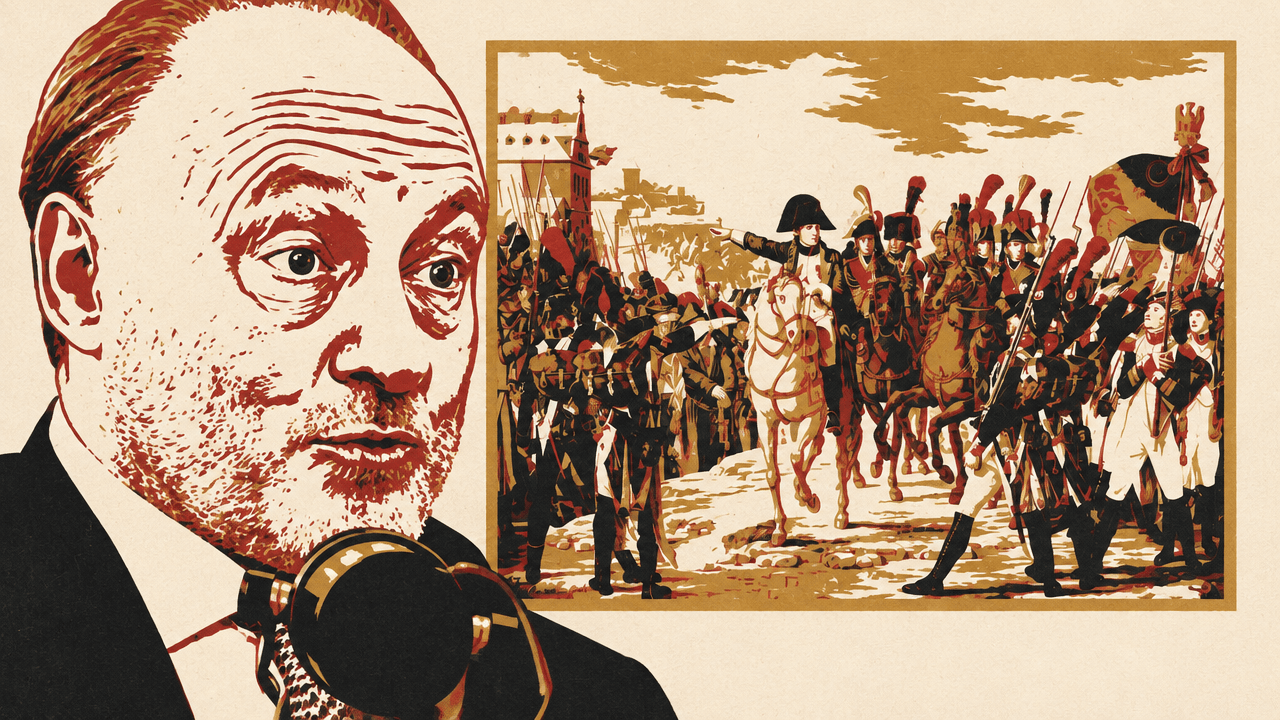
Command rested on preparation and conviction
Andrew Roberts sees Napoleon and Churchill’s capacity for command as something formed through education and thought, not simply temperament. Both attended military colleges, and as young men they studied war through figures such as Julius Caesar and Alexander the Great. As they grew older, the scale of their responsibilities—and the number of men under their command—increased. Roberts links their early preparation to their later ability to make what he calls “shatteringly important decisions.”


He describes their confidence as egotism in a negative light, but as self-confidence in a more positive one: a quality that helped them act under pressure. Training and historical study worked alongside a strong sense that their actions were justified. Roberts calls that conviction a “holy fire,” clarifying that he means neither man was religious. He means a deeper belief that what they were doing was good, right, and necessary.
There was a sort of holy fire that they both had.
Tim Ferriss makes the human cost explicit, asking about the deaths of friends for which the two men were responsible. Roberts says those deaths did not keep them awake at night. In his account, the men’s sense of purpose accompanied the burdens of command: the conviction that their actions had to be taken, even when the consequences included the deaths of people close to them.


Reading shaped their judgment, but not in the same way
Roberts presents reading as part of the intellectual preparation behind command. The details differ. Churchill never attended university; as a young officer in India, he educated himself by reading philosophers and writers. Roberts singles out the nineteenth-century English historians Edward Gibbon and Thomas Macaulay. Their influence, he says, reached Churchill’s writing and later oratory, as well as his philosophical outlook.
Napoleon, Roberts says, was even more literary: he read extensively as a young man and wrote short stories and books. Roberts does not identify particular authors who shaped Napoleon as he does for Churchill. Instead, he emphasizes the place reading occupied in both men’s lives. Napoleon had few friends in his early twenties. Churchill read while his colleagues and comrades slept through the midday heat in India.
For Churchill, then, Roberts names specific writers and describes their influence on his style and outlook. For Napoleon, he stresses literary interests and early social distance. In both cases, reading set them apart from their contemporaries, though Roberts gives different accounts of what that reading contributed to each man.
Churchill’s sense of duty joined privilege to service
Roberts connects Gibbon and Macaulay to Churchill’s political outlook, which he describes using the period label “Whig.” He loosely compares these Whigs with modern liberal conservatives and associates them with noblesse oblige: the idea that privilege entails a duty to work for the community’s greater good.
When Ferriss asks what the phrase means, Roberts describes an obligation to protect widows and orphans, comparing it with a medieval, chivalric ideal. He says Churchill believed in that duty. Reading had shaped Churchill’s outlook; noblesse oblige gave that outlook a practical direction, tying privilege to service.
Together, Roberts’s account links command to both preparation and purpose. Military education and sustained reading supplied intellectual foundations; confidence and a conviction of duty helped Churchill and Napoleon act as their responsibilities grew.