Roberts Argues National Confidence Requires Remembering Both Wrongs and Achievements


Historian Andrew Roberts argues that Britain’s declining pride in its history reflects a public account of the past that emphasizes the British Empire’s abuses while giving too little weight to achievements such as the abolition of slavery. He says that imbalance weakens national confidence by making it harder for people to feel pride in the country’s future. Roberts draws a parallel with the removal of a statue of Thomas Jefferson, arguing that acknowledging historical wrongdoing need not erase other achievements worth remembering.
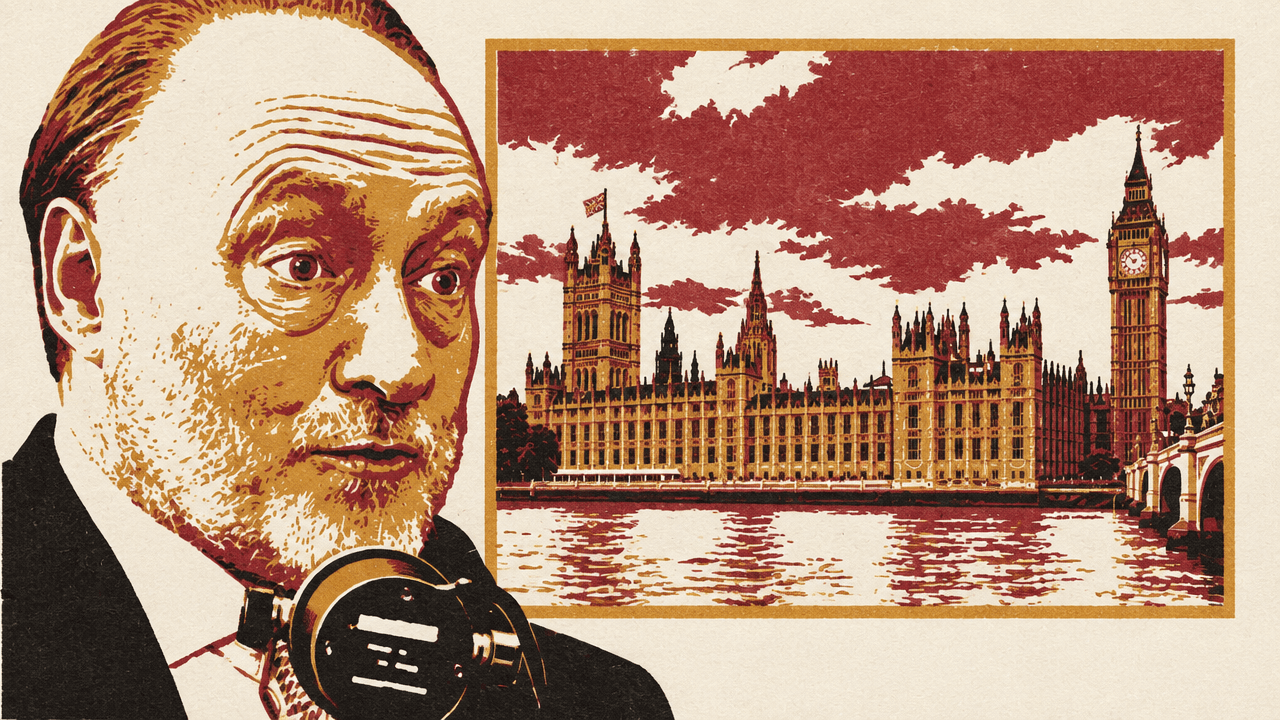
National confidence depends on what a country chooses to remember
Andrew Roberts says he is pessimistic about Britain, though less so about the United States, which he describes as “still such a rich and innovative country.” His concern about Britain is bound up with the political use of history: he wonders whether the country still believes in itself “in the way that we did when I was growing up.”


Roberts links that question to more than changing judgments about particular historical events. He argues that a country’s account of its past affects whether people feel pride in its inheritance—and, in turn, whether they can feel pride in its future. Britain, he says, has produced “some pretty extraordinary and wonderful things for the world.” If those achievements are missing from the account people inherit, he sees less reason for them to identify with the country’s prospects.
The issue, in his telling, is the balance of public memory. Roberts does not describe pride as a judgment that everything a country did was admirable. His argument is that the wrongs of the past can become so dominant in how history is presented that other parts of the record disappear from view. He sees that imbalance as consequential because national confidence depends, at least in part, on seeing something in the past that is worth carrying forward.
That connection between remembrance and confidence is what links his British and American examples. In Britain, Roberts points to attitudes toward the Empire and the country’s role in abolishing slavery. In the United States, he turns to the removal of a statue of Thomas Jefferson. In each case, his concern is not only what people think of a particular institution or founder. It is whether criticism of historical wrongs leaves room to recognize achievements that, for him, help explain what is valuable about the country.
Roberts cites a fall in pride but leaves its cause as his interpretation
To illustrate his concern about Britain, Roberts gives figures for the share of people proud of British history. He is unsure whether the earlier figure dates to 2015 or 2010: he recalls that 86% were proud then, compared with 56% now.
Roberts attributes the decline to what he calls a sustained attack on the British Empire. He says attention has focused on its “horrors” and “monstrous things,” while Britain’s part in the abolition of slavery is forgotten. The figures establish the change he wants to draw attention to; his explanation is that the way the Empire is discussed has contributed to it.
That explanation makes the selection of historical emphasis central to his argument. Roberts sees a public account that foregrounds imperial abuses and leaves less space for other parts of the record. He names abolition as an example of what he believes is being overlooked. His point is not that those histories cancel one another out, but that concentrating on one while neglecting another can shape whether people regard the national past as something to be proud of.
For Roberts, the movement from judgment of the past to judgment of the future is direct: if people are not proud of their ancestors or what they produced, he finds it difficult to see why they would be proud of the country’s future. The polling figures, as he presents them, matter because he reads the decline in pride as a sign of weakening attachment. They do not, by themselves, establish the cause of that decline; that is the interpretation he offers.
Jefferson shows why Roberts wants criticism to coexist with remembrance
Roberts extends the same concern to the United States, while making clear that he is less pessimistic about it than Britain. He points to the removal of Thomas Jefferson’s statue from New York City Hall and calls the refusal to admire the founders “a form of cultural suicide.” His example turns on whether a founder’s wrongdoing should determine how the founder is remembered.
Roberts acknowledges that Jefferson owned slaves. He also emphasizes that Jefferson wrote a Constitution that, in Roberts’s words, has survived for a quarter of a millennium. He puts Jefferson alongside Washington and the other founders, whom he describes as brave enough to stand against the most powerful empire in the world. Those achievements and risks, Roberts argues, are reasons Jefferson deserves a statue despite the wrongs he acknowledges.
The example clarifies the standard of remembrance Roberts is advocating. He is not asking for a history in which founders are treated as faultless; he names Jefferson’s slaveholding himself. Rather, he argues that acknowledging a grave failing need not make other achievements irrelevant. In his view, removing the statue risks making the failure the only part of the person that remains publicly visible.
That is the same tension he identifies in Britain. His comparison does not make the histories identical; it connects them through a shared question about what public memory permits people to inherit. Roberts calls monuments a “living link with the past” and says that pulling them down breaks that link. He adds that the same kind of thing is happening in Britain.
Across both examples, his worry is that a nation can lose confidence when criticism narrows its picture of the past to its worst acts. The alternative he implies is not uncritical celebration, but remembrance broad enough to hold wrongdoing and achievement together. For Roberts, that fuller account is part of what allows people to see a future worth being proud of.