Board Bets Tabletop Touchscreens Can Make Video Games Social Again
 Jason Calacanis
 Brynn Putnam
 Alex Wilhelm
 AJ PiplicaThis Week in StartupsWednesday, June 24, 202621 min read
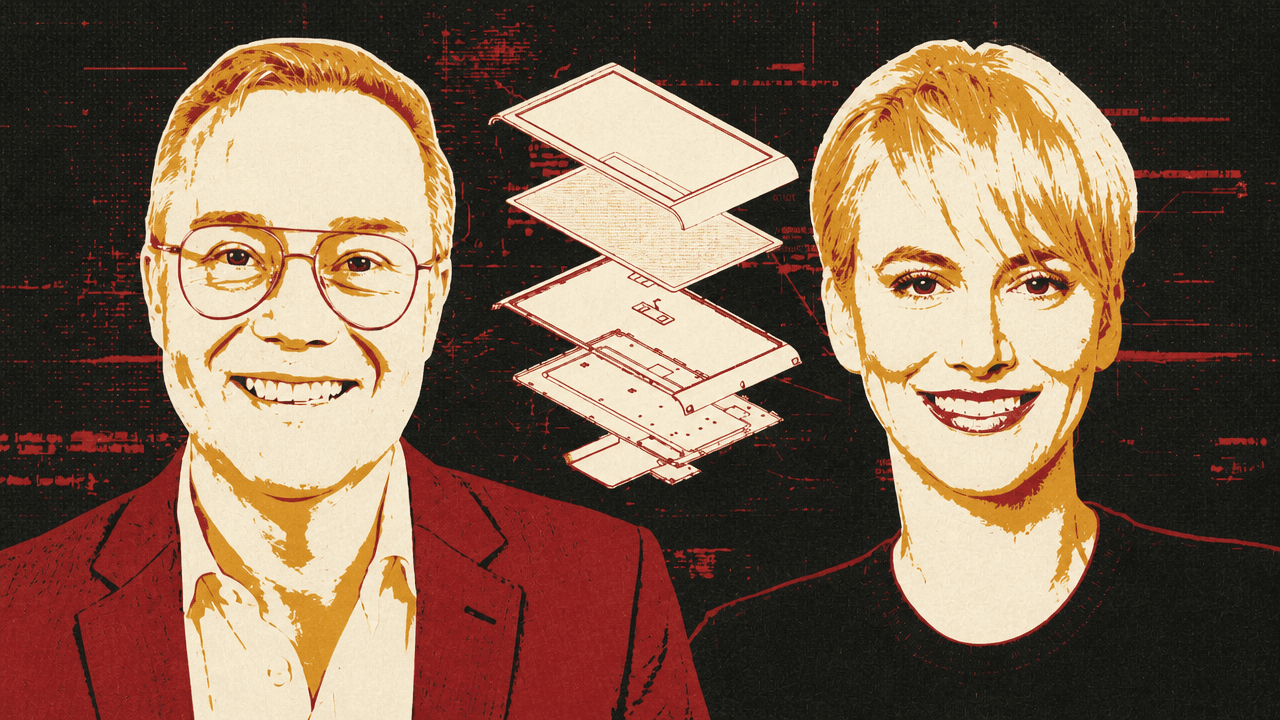
Brynn Putnam, founder and CEO of Board, argues that video games can become more social by moving the screen from individual devices to a shared tabletop. In a This Week in Startups interview, she describes Board as a $399 “face-to-face gaming console” that uses a 24-inch touchscreen and physical pieces to combine the interactivity of video games with the accessibility of family board games. The broader case is that category-creating hardware has to make the experience legible before the market is obvious.
Board’s wager is that the screen can move back into the room
Brynn Putnam describes Board as “the first face-to-face gaming console”: a 24-inch touchscreen designed to sit flat on a table, with players gathered around the same display and using physical pieces as controllers. The product is not presented as a conventional board game, and not as a standard video-game console. Putnam’s claim is that Board combines the interactivity of video games with the tactile, shared qualities of tabletop play.


The central technical trick is that the screen recognizes objects, not just fingers. When Jason Calacanis framed it as a “giant iPad” with some way of knowing what has been placed on it, Putnam said the distinction matters: ordinary touchscreens recognize a limited number of touch points, typically enough for fingers, but Board needed to recognize unlimited touch points and physical objects.


The pieces do not contain sensors or electronics. Putnam said each has a unique conductive pattern built into its surface, made from a blend of capacitive and non-capacitive plastic. Board’s software stack processes raw touch-sensor data using embedded AI to detect and track those pieces. In her example, the system can know that a “Jason” piece is on a particular part of the screen, facing a particular direction, and using that orientation to shoot a basket.
That software and data layer is proprietary, according to Putnam. Board uses open-source frameworks, but she said the models are trained on the company’s own custom dataset and that the platform was built “entirely from the ground up.”
So it knows, um, this is the Jason piece. It's over here facing this direction. It's shooting a basket. And so we can play games where the pieces are actually controlling the digital screen in real time.
The product demo showed families and groups placing pieces on a large tabletop screen, including a cooking game where players place ingredient-like objects onto the display. The launch video’s on-screen text framed the company simply: “Board” and “It’s a game changer.” Later, Board’s website was shown with an overhead image of children playing around the device and the line: “The first ever face-to-face video game console designed to bring everyone together.”
Putnam’s argument is not that screens are going away. It is that the screen’s social position can change. Instead of each person holding a private rectangle that interrupts eye contact and pulls attention away from the room, Board places the screen between players as a shared surface. Calacanis connected that to his own parental anxiety about device usage, app-level controls, and the desire to recreate memories of doing things together. Putnam’s answer was that this problem was part of Board’s origin: family time across a wide age range had become hard to organize through either modern video games or traditional board games.
The wedge is not board-game purists, but families who cannot get everyone into the same game
Brynn Putnam is explicit that Board is category creation, not a pitch to the most orthodox tabletop gamers. Calacanis raised the likely criticism from board-game communities: that a game with a screen is not technically a board game, or that digital assistance violates the point of tabletop play. Putnam did not contest that some board-game or video-game devotees may find Board outside what they want. Her answer was to define a different customer: people looking for a fun, accessible way to build memories with people they love.
The product is designed around a practical family problem. Putnam said that after Mirror, her life had changed: she now had a three-year-old, a nine-year-old, and three stepchildren aged 18, 20, and 22. Getting that range of ages and interests into one activity was “virtually impossible.” Modern video-game controllers had become too complex for less experienced players. Board games created a different failure mode: the family either replayed the same familiar game or spent time reading and arguing over long rulebooks before discovering the game was too hard for the youngest or too easy for the oldest.
Board’s design answer is to let one game support different levels of participation. Putnam described a kitchen game similar to Overcooked, where players collaborate to manage a busy kitchen. Her youngest child can play as the cleaner, managing the sponge and still having fun. Older players can memorize recipes and think strategically about sequencing tickets for the best payoff. The same game can include a simple role and a more complex optimization layer.
That point matters because Putnam and Calacanis repeatedly returned to onboarding. Calacanis used Mancala as an example: playing with his daughter using her improvised rules was fun, but eventually strategy games depend on shared rules. He also cited games like Settlers of Catan as difficult for new players because the first several plays can be punishing before the game opens up. Putnam’s comments imply a product priority rather than a fully specified feature list: reduce the setup and learning friction that prevents mixed-age groups from getting into a game together.
Putnam’s North Star is “fun, accessible, full family entertainment.” The screen is acceptable only if it supports that aim. In her formulation, it should not take players into isolated experiences; it should bring them together.
We take the interactivity of video games and we take the tactile feel of playing with physical pieces and sitting around a shared experience, but we're creating something that's fundamentally new.
That newness also affects market definition. Calacanis later described Board as the kind of product that may confuse investors because it does not fit neatly into an existing total addressable market. Serious board gamers may reject it; serious video gamers may not consider it deep enough; Dungeons & Dragons purists may see it as sacrilege. His broader lesson was that founders creating new categories often have to ignore market maps based only on existing categories.
The business model starts with low-margin hardware and moves toward games, pieces, accessories, and creation
Brynn Putnam said Board sells for $399 and includes seven games. Additional games are sold through a game store at roughly $35, and those games come with their own custom piece sets. A subscription product is planned for the end of the year, centered on creator tools that let users create their own games and custom pieces.
Putnam said the company is trying to push hardware to the lowest price point possible and expects the price to evolve as the product matures. The near-term strategy is to sell hardware at “low to no margins” and build long-term customer value through games, accessories, piece storage, cases, premium pieces that unlock new experiences, and the creator membership.
The usage claim she offered was strong for an early hardware platform: 85% of Board members are active monthly, playing more than 30 sessions per month. She used that engagement to argue that Board compares favorably with other family entertainment spending, including a family trip to the movies that may cost $100 to $150 after tickets, popcorn, and candy.
Calacanis focused on the economics of physical pieces as potentially “sneaky brilliant.” He compared the emotional pull of custom or collectible pieces to children’s toy lines, card packs, and premium franchise collectibles. Putnam sharpened that with a personal example: over the weekend, her daughter used Board’s creator product to make a mermaid piece that looked like herself. Putnam said she would pay “whatever it takes” to have that physical piece delivered because her daughter had imagined and created it herself. In Board’s model, that object would not just be a keepsake; it could unlock new games and experiences.
Putnam described Board as several businesses at once: “Nintendo meets Roblox meets Lego meets a great collectibles business.” That complexity is also the opportunity. The platform is not only a device and not only a store; it has hardware, software, user-generated creation, physical goods, and potentially licensed intellectual property.
The company is already moving toward a marketplace. Putnam said the first community game is scheduled to launch the following month: a pinball game using robots and spaceships from Board’s arcade game. The business terms may differ by game. In some cases Board may use revenue sharing; in others it may buy the game outright. Games are submitted for review before appearing in the community section, with the review intended to ensure quality and safety.
That curation matters because Board is not trying to be a fully open platform. Putnam said building a game on Board may itself be “one of the most fun games on Board,” and many users may only create experiences for themselves and friends. But broader distribution goes through Board’s review process.
The game examples shown and discussed suggest how Board is positioning its catalog. The site displayed titles including Spycraft, Strata & Daily Build, Omakase, Save The Bloogs, and a Retro Arcade Collection. Putnam explained that Chop Chop is the cooking game; Omakase is a strategy game about building sushi sets; Save The Bloogs is Board’s interpretation of Lemmings, a physics puzzle in which players save small blue characters; Spycraft is an “escape room in a box”; Mushka is a virtual pet similar to Tamagotchi; and Heist uses mirrors to route lasers through burglary puzzles.
| Board game or release | How it was described |
|---|---|
| Chop Chop | A cooperative cooking game similar to Overcooked. |
| Omakase | A strategy game about building different sets of sushi. |
| Save The Bloogs | A physics puzzle game, described as Board's interpretation of Lemmings. |
| Spycraft | An escape-room-in-a-box puzzle game about spies unlocking a global mystery. |
| Mushka | A virtual pet, described as similar to Tamagotchi. |
| Heist | A puzzle game using mirrors to route lasers through heist puzzles. |
| Thrasos | An upcoming strategy game compared on-screen to Risk. |
| Board Tabletop | An upcoming tabletop product for Dungeons & Dragons-style play, using web-based virtual tabletop maps or custom maps with Board's piece tracking. |
The upcoming release page shown during the interview placed new titles in familiar analogies: The Heist for fans of chess or checkers; Thrasos for fans of Risk; Board Tabletop for Dungeons & Dragons-style play using a web-based virtual tabletop or custom maps with Board’s piece tracking; and Bloogs Blitz for fans of Angry Birds or Cut the Rope. The pitch is not to port these games directly, but to orient customers quickly by reference to known patterns.
Board is avoiding simple ports in favor of native IP experiences
Jason Calacanis pushed on licensed intellectual property because Board’s hardware seems naturally suited to recognizable worlds and collectible objects: Star Wars, Marvel, Lord of the Rings, Grogu, Ahsoka, Mandalorian characters, or even a version of the hologram chess game from Star Wars. Brynn Putnam said Board has been in conversations with the large IP owners Calacanis mentioned, but she drew a line between simple ports and experiences native to the platform.
Her preferred analogy was Monopoly Go: take beloved characters, worlds, and IP, then reimagine them for the platform in a way that feels native to its technology. For Board, that means the physical pieces and digital worlds need to make sense together. Putnam said early investors and customers encouraged the company to bring over familiar games such as Monopoly or Checkers. Board has steered away from that approach in favor of partnerships that can deliver something new, native, and authentic to the platform.
A touchscreen version of Monopoly with pieces would be easy to understand, but that is not the direction Putnam described. Her emphasis is on experiences that use the combination of object recognition, shared screen, and physical pieces in a way that feels specific to Board.
Dungeons & Dragons is the most immediate test of that logic discussed in the interview. Putnam said Board’s D&D tabletop product launches in July, and that it naturally lends itself to a larger surface and map. If the community receives it well, she sees an opportunity for a much larger board. Calacanis extended that into a possible luxury-table ecosystem: customized poker-style or tabletop-gaming furniture with larger embedded surfaces, aimed at households that want to become the neighborhood hub for play.
Putnam did not commit to specific future hardware profiles beyond the larger-board opportunity she tied to tabletop play. What she did commit to is the product principle: licensed worlds and familiar game types have to be reimagined for Board rather than merely copied onto a screen.
Putnam’s hardware lesson is to fund the experience before the fully engineered product
Brynn Putnam said Board took about two years to reach launch, which she considered remarkably fast. She attributed that to the team’s prior experience. Her previous company, Mirror, was an interactive smart mirror that streamed workouts into homes, so she already understood screen-based consumer hardware. Board’s CTO, Ryan, brought a background in computer vision and machine learning from self-driving cars, along with a team that had a head start on the screen-recognition challenge.
The comparison with Mirror was instructive. Putnam had no technology background when she started Mirror. She had been a professional ballerina at New York City Ballet, then moved into brick-and-mortar fitness studios. Mirror began as a napkin sketch and a nonfunctional prototype used to validate that a screen could be seen through a one-way mirror and that the experience was engaging.
Her early manufacturing lesson was to involve manufacturers sooner rather than design in isolation. She had heard stories of founders spending time and capital designing hardware that factories could not manufacture, or reaching manufacturing after running out of money. With Mirror, she worked early with a local manufacturer to understand practical challenges around the custom mirror and frame.
Mirror was produced in Mexico because it was large and heavy enough that shipping from Asia reduced the advantages of overseas production. Putnam said the Mexican factory had experience with digital picture frames and digital signage, and that it was run by a woman and operated almost entirely by women. She described it as an “incredible experience” for a female-operated company to grow with that workforce.
Board’s manufacturing path is different. Putnam said this time it made sense to manufacture in Asia, through a tier-one contract manufacturer in Thailand with experience in display products and work for companies such as Peloton, Portal, and Nook. Rather than owning and sourcing every component as Mirror had, Board worked closely with the manufacturer and leveraged its touchscreen experience. That shaved significant time from the process.
The fundraising lesson Putnam emphasized is not to over-engineer the earliest version. Because she does not come from a technical background, she said she focuses on validating the experience for investors. Board’s early prototype did not have all the technology working, but it showed what it felt like to sit around a shared experience using physical pieces as controllers. The company raised its first round on that basis.
Fundraising is storytelling, just like talking to your customers is storytelling. So you have to build what you need to tell that story.
Her qualification was that founders still need a clear understanding of how they will build the final product. But the early goal is to do the bare minimum required to make the customer experience come alive: the brand, the use case, and the emotional logic of the product.
Distribution followed the same confidence-building logic. Board did not use Kickstarter because Putnam did not want customers to feel they were funding development or taking quality and shipping risk. The company launched direct-to-consumer for the prior holiday season and sold out its 10,000 launch units within a few weeks. At the time of the interview, Putnam said Board was available for purchase at board.fun.
Hermeus makes the category problem industrial instead of domestic
The second company discussed, Hermeus, is not about the dinner table. It operates in a different domain and on a different risk curve. But it gives the article’s broader founder question a harder version: how do you make something unfamiliar concrete enough that customers, investors, and partners can fund progress before the final category is obvious?
AJ Piplica, Hermeus co-founder and chairman, joined from the company’s factory in Atlanta, standing in front of the Quarterhorse Mark 2.2 airplane. He described it as the company’s second supersonic jet and said it should be out of the factory in the next few weeks. Alex Wilhelm framed Hermeus’s project as a hypersonic autonomous jet, with hypersonic meaning five times the speed of sound.




Hermeus’s North Star is Darkhorse: a hypersonic, reusable aircraft, faster than the SR-71, smaller than the SR-71, and with no person onboard. Piplica framed its military value as the ability to operate “basically with impunity” in almost any airspace, giving U.S. and allied military leaders the kind of asymmetric advantage he associated with stealth technology and precision-guided weapons.
The reason to remove the pilot is partly strategic and partly operational, in Piplica’s account. He pointed to the risks created when aircraft are shot down and pilots become the object of search-and-rescue operations or potential prisoner-of-war crises. He cited modern conflicts, including Ukraine and Iran, as evidence that uncrewed systems are the future of warfare. Wilhelm added that recent military aircraft crashes make the safety argument obvious: if the system can operate without a person onboard, crashes do not have the same human cost.
At Mach 5, human piloting is not the model. Piplica said these aircraft will fly more like rockets: no human pilot in the loop, with autonomy handling flight and humans potentially making high-level command-and-control decisions “on the loop” rather than physically flying the aircraft. That framing made Hermeus hard to categorize in the same way Board is hard to categorize, though in a different market: reusable like an aircraft, autonomous like a rocket, and designed around a mission profile that does not map cleanly onto existing procurement categories.
Chimera has to make a turbine work to Mach 3 before a ramjet can take over
Hermeus’s propulsion system, Chimera, is a turbine-based combined-cycle engine: a turbojet for lower speeds and a ramjet for higher speeds. A technical diagram shown during the discussion labeled two operating modes: “Mach 0-3 Turbojet Mode” and “Mach 3-5 Ramjet Mode.” It also showed a pre-cooler in the lower-speed path and air bypassing the turbojet in ramjet mode.
| Chimera mode | Speed range shown | What Piplica said it does |
|---|---|---|
| Turbojet mode | Mach 0-3 | Uses a gas turbine engine, with incoming air cooled by a pre-cooler so the engine can operate at higher speed. |
| Ramjet mode | Mach 3-5 | Routes air around the turbojet and uses shock waves to compress the air, eliminating the need for a mechanical compressor and turbine in that flow path. |
Piplica said the first challenge is getting an off-the-shelf gas turbine engine to about Mach 3, roughly 30% to 50% faster than it was designed to go. Hermeus does that with a pre-cooler that cools incoming air so the engine does not melt. Wilhelm clarified the physics: at those speeds, incoming air is compressed and heated, so it has to be cooled before use. Piplica said that if Mach 3 air is slowed to a stop at the front face of a gas turbine, it heats to about 800 degrees Fahrenheit, enough to melt aluminum and many other materials.
That heat also hurts performance. Turbojets create thrust by raising the temperature of high-pressure flow and exhausting it through a nozzle. If the incoming air is already very hot, there is less useful temperature rise available to generate thrust.
After Mach 3, the ramjet becomes the simpler and more effective device. Piplica called a ramjet “literally the simplest aero propulsion device” in the textbook: a tube with fuel injectors and a nozzle. It uses shock waves, which occur naturally at supersonic speeds, to compress air. Because there is no mechanical compressor, there is no need for a turbine to drive that compressor.
The transition between the two systems is the hard part. Wilhelm asked whether anyone had flown a hybrid turbojet-ramjet like this before. Piplica said it had never been done in the sky. Lockheed and Aerojet Rocketdyne had done it in the lab, taking roughly six years and $250 million, while the closest flown analog was the J58 engine that powered the SR-71, which bypassed some turbine flow but not all of it.
Hermeus has not yet flown Chimera. Piplica said the company has tested it on the ground at two scales. The aircraft behind him, Quarterhorse Mark 2.2, will be the first to fly the pre-cooler, later this year. The ramjet portion follows after that.
Quarterhorse turns a hypersonic ambition into one de-risked aircraft per year
Quarterhorse is the program Hermeus uses to de-risk long-duration, high-speed flight. AJ Piplica said the company aims to build roughly one new airplane per year, with each aircraft removing one major unknown. He invoked Kelly Johnson’s adage from Skunk Works: “one miracle per program.” Alex Wilhelm joked that Hermeus seemed to be attempting one miracle per year.
The first step was not a full aircraft. Piplica said Hermeus had to “teach rocket people how to build airplanes,” because there was nowhere to hire a team experienced in building a brand-new airplane every year. That capability existed in the 1950s and 1960s, he said, but not in the current aircraft industry. The rocket industry, by contrast, still builds and iterates quickly, which is why SpaceX is a model for Hermeus.
Quarterhorse Mark 0 was effectively a jet-powered go-kart, built to drive around an Air Force runway at 50 miles per hour. Quarterhorse Mark 1 then had to fly. It flew in May of the prior year, though Piplica said the company “skirted the definition of flight” with a roughly 30-second flight 50 feet off the ground. The point was to fly the airplane and obtain the approvals and operational experience required to do so.
Quarterhorse 2.1 achieved its first supersonic flight 364 days after Mark 1 flew, reaching about Mach 1.21. Piplica said the next goal is to push speed toward Mach 1.5 or a bit beyond. Hermeus has also integrated a weapons rack and plans to begin flying with stores and dropping objects from the aircraft.
The weapons discussion led to a strategic point about range. Piplica said the aircraft’s F100 engine provides enough thrust to carry external stores at high speeds. Releasing weapons such as AMRAAMs from high speed and high altitude can extend their range. In his formulation, range is the name of the game in Ukraine and the Pacific: “if you’ve got a longer arm, you’re probably gonna win.”
Wilhelm then reframed Darkhorse as a “reusable first stage” for munitions: a platform that carries weapons closer to target conditions and lets them fly farther. Piplica accepted the analogy. That exchange made the aircraft/rocket ambiguity concrete without needing a new category label. Hermeus is not building a rocket in the literal sense, but Piplica’s military value proposition overlaps with what a reusable booster does for payloads: put them in a better starting position.
Quarterhorse 2.3 is expected to move toward Mach 3. Piplica said it will include the pre-cooler and a high-temperature metallic airframe, unlike the aluminum aircraft in the current series. It will also carry the fuel required for those conditions. The purpose is to reach the speed regime where a ramjet can start.
Mark III brings the full Chimera system: ramjet, pre-cooler, and gas turbine together. Piplica said the airframe is broadly similar to 2.3, so the step from the high-temperature Mach 3 aircraft to the Chimera aircraft is smaller than it might sound.
The final major challenge before a Darkhorse-style production concept is long-duration high-speed flight. Piplica described that as the hardest remaining problem: flying for long periods at Mach 3 to Mach 5, handling the thermal environment in a closed loop, and reusing the aircraft quickly over many cycles. He compared it to orbital reentry, but inverted. Reentry involves extreme peak heating over a short period. Hypersonic aircraft face lower peak heating than reentry but accumulate heat continuously, requiring ways to avoid heat entering the system and to dump heat once it does.
The commercial dream is speed; the investable business is paid de-risking
Alex Wilhelm pressed Piplica on whether Darkhorse or related platforms could eventually serve non-defense markets. His example was urgent transport: a donor kidney, or other high-value cargo that could justify paying for speed if per-flight cost came down.
AJ Piplica said he does see commercial applications down the road, with cargo as the natural first entry point because it does not require putting people on the platform. The safety challenge would still matter: the aircraft would fly over people and long distances. But in his view, a military business would mean the aircraft was not being certified on its first iteration. The defense program would produce operating experience before commercial use.
The examples Piplica gave were mundane but revealing: legal documents, flowers, and lobsters as things people still ship around the world and want to move quickly. The broader argument was geographic rather than product-specific. Mach 4 or Mach 5 travel, he said, makes the world regional. Crossing the Atlantic in 90 minutes would be comparable to today’s Miami-to-New York flight time. His historical analogy was that technologies that bring economies closer together — steam shipping, railroads, the U.S. interstate system — have driven economic growth.
But Piplica’s near-term financing argument was not built on hypersonic flowers or organs. Wilhelm asked him about the company’s $350 million Series C led by Khosla and whether venture capital would be enough for the company’s future needs. Piplica did not present that capital as the whole answer. He said the company can be built privately with sufficient access to capital, if that access remains good, but he also said the numbers will not be small and that Hermeus will want to raise billions of dollars.
His argument was that the required capital can be paired with revenue rather than treated as a long pre-revenue R&D bill. The model he cited is SpaceX. Piplica said SpaceX was extremely capital efficient before an IPO because its customers paid it to fly rockets, and those flights generated the data needed to learn how to land rockets. He called it “the greatest hack in the book.” Hermeus’s version is to get paid by customers to fly airplanes, producing the data needed for the next development step.
For us, like we get paid to fly our airplanes by our customers all the time, which gives us the data that we need to move on to the next step, and the next step, and the next step.
Wilhelm described a Defense Innovation Unit contract as recently increased and asked whether it should be thought of like equity-capital-like funding or as something distinct. Piplica answered that Hermeus monetizes the tech de-risking it is doing with equity capital: the company develops products with private capital, and the testing data it generates while pushing beyond what has been done before is valuable to the government under the contract. He explicitly compared that structure to SpaceX’s original Commercial Orbital Transportation Services contract with NASA, saying he had been carrying that report around the Pentagon “like a Jehovah’s Witness” for nearly eight years as a template for how government should buy from companies like Hermeus.
Wilhelm framed this as part of the American Dynamism case: startups moving faster and with less capital than incumbent primes. Piplica said there is a reason no new large U.S. military aircraft manufacturer has been founded since the 1950s, with General Dynamics as the last example he cited. He compared that to the old argument against Tesla and SpaceX: no one had started a successful U.S. car company since Jeep in 1941, which many treated as a reason not to try. Piplica’s answer is that the absence of new entrants is the opportunity, if a team is willing to take the risk.
He contrasted Hermeus’s approach with fighter programs such as the F-22 and F-35, which he said took 20 to 25 years and $30 billion to $60 billion just for development. The claim is not that hypersonic aircraft are cheap or easy, but that a company organized around rapid iteration, customer-funded testing, and private capital can attack a stagnant industrial category differently.