GRU Space Plans Lunar-Regolith Bricks as the First Step Toward a Moon Hotel

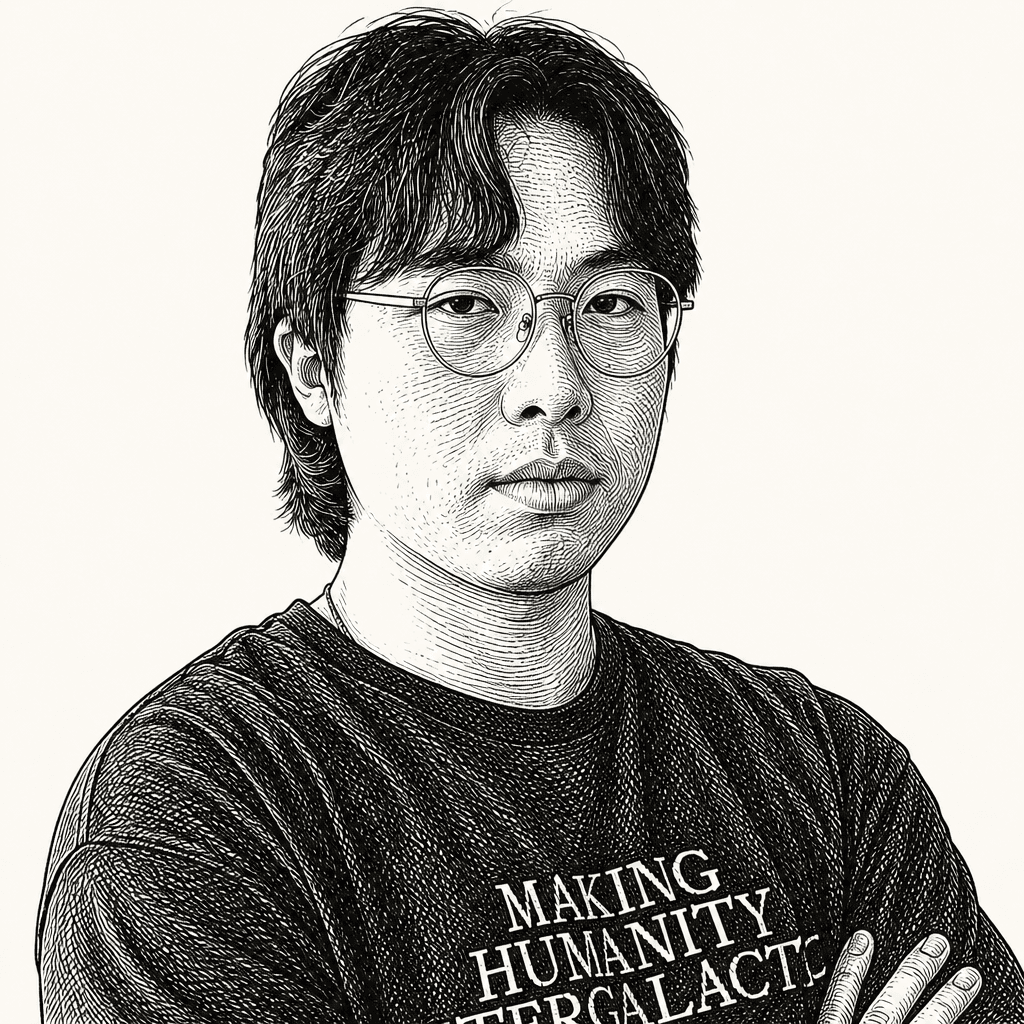
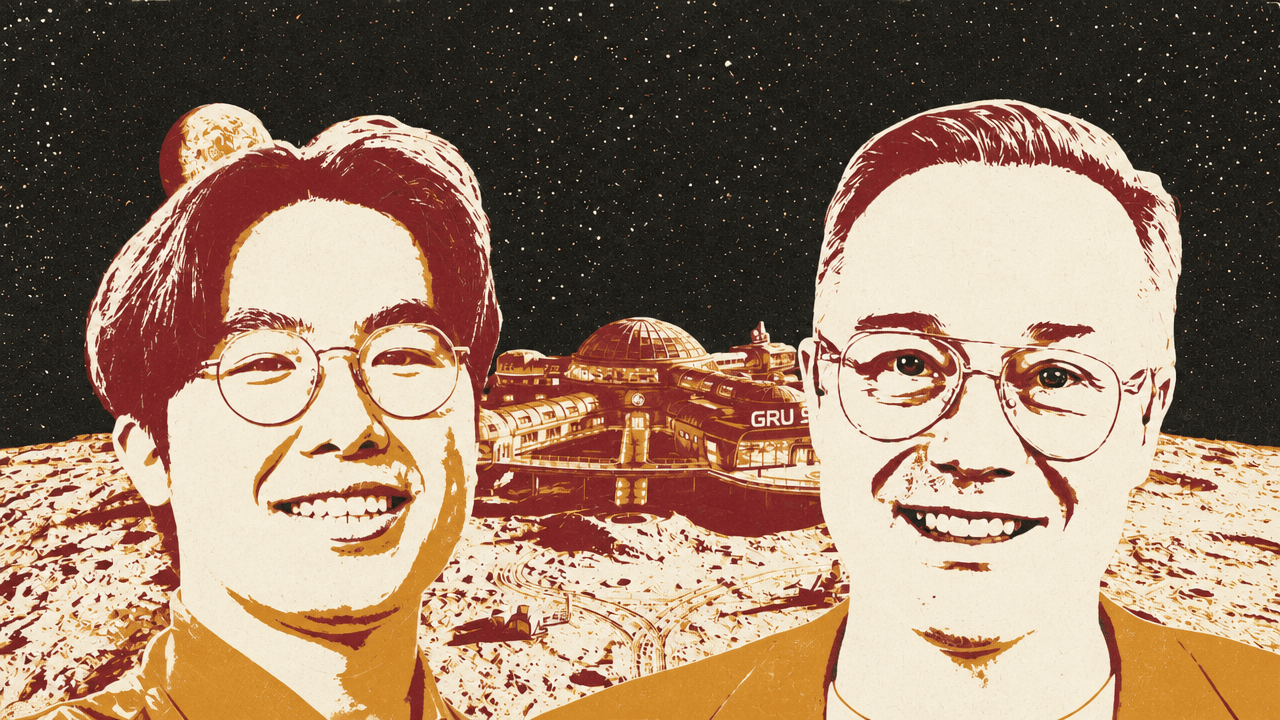
On This Week in Startups, GRU Space founder Skyler Chan argues that a Moon hotel is the first commercial wedge for a larger off-Earth manufacturing business: using lunar regolith to make construction materials rather than shipping them from Earth. Chan lays out a plan to prove the technology by making a brick on the Moon, then scale toward robotic habitats, NASA construction work, space tourism and eventual claims on lunar resources. The same episode turns to Anthropic’s forced shutdown of Fable 5 and Mythos 5, which Jason Calacanis and Lon Harris frame as a warning that frontier capabilities can be cut off before law, politics and operating norms have settled.
The lunar hotel is a wedge into off-Earth manufacturing
Skyler Chan is not pitching the Moon hotel as the whole company. He describes it as “simply just the first wedge” toward a larger business: making products on the Moon by using lunar resources rather than shipping finished materials from Earth.
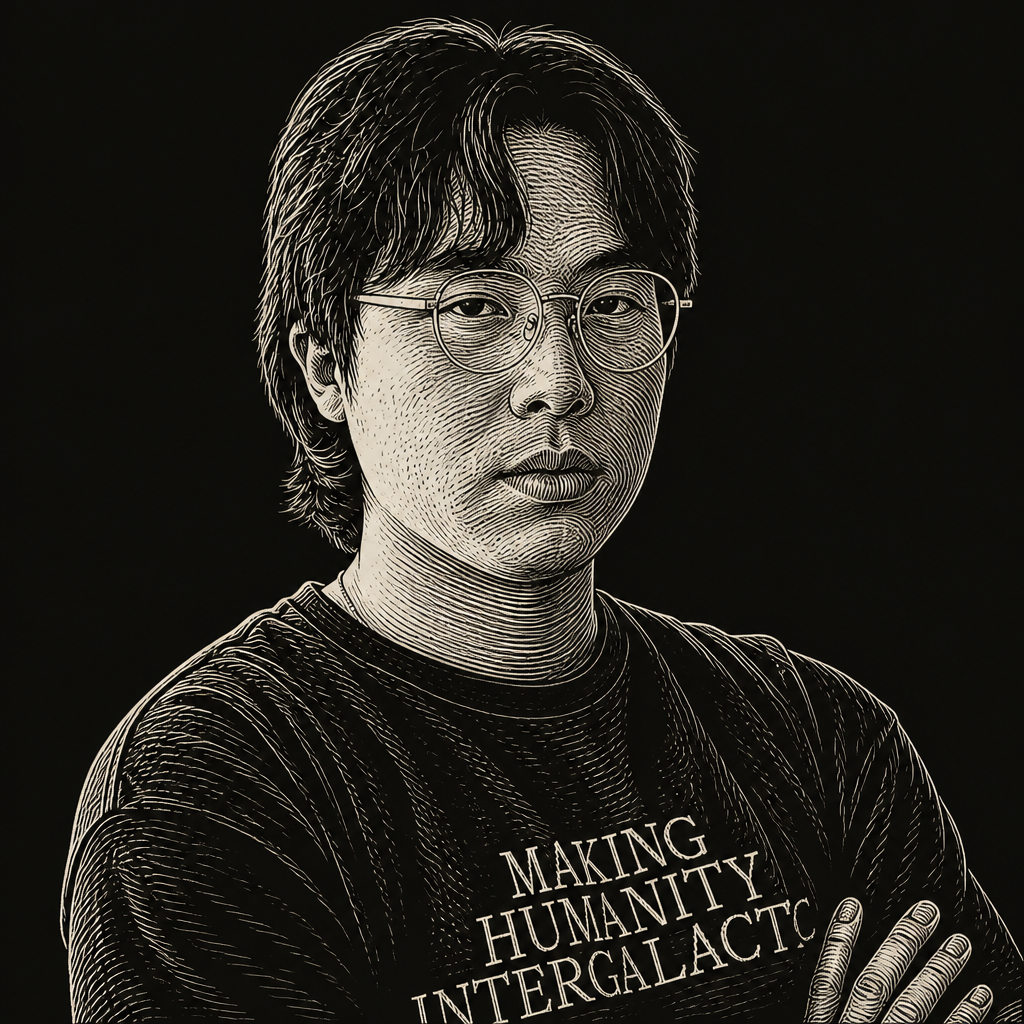
Chan’s company, GRU Space, is working on a payload factory designed to land on the lunar surface and turn lunar regolith — the topsoil-like material covering the Moon — into bricks. The immediate demonstration is modest by the standards of the end vision: prove that a brick can be manufactured on the Moon. But Chan frames that step as the missing technology in a broader sequence. Rockets have changed the economics of access to space; the next layer, in his view, is habitation, construction, and in-situ resource utilization.
The core cost argument is simple. Shipping construction materials from Earth to the Moon is wasteful and expensive. Chan compared the alternative to early settlement in North America: “Like we built the US, do we bring everything from Europe? No, we used the timber available in the US.” GRU’s bet is that lunar construction should follow the same logic. Use what is already there, bring only what must be brought, and manufacture locally.
The payload Chan described has several stages. It would mine lunar regolith using a robotic arm, filter the material to obtain fine particulate, and bind it with a geopolymer brought from Earth. The fine particulate matters, he said, because more surface area improves binding. Chan said other commonly proposed approaches — sintering and melting — were rejected for energy reasons. They may be technically plausible, but in his view they are poorly matched to the near-term timeline and equipment constraints if NASA and others want lunar infrastructure quickly.
We basically got like manifest destiny going on on the Moon.
That phrase captures both the ambition and the tension in the plan. Chan sees a land-and-resource race ahead, with private companies moving before a detailed legal regime is in place. GRU’s near-term path is to establish technical credibility; its long-term aspiration includes owning lunar resources and land. Chan said that aspiration is already stated in the company’s white paper.
The company’s name — Galactic Resource Utilization — is meant to reach beyond one hotel or even one Moon base. Chan described the “final form” as galactic-scale in-situ resource utilization, tied to the idea of elevating humanity to “Type 3 on the Kardashev scale.” The Moon, in this account, is not the destination. It is the training ground and the first market.
Chan’s NASA path starts with one brick, not a finished base
Jason Calacanis pressed Chan on the business model: a Moon base may be compelling, but a startup eventually needs a paying customer. Chan’s answer was that NASA has provided the demand signal. He said that on the same day as YC Demo Day, NASA held an “Ignition” event and announced it would spend $20 billion to build a Moon base.

That figure remains Chan’s cited premise in the source, not an independently established article claim. On that premise, Chan wants GRU to become NASA’s go-to Moon-base construction contractor. The route, as he explained it, runs through NASA’s Technology Readiness Level system, or TRL, which ranks technologies from one to nine. The higher the score, the more likely a company is to win contracts. For GRU, the way to move up that ladder is not to produce an elegant deck, but to demonstrate that the technology works on the Moon.
That is why the first mission is centered on making a brick. The brick is less important as an object than as proof of a process: excavation, filtering, binding, and product formation under lunar conditions. Chan said humans already have flight heritage for robotics on the Moon and Mars. What humans do not yet have, in his framing, is flight heritage for using lunar resources to manufacture a useful product.
Once that first unit works, the scaling logic becomes industrial rather than heroic. Chan compared it to a company sending one GPU to space and then sending thousands. If GRU can prove that one factory can make one brick on the Moon, the next step is to send many factories and “crank out more bricks.”
Calacanis made the broader market point around falling launch costs. His view was that SpaceX has reduced the cost of getting to space by more than 90%, which creates room for a large number of specialized startups to solve previously uneconomic problems. A Moon economy would not just require rockets. It would require power, communications, rovers, robotic arms, materials systems, habitats, computing hardware that can survive launch and space conditions, and many other pieces.
Chan agreed and described the lunar economy as an ecosystem with several service categories. Lunar terrain vehicle providers include Lunar Outpost and Astrolab. There are robotic-arm companies, communications companies, and power companies working on approaches from nuclear systems to solar and laser beaming. The hotel, in Chan’s business logic, can sit on top of that ecosystem and create demand for the other providers.
This is why he calls the hotel and the base distinct in branding but similar in core technology. A hotel would need communications to let guests contact people on Earth. It would need rovers for tourist activities. It would need power. It would need construction. If it works, Chan said, the hotel becomes “an index on everyone else.”
The habitat plan depends on robots, inflatables, and lunar shielding
Lon Harris asked how far GRU can get before humans must go to the Moon. Chan’s answer was that the goal is to build the hotel end-to-end without sending humans for construction. Human labor on the Moon adds life-support, environmental-control, power, and communications complexity. Robots make the construction phase cheaper.
We would build the entire hotel end-to-end without actually needing to send humans because we would have the robots to assist us.
Chan broke the hotel problem into survival constraints. If a person were on the Moon and removed a spacesuit, the immediate threats would include lack of pressure, temperature swings, radiation, and micrometeorite impacts. Some associated problems — water recycling and related life-support systems — have precedents from the space station. GRU is focusing on what Chan considers the critical path: pressure, temperature, radiation shielding, and micrometeorite protection.
The architecture he described starts with an inflatable or expandable habitat. That handles pressure and controlled environmental conditions. The regolith-based construction then becomes shielding. Bricks or other lunar-material products could be placed around the inflatable structure in an igloo-like arrangement. The inflatable sits inside; the lunar material forms the protective shell.
That distinction matters. GRU is not claiming that a brick alone solves habitation. The brick is the first visible product in a chain of systems. The company has to prove that the regolith-based material can be made on the Moon, that an inflatable can deploy, and that the two can work together as a habitat system.
GRU’s displayed roadmap laid out an estimated sequence from systems testing to a first hotel:
- 2029Mission 01: a first lunar systems test places a pressurized test payload on the lunar surface to evaluate controlled environmental conditions alongside early construction experiments using locally sourced materials.
- 2031Mission 01.1: a larger payload lands near a lunar pit chosen for natural shielding; an inflatable system is deployed inside and further construction tests begin.
- 2032Mission 02: the first lunar hotel is landed and deployed, built on Earth and delivered by a heavy lander, with capacity for up to four guests on multi-day stays.
- Future missionsGRU systems and robotic equipment scale construction, enclosing modular inflatable habitats with lunar-material structures and increasing capacity from four to ten guests.
The visual roadmap said the 2032 hotel would be designed to operate for 10 years and offer views of the lunar landscape and Earth, along with envisioned surface experiences including Moonwalks, driving, golfing, and other activities. It also showed a progression from early systems tests to a cave-base concept and then to modular, lunar-material-enclosed habitats.
The proposed hotel experience is not described as utilitarian. Chan emphasized architecture and symbolism. When Calacanis described the design as a “Neo-Greek Lucas Star Wars aesthetic,” Chan called it “Greco-futurism.” The reference points included the Palace of Fine Arts and, in the discussion, the Marin County Civic Center’s influence on Star Wars architecture.
Chan said the first human-made structure on the Moon should be more than efficient. Thousands of years later, he argued, people should be able to look back at it as a meaningful mark of human civilization. The benchmark, as he accepted it, is that it “has to be sick.”
A million-dollar deposit sells access before the market exists
GRU is asking for $1 million deposits for future Moon-hotel reservations. Chan said the deposits are fully refundable, a design choice made after studying Virgin Galactic, Blue Origin, and other space-tourism efforts, including those that did not work as well. The purpose is to let people reserve spots before the hotel opens.
Jason Calacanis pressed the practical question: what does a person get for a million dollars? Chan’s answer was less about the precise number of nights than the psychology of space tourism. The target customer, as he described it, is not someone shopping for an ordinary vacation. It is a person who has “experienced everything that can be done on Earth” and wants to do something greater, to feel part of something larger, and to build legacy.
They've experienced everything that can be done on Earth, that they want to do something greater.
Chan also described an adjacent offering: the ability to etch a person’s name or company name on the payload going to the Moon, where it would remain. In the studio, Lon Harris showed a small gray GRU brick with “JASON CALACANIS” etched into it. Calacanis compared the idea to Leo Laporte’s “brick house” concept for supporting independent media, where supporters could buy a named brick and later find it when visiting.
That exchange clarified the dual nature of the deposit strategy as Chan presented it. It is not just pre-selling lodging capacity. It is also selling symbolic participation in a project that may or may not reach its stated endpoint. Chan acknowledged that space tourism is not for everyone. Calacanis, for his part, said he would consider going to space only after many successful trips, noting that he has three daughters and would not want to be among the first high-risk customers. Harris compared the risk posture to not wanting to be on the first Titan submersible trip.
Chan’s response was that testing is essential. Calacanis agreed that the endeavor must be safe, while acknowledging that some implied risk will remain. The deposit logic, as Chan described it, depends on a customer who values access, status, and participation in a civilizational project before an ordinary market exists.
GRU expects lunar capability to precede lunar law
The regulatory question is not incidental to Chan’s plan. Jason Calacanis asked whether NASA or any government would allow a “random YC founder” to own or build a base on the Moon. Skyler Chan answered that there is not much hard, clear-cut regulation governing who does what on the Moon.
GRU’s prediction is that companies will establish de facto positions by being the first to make use of land and resources. Chan compared this to the Hudson’s Bay Company, which he said owned a huge piece of land in Canada for 200 years before selling it back to Canada. The analogy was not offered as a legal proof. It was offered as a model for how control can emerge in a frontier environment before modern governance catches up.
This is where Chan’s “manifest destiny” framing becomes more than rhetoric. GRU is openly thinking about resource ownership, land control, and private infrastructure. Chan said the company’s white paper states that eventually owning “a lot of the resources and the land on the Moon” is on the roadmap. He tied that claim to GRU’s role as the company figuring out how to use those resources.
Chan wants to create facts on the lunar surface: working machinery, manufactured materials, deployed structures, and eventually occupied habitats. In that world, legal rights may follow capability. Calacanis closed the interview with a tempered endorsement of the ambition. He called the odds slim but said the effort is exactly the kind of “crazy” entrepreneurial stepping stone needed for a longer-term space economy. Chan’s project, in that framing, does not need to be likely in order to be worth attempting. It needs to move one hard capability forward.
The Anthropic shutdown exposed a new kind of platform risk
The US government’s directive forcing Anthropic to suspend access to Fable 5 and Mythos 5 became a test case for what happens when a frontier model is treated as a national-security object. Lon Harris described the order as an export-control action aimed at preventing access by foreign nationals, based on concerns that Fable 5 could be jailbroken into Mythos 5 and used as a cyber weapon. According to Harris, Anthropic responded by shutting off the models for all users, not only foreign nationals, in order to ensure compliance.
Anthropic’s visible statement said the company received the directive at 5:21 p.m. ET on June 12, 2026. The statement said the letter did not provide specific details of the government’s national-security concern, but that Anthropic understood the government believed it had become aware of a method for bypassing, or “jailbreaking,” Fable 5. Anthropic said it had reviewed a demonstration of this specific technique being used to identify “a small number of previously known, minor vulnerabilities,” which it described as relatively simple and discoverable by other publicly available models without requiring a bypass.
The statement also said the government order applied to “any foreign national, whether inside or outside the United States, including foreign national Anthropic employees,” and that the net effect was that Anthropic had to “abruptly disable Fable 5 and Mythos 5 for all our customers to ensure compliance.” Other Anthropic models were not affected. Claude’s interface, shown on screen, displayed “Fable 5” grayed out as “Currently unavailable,” with Opus 4.8, Sonnet 4.6, and Haiku 4.5 still listed as alternatives.
Harris separately pointed to political reporting and public commentary suggesting the shutdown might reflect more than a narrow security dispute. He cited claims that Anthropic failed to honor a cyber executive order and that administration officials viewed the company as a bad actor. He also cited Secretary of Defense Pete Hegseth’s previous public criticism of Anthropic and asked whether the issue was a genuine jailbreak problem, ongoing bad blood between the administration and Anthropic, or something else.
Jason Calacanis argued that several things were happening at once. He said there is a real political conflict between Anthropic and the Trump administration. In his view, Anthropic’s leadership and workforce are largely liberal or Democratic and hostile to the administration, while the administration is full-contact, takes things personally, and has “it in for Anthropic.” He contrasted Anthropic with other tech leaders who have shown up in Washington and cooperated pragmatically with the administration.
But Calacanis separated that political context from the model-safety issue. He argued that Anthropic’s rollout behavior looked like the actions of a “good actor being thoughtful.” If a company such as Google, Microsoft, Apple, OpenAI, xAI, or another major lab released a powerful model first to a limited set of trusted partners, monitored its use, downgraded sensitive queries to a safer model, and then paused access when a government raised a concern, he said people would normally praise that behavior as self-regulation.
Regulate thyself or thy product will get banned.
Calacanis said frontier labs should be responsible for safe rollout because the government does not understand the nuances of these products well enough to design the first layer of controls. His criticism of Anthropic was not primarily its operational handling of the model, but its communications. He argued that Anthropic’s broader public messaging — especially claims about AI destroying a large share of jobs — invites regulatory and political backlash. “Their comms trigger this,” he said.
Harris pressed the inconsistency he saw: if Anthropic brands itself as the AI-safety company, why would it appear to minimize a possible dangerous jailbreak rather than proactively pull the model? Calacanis said he did not believe the version of the story in which Anthropic dismissed a serious risk, because in his view the company’s pattern is to overreact in favor of safety. He noted that Anthropic turned the models off for everyone even though the government order targeted foreign nationals.
The disputed technical fact was whether Fable 5 had a broad jailbreak that could unlock Mythos 5-like capabilities. Harris summarized Anthropic’s position as denying a “universal jailbreak” that broadly bypassed safeguards and unlocked a wide range of cyber capabilities. In Harris’s framing, the government and Amazon were on the other side of the concern. The source does not resolve that technical dispute.
Harris also raised a conspiracy theory circulating around the shutdown: that Anthropic’s competitors, including Amazon CEO Andy Jassy as named in the discussion, had flagged the jailbreak to the administration in order to sandbag a leading competitor. Calacanis rejected that as unlikely. His reasoning was that Amazon would not intentionally damage a company in which it has a large financial position. His reconstruction was explicitly inferential: an AWS security team might find a jailbreak, escalate internally, tell Anthropic, and inform government national-security officials because the issue may carry legal and moral consequences.
The political layer remained central to Calacanis’s interpretation, but his practical conclusion was narrower than the political diagnosis. He said the administration likely would have treated the same facts differently if the company were led by a more aligned or cooperative technology leader. At the same time, he accepted that the executive branch can have national-security authority to intervene temporarily when officials believe a private product poses imminent danger.
Calacanis also speculated that Silicon Valley political history made the conflict more charged. He tied Anthropic’s perceived position to Dario Amodei, Reid Hoffman, Democratic-aligned tech networks, and longstanding PayPal-era grudges. Those claims were presented as Calacanis’s interpretation of tribal politics around the company, not as evidence resolving the jailbreak question.
The emergency order was narrow, but the dependency lesson is broad
The shutdown raised a broader question: should governments be able to gate access to AI models based on nationality or demographics? Lon Harris read a viewer concern that this could put society on a dangerous path if model access is restricted by demographic category.
Jason Calacanis treated this as an emergency national-security action rather than a general speech or market-access regime. He argued that the executive branch must have the ability to push a panic button when it believes a privately created product poses imminent national-security danger. The relevant analogy, in his view, was not an ordinary legislative ban after public debate, but an emergency temporary order. He struggled to find a real-world analogy and joked that the closest example was the fictional Iron Man question of whether Tony Stark should be allowed to keep the suit.
Harris noted that some people view AI model access as close to a freedom-of-speech issue: the government should not decide which model a person can use for which tasks. Calacanis responded that the government had not shut down access to all AI models. It had targeted one model that it believed had been jailbroken, after the company itself had described the model class as dangerous. Anthropic then turned it off for everyone because enforcing a foreign-national restriction reliably would be difficult. Calacanis said that was rational: IP addresses and identities are porous, and hostile actors could use stolen American identities or domestic proxies.
The more durable lesson, both hosts agreed, is that no serious company should depend on a single model. Harris cited international reactions: a UK Labour MP, Alistair Carns, argued that the most advanced AI model on the planet had been switched off by a foreign government and that Britain should build a home-grown AI industry; Canadian Prime Minister Mark Carney warned about over-reliance and encouraged Canadian tech companies to diversify their model dependencies.
Calacanis extended that into an architecture prescription. AI applications should own their harness: the front end, data, skills, memory, prompts, context management, and routing layer. The underlying model should be swappable. He cited Hermes from Nous Research as an example of an agent that can use different back-end language models, and said his own team had set up internal routing between Kimi and Claude. In his view, dynamic routing is the practical response to model shutdown risk.
The model-performance gap still matters. Calacanis said open-source models feel nine to twelve months behind the latest Mythos model, and that Anthropic may be roughly 20% better than alternatives. But he argued that this kind of gap narrows as the field matures. The difference between a freshman and senior in high school can feel enormous; by the workforce, a 27-year-old and 31-year-old are both just adults. His point was that frontier-model advantage may be real without being permanent enough to justify single-provider dependence.
You cannot have a single point of failure.
Harris added that open-source models build on frontier models through distillation and training, so every generation benefits from the one before it. Calacanis called the immediate panic a “tempest in a teapot” amplified by political machinations, but not meaningless. The event made visible a risk that existed already: a model can disappear overnight, and the organizations that built on it may have little control over why.
The winning podcast companion checked claims instead of performing around them
The $5,000 bounty asked builders for a real-time podcast companion: a tool that listens live to a show and reacts in real time, especially by checking facts. Three finalists showed three different interpretations of that request: Couchverse from Lemon Slice AI, Convalenz by Beau Bratton, and My AI Sidecast by Ricky Rivas.
Couchverse emphasized the viewing experience. It worked as a Chrome extension and overlaid animated avatar commentators on a video: an alien fact-checker and a cat-themed goth-girl “snarky troll.” Jason Calacanis gave it high marks for creativity and ease of use, calling ease of use a ten out of ten. But he disliked voice-over-voice commentary and said the actual value was not yet what he wanted. Lon Harris agreed that the commentary was not consistently useful and felt repetitive or too tossed off. Calacanis could imagine it becoming more like Mystery Science Theater if the characters were smaller, paused the content, and delivered better commentary.
Convalenz missed the prompt but found a different product. It required downloading and setup, which Harris said was the most cumbersome of the three. It also worked more as a companion to live broadcasting than as a passive listener on any existing podcast. But its output was striking: as Harris read a news story, Convalenz turned the material into presentation slides in real time. One slide in the demo summarized a SpaceX IPO with figures including a $75 billion capital raise, $1.77 trillion valuation at open, and $100 opening share price. Harris said he fact-checked the slides it made and found them accurate, but the article does not independently verify those demo figures.
Calacanis immediately saw a use case outside the bounty: talks and Q&A sessions where the system dynamically generates slides from what the speaker says. Harris noted that the user could give the AI design instructions up front: make it look like Steve Jobs keynote slides, chart comparative numbers, or focus on specific information types. Harris suggested Gamma should buy the feature; Calacanis suggested Plaud or another note-taking product might use it to generate real-time infographics.
My AI Sidecast was closest to the original specification. It listened to a Chrome tab, worked with live or pre-recorded content, produced a transcript, and offered modes including fact-checking, notes, and roasting. The demonstrated fact check addressed a claim that Bernie Sanders wanted to seize 50% of the equity in Anthropic. In the demo interface, Sidecast marked the claim true and summarized that Sanders had proposed an AI Sovereign Wealth Fund Act, described there as a one-time 50% equity tax on major AI firms including Anthropic, OpenAI, and xAI, payable in stock rather than cash. That was a demonstrated output from the finalist’s product, not an independently verified legislative claim in the article.
For Calacanis, the Sidecast demonstration was decisive: “That’s it. This is what I wanted.” Harris and the producer had also selected Sidecast as the top entry because it matched the prompt, responded quickly, and combined fact-checking with clean transcription and notes.
| Entry | Builder | What stood out | Result |
|---|---|---|---|
| My AI Sidecast | Ricky Rivas | Chrome-tab listener with transcript, notes, and concise real-time fact checks | $3,000 winner |
| Couchverse | Lemon Slice AI | Chrome extension with animated AI commentators; very easy to use but less practically useful | $1,000 honorable mention |
| Convalenz | Beau Bratton | Turns live speech into presentation slides; compelling product but not exactly the requested fact-checker | $1,000 honorable mention |
Calacanis said all three projects suggested real businesses, and that he would be interested in meeting the developers. The lesson for builders was specific: in a live media workflow, speed, low setup friction, and concise verification beat a more theatrical interface. Convalenz also showed that a product can lose the stated contest and still reveal a commercial wedge if it turns live speech into useful artifacts.
Annotated is a clipping tool designed for permanence and dispute
The next bounty centers on annotated.com, a domain Jason Calacanis said he bought 20 years ago for $30,000 or $40,000 and once considered using for a startup before choosing Mahalo instead. The product concept is a Chrome sidebar extension for clipping and reacting to content from any website.
The requirements page shown on screen listed three non-negotiables: it must ship as a Chrome sidebar extension, every annotation page must include a visible “File a claim” button to dispute fair-use breaches, and all clipped content must link back to the original source URL. The user journey shown on screen had six steps: sign up with X or Google, pick a source, choose what to clip, generate a clip and landing page, add commentary, and browse a social feed. The maximum clip length shown was 90 seconds.
Lon Harris compared the idea to Delicious, the old bookmarking service, but extended into a social discussion object. Instead of typing a post into Reddit, a user would pull a piece of content from elsewhere on the web and use it to start a thread.
Calacanis’s motivation is permanence and accountability. If a person is quoted in a New York Times story, they could highlight the quote and respond: “I didn’t say this,” or “I said this, but they left out the second part,” attaching evidence. If the original story changes later, the annotation remains as a record of the moment. If a podcast clip later proves prescient, someone could clip the relevant 30 seconds, add context and evidence, and host a debate below it.
Fair use was central to the concept. Calacanis said he has changed his view on clipping: if someone uses a small portion of content for commentary and links back, that is fair use. He distinguished that from ripping an entire episode into many clips so viewers never need to visit the original. Harris said the show’s social accounts already share short clips from other interviews and then link back to the full source, and that original creators often appreciate it because it sends attention back to them.
Calacanis made clear that the Annotated bounty is different from the podcast-companion bounty. The fact-checker was a project he wanted to see exist. Annotated is a company he may want to build. Submissions to the bounty, he said, should be treated as public domain and open source; he may later incorporate ideas, start from scratch, fund a team, or incubate a company through his venture firm.
The broader prediction is that venture firms will do more incubation when they have a clear product idea and can find a team to execute it. For Calacanis, the bounty program is partly entertainment, partly product discovery, and partly talent sourcing. The next test is whether builders can turn a long-held media annotation idea into a working product surface.