GRU Space’s Moon Hotel Depends on Turning Lunar Dirt Into Infrastructure

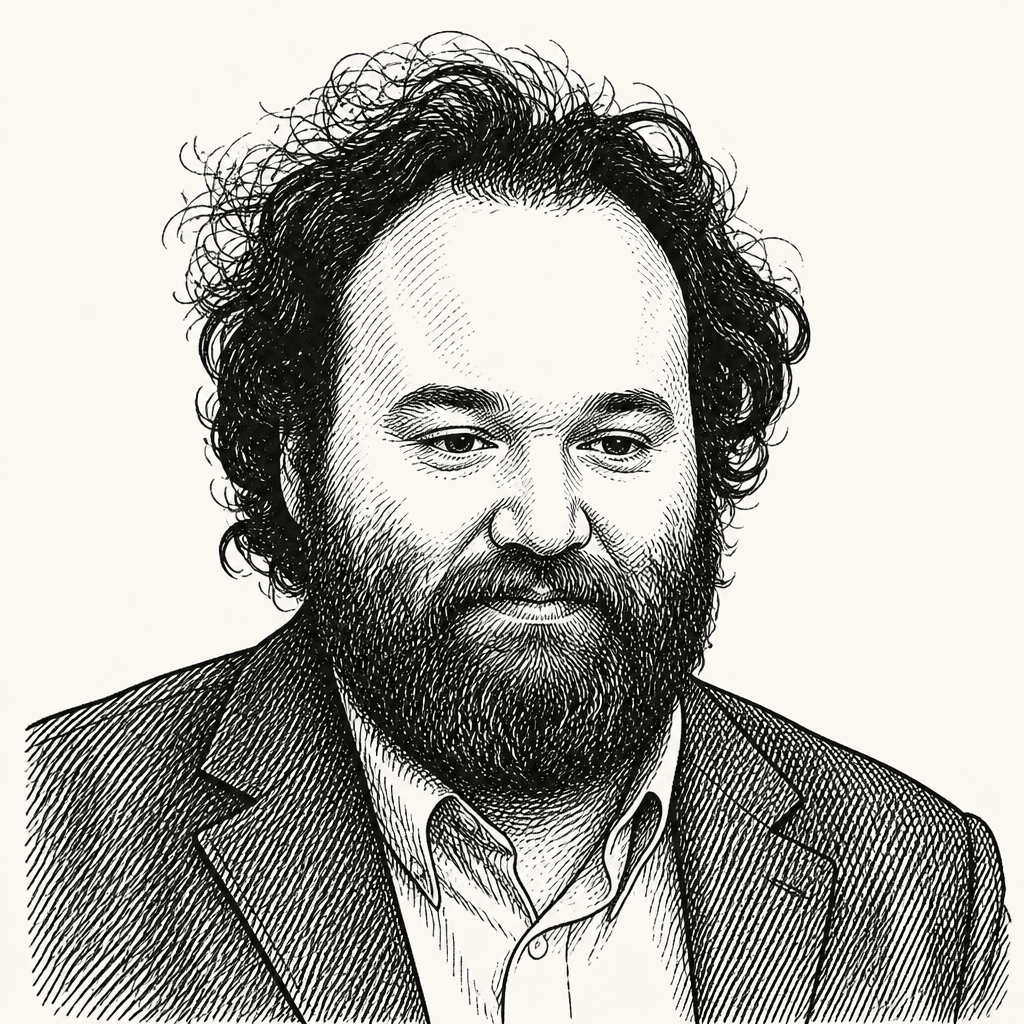
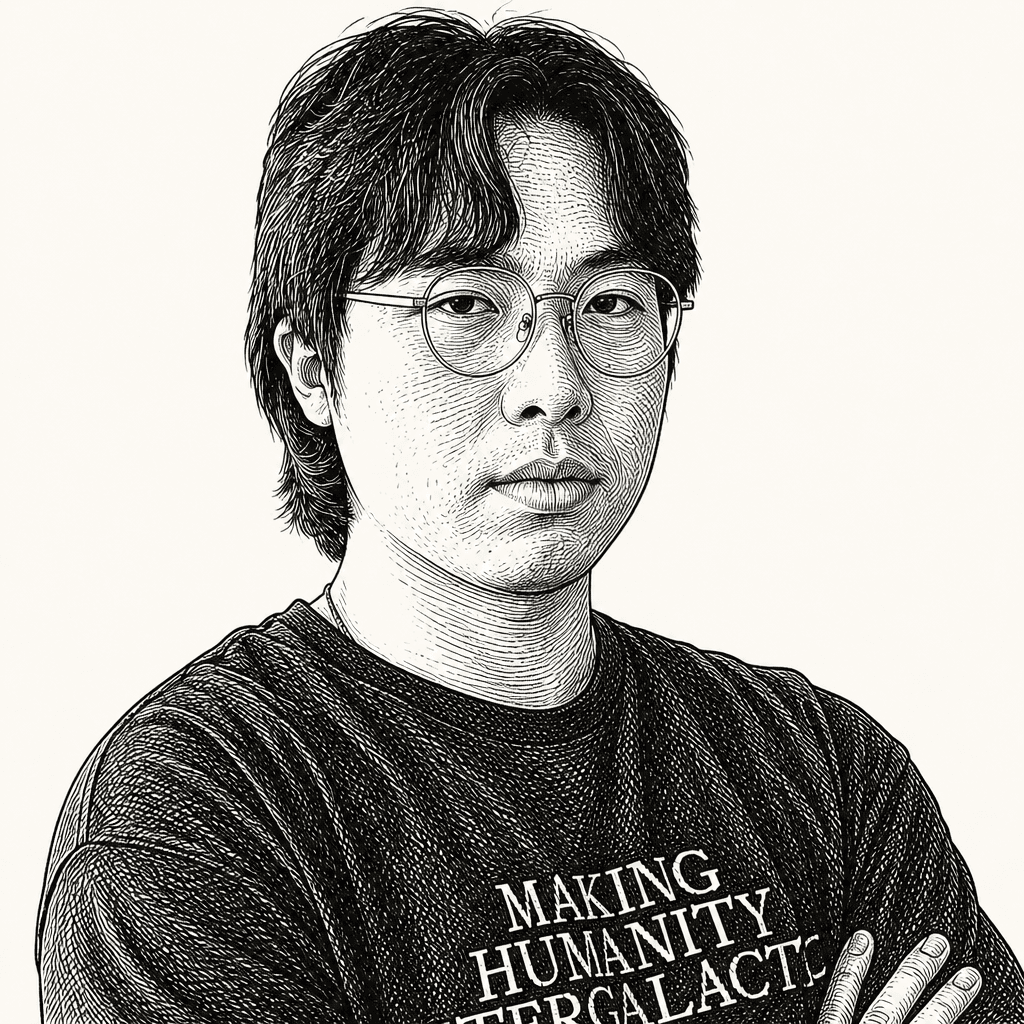
Skyler Chan of GRU Space argues that the company’s proposed lunar hotel is less a tourism stunt than a test case for building infrastructure from the moon itself. In an interview with Jason Calacanis and Lon Harris, Chan said GRU’s core bet is that concentrated sunlight can melt lunar regolith into durable building material, reducing the need to haul construction supplies from Earth; the episode also used a contested rumor about Anthropic to examine how closely frontier AI labs are becoming tied to U.S. national-security institutions.
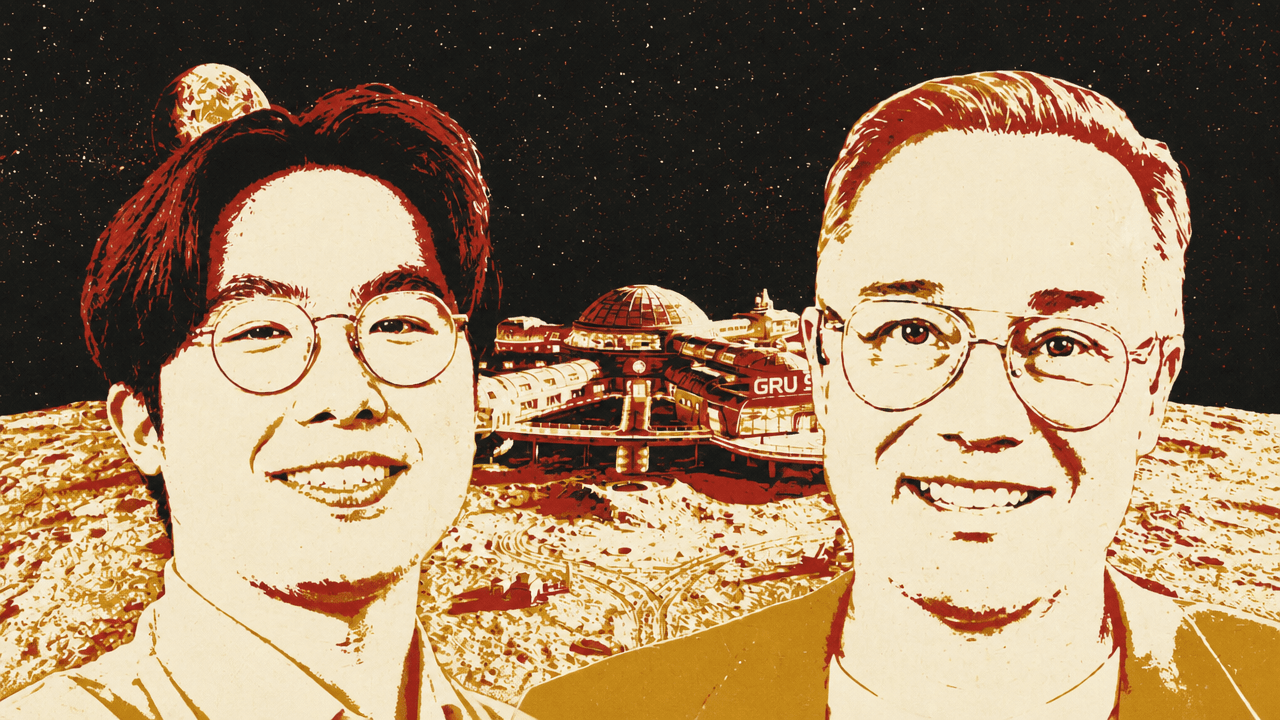
GRU Space’s hotel pitch is really a construction thesis
Skyler Chan framed GRU Space’s premise as a response to a bottleneck that appears only after launch gets easier. If more people and heavier payloads can reach space, the next constraint is not the rocket. It is the absence of durable places to arrive, work, and live.
Chan said space is “undergoing a massive Renaissance” after a decade in which more people gained access and larger rockets became available. GRU’s starting question is what happens when people actually get there. His answer was not a capsule, a temporary module, or a tourism stunt. It was construction.
The core bottleneck is having to actually build sustainable habitation systems so people have a place to go.
The company began, Chan said, by trying to make “lunar concrete out of moon dirt.” The reason is basic but central to the pitch: the moon already has abundant regolith. If long-term lunar infrastructure depends on hauling most construction material from Earth, the economics and logistics become punishing. GRU’s thesis is that roads, landing pads, foundations, walls, and eventually inhabited structures need to be made from material already on the moon.
Chan contrasted that with the International Space Station’s modular architecture. He credited the ISS with pioneering humanity’s access to space, but said modular systems were not designed with the same long-term sustainability in mind. The distinction matters. GRU is not merely pitching a different-shaped habitat. It is arguing that lunar settlement requires a shift from assembled hardware to built infrastructure.
A TechCrunch page shown on screen carried the headline “GRU Space’s ambitious pitch to build America’s first hotel on the moon,” alongside a concept image of a lunar base. The hotel is the public-facing version of the company’s story, but Chan repeatedly described something broader. In his telling, a resort is a flagship use case for proving that human-scale structures can be built on the lunar surface. The deeper ambition is the construction layer itself.
Jason Calacanis pushed immediately on the material problem. If inflatables are vulnerable to micrometeorites, and if ordinary construction materials are too heavy to fly from Earth in bulk, what exactly is “concrete” on the moon? Does it require water? Is it dust plus epoxy? Is it resin? Is there an aggregate? Calacanis’s questions forced the pitch away from concept art and toward process.
Chan said some proposals involve bringing a binder — an epoxy or resin — and mixing it with regolith to form a brick. GRU’s approach, as he described it, is different. Instead of binding moon dirt together with imported material, the company wants to melt the regolith itself using concentrated solar energy.
Calacanis reduced the idea to its simplest image: a giant magnifying glass.
Chan accepted the metaphor. GRU’s concept uses a rover with mirrors that focus sunlight onto the lunar surface. The rover scrapes or prepares the dirt, concentrates sunlight, heats the regolith to roughly 2,000 degrees Celsius, and melts it. As it cools, Chan said, it solidifies into a hard, glass-like material, “almost like an obsidian glass.”
There’s plenty of moon dirt on the moon.
That process changes what the company needs to build. It does not necessarily have to manufacture bricks and stack them. For landing pads, roads, or flat foundations, a rover could move across the surface and melt areas in place, creating an interlocked hardened layer. Calacanis compared it to laying asphalt. Chan compared it to a Zamboni: a machine that passes over a surface and leaves behind a transformed, usable plane.
The source showed an animated rendering of this process: a rover on the lunar surface with a large mirror structure focusing sunlight downward onto a patch of soil. The visual matched Chan’s explanation closely. The machine was not depicted as a crane, a printer, or a conventional masonry system. It was a mobile solar furnace.
The attraction of the approach is that both the input material and the energy source are local. Calacanis noted that the moon has 14 straight days of sunlight during the lunar day, a window in which a solar-driven construction system could do substantial work. Chan said the underlying concept had been studied extensively around the Apollo era and afterward, especially for landing pads and other foundational infrastructure. GRU’s claimed innovation is to move beyond flat infrastructure toward walls and larger architectural forms.
The interview therefore made the hotel legible as a construction thesis. The resort may be the object people remember. The technical proposition underneath it is narrower and more consequential: can concentrated sunlight turn regolith into durable building material at useful scale, and can a machine repeat that process reliably enough to create real lunar infrastructure?
The hotel design uses lunar terrain as shielding, not just scenery
The renderings of GRU’s proposed resort showed domed, interconnected structures built into a crater-like formation, with rovers outside and a multi-story complex set against lunar terrain. Jason Calacanis described the design as having a “very sci-fi spin”: modular units, large domes, and what looked like a hotel inside or against a giant cavern.
Skyler Chan gave a practical explanation. The moon has steep craters, skylights, impact formations, and potentially access points to lava tubes. Building off a cliff-like structure, he said, could provide easier access downward and help with radiation shielding.
Calacanis drew an analogy to pueblos built into rock formations on Earth. The built environment uses the landscape as a defensive and structural feature. On the moon, the relevant hazards are not weather in the terrestrial sense, but radiation and micrometeorites. Chan agreed with Calacanis’s framing: the terrain itself can provide part of the protection.
That is an important design constraint. GRU’s concept is not simply to place a hotel on an empty plain and cover it with domes. The siting is part of the architecture. A crater wall or cliff-like structure can reduce exposure before the company adds any manufactured shielding. Natural formations may also create access paths to deeper protected spaces, such as lava tubes, though Chan described this as a possibility rather than a completed plan.
The dome renderings therefore represent only the visible part of the system. The less glamorous part is site selection: finding terrain that can reduce radiation exposure, protect against impacts, support access, and allow construction equipment to operate. In Chan’s explanation, the moon’s surface features are not background art. They are part of the engineering strategy.
Chan also described GRU’s role as integrative. Building a lunar resort would require a “multi-faceted approach” and heavy partnership with large space companies already operating in the sector. GRU, he said, is “essentially a general contractor.” Calacanis sharpened the business analogy: a developer, even a real-estate developer.
That model matters because GRU is not claiming, in this discussion, to own every necessary component of lunar settlement. It would need launch providers, transport systems, life-support partners, and other space infrastructure companies. GRU’s proposed role is to define and coordinate the construction layer: how to turn lunar material and lunar terrain into usable built environments.
The resort is useful because it forces integration. A landing pad is necessary, but it does not by itself define a public destination or a consumer market. A hotel does. Chan said GRU wants to build humanity’s first outpost or resort on the moon. He initially said “space” and then corrected himself to “on the moon,” underscoring that the pitch is not orbital tourism. It is a surface destination.
The hard part is that a surface destination carries far more complexity than a short-duration orbital experience. It requires arrival infrastructure, surface mobility, shielding, power, construction, habitability, and emergency planning. The discussion did not turn those into a complete technical roadmap, but it did clarify that GRU’s resort concept depends on solving construction and siting problems first. The hospitality use case sits on top of the infrastructure thesis, not the other way around.
The reservation strategy is a demand signal, not a financing plan
Skyler Chan said current access to space in orbit costs about $50 million per person. GRU’s goal, he said, is to reduce that by roughly tenfold, implying an eventual ticket price around $5 million per person. He then described a target of bringing up 100 people early on, “hopefully” by the end of the 2030s.
We want to be able to bring up a hundred people early on, hopefully out by the end of the 2030s.
Jason Calacanis did the arithmetic aloud. One hundred people at $5 million per ticket is $500 million. He immediately asked whether GRU could build the hotel for that amount. Chan answered directly: it would cost “substantially more.”
| Claim or milestone | What was said |
|---|---|
| Current orbital access cost | Chan said it costs about $50 million per person to get access to space in orbit. |
| Target ticket price | GRU’s goal is to reduce that by roughly tenfold, to about $5 million per person. |
| Early customer target | Chan said GRU wants to bring up 100 people early on. |
| Spoken timeline | Chan said GRU hoped to bring early customers by the end of the 2030s. |
| Deposit discussed | Calacanis and Chan discussed a $1 million deposit toward the proposed $5 million ticket. |
| Implied gross ticket value | Calacanis calculated that 100 people at $5 million each would equal $500 million. |
| Hotel cost | Chan said the project would cost substantially more than $500 million. |
| Capital raised | Chan confirmed a small $1.5 million check from an early-stage investor. |
| Near-term prototype | Chan said GRU aims to build a subscale rover and solar-furnace prototype within roughly the next year. |
The deposit idea, as Chan explained it, is not a complete financing plan for the resort. It is a demand signal. If a meaningful number of ultra-high-net-worth customers are willing to put down large deposits, GRU can show investors and partners that the market is not purely hypothetical. The money matters, but the evidence of willingness to pay may matter more.
Calacanis asked whether GRU had started raising money either from venture investors or from individuals willing to put down “a milli.” Chan said the company had begun reaching out to determine whether the “super ultra” high-net-worth market would take early spots. He argued that, out of billions of people, there are enough extremely wealthy early adopters for whom a lunar reservation could be plausible.
Calacanis did not dismiss the demand premise. He treated it as believable that some wealthy people would want to go to the moon. Lon Harris joined the lighter version of that point, joking that there are enough people with extravagant toys and hobbies to form a market. But Calacanis questioned the deposit amount. His recommendation was $250,000 rather than $1 million.
He cited Virgin Galactic as an example of a space-tourism reservation model that attracted hundreds of deposits at roughly that level. Harris said the number was around 800 tickets. Calacanis’s point was not that Virgin Galactic proved GRU’s plan would work. It was that a lower reservation price might generate broader participation, meaningful cash, and a clearer signal of demand without asking early customers for a seven-figure commitment before the proof of concept is visible.
The exchange separated three different questions that can otherwise blur together. First, is there a population of wealthy customers interested in lunar travel? The hosts and Chan treated that as plausible. Second, can deposits from that population help demonstrate demand? Chan argued yes. Third, can those deposits finance the lunar hotel itself? Chan acknowledged no; the project would require substantially more capital than the implied $500 million in early ticket value.
That distinction is the core of the business risk. A deposit campaign can show desire. It cannot by itself solve construction, launch, operations, safety, or capital intensity. Calacanis pressed Chan toward that reality. To move the pitch from “sci-fi” to something financeable, GRU needs a proof of concept on Earth: a machine that can melt surface material into a durable, useful layer in conditions relevant to the moon.
The meaningful near-term test is a vacuum chamber, not a resort rendering
Skyler Chan said GRU is building a solar furnace in California and referenced concentrated-solar research on Earth. He mentioned a 10-megawatt array in Spain and an equivalent kind of field in the United States as examples of concentrated solar being a studied domain. His point was that focusing sunlight to create extreme heat is not, by itself, an exotic unknown. GRU’s challenge is adapting the optics and construction process to lunar infrastructure.
A visual showed what looked like a desert rover: a four-wheeled platform with a large hexagonal frame of mirrors directing light downward. Jason Calacanis asked whether the image was real. Chan clarified that it was a rendering. The mirrored array, he said, is meant to concentrate sunlight.
Chan claimed that on Earth, an optical setup with roughly a half-meter diameter can reach around 2,000 degrees Celsius. He said GRU’s early prototypes used standard mirrors and heated material on a patio. Calacanis asked whether someone could buy ordinary mirrors or magnifying glasses and melt rock by focusing them; Chan said that, in principle, focusing enough of them could do it.
The expected output, Chan said, is comparable to obsidian, the glass formed naturally by volcanic processes. He claimed the material is generally stronger than concrete on average. He did not provide test data, compressive-strength numbers, or durability results in the exchange. The claim was qualitative: the process produces a glass-like solid, and Chan expects it to be strong.
When you look at what volcanoes naturally produce, naturally forms sort of obsidian, it is naturally stronger basically than concrete, on average.
Lon Harris asked the more operational question: how different will the process be on the moon from a test in the Mojave? Chan’s answer identified a less obvious constraint than heat. Over a 10- or 15-year operating period, the mirrors may degrade. When hardware is launched from Earth, outgassing can fog optical arrays in space. That is a serious issue for any system whose core function depends on precision optics and concentrated sunlight.
Calacanis connected the problem to Mars-rover-class engineering. Radiation, outgassing, dust, long-duration operation, and reliability are familiar categories in space hardware, even if GRU has to solve them for its own mission profile. The comparison did not make the problem easy. It located it in the world of known space-engineering risks rather than pure fantasy.
He then turned to capital. Chan confirmed GRU had raised a small $1.5 million check from an early-stage investor. Calacanis asked what would be needed for the next round and what the company’s actual next goals were. Chan’s response became hard to parse, but Calacanis distilled it: a prototype.
Chan agreed. The next-year goal is a subscale version of the system. Calacanis described it as a rover with a solar oven. Chan added that it would be tested in a large vacuum chamber.
That is the real milestone. GRU does not need, in the near term, to prove that a luxury lunar hotel can operate. It needs to prove that its construction method can work under relevant conditions. A vacuum-chamber test of a rover-mounted concentrated-solar system would not validate the whole business, but it would attack the core technical premise: focus sunlight, melt regolith-like material, let it solidify, and produce a useful surface or component.
Calacanis ended the interview with encouragement but kept the conditional explicit. If the idea actually works, he said, then asking whether free solar energy can melt sand into useful lunar infrastructure is “genius.” The praise depended on the proof. GRU’s renderings may attract attention, and a reservation campaign may signal demand, but the company’s credibility turns on whether the machine can do the work.
The Anthropic model story was a rumor, a denial, and a broader warning
Lon Harris introduced the AI discussion with a rumor: that the U.S. government had stopped Anthropic from releasing Claude 3.5 Opus. The claim came from an account shown on screen as @raw_thought. The post said a “very reliable source” claimed Opus 3.5 had been finished for more than a week and that the government ordered Anthropic to halt release because of a capability, safety, or national-security evaluation result. It also claimed Anthropic intended to deny the story when asked.
Harris summarized the implication as a national-security intervention: the government wanting early or exclusive access to advanced AI tools for intelligence analysis and cybersecurity before ordinary users could apply them to everyday commercial tasks.
Jason Calacanis read the post and immediately asked whether it had been community-noted or denied by Anthropic. Harris said Anthropic people had essentially denied it. A post shown from Alex Albert, identified by Harris as Anthropic’s head of developer relations, said: “Just to be clear, this is completely made up. The government hasn’t halted any release. We’re still actively training and evaluating our next models.”
That denial is central. The discussion did not establish that the U.S. government halted an Anthropic model release. It established that a viral account made the claim, that an Anthropic representative denied it, and that the hosts used the rumor to examine a broader question about government influence over frontier AI.
The source also showed a second @raw_thought post claiming Dario Amodei had told employees they would need to answer questions about the delay and were considering “making up a story about evaluation or alignment delays.” That second post intensified the allegation but did not resolve it. It remained part of the same contested claim set: anonymous-source assertions on one side, an Anthropic representative’s public denial on the other.
Calacanis’s own view was skeptical. He said the rumor felt “incredibly likely” to be “totally wrong.” His reasoning was structural. If the government were concerned about frontier-model capability, he argued, it would not typically wait until the moment of release to intervene. In his view, national-security actors have already become closely involved with major AI labs.
He pointed specifically to retired NSA director Paul Nakasone joining OpenAI’s board. The source showed an OpenAI page titled “OpenAI appoints retired US Army General Paul M. Nakasone to Board of Directors.” Calacanis characterized that as the NSA being “inside of OpenAI” through a board member. He then cited Edward Snowden’s reaction, shown on screen in a post warning people not to trust OpenAI or its products after the appointment and calling it “a willful, calculated betrayal of the rights of every person on Earth.”
Calacanis did not present Snowden’s post as proof that OpenAI had acted improperly. He used it to show that the intelligence-AI connection is already visible, controversial, and politically charged. His central point was different from the viral rumor. He was arguing that if government agencies already have relationships, board-level visibility, and national-security channels into frontier labs, then influence over model development may not appear as an abrupt public shutdown.
That distinction is the useful part of the exchange. The sensational version is: the government secretly blocked Claude 3.5 Opus. The source did not establish that, and Anthropic’s Alex Albert denied it. The institutional version is: frontier AI companies and national-security institutions are already becoming closely entangled. Calacanis treated that as the more plausible and more important issue.
The regulation question is whether frontier AI becomes infrastructure of state power
Even while doubting the specific Anthropic rumor, Jason Calacanis treated the underlying question as serious. His concern was not limited to one model release. It was whether frontier AI is becoming part of national-security infrastructure in a way that changes who controls access, who gets early visibility, and how much the public can know.
Lon Harris framed the strongest version of the concern as the U.S. moving toward “nationalizing AI altogether.” In that scenario, a private company builds a foundation model and the federal government decides it is too powerful to deploy freely. In the actual exchange, that remained a hypothetical implication of the rumor, not an established event.
Calacanis’s model was less formal nationalization than gradual co-option or tight partnership. He said AI is being “co-opted or partnered tightly with US intelligence.” The reason, in his account, is straightforward: if Anthropic, OpenAI, Google, Meta, or another major lab produces a model that represents a step change in capability, the government will want intelligence over it.
The imagined threshold is not simply a better chatbot. Calacanis described the relevant case as a model that puts AGI within striking distance. If a lab creates something that changes strategic calculations, he suggested, the state will not treat it like an ordinary software release. It will want to understand the capability, manage access, and potentially shape timing.
The tension is that this can be framed two ways. In a national-security frame, government visibility into frontier AI is rational and possibly inevitable. Advanced models could affect intelligence analysis, cybersecurity, strategic competition, and other areas the state already treats as sensitive. In a civil-liberties or open-market frame, the same proximity looks like capture: a small number of private labs and security agencies determining who gets the most powerful systems and when.
The Snowden post shown on screen represented the sharpest civil-liberties version of the concern. It treated the Nakasone appointment as a betrayal of users’ rights. Calacanis did not linger on every part of that claim, but he did use it to emphasize how visible the convergence has become. The public does not need to rely only on rumors to see that national-security institutions are entering the frontier-AI ecosystem.
That is why Calacanis redirected attention from the alleged release halt to the institutional pattern. A dramatic shutdown order would be easy to notice if it became public. Board appointments, partnerships, pre-release evaluations, informal channels, and national-security access may matter more while being less legible. In Calacanis’s telling, the most important forms of influence may not look like a regulator stepping in at the last minute. They may look like the government being close enough to the labs that the public never sees the moment when influence is applied.
The discussion left the specific Anthropic claim unresolved and contested. It did not leave the broader concern as a throwaway. The hosts treated frontier AI as a technology category that may be moving from consumer and enterprise software toward state power. The unresolved policy question is what kind of oversight, disclosure, and access rules should exist when private labs build systems that governments view as strategically consequential.
The fact-checker bounty tried to catch mistakes while they still matter
The final product thread was a live AI fact-checker bounty. Jason Calacanis said they had offered $5,000 for an AI companion that could listen to the podcast in real time and fact-check the hosts as they spoke. The reason was simple: “we get stuff wrong.” Lon Harris agreed that they try their best but move fast.
The source establishes the problem more clearly than it establishes the final product comparison. Three finalists built real-time podcast companions that listen along and fact-check on the fly. A shown interface used a dark-mode layout labeled “Live Pod Checker Listening...” with an audio waveform, transcript boxes, and a sample check: “Fact Check: True - 3 finalists were selected.” The source does not provide enough reliable detail in the supplied material to compare finalists or name a winner.
The product problem, however, is concrete. A live show moves through claims, estimates, jokes, rumors, denials, and analysis without clean boundaries. A useful fact-checking companion would need to distinguish among them quickly. It would need to know when a host has made a checkable factual claim, when a speaker is offering an opinion, when a claim is attributed to a third party, and when a rumor has been denied.
The Anthropic segment illustrated exactly why that matters. A crude fact-checker might try to stamp the whole topic true or false: “the government halted Anthropic’s model.” But the real informational structure was more complicated. It included a viral @raw_thought allegation, an Anthropic representative’s denial, a second allegation from the same account, an OpenAI board appointment shown on screen, Snowden’s reaction to that appointment, and Calacanis’s separate analysis about state-AI entanglement.
Those are not the same kind of claims. “Alex Albert denied the rumor” is checkable within the shown source. “The government halted the model” was contested and denied. “National-security actors are becoming more involved with AI labs” was Calacanis’s broader interpretation, supported in the discussion by the Nakasone example but not reducible to the Anthropic rumor. A good live checker would need to preserve those distinctions rather than flatten them.
The same applies to the GRU interview. A live checker would need to separate Chan’s claims about target pricing, deposits, and timelines from Calacanis’s arithmetic and recommendations. It would need to catch that “100 people at $5 million” implies $500 million, while also retaining Chan’s caveat that the hotel would cost substantially more. It would need to mark qualitative technical claims — such as obsidian-like material being stronger than concrete on average — as claims made by Chan, not established test results unless data were supplied.
That is the practical ambition of the bounty: not an after-the-fact transcript cleanup, but a companion that can intervene while the conversation is still live enough to correct. The source does not support a detailed evaluation of the finalists, but it does support the underlying need. Fast commentary often mixes evidence, memory, math, speculation, and humor. The correction window is short. The product challenge is to make factual friction available in real time without stopping the conversation.