The Nvidia Probe Reopens the Debate Over Chip Sales to China
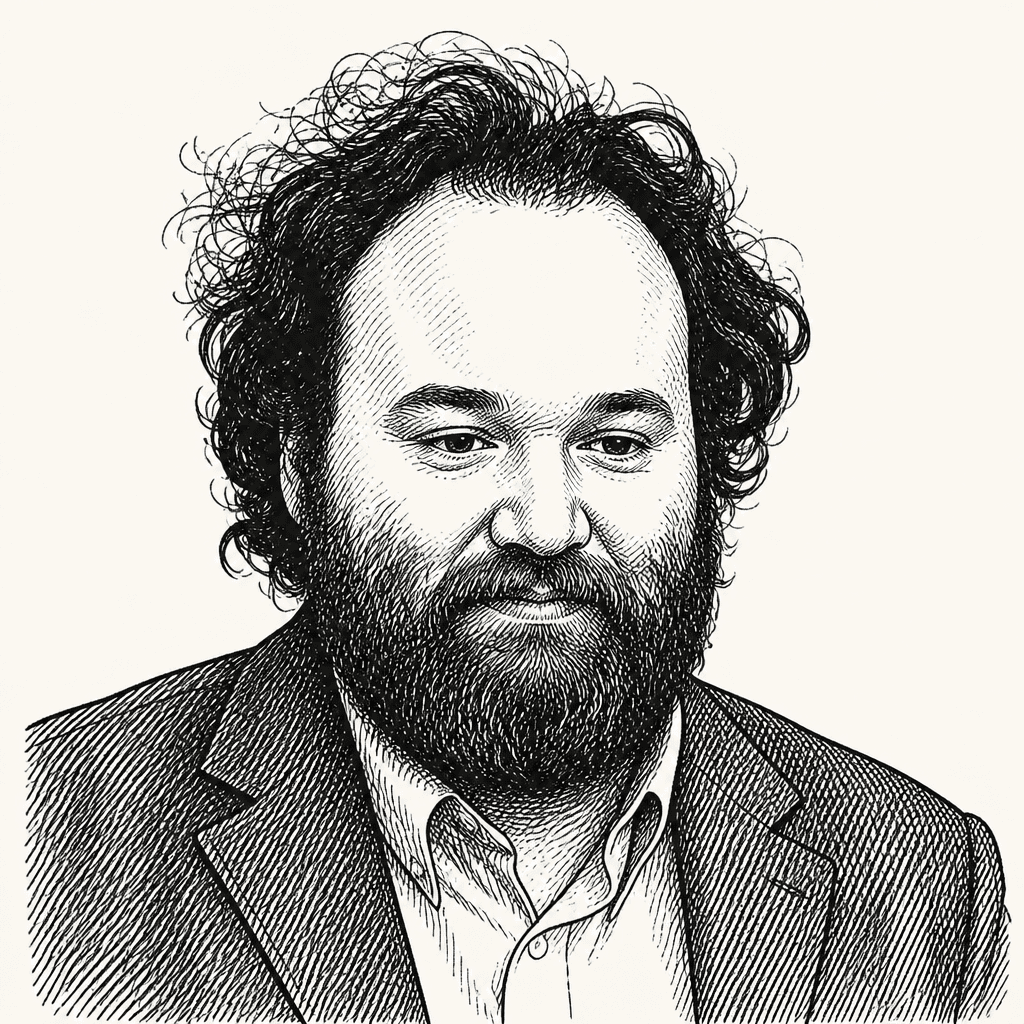

Jason Calacanis argues that Nvidia should separate accountability for Jensen Huang’s conduct from the decision about who leads the company, weighing the strategic cost of removing a CEO he considers critical to the U.S. effort to compete with China. The argument comes as reported suspicions that Alice Huang was recruited by Chinese intelligence sharpen questions about whether Nvidia chips are reaching China through intermediaries—and whether the United States should allow sales of older-generation chips.
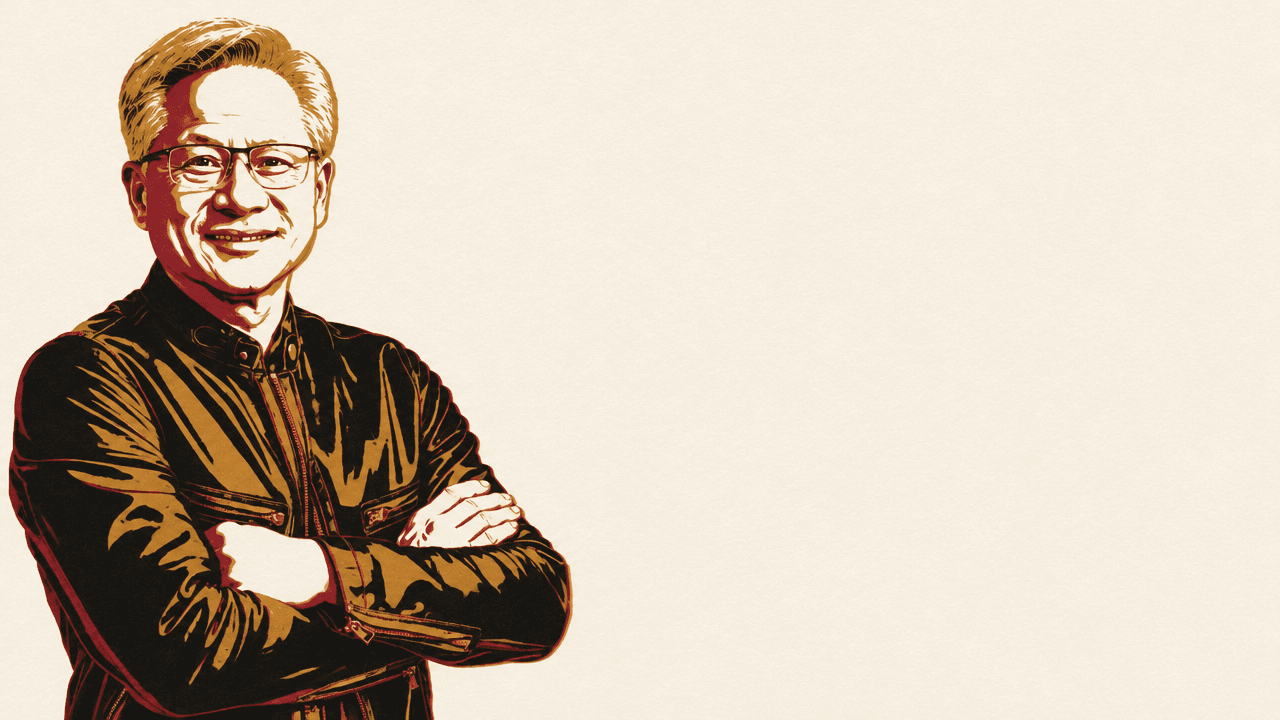
The Nvidia scandal puts export policy and corporate governance on the same track
Nvidia’s board has opened an investigation into CEO Jensen Huang after he acknowledged an affair with Alice Huang, a former executive at Singapore-based cloud and data-center company Megaspeed. The two are not related. U.S. officials reportedly believe Alice Huang may have been recruited by China’s Ministry of State Security to surveil Huang, while Megaspeed is suspected of diverting Nvidia chips to China. Huang remains CEO. The board said it had no reason to believe national security or company secrets had been compromised.
Those are separate questions with different stakes: whether Huang’s personal conduct created a vulnerability, whether any information was exposed, and whether Nvidia’s business in Southeast Asia has helped chips reach China despite export restrictions. Lon Harris summarized the reported allegations; Jason Calacanis focused on how they could change the way people interpret Huang’s public comments about China.

At the All-In Summit, Calacanis recalled asking Huang whether the United States needed to be at war with China. Huang’s answer, as Calacanis remembered it, was that the two countries could “all win together.” Huang had also supported the argument for selling older-generation chips to China: Nvidia might keep China within its software ecosystem, including CUDA, and preserve its position as a global standard.
The reported intelligence suspicions put those comments under a new kind of scrutiny. Calacanis said people would now ask whether Huang’s positions reflected his own judgment, his responsibilities as Nvidia’s chief executive, or pressure from someone who might have had leverage over him. The board’s statement that it had no reason to believe secrets were exposed addresses one part of the concern, while questions about the relationship and Huang’s advocacy for Nvidia’s China policy remain.
There is also a question of what the U.S. government knew and when. Harris said the New York Times had reported that Secretary of State Marco Rubio oversaw a classified memo this spring warning senior administration officials about the relationship. President Trump, by contrast, said he had not heard that Huang had done anything wrong and was still considering bringing him on a trip to Asia the following week. Calacanis said reports had arrived in stages: an earlier report that Huang was being targeted, followed by a report that the relationship was romantic. He thought the accumulating coverage may have prompted Huang’s memo to employees acknowledging the affair.
Calacanis argued that executives should assume they could be targets of corporate or state espionage. He described a method in which an operative approaches someone in a target’s social or professional circle, compromises that person, and uses the connection to reach the intended target. He cited an X thread by investor Shaun Maguire that described a similar progression. The point was not that every unusual social encounter is an intelligence operation, but that powerful people may be approached through intermediaries as well as directly.
Calacanis offered an episode from his own life as a cautionary example, not as a confirmed intelligence case. Years earlier in Australia, he said, a woman repeatedly asked him to have a nightcap and wanted to know where he was staying. He told her he was with his wife and daughter and did not provide the hotel name. He judged it far more likely that she was seeking information than that she was romantically interested. He also noted that a person one step removed from a senior executive could be targeted as a route to someone else, and suggested that technology employees with broad IT access might be especially valuable entry points.
Neither Calacanis nor Harris claimed to know how systematically Western governments use these tactics. Calacanis wondered whether they are institutionalized or carried out off the books; Harris speculated about rogue units. Their exchange left the question open. For Calacanis, the practical lesson was to treat personal security as potentially connected to corporate and national security.
Megaspeed’s reported finances make chip diversion central to the case
The export-control debate predates the affair. Nvidia and administration figures had argued that selling less advanced chips to China could keep Chinese companies using Nvidia’s software and make CUDA more widely adopted. The opposing position was that any meaningful supply of chips could strengthen a strategic competitor. Calacanis said he had considered the limited-sales argument reasonable, but that reported diversion through Southeast Asian intermediaries had made it harder to rely on.
The distinction is important: diversion means a chip sold to one buyer or country is rerouted elsewhere. Calacanis said there had been multiple cases of people being caught doing this. The Megaspeed allegations therefore raise a question beyond the relationship between two people: how reliably can companies and governments control where advanced chips end up after a sale?
A May 2025 thread by short seller Culper Research had already singled out Megaspeed. In the posts shown during the discussion, Culper said Nvidia vouched for Megaspeed as its largest Southeast Asian chip buyer, describing the company as free of Chinese ownership and diversion concerns. Culper alleged that documents instead suggested Alibaba had financed Megaspeed through a Singapore shell company. The thread accompanied Culper’s short position against Nvidia.
Culper’s thread also highlighted a reported jump in Megaspeed’s balance sheet, from $33 million at year-end 2023 to $3 billion at year-end 2024. It attributed almost all of that increase to $2.9 billion in “refundable deposits received” from an unnamed source, and said the same amount was forwarded to subsidiaries including Speedmatrix. Culper further said that Speedmatrix pledged its assets as collateral to APEX Enterprise Solutions Singapore in June 2024, two months before it began operations.
The thread connected those financial claims to Huang’s visits and social ties. Culper posted photographs of Huang with Alice Huang and said he had “walked alongside Megaspeed at every step.” It placed the two together at a party in June 2024 and at dinner in May 2025, shortly after U.S. trade restrictions. The posts also quoted a current Megaspeed employee saying Alibaba representatives came to the facility every time Huang visited, sometimes on the same day or in the same week. Culper cited a former Nvidia employee who said staff had speculated internally about the apparently special nature of Huang’s relationship with Megaspeed.
Harris noted that repeated visits and business connections could prompt questions even without knowledge of a romantic relationship. Calacanis’s point was that the short seller had made those links public months before the affair was acknowledged. He said the research and the timing deserved scrutiny.
The allegations nevertheless strengthened, in Calacanis’s view, the case for reconsidering whether older chips should be sold to China at all. He said the United States may need to stop sending even previous-generation chips, rather than assume that less advanced products will preserve American influence without adding Chinese capacity. He also called for building more U.S. data centers and compute. The issue is not simply whether Nvidia wants to retain a market; it is whether the benefits of keeping customers in its ecosystem outweigh the risks of supply reaching a competitor through intermediaries.
Keeping Huang in the job is Calacanis’s strategic argument
Calacanis anticipated years of investigation and substantial fallout for Huang and Nvidia. He speculated that Huang could face sanctions, that the board might change, and that the company could come under greater oversight. He did not expect Nvidia to fire its CEO, whom he considers too valuable to the company and the American AI effort. Those were forecasts, not reported decisions.
Benching him is what the Chinese want.
Calacanis argued that removing Huang could serve the interests of the party alleged to have targeted him, and urged the company and policymakers to think strategically rather than vindictively. In his view, accountability for Huang’s conduct and the question of who can lead Nvidia are distinct matters.
That argument sits beside Calacanis’s insistence that Huang has obligations to Nvidia and to the United States. He said Huang would need to put the facts on the table, however embarrassing, and acknowledged that the situation could have consequences for his family as well as the company. Calacanis’s case is not that the affair should be ignored; it is that the company’s leadership decision should account for Nvidia’s role in the U.S. effort to compete with China. He described that contest as a two-player race for superintelligence and said the country should rally behind the industry, not necessarily behind Huang personally.
Harris agreed that Nvidia needed Huang to move forward. Calacanis went further, saying that without Huang there would be no superintelligence. That is his judgment about the company’s dependence on its CEO.
The claim that China might benefit from Huang’s removal is part of Calacanis’s strategic argument, not evidence that the reported allegations were designed to force him out. He also said Huang had made a mistake and would not emerge unscathed. The tension in his position is that the company may need to impose consequences and establish what happened while resisting a response that, in his view, would weaken Nvidia’s leadership.
Sequoia’s changes may be organizational rather than an effort to erase Botha
Sequoia Capital announced that it would close its London office, merge its early-stage and growth teams, and end its Scouts program. The Financial Times framed the changes as an attempt to undo the legacy of former steward Roelof Botha. It also reported that Sequoia partners were blindsided when Botha joined SpaceX’s board without seeking partnership approval. Sequoia’s spokesperson said the firm continued to “collaborate closely with Botha.”
Calacanis, one of Sequoia’s first scouts, accepted that the firm was moving away from a process-heavy culture associated with Botha. He described formal partnership meetings and in-person collaboration as part of Sequoia’s traditional approach. Newer partners might prefer to make decisions more quickly rather than wait for a scheduled meeting. That could reflect a generational or market-driven shift, he said, rather than an effort to repudiate Botha.
He also described the Scouts program, Heritage Fund and Sequoia Arc as experiments rather than the firm’s core business. Botha invited Calacanis and Sam Altman to be the first two scouts; Calacanis said he backed Uber through the program, while Altman backed Stripe. The model was later copied by other venture firms. But it required Sequoia partners to review opportunities surfaced by scouts. If no one at the firm wanted to keep championing it after Botha’s departure, ending the program would not by itself demonstrate hostility to his legacy.
The SpaceX board seat is different. Calacanis described it as exceptionally prestigious and said the choice belonged to Elon Musk, who selected Botha because of a relationship that went back to PayPal. It was not, in Calacanis’s view, a seat that belonged to Sequoia simply because the firm had invested in SpaceX. He could understand why other partners might feel slighted: being selected by Musk could feel like an anointment, particularly to people who saw themselves as leading figures at Sequoia.
Calacanis also disputed the suggestion that the seat necessarily complicates Sequoia’s handling of its SpaceX shares. He said the firm could distribute shares to limited partners rather than sell the whole position into the market. Harris’s caution was broader: a report can assemble sources’ impressions into a plausible narrative without establishing every participant’s motives. Calacanis thought the organizational changes could be explained by ordinary shifts in process, projects losing their champion, and interpersonal tension over the board seat—not necessarily by a coordinated effort to erase Botha’s influence.
Apple’s agent should handle personal tasks without giving up personal data
Apple CEO John Ternus has reportedly pressed software chief Craig Federighi to move faster on AI and push Siri beyond incremental improvements. Bloomberg’s Mark Gurman reported that Apple wants Siri to behave more like an agent that can carry tasks across conversations, potentially as early as the following year. The report also said Mike Rockwell, who has led work on the new Siri, was considering stepping down.
Calacanis called Apple’s position a failure of execution: Siri and Amazon’s Alexa arrived early, yet other companies have taken the lead in conversational AI. Rather than patching the existing product, he proposed a new team and a “Siri 2.0,” comparing the reset to Steve Jobs’s decision to replace the team behind MobileMe with the work that became iCloud.
His proposed agent would begin with information people already keep on Apple devices: photos, calendars and email. Siri should be able to act on those materials while making privacy a central product promise. A request could be handled by a model running locally or sent in encrypted form to a model and returned to the device for decryption. Apple could promise not to store the information or train on it.
Harris supplied a practical test. After buying an iMac with 24 gigabytes of memory, he had begun experimenting with smaller local models. He wanted to tell the computer how he preferred its settings rather than spend 30 or 45 minutes changing preferences one by one. An agent that could handle such configuration would be doing more than answering questions; it would act on the user’s device and preferences.
Calacanis argued that consumers may adopt agents faster than businesses, where questions about access to email, calendars and other systems can slow deployment. He said he was moving his team onto paid Grok accounts and also paying for Anthropic. Harris said a smaller Qwen model running at home was adequate for many organizational tasks and simple applications. Neither thought every task required the strongest cloud model.
Their preferred division of labor was local first, then cloud. Calacanis described a routing approach in which an agent tries the local computer, then an open model in the cloud, and sends the task to a frontier model only if the earlier options fail. Harris said that matched his experience: smaller models handled much of his routine work, while more demanding tasks could be escalated.
Open weights let developers alter a model’s answers
Two releases from labs outside the largest frontier players illustrated different uses for open models. Thinking Machines released Inkling-2-Small, which Harris described as a 594-billion-parameter mixture-of-experts model with 17 billion parameters active at a time. It was available through the company’s Tinker platform, with the weights expected under an Apache 2.0 license after external safety testing. Calacanis cited Artificial Analysis as saying it would be the highest-scoring open-weight model developed outside China. Harris also reported that Thinking Machines was closing a $5 billion round at a $40 billion pre-money valuation.
Nous Research released Arete-27B, built on Alibaba’s Qwen-2.5-27B and post-trained to reduce answers aligned with Chinese state positions. According to Nous’s own evaluation, Harris said, answers containing propaganda fell from 22% to about 1%. The teacher model used in that training was Thinking Machines’ first Inkling, connecting the two releases.
Calacanis said open models can be stripped down and rebuilt, while acknowledging that the technical details were beyond his expertise. He recalled asking models about Tiananmen Square and seeing them begin to answer before shifting into evasive or sanitized descriptions. Open weights, in his account, let developers test and modify those behaviors rather than accept a provider’s framing.
For Harris, local experimentation was useful even without matching the strongest cloud models. He said a Qwen model on his home machine handled simple organizational tasks and applications. Calacanis predicted that, as hardware improves, more users would handle routine work locally and send harder tasks to the cloud.
Agents also change how compute is used. Calacanis described them as launching many threads of work at once and recombining the results. Some tasks may draw on many GPUs; as personal hardware improves, users may be able to do more on their own machines. Harris emphasized that his needs were not those of people building software or solving difficult mathematical problems: a smaller model was already enough for much of his work.
Their exchange also distinguished what local models are useful for from what they can do. Harris said a smaller model was enough for routine tasks, not that it matched a frontier model across the board. Calacanis imagined a progression from a personal machine to an open model in the cloud and then to a frontier model when necessary. The appeal, as they described it, is not that every user can run the largest model locally, but that many ordinary tasks may not need one.
Automation could meet a more direct political backlash than data centers
Calacanis expects the political fight over AI infrastructure to differ from the fight over automation. Data centers, he argued, can find a home in states seeking investment, tax revenue or development. Robots and autonomous vehicles, by contrast, threaten identifiable jobs and could prompt direct restrictions.
He pointed to a document signed by Texas governor Gina Hinojosa calling for self-driving cars to remain on roads with safety drivers. Calacanis predicted a move away from industry self-certification toward regulation: cities could face caps on robotaxis, restrictions on where they operate, or requirements that they be removed from service after accidents. He said early data suggested human drivers were getting fewer rides in markets with Waymo, while acknowledging the data were noisy and the trend was still developing. Harris said he took a Waymo whenever one was available.
In Calacanis’s forecast, rules would extend beyond driverless cars to factory and construction robots wherever they displace human work. Governments might require employers to hire people at a specified wage if workers were available, or impose a fee for each robot installed. Calacanis said he was predicting, not endorsing, those policies. He expected voters to support them, and said regulation could delay deployment and cut robotics-company valuations even if the underlying trend remained intact.
His proposed middle ground was to keep expanding domestic manufacturing while pairing robots with human oversight—he suggested, illustratively, one well-paid supervisor for every ten robots. Harris noted that some agricultural and solar-panel robots still require a person on site. Calacanis’s broader point was that automation may change work rather than eliminate every human role, moving people from direct operation toward supervision.
By contrast, Calacanis argued, data centers can be built in sparsely populated areas if developers solve the power constraint. The discussion ranged from West Texas and New Mexico to Australia, where he imagined combining open land, solar generation, nuclear power and network connections. Harris’s example was the long, lightly populated drive between Arizona and West Texas: there seemed to be room for facilities, he said, if power could be supplied. Calacanis identified reliable electricity as the key constraint and raised water as another, suggesting desalination where nuclear power was available. These were speculative siting ideas, but the contrast was clear: land for compute may be politically negotiable, while replacing workers is likely to provoke more direct resistance.
The disagreement about job displacement also depends on timescale. Calacanis said autonomous driving and delivery were likely to displace jobs, while he thought David Sacks was right that knowledge work could expand because there would always be more work to do—at least until superintelligence. Over a longer period, he wondered whether companies might simply reduce team sizes by a few percent each year. In his view, short- and long-term effects could differ, with the most consequential political pressure arriving in the middle.
The Cybertruck’s commercial failure may become its collector appeal
Tesla plans to stop making the Cybertruck in 2027 and use the factory space for more two-seat Cybercab robotaxis, according to the TechCrunch article Harris discussed. At launch, Elon Musk had predicted annual sales of about 250,000. Harris said TechCrunch reported that Tesla had delivered only tens of thousands in total over the first three years. The article also described this as the third Tesla vehicle discontinued that year, after the Model S and Model X, while Tesla focused more on Optimus robots.
Harris asked whether the Cybertruck could become a modern DeLorean: mocked when new, but valued later as a rare, recognizable artifact. Calacanis agreed, predicting that it would become a collector’s vehicle. He argued that price had limited demand: if the Cybertruck had reached $50,000 or $60,000, he thought it could have sold in much larger numbers. Instead, it launched above $100,000 and later came down to roughly $80,000 or $90,000.
The vehicle also became a political symbol. Calacanis said people he knew who owned Cybertrucks were treated as MAGA supporters, while owners of Model 3s and Model Ys did not receive the same reaction. Harris connected that distinction to a change in Elon Musk’s public persona and Tesla’s earlier association with environmental and climate causes. In Calacanis’s view, the truck’s design and visibility helped it acquire a reputation beyond its price and performance.
He said owners he knew were delighted with the vehicle, citing its drive-by-wire system and plush interior, but that the truck had become iconic “in a bad way.” He predicted that it might be worth $100,000 in today’s dollars in 10 or 20 years. Harris likewise imagined younger people treating it as a rare object they had heard about but seldom seen.
The exchange opened into a broader question about what people value in cars. Calacanis and Harris thought the gearhead culture of choosing, fixing and driving distinctive cars might be fading. Harris recalled that characters in older films and television were often identified by their cars; he sees less of that now. Calacanis argued that changing tastes are already visible in the market for older vehicles: classic cars from the 1930s, 1940s and 1950s may be coming onto the market as older owners die, while Gen X buyers are more interested in late-1960s and 1970s muscle cars, DeLoreans and some 1990s vehicles.
That generational shift sits uneasily with the appeal of autonomous vehicles. Calacanis said he wanted a future Corvette that could drive itself on a long trip, even though he also wanted to drive it himself. He predicted that a company such as Nuro or Waymo might eventually sell driving software to carmakers. Harris described himself as less of a car enthusiast than his uncle, whose 1980s IROC-Z had seemed like the coolest car when he was young. The anecdote sharpened the contrast: the Cybertruck may be remembered as a collectible, even as the culture that made car ownership a personal identity gives way to a preference for being driven.
The algorithm result raises the value of coordination as well as insight
OpenAI and Anthropic each said their models had found a faster method for solving 3SAT, a classic logic problem, challenging the exponential-time hypothesis. As Harris explained it, the hypothesis holds that 3SAT cannot be solved much faster than brute force: adding a variable roughly doubles the work. The labs said they arrived at essentially the same faster method on the same day, October 16. Two of the hypothesis’s original authors and an MIT researcher were reviewing the work.
For now, the practical implications remain limited. Harris said the algorithms apparently beat brute force only on astronomically large inputs, and that nothing had changed in practice. Researchers had relied on the hypothesis in hundreds of papers, but the reported result did not yet make those applications obsolete.
The question is what a result like this says about expertise. Harris asked whether theoretical mathematicians and computer scientists become more valuable as people who can check AI’s work, or whether AI is poised to take over their problems. Calacanis framed the issue as a difference between insight and scale. If a system can apply seemingly unlimited compute to a problem, it may reach a solution through brute force rather than a new human-style understanding.
That possibility could change the work of mathematicians, Calacanis said. Instead of relying primarily on an individual’s ability to focus for years and discover a method, researchers might orchestrate large groups of AI systems pursuing many approaches in parallel. Harris added that people face a limit computers do not: a human may spend decades becoming expert, then has a finite working life in which to use that expertise.
The reported result is not proof that AI has replaced theoretical researchers. It sharpens the question of which parts of their work depend on scarce human insight and which can be attacked with enough parallel effort. Calacanis’s warning was that a problem’s resistance to human solution does not mean it is unsolvable; it may mean people have not had the resources to search broadly enough.