NVIDIA’s China Chip Sales Complicate Calls for Jensen Huang’s Return
 David Moscatelli
 Donald TrumpSean Duffy
 Jason CalacanisMarkwayne MullinThis Week in StartupsTuesday, November 17, 202616 min read
Jason Calacanis argues that selling older NVIDIA chips to China could keep customers on the company’s platform, while a total ban could hasten China’s effort to build its own chip stack. He says the facts behind the board’s investigation of Jensen Huang remain unclear, but suggests the board might have let Huang take a leave of absence while it investigated rather than removing him outright.
NVIDIA’s leadership dispute is also a dispute over chip exports
Jason Calacanis treated calls for Jensen Huang to return to NVIDIA as two questions colliding: whether the board moved too quickly against a long-serving leader, and whether the United States should allow NVIDIA to sell older chips to China.


A “Stand with Jensen” petition displayed 184,932 names on its letter, including counters for 9,319 current NVIDIA employees and 1,654 former employees. Calacanis cautioned that online petitions can attract fake signatures. He also questioned reports that investors were organizing a “war room.” Brad Gerstner, whose firm Altimeter had sent a letter to NVIDIA’s board with Atreides Management, said on CNBC that he was not part of one and did not know whether one existed. Calacanis described the concern he saw as more measured: perhaps Huang should have taken a leave of absence while the board investigated rather than being removed outright.
The investigation, as Calacanis understood it, involved Huang’s relationship with a woman alleged to be a Chinese spy and the possibility that advanced chips sold outside China were being diverted there. He said the public did not yet know what had happened. He speculated that the issue might be less a deliberate sale to China by Huang than whether NVIDIA should have anticipated that customers or resellers would route chips or computing access onward.
That distinction matters in Calacanis’s account because chips need not physically enter China for Chinese companies to use them. He described a possible chain in which a company in Singapore, Malaysia, or Vietnam buys chips or computing capacity, then provides access over the internet to users elsewhere. Shell companies or resellers, he suggested, might obscure who ultimately receives access. These were possibilities he was considering, not findings he said had been established.
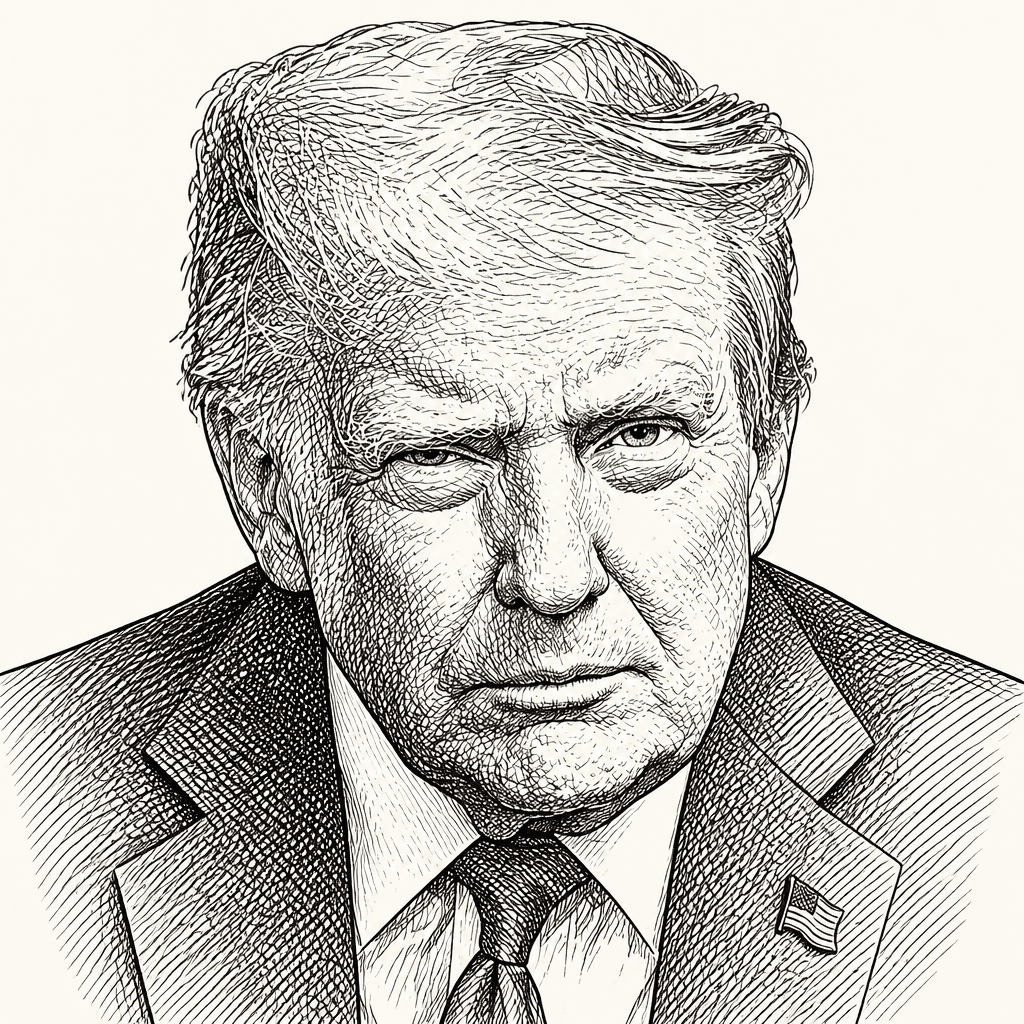
Donald Trump, in a clip shown on the program, said the United States had prohibited NVIDIA from selling its most advanced chips, including Blackwell, but that selling older chips was beneficial. He added that Huang returning was “certainly” not a bad idea. Calacanis read Trump’s position as support for selling older chips to keep customers on NVIDIA’s CUDA platform while withholding the newest technology. The alternative, as he framed it, was to prohibit sales altogether and accept that China would build its own chip stack.
Calacanis did not resolve that policy dispute. He set out competing interests: Chinese companies may want NVIDIA hardware now to run AI models, while the Chinese government may want to build a domestic alternative. He also raised an oversight question: if an approved buyer resells chips or provides remote access to them, what should NVIDIA have known, and what controls should it have had?
He said he found it hard to believe Huang would knowingly participate in diverting advanced chips to China. At the same time, he said NVIDIA would naturally want to sell to customers who were not explicitly blocked from buying. The possibility that Huang’s relationship had any connection to access or sales remained Calacanis’s speculation; he did not present evidence for that theory.
The company’s near-term commercial outlook, in his view, depended less on Huang’s immediate return. NVIDIA had orders that could keep it selling for several years, and Calacanis expected other large customers to take capacity if one buyer dropped out. Longer term, he worried about losing a founder’s ability to lead deals and sustain momentum across successive generations of products. He compared the possibility of a more cash-focused NVIDIA to Apple after Steve Jobs, when Tim Cook led a business that Calacanis described as generating cash through buybacks and established products.
Calacanis said he bought NVIDIA shares at $159 after the news broke. He remained long the company while leaving open the possibility that the United States might decide to sell no chips to China. His argument was that the choice involves a tradeoff: sales might keep buyers on NVIDIA’s platform, while a total prohibition might accelerate China’s effort to build its own.
The FAA outage exposed the cost of aging systems and piecemeal upgrades
A nationwide FAA ground stop lasted about four hours after a communication issue affected air-route traffic-control centers. Calacanis described a reported sequence in which a provider was decommissioning a copper line, a move to fiber affected a router, and the router began flooding the network. The White House officials shown at a briefing described an investigation that was still underway.
Drawing on his experience as a network engineer, Calacanis said a router flooding a network could leave terminals unresponsive, much like a denial-of-service attack, without the disruption being intentional. Markwayne Mullin said officials were still looking at cybersecurity and had not ruled it out. He said the apparent cause was new equipment and technology overwhelming an older system during patching. Sean Duffy described the failed equipment as legacy technology and said work on a replacement had begun, but was not fully funded.
Mullin argued that piecemeal upgrades had failed and called for a complete system overhaul, estimated at $50 billion. Duffy said the system was old and argued that the administration needed funding to complete the build. Their remarks connected the outage to a broader argument over whether to rebuild the system rather than continue patching it.
Calacanis thought Mullin appeared to be shifting blame toward Duffy. More broadly, he pushed back on the assumption that a system failure must be a cyberattack: in his view, aging infrastructure and a difficult upgrade process offered a more ordinary explanation. He also acknowledged the limits of his own perspective, saying he was neither a pilot nor an FAA employee.
The proposed $50 billion price tag prompted Calacanis to question how air-traffic infrastructure is organized. He floated contracting out parts of the system, perhaps by region, rather than relying on a single federal organization to manage everything. He argued that a long-term overhaul is hard to carry through when political leadership changes, and suggested that transportation leadership might need a longer window to implement change.
He put the estimate in household terms: if a replacement lasted 20 years, he calculated that it would cost about $7.50 per American per year.
Calacanis also said people in Congress and the Senate had noted that $12 billion had already been given for the work, with only $3 billion or $4 billion spent. The outage brought the consequences of deferred modernization into view, while arguments over funding, responsibility, and the system’s structure continued.
The rocket recovery mattered because reuse changes the economics
Calacanis described SpaceX as having caught Starship for the first time with the launch tower’s mechanical arms, the “chopsticks.” He said the booster had been recovered before, while Starship had reached space on recent flights. In the footage shown, a booster descends toward the tower and is caught by its arms. Calacanis called the catch precise and striking, and said the hardware could potentially be reused, while qualifying that he was not sure whether this particular vehicle would be.
He explained the economics through an analogy Elon Musk had used with him years earlier: imagine having to destroy a passenger plane after every New York-to-Los Angeles flight. If the aircraft were a $50 million asset carrying hundreds of passengers, the cost of replacing it would be reflected in ticket prices. Reusable rockets, in this account, could avoid repeatedly discarding expensive hardware.
The launch also carried Starlink satellites. Calacanis used the milestone to describe the service’s improvement from his own experience. He had relied on Starlink as backup internet at a ski house and occasionally saw video break up during satellite handoffs. He said those interruptions had become less frequent as the constellation grew denser, and praised newer equipment, including a Mini unit with a battery pack.
He then sketched a possible future use beyond home or remote-site connectivity: satellite internet built into cars, with a vehicle acting as a Wi-Fi access point for nearby users. He imagined a Starlink-equipped car sharing access with another car or a device near it. That was a projection, not a capability he said was already widespread.
The contrast with United Launch Alliance’s Vulcan failure sharpened Calacanis’s comparison. The Reuters clip shown reported that Vulcan failed about ten minutes after liftoff, destroying its payload of 40 Amazon Leo satellites; ULA said the cause was not immediately clear. Calacanis characterized ULA as several years behind SpaceX. He noted that SpaceX’s market price did not rise after the Starship event and attributed that to investors treating the news as already priced in.
The Cybercab preorder left availability and timing unresolved
Calacanis said Tesla was taking Cybercab preorders for $990 plus a $300 monthly fee for personal use. He described the offer as geographically restricted to areas where Cybercabs had launched and available by invitation. He linked it to a bet with Marques Brownlee: Brownlee had said he would shave his head if Tesla delivered a consumer vehicle for under $30,000. Calacanis’s objection was that an invitation-only preorder was not the same as a product anyone could simply buy.
The program displayed an X post by Elon Musk that said the service would be available nationwide as regulatory approval came through, and that the monthly fee was too high. The post was dated November 14, 2024, so it was not a contemporaneous response to the preorder discussion. Calacanis’s own view was that $300 seemed too high and that broad availability would depend on regulatory approval.
That caveat shaped his skepticism about timing. He said he had signed up but did not expect broad deliveries soon, and predicted that deployment would require a city-by-city regulatory fight. He thought a small number of customers might get the vehicles in the second half of 2027, while acknowledging uncertainty about the timeline.
At the same time, Calacanis liked the vehicle concept. He said he would rather see Tesla sell a small two-seat car with a steering wheel, pedals, and mirrors for ordinary use around town. Those controls had been removed from the Cybercab design because it was intended to be fully self-driving. His suggestion was that a conventional version could reach customers without depending on the same level of regulatory clearance.
Go.ai’s pitch joins data control to predictable AI costs
David Moscatelli described Go.ai as an on-premises AI infrastructure company that supplies both software and physical hardware. Its customers want to use AI while retaining control of sensitive data, and some are also concerned about the cost of using frontier models. Go.ai offers what Moscatelli called a plug-and-play system that enterprises can own rather than lease.


He said the company had contracts with more than 200 clients across healthcare, financial services, banking, credit unions, insurance, telecom, power and utilities, and aerospace and defense. He offered Axos Bank as an example: the bank uses Go.ai for control testing, work that he said could be reduced from months to a couple of days. Because the system runs on premises, customers are not charged by usage.
That unmetered model, Moscatelli argued, changes what employees are willing to do with AI. When users know an assistant is local to their institution or device, they may feel more comfortable asking personal or sensitive questions than they would if they believed their interactions were being monitored elsewhere. Without a per-use charge, organizations can also try applications they might avoid if every experiment added to a frontier-model bill. Calacanis described the shift as moving from a lease model to ownership; Moscatelli agreed that both control and cost can change how people use the system.
Moscatelli said enterprise adoption varied sharply by industry. In banking, he estimated that 20% to 30% of large organizations were truly all-in on AI, while 10% to 20% were not engaging with it. Most were somewhere in between, testing use cases and asking how to establish a return. In healthcare, he put the all-in share at about 5% or less, saying organizations would come along as regulatory guidance changed and other conditions caught up.
| Industry | All-in on AI, by Moscatelli’s estimate | Not engaging, by his estimate |
|---|---|---|
| Banking | 20%–30% | 10%–20% |
| Healthcare | About 5% or less | Not specified |
Calacanis’s framing was that higher consequences make organizations more conservative: a media company or venture fund might experiment more freely than a regulated institution where an error carries greater costs. Moscatelli’s answer was less categorical. Adoption depended on the industry, and many organizations were still working out what AI should do for them, how it could make money, and whether the return justified adoption.
A sales call works when the buyer supplies the problem and the criteria
Moscatelli said he began selling without sales experience, fundraising experience, or a useful network. His first customer came after he called the CEO of a credit union every day for six months, including weekends and holidays. When the CEO finally answered, he asked Moscatelli to promise never to call again if he tried the product. Moscatelli said he answered, “maybe.”
Persistence was only one part of his approach. To reach bank executives by email, he opened accounts at banks, deposited a small amount, and then wrote to the CEO as a customer. His example was an email to the head of Alliant Credit Union. It began with a real connection: Moscatelli and his family were members and lived near the institution. He then referred to the organization’s past help when he was in a serious financial bind, before asking for feedback.
He called this a “reason to care” email, not a sales email. The structure was to establish why the recipient should pay attention, personalize the message with details that could not have been sent to anyone, offer specific appreciation, and make a small request. Instead of asking someone to buy, he asked for time and feedback.
You can’t send sales emails. You have to send a reason to care email.
Moscatelli said the template worked “90% of the time,” based on his experience. His aim was to give a busy recipient a reason to respond, rather than lead with a product description they had no reason to read.
On a call, he organized the work around five stages: curiosity, problems, vision, consequences, and a next step. The first job is to learn what the prospect does now, whom they use, what they have tried, and what they hope to achieve. Only after hearing the answers should the salesperson shape the pitch around the prospect’s priorities.
That requires establishing trust before making the case. Moscatelli said trust did not come from small talk about shared hobbies; it came from sounding prepared and precise. He illustrated the point with directions: a person who confidently gives a clear route seems more credible than someone who gives the same directions hesitantly. The answer itself may be identical, but the delivery affects whether the listener trusts it. If a salesperson cannot answer a question, the prospect may conclude the salesperson has not done the work. Enthusiasm matters too, he said, but it does not substitute for knowing what the product can do.
Curiosity also helps qualify the sale. For Go.ai, a salesperson might ask whether the organization already uses AI, what it costs, and whether data security is a concern. If a company already has an on-premises system that works and is affordable, Moscatelli said, there is little point in trying to force a sale.
The prospect’s answers can supply the criteria for a successful purchase. In a hypothetical call-center example, a buyer might say that success means reducing average calls from five minutes to three, at a particular price and installation pace. The salesperson can then decide whether the product meets those conditions. Without asking, the salesperson may pitch features without learning what would make the purchase worthwhile.
Questions about management priorities can reveal which problems matter most. In a bank, for example, a prospect might identify AI for control testing, policy and procedure lookup, or helping tellers complete transactions faster. Those answers lead to different pitches. Calacanis demonstrated how a salesperson could build on an answer by asking how the bank’s vision for tellers might change with AI, and recalling the earlier expectation that ATMs would eliminate tellers even as they allowed bank employees to sell other products. Moscatelli said that kind of question could help the prospect imagine a future rather than simply describe the present.
The next stage is to make that future legible. Moscatelli used Aladdin to explain the shape of a story: the audience understands the protagonist’s starting position, the obstacle, and the transformation that would resolve it. In a sales call, the prospect’s existing process is the starting point; risks, delays, or inefficiencies supply the problem; the product represents a possible route to a better state. Moscatelli warned founders not to assume buyers understand why their product matters. Listing features of an on-prem AI system will not establish its value if the prospect has not first seen the need it addresses.
Questions about consequences can run in either direction. A salesperson might ask what happens if the company falls behind a competitor, or what it would mean personally to reach a goal. If a call-center manager says shorter calls could help the department hit its targets and improve her promotion prospects, the problem is no longer only an organizational metric. Moscatelli said that personal stake can make the prospect more invested in solving it. Calacanis added that a salesperson could also ask what it would mean if revenue per teller doubled, shifting from the cost of inaction to the benefit of success.
The final step should be concrete and tied to what the prospect said. Moscatelli’s example was a call with a bank manager who wanted to expedite call-center work. The salesperson could explain that the engineering team had prepared a demo environment around that specific goal, send the customer credentials, and schedule a follow-up to discuss what they saw. The next step is easier to accept because it continues work the prospect already said mattered, rather than arriving as an unrelated request for another meeting.
Moscatelli compared the technique to a clothing salesperson who pairs complementary items with clothes a customer is trying on. The suggestion feels connected to the customer’s goal of completing an outfit, not like a random add-on. For a software sale, the equivalent is preparing the demo or workshop around the buyer’s stated problem. The call should move naturally from discovery to an action that could help.
Calacanis asked whether salespeople who let customers talk more tended to close more deals. Moscatelli said they did, and estimated that those sellers might close 80% to 90% of their sales, compared with 10% to 20% for those who did the opposite. He also said his team trained salespeople to put the prospect in the driver’s seat through curiosity in both the question and its tone, including a higher inflection at the end.
The framework is a system, not a software purchase. Asked whether Go.ai used sales-analysis tools such as Gong, Moscatelli said the company had developed a homegrown approach through research and trial and error. A tracking tool might make a process more organized or faster, he said, but it would not make sales if the underlying system was wrong. As the company grew, he might consider such software; for now, the process of training and evaluating salespeople mattered more.
Language can make the same offer sound inviting or adversarial
Moscatelli advised salespeople to avoid “try” and say “explore.” “Try,” he argued, carries the possibility of failure; “explore” sounds like an invitation. For pricing, he recommended “premium” rather than “expensive,” and “affordable” rather than “cheap.” “Expensive” centers cost, while “premium” suggests quality; “cheap” can imply poor quality or suggest that the buyer cannot afford the alternative.
Calacanis extended the point beyond sales calls. He said his company calls advertisers “partners” because the word signals a shared relationship. He also prefers “investing” to “spending” when describing business costs, and “team” to “employees” when discussing the people who work at a company. Moscatelli agreed that these terms prompt different reactions: “spending” can evoke anxiety about money running out, while “investing” frames the same activity as deliberate.
Calacanis gave a more consequential example from venture financing. He said he refers to investor rights as part of an “agreement,” not merely a “contract,” because the language can change how a later investor frames a proposal to alter those rights. “Changing some terms” sounds procedural; “breaking our agreement” makes the relational obligation harder to ignore. His point was not that wording changes the underlying terms, but that it affects how people understand what is being asked of them.
Both men treated word choice as more than cosmetic. The same choice can make a product sound risky or inviting, a price high-quality or low-value, and a request cooperative or adversarial. Moscatelli’s sales sequence depends on understanding the buyer’s priorities; careful language helps present a response in terms the buyer can recognize.