AI Predicted the Supreme Court’s Questions, but Human Persuasion Won
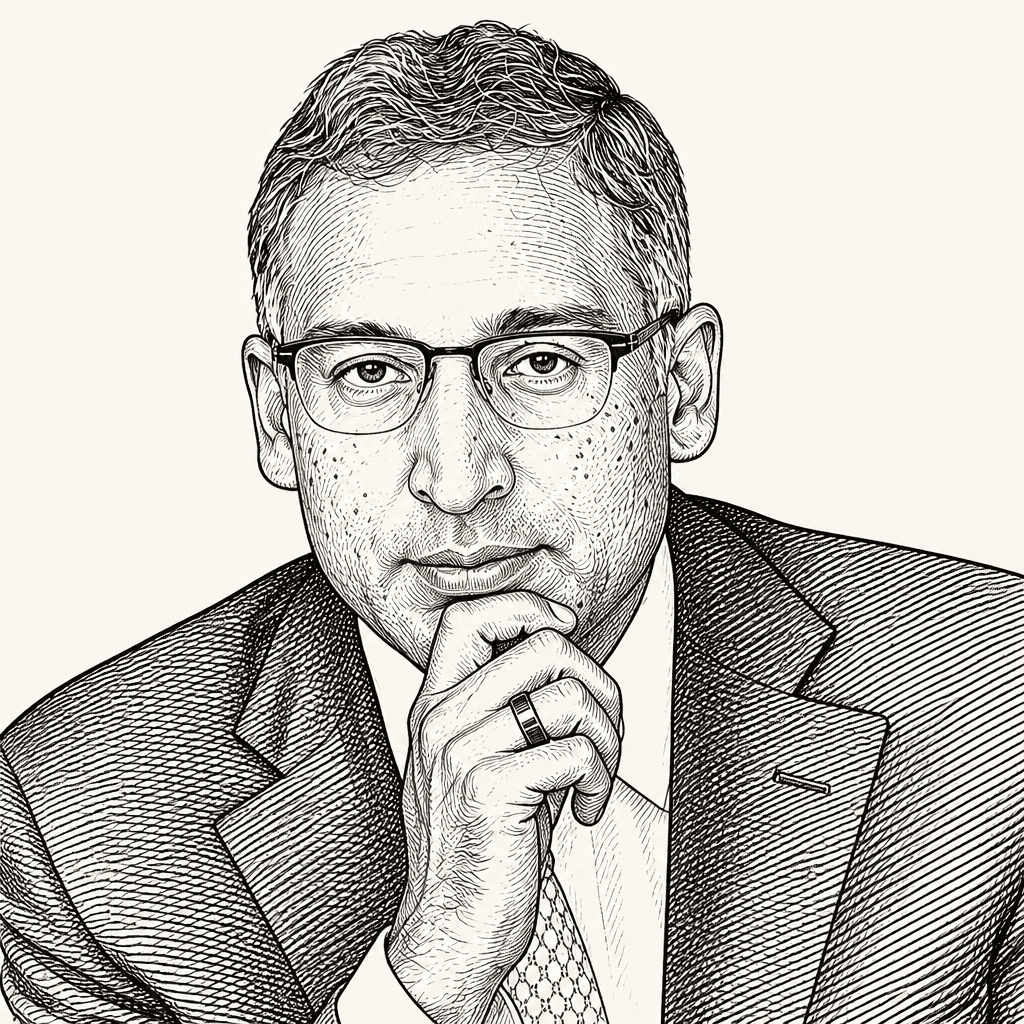
In a TED talk, Supreme Court lawyer Neal Kumar Katyal argues that AI helped him prepare for a historic tariff case, but did not win it for him. Katyal says a legal AI system trained on decades of justices’ questions and writings anticipated major lines of attack in a challenge to a president’s tariff program, including concerns that later appeared in argument and opinions. His central claim is that prediction is not persuasion: the case was won by combining AI-assisted foresight with human judgment, listening, composure and the ability to answer the person in front of him.
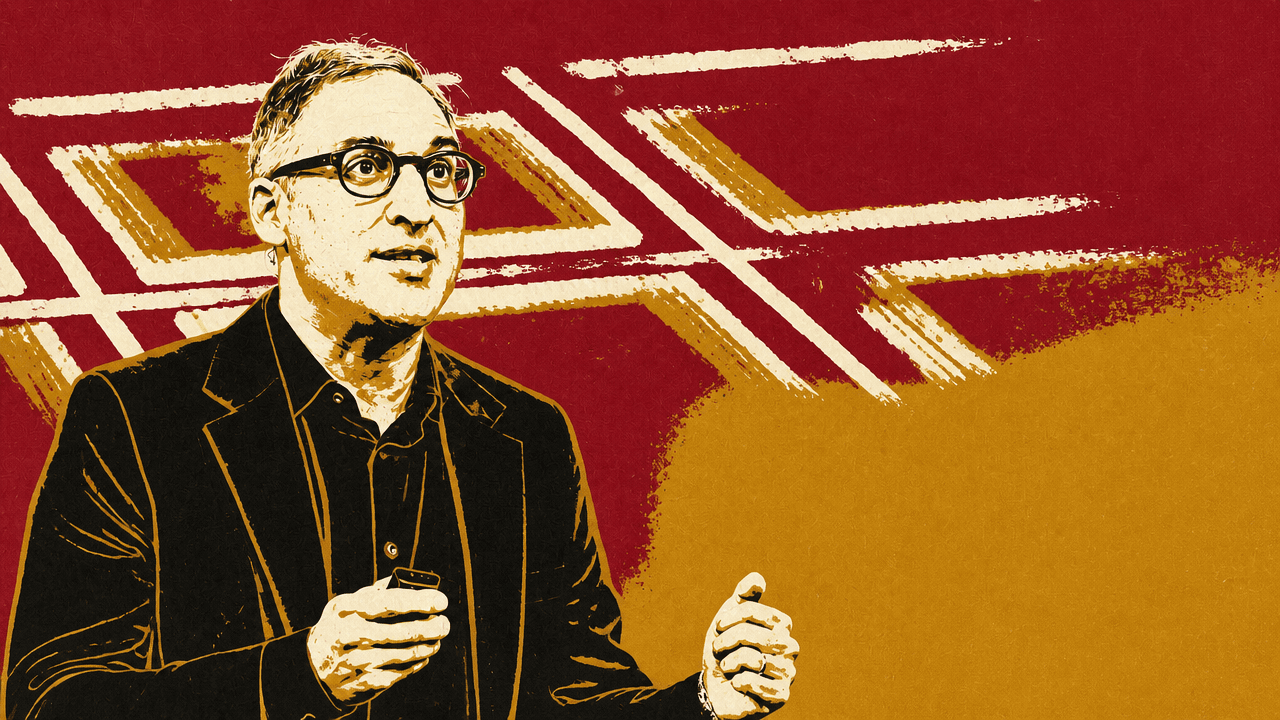
The AI predicted the attack; Katyal says connection won the argument
Neal Katyal’s account of the tariff case turns on a distinction he wants professionals facing AI to take seriously: prediction is not persuasion. The tool he called Harvey was trained, he said, on every question asked by a Supreme Court justice in the last 25 years and on the justices’ written output — opinions, concurrences, dissents, and separate opinions. It predicted several lines of attack he expected to face in a case challenging a president’s tariff program. But Katyal’s claim is that the case was not won by repeating what the machine produced. It was won by using that foresight while still listening, judging, and responding to the person in front of him.
The stakes, as he framed them, were constitutional as much as economic. On April 2, 2025, Katyal said, the president invoked a 1977 law and imposed tariffs on “virtually every country on Earth,” without a congressional vote. Katyal’s warning was broad: if a president can “command the global economy by yelling emergency,” then checks and balances do not merely bend; they break. The Article I and IEEPA framing came through his explanation and the on-screen comparisons between Harvey’s forecasts and the justices’ questions: Harvey anticipated questions about congressional power over “Duties” and “Imposts,” the assignment of taxing power to Congress, statutory silence on “tariffs” and “duties,” and whether emergency authority could be read to cover the tariff power.
He said he had been hired to persuade the Supreme Court to do what it had never done in 237 years: declare a sitting president’s signature initiative unconstitutional. The obstacles were political as well as institutional. Legal scholars, commentators, and even colleagues told him the case was impossible, he said, in part because three justices had been nominated by the president and three others by Republican presidents. Katyal said he thought that analysis was wrong, but he acknowledged the institutional problem: the Court had never taken the step he was asking it to take.
The public pressure arrived before the argument. A Washington Post opinion piece shown on screen called the choice of Katyal a “strategic mistake” and argued that “a conservative advocate would improve the challengers’ chances of overturning Trump’s policy.” Katyal said he read it over breakfast about two weeks before the argument. He was not replaced. In his account, he went to the podium and won: the president’s tariffs were declared unconstitutional.
That setting matters because of how Katyal describes Supreme Court advocacy. It is not a prepared speech delivered uninterrupted. An advocate stands about 10 feet from nine justices and faces roughly “50 questions thrown at you in 30 minutes.” The work becomes a chain of real-time decisions: which argument to make, which one to abandon, which word to use, when to pause, and what tone to take.
The argument he offered was not a simple celebration of a large legal victory. He organized the win around four forms of preparation: reframing fear, anticipating the Court’s lines of attack, listening under pressure, and cultivating stillness. Three of the teachers were human. The fourth, Harvey, was the AI.
Fear did not vanish; it changed shape
The first problem was not legal research. It was the private conviction, still present after dozens of Supreme Court arguments, that Neal Katyal did not belong in the room.
A month before argument, he said, he began working with Ben, a coach whose clients included sports figures such as Andre Agassi and Olympians. Ben’s focus was “game day”: the moment when preparation either appears under pressure or collapses. His first question to Katyal was direct: “What are you afraid of?”
Katyal’s answer was not that he lacked experience. He said he had already argued 52 cases, saved the Voting Rights Act, and struck down the Guantanamo military tribunals. But Ben forced him to acknowledge a belief he had buried: every time he entered the Court and saw the portraits on the walls, he thought, “They don’t look like me. I don’t belong here.”
Imposter syndrome doesn’t care about how many cases you’ve won, it cares about only your doubts.
Ben did not try to talk him out of the fear. He gave him a practice. Katyal showed a handwritten list of five adjectives: composed, present, prepared, laser focused, and strong. Ben had him visualize those traits every day before a mock court.
The decisive reframing came about 18 hours before the argument. Katyal told Ben he was terrified: he had to do a great job, had to remember 500 things, had to deliver an argument for history. Ben’s intervention was linguistic and small enough to sound almost trivial: change the vowel. Not “got to.” “Get to.”
That shift altered what Katyal was rehearsing. He did not “got to” argue the case; he “got to defend the Constitution of the United States.” He got to, as the son of immigrants, remind the country what it was about. He got to defend his parents’ vision of America.
“The terror didn’t disappear,” Katyal said, “but it transformed into joy.” He did not present this as a cure. The fear remained. But the emotion was reorganized around purpose rather than dread. In a performance environment where the wrong inward monologue can narrow attention and accelerate panic, the difference mattered.
Harvey was built to see the Court’s patterns
Neal Katyal first introduced Harvey as the relentless member of the team: someone who read “the 200th tariff case the same way as he reads the first.” He let Harvey’s work stand before explaining what Harvey was.
A month before the argument, Harvey predicted that Justice Amy Coney Barrett would ask about license fees. On screen, the prediction referred to cases allowing “monetary mechanisms (e.g., license fees)” to adjust imports and asked for the administrable principle distinguishing a license fee from a tariff. Beside it, the actual argument language showed Barrett asking why an earlier case “was very careful to always call it a license and a licensing fee” and asking for “the distinction between licenses and fees and if it matters.”
Harvey taught me peripheral vision, the idea of if you read a lot, you can see patterns and come up with stuff and anticipate the angles of attack before it arrived.
Harvey was an AI system, built with a legal AI company over the prior year. Katyal said he trained it on every question asked by a Supreme Court justice in the last 25 years, along with everything the justices had written: opinions, concurrences, dissents, and separate opinions. From that corpus, he said, patterns emerged.
The system’s predictions were not generic. Katyal showed examples tied to particular justices, with Harvey’s forecast on one side of the screen and the justice’s actual question or opinion language on the other.
| Justice | What Harvey anticipated | What Katyal showed from the Court |
|---|---|---|
| Justice Neil Gorsuch | A question about Article I, the power to lay “Duties” and “Imposts,” and whether Congress had clearly transferred taxing power to the executive under IEEPA. | Gorsuch asked whether the “key part of the context” was “the constitutional assignment of the taxing power to Congress.” |
| Justice Brett Kavanaugh | Pressure on whether the use of IEEPA for tariffs was different in kind, not just degree, from tools such as asset freezes and embargoes. | Kavanaugh asked about the difference between a quota and a tariff, and between an embargo and a tariff. |
| Justice Amy Coney Barrett | Concern about the “widespread economic and diplomatic consequences” of an injunction and the remedial approach. | Barrett asked how tariff reimbursements would work if the challengers won and whether the process would be “a complete mess.” |
| Chief Justice John Roberts | A route based on IEEPA’s silence on “tariffs,” “duties,” and limits on rate, scope, and duration, contrasted with Congress’s explicit limits in other tariff delegations. | The opinion language shown on screen said Congress has delegated tariff powers “in explicit terms” and “subject to strict limits.” |
Katyal’s account of the Chief Justice was not simply that the AI predicted a question. He said Harvey predicted an “escape route”: a way for Roberts to vote with the challengers while protecting the institution he had spent his career defending. Katyal’s role, as he described it, was to hold that door open. In Katyal’s telling, Roberts walked through it, writing a 6–3 opinion striking down the tariffs.
The most striking match, in Katyal’s telling, was not in the majority opinion. He said Harvey predicted Gorsuch’s separate opinion “almost verbatim.” On screen, Harvey’s forecast emphasized legal stability and the danger of adjustable rates, countries, and coverage. Gorsuch’s opinion, as displayed, said the president claimed authority to set tariffs at “1 percent or 1,000,000 percent,” target one product or nearly every product, and change his mind “at any time for nearly any reason.”
Katyal was careful about what he believed that kind of prediction meant. He rejected the idea that there was anything improper about anticipating a justice’s concerns. Predictability, in his account, is not a weakness in judging. It is what advocates should want from courts.
“Predictability is just consistency made visible,” he said. A justice who returns to the same principles across cases and years is, in Katyal’s language, “a justice with character.” Harvey did not find weakness in the justices, he said. It found integrity.
The machine could find the pattern; it could not argue the case
The praise for Harvey came with a warning. If Neal Katyal had merely repeated the AI’s output, he said, he would have lost “10-0,” a joke sharpened by the fact that there are only nine justices. The point was serious: the power of AI can tempt people to stop thinking.
He put the danger in four words: “The computer says so.” That, in his view, is where human judgment can end. People fold, the machine thinks, the human nods, and “in that nod, somewhere we disappear.”
His legal team’s response was not deference. Harvey was a sparring partner, not an oracle. Katyal called it “brilliant, tireless, occasionally insufferable, but not a god.” It generated questions. The lawyers had to find answers.
That distinction drove his broader claim about expertise. For centuries, he said, the expert was often the person who had read the most, remembered the most, and seen the most: the seasoned doctor, the experienced lawyer. That edge was accumulated knowledge. AI is making that particular edge “nearly worthless,” not because humans no longer matter, but because pattern recognition across huge bodies of information is becoming widely available.
The remaining advantage, he argued, is not breadth of knowledge by itself. AI can analyze and predict. It cannot do what he said actually won the argument: connect.
By connection, Katyal did not mean general warmth. He meant the ability to persuade a particular person in a particular moment by responding to something below the surface of a question. It is not just the argument, but “the delivery, the pause, the tone, the look that says, I hear you, and here is my answer.”
Listening was treated as a courtroom skill, not a courtesy
The third teacher was Liz, an improv coach. Neal Katyal’s claim was that improv mattered to Supreme Court advocacy because it trained the skill the courtroom demanded most: listening before answering.
Liz’s instruction was simple: actually listen. Not wait to speak. Not prepare a rebuttal while the other person is still talking. Quiet the internal monologue and trust that the next words can be found after the other person has spoken.
Katyal connected that to the improv principle of “yes, and.” In court, that did not mean agreeing with the justices. It meant absorbing the question, validating the concern beneath it, and then building back toward his answer. Under attack, he said, he tried to turn the interrogation into a dialogue.
The examples he showed were snippets of his argument, each addressed to a justice by name and each using the justice’s concern as the point of entry.
To Gorsuch and Barrett, he said: “This power, as Justice Gorsuch said, as Justice Barrett said, is going to be stuck with us forever.” To Justice Samuel Alito, he responded by invoking Alito’s own prior framing: “I think you’ve said many times the purpose isn’t what you look at, you look to actually what the government is doing.” To Kavanaugh, he began, “Thank you, Justice Kavanaugh. So, five answers on the Nixon precedent.”
With Justice Clarence Thomas, the answer became historical and memorable: “Tariffs are constitutionally special because our Founders feared revenue raising, unlike embargoes. There was no Boston Embargo Party, but there was certainly a Boston Tea Party.” With Justice Sonia Sotomayor, he acknowledged the breadth of the issue directly: “I wish I had an hour to talk about this with you, because this argument by the government is wrong every which way.”
Alito asked whether Katyal ever thought his legacy as a constitutional advocate would be “the man who revived the non-delegation argument.” Katyal’s answer was: “Heck yes, Justice Alito.”
The payoff, for Katyal, was clearest when prediction failed. Justice Barrett asked a question Harvey had not predicted. Katyal said that, for a moment, it felt as if Barrett and he were the only two people in the marble and mahogany room. In the half-second before answering, he did something he said no algorithm can do: he looked at her, “really looked,” and tried to understand her worry. Then he answered the worry.
That is the line Katyal drew between AI-assisted preparation and human advocacy. The system could map likely terrain. It could not inhabit the live exchange.
Stillness was part of the preparation
The fourth human teacher was Bob, a meditation coach. Neal Katyal introduced this with some resistance. He said he was “just about the last person to meditate” and had thought meditation was for people who own crystals. He added: “I do not own crystals.”
But before the tariff argument, he worked with Bob daily. The practice was not app-based. Bob rented an apartment a block from the Court, and the two worked together every day. Katyal spent 20 minutes a day focusing on a single word.
He described the result in tactical rather than spiritual terms. Bob did not just give him a mantra; he gave him “a weapon.” When Katyal entered the courtroom, he said, “the static was cleared.” He was calm. He was dangerous.
That stillness fits the rest of the preparation. Ben helped him transform fear into purpose. Harvey gave him an anticipatory map of likely legal attacks. Liz trained him to hear the question actually being asked. Bob helped reduce the internal noise that would interfere with all three.
Katyal showed a New York Times opinion screenshot by David French with the headline, “Is This the Most Important Supreme Court Case of the Century?” Katyal’s spoken description went a step further, saying the argument was one that some had called “the most important decision the Supreme Court has made in a century.”
When he walked into court, Katyal said, he carried no mountain of legal notes. He had an email from Liz about the power of connection. On top of it, in his own handwriting, he had written his parents’ names, his children’s names, and his wife’s name — the people he was fighting for.
His father, he said, was his first audience and did not live to see the argument. After the case, as Katyal walked out past the Court’s marble walls and portraits of people who did not look like him, he received a message from Ben: “So happy for you Neal! I think your dad was watching over you too my friend.”
The ending returned to the phrase Ben had given him. The newest technology, the oldest human wisdom, and the most powerful court met at the same podium. Katyal’s final formulation was not that he had to do it. It was: “I get to do that.”