Nvidia Seeks to Turn AI Compute Into Financeable Infrastructure
 Alex EdelsonErnie Garcia
 John Coogan
 Conor SenIan McGinley
 Jordi Hays
 Sam Altman
 Jensen Huang
 Nico SimkoTBPNTuesday, August 11, 202614 min read
Nvidia CEO Jensen Huang argues that profitable AI token demand justifies a far larger buildout of computing capacity—and is seeking to make that buildout financeable through platforms with major private-capital firms. The plan depends on lenders treating standardized AI data centers less like rapidly depreciating venture-backed equipment and more like infrastructure, despite unresolved questions about GPU residual values and the private labs whose demand is meant to support the assets.
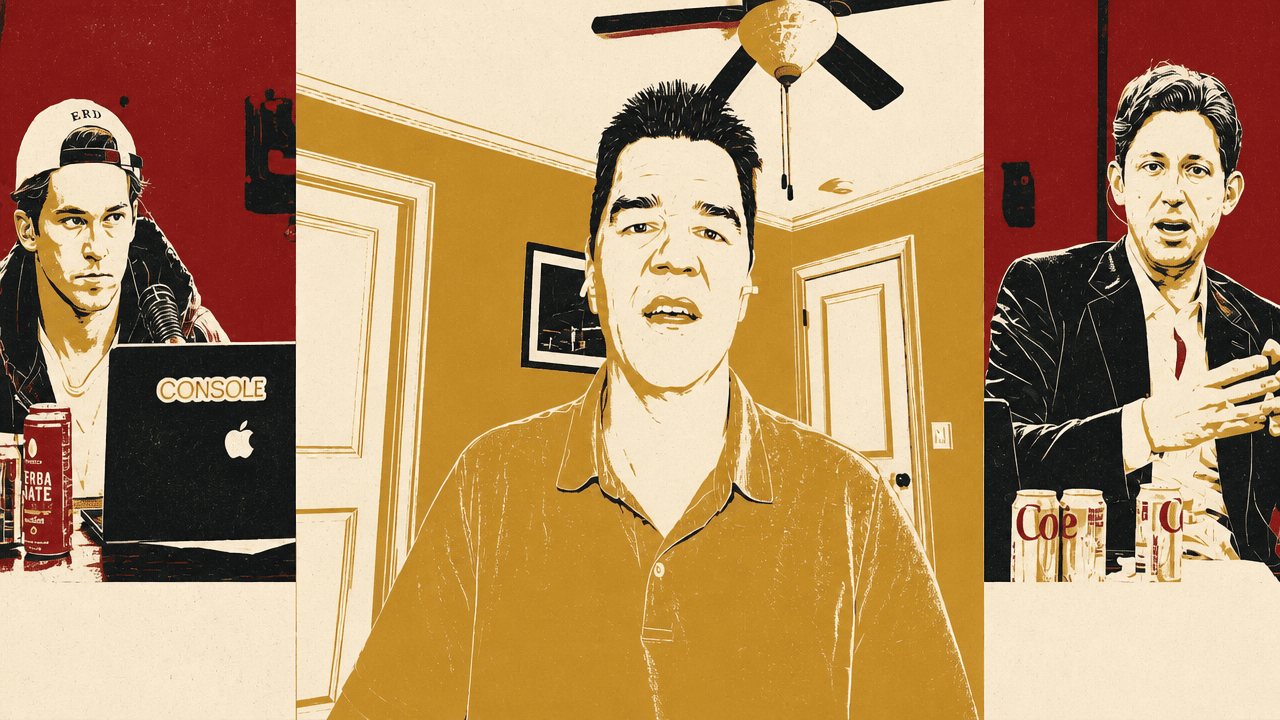
Nvidia is trying to make compute financeable like infrastructure
Jensen Huang described an AI supply chain constrained at nearly every point: chips, memory, packaging, systems, photonics, connectors, land, power, and construction labor. His premise was that those bottlenecks have arrived just as AI has begun doing productive work around the world. “AI tokens are profitable,” he said. “Incredibly profitable. When you have something profitable, everybody wants to make more of it.”


We're going to be constrained for some time, and pretty much across the board. From chips to memories to packaging, to systems, photonics, connectors, land, power, construction workers. The whole thing.
That claim underpins Nvidia’s announced partnerships with Apollo, BlackRock, Blackstone, Brookfield, Goldman Sachs, and KKR. In an X post shown on screen, Huang said the partners would establish independent financing platforms designed to mobilize more than $500 billion in third-party capital for AI infrastructure over time. John Coogan also cited Apollo president Jim Zelter’s estimate that more than $8 trillion of capital is expected to go into AI infrastructure, with private capital financing part of the buildout alongside public markets.
Huang’s case was not simply that AI is strategically important. It was an argument about the economics of its output. He compared AI labs buying compute with Nvidia buying wafers from TSMC: if an input is profitable and demand is strong, the rational response is to buy more of it. He called AI labs the fastest-growing technology companies in history and said observers would recognize their profitability within months.
The financing plan therefore rests on a proposition that is important but difficult for outside investors to inspect. Jordi Hays noted that the two leading AI companies are private. Financial numbers emerge intermittently, but the market does not receive a complete picture. In his formulation, companies materially influencing public-market behavior are themselves private.

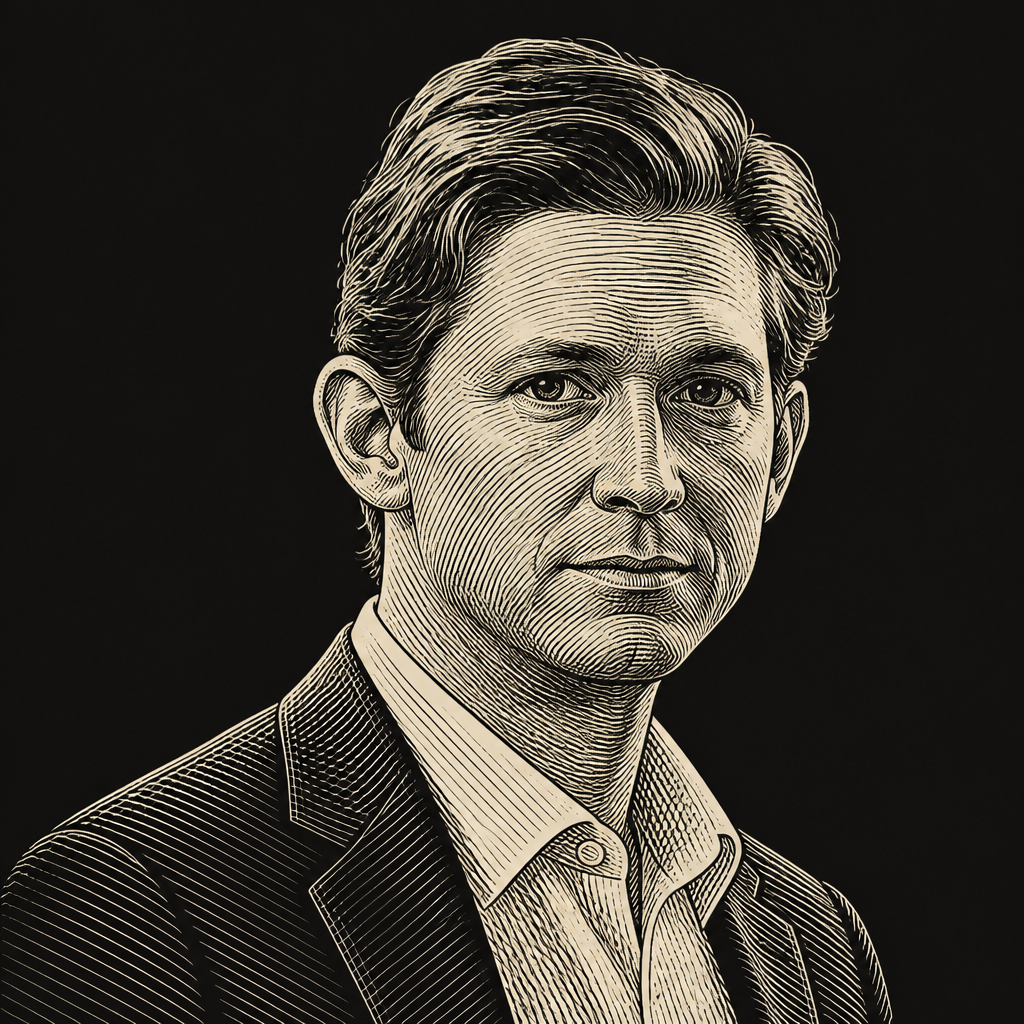
John Coogan framed the financing platforms as one layer in a broader stack. Institutional capital can fund a data center; Nvidia supplies chips and systems; an operator builds capacity; and a lab rents the resulting compute. Coogan placed SpaceX on the supply side of that system, as a prospective “neo-cloud” selling compute, rather than as proof of any particular lab’s inference demand.


His rough arithmetic made the headline figure seem less exceptional. At an estimated $50 billion to $60 billion per gigawatt of compute capacity, $500 billion supports roughly 10 gigawatts. Coogan characterized that as the next stage of an already rapidly scaling buildout, rather than an end-state. He said Meta individually had a plan at a similar 10-gigawatt scale.
The difficult financial question is whether compute can be made legible to lenders as infrastructure rather than as fast-depreciating equipment purchased by venture-backed companies.
Prakash’s X post sketched a possible route to financing compute assets. Banks dislike GPUs as collateral, the post argued, because a newer generation can make existing equipment obsolete quickly. Nvidia knows its own roadmap, however, and Prakash suggested it might offer depreciation insurance of up to 25% while helping lenders standardize data-center reference designs.
Under that scenario, a one-gigawatt Blackwell data center in a defined configuration would become more fungible: a project lenders can classify, compare, and underwrite across borrowers. Debt secured against such facilities could potentially be repackaged into asset-backed securities, collateralized loan obligations, and collateralized debt obligations. The post invoked the 2008-era acronyms deliberately, but the proposed mechanism was straightforward: replace part of a project’s idiosyncratic credit risk with sector-level risk, make the debt easier to tranche, and widen the eventual buyer base to pension funds and insurers.
Coogan’s formulation was plainer. Nvidia is trying to help its customers borrow at rates closer to real estate than venture equity. If successful, data-center development could draw on a deeper pool of institutional capital than conventional startup funding.
The asset Nvidia is presenting is therefore not simply a GPU. It is an AI factory: an integrated computing system whose token output is valuable enough, Nvidia argues, to support a financing market around it. That proposition depends on durable, monetizable token demand; AI labs demonstrating the profitability Huang predicts; and lenders accepting the residual-value assumptions and standardization of the underlying compute assets.
Paramount is using California jobs as leverage against an antitrust case
Paramount CEO David Ellison is reportedly prepared to begin moving the company out of California if the state will not negotiate a settlement over Paramount’s proposed Warner Bros. Discovery acquisition. The threat is aimed at California Attorney General Rob Bonta, one of 12 state attorneys general seeking to block the transaction.
According to a Variety report summarized by John Coogan, Paramount would begin preparing an exit if settlement negotiations had not begun by August 1. The report said the Paramount Skydance board had approved relocation plans and that its Los Angeles headquarters could move as early as October 1, though no destination had been selected. Georgia, Texas, and Tennessee were reportedly under consideration.
The immediate pressure is financial. Beginning October 1, Paramount will owe Warner Bros. Discovery shareholders a $7 million-per-day ticking fee until the transaction closes. The antitrust trial is scheduled for May 2, 2027. Coogan estimated that the daily charge could reach roughly $1.2 billion by the time the case concludes.
The dispute is not simply over commitments to maintain production in California. Bonta has said an acceptable resolution would probably need structural remedies, such as asset divestitures, rather than behavioral commitments such as maintaining a specified film-production level. A pledge to make 12 or 24 films annually would not necessarily answer the state’s concern about the combined company’s structure.
Jordi Hays called a relocation threat Ellison’s nuclear option. A protracted case would delay integration and make the acquisition materially more expensive. Yet moving the historic Paramount headquarters would also antagonize an industry centered in Los Angeles.
Coogan distinguished symbolism from direct economic impact. Moving an individual production from Los Angeles to Atlanta might shift more spending than moving a corporate headquarters. But putting Paramount’s iconic Hollywood base on the line makes the message unmistakable: if California will not help establish a path to closing the deal, Paramount is prepared to take senior jobs and eventually operations elsewhere.
A merger could turn Tesla’s operating milestones into a valuation test
A provision in Elon Musk’s 2025 Tesla compensation agreement creates an unusual incentive around a possible acquisition of Tesla by SpaceX. John Coogan stressed that this is not an imminent or simple transaction: Tesla shareholders would need to approve it, and both companies would need to support a transaction at a still-hypothetical scale. But a change of control would materially alter the mechanics of Musk’s stock award.
Under the ordinary terms described by Coogan, Musk can earn as many as 423 million Tesla shares across 12 tranches. Each tranche requires both a market-capitalization threshold and an operational milestone. The targets include 20 million vehicle deliveries, 10 million active Full Self-Driving subscriptions, one million Optimus robots delivered, and one million robotaxis in commercial operation. Tesla would ultimately need to reach an $8.5 trillion market capitalization for all 12 tranches to qualify.
In an acquisition, however, the operating requirements would disappear. Tesla would determine how many of the tranches qualify solely from the company’s value at the time of the transaction. The relevant figure would be whichever is higher: Tesla’s market capitalization immediately before the deal or the value implied by the price paid to Tesla shareholders.
That makes a sufficiently expensive acquisition a possible substitute for years of individual execution tests. At an $8.5 trillion valuation, all 12 tranches could qualify without Tesla accomplishing many of the operating milestones otherwise attached to the award.
The provision does not make the outcome easy. Coogan said $8.5 trillion would be more than six times Tesla’s recent market capitalization, while a buyer would have to support the acquisition price and persuade Tesla shareholders to approve the deal. The Wall Street Journal’s estimate, as relayed by Coogan, put Musk’s maximum award at roughly $824 billion despite the package’s familiar $1 trillion label.
Jordi Hays argued that Musk’s incentives would not all point in the same direction. Musk has greater ownership in SpaceX, which means he could benefit when SpaceX acquires Tesla at a lower valuation. But a high Tesla price could unlock more of Musk’s Tesla compensation, which would then roll into the combined entity. Hays called the structure U-shaped: Musk may benefit from a low acquisition price through SpaceX ownership and from a very high price through the Tesla award, with a more complicated middle.
The operating targets remain meaningful under the agreement’s normal terms, but the central story is the exception. A compensation plan designed to demand a dozen extraordinary milestones can, after a change of control, become principally a test of transaction valuation.
A SpaceX-Tesla combination would matter beyond the pay package. Coogan said it could consolidate more of Musk’s businesses under one roof and potentially increase his effective control over Tesla. The change-of-control provision turns a possible merger into more than a question of industrial strategy: it also offers a route through a compensation plan that otherwise requires a remarkable set of operating outcomes.
Carvana made online car buying viable by owning the hard parts
Ernie Garcia described Carvana as a different supply chain rather than a better dealership website. Traditional dealerships share a cost structure that, in his view, pressures them to maximize revenue in the finance-and-insurance back room. Carvana’s response was to vertically integrate enough of the transaction that buying a car could be simpler for the customer.
The goal with Carvana was to try to build a different supply chain, different cost structure, vertically integrate, so that customer experiences could economically be simple.
The company buys cars from consumers, moves them to large reconditioning facilities, puts roughly $1,000 in parts and labor into each one, runs its own logistics system, and offers financing, trade-in values, warranty choices, and delivery through a fully transactable website. Garcia said Carvana now lists 50,000 cars. Beneath that interface are a retailer, a remanufacturing business, a logistics company, and a finance company.
The model depended on first overcoming a basic trust problem: would consumers purchase a vehicle without seeing it? Garcia delivered the company’s first sale himself. The customer immediately opened the hood to make sure the car really had an engine, having argued with friends about whether the business could possibly be real. Carvana’s seven-day return policy was its answer to that skepticism.
That policy changes the physical economics of the business. If customers will buy sight unseen with a meaningful return option, inventory does not need to sit at every local point of sale. It can be centralized, offered nationally, and delivered through a logistics network rather than distributed across dealership lots. Garcia said that, when Carvana went public in 2017, 30% of customers did not test-drive their vehicle before purchase.
The company’s asset-heavy approach ran against the marketplace preferences of its founding period. Garcia said Silicon Valley did not respond well to a model built around owned inventory, facilities, logistics, and finance, contributing to Carvana’s decision to go public in 2017 as a four-year-old company. Public-market access gave it a source of equity capital and improved access to the financing needed for inventory and its finance operation.
Garcia’s larger management lesson came from the subsequent swings in market judgment. Carvana became a COVID beneficiary after initially facing a severe transactional shock, then faced a dramatic reversal in 2022. He argued that stock prices reflect not only operating reality but also investor pressure, changing themes, and the expectation that other investors may sell. Carvana treated that period as a hard organizational problem to survive together.
This is our moment where we publicly look dumb, and we gotta ride it out and go through the hard thing.
Carvana’s central constraint is now reconditioning rather than demand. Garcia said the company has 2% market share, earns returns two to two-and-a-half times normal industry levels, and believes it could sell more cars than it can currently prepare. Every used vehicle arrives needing a different combination of inspection, repair, and cosmetic work. That makes the operation harder to automate than a conventional factory, where each unit follows the same production sequence.
Some repeated tasks, including tire changes, may automate earlier. Assessment of condition and the workflow around repairs are already improving, Garcia said, but a fully lights-out reconditioning operation is likely to take longer than traditional manufacturing automation. In the nearer term, he expects Carvana’s next five years of economic performance to turn on making that machine incrementally bigger and more efficient every day.
Its digital pricing system illustrates the standard Garcia thinks matters: it does not need to be perfectly right; it needs to be as accurate as the market it replaces. In an early test across 100 wholesale-auction vehicles, physical buyers who inspected cars in person had an average absolute pricing error of about $1,200. Carvana’s first-generation model, using far less specific information, was off by about $1,300.
At pickup, the company runs an OBD2 diagnostic scan and may reprice a vehicle if its actual condition differs materially from the estimate. But Garcia said well over 90% of customers receive the value they were quoted. The early lesson was that a remote model did not need omniscience. It needed to perform comparably to the incumbent system of physical buyers.
AI is useful to Carvana because the transaction has already been broken into deterministic services. A buyer may need to combine a trade-in, cash, financing, a warranty decision, insurance, registration, title documents, and identity or financial verification. The transaction is complicated, but the economic terms are not individually negotiated with a dealer’s finance-and-insurance agent.
Garcia said that structure lets natural-language customer questions draw on the full operating system. He sees that as an advantage over conventional auto retail, where the underlying data and decisions are less standardized. The AI layer is consequential not because it replaces Carvana’s physical infrastructure, but because it can make that infrastructure easier for the customer to navigate.
Prediction markets have fraud rules, but their product boundaries remain unsettled
Ian McGinley, former head of enforcement at the Commodity Futures Trading Commission, said prediction markets are here to stay. They have captured retail and institutional attention, he said, but their legal and practical boundaries remain unsettled—especially for sports-event contracts.
States that have regulated gambling for decades are challenging sports contracts because they could lose both revenue and authority. McGinley said some district courts have sided with prediction-market operators on the theory that federal law preempts state regulation and places the products under CFTC jurisdiction; one appellate court has reached the same conclusion. Other courts will weigh in, and he expects the question could ultimately reach the Supreme Court.
The CFTC’s basic position is that these products are financial instruments, or swaps: agreements between parties based on the occurrence of an event with economic or financial consequences. That gives the agency authority over fraud and manipulation. McGinley expects more specific rules as the market expands beyond historically limited uses and into sports, politics, travel, entertainment, and other everyday events.
The central enforcement issue is not new in his account, even if the venue is. A person cannot trade a contract using information that is not theirs to use. Someone cannot buy an event contract knowing they will be the relevant guest or participant. In discussing allegations related to a Maduro market, McGinley emphasized that the allegations had not been proven. But he said the alleged conduct would have been illegal independent of prediction markets: it is akin to knowing the answer before taking the test.
The challenge is that contracts can now exist around nearly anything. Equity and commodity markets have established training, policies, surveillance, and compliance infrastructure. People who never thought of themselves as market participants may suddenly possess information connected to a tradable event. McGinley said industries affected by prediction markets need to understand the exposure, including possible CFTC and Justice Department enforcement.
Jordi Hays raised a separate policy concern: widely accessible markets can give participants a financial incentive to influence the events being traded. The hosts had experienced a minor version in their own chat, where markets on what a guest might say drew in users more interested in steering the conversation than understanding it. Hays cited a military-operation-related market as a far more serious illustration of the possibility that a person close to an event could be incentivized to signal, manipulate, or endanger others for profit.
McGinley said the CFTC is confronting this question through proposed rules meant to prohibit contracts that are potentially manipulable. The objective, as he described it, is to preserve contracts that people find informative or economically useful for hedging while avoiding incentives for traders to cause the outcome.
A newly discussed lawsuit involving flight-tracking data shows how quickly the question can spread. The hosts raised FlightAware’s suit against Kalshi over flight-cancellation contracts and the public concern that someone might disrupt a flight to profit from a cancellation market. McGinley had not reviewed the newly filed matter in detail, but returned to the core regulatory question: distinguish contracts that produce information from contracts that create dangerous incentives to alter reality.
The hosts compared ubiquitous sports contracts with an older, more friction-filled model of gambling, including travel to a casino, warnings, hotlines, and self-exclusion programs. Their question was whether a product described as “trading” can avoid comparable safeguards when its practical use resembles a casino on a phone.
McGinley said the CFTC has tools to regulate the market, though it has not historically regulated these particular subject areas and government takes time to catch up with industry. He also stressed the informational value that gives prediction markets their appeal. He called the 2024 election a watershed: traditional polling and experts had described a close contest, while prediction markets showed a comfortable lead for the eventual winner in swing states. Rate-change markets can similarly offer an implied view alongside other financial information.
The unresolved question is not whether event markets can provide useful information. It is which contracts can do so without creating unacceptable manipulation risks, and what safeguards the CFTC will impose as the category expands.