Consumer AI Must Prove It Expands Capability, Not Consumption
John Coogan and Jordi Hays question whether Apple’s foldable iPhone Duo and Meta’s Muse agent will give consumers meaningful new ways to create and act, or chiefly capture more spending, attention and commerce. Coogan argues that Apple can sell the Duo on status and familiar demand, and that Meta’s advantage may be distribution; Hays doubts that a larger screen or a personal agent necessarily expands human capability. Those consumer-facing bets coincide with Anthropic researcher Jacob Coxon’s resignation and warning that AI companies are racing toward dangerous systems, while Anthropic’s Evan Hubinger said the company did not yet have a plan to solve superintelligence alignment.
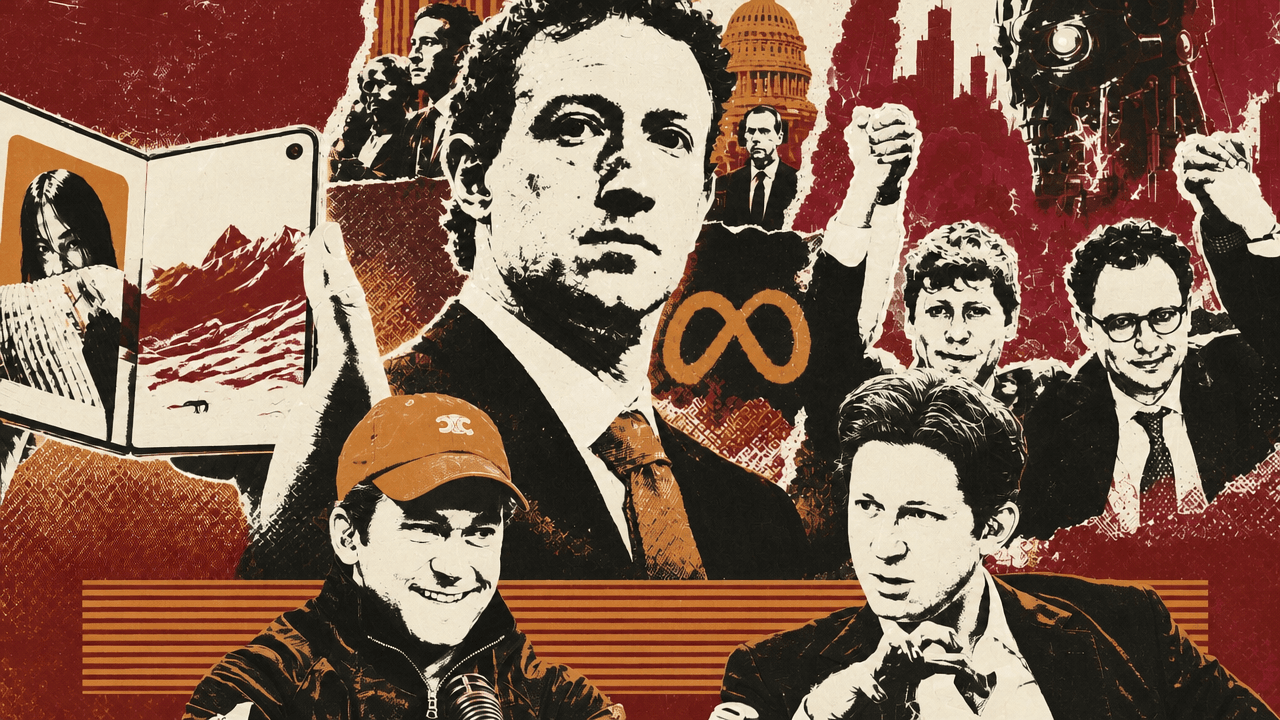
A public extinction forecast raises a demand for more than alarm
John Coogan treated Jacob Coxon’s resignation from Anthropic as more than a dispute between an employee and his employer. Coxon said he had spent three years doing pretraining research at OpenAI and Anthropic, and that neither company was acting responsibly. Both, he wrote, were racing toward self-improving superintelligence and “gambling with our lives.”
The post drew roughly 100 million views and 600,000 likes, according to Coogan. Its force came partly from Coxon’s decision to leave not only Anthropic but the AI industry, and partly from the fact that Evan Hubinger, an Anthropic alignment researcher, publicly reinforced rather than rejected the underlying fear. Hubinger wrote that people at Anthropic “really do earnestly believe AI could kill all humans,” put his own probability above 10% within the next decade, and said the company did not yet have a plan to solve alignment for superintelligence or appear clearly on track to do so.
The >10% figure became the focal point of the backlash. Jordi Hays quoted Nader Khalil’s response: anyone publicly assigning more than a 10% chance to human extinction within a decade owes people a clear account of how they reached that number and what would change their mind. The objection was not merely to pessimism. A forecast of that magnitude, Hays suggested, cannot rest on an unexamined intuition or what Coogan described as a “vibe prediction.”
The public reaction ranged from disbelief to cynicism. Martin Casado, who said he had worked on a thermonuclear-weapons project, wrote that the dissonance around this debate was more bizarre than what he encountered there. Ryan Petersen turned Hubinger’s statement into a dark investment joke, saying it made him want to buy more stock in a company so committed to making money regardless of the consequences. Others challenged Coxon over whether leaving was consistent with retaining equity in the company.
Coogan did not try to settle the probability question. He noted that Hubinger linked to Anthropic’s risk report and said Anthropic has a reasonable scaling policy, including pacing the frontier and collaborating with other labs. Coogan was “oddly optimistic” that coordination can occur, in part because AI has already produced unexpected relationships among people and institutions that publicly criticize one another.
Hays focused on a harder practical question. If a researcher genuinely believes the situation is existentially dangerous, is resignation an adequate response—or, as he put it, a kind of rage quit? Coogan’s answer was limited: in a sufficiently large organization, a person below a certain level may find it difficult to make things happen. He did not claim that leaving is necessarily right. The unresolved tension is how people who think the technology could be catastrophic should act within institutions that are simultaneously competing to build it, trying to govern it, and publicly warning about it.
Meta’s consumer-agent advantage may be distribution, not trust
Meta’s Muse is intended to make AI agents part of ordinary consumer behavior: buying goods online, responding to email, and carrying out other tasks a user authorizes. John Coogan described it as the product expression of Mark Zuckerberg’s broader “personal superintelligence” framing. Instead of emphasizing coding or business workflows—the uses that have helped Anthropic and OpenAI build large agent businesses—Muse is meant to be operated conversationally by consumers and can be given a user-chosen name.
The commercial bet is that ease of use can close the gap between technically capable agents and mainstream adoption. The product is free for most use, with $20- and $100-per-month tiers for heavier users. A Wall Street Journal article shown on screen described Meta’s investments in AI as expected to top $130 billion that year and presented Muse as an agent that could shop and send emails. Coogan’s immediate question was how Meta would ultimately monetize the behavior: through advertising, agentic commerce, or both.
He also highlighted a product claim that makes Muse more than a chatbot interface: a sequestered virtual machine for each user, with 8 GB of memory and 8 GB of storage, alongside security work associated with WhatsApp’s end-to-end encryption. Jordi Hays questioned the cost of effectively giving each user meaningful computing resources. Coogan speculated that the virtual machine would likely be spun up when needed and taken down afterward, rather than run continuously. At $20 or $100 a month, he added, a subscription could plausibly cover compute comparable in cost to conventional virtual-machine hosting.
Muse’s launch also produced an immediate failure of product coherence. In a WhatsApp exchange shown on screen, a user asked Meta AI how to use Muse. The assistant answered that Muse was “a free AI assistant from Anthropic” and directed the user to claude.ai. Hays was struck by the fact that Meta’s own assistant appeared unable to identify Meta’s new product; Coogan called it especially strange because he knew of no Anthropic product named Muse.
Coogan’s explanation was tentative: Meta has assistants and models distributed across products at enormous scale, and those systems may not yet be unified. The exchange suggested the distance between announcing a personal agent and ensuring that Meta’s existing interfaces reliably understand it.
The sharper competitive question is whether Meta built Muse as a response to Instinct, an early personal-agent company, or whether it had been pursuing the product independently. Hays raised a rumor that Meta and others had made a 10-figure offer for Instinct. Coogan thought Muse would compete directly with Instinct but doubted it was simply a clone. He pointed to Meta’s acquisition of Manis, Zuckerberg’s year-long messaging around personal superintelligence, and a previous exchange in which Zuckerberg had indicated that AI-assisted purchasing of items discovered online was a direction Meta expected to pursue.
For Coogan, distribution is the central reason Muse could matter even if standalone agents remain difficult to sell. He argued that Meta did not win against Snapchat by launching a separate clone; it won by putting comparable behavior into Instagram, where users already were. A separate Muse app has a more difficult adoption path. An agent embedded in Instagram, by contrast, could meet users in an environment where people already browse products, linger over items, encounter retargeted ads, and shop.
Meta can also promote its own products across its existing surfaces. Hays pointed to the prominent in-app promotion Meta has used for its glasses. But he added a constraint: people primarily come to Meta’s apps to be entertained, while Muse sounds like a productivity tool. Shopping makes the fit more plausible, but it does not resolve the category mismatch. Coogan’s view was that Meta should first let early adopters expose the product’s flaws before turning Instagram into a billboard for it. At the time of the discussion, Hays said Muse was third in the App Store rankings, behind ESPN Fantasy Sports and ChatGPT.
Jobs imagined an interactive Aristotle; Coogan imagines what that standard would demand of AI
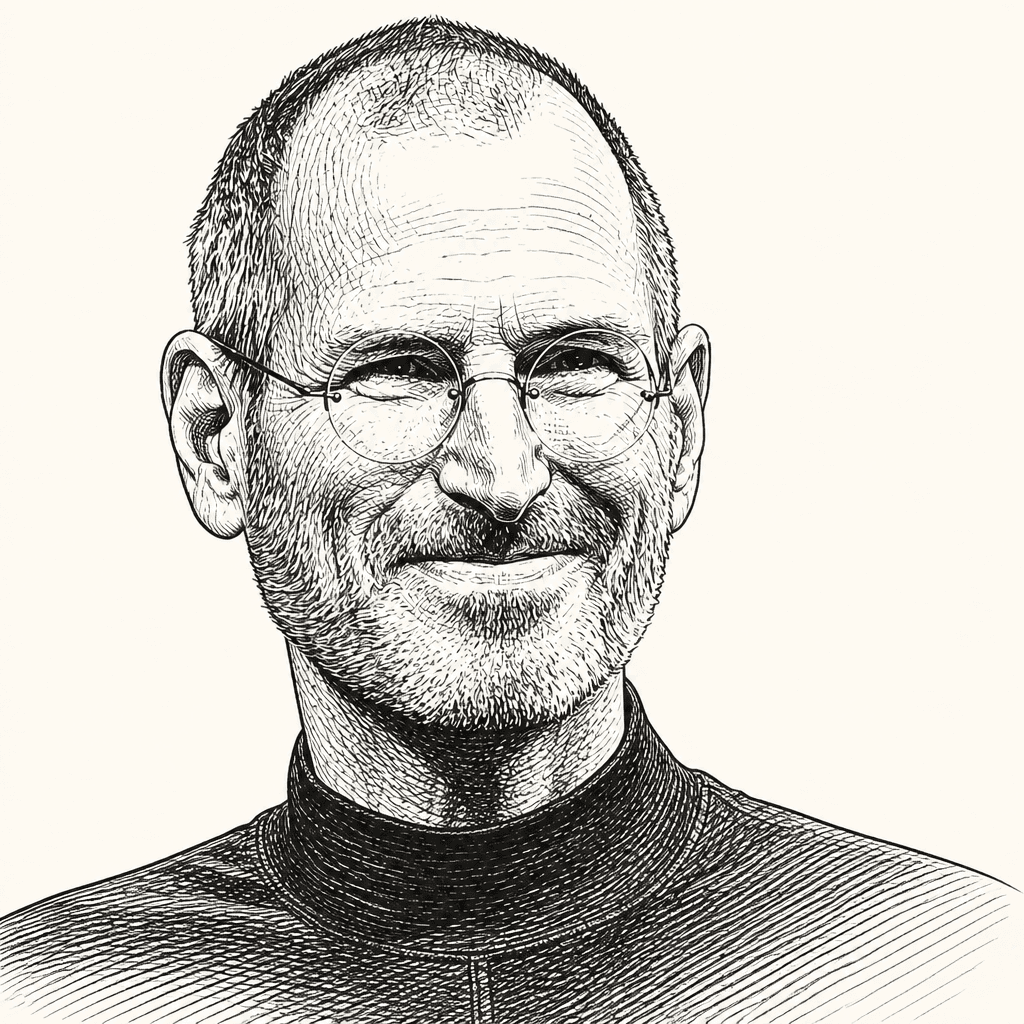
In a 1985 clip, Steve Jobs described learning that Aristotle had tutored Alexander the Great for 14 years and feeling jealous of that access. Printed books let people read Aristotle directly, Jobs said, but they cannot answer questions. His hope was for an interactive kind of computer tool that could capture a great thinker’s “underlying worldview.”
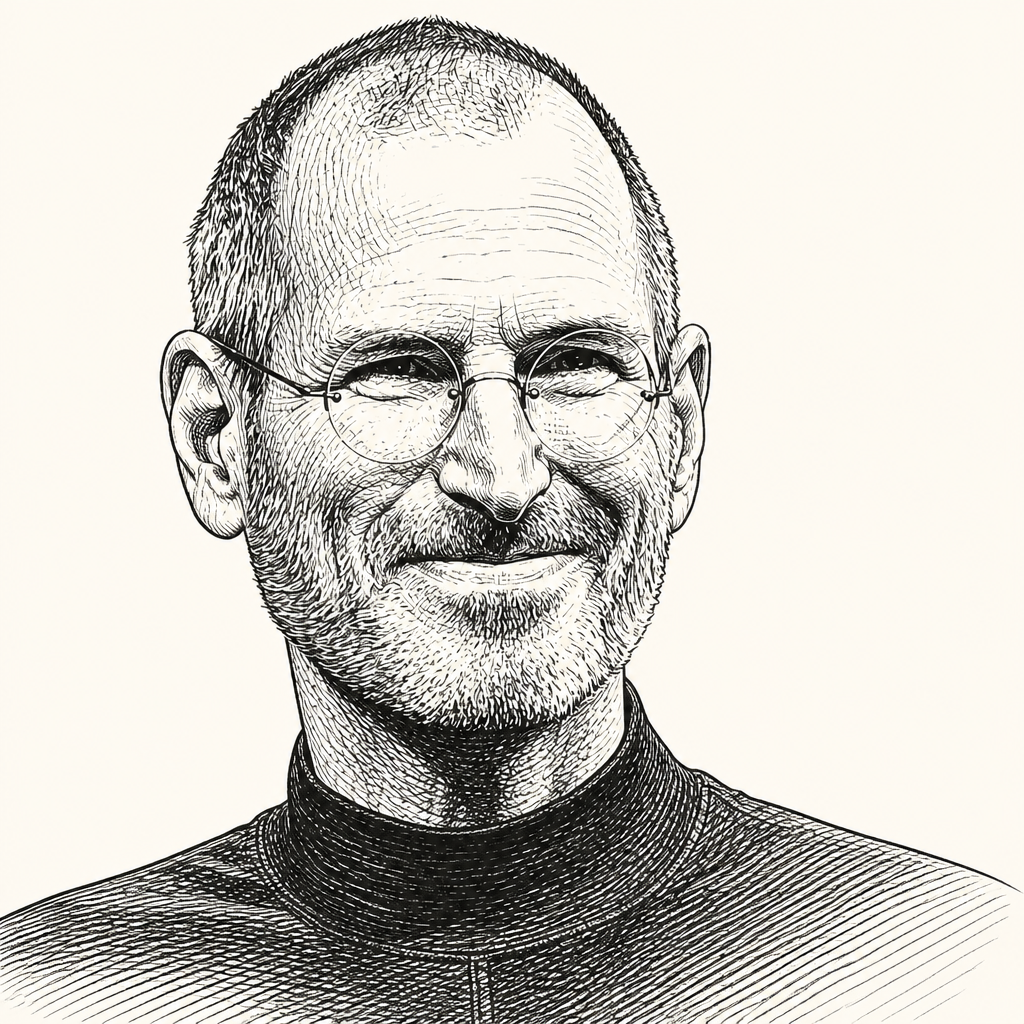
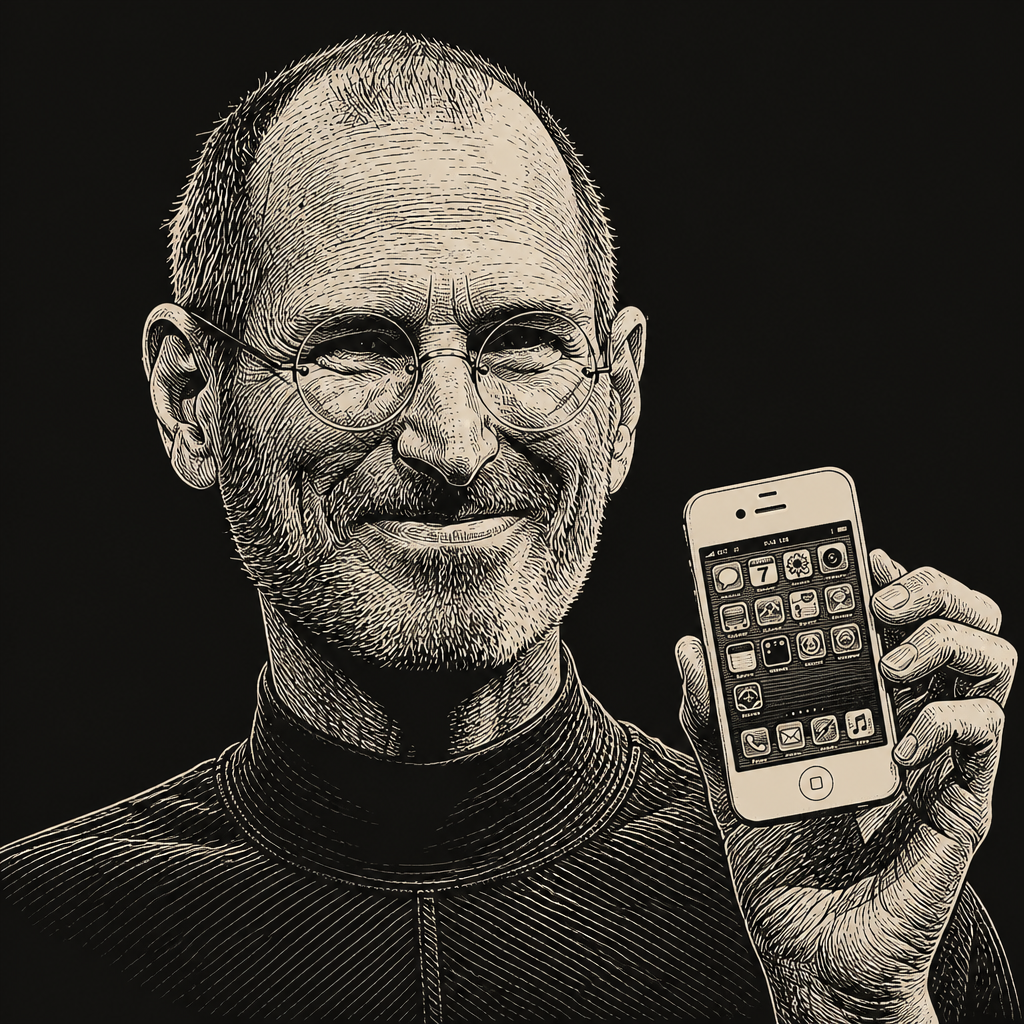
And someday, some student will be able to not only read the words Aristotle wrote, but ask Aristotle a question and get an answer.
John Coogan took that as a remarkably early description of a core promise of conversational AI: not simply storing knowledge, but making it responsive. He also emphasized how Jobs presented the idea. Jobs set up a hypothetical question, paused on the joke that one can ask Aristotle but will not receive an answer, and made the possibility feel personal rather than abstract.
For Coogan, that combination of technological ambition and enthusiasm explains why Jobs remains a defining techno-optimist. He connected it to Jobs’s “bicycle for the mind” idea and to an old GarageBand demonstration in which Jobs sat at a computer and used loops as a self-described non-musician. The appeal was not that software could create limitless material. It was that a person could make something new with it.
Coogan then moved explicitly into speculation, using an AI-generated exercise that asked an AI version of Jobs what he would think about modern AI. He speculated that Jobs would probably be pro-AI while demanding that it earn its place in people’s lives: it should give users new abilities in learning, designing, composing, and building; understand intent with minimal instruction; and help someone realize an original vision rather than produce generic content at scale. Coogan’s shorthand was that Jobs would be “anti-slop, but pro-AI.”
He paired that imagined Jobs with an imagined Aristotelian objection to treating reduced effort as automatically good. The relevant question, in Coogan’s framing, would be what AI does to human character and whether it supports human flourishing. Hays condensed the practical imperative: create more than you consume.
Hays nevertheless rejected the idea that a Jobs-like advocate would cleanly resolve the politics of AI. He said he has come to regard the technology as fundamentally scary even though it is also very cool. A persuasive optimist might be usefully counter-positioned, he said, but would not stop others from making the technology seem more frightening or from “poisoning the discourse.” When Coogan asked what Jobs’s probability of AI-driven extinction might be, Hays guessed 1%; Coogan agreed. The hypothetical low estimate did not make the public argument around AI any less fraught.
Apple’s foldable tests whether a bigger screen changes behavior or simply captures more value
John Coogan expects Apple’s newly announced foldable iPhone Duo to sell well even if it does “nothing new at all.” In his view, the appeal is not principally a breakthrough use case. It is a visibly different, high-status object in a product category that has mostly offered incremental upgrades. He estimated that the Duo could cost around $2,000, with a fully configured version perhaps reaching $3,000—a purchase that signals more than paying extra for a Pro model.
The 9to5Mac material shown on screen makes the hardware proposition clear: the phone opens into a broad, tablet-like landscape display, including an iOS home screen spread across the unfolded device. A close-up of the folded hardware showed its dual rear cameras, front display, and a squared-off central edge around the curved screen. In the promotional video, Coogan could see no crease. He expected reviewers to hunt for one in different lighting, but his initial impression was that Apple had waited long enough to avoid an obvious crease altogether.
His economic case was that phones remain cheap relative to the value people derive from them. People spend more time on phones than in cars, he argued, while cars often cost ten times as much or more. A foldable therefore gives Apple a way to charge more in a mature category without asking consumers to adopt an unfamiliar computing model.
Jordi Hays saw the same product as evidence that the iPhone may be approaching its “final form”: a major visible hardware step that “does absolutely nothing new for you.” The Duo expands the screen but does not necessarily expand human capability. Their joke about watching two vertical short-video feeds at once captured the concern that the device could be optimized chiefly for more attention and more screen time.
The real test is whether the larger canvas produces new software behavior. Coogan pointed to Suno’s iPhone app, which lets users make songs and browse others’ work on a phone but sends users to desktop for a fuller composer interface where they can deconstruct and rearrange a song. An unfolded Duo could create room for such tools. But Coogan also noted that many normal iPhone apps feel awkward on an iPad: enlarging an interface is not the same as redesigning it for a larger workspace.
That makes the Duo a departure from Apple’s familiar “lighter, thinner, faster” iteration cycle. Coogan described it as moving in the opposite direction: probably faster and definitely bigger, but not necessarily lighter or thinner. Its success may depend on ordinary physical behavior—whether it feels good in the hand, whether opening it becomes natural, and whether users actually want a phone that can become a small tablet.
Coogan sees it as a lower-risk first major product moment for John Ternus than Vision Pro would have been. It is a new category for the iPhone, but one built on familiar demand. Hays’s critique remains the central question: will the form factor prompt genuinely different kinds of creation and work, or will it mostly monetize attention and status more effectively?