Twitter’s Hypergrowth Playbook Replaced Consensus With Accountable Owners
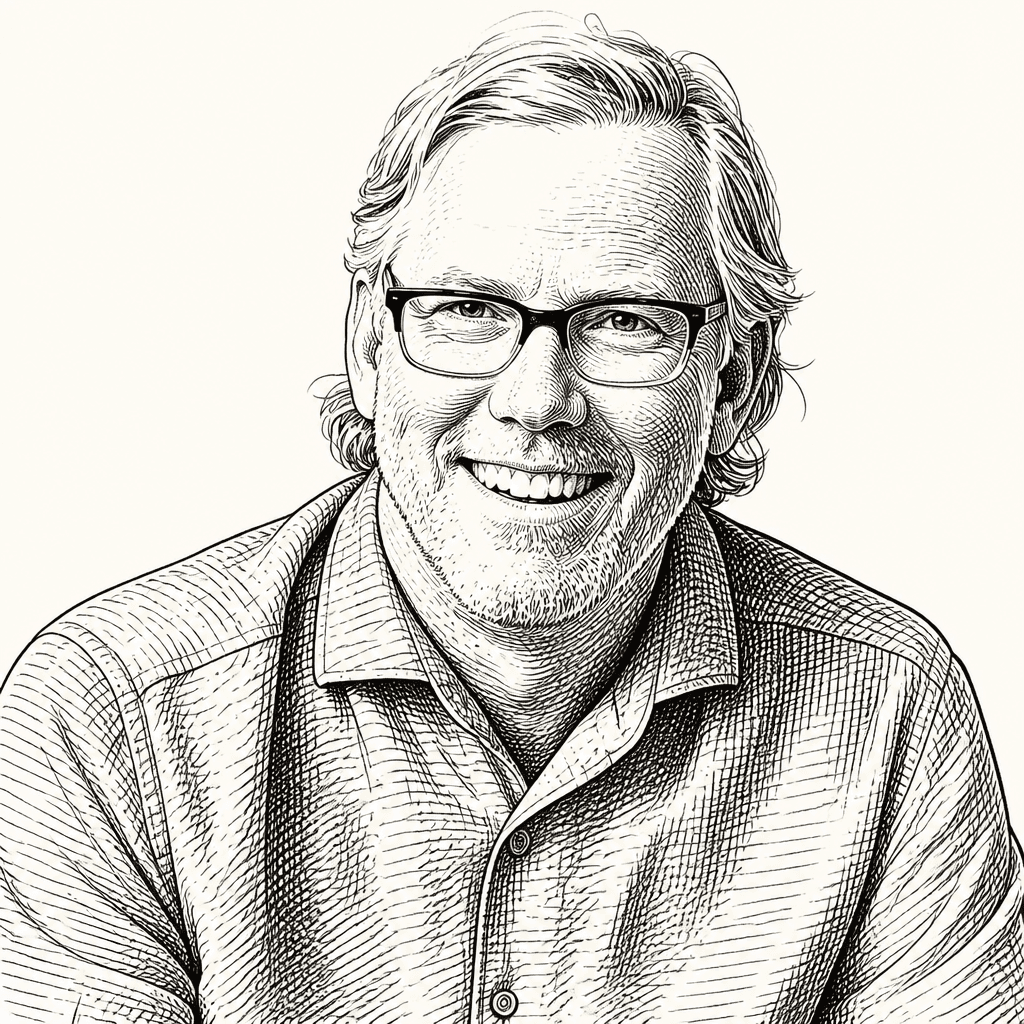
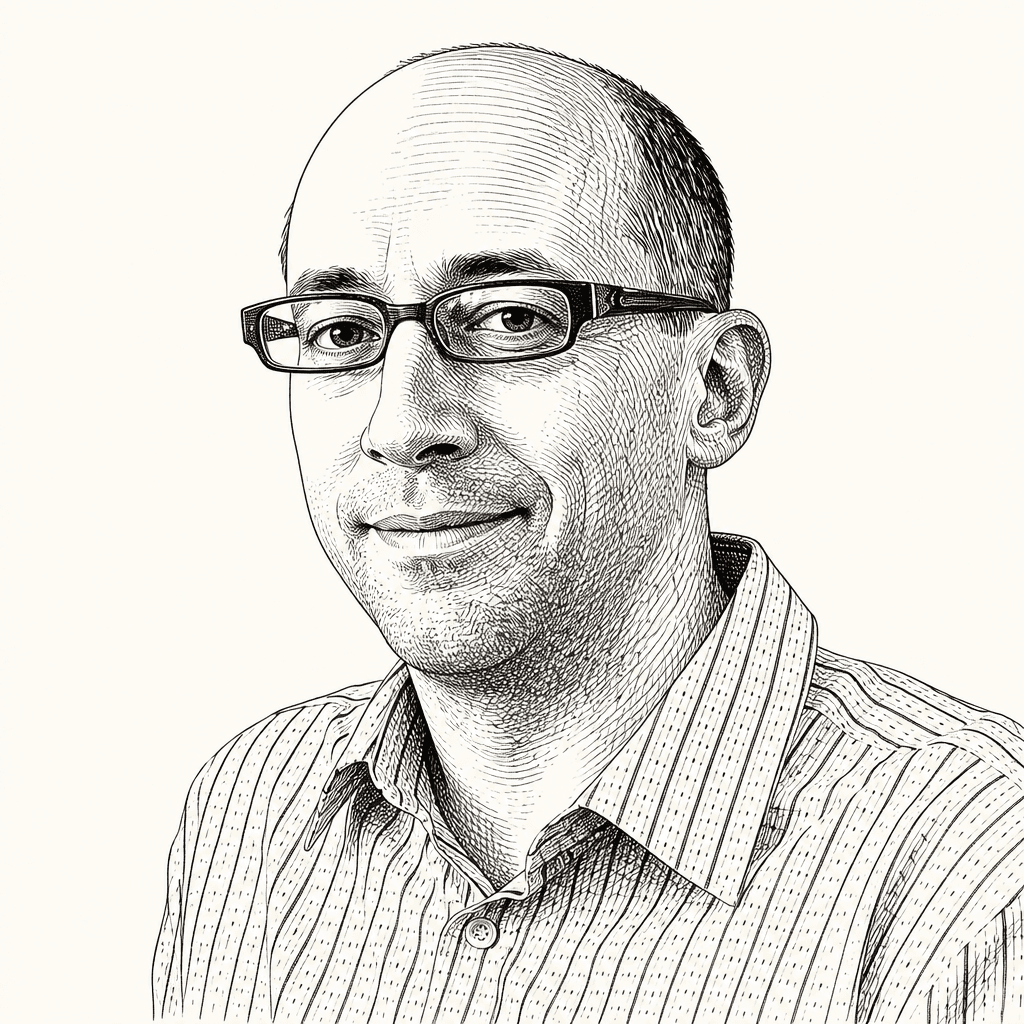
Dick Costolo’s account of running Twitter from 2010 casts the company’s early crisis less as founder drama than as an operating failure: too many decisions required group consent, too few people clearly owned outcomes, and process was allowed to substitute for judgment. In a conversation with Brian Halligan, the former Twitter CEO argues that scaling the company required replacing consensus with accountable decision rights, a bias to yes, direct communication, and faster correction when mistakes or personnel problems became clear.
Twitter’s operating problem was consensus
When Dick Costolo joined Twitter in 2009, the company already had cultural force and public attention. Ashton Kutcher and Oprah Winfrey were helping turn follower counts into mainstream spectacle. The product was a rocket ship. The business, by Costolo’s account, was not yet a business: “zero revenue model,” “zero business model,” and a press narrative that Twitter might be interesting but would never make money.

The dysfunction he found was not only interpersonal drama. It was a decision system. Twitter, as Costolo described it, operated “very much [as] a collective.” Product questions that later sound obvious — whether retweet should be native, rather than something users manually typed as “RT” — were discussed around a table until the group reached a view. Costolo’s diplomatic phrase was that things moved “methodically.” His blunt version was that Twitter “didn’t move quickly at all.”
The CEO transition that put him in charge was itself unstable. Costolo said Ev Williams first asked him to hold down the fort during paternity leave, then floated making the COO role permanent. Later, when the board moved toward making Costolo CEO, the sequence became confused: he said he was told in a driving rain that the board had decided he should be CEO, got advice from Bill Campbell that he should quit, was then told the board had decided Williams would remain CEO and Costolo would be vested out, and was finally told not to quit before being asked again to stay and take the job.
- Summer 2009Ev Williams asks Costolo to help during paternity leave, then discusses a permanent COO role.
- During the CEO transitionCostolo says he was told the board had decided he should become CEO, before the decision appeared to reverse.
- After further board back-and-forthCostolo says he was asked to stay and take the CEO role.
Costolo did not present this as a heroic succession story. “It was super crazy,” he said. The management point was simpler: once he had the seat, Twitter had to stop treating consensus as the default path to action.
His first operating priority was “velocity, velocity, velocity.” He wanted more cadence, faster decisions, and a habit of asking what would have to be true for something that took six weeks to take two. The important move was removing group permission from the center of the company.
One early example stayed with him. A front-end engineer came into his office upset that the status line had changed without asking him. Costolo’s answer was that this was now going to happen more often. The company was no longer going to ask everyone for a view on every change.
That was not a rejection of expertise. It was a rejection of companywide permissioning. Costolo wanted decisions pushed down the stack to the people responsible for making them, and he did not want the organization using his name as a substitute for reasoning. He said he hated hearing “Dick said” inside the company as the reason for doing something.
The pattern surfaced clearly in a performance issue on Android. The Android app’s boot time was getting longer, and usage was declining as boot time rose. Costolo said the metric was visible: Android usage went down almost linearly as Android boot time went up, while iOS did not show the same problem. He told the team the Android app had to boot as fast as iOS.
A week later, during one of his late-night walks around the engineering floor, an Android engineer asked whether Costolo had said to remove a JSON file from the Android boot system. Costolo knew what a JSON file was, but not what was in that boot file. His diagnosis was that a manager had chosen a solution, encountered engineering pushback, and used “Dick said” to end the debate.
For Costolo, that was the wrong kind of speed. A CEO-level complaint about an outcome had been converted into a false command about an implementation detail. The company needed accountable owners, not managerial ventriloquism.
It's not the job of leadership to prevent mistakes from happening. It's the job of leadership to correct mistakes quickly when they happen.
“Bias to yes” removed the informal vetoes
As Twitter grew, Dick Costolo saw the company slow down for a different reason: fiefdoms. Teams wanted “ball control” over their domains, and the mechanism was not always an explicit no. It was something slower.
An engineer would run an experiment, receive support to launch it to some percentage of users, and then weeks would pass. When Costolo asked where the experiment was, he would learn that the engineer was waiting for signoff from trust and safety, user security, or another group. The blocking team had not said the experiment could not launch. It had said the engineer needed approval from a long list of other people.
Costolo’s response was a rule he called “bias to yes,” derived partly from his improv background and analogous, in his telling, to Jeff Bezos’s “bias to action” at Amazon.
Bias to yes is only your direct — the person you report to — is allowed to tell you you’re not allowed to do that.
Legal was the exception. Costolo said legal could stop something if doing it would get someone fired because it was illegal or violated the privacy policy. But no other organization could tell an employee that they could not do something or that they needed to go ask another set of people for permission.
If an engineer had an idea for an experiment, had time to do it, and got the manager’s signoff, it could move. Marketing could not stop another team from using licensed Mailchimp software simply because marketing “owned” it. Trust and safety could not impose an informal approval gauntlet unless the reporting chain or legal basis required it.
The result, Costolo said, was that experiments “started flying out.” Engineers realized they did not always need formal design wireframes for something launching to one percent of users. They could build enough to test the idea and learn.
But he was careful about what the rule did not mean. Bias to yes was not permission to abandon assigned priorities. If a manager had made clear that a priority mattered and a person stopped doing it to pursue a personal idea, the manager could still say no — and, in Costolo’s formulation, could fire someone for refusing to do the work they were being measured on.
The principle was linked to another rule: do not solve every problem with process. Costolo described a familiar company reflex. A customer churns. An advertiser quits. The CEO says, “That can never happen again.” Another step gets added to a checklist.
The problem, in Costolo’s view, is that the company starts managing to process instead of outcomes. He compared the dynamic to the TSA focusing on water bottles instead of the outcome of making sure there is not a bomb on the plane. The procedural logic is understandable, but it compounds.
His alternative was DRIs, operating control, and span of control. There should be only a few organizational processes. Most work should be governed by clear ownership and decision rights.
That model changes how leadership has to react when things go wrong. If leaders want people to take risks, be bold, and stop tiptoeing around the organization asking permission, they cannot punish every error that follows. Costolo said he came to understand this only over time. The leadership job was not to design an organization where mistakes never occur. It was to create one where mistakes surface quickly and are corrected quickly.
Brian Halligan reduced the pattern to three elements: no group decisions, DRIs, and bias to action. Costolo agreed. But the operating point was that speed depends less on telling people to move fast than on removing the reasons they are afraid or unable to move.
Communication had to carry context, not orders
Costolo’s approach to scale treated communication as a management responsibility, not simply internal messaging.
He taught a management class at Twitter based partly on Ben Horowitz’s management class at Loudcloud. A line from Horowitz’s outline became central for him: “Make sure everybody understands what you understand.” Costolo told managers that their job was to make sure people understood the priorities, what those priorities meant for their team, and what success would mean personally and professionally for the people doing the work.
He liked a story about a Tesla factory tour, where a person installing a component did not merely say he was screwing a widget into a car. He connected the work to building cars that could become more popular in America. Brian Halligan compared it to the bricklayer who says he is not just laying bricks but building a cathedral.
The management point was not sentimentality. Costolo wanted people to know why their work mattered so that priorities were not experienced as arbitrary instructions. “Because so and so said” gave a team neither the reason for the decision nor the frame needed to make future decisions without escalating.
Bad news required a related discipline. Halligan observed that good news travels fast, bad news travels slowly, and the signal degrades as the organization gets bigger. Costolo’s answer was to make it explicit that screwed-up situations needed to move up the stack quickly. If a team, decision, or situation was a mess, people had to communicate that so leadership could help correct it.
His all-hands cadence reinforced the same system: repeat the priorities, explain how they would be measured, explain why they were important, and explain what success would mean for the company.
Costolo also used direct team listening. The practice came from a Steve Jobs story Costolo said he had taken from Jobs’s time managing both Pixar and Apple. Jobs, with only one day a week at Pixar, would meet with a functional group — for example, illustrators — without John Lasseter, the movie’s director, in the room. He would ask what was not working well at Pixar, ask others whether they agreed, ask what was working well, take notes, summarize what he heard, and say he would talk to Lasseter, who would follow up. He did not adjudicate in the room or tell the team their director was wrong.
Costolo began doing the same with teams at Twitter. It let him test whether a team understood the priorities and whether what he heard from the team matched what he heard from its leadership. Some leaders hated the practice. Costolo said that made him more concerned, not less.
Management by walking around gave him another source of information. Bill Campbell had told him that when Costolo became CEO, “you could roll a grenade into Twitter at 5:30 PM and only take out the cleaning people.” Costolo did not think a CEO could fix that by telling people to work harder. Instead, he would go out for dinner, come back around 9:00 or 9:30 p.m., walk the engineering floors, ask people what they were working on, and later talk about that work at all-hands.
The effect, as he described it, was cultural. People noticed that engineers who were around late and could explain what they were building were getting attention and priority. Marcel Molina was one example Costolo named: he was often working late on things like native retweet, and Costolo would elevate that work in front of the company.
Halligan said he copied the general practice at HubSpot, walking the halls to see what was happening in development, support, and sales. He described it as useful context and a way to see who was “burning the midnight oil.”
Focus still mattered, but rigidity slowed people down too
Dick Costolo rejected the idea that focus has become overrated because software teams can now build and test more quickly. But he also rejected a narrow “say no to almost everything” CEO mythology.
His view was that priorities can change once in a while, but not constantly. If a company sets four major priorities for the first four or five months of the year, it cannot reach February and discard half of them without cost. People will stop committing. They will assume that a project like direct messaging architecture has a meaningful chance of being thrown out in a month, and they will not “bust [their] ass” on it.
At the same time, Costolo distinguished between focus and unnecessary deliberation. He invoked Bezos’s principle that only existential decisions deserve slow decision-making. If a decision is reversible, make it quickly. In his view, modern teams can do more with less because more doors are two-way doors.
The tension was captured in a story from 2011, when Twitter wanted Jeff Bezos to join the board as an independent director. Costolo said he and Jack Dorsey met Bezos, who asked about strategy. Dorsey cited Steve Jobs’s view that the CEO’s most important job is focus: the CEO as editor-in-chief, saying no to almost everything. Bezos responded, according to Costolo, “Oh yeah? Well, I like to do everything!” and laughed, saying his team had to talk him out of things.
Costolo’s conclusion was not that Bezos was right and Jobs was wrong. It was that there are many ways to be successful. Today, he suggested, Bezos might say companies can do even more now while still being focused. The two ideas can coexist: leaders can preserve strategic clarity without treating every new initiative as a fatal distraction.
He used a forestry metaphor to describe the management level at which this matters. A director who spends all day putting out fires is not yet thinking strategically. The director’s job is to map the territory and do “forestry management”: understand what must be true 24 months from now so that the whole system is in better shape, so that a future fire does not endanger the highway. Tactical fire-fighting should be pushed down the stack. Senior leaders have to manage the terrain.
Hard feedback required less theater, not less empathy
Dick Costolo accepted the description that he was not passive-aggressive. He called himself impatient and direct, and acknowledged impatience as a flaw. But he drew a line between bluntness and cruelty.
His advice to young CEOs who have never had to give real feedback was taken from Bill Campbell: write down what you want to say, then say that and do not say anything else.
Write down what you want to say, and then say that and don't say anything else.
Costolo’s point was that most people can write honest feedback the night before and then fail to deliver it the next day. They pad it with context, apologies, and vague language: “It’s really hard times here for everybody…” His response to that instinct was blunt: “Shut the fuck up.” The person already knows something difficult is coming.
The alternative was not aggression for its own sake. “You can be empathetic and still be straightforward,” he said. A manager can acknowledge that the message is hard to hear and that the person may not want to deal with it anymore. What they should not do is bury the message under fluff.
Halligan emphasized the hard part: sit with the silence. Costolo agreed. He used role play in his management class to teach feedback delivery, and said almost no one was good at simply giving the message and waiting. The one person he remembered as excellent at it was Elad Gil. In the role play, the employee was primed to be angry and reject the feedback. Gil delivered the message and sat quietly until the other person ran out of gas.
Costolo applied the same directness to performance management. He said leaders often say “hire slow, fire fast,” but he did not claim to have lived it perfectly. “I fired slow,” he said, and almost every time he knew within six weeks that he should have moved sooner. Halligan said the same was true for him at HubSpot.
Costolo was skeptical of executives who say they like firing people because it is the right thing for the employee. “That just sounds like you’re an asshole,” he said. Firing is horrible, and still sometimes necessary.
He described asking board member David Rosenblatt for help planning the termination of an executive with global operating responsibility. The question was operational as much as emotional: if the person is fired in the morning, some international offices are asleep; if in the afternoon, others are. Rosenblatt, who had been CEO of DoubleClick, shared a communications schedule from a similar situation. The only line Costolo remembered was “6 a.m.: Wake up in a cold sweat.”
He also cited a Jeff Weiner analogy from LinkedIn. In baseball, a manager walks to the mound, the pitcher insists he still has it, the manager walks back, and the next batter hits a home run. The manager walks out again knowing he should have made the change the first time. Weiner’s lesson, as Costolo relayed it: do not make your first conversation with someone when you already know you should be having the second conversation.
In hypergrowth, this problem gets worse because hiring standards collide with hiring volume. Costolo mocked the universal founder claim that “we’re only gonna hire A players.” When a customer success team suddenly needs twice as many people next quarter because the company churned customers after no one checked in with them, the neat standard breaks down.
That makes performance management more important, not less. But first-time managers and directors will do almost anything to avoid letting someone go. Costolo called one avoidance pattern “trans-firing”: moving an underperformer to another team under the story that they would be great in a new context.
Twitter’s countermeasure was to block transfers below a performance threshold. If reviews were on a one-to-four scale, and a two meant serious underperformance, a two could not switch teams until they were no longer a two. The senior team also looked for managers gaming the review cycle — moving someone from two to three to two to three to avoid a performance plan — and for inflated curves. Costolo described the posture as “super hardcore” because the organization otherwise routes around hard decisions.
Recruiting had to preserve internal slope and add missing muscle
Costolo said he tried to promote from within as much as possible because employees need to believe they are not capped by external hiring. Kevin Weil was his example: Weil was an individual contributor when Costolo arrived, at a company of roughly 40 people, and eventually ran all product after running ads product.
But some roles required outside hires with specific operating strengths. Anthony Noto, who had run technology and media at Goldman Sachs, was valuable to Costolo because Twitter was constantly in the news and under investor scrutiny. Costolo described Twitter as “the drama queen of hypergrowth companies,” noting that the Twitter bird had hanged itself and exploded on two magazine covers the year he became CEO. He told communications head Gabriel Stricker that next year’s goal was “no dead birds on magazine covers.”
Noto’s strength, in Costolo’s telling, was dealing with investors and communicating with them. Costolo had tried for a while to bring him into Twitter and eventually succeeded.
Adam Bain was a different kind of hire: non-consensus. When Costolo, then COO, told the board and Ev Williams that the perfect person to run revenue was a Fox Interactive executive in Los Angeles, the reaction was skepticism. But Costolo had met Bain during the FeedBurner sale process, when News Corp had been an interested buyer before Google acquired the company. Bain struck him as tireless, with “a motor that doesn’t stop.” Since Twitter would be fighting from behind against Facebook for social ad dollars, Costolo believed that motor was exactly what the role required. He said he flew to Los Angeles for five or six months before convincing Bain to join.
Bain later became Costolo’s example of how to compete against a much larger company. Twitter could not pretend Facebook did not matter. Costolo said the company had to acknowledge that Facebook was huge, that Mark Zuckerberg was intensely competitive, and that Facebook would not tolerate Twitter winning a category without responding.
Bain’s approach was to compete asymmetrically. At the Consumer Electronics Show, before a major customer meeting with a company like Unilever, Bain would ask the CMO how the Facebook meeting had gone and what Facebook was excited to show that year. Then, in Twitter’s own meeting, he would say Twitter had things to show but wanted to spend the next two hours understanding the customer’s business, concerns, and problems. Costolo called it “just good salesmanship”: if Twitter could not match Facebook feature-for-feature, it could come at the relationship from a different angle.
On the business model, Costolo said he would choose advertising again. In his phrasing, advertising is “undefeated”; average revenue per user is higher than subscription revenue.
His major strategic regret was not completing an Instagram acquisition before Facebook did. Costolo said Twitter tried to buy Instagram a month or a month and a half before Facebook bought it. Facebook’s famous offer was $1 billion, which Costolo described as $700 million in stock and $300 million in cash, when Instagram had eight or nine employees. Twitter’s proposed offer, as he recalled it, would have given Instagram “well over 10% of Twitter” and something equivalent to about $700 million in stock, at a time when Twitter was valued around $5 billion.
Looking back, Costolo said he would have gone further. He would have told Kevin Systrom he could run Twitter when Costolo left, and he would have borrowed $300 million from JPMorgan to add cash to the offer. He allowed that Systrom still might not have taken it. But Costolo called Instagram a game changer. Once Facebook had it, he believed Twitter was boxed out of the future of rich-media social feeds. Twitter had Vine, but it was much smaller, and Facebook could bring video to Instagram. “That was sort of checkmate,” he said.
Moderation could not be reduced to hard-and-fast rules
Dick Costolo said people often underestimate how subjective and situational content moderation is. The simple version — “just prevent people from doing that” — breaks down quickly. He gave the example of a lyric in a Kanye song: if a phrase is prohibited, can users quote the lyric? The broader point was that a rigid rule system cannot handle all context.
His clearest example was one he used to show why the work was hard. Costolo described ISIS capturing three pilots from an unspecified air force, putting them in cages on a beach, lighting them on fire, killing them, and posting photos and videos to Twitter. His general counsel came to him about the terrorist accounts. Costolo’s first reaction was to suspend the accounts and anyone posting media of the pilots being lit on fire.
Then, he said, the New York Post posted a large photo of the same scene. In Costolo’s telling, the company then faced the problem created by the rule: the New York Post appeared to have been swept into the same enforcement logic, and his reaction was that the New York Post was different. But if the New York Post was different, the next question was who else was different and who was not.
For Costolo, that was the point. The policy problem was not solved by writing a rule and enforcing it mechanically. Some cases require judgment by people with operating control and an understanding of the situation, such as the general counsel. The company will make judgment calls, and it will get some wrong.
When Brian Halligan asked about later accusations that Twitter’s moderation teams were left-of-center and about conversations with the Biden administration after Costolo’s tenure, Costolo said the team during his time was “probably” left-of-center. But he did not think that shaped how Twitter handled abuse then. He said culture-war rules such as prohibitions on deadnaming trans people came after he left.
During his tenure, the major abuse work was massive Russian bot activity, which he described at the time as phishing attacks and bot farms trying to hack accounts or get credit card information, not election-related activity — though he allowed that it may have been groundwork for 2016.
The CEO role punishes people who confuse the title with the self
Costolo framed press resilience partly through his background in improv comedy. Before returning to business, he had performed and auditioned for Saturday Night Live. He described a midnight improv show at the Adelaide Opera House in Australia where a drunk crowd of roughly a thousand people started yelling “You suck, get off!” five minutes into an 80-minute improvised performance. His lesson was that he had learned to take boos from the front row.
That did not mean press was irrelevant. Halligan said bad press had been soul-crushing for him even when he tried to act like it was not. Costolo answered with a story from 2014: after Twitter’s successful 2013 IPO and awards naming him CEO of the year, his daughter texted that she had bad news and good news. The bad news was that Yahoo Finance had named him one of the five worst CEOs of 2014. The good news, she said, was that nobody read Yahoo Finance.
His more substantive defense against title-dependence was refusing certain invitations that came because he was Twitter’s CEO. He was invited to the Vanity Fair Oscars party and did not go. He told his daughter he did not want to start attending events merely because he was CEO of Twitter, because then he might become attached to staying CEO for the invitations.
He would go to things where he felt invited as Dick Costolo, such as the NBA All-Star game through Adam Silver. He would also attend obligations that were clearly part of the job, such as going to the White House to discuss Edward Snowden, abuse, or terrorists using the platform. But celebrity events where “I don’t know any of these people, they don’t care about me” were different.
The same thread shaped his advice about CEO archetypes. Halligan asked about Jensen Huang’s distinctive operating model — many direct reports, no one-on-ones, public criticism — and why other CEOs do not seem to copy it. Costolo returned to the Bezos line: there are many ways to be successful.
He warned against reading biographies of Elon Musk or Steve Jobs and treating them as a complete playbook. Such books leave things out and create mythology. More importantly, if a CEO tries to be someone they are not, “nobody is fooled.” Employees know when a leader is spinning them or playing a role.
If you try to be someone you're not, nobody is fooled.
He illustrated this with a Hakeem Olajuwon story he used in his management class. A reporter asked Olajuwon about Charles Barkley’s Nike ad saying, “I ain’t no role model.” Olajuwon said he was happy to be a role model. Costolo’s remembered version of the answer was that Barkley was different in public than in private, which created anxiety about whether to be public Charles or private Charles. Olajuwon said he was always the same person.
Costolo’s lesson was that trying to copy Steve Jobs, or anyone else, is miserable if it is not who you are. It was hard enough for Jobs to be Jobs; another CEO is unlikely to perform that role convincingly.
Boards and public markets should add operating judgment
Dick Costolo said two Twitter board members were especially helpful to him.
Peter Chernin, brought in from News Corp as an independent director, had managed tens of thousands of people and had global operating experience. Costolo needed that operating perspective. Chernin’s recurring contribution was to move discussions back to the user: if he were “chief user officer,” how would he think about the question from the user’s point of view?
Peter Fenton from Benchmark helped in another way: executive recruiting. He would help Costolo interview candidates, think through them, and close them. Because he was not inside the company day to day, Fenton could give candidates a third-party perspective on why Twitter could become a monster and why they should join. Costolo said that helped convince executives including Bain and Noto.
His advice to companies at roughly $100 million in revenue or around a Series B was not to wait until just before the IPO to add independent directors. He thought it was useful to bring in people with operating expertise much sooner.
On going public, Costolo’s retrospective was clear: if he could do it again, he would have kept Twitter private longer. Running a private company is easier because there is no daily stock ticker for employees to obsess over, and no immediate after-hours punishment for a decision that may be strategically right but causes the company to miss a revenue number by a point. Public markets force more explicit short-term versus long-term tradeoffs and add stress to decisions that are already hard.
Costolo also expects the market for “adult” operating CEOs to move in waves. Brian Halligan noted that it has become rare for founder-led companies to bring in external adult CEOs. Costolo agreed it is rare now, but predicted that as some companies reach billions in revenue within a few years under very young founders, something will happen that produces another wave of operating executives brought in to run companies.
For VPs who want to become that kind of CEO, his advice was practical: do what Anthony Noto did and make the ambition known to executive recruiters. Tell them you want to talk about CEO roles. You may not get one immediately, but you have to put your name in the market.