AI’s Defender’s Window Is a Chance to Repair Longstanding Security Debt
OpenAI President and co-founder Greg Brockman argues that frontier AI can accelerate scientific discovery and help defenders find and repair vulnerabilities before cyber capabilities spread more widely. He cites nearly 400 solved mathematical problems as evidence that models can produce new knowledge, while stressing that fields such as biology still face data and process bottlenecks. Across science, security and workplace agents, Brockman says, greater capability must be matched by human oversight and control.
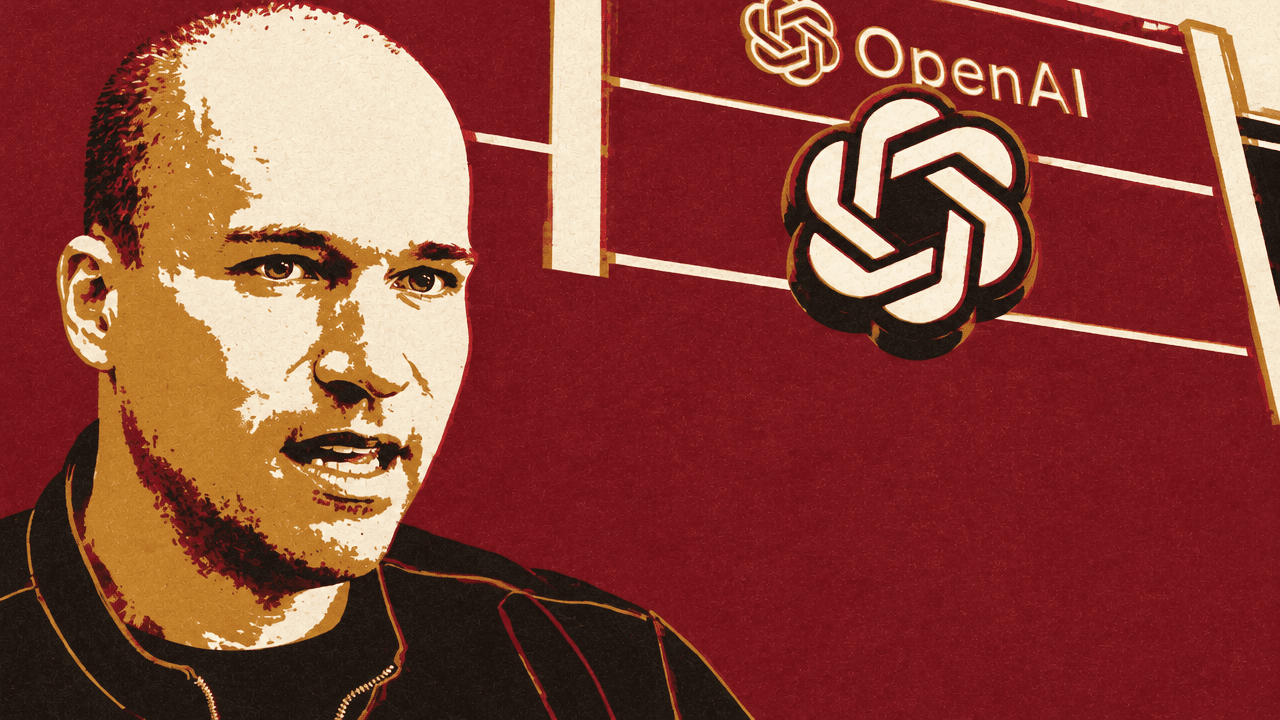
Math results matter if they produce insight people can use
Greg Brockman sees AI’s recent mathematical work as evidence that models can generate new knowledge, not merely retrieve or rearrange existing material. He pointed to nearly 400 important open problems, some a century old, that he said had been resolved. The milestone, he argued, is not simply that a model can return an answer; it is that people equipped with these systems may now be able to solve problems that were previously out of reach.
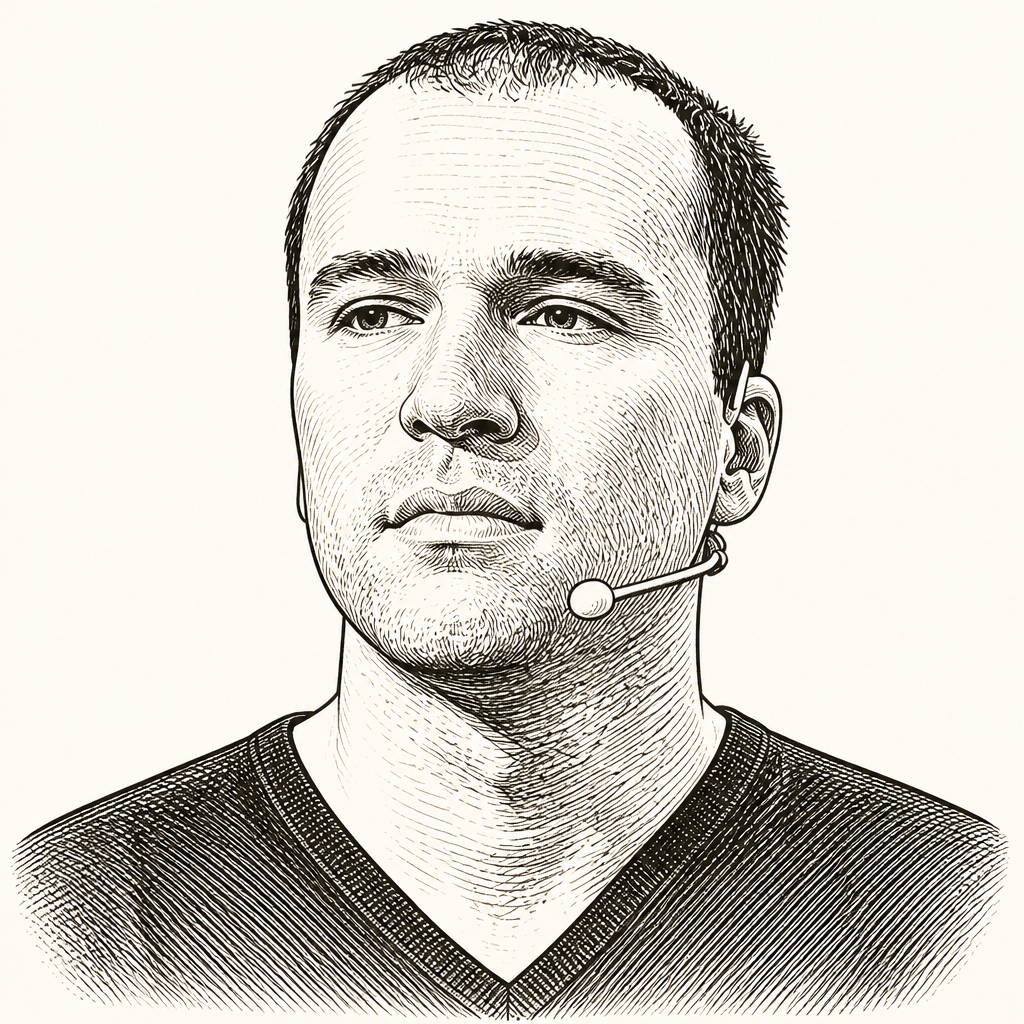
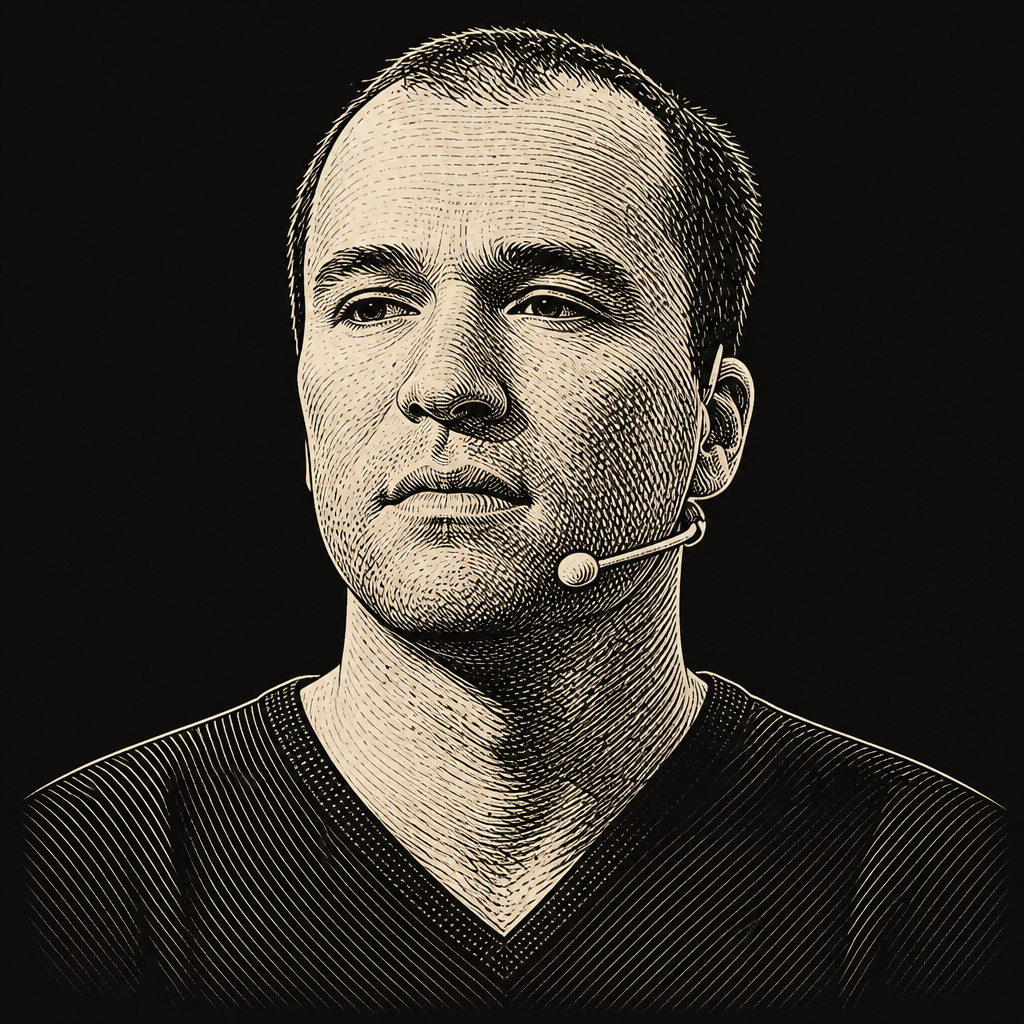
Brockman was careful about the scope of the claim. He does not think models are yet producing whole new grand theories. But he said the mathematical community is examining the results for insight, and that early reactions from domain experts describe surprising applications of ideas and unexpected connections. The output, in his view, is not just a mass of incomprehensible proofs. He contrasted the work with the Four Color Theorem, whose proof involved checking many cases: a result can be established without yielding much human understanding. These newer results, he said, may mark a different phase of machine discovery.
That distinction matters because proofs are not as easy to verify as arithmetic. A numerical answer can be compared with a known answer; a proof in natural language is harder to assess. A formalized proof can be checked mechanically, but the results Brockman was discussing were natural-language proofs, where establishing that the reasoning is sound is more difficult. Elad Gil raised the related problem of communication: in any specialized field, only a small number of people may be able to adjudicate a complex result. Brockman, who once expected to become a mathematician, argued that the goal should not be to accept a proof no one understands. It should be to identify the insights within it.
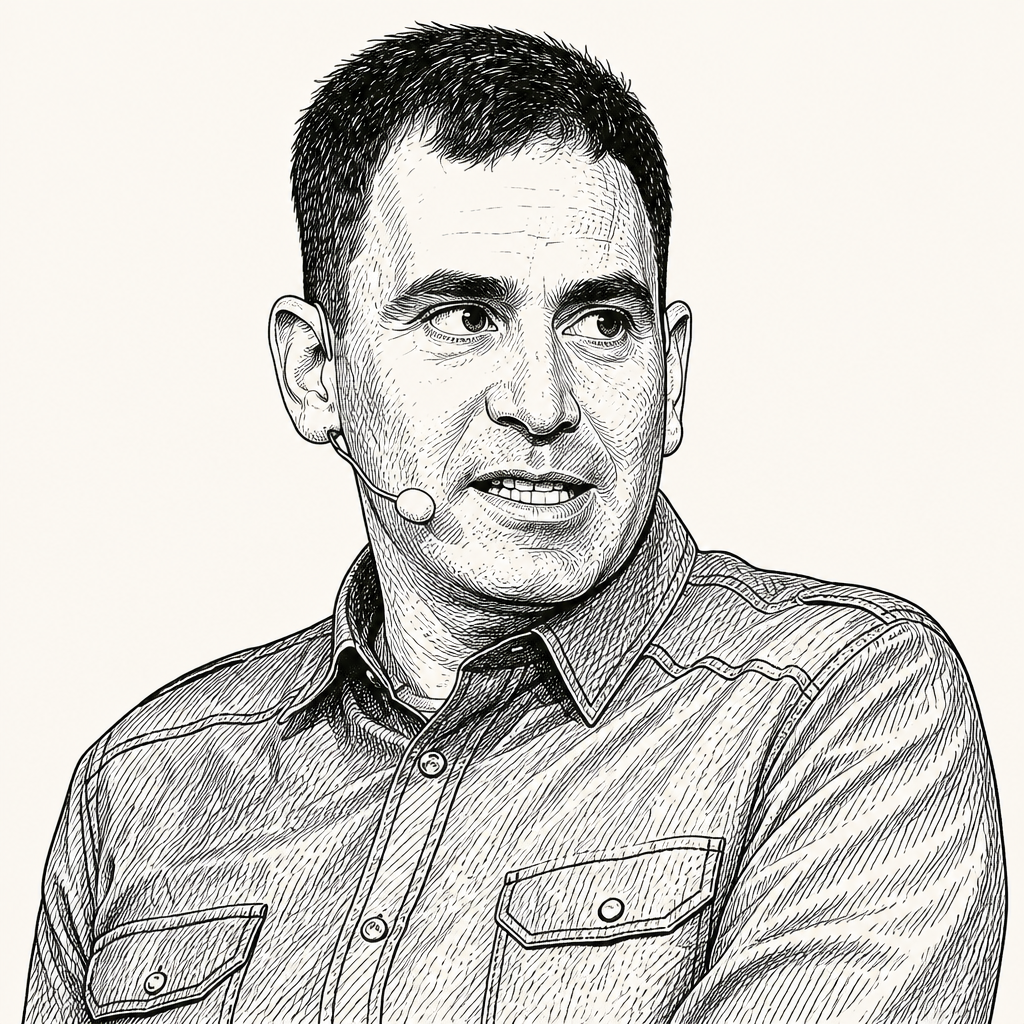
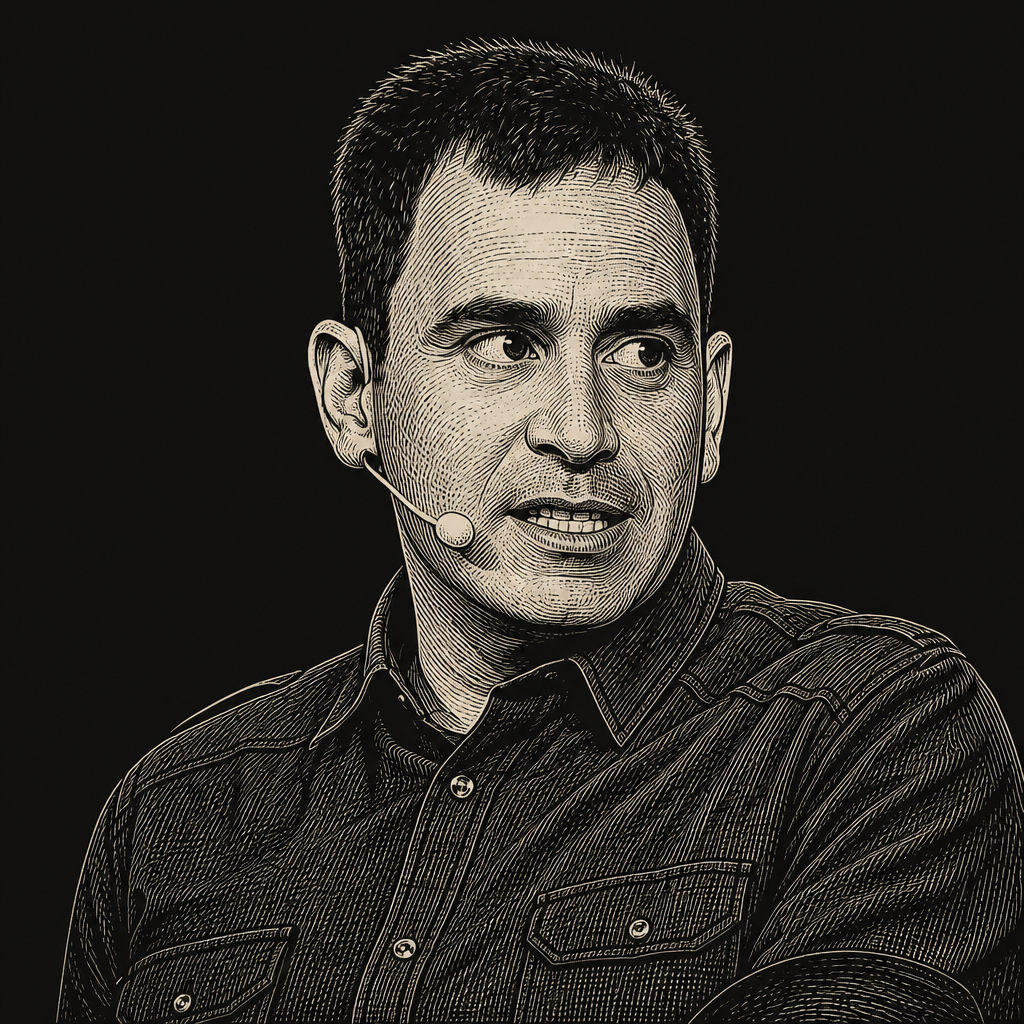
The mathematical community is going through all of that to look for insights.
Sarah Guo suggested that models may also help people follow the reasoning, by getting better at inferring what a learner knows and how to guide them toward new understanding. Brockman called that an underappreciated benefit of AI: helping people know more, understand the world, and understand one another. He described mathematics as both a search for structure and a human activity: its beauty and meaning depend partly on what people find compelling.
He connected that educational aim to oversight and alignment. Some tasks are difficult for a person to check directly: summarizing a book, for example, is hard to evaluate without reading the whole book. But a second model can challenge the summary. If it points to an important passage or plot point the summary omitted, a person can judge that specific objection without reviewing every page. The challenge makes a broad, hard-to-check output more contestable: instead of having to verify the entire summary, the person can assess a concrete counterexample.
Brockman cited debate and iterative amplification, approaches discussed at OpenAI since 2017, as ways of structuring this kind of scrutiny. In his account, one AI can make a case and another can try to show why it is wrong; the person can then assess the evidence the challenger surfaces. The larger point is that oversight need not mean a person independently redoing every task. Models can be trained to make their work more legible and contestable, so people retain meaningful control over decisions they could not verify alone.
Biology may benefit, but data and process remain bottlenecks
Greg Brockman’s case for applying AI to science rests on a combination of model capability and the conditions of a field. Mathematics has benefited not only because models have become more capable, but because it offers abundant data. Brockman also named theoretical physics as a field with substantial data. Biology presents a harder test: relevant data can be scarce, difficult to obtain, or expensive to generate.
That does not mean biological applications are out of reach. Brockman said OpenAI is already applying similar models and techniques in biology, and expects some areas to accelerate quickly. But he distinguished between what can be learned from existing data and what requires new ways to produce it. Where the necessary data does not exist, improvements in wet-lab methods and simulations may become crucial. The point is not simply to transfer a model from one field to another: the data bottleneck determines what can be learned, and easing it may require changes to the way evidence is generated. Brockman summarized the underlying relationship as compute, data, and algorithms combining to produce capability and results.
Asked where to focus, Brockman singled out drug discovery as the clearest application. He argued that biology is not inherently less amenable to neural networks than language is. People are naturally suited to language, he said, while biology is comparatively foreign to us. He sees no obvious reason a neural network should be better at language than at biology; given the results in language, he thinks models should be able to learn the “language of biology,” too.
He also emphasized that drug development is a pipeline, not a single molecular-design problem. Models that predict whether a molecule binds do not by themselves resolve every later question about safety, efficacy, trials, or clinical use. AI could increase the number of approaches explored in parallel and reduce the time spent on individual steps, Brockman said. He also pointed to individualized cases: a treatment for a person’s particular condition may already be described somewhere in the literature, but finding the relevant paper can be difficult. AI could help scale that kind of search. Materials science, he added, is another field where he expects meaningful change.
The constraints are not all scientific. Brockman described regulatory filings as a major bottleneck, noting that preparing a case for a clinical trial can take a year and that AI could make the writing and assembly of those documents easier. More broadly, he argued that each step in drug discovery should be examined for ways to reduce time and effort. Some obstacles may require new data or better laboratory and simulation methods; others may be administrative.
Changes to trial requirements, however, should follow evidence that models can predict outcomes, not merely the prospect of faster drug discovery. Brockman said neural nets are not yet a substitute for clinical trials. If models become more predictive of efficacy or toxicity, he said, requirements could change; he compared this to rethinking transportation rules if self-driving cars became far safer than human drivers. He also noted that clinical-trial regulations differ across countries, and said some trials are already moving to jurisdictions whose rules better fit researchers’ aims.
For Brockman, the extent of any change depends on what can be demonstrated and on the consequences of changing the system. Long-term outcomes are a particular challenge: it is difficult to know whether a model’s predictions about them are accurate without observing at least some corresponding period. The possibility of using models to reshape drug development is real, he argued, but the evidence and the limits of that evidence should determine how quickly regulation follows.
An agent changes work by noticing what the user did not ask
Greg Brockman described Dots as a proactive agent that keeps working after its user stops. His own Dots tracks promised tasks, messages he still needs to send, and other work left undone. It can flag a calendar conflict, including when he needs to leave one meeting early to reach another. Because it has context from his inbox, Slack, projects, calendar, and the questions he has been asking, it can identify what is likely to matter without waiting for an explicit prompt.
Brockman said the shift is less about a new level of model capability than a new form factor: Dots uses an ASTRA-level model with its own cloud computer, but in a workplace setting the always-on, cross-context design changes how that intelligence is used. He has one Dots covering his work life.
He expects work and consumer assistants to converge, though cost and governance will keep shaping their different forms. A consumer product must serve many people at low cost; a workplace user may be able to justify more compute if it produces a return. OpenAI’s effort to provide a large free tier in ChatGPT, including bringing memory to free users, illustrates the engineering costs of extending capabilities at scale. In an enterprise setting, more compute can be spent on fewer users, and different use cases—payments and travel, for example—can pull products in different directions. Brockman sees these as market pressures rather than a fundamental difference in what an AI assistant is.
He also sees the distinction between consumer and enterprise becoming less stable. Brockman argued that AI can reduce the ordinary barriers to starting a company, and said he knows people who have left jobs to start businesses because they can rely on AI to take on more of the work. OpenAI’s strategy, he said, is to bring together its large consumer base with its coding and enterprise businesses rather than treating them as unrelated fronts.
That convergence raises a design problem. Brockman’s shorthand is that “the best UI is no UI”: users should be able to reach an AI by voice, Slack, iMessage, or a call, rather than learning a fixed set of buttons and menus. But a workplace assistant has stakeholders a personal assistant does not. Companies need administrators and security teams, and may want control over when features become available. Those controls can mean that some functionality is absent for some employees, which itself needs to be communicated. A product that aims to remove the interface still has to account for permissions and organizational complexity.
At the same time, no fixed interface does not mean no visual interface. Brockman said OpenAI had introduced generative UI, in which an AI can create a display suited to a particular task. Booking a flight may call for a comparison of options; assembling a bicycle may call for a one-off visual guide. The source showed a bicycle-assembly interface labeled “Rocket Youth Bike,” with a diagram and the instruction “Match the pedals.” Unlike a fixed menu or a prebuilt app, this is an interface formed around the task at hand: Brockman said an AI could create in real time the bespoke tool that someone would otherwise have had to build in advance. The example clarifies his distinction between removing the need to learn a fixed UI and still producing a visual interface when the work calls for one.
Brockman also described models that can give a quick answer and keep thinking, then return a more complete response. Together, these features point to an assistant that adapts its effort and presentation to the task rather than requiring the user to navigate a fixed product.
The defender’s window is a chance to pay down security debt
Greg Brockman calls the current period a “defender’s window.” Frontier models can help organizations find and fix vulnerabilities, he said, but those strongest capabilities have not yet diffused widely. Meanwhile, the cyber capabilities available to more people are increasing with each model release. His warning is that defenders need to use the interval before the gap closes. The window is an opportunity, not a guarantee that defenders will prevail: Brockman said success will require organizations to change how they work and coordinate their response.
The vulnerabilities are not new. Sarah Guo pointed to familiar examples of fragile infrastructure, including open-source software maintained by a single person and past incidents such as Heartbleed. Brockman agreed that AI is exposing longstanding human choices: security was often added after systems were built, while the internet was designed more for resilience than security. That accumulated technical debt is now becoming harder to ignore.
OpenAI, he said, is giving defenders access to powerful models through its Daybreak program and has committed $1 billion to help frontline defenders use them. The work includes identifying vulnerabilities and coordinating responses with governments and the wider community. Brockman also described an internal security push: OpenAI put about 25% of its production engineers’ projects on hold so they could focus on security, then used its strongest available model to probe infrastructure. The company found and fixed issues, and built tools to repeat the process. The model eventually reached the limit of the issues it could find. Brockman called that a positive result, but one that must be revisited with each stronger model.
He expects AI to help in two ways: by finding weaknesses in existing software and by helping write more secure software from the start. Formal verification, he said, has long been possible in principle but too painful, specialized, and expensive to use broadly. Models that can prove properties of software could make that kind of checking more practical.
This is not a case for assuming defense will catch up automatically. Elad Gil described the possibility of a transition period with more attacks and incidents as organizations improve their systems. Brockman said defenders can ultimately outstrip attackers, but only with coordinated action and a change in how organizations approach security. The security of an organization will depend both on foundational practices and on how effectively it uses cyber capabilities to defend itself. Critical infrastructure and organizations that have historically lacked resources will need attention, too.
The stakes change the economics. Brockman argued that security spending should “vastly outstrip” software spending. As software becomes cheaper to produce, he said, reliability and security become a larger part of its value. He pointed to supply-chain vulnerabilities, including malicious packages that can affect many companies, and the difficulty of auditing third-party software. The scarcity of human specialists has made it hard to inspect every dependency. AI, alongside specialist companies and community partnerships, could make more of that scrutiny possible. For Brockman, the opportunity is not simply to add another layer of security tools, but to make systems more secure by design.
Human agency means retaining authority over what AI is for
Greg Brockman’s account of AI’s benefits is tied to a condition: people should remain in control of the future the technology helps create. He said OpenAI’s mission to ensure AGI benefits all of humanity makes human agency central. Models may surpass people in particular capabilities, but their abilities are uneven, and that superiority should not settle what goals are worth pursuing.
He illustrated the point with the handle on the original iMac, which he said Steve Jobs wanted so people would feel they could control the machine. Brockman wants the same basic assurance from AI. He compared future human roles to those of a CEO or board: people may rely on teams and domain experts with more specialized knowledge, but they still need to decide whether the outcome is what they wanted and whether it makes their lives better.
That standard has concrete implications across the applications he described. A proof should yield insight people can understand; a drug-discovery system should be judged by what it can demonstrate about outcomes; an always-on agent must work within the authority and controls of its user or organization. And in cybersecurity, deploying stronger models is not enough if defenders do not use them to repair vulnerabilities. In Brockman’s view, AI’s capabilities matter insofar as they expand what people can do while leaving people responsible for deciding what is worth doing.