Pax Silica Aims to Secure the Full AI Supply Chain

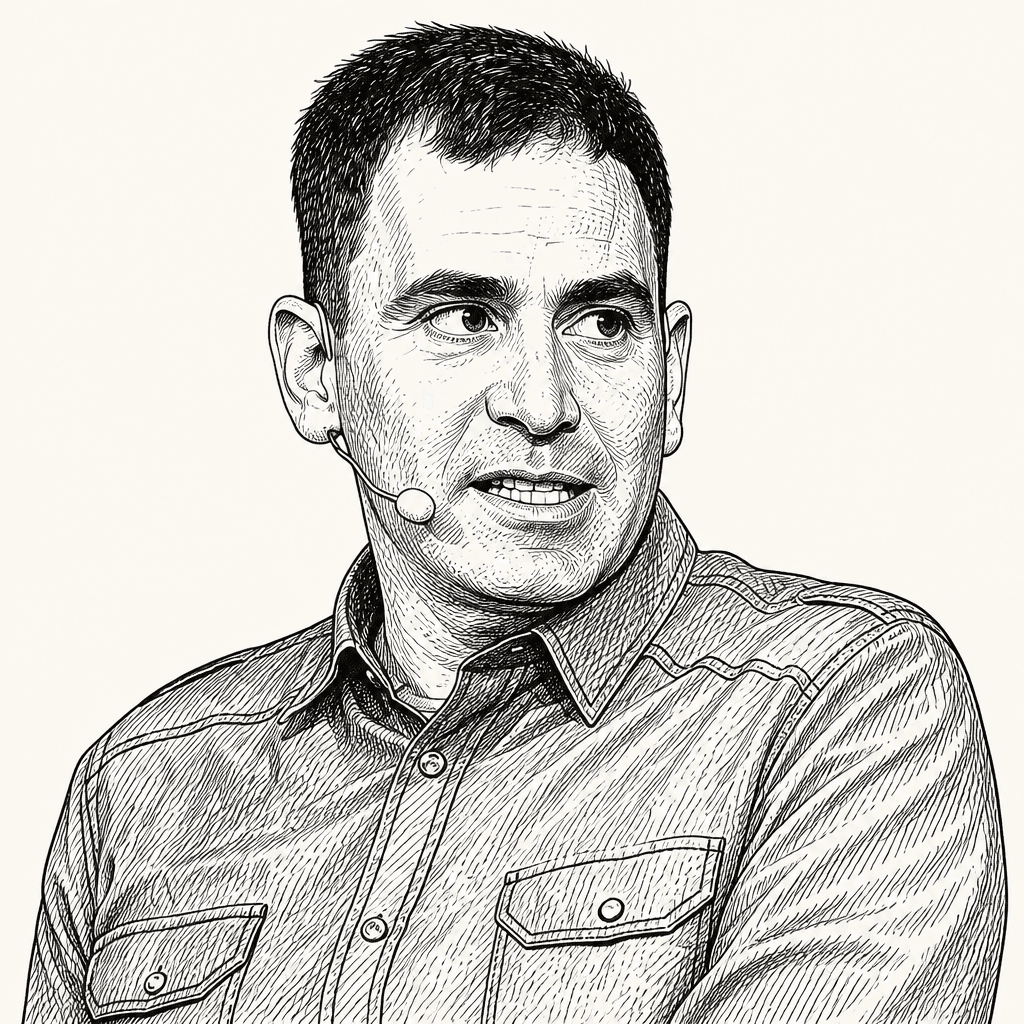
U.S. Under Secretary of State for Economic Affairs Jacob Helberg argues that AI dominance depends on securing the full industrial supply chain behind compute, not just advanced semiconductors. In an interview with Sarah Guo and Elad Gil, Helberg presents Pax Silica as a 14-country economic-security coalition meant to build commercially viable allied supply-chain platforms, starting with a 4,000-acre industrial zone in the Philippines. He frames the strategy as a private-sector-led alternative to China’s Belt and Road model, combining domestic reindustrialization with partner-country specialization in critical inputs such as minerals, robotics components, and processing capacity.

Pax Silica treats AI as a full industrial supply chain, not a chip problem
Jacob Helberg describes Pax Silica as an “economic security coalition” of 14 countries built around a broader premise than semiconductor access. The 14 countries are not named in the source. Helberg’s point is that the AI supply chain is not just advanced chips. It includes “thousands of inputs”: precision reducers, servo motors, rare earth magnets, actuators, and other components that determine whether AI infrastructure, robotics, and advanced manufacturing can actually scale.
The first major implementation is in the Philippines, which Helberg called America’s “oldest ally in Asia.” The Philippine government, he said, is granting 4,000 acres for what the administration is calling an “economic security zone.” Helberg framed the site as a forward-deployed industrial base: a platform for private investment intended to combine American legal predictability with Philippine industrial advantages.
Helberg emphasized that the arrangement is being built in phases and that the final long-term regime has not yet been negotiated. In the first phase, he said, the State Department is taking custody of the zone. He described the department’s authority as similar to the way foreign governments may gift consulates, embassies, or other diplomatic properties. In this case, the scale is unusual, but Helberg said there is no statutory limit on the size of property that can be accepted. For now, he described the zone as diplomatic property “effectively” governed by the same laws as embassies.
The second phase is the long-term development framework. Helberg said the United States and the Philippines have a two-year window to negotiate investor protections, tax regimes, and legal safeguards for companies that would operate there. The goal is not a temporary site, but a multi-decade structure that private capital and industrial companies can use.
The Philippines, in Helberg’s view, is not simply a convenient location. He argued it has a “native, indigenous manufacturing ecosystem” and a values alignment with the United States. Those two factors, he said, make it a plausible test case for a model that could be replicated in other geographies where allied countries have specific industrial strengths.
Robotics is one of the first domains he identified as a candidate. Helberg called robotics “an incredibly promising industry” for manufacturing and daily life, but said its supply chain is “right now completely dominated by China.” For Pax Silica, that makes robotics not only a commercial opportunity but a supply-chain-security priority.
The contrast with Belt and Road is ownership, capital allocation, and commercial viability
Sarah Guo asked how Pax Silica differs from China’s Belt and Road Initiative if both involve economic-security strategy, infrastructure, and access to inputs.


Helberg’s answer began by defining Belt and Road as a large Chinese foreign-policy project that uses state-owned enterprises as extensions of the government to execute overseas infrastructure projects. Those projects include mines, processing facilities, roads, bridges, and railways. Their strategic purpose, in his telling, was to build a network that gave Chinese factories reliable access to inputs across continents.
Elad Gil summarized the side effect as both building China’s industrial base and securing natural resources abroad. Helberg agreed, pointing to Shenzhen as “the world’s factory floor” because of its deep supplier and vendor relationships and the infrastructure that supports them.
But Helberg argued that the American answer cannot be a government-operated supply chain. “That’s not how we shine as a country,” he said. The U.S. advantage, in his view, is not state ownership but private companies and products. He invoked Steve Jobs’s line that American products “enchant and delight users around the world by the billions,” which was also shown on screen over a black-and-white image of Jobs seated with a Macintosh.
We're not going to do government operated supply chains because that's not how we shine as a country. Our superpower is really our private sector and our companies.
That distinction leads to a different operating model. Helberg said Pax Silica is meant to work “in lockstep” with private companies and builders to create platforms that are commercially viable and can eventually live outside government as private services. The forward-deployed industrial base is one such platform. He also said the administration is considering a major logistics effort with large corporates, and that a broader rollout could include four or five lines of effort.
Helberg’s critique of Belt and Road was not that it failed entirely. He said some projects have been useful for China. But he argued the model produces waste because central planners and bureaucrats allocate large pools of capital, vendors overcharge, and infrastructure sometimes becomes “roads to nowhere.” He also described the financing structure as one that can put host countries into a “debt trap”: China lends for a project, Chinese companies build it, cost overruns expand liabilities, and debt may convert to equity if the host country defaults.
In Helberg’s view, that has given Belt and Road a reputation as a tool of political leverage rather than partnership. Pax Silica, he argued, is meant to be “positive sum” because companies are in the driver’s seat and projects are designed around commercial viability rather than political symbolism.
The answer’s been trying to work in lockstep with our private companies and our builders to build platforms that are commercially viable, and that can ultimately live outside of the government as a private service.
Partner countries are being offered a stake in the physical AI boom
For countries joining or working with Pax Silica, Helberg’s value proposition is that the AI boom is increasing demand for the physical inputs of compute and automation. He said AI is already fueling “over a third” of U.S. GDP growth and is translating overseas into record demand for copper, cobalt, data-center inputs, electricians, and related industrial capacity.
His argument is that partner countries can capture growth if they take a larger stake in relevant layers of the supply chain. The key phrase was “layers that make sense”: not every country needs to do the same thing, and not every country should attempt to replicate the most capital-intensive segments of the industry.
Helberg cast this as a non-zero-sum moment because the technology market is expanding quickly. “The pie grows really fast,” he said, which makes it easier to form mutually beneficial partnerships. In the Philippine case, he said the arrangement is being structured so that both sides have “skin in the game,” both share in the upside, and risk is evenly allocated.
Pax Silica, in this telling, is not only about moving production away from China. It is also about giving allied and partner countries a reason to participate by building industries around portions of the AI supply chain where they have real advantages.
Reindustrialization at home still depends on what should not be replicated abroad
The administration’s division of labor between domestic production and allied production starts, in Helberg’s telling, with a consumption-production imbalance. The United States, he said, accounts for roughly 20% to 30% of global consumption in a given quarter despite having about 4% of the world’s population. Its production share is far lower.
If the country narrows that gap, Helberg argued, it will reindustrialize. But because unemployment is already around 4%, he said that reindustrialization would have to involve “semi-autonomy or full autonomy.” He cited Singapore’s autonomous ports and factories as evidence that such a path is possible.
The rest of the world’s consumption, in his account, is still largely supplied by systems concentrated in China. Pax Silica’s international strategy is meant to distribute suppliers more evenly across trusted, transparent, reliable partners. That is where Helberg sees a hub-based approach: regions with rare earth minerals, deep manufacturing ecosystems, or other specific strengths can become supply-chain hubs for the layers where they are best positioned.
He named Africa and South America as regions where demographic and economic growth could make regional hubs important over time, citing Brazil and Argentina as examples in South America. But he also maintained that the United States remains the “economic engine” of the global economy and that domestic reindustrialization will be the primary driver.
Advanced semiconductor fabrication is the clearest example of what Helberg thinks should remain focused in the United States rather than copied everywhere. He said efforts to bring back semiconductor fab production are already underway and should continue. The reasons are practical: the work is highly technical, the global talent supply is finite, and the capital intensity is extreme. In his view, it would not make sense to replicate that push elsewhere before completing it domestically.
That leaves many other layers open. Helberg’s point was that the supply chain is “vast,” and the remaining buildout creates opportunity for partner-country specialization without abandoning domestic semiconductor ambitions.
Rare earths are a pricing and processing problem, not only a mining problem
The rare-earth bottleneck, as Helberg described it, is not simply that the minerals cannot be found. Elad Gil noted that rare earths are not actually rare, that the market is relatively small, and that China subsidizes the sector as a source of political leverage. Helberg broadly agreed with the premise while adding nuance: rare earths are not everywhere, but they exist in many places. The economics depend on how much energy is required to extract a given mineral at a given grade.
The more serious scarcity, Helberg argued, is in refining and processing. Processing facilities outside China exist, he said, but in “very limited” quantities. China, meanwhile, “subsidizes the hell out of them.”
Helberg said the Trump administration has treated mineral security as a priority from the beginning. He cited a State Department critical minerals summit on February 4, with more than 55 participating countries, and said the administration signed critical-minerals memoranda of understanding with dozens of countries. The countries and companies involved in these minerals efforts are not named in the source.
| Policy area | Helberg's description |
|---|---|
| Supply | Capital and investment into projects so producers can expand mineral production. |
| Demand | Deals with countries intended to address pricing and improve commercial viability. |
| Processing | Attention to limited refining and processing capacity outside China. |
The pricing issue was central to his answer. Helberg compared mineral projects to startups: capital can be invested, but long-term viability depends on the price at which a company can provide its product or service. He said the administration is negotiating with countries to address pricing and expressed confidence that it would resolve the pricing issue for the minerals market before the end of the administration.
Technological substitution is also part of Helberg’s answer. He said some Bay Area companies are working on new materials, rare-earth-free magnets, and other innovations. He described the possibility of a “rabbit out of a hat” outcome in which innovation solves a mineral dependence problem in a way policymakers did not anticipate. If that happens, he said, it will come from the tech industry, not government.
Venture capital is being asked to judge execution risk
Private capital’s role in Pax Silica, in Helberg’s account, is not only to finance companies. It is to help identify which teams can actually execute.
His reasoning was that industrial and supply-chain projects do not fail only because the technology is wrong. They fail because of execution risk, scientific risk, operator quality, and the ability to deliver on aggressive plans. Venture capitalists, he said, are “hardwired” to evaluate founder and operator traits that may not be obvious in a deck or spreadsheet.
That signal, in Helberg’s view, can help government allocate taxpayer capital more efficiently. He did not present venture capital as a replacement for public policy; he presented it as a source of judgment about which companies are strongest in a given space. Government can then use that judgment as one input into its own capital decisions. Helberg did not name the specific companies under discussion.
He also connected venture capital to the innovation side of the rare-earth problem. New materials, alternative magnets, and other substitutes are not likely to be invented by government. The administration’s role, as he described it, is to remain close enough to the innovation ecosystem to support unexpected technical solutions when they appear.
The near-term work is energy, tax incentives, and platforms companies can use for years
Helberg’s prioritization between near-term needs and longer-term bets such as next-generation lithography, robotics, new semiconductor designs, and nuclear power is less about choosing a single sector than about changing the conditions under which companies build: energy supply, permitting, tax treatment, and durable sites for manufacturing and processing.
He pointed to domestic energy expansion as part of that environment. He said the administration has worked to cut red tape and accelerate American nuclear deployment, and said from memory that one of the president’s first executive orders called for quadrupling domestic nuclear supply. He also cited deregulation and tax incentives in what he called “the one big beautiful bill.”
For the State Department, he framed the forward-deployed industrial base as an “evergreen” platform: a long-term system companies can use to build faster and get to market sooner. Rather than describing it as a one-off response to a particular bottleneck, Helberg presented it as a structure the administration hopes can be replicated in other geographies and used by technology companies over the long term.
The durability problem remains harder. Elad Gil noted that executive orders can be reversed by future administrations, while legislation and tax policy may last longer. Helberg answered only partially, saying tax reform is “very sticky.” He also said his State Department role prevents him from commenting on electoral politics, a statutory constraint that limited how directly he could address future administrations.
For entrepreneurs, Pax Silica is a channel for export barriers, supply-chain deals, and IP concerns
For American founders, executives, and investors, Helberg said Pax Silica is intended as a platform to expand market access for U.S. companies. Even among allies, he said, American companies can face hurdles exporting products and services. He specifically mentioned Japan, South Korea, and India as markets where the administration wants feedback on what is working, what is not, and how policy could make U.S. companies more competitive.
He also said the administration wants to understand supply-chain partnerships already forming between American companies and companies in India, Japan, South Korea, and Singapore. Executives, in his view, are uniformly becoming more deliberate about supply-chain exposure to China because of political dynamics. Knowing where companies see opportunities helps the government identify what to scale. The source does not name the companies already giving feedback or forming these partnerships.
The third area he named was intellectual property. Helberg pointed to model distillation as an unresolved policy issue for AI. He framed it as central to protecting the economic value of “hundreds of billions of dollars” invested in AI companies, and said input from builders closest to the technology is important.
Companies, in Helberg’s account, should bring information government may not see from Washington: export barriers, partner opportunities, supply-chain decisions, and IP concerns.
Helberg’s view of American advantage is underdog speed, not incumbent control
Helberg’s description of America as a “global underdog” is part of the same strategic theory behind Pax Silica: the United States should not understand its advantage as incumbent control. It should understand its advantage as speed, resilience, contrarianism, and private-sector execution under pressure.
Sarah Guo said the phrase surprised her, because it is not how she thinks of America. Helberg used the question to reject a framing in which the United States is simply the established power and China the rising power. He referenced the “Thucydides Trap” framing and argued that it misses something essential about American history.
America, he said, began as “13 disorganized, unruly colonies” rebelling against an empire and against the expectations of polite society and expert opinion. Across American history, he argued, experts have repeatedly predicted decline or the limits of American power: during the financial crash, the Iraq War, the oil crises, Vietnam, and COVID.
His COVID example was part of that broader argument, and it remained Helberg’s account of American performance under pressure. He said that despite dramatic magazine-cover narratives about American unraveling, the United States produced a vaccine in under a year, that it performed “much, much better” than every other alternative, and that the country came out of COVID earlier while China remained affected by zero-COVID policy.
For Helberg, this mentality connects directly to Silicon Valley. Founders begin with contrarian ideas that experts often dismiss. They hear “no” repeatedly and keep going. That underdog mentality, he argued, is both a national trait and the “quintessence” of Silicon Valley.
It also shapes how he wants Pax Silica to be perceived abroad. The American offer, as he described it, should be positive-sum, tenacious, and creative. He contrasted that with an approach associated with political leverage and state direction. The through-line of his argument was that America’s strategic advantage in AI supply chains will not come from copying China’s model. It will come from aligning government policy with private-sector speed, product orientation, and willingness to build under pressure.