Hidden Workflows Become Businesses When Failure Has an Owner
Sam Parr and Shaan Puri argue that large businesses often sit behind visible services, handling recurring operational failures that customers already pay to manage. Their examples—from dental insurance claims and hospital generator maintenance to the supply of research animals for drug testing—share a structure: the cost of failure is clear, the buyer is identifiable, and a specialist can take responsibility for work customers do not want to run themselves. Puri’s advice is to get close enough to real workflows to notice where the formal process breaks down.
A hidden workflow becomes a business when failure has an owner
A useful business can be hiding inside an operation that customers never see and founders with conventional career paths never encounter. Shaan Puri frames the opportunity as the machinery required to make a visible product or service work: drug development depends on research-animal supply and testing; a dental practice depends on insurance claims being filed and collected; hospitals and nursing homes depend on backup generators functioning when the grid does not.
These are not simply unglamorous industries. The work is recurring, operationally essential, and expensive to get wrong. A patient sees a prescription, a dentist visit, or a hospital room. Behind each is a workflow somebody must manage: research models before clinical trials, rejected insurance claims, or critical equipment that cannot fail. Those workflows can support substantial businesses because customers may prefer to pay a specialist rather than build and operate the capability themselves.
The business opportunity is often not a novel consumer desire. It is a process that customers already pay to manage badly, tolerate as unavoidable, or treat as a burden of doing business.
| Business pattern | Recurring customer pain | Why a specialist can win |
|---|---|---|
| Research-animal supply and testing | Drug developers need dependable preclinical testing capacity and access to constrained research models. | A provider can aggregate facilities, scientific services, and a difficult global supply chain that individual biotech companies may not want to own. |
| Dental revenue-cycle administration | Insurance verification, claim filing, payment posting, and follow-up consume staff time while errors and denials leave revenue uncollected. | A specialist can take over a revenue-critical workflow, concentrate expertise, and try to improve collections. |
| Generator installation and service | Hospitals and nursing homes cannot tolerate prolonged power loss when backup systems fail. | Customers have a strong reason to pay for installation and maintenance of equipment they cannot safely neglect. |
DayDream Dental, a business Parr and Puri discussed, applies this logic to dental administration. Puri described the daily work of a typical practice’s back office: calling insurance companies, reading billing codes, verifying patient coverage, submitting claims, correcting rejected claims, and following up until the practice receives payment. A dental visit can appear to be a simple exchange between patient and provider, but the revenue cycle behind it is messy and lossy.
DayDream’s pitch is to take over that function using AI, software, and specialized staff. Its on-screen materials list insurance verification, claim submission and follow-up, payment posting, patient billing, and detailed analytics. The company says it aims to collect what practices are owed and keep insurance aging beyond 90 days at zero.
The proposition does not require a dentist to embrace a wholly new category of discretionary spending. The dentist already has a budget in the form of staff time, billing overhead, and money that should have been collected but was not. The service proposes to improve an existing cash flow.
Sam Parr said DayDream’s founder was close to $10 million in annual revenue in the company’s second year. More revealing was how he found the problem: his mother was a dentist, and he had spent summers working in her practice. He did not begin with a generic thesis about healthcare administration. He had enough exposure to see that the back-office friction was not peculiar to one office.
Parr’s generator-services example follows a similar route. Hospitals and nursing homes need industrial backup generators because power loss can be catastrophic. The founder he described reached the opportunity through a winding sequence of jobs, consulting work, and introductions. Parr said the business could eventually become a $100 million or even billion-dollar company.
Proximity matters because it supplies the detail that broad market maps leave out. It lets a founder see which work consumes staff hours, which failures recur, which losses are accepted as normal, and which tasks customers would gladly stop doing if someone else could assume responsibility.
Charles River shows what happens when an obscure input becomes a constraint
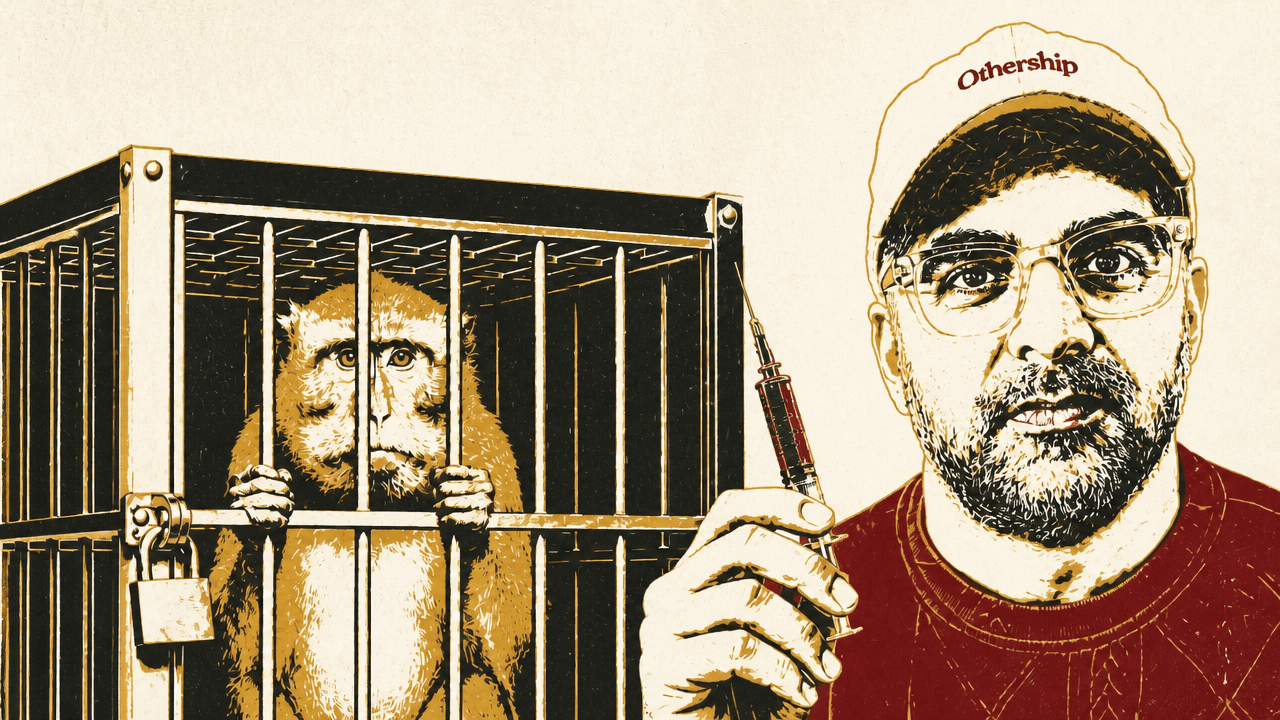
Puri’s example of non-human primates used in biomedical research makes the pattern visible at an industrial scale. He said more than 20% of drugs are tested on monkeys, particularly cynomolgus macaques, which he described as a close enough proxy to humans to become especially valuable in preclinical research.
The US imports tens of thousands of monkeys annually, Puri said, and COVID sharply changed the economics. Before that period, he said, an animal might cost roughly $2,000. As demand for testing rose and supply tightened, prices reached $20,000 and in some cases $50,000 per monkey.
China had supplied about 60% of the world’s non-human primates, according to Puri, before it stopped exporting them. Cambodia, Vietnam, and Mauritius became alternative sources. What looks from the outside like a narrow procurement detail became a binding constraint on drug-development work.
Charles River Laboratories sits in the middle of this system. Puri described it as a research, testing, and development-services provider that lets biotech companies avoid building every part of the necessary infrastructure themselves. Its on-screen materials presented the company as supporting the full drug-discovery and development continuum, from basic research and preclinical testing through clinical development, manufacturing, and scientific and regulatory guidance.
Puri said Charles River works with roughly 80% of biotech companies and has tested about 80% of drugs that reach market. The revenue chart shown on screen placed the company’s annual revenue at $1.4 billion in 2019 and $4.0 billion in 2024.
The company’s move upstream illustrates what supply dependence can do to a service business. An on-screen article reported that Charles River agreed in January to acquire K.F. (Cambodia) Ltd., a supplier of captive-bred research monkeys, for $510 million. The article quoted Charles River’s stated rationale: greater oversight and operational control over a key supply source. Puri’s interpretation was straightforward: the company had been exposed to wild swings in the availability and price of non-human primates, so it bought into the supply chain.
The commercial value is inseparable from ethical and legal tension. Puri described an alleged scheme in which monkeys taken from the wild were passed off as captive-bred research animals, retagged, and sold into the testing system. The article displayed on screen described federal charges against Cambodian supplier representatives and government officials over an alleged conspiracy to smuggle wild-caught monkeys into the US under paperwork identifying them as captive-bred.
Everything is a business. It would not exist if there wasn't an entrepreneur behind it making it exist.
Puri’s broader claim is that specialized businesses become invisible because their output is embedded in something more familiar. A factory conveyor belt has a supplier for its tread. A mechanical pencil depends on somebody who knows the market for its lead. He recalled meeting people whose businesses involved almond farms, mushroom farms, conveyor-belt components, and blue-dye production. The surprise was not that these activities exist. It was the scale and specialization behind them.
Sam Parr offered American Express’s role in the soybean-oil scandal as a related example. In Parr’s account, a fraudster borrowed against purported soybean-oil inventory held in tanks. American Express had been paid to verify that the pledged inventory existed. The tanks, Parr said, were ultimately filled with seawater rather than oil.

When soybean-oil prices fell and lenders sought repayment, the fraud surfaced. Parr said American Express faced liability because it had guaranteed the inventory verification. Warren Buffett’s investment thesis, as Parr recounted it, was that an obscure collateral-inspection business did not necessarily damage American Express’s core credit-card franchise. Restaurant customers could continue trusting and using the card even after the company had suffered a major failure in soybean-oil verification.
The episode matters because even a famous company can contain an obscure operating business with material liabilities. Parr said he was struck that American Express had been in the soybean-oil checking business at all, describing it as a multi-hundred-million-dollar annual activity.
The best openings appear at the edge of real workflows
The difficult part is not agreeing that overlooked problems exist. It is finding them without mistaking every irritation for a business. Puri calls the underlying skill “the art of noticing”: remaining exposed to ordinary friction, registering what is inefficient or absurd, and developing enough depth in an area to distinguish a persistent gap from a trivial inconvenience.
The useful observation is rarely just, “This seems annoying.” It is more specific: a particular person performs a particular task repeatedly; a customer loses money or time when that task goes wrong; the loss has an owner; and the workflow is important enough that someone will pay for a more reliable alternative.
That is why the examples have commercial force. The dental office has claims that must be verified, filed, corrected, and collected. The healthcare facility cannot accept a failed backup generator. The biotech company cannot simply skip the testing capacity or animal supply it needs. The pain is frequent or consequential, and the buyer is identifiable.
Puri’s summary of Paul Graham’s idea of the frontier explains how a founder gets close enough to see these conditions. Interest, in his rendering, does two jobs. It supplies motivation to keep working when the work becomes difficult, and it directs a person toward territory that is personally distinctive rather than universally crowded.
At a distance, an industry can look complete. Healthcare, logistics, construction, finance, and software appear to be established categories with established players. Closer in, the surface breaks apart: approvals requiring phone calls, data being re-entered, claims denied for preventable reasons, supplies with few dependable sources, and tasks employees perform manually because no one has solved them.
The founder’s job is not merely to identify a category. It is to reach the part of the category where the official process and the actual process diverge. A company may say it has billing staff, procurement procedures, compliance software, or a service vendor. The relevant question is whether the work still requires repeated intervention, whether the customer has visibility into its failure, and whether a new provider can plausibly take responsibility for the outcome.
The businesses discussed suggest several tests for evaluating a hidden workflow. They are not universal rules for every outsourcing company; they are ways to turn a curious industry fact into a more concrete commercial question.
-
Frequency: Does the problem recur often enough to justify an ongoing service rather than a one-time consulting engagement?
-
Economic owner: Who feels the loss directly? It may be the practice owner missing collections, the facility manager responsible for reliability, or the research organization facing delay and supply risk.
-
Existing budget: Is money already being spent on staff, vendors, maintenance, or error correction? A service that redirects an existing budget has a different sales motion from one that asks a customer to fund a wholly new priority.
-
Cost of failure: What happens if the workflow is neglected? Lost collections, delayed research, compliance trouble, and power failure are not interchangeable annoyances; each creates a different willingness to pay.
-
Ability to transfer responsibility: Can the customer hand the work to an outsider while retaining sufficient confidence in continuity, accountability, and control? The examples imply that a specialist needs to be trusted with a revenue-critical or safety-critical function, not merely offer advice about it.
-
Measurable performance: Can the provider observe enough of the workflow to make a specific promise about results? DayDream’s materials tie its offer to claims, payment posting, collection rates, and insurance aging rather than a general promise of efficiency.
Puri’s contrast is with the kinds of products founders tend to build from their own familiar environments. Smart, technically capable people often encounter the same consumer and software problems as one another, so they build to-do-list apps, dating apps, and other products rooted in their daily lives. His recommendation is not to avoid competition categorically. It is to look for categories that capable people have not learned much about and therefore may not have crowded.
That does not mean choosing an industry at random. It means gaining a route into one. Family work, a former job, a supplier relationship, a customer conversation, a consulting project, or repeated contact with a particular workflow can all create the access that turns an opaque sector into a legible one.
Recurring attention can keep a founder close to the frontier
Parr raised a prior question: what if someone does not know what they are deeply interested in? He said he can become intensely interested in something for a period without feeling that he has one lifelong, 40-hours-a-week obsession.
Puri’s answer was to look for repeated structures of attention rather than a single clean vocational identity. He pointed to Parr’s interests in fitness, the history of denim, media, and researching businesses, along with the accumulated work of recording nearly a thousand conversations about niche business ideas. A pattern can feel scattered from the inside while appearing obvious in a record of behavior.
For Puri, childhood can be useful evidence because children have more unstructured time and fewer incentives to optimize for seriousness or status. His own sequence ran from video games to online poker, then business and investing. The activities changed, but he saw the same underlying attraction in each: strategy, competitors, scoreboards, trial and error, and the satisfaction of winning a difficult game.
That recognition matters because sustained interest can be a route to the frontier. A person who is drawn to a particular kind of game, craft, system, or community is more likely to spend enough time in it to acquire the detail outsiders lack. The interest itself is not a business thesis. It is a reason to keep looking long enough for a thesis to emerge.
Puri’s second instruction is not to dismiss that attention because it seems childish, narrow, or low-status. He described this as being “shameless” about what lights someone up. He used Elan Lee, a creator of Exploding Kittens, as an example of someone who kept making and testing games rather than treating games as an interest to put aside when real work began. Parr recalled Lee trying out game instructions on a group and watching whether people understood and enjoyed them—the same kind of immediate feedback a comedian gets when trying material.
The business relevance is not that every hobby should become a company. It is that enthusiasm can sustain the repeated observation, experimentation, and tolerance for specificity that operational businesses require. Puri argues that visible enthusiasm is often treated by smart people as low-status or unserious. Yet it can be useful precisely because difficult work requires energy over a long period, and because many people decline to cultivate traits they already know are valuable.
Notice what lights you up and then let it fly.
The strongest version of this advice is not to “follow your passion” in the abstract. It is to take recurring attention seriously enough to enter a domain, learn its actual workflow, and find the points where people are improvising around persistent failure.
A dense founder environment can widen what seems plausible
Parr’s account of a week in San Francisco offers a narrower final lesson: a dense founder environment can make unusual businesses feel more conceivable.
He described San Francisco as unusually effective at producing awe, both through its landscape and through the concentration of people attempting strange, technically specific projects. During a day of founder conversations, he and Puri met entrepreneurs working on businesses that would sound odd in isolation, including an Indian founder using a robot to make Italian food. What energized Parr was less the individual company than the visible concentration of quirkiness, technical intensity, and willingness to go against the grain.
Puri argued that San Francisco produces more startup ideas that sound terrible—and often are terrible—than other places where entrepreneurs gather. He compared it to digging for gold: most digging produces dirt and sand, but the rare discovery keeps people searching in places that initially look implausible.
That setting does not replace access to a workflow or the commercial tests that make an opportunity real. But it can expand an entrepreneur’s idea set. Seeing people seriously pursue odd, narrow, or initially illegible projects makes it easier to investigate an obscure operational problem rather than dismiss it.