Consumer Brands Need Cultural Adoption, Not Just Paid Awareness

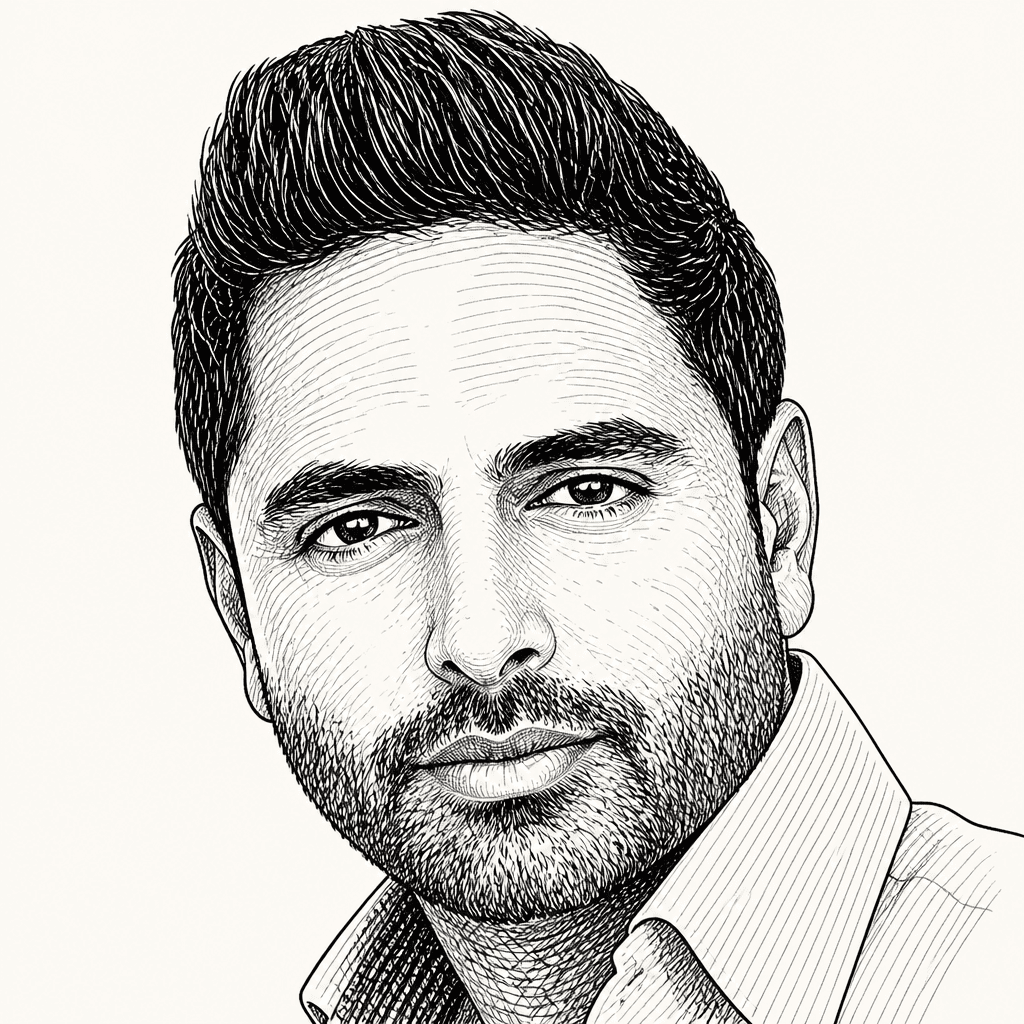
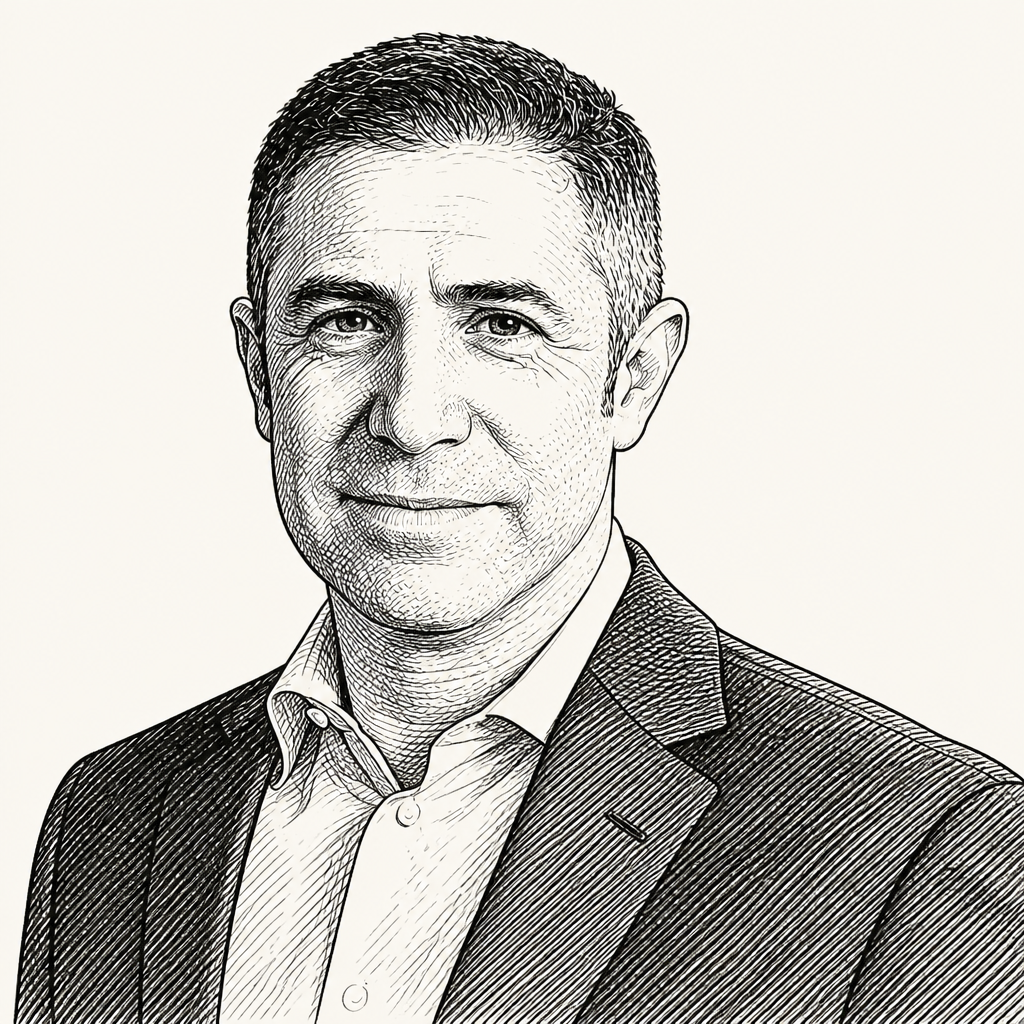
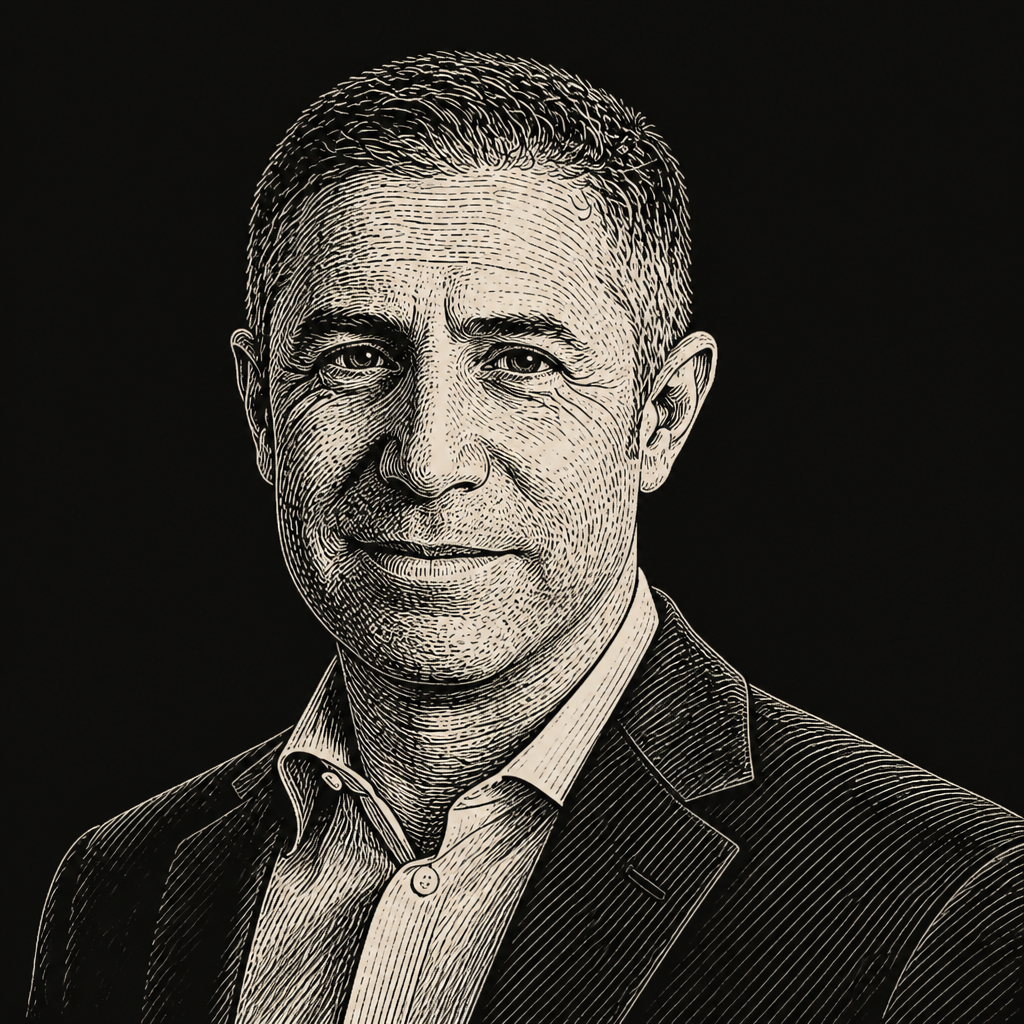
Rohan Oza, the brand builder behind Vitaminwater, Poppi and other consumer exits, tells Masters of Scale that breakout products are not made by awareness alone. In conversation with Jeff Berman, he argues that brands need a credible reason to exist, packaging that travels in public, and cultural partners who genuinely feel the product — whether that means radio DJs, 50 Cent, Alix Earle or a founder on TikTok.
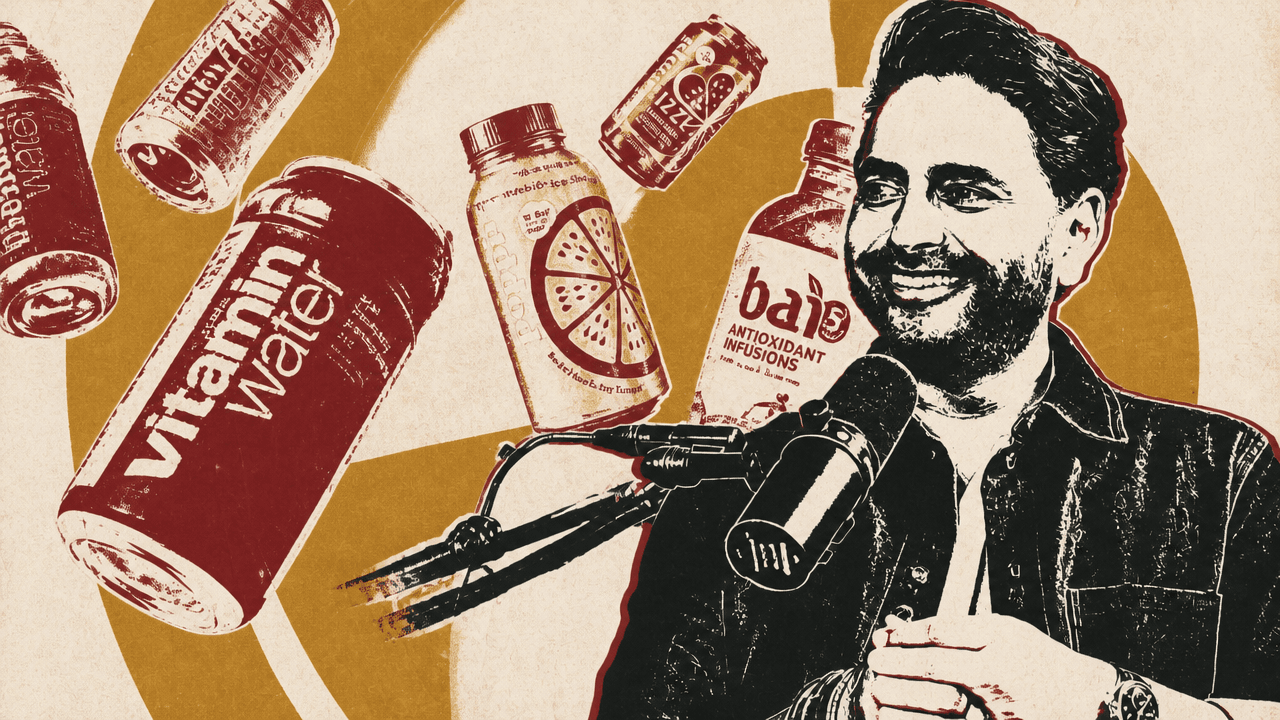
A brand has to enter culture, not just buy awareness
Rohan Oza describes his work less as conventional advertising than as a repeated search for the person, package, channel, or community that can make a product feel alive in the market. His phrase for the early lesson was “influence the influencer,” learned at Sprite and later applied more aggressively at Powerade, Vitaminwater, Bai, and Poppi.
In Oza’s telling, durable consumer brands come from matching a product with a real reason to exist, packaging that can travel in public, distribution that fits the moment, and people who can carry the brand into attention that already exists. The person might be a radio DJ, a rapper, a founder on TikTok, a mega-influencer, or an internal team close enough to the customer to know what is moving.
The premise is simple but demanding. A product can be good, and its packaging can be strong, and still lack what Oza calls “zeitgeist.” Vitaminwater had that problem when he joined as CMO. The product was “incredible,” the package was strong, but “no one knew about it.” The work was not to explain functional benefits in isolation. It was to make the brand cool and broad enough that consumers encountered it through people and places that already carried cultural authority.
For Sprite, the influencers of the era were not TikTok creators or Instagram celebrities. They were radio DJs. Oza says he flew roughly 80 DJs from the top 60 markets into Las Vegas around an award show, creating what Jeff Berman compared to “a Super Bowl radio row” for product promotion. Artists could hit 20 cities in an hour and a half. Oza took that same operating logic to Vitaminwater: partnerships across the country, field marketers who “felt the brand,” and a street-level network of radio DJs and hot bartenders. Before digital distribution could create velocity, he tried to concentrate attention in the places where taste moved.
That approach also explains why Oza treats celebrity endorsement as insufficient. Celebrities had endorsed products long before his career, Berman notes. Oza’s distinction is that the talent has to “feel your brand.” If they do, he says, they go above and beyond. If they do not, the endorsement remains a paid transaction.
He says the only way to assess that is to sit with the person. He cites meetings with 50 Cent on Vitaminwater, Justin Timberlake on Bai, and Alix Earle on Poppi. Going only through an agent, manager, or lawyer may protect the celebrity’s time, but it also prevents the brand from seeing whether the person has an authentic reaction to the product.
For entrepreneurs who cannot simply call major talent, Oza’s advice is not to bypass the gatekeepers. It is to build trust with them. With 50 Cent, the key relationship was Chris Lighty. With Justin Timberlake, it was Rick Yorn. Oza says the agent relationship comes first because “you can’t go around the agent.” The direct meeting with the artist comes only near the end, as part of the final negotiation. He compares it to a home inspection before closing: before the check is written, the brand needs the meet-and-greet.
Your package is the brand you walk around with.
Packaging, for Oza, is part of the same cultural system. At Powerade, he says, the brand was treated as an afterthought inside Coca-Cola — “like a dying brand” — and its athlete strategy amounted to picking “what Gatorade didn’t want.” His response was to redesign the packaging, bring in different athletes, create new product energy, and get Coke bottlers back behind the brand. The package had to “pop,” not merely test well.
He is skeptical that research alone can produce great packaging. If that were true, he says, everyone hiring the same research agency and showing consumers 10 designs would end up with strong work. His process still involves observation — he jokes that grocery trips take him two hours because he walks aisles studying products and packaging — but the final call depends on vision, the right creative team, and gut.
The large-company apprenticeship taught him the brand discipline and the constraint
Rohan Oza’s route into entrepreneurship began inside large consumer companies. His family background, as he tells it, was commercial: Indian by origin, born and raised in Africa, educated in England, later American, and raised around businesspeople. The expected path was to join his father’s agricultural equipment and hardware business, but Oza says he had neither aptitude nor interest in it. He argues that if someone is “blessed” to be able to work on something they are passionate about, that passion can make them more successful.
He entered consumer products through manufacturing at Mars M&M’s, then used business school to pivot. Mars mattered because it had created legacy brands that remained powerful for generations. Coca-Cola attracted him for the same reason: global, iconic, and a place to learn how enduring consumer brands are built. He says business school gave him “intellectual maturity” and helped him find the direction he wanted.
At Coke, he was viewed as “high risk, high reward.” Oza says Carl Sweat, who became a mentor, argued that he would be either brilliant or a train wreck, not middle of the road. Oza says he did not fully understand that assessment at the time, but later came to see it as accurate.
That risk profile became clearer after Powerade began to work. Oza says the brand was “rocking and rolling,” but instead of moving him up, Coke put someone above him. Jeff Berman presses on why a successful company would layer a manager above someone who was delivering results. Oza’s answer is that Corporate America involves “a lot of chess moves” and can become nervous when someone moves quickly, makes creative decisions, and does not manage internal politics well.
He is blunt about his own role: he was “playing politics terribly.” His entrepreneurial approach made him feel, to the organization, more like a threat or liability than an asset. Berman frames this as relatable for “intrapreneurs” — entrepreneurs operating inside large companies — and Oza embraces the term.
That tension set up his move to Vitaminwater. Mike Repole, then the number two person at Vitaminwater, reached out because the company needed a CMO. Oza describes Repole as a “gunslinger,” and says they got along well. Being layered at Coke made the offer easier to accept. He calls Vitaminwater the next and most important chapter of his life because it laid the foundation for what came later.
Vitaminwater turned an endorsement into equity and identity
The Vitaminwater deal with 50 Cent is the clearest example in Rohan Oza’s account of a cultural partner becoming more than a paid spokesperson. In 2004, he says, the two dominant names in music were 50 Cent and Jay-Z. He wanted 50 Cent in the room and believed he could be the face of Vitaminwater. The obstacle was price. Oza says 50 Cent was being paid $1 million to perform for one night in Libya, while Vitaminwater could not afford a conventional deal.
So Oza proposed equity: “skin in the game” instead of a large upfront fee. He says 50 Cent agreed immediately.
I said, I can’t afford you. But I have an idea. I said, we can do an equity game. I’ll give you skin in the game if you wanted to do this. And he’s like, I’m in.
The source shows a photograph of 50 Cent wearing a white and green patterned cap and drinking from a bottle of grape Vitaminwater, with visible text including “vitaminwater,” “FORMULA 50,” “MGM GRAND,” and “Reebok.” The image matters because it captures the role Oza describes: not a celebrity standing near a product, but a figure publicly carrying the product as part of the brand’s identity.
Oza says he was shocked by how quickly 50 Cent understood the opportunity. He describes him as “a very smart individual” who “understands business cold” and who knew his own leverage better than Oza did. Oza had a number in mind for what 50 Cent could make; he says 50 Cent made “10 times that.” Oza also says he did not expect the company to sell for $4 billion.
Oza says 50 Cent “fully” got behind Vitaminwater and “owned it.” When Darius, the founder, met him and said, “by the way, I’m the real founder of Vitaminwater,” 50 Cent laughed. Oza’s interpretation is that 50 Cent had put the brand on his back and effectively said, “I’m Vitaminwater.” Jeff Berman describes that as a kind of refounding, and Oza accepts the idea: “It lifted the brand.”
The deal also became a reference point in Oza’s later work. He connects Alix Earle’s Poppi involvement to the same logic. He says she was one of the first influencers to use an equity strategy in that context, in the way 50 Cent had done as an artist with Vitaminwater. In Oza’s view, that helped shift what influencers expected from brand relationships: “now every influencer wants an equity plan the same way that artists and celebs wanted it back in the day.”
The important distinction is not that equity is always the right instrument. It is that equity can align a cultural figure’s upside with the brand’s upside when the person truly believes in the product. Oza’s examples are built around the same structure: direct conviction, real skin in the game, and public behavior that goes beyond a scripted placement.
CAVU was built around value-add, not passive capital
CAVU Consumer Partners came from a perceived edge in brand-building, not just capital deployment. Rohan Oza says his future business partner Brett, who came from the hedge fund world and wanted to move into private equity, saw what Oza and Steve had been doing and identified a different kind of fund model. A fund that simply raised and deployed capital did not feel differentiated. A fund that could help build brands did.
CAVU stands for “ceiling and visibility unlimited,” a flying term Oza says he did not know before. He explains the metaphor as helping entrepreneurs guide their brands through turbulence toward clear skies. The fund’s mission, in his words, was “to democratize better living for all humans and their families.”
Oza describes CAVU’s sourcing as active. The best founders do not, in his experience, simply walk in and announce that they are brilliant. “It’s a hunt.” Once CAVU finds a brand, the firm has to bond with the founders because it is still the founders’ company. Oza is explicit that CAVU is not there to run the business. The role is “wingman or wing woman” on the branding journey.
The help is modular. Oza compares it to a Swiss Army knife: packaging, influencer strategy, Amazon, direct-to-consumer, billboards, pricing, relationships, or execution. The founder does not need help with everything. The appeal is that capital comes with brand-building capability.
The core conviction is that “brand is king.” Oza frames it as the moat: without a brand moat, he asks, “what do you have?” But he also notes a governance constraint. Founders should run 80% or 90% of the company. The partnership works only if they are willing to collaborate on the areas where CAVU can provide value.
His missed investments clarify the risk side of that model. Oza says CAVU passed on The Ordinary during its first fund. He liked the founder, whom he describes as high-risk, high-reward, but the check would have been roughly a third of the fund. CAVU became too nervous and “too corporate,” he says, because if the deal failed, the fund could have been out of the game. He says The Ordinary later sold for north of $2 billion and that the fund would have tripled on that deal alone.
Another near-miss was On, the shoe company. Oza says CAVU had a deal on the table and founders ready to sign, but the day they were moving forward, On announced Roger Federer. Existing investors re-upped, and CAVU was blocked out. Oza says it would have been a six- or seven-bagger on a large check.
These examples are not presented as regrets about brand judgment so much as reminders that risk appetite, timing, and access can determine outcomes even when the thesis is right.
Poppi began by shutting down Mother and rebuilding around “modern soda”
Poppi entered Rohan Oza’s orbit through Shark Tank, where he says he appeared partly as a way to “pay it forward.” He frames the United States as uniquely favorable for entrepreneurship, saying that almost nowhere else can someone create products from scratch and be worth $2 billion, $3 billion, or $5 billion within five years. Jeff Berman agrees that this is not a political statement but a description of the entrepreneurial environment.
Oza says most of his Shark Tank deals lost money. Then a beverage called Mother Beverage appeared. His first reaction was negative: he disliked the name, thought the packaging was terrible, and objected to the glass bottle because it could break and was hard to carry. But he liked the founders, Allison and Stephen, and liked the product, especially the orange flavor. It reminded him of a cross between Fanta and Orangina, drinks he had consumed as a child, but with the ability to drink it every day without guilt. He describes the proposition as low sugar, natural ingredients, fiber, and “permissible guilt.”
The product insight was strong enough that he was willing to make a radical brand decision. He told the founders, in his account, “we shut down the company today” and create a new company together. He credits Allison and Stephen for trusting that move. With CAVU’s backing, Oza says Allison, Stephen, himself, and Stevie co-founded Poppi.
The division of labor is important in Oza’s account. The original founders had the product and idea. Oza brought the vision of “modern soda.” Stevie created the package and marketing DNA. CAVU funded it. Poppi was therefore not just a new label for Mother Beverage; it was a rebuilt company around a sharper category idea.
Even then, timing nearly broke the plan. Poppi launched in March 2020. Within two weeks, Oza says, retailers called to say they would not carry it because the world had shut down. The company was forced into a digital-first posture: influencer strategy, Amazon only, and a modern version of Oza’s old-school cultural playbook.
That shift marks the clearest difference between Oza’s earlier brand-building and Poppi’s. At Sprite and Vitaminwater, influence moved through DJs, street teams, bartenders, and artists. Poppi had to move through social platforms, direct digital commerce, and a community built by people who lived the brand from inside the company.
Berman notes that he remembers Poppi “popping” partly because a founder-made video took off. Oza says Allison created a TikTok that went viral, producing early buzz. But he emphasizes that the broader engine was internal, not agency-led. The company hired a young, dynamic team of women who lived the brand. Stevie wrote the DNA. The team executed internally and built what Oza calls an “incredible Poppi community,” which he says still exists.
That community and cultural visibility eventually laddered up. Oza says figures like Hailey Bieber and Kylie Jenner were seen drinking the product without being paid. Then Poppi pursued what he calls the mega-influencer layer with Alix Earle. He says both sides took risk, but Earle saw the vision early. Oza gives credit to Stevie, Allison, and the team for recognizing Earle’s fit; he says he was being educated on her at the time.
There is a generational lesson embedded in that admission. Berman asks whether, when a marketer is outside the product’s core demographic, the job is to hire the right team and trust them. Oza says yes. “I was cool 20 years ago. I’m not cool now,” he says. He can still see cool, but someone else has to live close enough to it to execute.
The founder does not always have to be the face
Jeff Berman raises a practical question for consumer founders: must they become the influencer? Must they be the face of the brand? Rohan Oza’s answer is conditional. Some brands need a founder in front. Some are better served by a celebrity or cultural figure. Some need both.
In Bai, he says, Justin Timberlake became the face of the brand. In Vita Coco, Michael Kirban was a strong operator, but Madonna was the face. Oza says Kirban recognized that Madonna was probably a better face than he was. Berman jokes that most people would recognize that. Oza’s point is not dismissive: Kirban’s strength was operating, and he built what Oza describes as a brand worth more than $3 billion.
Poppi was different. Allison was front and center, not as the only influencer but as what Oza calls the “founding influencer face” of the brand. That worked for Poppi because her story, product conviction, and social presence fit the brand’s digital-first launch. The lesson is not founder-as-default-spokesperson. It is founder-market-brand fit.
Oza’s broader posture is that he is still learning how those fits change. Asked about mentors, he does not identify one definitive piece of advice. He describes an accumulation of lessons: Darryl Cobbin at Coke on cool marketing, Mike Repole at Vitaminwater on corporate culture, Chris Hall on operating a tight ship, and Darius on remaining “a student of the industry.”
That phrase is the closest thing to a final operating principle. The mechanics of influence changed from radio DJs to TikTok, from artist equity to creator equity, from street teams to internal digital communities. Oza’s claim is not that the old playbook can simply be repeated. It is that the underlying discipline persists: understand where influence actually moves, make the product and package worthy of that influence, and keep learning as the channel changes.