A Boutique Podcast Network Offers Hosts More Control Over Sponsorships
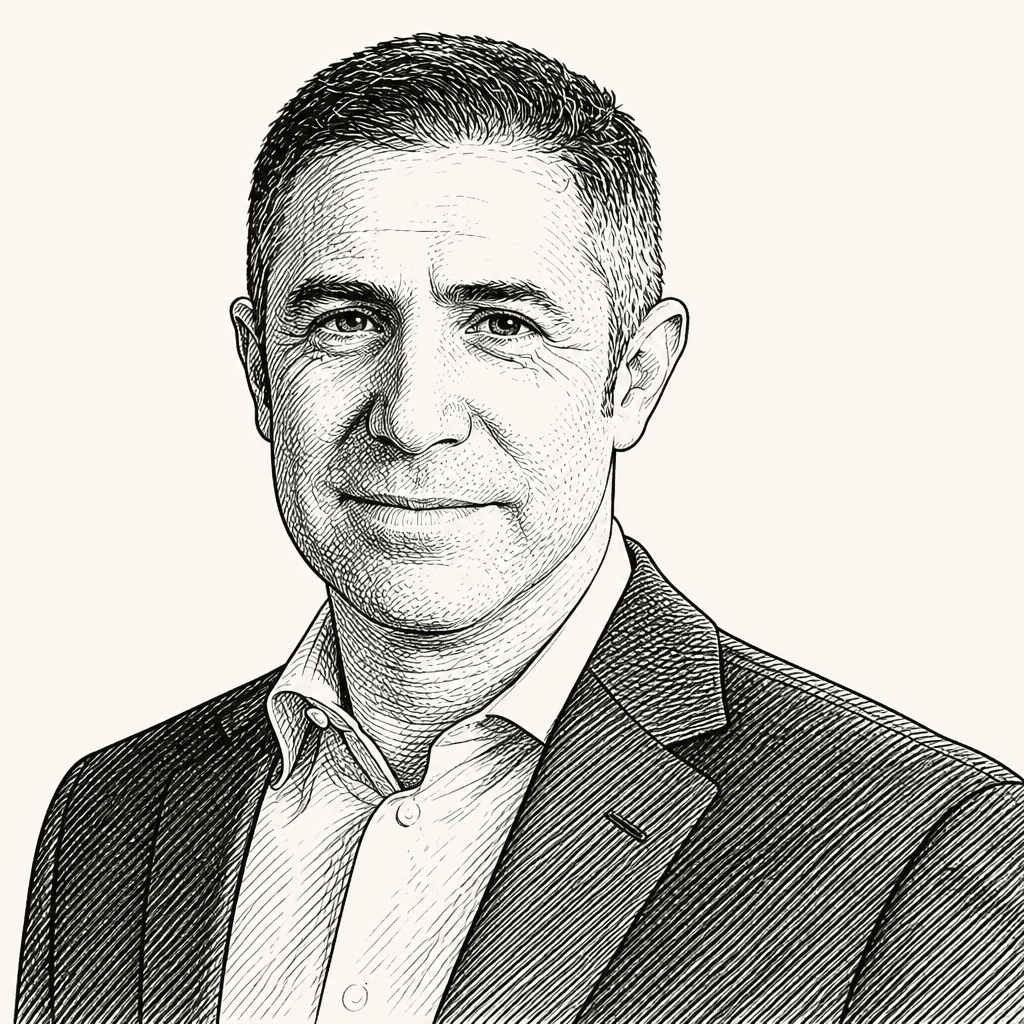
Rich Roll says he avoids shaping interviews around viral clips, even when that means they may not travel as far. His growing podcast network offers selected hosts hands-on support with sponsorships and other business work, an arrangement he says can help them retain more agency than they would in a larger network. Roll describes both choices as part of building a show and business around work he believes in.
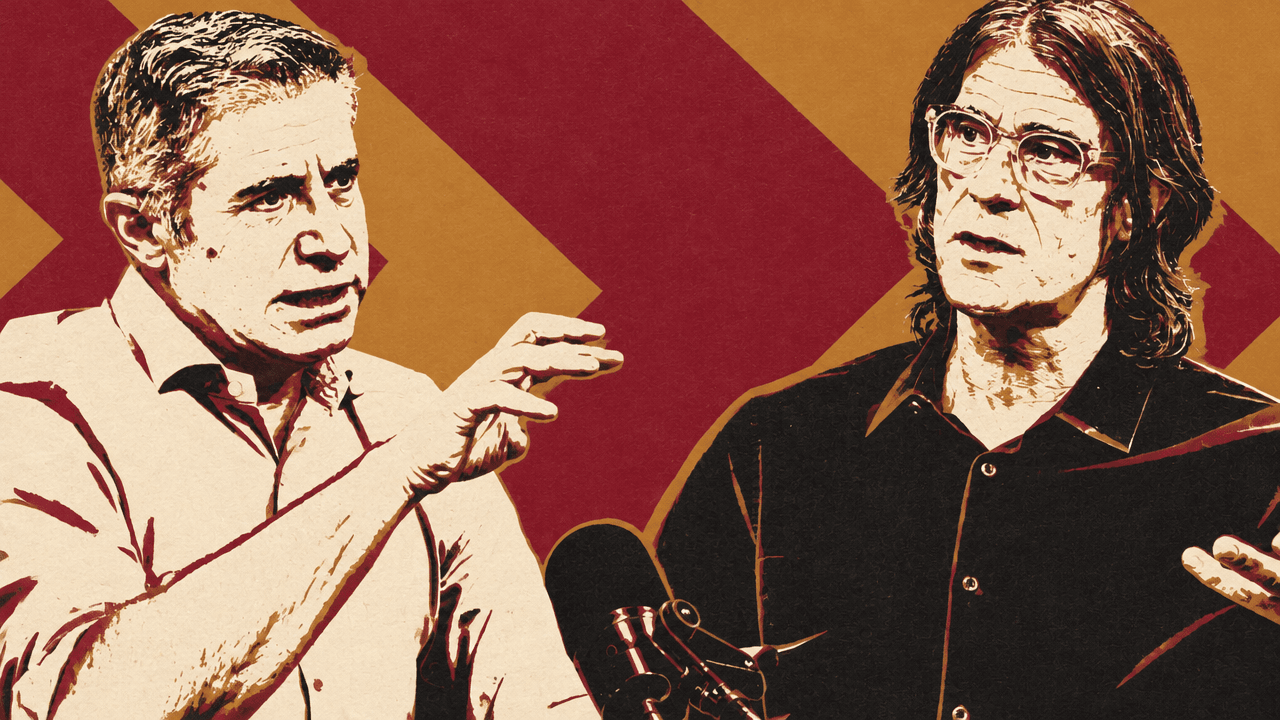
The show’s scale grew without changing its purpose
Rich Roll says he never expected his podcast to reach 1,000 episodes. When he began in late 2012, he barely knew anyone personally who listened to podcasts. He had discovered the medium through playlists he took on long bike rides, where familiar hosts began to feel like “a parasocial friendship.” Their shows had affected him, and he wanted to try making one himself.
At the time, Roll and his wife lived on an organic farm on Kauai’s north shore. He was restless and wanted a creative project. Putting a show on iTunes and recording an episode seemed like a low-stakes experiment; he did not know whether he would make a second one. Podcasting was not yet an obvious business opportunity. Roll recalls that saying you had a podcast could feel embarrassing.
The operation around the show has since changed dramatically: Roll now has a staff, a studio complex and a growing podcast network. But he says the intention behind the interviews has stayed consistent. He wants to sit with someone who inspires him and create the conditions for that person to give a good account of themselves. “I’m not a journalist,” he says. “I’m not here to challenge people necessarily. I’m here to highlight the people that I think are worthy of attention.”
That approach puts him at odds with the incentives he sees in online media. Roll says attention is often won through contrarianism, drama and giving a platform to people with ideas he considers questionable. The interview displayed material from Oxford, Stanford Report and Yale News about “rage bait” and online outrage alongside his comments. Those headlines frame the concern he raises; Roll’s argument is that the pursuit of attention can put a host who wants to work with integrity in a bind.
Roll tries not to design interviews around the algorithm. He knows some hosts shape questions to provoke a response that can be cut into a viral clip. He chooses not to work that way, while accepting that the result may not travel as far. His alternative is preparation followed by presence: he researches guests, then tries to set that preparation aside and listen in the moment, much as he would at a dinner party. He has a direction in mind, but does not want to force the conversation into a predetermined shape.
The aim is intimacy. Roll wants guests to lower their guard, and believes he cannot reasonably ask them to be vulnerable if he is unwilling to do the same. He sees emotional connection with a guest as one of his strengths, and tries to make room for a conversation to become what it will rather than steering it toward a clip.
A guest’s impact matters more than the size of the name
Rich Roll describes two different ways a guest can matter to him. He says he was the first person to have David Goggins on a podcast. Goggins was already known in the ultrarunning community, and Roll had been trying to book him for some time. When Goggins eventually agreed, the two recorded an audio conversation on the floor of a Los Angeles hotel room, before Roll’s show had video. Roll remembers the episode as an early viral moment and describes Goggins as a gifted speaker and an inspirational figure.
A different kind of story came from Josh LaJaunie, whom Roll found in rural southern Louisiana. LaJaunie had been extremely overweight and, as Roll described it, came from a community with little connection to the healthy eating practices Roll often discussed. LaJaunie took it upon himself to lose weight, reinvented his life and became a runner. Roll says the episode made an impact on his audience, and that the audience’s response affected LaJaunie. The Runner’s World cover shown during the interview identifies LaJaunie as its “WINNER” and says he “went vegan, shed 200 lbs, and got fast.”
Roll says stories like LaJaunie’s mean the most to him. He also remembers visiting Arnold Schwarzenegger’s office and seeing him bring out an Excalibur sword as a personal highlight. But when people ask him to name a favorite guest, he says he does not really have one.
The network offers another route between going it alone and joining a large operation
Rich Roll says he did not set out to become an entrepreneur. He was raised in a traditional, achievement-oriented family and expected to follow a safe professional path. Even at Stanford, during the early tech boom, he says he was more interested in literature than in the computer science courses his peers were taking. Starting a business felt like a foreign language.
The idea for Voicing Change Media came from a problem he saw among established podcasters. Some had built substantial audiences but did not know how to monetize their shows. Their options, as Roll describes them, were to negotiate deals themselves, take on the work of running a small business, or join a large network. He says the last option could mean weak advertising rates, little control over which brands appeared on the show, and ad reads for companies the host did not believe in.
Roll and his team had spent years building infrastructure for their own show and had experience with several networks, including bad ones. They eventually chose independence and developed a way to work directly with chief marketing officers on more complex annual deals. Once the team could support the work, Roll thought it could extend that approach to a small number of other hosts he considered a good fit.
The host lineup displayed during the interview includes Dr. Lisa Damour, Forrest Hanson, Dr. Rangan Chatterjee, Alexi Pappas, Dr. Aliza Pressman, Simon Hill and Zac Clark, alongside Roll. He says its hosts share a sensibility with him: they are doing work that complements his and trying to operate against the algorithm’s incentives. The network’s purpose, in his account, is to reward that choice rather than penalize it. The offer is not simply access to advertisers; it is support with the work behind sponsorships, so hosts do not have to choose between handling every business detail themselves and surrendering much of their agency to a larger network.
He is still working out how to identify the right people and formats. Experience matters: hosts who have been podcasting for some time have often encountered the frustrations of doing everything themselves and understand the labor involved in the network’s support. Newer hosts, he says, can sometimes have expectations that do not match the reality of the business. The group has had fits and starts and learned from them. For now, Roll describes the operation as boutique and hands-on, though he says a recent hire will help it scale somewhat. He is not trying to sign hundreds of hosts.
The sponsorship model asks creators to commit more than an ad read
Rich Roll credits his business partners, including Jonathan Retseck of RXR Sports, with expertise he does not claim for himself. Voicing Change Media is a joint venture with RXR, which had represented Roll for speaking engagements and other brand relationships before taking on his podcast. Its sports-management perspective, Roll says, differs from the conventional advertising model.
In a typical podcast ad buy, the price is tied to audience size and calculated through cost per thousand impressions, or CPM. Roll describes that approach as transactional: the host reads an ad and moves on. When the brand is a poor fit, he says, the advertising may not work, the sponsor may leave, and the show has to keep finding replacements.
Some of Voicing Change’s arrangements instead bundle podcast advertising with other services in what Roll calls a “360 deal.” A brand might buy a set number of ads over a year while also paying for travel, appearances, speaking engagements, events or photo shoots. These deals can include category exclusivity: if Roll represents one brand in a category, he cannot work with a competitor in that category. The commitment is therefore larger than an ad read. It requires time and can limit the host’s ability to work with other brands in the same category.
Roll’s case for the model is that the relationship can become more meaningful to the audience and more useful to the brand. Rather than treating audience size as an entitlement to a particular fee, he says creators should ask what problem the brand has and how they are positioned to solve it—ideally before the brand has identified the problem itself. He says the goal is to become an indispensable partner, with a two-way relationship rather than a sequence of short-term ad buys.
Recovery made the career he had chosen harder to keep choosing
Rich Roll describes the business he built as downstream of a long personal process, not a sudden reinvention. Raised in a household focused on education and achievement, he absorbed the idea that happiness came from a secure, respected career. He was good at following that path, but began drinking heavily in college. He says he could see early on that his relationship with alcohol differed from his peers’: he was the last to leave a party and the one looking for leftover drinks.
After moving to New York, drinking became more destructive. Roll describes himself as living in conflict with his own spirit without recognizing it. The consequences accumulated: legal trouble, difficulty keeping a job and two DUIs within roughly six to eight weeks after moving to Los Angeles. He was facing possible jail time and the prospect of losing his law-firm job. His parents told him they would be there if he sought help but would no longer participate in what he calls a codependent situation.
There was no single rock-bottom moment. Roll points instead to a series of painful events, including a marriage that ended on the honeymoon. Eventually, he says, he was so broken that he asked for help. At 31, he spent 100 days in a treatment center in Oregon. For the first time, he was honest with someone else about his behavior. A counselor told him his alcoholism was as severe as cases typically seen in much older, long-term drinkers, and that people in that condition died if they did not address it.
Roll had assumed he would return quickly to his law career. During treatment, he told his counselor he had received a job offer from Akin Gump and asked what to do. The counselor urged him to tell the firm the truth. Roll called, expecting the offer to be withdrawn; instead, the firm initially kept it open and assigned him to a partner who was also in the program. But when the firm asked him to start working on a case while he was still in treatment, Roll’s counselor said that could not work. Roll declined the job and focused on sobriety.
He calls it a “sliding door moment”: he could have become a lawyer at that firm, but instead returned to Los Angeles and made recovery his priority. He went back to his existing law firm for a time, while immersing himself in the recovery community. He says he already knew the work was not right for him, but did not yet know what he wanted instead. He stayed because he had bills to pay and needed time to work out who he was and what mattered to him.
Endurance gave him a way to explore questions he could not yet answer
Rich Roll says leaving law took years. As he approached 40, a health scare collided with a growing sense that his career was out of alignment with who he was. He reached a point where he could no longer type a confirmation letter. That may have looked like burnout, he says, but he understood it as being deeply out of integrity in a profession that simply was not right for him.
Changes in diet helped him feel physically revitalized. He returned to the pool, began running, and started cycling after his wife gave him a bike for his birthday. Roll had been a swimmer at Stanford and a lifelong athlete, but had become disconnected from that part of himself. At first, he says, exercise was about enjoying the feeling of being connected to his body again.
The first goal was not Ultraman. Roll thought about doing an Ironman, but learned that the races he considered were booked far in advance. Then he encountered an article about Ultraman, a three-day, double-Ironman-distance event. Something about it appealed to him: it felt less like a competition than a spiritual odyssey. He had begun asking questions about his life without knowing the answers, and endurance training gave him a way to process that exploration. He signed up for Ultraman without ever having done an Ironman.
Integrity is a practice, and trust is what it protects
Rich Roll describes integrity as alignment across mental, spiritual and physical life, as well as relationships: how he feels about his decisions, whether he is taking care of himself and whether he is caring for the people who matter to him. He does not think anyone can maintain perfect alignment in every part of life every day. The larger question is whether, in the round, someone is in the right place doing work they believe they should be doing.
Roll draws on an AA aphorism he learned in recovery to explain why this matters to him:
You can't transmit something you haven't got.
He says a person’s voice resonates in proportion to how fully they are living what they say. He also cautions against confusing desire with intuition: people can be too disconnected from their bodies, minds or spirits to distinguish what they want from what their intuition is telling them. Modern life, he says, continually distracts people from that connection or rewards them for acting against it.
For Roll, the practical consequence is that integrity needs regular attention, while trust can be spent quickly for short-term attention or money. He believes people need voices they can trust in a complex media environment. His preference is to play the long game: not necessarily to be the most conspicuous voice, but to be someone an audience returns to when deciding what deserves its attention.