KCRW Treats Interesting Programming as Part of Public Service


KCRW president Jennifer Ferro argues that public-service media cannot rely on its mission alone to hold an audience: it has to make work people find interesting. In a Masters of Scale conversation with Jeff Berman, Ferro draws on her years as deputy to KCRW founder Ruth Seymour to explain why candor about dull programming matters, and why stations must build community beyond the radio dial.
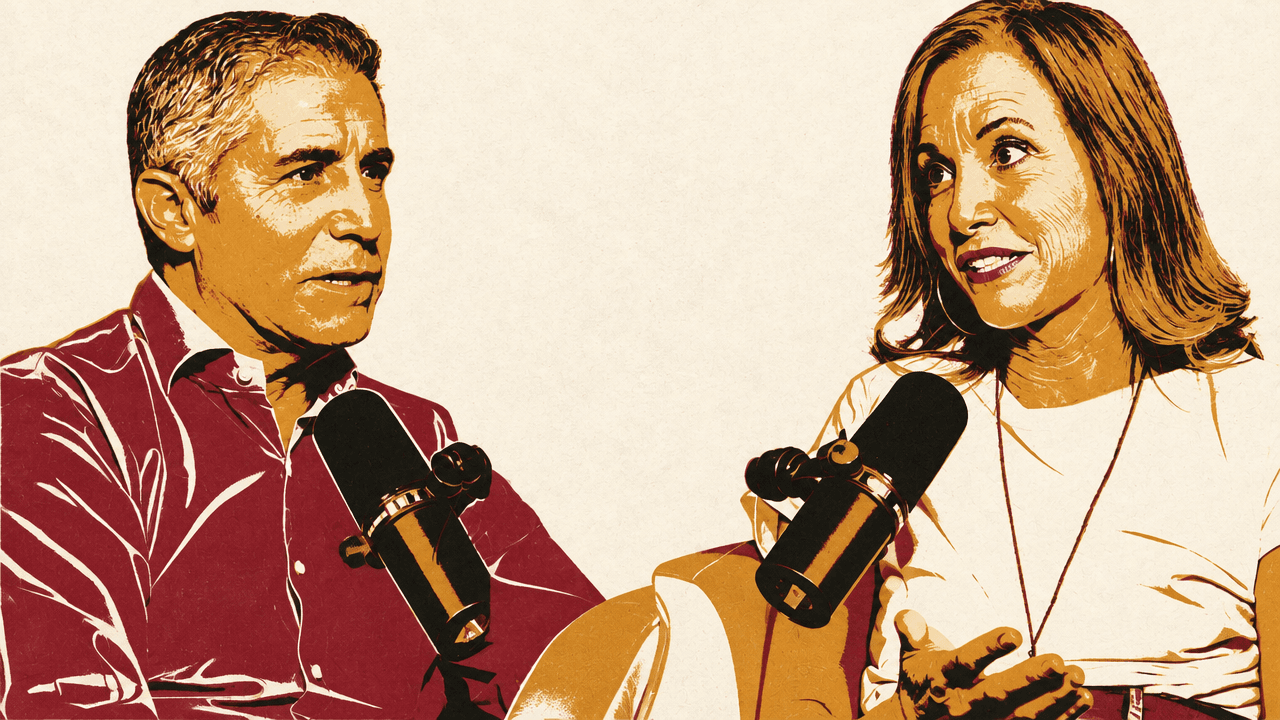
KCRW treats being interesting as part of its public-service mission
For Jennifer Ferro, KCRW’s distinction is not that it chose culture over journalism. It is that the station refuses to treat journalism as the only public good worth offering. News matters, she said, but so do the other parts of a newspaper people used to turn to: humor, food, movies, music and the discoveries that make a place feel alive.


Ferro said KCRW does not assume that being public radio means being dull. She described the mix as “broccoli and chocolate cake” and said the station tries to lean toward the cake. The metaphor points to a programming choice: public service can attract people through pleasure and curiosity, not only through the obligation to stay informed. A station can cover consequential subjects while also giving people reasons to laugh, find a place to eat or decide which movie to see.
That approach also shapes Ferro’s view of competition. Radio remains valuable, she said, but it is no longer the obvious place to find a new audience. When radio was one of a limited number of readily available media choices, being on the dial could be enough to reach people. Now the task is to move from making media to building a community: people who care enough about the station to support it as members. The question is not just what KCRW can put on air, but what gives people a reason to stay connected when they have so many alternatives.
Ferro described KCRW as a “door opener to culture in Los Angeles,” spanning music, food, politics and policy. Its reach, she said, comes partly from not putting itself in a box. That breadth helps explain why the station has made a mark beyond Los Angeles, including through programs and figures such as Left, Right & Center and food critic Jonathan Gold.
The programming philosophy also connects to Ferro’s advice about competing for attention. Asked how fact-based media might draw people away from platforms that reward outrage, she said it needs to spend heavily on marketing. Berman suggested that “fact-based media” might need a better name; Ferro agreed that the phrase did not sound like chocolate cake. Her point was not that the work should become less serious, but that a public-interest mission does not by itself make a product compelling. KCRW, she said, has to make work that is interesting and exciting while keeping its commitment to serving the public.
Ruth Seymour made candor part of the work
Ferro came to KCRW by way of work that offered little obvious preparation for a media career. After college, she worked as a legal secretary and paralegal for a criminal defense attorney during the war on drugs. The experience, she said, taught her how the world worked for people without money, and how people trying to survive could be swept up in politics. Jeff Berman connected that kind of work to the resourcefulness required in startup life. Ferro added another lesson: accepting that things are not always fair.
She began volunteering at KCRW because she loved listening and wanted to be around what she called “smart people.” The volunteer program was robust, and she found a welcoming, committed community. She left her job and volunteered full-time, trusting that something would eventually open up.
The opening came through a practical assignment. KCRW founder and general manager Ruth Seymour hired Ferro to transcribe a radio show. Ferro did the work manually, using a laptop she had bought with a credit-card cash advance. When Seymour noticed the computer, Ferro said, she was impressed. Soon afterward, Seymour’s assistant announced she was leaving for the Peace Corps. Seymour sent someone after Ferro and offered her the assistant job.
Ferro initially resisted: she had gone to college and did not want to be a secretary. But she loved the station and had few other prospects, so she accepted. Two years later, she told Seymour she needed to leave and start a career. Seymour asked what Ferro would do if she stayed. Ferro suggested that Seymour needed a number two: people were afraid of the founder, while Ferro could hear them out and help interpret what Seymour wanted. Seymour agreed.
The role lasted 16 years. Ferro said she and Seymour fought constantly, and that she often left work thinking she was about to be fired. In retrospect, she understood the arguments as part of Seymour’s way of working: Seymour valued people who told her the truth, even though her intelligence and forceful personality made others cautious. She kept Ferro close to decisions, explained her reasoning and told stories. What seemed at times like simply listening turned into an education in how a leader made choices.
Ferro said Seymour’s willingness not to care what people thought of her was a “superpower” when decisions involved talent, artistic expression or work that was not meeting the mark. Those judgments can be difficult to make, especially when a program has a worthy subject. But Ferro argued that leaders have to be able to say when something is boring, move on from what is not working and try something else.
It’s powerful to be able to say, “This is boring.”
When Seymour retired, she stepped away from the board as well. Ferro had to apply and win the general manager role, but Seymour said she would not remain on the board or call Ferro; Ferro could call her if she needed to. Ferro described that decision as a major gift because it gave the next leader the same freedom Seymour had had. She also said her own leadership style was “a lot nicer.” Her account links the two styles without suggesting that she simply reproduced Seymour’s temperament: she had learned from being in the room for decisions, and then had to take responsibility for her own.
A trusted institution has to adapt beyond the radio dial
The media shift, Ferro said, is KCRW’s biggest challenge. In the era when radio was a more limited and convenient option, a station could reach people simply by being available. Now, she sees the task as building a community that will choose to remain connected and support the organization. KCRW has about 140 employees, but its challenge is not just organizational scale: it must earn attention and loyalty in a crowded media environment.
Ferro sees that community role as relevant well beyond Los Angeles. Public media, she argued, offers something distinct from commercial media: a commitment to serving the public rather than selling data or products. She said audiences may not listen every day, but people who know KCRW can trust it. In an environment where media channels can be manipulated, she called public media a backstop—a place people can turn to find out what is real.
That case becomes more complicated when public media is accused of political bias while also relying, in part, on federal funding. Ferro said KCRW was never “state media” and described public media’s purpose as serving the country and elevating voices that are not often heard. Federal support made up about 5% of KCRW’s budget, she said, but a much larger share—about 30%—for Marfa Public Radio in Texas. Its signal covers 30,000 square miles, including places with no other media or cell service. The difference matters: the same cut can be a limited share of one station’s budget and a severe constraint for another.
Ferro said she took on the chairmanship of the NPR board because she saw an opportunity to build cohesion across public radio during a period of major challenges. Within the system, she said, stations and organizations can see themselves as very different; from outside, people often treat NPR, public radio and stations such as KCRW as interchangeable. That combination can make collective action feel like “herding cats.” She also saw a leadership change approaching at NPR alongside increasing Republican attacks on the industry, and hoped to help lead NPR and public radio to a better place.
Ferro described a tension in the politics around public media. She said that when she and colleagues made the case to elected officials, some privately acknowledged the value of local public radio while publicly repeating claims that it was biased. Losing federal support had, in one respect, been freeing because KCRW no longer had to spend as much time in that argument. But Ferro did not conclude that public funding was unnecessary. She said the country deserves a publicly supported information source and community resource, and compared public media’s purpose to that of public libraries and parks.
The funding loss has not yet produced all the consequences smaller stations might face. A fundraising effort outside the industry helped create a bridge fund that gave many stations two years of runway, with support from large national foundations. Ferro said larger stations—she estimated there are 12 to 15 with budgets above $15 million—are now considering regional leadership and shared services, acquisitions or other ways to preserve coverage while reducing costs. She did not know exactly what that model would become. Her larger point was that stations can either work to protect what they used to have or adapt to the other forces changing around them.
Ferro said she would welcome renewed federal funding, despite the political difficulties. She called the federal contribution to public radio and television “budget dust” at the national level, while emphasizing that even a modest amount can matter greatly to a small station. On the rescission effort affecting public media and USAID, Ferro said public television and radio lobbied representatives and nearly defeated the measure in the House. In her account, four Democrats did not show up to vote, and Republicans switched sides when they saw it would not pass. She took that as evidence that many representatives understood their constituents’ attachment to public media, including children’s programming and local voices.
Even so, Ferro was not confident Congress would restore support. She said she would keep making the case in Washington, but doubted that Congress was ready to act. Her willingness to seek renewed funding coexists with her recognition that public media has to find ways to adapt without it.
A public internet would add a public option, not settle every question
Ferro’s argument for public media extends to the systems through which people now encounter information. A former colleague used to say that the country needed a public internet, she recalled. Ferro initially thought the internet was already public; she now sees that it is controlled and shaped by private platforms. She compared the need for a public digital space to the coexistence of bookstores and libraries: people benefit from commercial options as well as places designed for public use.
She did not offer a detailed blueprint for a public internet, and said she was not necessarily advocating broad government regulation. Her proposal was less specific: people should have a space designed to make their lives better, rather than one shaped only by the commercial incentives of its owners. She argued that companies controlling media pipelines have a responsibility to create space that is designed not to harm. If private platforms retain control of those channels, she said, society still needs a place less vulnerable to manipulation and not organized around maximizing revenue.
Ferro contrasted those digital pipelines with broadcast radio, which is subject to FCC rules and standards and can lose its broadcast privilege for violations. She said she does not see an equivalent system of oversight in today’s digital pipelines. Her concern includes what children encounter online: she pointed to the possibility of children seeing harmful material and people being “poisoned” by damaging content. She acknowledged that digital platforms also contain things she enjoys—she joked about looking at squirrel houses on Instagram—but argued that the absence of anyone “minding this store” raises questions about society’s responsibility to protect people.
Berman offered a frame for the tension between that concern and the internet’s expansion of access. Older broadcast news, he said, was shaped by the judgments of a narrow group of people; online media allows many more viewpoints to reach audiences, alongside the harms associated with the current system. He asked whether Ferro was arguing for a trusted corridor of information alongside that wider range. She agreed, saying that public and private spaces can coexist, as bookstores and libraries do. She did not specify how such a corridor would be built or governed; she returned to the principle that some spaces should exist to make people’s lives better.
On the question of how public-interest media can compete for attention, Ferro’s answer was concrete: it needs marketing, and the work itself needs to be good. She agreed with Berman that “fact-based media” was an unappealing label, and said public media has to make its product as interesting and exciting as the alternatives. That brings her argument back to KCRW’s programming choices: public service is not a reason to accept dull work. A trusted space can matter, but people still need a reason to use it.
I think that fact-based media needs to spend a lot of money on marketing.