Thucydides’ Famous Maxims Lose Meaning When Read Outside Their Context

Historian Andrew Novo argues that Thucydides is most useful to readers of politics and war when his famous lines are read in context, not treated as timeless rules. In a discussion with Andrew Roberts, Novo says the history of Athens and Sparta offers lessons about recurring motives such as fear, ambition and the pursuit of power—but applying them to current rivalries requires attention to specific interests, alliances and decisions.
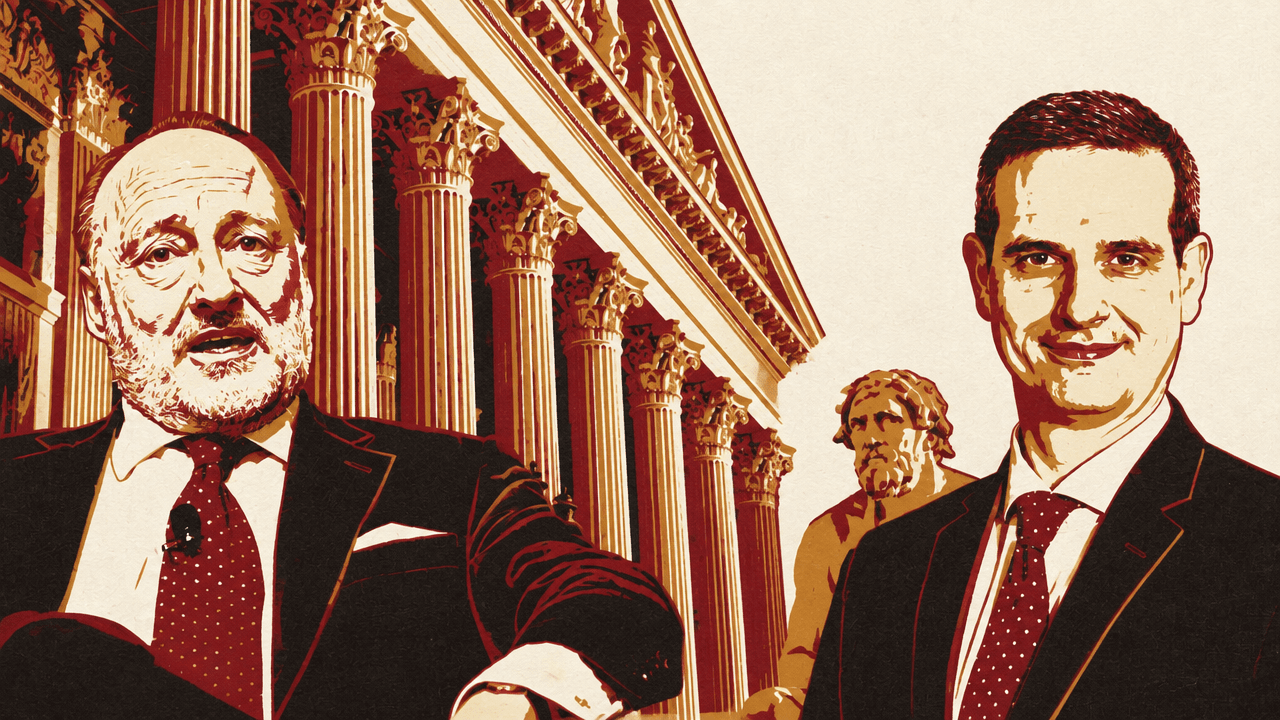
A famous line is a starting point, not a lesson
Andrew Novo approaches Thucydides as both a participant in war and a historian of it. An Athenian aristocrat, he held political office and was elected one of Athens’s ten generals. After failing in a military command, he was removed from office and exiled. The failure that damaged his career also gave him time and freedom to travel, gather evidence from people involved in different ways in the conflict, and write his history. Novo suggests that the distance exile imposed may have helped Thucydides see the war more broadly. Andrew Roberts adds that Thucydides was wealthy enough to have the time and leisure to write.


That distance matters when readers try to use Thucydides as a guide to current affairs. His history repeatedly sets a general statement—about human nature, democracy or power—inside a particular episode. A line can sound like a rule for all politics when lifted from that setting. Novo’s warning is not that history has nothing to teach the present. It is that readers should follow the argument beyond the memorable sentence.
The familiar account of the Peloponnesian War’s cause is a case in point: the growth of Athenian power and the fear it caused in Sparta. In modern use, including in Graham Allison’s formulation of the “Thucydides Trap,” that observation can become a warning that rising and established powers should be wary of one another. Novo says the warning is useful, but it cannot be the end of the analysis. Leaders are already watching for threats; the important questions are what they fear, why they fear it and how they choose to act.
Novo’s formulation is that “that’s where the analysis should begin.”
Sparta, in his reading, was not simply frightened by Athenian ships or soldiers. It worried that Athenian power could weaken its alliances, especially its relationship with Corinth, a major naval ally on which Sparta depended to project power. Applied to the rivalry between the United States and China, the same approach means asking which aspects of Chinese power might threaten American interests, including the credibility of US commitments to Japan, South Korea or the Philippines. Taiwan raises related but distinct questions: whether the absence of a formal treaty commitment, and the interests at stake there, could shape American calculations or create a fear strong enough to prompt a military response.
These are questions about choices, not a forecast of inevitability. Novo notes that the Greek term behind a famous translation about what made war “inevitable” can be rendered as what “compelled” Sparta to fight. He says a translation from the 1870s helped establish the language of inevitability, while the Greek term ananke points more toward compulsion. The distinction leaves room for human agency: pressure does not make a decision on behalf of leaders. They interpret the circumstances, assess the rivalry and decide how to respond. Thucydides becomes more useful to contemporary analysis when readers look past the slogan about power and fear to examine the specific fears, interests and decisions involved.
The Melian Dialogue is a warning embedded in a provocation
“The strong do what they can and the weak suffer what they must” is often taken as Thucydides’ verdict on international politics. Novo argues that its setting complicates that reading.
The Melian Dialogue is unusual in the history because it is presented as an exchange between representatives of Athens and the island city of Melos, rather than as narrative or a debate within a city. It takes place while Athens and Sparta are at peace. In Novo and co-author Jay Parker’s interpretation, Athens deliberately confronts Melos, an ally of Sparta, with an ultimatum: join the Athenian coalition or face destruction. They read the move as an attempt to gain advantage over Sparta and possibly to provoke or humiliate it diplomatically. Melos has an oligarchic government, and Novo says the Athenians want to replace it with a democracy. In Thucydides’ account, the Athenians are annoyed that they are speaking only to the city’s leaders rather than addressing its whole population, as though a broader audience might change how the Melians respond.
The Melians appeal to justice; the Athenians dismiss justice as irrelevant to their decision and offer the famous maxim. Novo emphasizes that the dialogue is not simply Thucydides speaking in his own voice. He is representing how arrogant Athenian leaders might have spoken. Novo says it remains unclear whether Thucydides reports what he heard, reconstructs the exchange or projects what he believes Athenians of this kind would have said.
The Athenians destroy Melos, replace its political regime and carry off many of its leaders into slavery. In the next episode, they set out for Sicily, where their expedition against Syracuse ends in catastrophic defeat. Novo reads the sequence as a warning about Athenian hubris: the Melian Dialogue’s confidence in power is followed by a disastrous demonstration of its limits. In his account, the juxtaposition matters; the famous line should not be read apart from what follows. This is an interpretation of how the episodes work together, not a claim that the line itself is a simple authorial endorsement or that the dialogue’s precise wording is certain.
The weak are not without agency. Novo draws a parallel with Thomas Hobbes, the first translator of Thucydides from classical Greek into English. In Leviathan, Hobbes writes that even the weakest can kill the strongest through devices or alliances. The same possibility, Novo suggests, applies to states: a weaker power may gain leverage through alliances, technology or subterfuge. His point is not that weakness guarantees success, but that relative strength can change and a powerful state cannot assume its resources will force every outcome it wants.
Power depends on allies, resources and political ideas
The contrast between Athens as a sea power and Sparta as a land power is another useful shorthand that can become misleading. Novo argues that the Greek world required both kinds of power, and that each state depended on allies to exercise its own. The rivalry was not simply two isolated powers facing one another across a boundary. It involved alliances, resources and the need to operate in domains where each side was less equipped.
Sparta had the strongest army, but its Peloponnesian League included naval capacity, particularly through Corinth, probably the second-largest sea power after Athens. Sparta therefore had a strategic reason to keep Corinth on its side: losing the ally would mean losing important naval capabilities. Athens, meanwhile, depended on its empire for its navy. The city-states that began as the Delian League contributed ships and crews; over time, many paid tribute that Athens used to finance ships, crews and recruitment.
Neither side could readily impose its will using only its strongest resource. Sparta’s army could not subdue Athens, while Athens’s navy could not subdue Sparta. Both understood that they would need to fight in the other’s domain. Sparta sought money and ships from Sicily, Italy and Persia to build a fleet. Novo rejects the image of a land power and a sea power merely staring at each other, unable to act. Each had to work out how to acquire the capabilities needed to achieve its aims and how to keep allies committed along the way.
The question of what counts as power also reaches beyond military strength. Novo points to the influence of Athenian political ideas. Sparta disliked Athenian democracy, which it regarded as chaotic and prone to mob rule, and considered its own mixed constitution—combining elements of citizenship, democracy, oligarchy and monarchy—superior. Political arrangements could therefore be a source of influence and anxiety in their own right. The rivalry was not only over which side could field a larger force; it was also over competing accounts of how a city should be governed.
For Novo, this ideological dimension helps make sense of what Sparta might fear about Athenian power. Athenian influence could matter even where the navy was not the immediate issue: the spread or appeal of its political model could unsettle the relationships on which Sparta relied. That is why he cautions against treating “power” as a single quantity. Military capacity, alliance credibility and political influence are different forms of power, and one may matter more than another in a particular decision.
Economic leverage and control of natural resources matter too. Athens depended on imported grain. Its ships and soldiers could not sustain the city if its food supply were cut off. Novo’s point is that an analysis of Athenian power has to include this vulnerability: a state may possess formidable military resources while remaining dependent on something another actor can disrupt. The ships and soldiers do not disappear from the analysis; they simply do not tell the whole story.
The 1970s OPEC example, raised by Roberts, illustrates why a military definition of power is too narrow. Oil-producing states without comparable military strength could still impose severe economic costs by raising oil prices. Novo uses the example to return to the question of what power consists of: economic leverage can affect a stronger military actor, just as a supply dependency can make a powerful city vulnerable. The point is not that these forms of power are interchangeable, but that a comparison based only on armed forces misses consequential sources of pressure.
A more complete analysis therefore asks what a state needs, which allies or resources it depends on, and what another actor can do to those relationships. Athenian power could mean naval strength, the influence of its political model, its empire’s contributions or its access to grain. Those are not interchangeable, and the distinction changes what a rival might fear or try to undermine. This is also the kind of specificity Novo wants brought to contemporary analysis: identify the dependency or interest at stake before drawing an analogy between past and present.
Thucydides distrusts democracy without dismissing it
Thucydides’ own political position complicates his account of Athens. Andrew Novo describes him as wary of democracy’s less restrained impulses, and Andrew Roberts notes that the historian had himself been exiled by the Athenian state. Thucydides is skeptical of a system in which public opinion can change quickly, making policy unstable. Novo says he also worries that politicians can exploit divisions for personal advantage and that democracies are vulnerable to demagogues.
But his view is not a simple preference for oligarchy. He admires Pericles, Athens’ leading democratic politician, and regrets what followed his death. In Novo’s account, Thucydides distinguishes Pericles’ leadership, which he presents as directed toward the public good, from later politics under less capable leaders. His concern is partly that a democracy may fail to act coherently until danger forces it to do so. Novo points to Thucydides’ comment after the defeat in Sicily about democracies being ready, when terrified, to put things in order and do the right thing. The observation is presented in that particular context; it is not a general claim that democracy reliably corrects itself. The exchange also exposes a caution about quotation: Roberts reaches for a similar line associated with Churchill, and Novo notes that the familiar Churchill version is apocryphal.
The funeral oration attributed to Pericles gives Thucydides’ admiration for Athens a sustained expression. The speech was delivered as part of an Athenian custom: after the first dead of a war were brought home, the city’s leading political figure gave a public address in their honor. In this case, Pericles spoke for the first casualties in the conflict with Sparta. He compares Athens with Sparta, criticizing Sparta’s closedness and praising Athens for welcoming foreigners. He also connects education, inquiry, art and culture with the development of civic and human excellence.
Roberts asks whether Pericles actually said the words Thucydides gives him. Novo thinks Thucydides was well placed to hear the speech: it was public, delivered at the beginning of the war, and Thucydides was still in Athens. Novo is not certain where it was delivered. He suggests the Pnyx, where the assembly met, or the Areopagus, where the council met, and allows that it may have been the Agora. He argues that the ideas in the speech were familiar in Athenian public and private life, rather than inventions Pericles produced for the occasion. Pericles, Novo says, would have expressed related ideas in speeches and conversation. Thucydides may have shaped the wording, but Novo regards the speech as a credible depiction of Periclean idealism about Athens and its civilization.
That idealism does not erase the history’s criticism of democratic politics. Rather, it sharpens the distinction between a system’s aspirations and its failures. Thucydides can value what Athens represents and still examine how its leaders, institutions and public decisions undermine it.
Civil strife makes power look less like a virtue
Thucydides’ reputation as a writer of Realpolitik can obscure the moral judgments in his history. Andrew Novo argues that Thucydides wants to describe political reality without pretending that right and wrong are irrelevant.
His account of the civil conflict, or stasis, in Corcyra—modern Corfu—shows what political competition can become when it breaks down. The conflict between democrats and oligarchs grew out of earlier instability and became a prolonged civil war. Thucydides uses it to examine the wider effects of societies tearing themselves apart. Novo says Thucydides identifies the love of power, operating through greed and personal ambition, as the cause of the evils. Party divisions and fanaticism help violence displace the habits and standards that keep people civilized.
That judgment sits uneasily beside the Melian maxim. In one context, power is asserted by the Athenians as the basis of their ultimatum; in another, the pursuit of power becomes destructive. Novo’s point is that the apparent contradiction should not be resolved by reducing Thucydides to a single doctrine. The history shows both the force of power and the costs of treating the desire to wield it as an unquestioned good.
Novo cites Thucydides’ examples of political language turning moral qualities upside down: recklessness is called bravery, while greed is redescribed as a desire for gain. He connects this to a broader Greek concern with the corruption of political ideals: tyranny as a corruption of monarchy, mob rule as a corruption of democracy, and oligarchy as a corruption of aristocracy. Thucydides is not simply cataloguing how people behave under pressure. He is showing how they can make the breakdown of standards sound virtuous.
The plague in Athens offers another example. Thucydides describes people abandoning obligations to parents and children and failing to bury the dead. Novo reads the passage as a criticism of the rupture of social norms under extreme fear. Fear, honor and interest—the motives through which Thucydides often interprets behavior—do not all fit neatly into a narrow account of Realpolitik. Honor is shaped by what a society values, and interest can be contingent or redefined. Novo also notes that Hobbes takes up a similar set of motives, though Hobbes uses “diffidence” where Thucydides’ formulation is “interest.” Thucydides, Novo argues, is trying to understand human behavior while retaining the ability to judge it.
The Sicilian expedition turns political ambition into strategic disaster
The transition from Melos to Sicily ties the history’s critique of Athenian power to a specific political decision. Andrew Novo says the Athenians launched their expedition while at peace with Sparta, presenting it in part as support for allies in Sicily who were under pressure from Syracuse’s allies. Alcibiades argued for a much more ambitious undertaking: not merely to assist an ally, but to crush Syracuse, conquer Sicily and use the island as a base for further expansion into Italy.
Novo describes Alcibiades as an elite figure at the top of Athenian society. Pericles had taken him in after his father’s death; he was wealthy, young and ambitious. He entered multiple chariot teams in the Olympic Games and finished first, second and fourth. In Thucydides’ account, Novo sees Alcibiades as an example of politics organized around personal advancement. Pericles is the contrast: a leader who, in Thucydides’ presentation, seems to govern for the common good. Alcibiades, by contrast, objects to a peace partly because he had been excluded from making it.
Alcibiades won support for the expedition and was appointed one of its commanders. Then came the desecration of the Hermae, statues whose phalluses were broken off shortly before the fleet departed. The episode created a political scandal. Roberts describes the conventional explanation as a drunken prank by young aristocrats; Novo says another interpretation connects the accusations to a deeper fear that Alcibiades and his wealthy associates were plotting an oligarchic coup. Novo does not settle the question of who was responsible or what motivated the act.
After the fleet reached Sicily, Alcibiades was summoned to Athens to face trial. He refused to return, fearing he would not receive a fair hearing, and went to Sparta. He later went to Persia and returned to Athens. Novo notes the complexity of Athens’ relationship with him: Aristophanes captured the city’s attachment and resentment in the line that Athens “loves and hates and longs to have him back.” Alcibiades was a capable commander, and his departure left the expedition without the same energy. It eventually stalled and was defeated, dealing a major blow to Athenian power.
For Novo, the expedition illustrates how alliance politics and personal ambition could combine in a consequential decision. It began with a case for assisting allies, but Alcibiades openly advocated conquest and further expansion. The defeat that followed gives the Melian episode’s juxtaposition with Sicily its force in his reading: Athenian confidence and ambition are followed by a costly failure.
A work meant for the future still has to be read in context
Thucydides explicitly hoped his history would last. Andrew Roberts quotes the passage in which he says it will be enough if his work is useful to those who want to understand clearly events in the past and events that, because human nature is what it is, may recur in much the same ways in the future. Novo confirms that the passage expresses Thucydides’ aim: to create a “possession for all time,” grounded in his assumption that human nature persists. The claim is not that every event repeats exactly, but that recurring features of human behavior make careful study of the past useful.
That ambition helps explain why later readers keep reaching for Thucydides. It does not mean every maxim attributed to him can bear the weight placed on it. Novo and Parker’s book, Restoring Thucydides: Testing Familiar Lessons and Deriving New Ones, argues for close reading rather than reliance on detachable lines. Great writers are often recruited to strengthen arguments their readers already hold. Novo gives two examples of invented attribution: in Wonder Woman, a character invokes Thucydides for a line he never said; and a plaque in the defense sector assigns him a maxim about scholars, soldiers and fools that is also not his.
More broadly, Novo warns that readers can flatten Thucydides, Machiavelli and Clausewitz into bumper stickers that suit an argument. Roberts raises the problem that quotation always takes words out of their original context; Novo’s answer is not that quotation can be avoided, but that readers should not stop at the excerpt. The problem is when shorthand replaces the work of understanding what a claim meant in its original setting—or when the claim was never made at all.
Thucydides’ value, in Novo’s account, lies in the combination of recurrence and specificity. Human beings may continue to respond to fear, honor and interest, but the way those motives operate depends on institutions, alliances, resources and political choices. Applied history begins not with a maxim treated as a prediction, but with the questions that reveal what is actually happening.