American Strategy Succeeds When Force Serves Bounded Political Aims
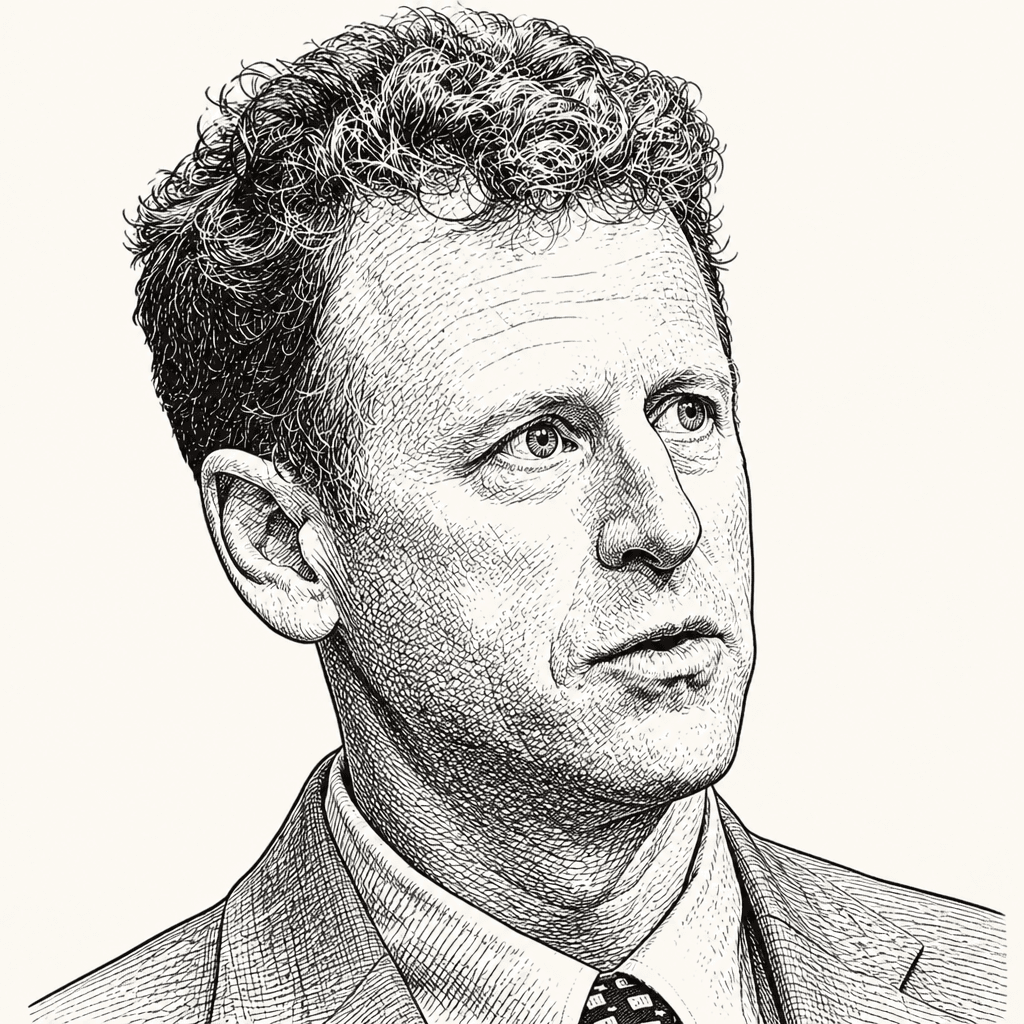

Brookings senior fellow Michael O’Hanlon argues in To Dare Mighty Things that American strategy works best when military power, alliances and deterrence serve a bounded political purpose—and fails when force is asked to remake societies or achieve ends leaders have not clearly defined. In a conversation with Hoover’s Michael Boskin, O’Hanlon calls this approach “resolute restraint”: maintain credible power and defend vital interests, but commit to war only when its objectives, means and durable political support align.
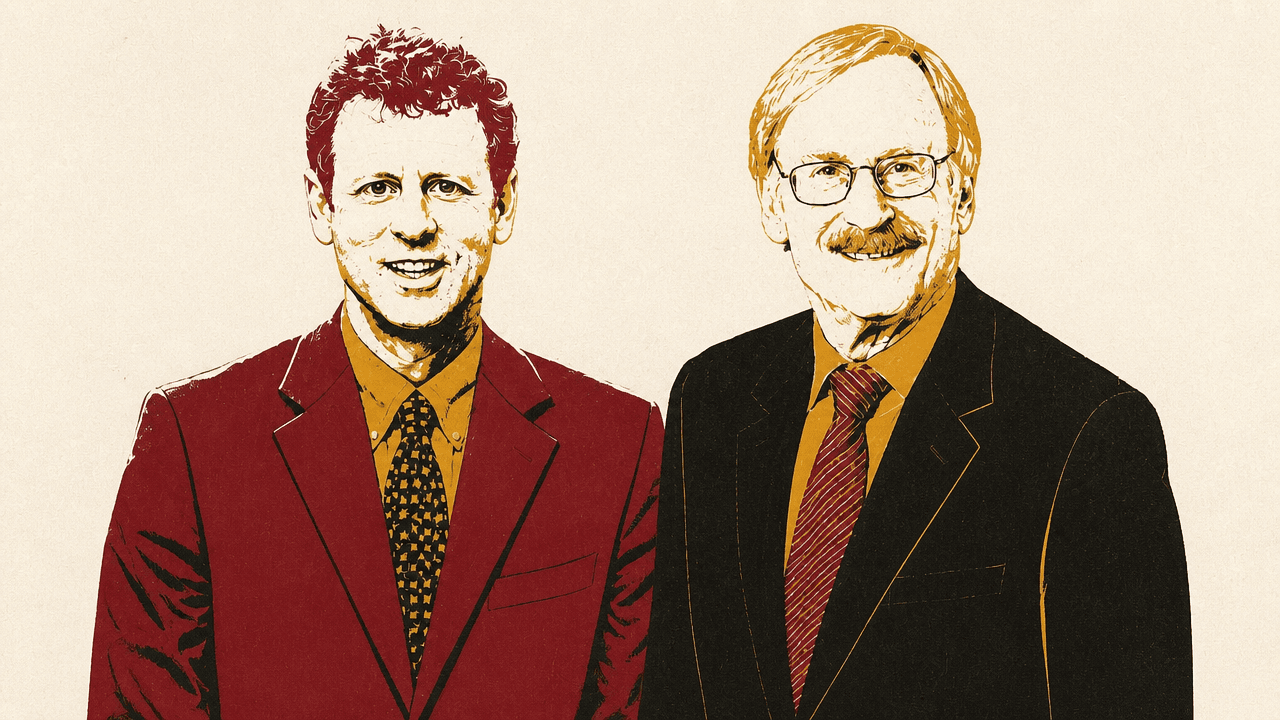
Resolute restraint sets a higher bar for war without surrendering deterrence
Michael O'Hanlon calls his preferred grand strategy “resolute restraint”: preserve credible military power, sustain alliances, and defend vital interests, but fight only the wars that are genuinely necessary. The formulation is deliberately difficult. Restraint without resolve can become disengagement; resolve without restraint can turn into open-ended commitments whose political aims exceed what military power can deliver.
Only fight the wars you really need to.
O’Hanlon acknowledges that this standard is easier to endorse than to apply. As his colleague Robert Kagan has observed, a conflict often comes to be described as a war of choice only after it has gone badly; before it begins, leaders usually believe the stakes compel action. O’Hanlon opposes the way the George W. Bush administration invaded Iraq in 2003, but he does not regard it as irrational that officials considered the option after September 11. Saddam Hussein had previously concealed weapons of mass destruction, and Washington did not know what capabilities remained. The central failure, in his view, was the expectation that the war and its aftermath would be easy.
His test is whether political objectives, military means, and alliance commitments can be aligned before force is committed. That does not mean refusing difficult missions. It means distinguishing between a core interest that requires a durable commitment and an expansive objective in a place whose politics, institutions, and strategic value the United States only partially understands.
We have been adaptable. We haven't always been successful.
That emphasis on adaptability is central to O’Hanlon’s reading of American military history. He rejects the idea that the United States has a single, durable “way of war.” The more useful question, he argues, is what strategic disciplines have allowed the country to deter major threats and win bounded wars—and what kinds of political ambition have led it into failures that military competence could not repair.
Success came from matching force to a bounded political purpose
O’Hanlon’s central comparison is not simply between wars won and wars lost. It is between strategies that connected military power to a limited political purpose and those that asked force to resolve political problems whose stakes, societies, and attainable end states were uncertain.
The Cold War is his strongest example of success on the first model. Korea ended essentially in a draw, and Vietnam was a loss. Yet he regards containment as a major strategic achievement because the United States prevented direct all-out war with the Soviet Union, defended Western Europe and Japan, ultimately protected South Korea, constrained communist expansion where it could, and maintained the open oceans and other international commons.
The achievement was neither automatic nor costless. Americans debated whether to create NATO, station forces permanently in Europe, or fight in Korea and Vietnam at all. But the core objective—defending principal industrial democracies and containing Soviet power—was clearer and more durable than the objectives pursued in the peripheral wars. Deterrence, force posture, allied commitments, and readiness were therefore not merely conditions surrounding conflict. They were the strategy.
The 1930s show why preparedness cannot be separated from political purpose. O’Hanlon calls American grand strategy in that decade “terrible”: genuine isolationism, in his account, reinforced by Neutrality Acts that constrained assistance to democracies confronting Hitler. The United States should have resisted German expansion earlier and more deliberately.
Yet military preparation was better than the country’s political posture. The services developed carrier aviation, large-scale amphibious-assault capabilities, radar, longer-range aircraft, and an industrial base that could convert from civilian to military production. Those preparations left the United States more ready for World War II than its grand strategy had warranted. They did not make isolationism sound; they showed that military institutions can innovate even when political leaders have misread the international environment.
Michael Boskin and O’Hanlon treat the 1991 Gulf War as the clearest post-Cold War example of a bounded objective matched to capable means. Iraq’s invasion of Kuwait required President George H. W. Bush to decide whether the United States would merely defend Saudi Arabia or would build a much larger force and liberate Kuwait. Kuwait was not a formal U.S. ally, and the Cold War’s end had encouraged expectations of a “peace dividend.” The decision to intervene on a large scale was neither inevitable nor low-risk.

Bush made the political decision first, O’Hanlon argues: Iraqi aggression would not be allowed to stand. Bush tied that decision to his vision of a post-Cold War order in which territorial conquest would carry consequences. Once the purpose was defined, the military campaign could be executed by leaders including Dick Cheney, Colin Powell, and Norman Schwarzkopf.
The campaign also rested on reforms and investments made years earlier. O’Hanlon credits the Reagan-era buildup with increasing military pay, strengthening the force’s appeal and morale, and acquiring equipment that allowed servicemembers to capitalize on their training. He also emphasizes bipartisan contributions, including systems developed during the 1970s under officials such as Harold Brown and William Perry.
The 1986 Goldwater-Nichols reform was especially consequential in his account. It consolidated the chain of command and gave combatant commanders greater authority. The reform was enacted over objections from the Reagan administration and many Joint Chiefs, in part because it reduced the influence of Washington-based service chiefs. O’Hanlon nevertheless regards it as essential to Schwarzkopf’s effectiveness in Desert Storm.
Boskin emphasizes that the political work extended beyond the White House’s initial decision. Bush and Secretary of State James Baker assembled a coalition that included Arab states as well as Britain and France, and Bush sought and received congressional authorization despite prominent opposition. Germany, Japan, and Gulf states also carried much of the war’s financial cost.
The operational preparation was unusually extensive. Boskin recalls that U.S. pilots had flown repeated simulated missions before combat began. O’Hanlon describes a Congressional Budget Office exercise estimating potential U.S. aircraft losses. Lane Pierrot, the office’s Air Force analyst, argued that the lower-bound loss rate should be the peacetime training-accident rate: pilots would have time to prepare further, while Iraqi radar systems would be heavily suppressed. O’Hanlon says she was right; actual losses were lower even than normal peacetime training accident rates.
The lesson is not that war becomes easy when it is well planned. It is that success is more plausible when leaders connect an intelligible political objective to a capable force, a clear command system, coalition support, and a feasible military plan.
The postwar failures asked force to settle questions strategy had not answered
Korea, Vietnam, Iraq, and Afghanistan share several features in O’Hanlon’s account. Each involved ambitious objectives in countries the United States knew relatively little about, with weak institutions and difficult political terrain. In each case, Washington was uncertain how important success truly was to American security. None was a formal U.S. ally when the conflict began.
That uncertainty was consequential. The United States fought hard—eight years in Vietnam and 20 years in Afghanistan—but without a settled political consensus about what degree of sacrifice victory required or what kind of end state was attainable. O’Hanlon rejects the simple claim that the United States fought these wars “with one hand tied behind its back.” It did not wage total war, but it did not quickly abandon the effort either. The deeper problem was that American strategy joined demanding political transformation to incomplete knowledge of the societies involved and uncertain judgments about the interests at stake.
The military itself was not principally to blame, he argues. American forces often performed well at the technical missions assigned to them. He makes exceptions for senior military leadership in Vietnam and for Douglas MacArthur’s conduct after the Inchon landing in Korea. Inchon was magnificent, he says, but the attempt afterward to reunite the entire peninsula was a strategic overreach.
The larger failure lay with civilian and military strategists who produced mandates that were expansive, murky, or open-ended. A force can execute difficult tasks with skill and still be unable to turn them into a sustainable political outcome.
The outcomes complicate the language of victory and defeat. Vietnam was lost, but O’Hanlon argues that resisting communist expansion may nonetheless have carried broader strategic value. The United States later reconciled with Vietnam, with John McCain and John Kerry helping lead the effort, and O’Hanlon says the two countries now have a good relationship.
Afghanistan is not governed by a friendly government, but O’Hanlon says it is not again serving as a base from which al-Qaeda plans attacks. He suggests the long campaign may have reestablished some degree of deterrence even though it did not establish the friendly government Washington sought.
These are not arguments that the wars succeeded on their declared terms. They are arguments for recognizing partial outcomes without confusing them with victory. Policymakers should confront the possibility of limited, indirect, or ambiguous results before committing to war—not relabel the result after an expansive objective has failed.
Ukraine should be secured without making NATO expansion automatic
O’Hanlon’s application of resolute restraint to Ukraine is more contentious than the underlying framework. He says he opposed bringing Ukraine into NATO before Russia’s full-scale invasion and remains opposed to doing so now. The United States should help Ukraine protect itself, he argues, but should seek arrangements other than retaining the prospect of NATO membership.
His case is that NATO was created to contain the Soviet Union and then expanded eastward after the Soviet collapse. He says Secretary of State James Baker told Mikhail Gorbachev that NATO would not move east of a reunified Germany, though subsequent administrations expanded the alliance. In O’Hanlon’s interpretation, the post-Cold War security order contributed to Russian resentment and made a persistently bad relationship with Moscow more likely.
| Year | NATO members |
|---|---|
| 1989 | 16 |
| Today, in O’Hanlon’s account | 32 |
That is not an argument that Russia should dictate its neighbors’ choices or that the United States caused Russia’s invasion. O’Hanlon explicitly rejects that conclusion. Nor does he propose reversing enlargement already undertaken: he says Finland and Sweden are valuable additions, and that Putin’s invasion has changed the strategic setting.
But he argues that Ukraine’s future security should not be treated as a choice between capitulation and further alliance expansion. A future architecture, he suggests, should protect Ukraine while avoiding what he sees as NATO membership’s exclusionary effect on Russian political thinking—potentially including Russia in a different arrangement after Putin is gone.
Boskin notes that Henry Kissinger expressed a similar concern about NATO’s eastward expansion. O’Hanlon also names Bill Perry, Sam Nunn, George Kennan, and former CIA director William Burns among those who, in differing ways, questioned enlargement. Their shared position, as he describes it, was not accommodation of Russian coercion. It was a search for a security structure that could consolidate Eastern European democracy without making NATO expansion the only available instrument.
A pentathlete military is better suited to an uncertain world
O’Hanlon argues against constructing American defense policy around a single anticipated conflict, even one as consequential as a Chinese attack on Taiwan. He respects the case made by Elbridge Colby, now the Pentagon’s under secretary of defense for policy, that Taiwan should be central to U.S. strategy. But he believes that argument goes too far if Taiwan becomes the organizing principle for all of American global security policy.
The better model, in O’Hanlon’s view, is what David Petraeus calls a “pentathlete” or “decathlete” military: a force that can do five or 10 difficult things well rather than one narrowly defined mission exceptionally well. The United States cannot know in advance which adversary, geography, or form of conflict will matter most. A force tailored too tightly to one contingency may be poorly prepared for another.
That judgment follows from his broader rejection of a single American way of war. Historian Russell Weigley famously described an American tradition of overwhelming power and enemy annihilation, with the Civil War and World War II as defining cases. O’Hanlon considers Weigley’s work indispensable but disputes its general conclusion.
The Revolution, he notes, was the country’s only truly existential war, but it was not won through annihilation. George Washington’s worst stretch came when he tried to fight Britain in conventional open-field battles around New York. The strategy that worked was counter-punching: preserve the force, avoid the battle Britain could dominate, and exploit opportunities.
The Mexican-American War was different again. O’Hanlon calls it ethically troubling, arguing that the United States effectively manufactured a justification for taking territory that became much of the American Southwest. Militarily, though, he sees a campaign of maneuver and logistics: Winfield Scott’s force combined rail movement, amphibious assault, engineering, and an advance through terrain Mexican defenders did not expect U.S. troops to cross before taking Mexico City. The United States then returned the city under the treaty that transferred the Southwest.
The point is not to draw a common moral lesson from those conflicts. It is that American success has required different methods in different circumstances: counter-punching in the Revolution, maneuver and logistics against Mexico, industrial mass warfare in World War II, and deterrence and alliance management during the Cold War.
Technology adds to that variation rather than erasing it. O’Hanlon sees drones and artificial intelligence as important, but not as a clean break from the past. The longer historical pattern is the diffusion of lethal capability beyond the strongest states. Firearms, then automatic weapons, and later more widely available arms gave weaker forces, insurgencies, and resistance movements greater ability to contest stronger militaries. He points to French defeats in Indochina and Algeria, the American defeat in Indochina, and the Soviet defeat in Afghanistan. Home terrain, political commitment, and access to weapons can blunt conventional superiority.
Drones fit into that history. Cruise missiles have existed for decades; what is distinctive now is the scale of drone proliferation and the ability to guide systems precisely. O’Hanlon does not expect drones to replace older systems wholesale. They may replace some artillery functions, but their larger effect will be to add surveillance, targeting, strike options, and vulnerabilities to already complex operations.
A Taiwan conflict would present a very different problem from Ukraine. Ukraine has involved a relatively defined front line and many short-range, first-person-view drones. A U.S.-China war could stretch across hundreds or thousands of miles and depend on longer-range automated systems, satellite links, dispersed basing, naval operations, and the ability to function while airfields, carriers, and command networks are threatened.
For O’Hanlon, the conclusion is not technological determinism. Strategists need to understand history well enough to recognize recurring political and organizational problems, and technology well enough to understand what available systems can actually do.
Alliances turn deterrence from an American promise into a shared capability
Allies have been indispensable to American strategy, O’Hanlon argues. The United States could not have won World War II alone or contained the Soviet threat in Europe without German, British, French, and other allied forces. During the Cold War, American military power was not overwhelmingly preponderant within NATO; allied troops along the inner German border and Fulda Gap were fundamental to Europe’s defense.
NATO militaries deteriorated after the Cold War, and he agrees that Donald Trump’s complaint about inadequate European burden-sharing had merit. During the Afghanistan war, O’Hanlon says, the United States supplied more than twice as many troops as the rest of NATO combined. The mission showed both the value of allied participation and the degree to which the alliance was not functioning as it should.
But he believes threats to abandon allies or withhold defense if they fail to meet spending expectations have become counterproductive. European states are increasing their commitments. France, Germany, Britain, and others have forces in the Baltic states. The contingents are not large, but their presence means a Russian attack on Estonia, Latvia, or Lithuania would immediately involve multiple NATO countries. That forward presence contributes to deterrence precisely because it makes the alliance commitment tangible.
O’Hanlon also says European countries are now keeping Ukraine afloat. The United States, in his characterization, has largely ended direct generosity or assistance while continuing to allow Europe to buy U.S. military technology for Ukraine. Europe, together with partners such as Japan and Canada, is providing the overwhelming share of direct assistance. For him, that is evidence that alliances can distribute real financial and operational burdens, not merely express solidarity.
The same logic applies in the Indo-Pacific, though the required posture differs. O’Hanlon supports the Marine Corps’ effort to equip some units with anti-ship missiles that can be dispersed in places such as Okinawa and the Philippines. Rather than presenting China with a large, easily targeted footprint, those units could strike Chinese ships attempting an invasion of Taiwan.
He also favors pre-positioning robotic systems on Pacific islands. Drawing on proposals by RAND analyst David Ochmanek, O’Hanlon points to mobile launchers capable of sending loitering unmanned aircraft armed with anti-ship missiles toward an invasion force. Such systems would reduce dependence on runways and aircraft carriers that China could target early in a conflict.
Proliferated satellite constellations are another useful adaptation. The United States once depended heavily on a limited number of expensive satellites that could be vulnerable in war. O’Hanlon says the growth of more numerous small satellites has made communications and reconnaissance more resilient and survivable.
On spending, he believes the defense budget is broadly in the right range. He describes a United States with roughly $30 trillion in GDP and around $10 trillion in combined federal, state, and local public activity. A defense budget just above $1 trillion would represent roughly 3 to 3.5 percent of GDP, 15 to 18 percent of federal spending, and 10 to 12 percent of total public spending.
Those are acceptable levels in historical and macroeconomic perspective, O’Hanlon argues. He also recognizes that an annual federal deficit around $2 trillion may eventually require broad fiscal restraint, including a plateau in Pentagon spending. But he sees current increases as justified by China’s rise, Russia’s war against Ukraine, and the need to compete in new technologies.
Strategic judgment depends on historical literacy beyond the top ranks
O’Hanlon’s final argument concerns the human foundation required for strategic judgment. History, grand strategy, languages, cultures, and foreign societies should have a larger place in American education and public life—not only within professional military institutions.
He does not dismiss political science. Work on the democratic peace, civil wars, peace settlements, and the conditions under which conflicts recur can identify patterns with practical value. But O’Hanlon believes history has been relegated too far beneath political science in the social sciences, and he would reverse that hierarchy.
The reason is partly self-knowledge. Americans tend to imagine themselves as friendly, peaceful, and fundamentally benign, he says. O’Hanlon believes the United States is generally good, but he does not think its history supports a description of the country as peaceful. It is a history of expansion, intervention, ambition, and a recurring willingness to use force. Theodore Roosevelt’s “speak softly and carry a big stick” better captures that pattern, in his view, than a self-image of simple restraint.
Historical knowledge also helps explain how other societies and leaders interpret American behavior. O’Hanlon points to Vladimir Putin’s fixation on Ukraine as an example of a historical and political context Americans need to understand. Understanding that context does not excuse aggression. It clarifies the setting in which decisions about borders, alliances, deterrence, and force will be interpreted.
Boskin argues that the United States needs a stronger pipeline of people able to serve in the State Department, intelligence agencies, Pentagon, White House, and Congress with historical and cultural depth. He points to the post-Sputnik National Defense Education Act as an example of national investment that encouraged students to study foreign languages and other strategically relevant subjects.
O’Hanlon offers a qualified note of confidence. The graduate students he teaches at Columbia, Georgetown, and elsewhere are, he says, as capable as any generation he has known. Boskin adds that senior military officers often develop an unusually broad understanding of the places in which they have served, including culture, history, politics, and economics.
The concern is less about the most senior officials than about the wider ecosystem: mid-level officials, analysts, legislators, and citizens whose understanding shapes which commitments leaders can sustain and which risks they can recognize. A public capable of thinking historically is better positioned to judge whether a proposed war has an achievable political aim, whether military means fit that aim, and whether alliances are being used as genuine strategic assets rather than rhetorical substitutes for strategy.