Robert Hall’s Consumption Test Put Household Expectations at the Center of Macroeconomics
Valerie Ramey argues that Robert Hall helped make household decisions central to macroeconomic models, showing how expectations about future income—not just current paychecks—shape consumption. She explains how Hall tested the permanent income hypothesis against data and why its findings matter for policy: households may save much of a temporary tax rebate, while lasting income gains can support higher spending. The account also traces how Hall’s approach influenced economic research and Ramey’s own work.
Hall’s consumption test put household expectations at the center
The 2026 Nobel Prize in Economic Sciences went to Robert Hall and Michael Woodford for contributions to the “microeconomic foundations of macroeconomic stabilization.” Valerie RameyValerie Ramey’s explanation of Hall’s work centers on a shift in how economists build models: rather than starting with statistical relationships among aggregate measures, they try to explain those measures through the decisions of households and firms. Hall’s test of the permanent income hypothesis was one important step in that shift.
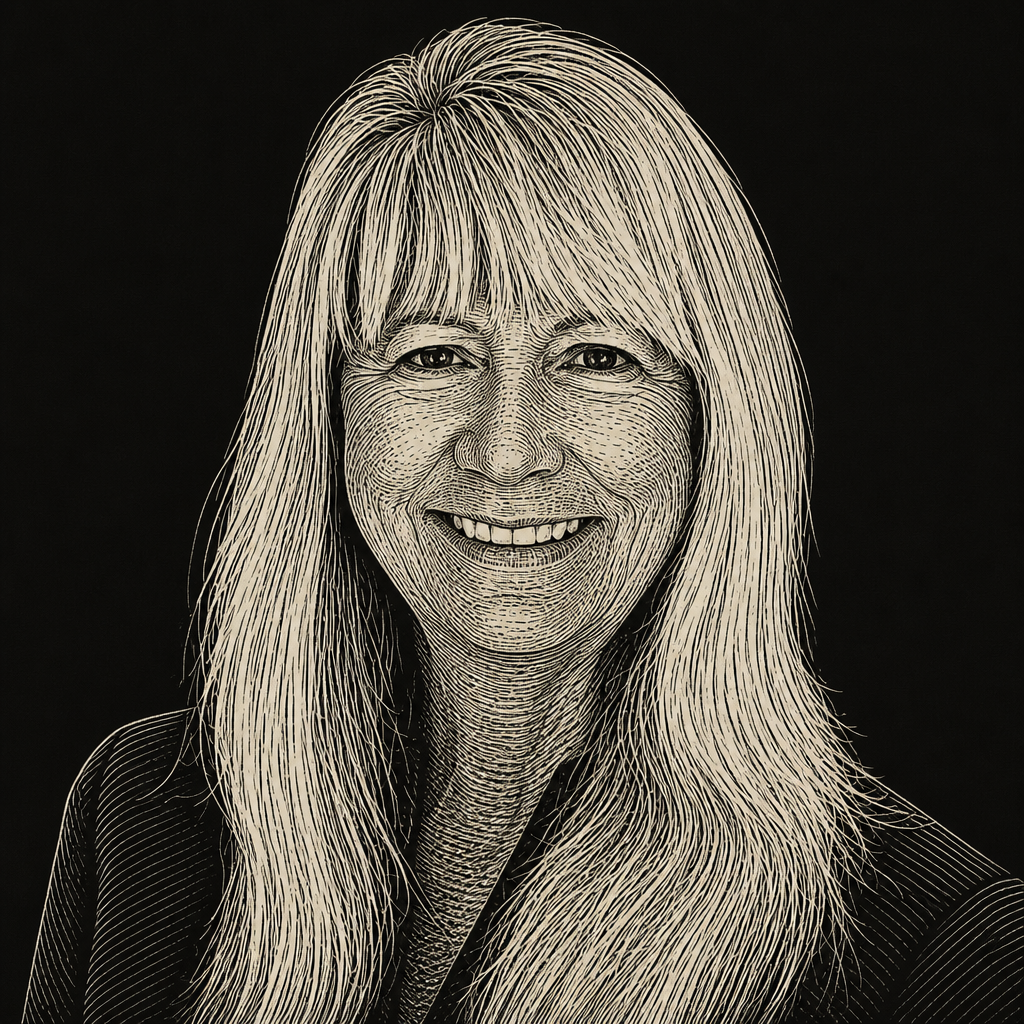
For decades, Ramey said, macroeconomics and microeconomics often proceeded separately. Microeconomists studied individual households and firms; macroeconomists looked at aggregate data and identified correlations among variables such as inflation, production, and consumption. Those aggregate relationships were not always grounded in a clear account of how people and businesses made decisions. The gap was especially consequential for consumption, which Ramey said represents about two-thirds of GDP. A model of the economy needs to explain how household choices add up to the consumption recorded in the national accounts.
The older Keynesian account offered a relatively direct link between income and spending. Households would spend a share of current income—perhaps 80 or 90 percent—and save the rest. An increase in income could therefore produce more consumption and, through the multiplier, more output. But economists including Milton Friedman and Franco Modigliani developed a more forward-looking account. People do not simply spend according to the paycheck in hand. They consider expected future income and wealth, and try to spread consumption over time.
Ramey described this as the permanent income hypothesis. Someone in a temporary job may make different spending decisions from someone expecting stable employment. The prospect of losing a job can affect consumption before any income actually disappears; so can changes in housing or stock-market wealth. The point is that spending depends not only on current income but also on what a household expects its income and resources to be over time. People generally do not spend an entire paycheck the day it arrives and then go without for the rest of the month.
Hall’s contribution, as Ramey explained it, was to turn that theory into a deceptively simple empirical test. Drawing inspiration from the random-walk idea in finance, Hall reasoned that if households use the information available to them when setting consumption plans, information they already had last year should not help predict a change in consumption this year. That information was already factored into the plan. Consumption should change when new information arrives.
The only thing that will lead to a change in consumption is if some news comes out.
A promotion with a substantial salary increase is one example of news. A household may respond by raising consumption, not simply because its current income has risen, but because its expectations about future income have changed. Under the theory, predictable changes in income should not have the same immediate effect as genuinely new information.
The distinction matters for policy. A temporary tax rebate may lead people to save much of the money and distribute the rest across future consumption, rather than spend the entire rebate at once. A lasting increase in income, by contrast, can support a higher consumption path. Ramey said Hall’s test could not reject the permanent income hypothesis statistically, and that its predictions held up in the data. That result challenged the expectation, associated with the simpler account of consumption, that a one-off rebate would generate a large burst of spending.
The Nobel citation described a broader implication of the laureates’ work: models built on microeconomic foundations give governments and central banks a theoretical basis for stabilization policy. It emphasized that households and firms look ahead when deciding what to consume, save, or charge, and that communicated policy plans can influence those expectations. The citation also said such models are used to consider economic shocks, including energy crises and sudden changes in household consumption. Ramey’s account of Hall’s specific contribution focused on the consumption test: a way to assess whether the forward-looking theory held up in the data.
Hall pressed economists to explain patterns beyond the business cycle
Ramey connected Hall’s approach to a broader habit of asking whether a model can account for more than one slice of economic life. Standard business-cycle data are seasonally adjusted, which removes recurring patterns through the year. Hall pushed students to consider the unadjusted data too: the economy also has large seasonal cycles, including a buildup in production and spending around Christmas.
Ramey described the pattern in unadjusted data as a major recession every January. The phrase draws attention to what the economy looks like when its seasonal movements have not been removed. She said people can find seasonally unadjusted data through the Bureau of Economic Analysis. The broader question Hall raised was whether economic models could explain both the business cycle and the recurring activity within a year.
The seasonal pattern also prompted a question about whether Christmas spending creates additional economic activity or shifts spending around the calendar. Bill Whalen wondered about the consequences of putting Christmas on hold, given the spending on travel, food, and gifts. Ramey’s answer was that people might buy those things at other times of the year. In her view, the issue was how activity is distributed through the year: people save up things they want and receive them at Christmas, but might make those purchases at other times if the holiday were absent.
Hall also used geography to make aggregate measures concrete. Imagine drawing a line across the country: a place with very low economic activity, such as the Mojave Desert, can be thought of as a recession, while a high-activity place such as New York can be thought of as a boom. Ramey recalled Hall writing a leading paper on the geography of output. The comparisons made students ask whether their models could explain patterns across time and place, rather than focusing only on the national cycle.
Ramey offered one of her own analogies for a different question: the “economics of pit stops.” In her work on the automobile industry, she examined whether recessions could give firms time to reorganize. During boom periods, carmakers had incentives to keep plants running while making modest changes to new models—adding fins, for instance, rather than shutting down production for long. During recessions, particularly those associated with oil shocks, firms might instead close a plant for months to convert it from producing large cars to smaller ones.
Ramey compared that shutdown to a race-car pit stop: the car leaves the race briefly for repairs and adjustments, then returns. Her example came from the automobile industry and from the question of what firms do during a downturn. She said Hall later wrote about recessions as reorganizations. The pit-stop analogy puts attention on the work involved in changing production: a plant can stop operating while a firm makes a substantial shift in what it produces.
Hall’s mentorship made intellectual course correction part of the work
Valerie RameyRamey met Hall as a graduate student at Stanford in the 1980s, later becoming his research assistant. She recalled that she and her husband understood only about half of Hall’s fall lectures at the time. The lectures were full of big ideas; they wrote down nearly every word, then returned to their notes while preparing for comprehensive exams. With more coursework behind them, the arguments began to make sense.
The research-assistant opportunity came through an unexpected encounter. Ben Bernanke, then an assistant professor at Stanford’s Graduate School of Business, told Ramey in an elevator that Hall was looking for an assistant. Hall reviewed her first-year record and interviewed her. Ramey had already worked as an undergraduate research assistant for labor economist Ron Oaxaca and experimental economist Vernon Smith. She also recalled telling Hall that Hoover’s politics would not be a problem for her: she was from Arizona, and her father was “to the right of Barry Goldwater.”
Ramey worked with Hall on the flat-tax book he co-authored with Alvin Rabushka. The discussion also raised the flat tax’s later political history: Whalen mentioned Steve Forbes’s presidential campaigns in 1996 and 2000 and asked what had happened to the proposal. The source does not include an answer from Ramey about the proposal’s political fate. What it does establish about her work with Hall is that the flat-tax book was among the projects on which she assisted him.
The lessons Ramey drew from Hall extended beyond a particular paper or project. One was that it is acceptable to admit an earlier paper was wrong. Another was that economists should be willing to change their minds about how the world works when new models, data, or empirical results point elsewhere. Ramey said Hall’s example made it easier for her to course-correct rather than defend a paper simply because she had written it.
That openness does not mean accepting every new finding without scrutiny. Ramey said there can be problems with empirical work, even when researchers use modern methods; the details matter. But a result should not be dismissed merely because it conflicts with an existing theory. Researchers often begin a project with an expectation about what they will find. Some of Ramey’s best research, she said, came when the evidence pointed in another direction. In those cases, the work became more interesting by following the data rather than forcing the result to fit the original expectation.
Hall also demonstrated that researchers need not stop learning new methods and techniques at a particular age. Ramey said he stayed near the frontier of the profession throughout his career, publishing in top journals until at least a few years before the interview. Some economists eventually turn toward policy advice or broader writing, which she described as worthwhile work. What stood out about Hall was that he continued to produce research papers. Ramey pointed especially to his later work on labor markets, which she considered among his most exciting. She recalled Northwestern economist Marty Eichenbaum saying he wanted to grow up to be like Hall, meaning that he hoped to keep working in that way into his seventies and eighties.
Hall’s analogies made economic mechanisms easier to see
Ramey said Hall used analogies to make difficult ideas accessible without treating them as mysteries. Money, in one formulation, is like a screwdriver. As she understood it, the comparison presented money as a tool that helps people conduct trade, rather than something to be treated as “rarefied alchemy.” She recalled the idea from her time as a graduate student, when she and other students were not always sure what Hall meant.
Unemployment, in another analogy, is like waiting at an airport. Workers and firms need to find a suitable match, and that search takes time. A passenger would not want to board the first plane that appears if it is going to the wrong place. Likewise, a worker may not want to take the first available job if it is a poor fit. Workers look for jobs and firms post vacancies, but there is no central clearinghouse that instantly pairs them. In Ramey’s explanation, some time spent unemployed can be part of the process of finding a good match.
Ramey said Hall used the airport comparison before the search-and-matching literature arose to explain unemployment. She added that Hall later contributed to that literature, for which two other economists also received Nobel Prizes. The analogy draws attention to an economic process that an aggregate unemployment measure does not describe on its own: workers and firms are searching, and a match may take time.
Economic research has limits, but its ideas can still be tested
Valerie RameyRamey resisted treating economics as equivalent to physics in its precision. Economists study people, whose decisions are complicated. Some questions can be studied with randomized controlled trials, but many cannot. Researchers cannot randomly assign countries to raise government spending or taxes and then observe the consequences as though they were running a clinical trial.
That leaves parts of economic theory as “black boxes,” she said. But uncertainty is not unique to the social sciences. Ramey compared economics’ measure of total factor productivity—associated in her account with Robert Solow—to dark matter in physics, describing both as markers of what remains unexplained. She said economists called total factor productivity “a measure of our ignorance.” Her comparison did not mean that economics had reached the precision of physics; it was a way of noting that even physics contains unknowns.
Economists also do not sit neatly alongside other disciplines. Ramey called the field an “odd duck”: it overlaps with political science and sociology, but does not fit comfortably within a university’s social-science division or business school. She noted that the University of British Columbia had created a separate school of economics because economics did not fit well with the other units.
In Ramey’s account, the Nobel Prize in Economic Sciences chiefly recognizes research and ideas rather than political identity. Economists have argued over Keynesian and neoclassical approaches, including disputes associated with Chicago and Harvard–MIT, but she characterized those as battles of ideas. Public controversy can attach to a laureate for other reasons. Whalen raised Paul Krugman, who had a public profile as a political commentator before receiving the 2008 prize. Ramey said the award recognized his foundational work on trade, not his writing on other subjects.
Ramey also said that economic ideas can take decades to show their influence. Economics has fewer findings that are dispositive, she said, and it takes time to see which ideas become foundational. That helps explain why laureates tend to be older, though she noted that some younger economists have received the prize in recent years. In that sense, the award to Hall recognized work whose impact had developed over time.
Hoover’s appeal, Ramey said, combines time to work with cross-disciplinary contact
Hall shared the 2026 prize with Michael Woodford. Valerie RameyRamey described Hall as unusually rooted in both Hoover and Stanford: he left MIT for Hoover in the late 1970s and spent most of his research career there while also holding a role in Stanford’s economics department. She said Hoover gave scholars time to work on ideas and the freedom to pursue them, which was important to Hall.
Ramey distinguished Hall’s connection from that of some other Hoover-affiliated laureates. Whalen named Thomas Sargent, Michael Spence, Douglass North, Gary Becker, and Milton Friedman, counting them alongside Hall as six Hoover-affiliated Nobel laureates in economics in the past 50 years. Ramey said Spence had been at Stanford for a time, but suggested that some of the others may have spent less time at Hoover or come there around the time of their awards. The six-person count and the distinctions among their institutional ties were presented in the discussion, rather than as a full accounting of each laureate’s relationship with Hoover.
For Ramey, Hoover’s appeal also lies in the opportunity to talk with people beyond one’s own field. She said the most exciting exchanges can come from random encounters, alongside more formal structures for bringing people together. Stanford adds to that environment. After nearly 40 years teaching at UC San Diego, she returned to Stanford three years before the interview and said she learned about developments such as AI more quickly than she had when she was 500 miles away.
Ramey also described a change in how Hoover is perceived on campus. When she was there as a student, undergraduates protested in the Hoover lobby during the Reagan administration. She said people now recognize the institution as a place doing serious research, associated with Nobel laureates and open to ideas promoting freedom and liberty. In her account, Stanford and Hoover benefit from a synergy between the university and the institution.
At the close, Ramey spoke about Thomas Sowell, whose name is attached to her Hoover fellowship. She said Sowell could have won the Nobel Prize and described him as a philosophical leader whose writing and ideas influenced younger economists. She distinguished that role from the technical work of researchers seeking to get empirical estimates right. Quoting Will Durant, she said Sowell had been “in the trenches of the siege on truth,” while researchers like her were working in territory captured by those ideas.
Hall, she said, was happy when his family told him about the prize. At first he thought his wife and children were “punking” him. The announcement came at 11 a.m. in Stockholm, or 2 a.m. in California, and Ramey said he had slept through it until his family woke him. She later joined Hall and his sons at Stanford’s Graduate School of Business, where a group gathered to celebrate.