Britain’s Race Debate Is Importing the Wrong American History

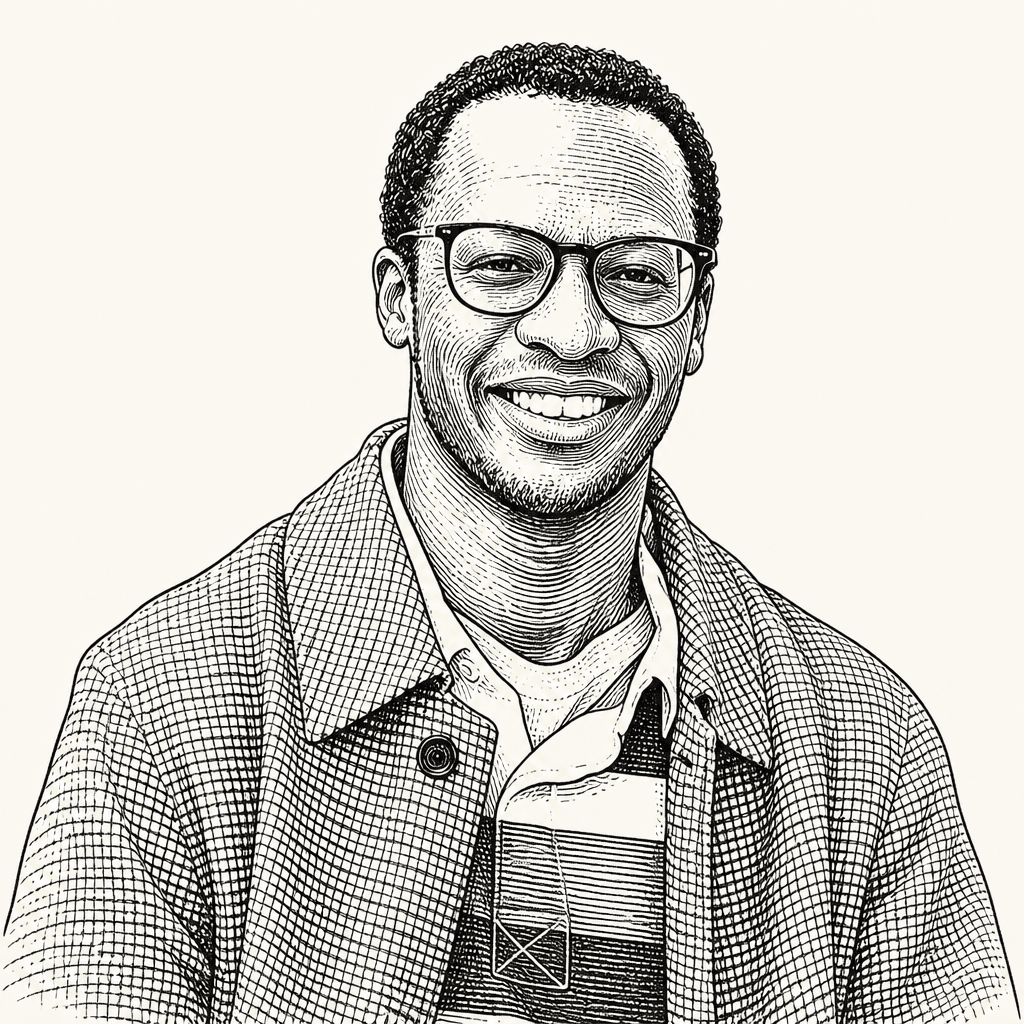
In a Hoover Institution conversation with Andrew Roberts, author and columnist Tomiwa Owolade argues that Britain’s race debate has become distorted by American categories that do not fit British history or demography. Owolade’s case in This Is Not America is not that Britain lacks racism, but that treating black Britons, American descendants of slavery, immigrants, Jews, Muslims, and other groups through a single imported racial framework produces bad analysis and weaker civic life.
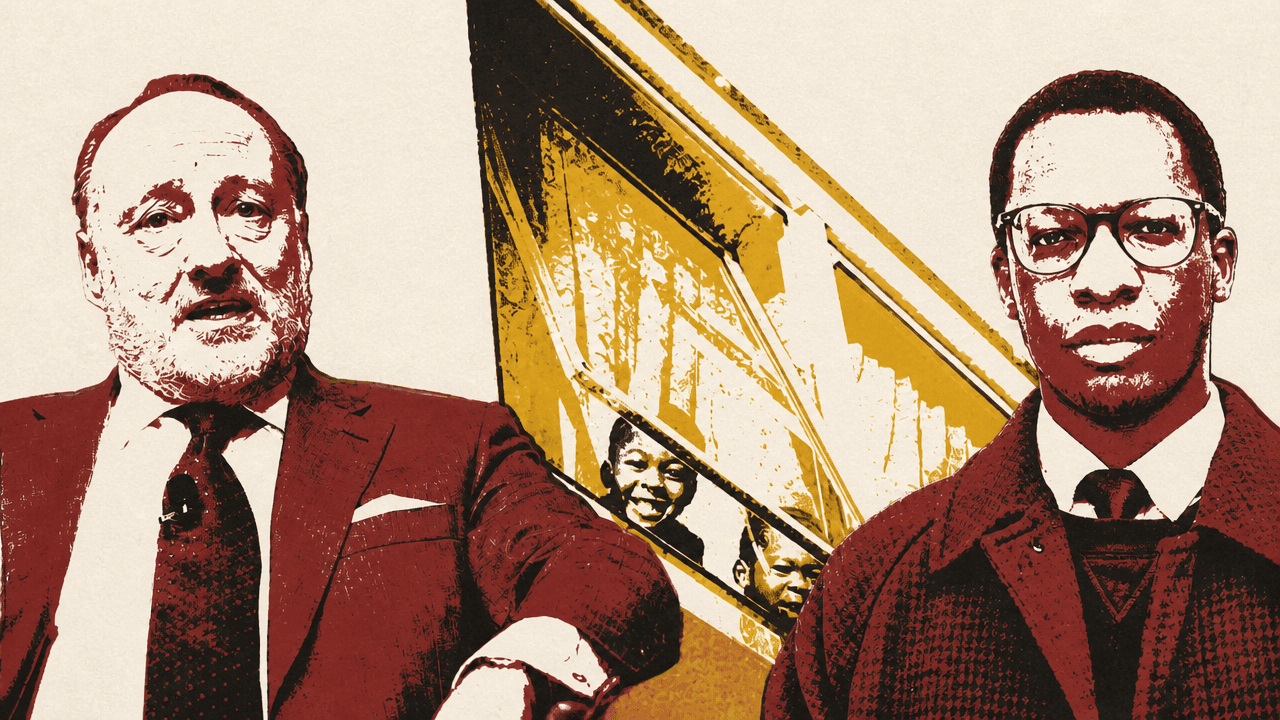
Britain’s race debate is being asked to carry an American history
Tomiwa Owolade wrote This Is Not America because, as he puts it, Britain’s discussion of race had become “far too reductive.” The reduction was not only that black Britons, or ethnic minorities in Britain more generally, were being treated as internally uniform groups. It was that the categories used to describe them were increasingly imported from the United States, where the history and demography are different.
His central example is black Britain. Owolade says most black British people today are either immigrants or the children of immigrants from Africa; roughly 30 years ago, he says, the majority would have been immigrants or children of immigrants from the Caribbean. That is not the black American experience. In his account, most black Americans are descendants of enslaved Africans, and many can trace their ancestry in America further back than many white Americans. The immigrant experience that characterizes much of black Britain, he argues, does not translate across the Atlantic; nor do slavery, Jim Crow segregation, lynching, or legally enforced bans on interracial marriage map onto British life in the same way.
The immigrant experience that characterizes the black British population doesn't apply to the experiences of black American people.
Andrew Roberts sharpens the point by quoting from Owolade’s book: there was no British legal equivalent of Jim Crow between the late 19th century and the mid-1960s; lynching has not been practiced in the United Kingdom; interracial marriage has never been banned in Britain; and British schools, in Owolade’s formulation, are segregated by class rather than race. Roberts also cites figures from the book: around 1% of Britain’s population was black in 1980, compared with about 4% now, while Asians are 9.3%.


| Group or period | Figure cited | Context |
|---|---|---|
| Black population in Britain, 1980 | About 1% | Roberts cites the figure from Owolade’s book. |
| Black population in Britain now | About 4% | Roberts contrasts this with the 1980 figure. |
| Asian population in Britain | 9.3% | Roberts cites the figure while discussing why American racial categories do not map neatly onto Britain. |
Owolade is not denying racism in Britain. Roberts explicitly says Owolade is not denying discrimination in housing, employment, criminal justice, or education. Owolade agrees with the larger point, saying black British people have experienced “vicious racism” in the past and, to some extent, today. His objection is to conflation. He says it is “quite disrespectful” to black Americans who experienced segregation, lynching, and a particular “brutalized racism” to collapse their history into the British one. If the aim is to address inequality, he argues, a skewed account of the problem will not produce a constructive remedy.
That is why Owolade treats racial generalization itself as a moral and analytical failure. Roberts cites a line from the book — “to define someone exclusively by their race is to acquiesce in the vision of racists” — and Owolade agrees with the characterization. Racists generalize by race; they do not attend to individual character, ambition, desire, family, geography, class, or culture. Owolade’s criticism of some progressive anti-racist discourse is that it repeats that reductive move from a different moral posture.
Simply looking at race is a terrible way to go about it because inequality can be shaped by class, can be shaped by geography, can be shaped by somebody’s particular family background.
The concrete consequence, in his telling, is misdescription. Black African pupils in Britain, he says, often do exceedingly well at school and in their professional careers. Black Caribbean pupils tend to do less well, along with white working-class pupils. Those differences matter because they complicate any account that treats race as the primary or sufficient explanatory category. For Owolade, “black British” is not a single social position; it contains different migration histories, cultures, class profiles, and educational outcomes.
The UCL letter became a case study in imported categories
Tomiwa Owolade traces much of his argument to 2020, during the Black Lives Matter protests in Britain. Students at University College London, his old university, wrote an open letter to the English faculty accusing the faculty and the university more generally of racism. A friend showed him the letter, and Owolade wrote a counter-letter that, as he describes it, deconstructed the original’s pitfalls.
What struck him was how fully the letter embodied the problems he saw in contemporary progressive discourse about race. In his account, it treated black people primarily as victims and cast them as needing a kind of white savior. If he had to boil down his opposition to that conception of anti-racism, he says, it is that it sees black and other ethnic minority people “as simply victims in need of a kind of white savior rescue.”
The letter’s treatment of the English literary canon was another point of objection. Owolade says it saw the canon as fundamentally racist, whereas he regards the canon of Western civilization as something that can transcend racial, ethnic, national, and cultural categories. His example is Chinua Achebe’s Things Fall Apart. Achebe wrote the novel partly as a rebuke to Joseph Conrad, but the title comes from a poem by W. B. Yeats, and Owolade says the structure is clearly influenced by Greek tragedy. To him, that is not an embarrassment or a contradiction. It shows why the canon can be “enriching,” “emancipating,” and “something to be treasured rather than something to be destroyed.”
The most revealing detail, for Andrew Roberts, was the use of the acronym BIPOC — black, indigenous people of color. Owolade says the term makes sense in an American context, where progressive anti-racist politics often links black Americans and Native Americans as historically marginalized groups. In a British university letter, he says, the term becomes absurd. “Using a word like indigenous saying that we must protect indigenous people in Britain,” he says, makes one sound “more like a member of the British National Party than it does a 21-year-old left-wing activist at a London university.”
That example is doing more than mocking a borrowed acronym. It illustrates Owolade’s larger claim that a vocabulary developed for one national history can become misleading, or even politically inverted, when transplanted into another. Britain did not have a black indigenous population in the way implied by the American phrase. To use the term without attending to that difference is, in Owolade’s account, a symptom of a wider failure to think concretely about Britain.
American influence is strongest when Britain stops thinking specifically
Andrew Roberts asks why Britain took the knee on football pitches and held large marches in 2020 if the underlying American context was so different. Tomiwa Owolade’s answer is not that British participants were insincere. It is that social media and the Covid lockdown created conditions in which many Britons internalized an American racial frame.
People were cooped up indoors, he says, relying on Twitter and Instagram as ways of being in touch with the world. Those platforms are dominated by America. In that setting, Black Lives Matter and the 2020 protests were not processed by many British users as events in a specific American setting, but as templates through which to interpret their own country.
Roberts grants the larger premise: America has a unique cultural force. Quoting from the book, he says that when something significant happens in America, it reverberates globally, and many people interpret what is specific to America as true of their own country. American politics, culture, food, music, clothing, film, and literature all carry enormous power.
Owolade is careful to say his argument is not anti-American. He says he loves and admires many aspects of American culture and society. But that admiration, in his view, is a reason to insist on particularity rather than erase it. To respect America is to see American phenomena as American — situated in a distinctive history, institutional structure, and political culture — rather than translating them automatically into British terms.
The way to show respect to somebody, the way to show that you love and admire somebody, is by seeing that person in all their particularity rather than trying to generalize about them.
He links this to Robert Hughes’s idea of the “cultural cringe,” originally used to describe Australia’s relationship to Britain. The cultural cringe, as Owolade explains it, is the belief that one’s own native land is embarrassing and unworthy of sustained attention, so one gravitates toward a more exciting and prestigious culture. He thinks many Britons now exhibit that attitude toward America. They find British politics boring and tedious while being gripped by American politics, especially under Donald Trump.
Roberts adds a related point about America’s own particularity: it is often imagined as young and thrusting, but its constitutional order is old. He says the average life of a constitution before replacement in world history is 19 years, while the American Constitution has lasted more than two centuries. He quotes John Gray’s observation that American institutions have changed less over the past centuries than those of practically any other country. Owolade agrees that America’s youth and vitality are central to its self-image, including in the rhetoric of presidents such as John F. Kennedy and Ronald Reagan, but says it is also a country with clear and durable traditions and values.
That clarity is part of America’s attraction. But within Owolade’s larger argument, the danger is that British fascination with America can become a substitute for attention to Britain’s own facts.
Solidarity should rest on values, not presumed identity
Andrew Roberts distinguishes Owolade’s argument from a rejection of international solidarity. People can properly feel solidarity, he says, with Iranian women, Afghan women, or hostages in Gaza. Tomiwa Owolade accepts that distinction and draws a line between solidarity based on universal values and solidarity based on identity.
The Black Lives Matter movement, in his account, leaned too heavily on identity-based solidarity. It assumed that black people in London would necessarily feel experiential kinship with black people in Milwaukee. Owolade calls that “factually nonsense” because it implies that the two experiences are the same.
His family example is pointed. Owolade’s family comes from Nigeria. At his brother’s wedding in Nigeria, his brother married a black American woman whose family descends from enslaved Africans, and many of her relatives and friends came to Nigeria for the wedding. From the perspective of many Nigerians, Owolade says, the most striking thing about the black American guests was not that they were black; it was that they were American.
He compares this to an episode of The Sopranos in which Italian-American gangsters visit Italy. Paulie Walnuts walks around trying to feel kinship and belonging, but the native Italians see him as American, not Italian — not least because he cannot speak Italian. Owolade extends the comparison to Irish people who often see Irish Americans as mostly American rather than Irish.
The point is not that ancestry is meaningless. It is that shared identity labels do not guarantee shared experience. For Owolade, solidarity is more defensible when it affirms universal values that apply irrespective of group identity, rather than claiming a kinship that may be sociologically thin or historically false.
The institutional argument extends the anti-reductionist one
Tomiwa Owolade gives a split answer on whether Britain has reached “peak woke.” At a superficial cultural level, he thinks some of the worst excesses have passed. His example is the Booker Prize: the previous year’s winner, he says, was Flesh, a novel about a straight white man experiencing upper-class London society. He speculates that such a book would not have won the Booker in 2020 or 2021, a point Andrew Roberts endorses.
But Owolade does not think the deeper structure has changed. Wokeness, as he describes it, is not only a cluster of values; it is also about control over institutions. For young people in Britain in or recently out of school or university, he says, there remains a “profoundly left-wing bias” in many cultural institutions, one that treats identity politics as the norm.
He names HR departments, universities, schools, and other cultural institutions as places where this bias persists. That creates an irony in his view. Critical race theory claims Britain is institutionally racist. Owolade says racism still exists in British society, including racism against black people, other ethnic minorities, and — especially relevant now, he says — Jewish people. But at the institutional level of many cultural bodies, he argues, the prevailing bias is not against identity politics but toward it.
This is not a departure from his earlier argument about Americanized racial categories. It is an extension of it. If institutions adopt identity politics as their default grammar, he argues, they also inherit its reductive habits: explaining inequality too narrowly, sorting people too crudely, and treating group identity as the decisive political fact. For that reason, he thinks any response cannot simply be cultural. It has to be structural and institutional. The idea that “wokeness” is disappearing because literary culture or public discourse has shifted slightly is, in his view, too shallow an account.
Anti-racism can become blind to antisemitism when its categories are too narrow
Britain’s move toward a multiparty politics raises, for Andrew Roberts, the possibility of sharper racial or sectarian splits. Roberts asks in particular about what he describes as the Green Party seeming to have embraced Islamism.
Tomiwa Owolade calls this a “very dangerous turning point.” In his view, some voters may still think of the Green Party as an environmental party — “slightly wacky,” “slightly eccentric” — but he says that version of the party is “dead now” and has been replaced by one animated by “sectarian furies,” Islamism, and “frankly antisemitism.” He argues that the war in Gaza is being used to denounce and marginalize Jewish people.
His criticism focuses on Zack Polanski, whom Roberts identifies for listeners as the Jewish leader of the British Green Party. Owolade says Polanski repeatedly emphasizes that he is Jewish and, in Owolade’s account, uses that identity to justify accusing Israel of genocide. Owolade’s stated fear is that this will create a condition for Jewish participation in progressive spaces: acceptability only if they disavow the state of Israel.
He reaches for the Test Acts as an analogy for a coercive test of belonging, not as a precise historical comparison. The force of the analogy, in his use, is that admission to respectable civic or political spaces could become conditional on repudiating part of one’s background.
Roberts adds that there are only about a quarter of a million British Jews, yet, in his view, many anti-racist activists refuse to see them as a minority. Owolade agrees. He says that under a framework in which racism is imagined as applying only to “people of color,” Ashkenazi Jews are treated as incapable of being victims of racism because they are white. He calls that way of thinking “noxious” and “vile” because it marginalizes one of the great horrors of the 20th century: the genocide of European Jews.
This is one of the sharper claims in Owolade’s argument. He is saying that a politics presenting itself as anti-racist can become incapable of recognizing antisemitism when the victims do not fit its racial taxonomy. The failure, again, is reduction: a fixed racial framework becomes unable to describe a real form of hatred.
Sectarian politics threatens the shared civic identity Owolade wants
Andrew Roberts quotes from This Is Not America: “A healthy civic society is one in which everyone irrespective of race, religion, ethnic background, or political ideology can speak to one another with a shared sense of identity.” Tomiwa Owolade says the rise of the Green Party, if it continues, would risk moving Britain away from that ideal.
His concern is the balkanization of society, especially in certain urban areas. He is careful not to generalize about all Muslims, but says some Muslim communities in Britain appear to feel greater affinity with a transnational Muslim identity than with other communities in the United Kingdom.
The local elections taking place on the day of the interview are, for him, revealing. Local elections used to be dominated by local issues: bin collections, schools, potholes. Roberts supplies “potholes” as the stock example, and Owolade agrees. But Gaza, he says, appears to be a dominant factor in these elections. He finds that “concerning” and “troubling” because it reflects, in his words, the importation of “Middle East style sectarian politics” into British civic life.
The same underlying concern runs through his account of race, anti-racism, antisemitism, and social justice: when political identity is organized around imported or transnational solidarities, Britain’s shared civic language weakens. In Owolade’s formulation, the result is not simply disagreement, but a loss of the conditions under which citizens can disagree as members of the same political community.
The alternative is curiosity, nuance, and generosity
Andrew Roberts attacks the term “social justice” as a corruption of justice, and asks how Britain can escape its grip. Tomiwa Owolade’s answer is sociological before it is ideological. He says many people embrace “social justice” because it gives them a sense of identity and belonging.
That search for belonging, he argues, is especially important in post-religious Britain, where the institutional power of the Church of England has waned and many people do not feel attached to a church or a local community. Social justice politics fills part of that vacuum. It offers a community, a moral language, and a way of affirming who one is.
The problem, Owolade says, is that it narrows vision. A curious person quickly discovers that justice is complex. Racial inequality and class inequality are not simple issues. But many people under the social justice banner, in his view, treat them simplistically and reductively.
His proposed answer is not a rival slogan. It is an intellectual and civic disposition: curiosity, nuance, sophistication, and generosity. He especially emphasizes generosity of spirit. Too often, he says, people committed to the social justice agenda demonize their intellectual opponents as racist or far right rather than trying to understand where they are coming from, what different experiences they have, and how disagreement might produce something constructive.
Owolade’s book and his broader commentary insist on particularity: Britain is not America; black Britons are not a single story; solidarity is not the same as identity; anti-racism can become blind to antisemitism; and a healthy civic society requires people to speak across race, religion, background, and ideology without reducing one another to those categories.