Britain’s Wartime Diplomats Turned Declining Power Into Lasting Influence


Lord Peter Ricketts, former head of Britain’s Diplomatic Service, argues that the wartime Foreign Office was not a ceremonial adjunct to military power but an instrument for sustaining alliances, securing access and preparing the political order after victory. Unable to match American or Soviet scale, Britain used diplomats to keep de Gaulle aligned, hold Spain outside the Axis, support governments in exile and build the institutions through which it could retain influence after 1945. Ricketts also contends that this work exposed the costs of the service’s narrow recruitment and exclusion of women.
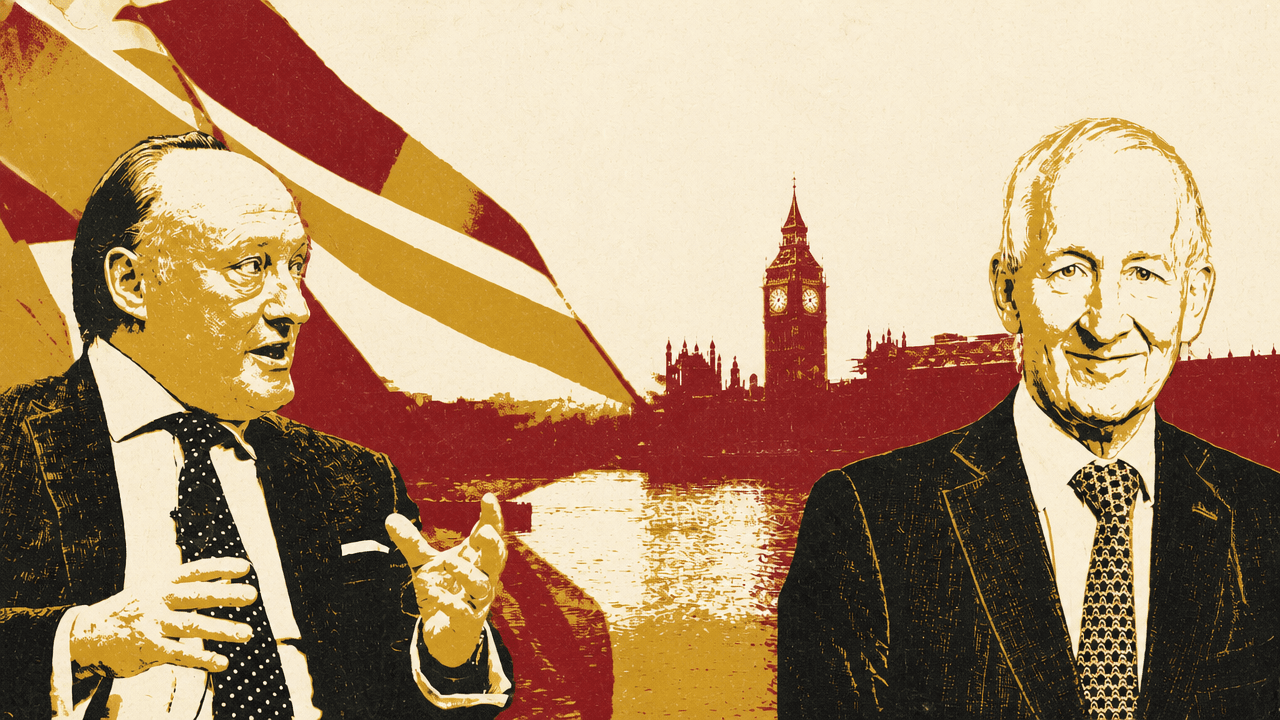
Britain’s diplomats turned limited power into access, alliances, and influence
Peter Ricketts presents the wartime Foreign Office as an instrument for producing political effect where Britain could not simply impose outcomes. Britain could not match the eventual scale of American or Soviet power, and it could not dictate the postwar settlement in Eastern Europe. But its diplomats could keep necessary relationships from breaking, preserve access in ambiguous political environments, sustain allied governments without territory, and help design the structures through which Britain would retain a role after the war.
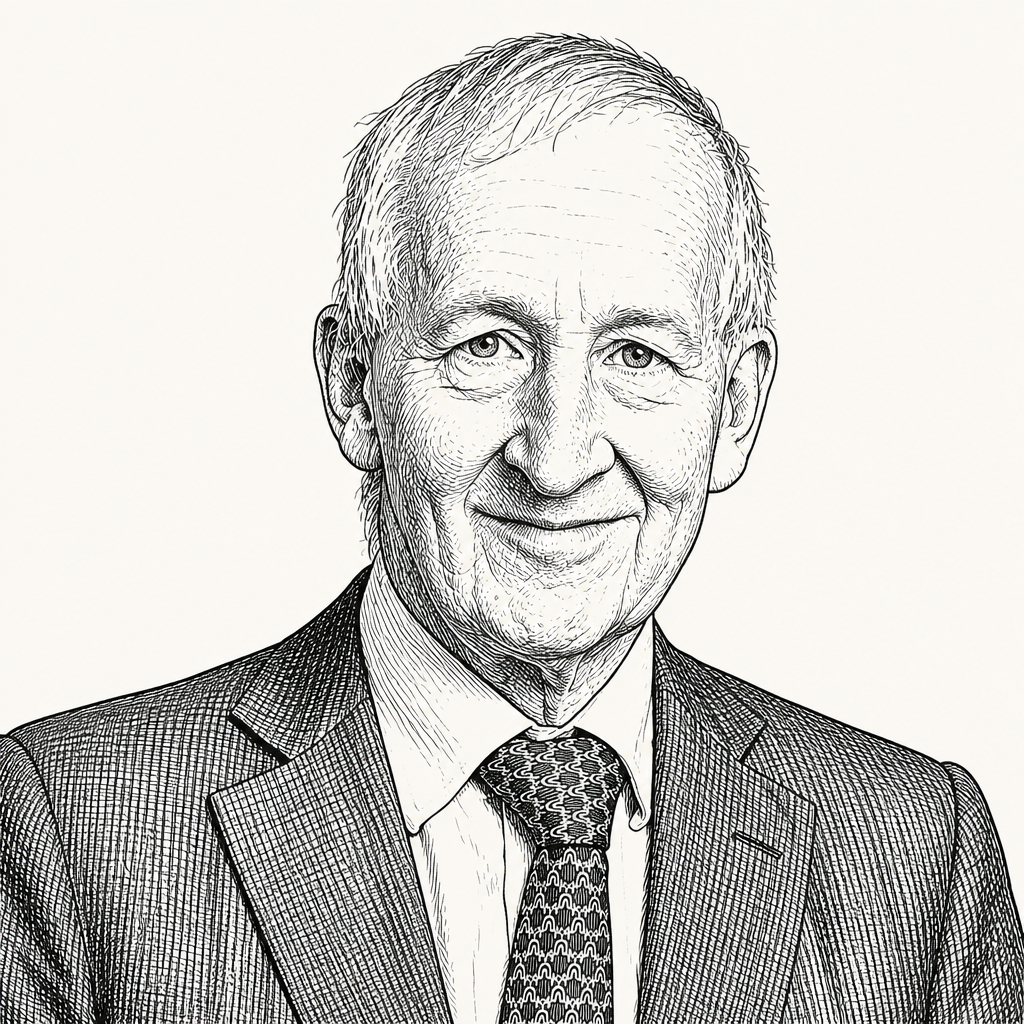
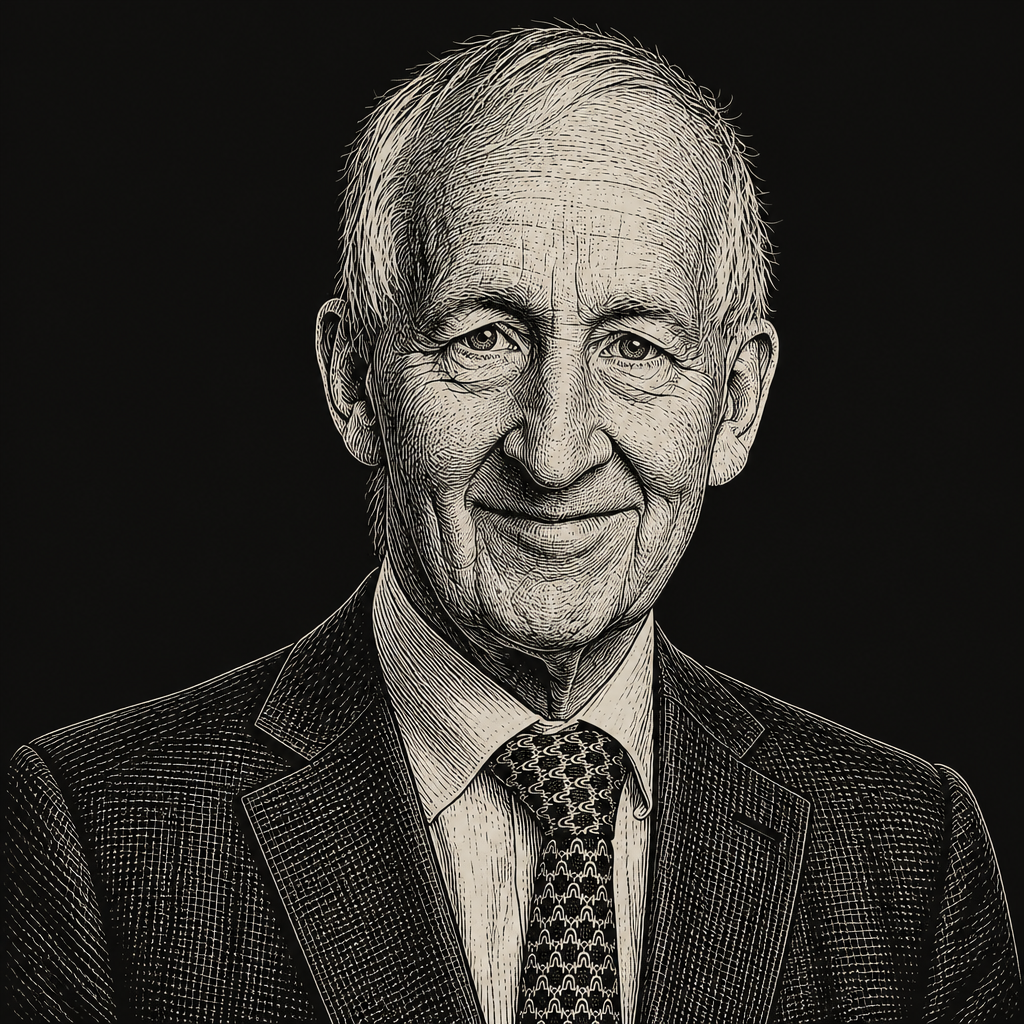
That work began from an institution under strain. The Foreign Office had spent the years before 1939 absorbed in the succession of crises leading to Munich. Unlike the Ministry of Defence, which had been planning for war, or the Cabinet Office, which had adapted structures from the First World War, it entered the conflict with little time to reorganize. Officials largely retained their prewar jobs and simply worked harder.
The strain was also moral. Foreign Office officials had served the government through appeasement with varying degrees of unease. Robert Vansittart, the Permanent Under-Secretary, was so openly anti-German that Neville Chamberlain removed him to an invented role as Chief Diplomatic Adviser, without staff or a defined function. His successor, Sir Alexander Cadogan, embodied a more conventional civil-service posture: serve ministers, but make the dangers and disadvantages of their policy plain.
By Munich, Cadogan and other officials were warning Lord Halifax against further concessions. Yet Ricketts does not treat the issue as morally simple. The diplomats involved were uneasy about the policy while also recognizing that Munich had bought Britain an extra year. Ivone Kirkpatrick, then at the British embassy in Berlin, had to shake Hitler’s hand during the crisis; Ricketts says the memory stayed with him.
Once war came, the department’s work became immediately operational. During the Phoney War, it had to assess proposals from dubious intermediaries who claimed to offer a route to negotiations with Nazi Germany. As German forces moved through Scandinavia and Western Europe, embassies became evacuation operations: getting British citizens out, destroying sensitive material, and trying to leave before advancing armies arrived.
The collapse of France made that work visible. British officials in Paris burned Foreign Office and government papers in the embassy courtyard while tracking the movement of the French government, preparing evacuation, and sending out their families. Churchill arrived amid the bonfire. The next day, at the Quai d’Orsay, he saw papers being wheeled into the garden and burned.
London also became the working capital of occupied Europe. Governments in exile and royal families needed premises, funds, BBC airtime, access to Churchill, and sustained attention from the Foreign Office. Polish, Czech, Belgian, Luxembourgish, Norwegian, and other representatives initially arrived with little, though their countries would later contribute substantially to Allied air and military forces.
Ricketts argues that this hospitality mattered after the war as well. Paul-Henri Spaak, Belgium’s foreign minister in exile, remained a major Belgian statesman for decades and later served as NATO secretary general. Ricketts says Spaak retained a lasting warmth toward Britain because of his treatment in wartime London. Queen Wilhelmina of the Netherlands and Norway’s king, he adds, had similarly fond memories of those years.
The larger point is that diplomatic work was not peripheral to the war effort. It maintained the political conditions in which military power could be used: allies had to remain allies, governments had to remain viable, and strategically consequential states had to be kept from moving into the opposing camp.
Keeping de Gaulle allied required diplomacy as alliance maintenance
The Free French relationship was the most volatile example of that work. Charles de Gaulle arrived in London, Ricketts says, with little beyond a suitcase of francs and a “performative obstinacy” that he used to extract more from Churchill than he otherwise could have obtained. De Gaulle saw dependence on either Britain or the United States as incompatible with French honor. Churchill, in turn, repeatedly found him infuriating.
Neither man could afford a rupture. Britain needed a French partner able to exercise authority after liberation; de Gaulle needed British backing without becoming, in his own view, a British client. Cadogan, Foreign Secretary Anthony Eden, and their staff became the intermediaries who kept this political marriage intact.
The Foreign Office role, Anthony Eden, Alec Cadogan, and their staff, were basically a kind of marriage brokers.
Cadogan’s importance runs through Ricketts’s account because he sat at the junction of political leaders and the official machine. Every paper for the Foreign Secretary passed through him. He advised Churchill on diplomacy, attended cabinet meetings, and traveled with Churchill to summit meetings. In military affairs, Churchill had General Ismay; in diplomatic affairs, Ricketts portrays Cadogan as performing a comparable role.
That role was especially important after confrontations with de Gaulle. Several Foreign Office officials developed enough of his trust to restore contact after recurring rows. Eden, meanwhile, had to urge Churchill to continue working with him despite his anger.
Before D-Day, the relationship again came close to breaking. Churchill summoned de Gaulle to a railway carriage outside Portsmouth, where they argued over the authority that would govern liberated France. De Gaulle discovered that Eisenhower was preparing a declaration concerning American-oriented currency for the liberation period and reacted furiously. Foreign Office officials again had to damp down the dispute.
Ricketts credits this repeated intervention with preserving de Gaulle as an ally who could take over in France after liberation. In his account, that mattered not simply as a matter of Anglo-French comity, but because it reduced the prospect of a political vacuum in which communist or other forces might gain greater influence.
The same work depended on less visible systems. The Foreign Office’s headquarters survived the Blitz relatively intact, partly because fire-watchers—including Cadogan, then in his late fifties—worked night duty on its roofs to identify incendiary bombs and direct firefighters. Much of the round-the-clock ciphering and deciphering, meanwhile, was done by women in an airless basement. Diplomacy rested on communications, records, intelligence, and administration as much as on the better-known exchanges among political leaders.
Neutral posts made local access a strategic asset—and a liability
Neutral capitals were places where diplomacy, intelligence, clandestine activity, and military geography met. Madrid, Ankara, Switzerland, and the Vatican were not merely observation posts. Their value came from local relationships and information that military organizations could not readily obtain; their danger came from the exposure that accompanied that access.
Spain was the clearest case. Francisco Franco had affinities with Hitler and Mussolini, but he never joined the Axis cause. Britain worked to keep him neutral through persuasion, pressure, and material inducements. Churchill sent Sir Samuel Hoare to Madrid, and Ricketts says Hoare developed a working relationship with Franco while stressing the benefits of staying outside the war. Britain offered raw materials, food, and corn that Spain needed.
The stakes were geographic. If Spain had joined Hitler, German access to the Strait of Gibraltar and Gibraltar itself would have endangered Allied access to the Mediterranean. Ricketts argues that the Torch landings in North Africa in 1942 depended in significant part on Britain’s success in preventing Spain from permitting German observation or intelligence positions around the strait.
The Dudley Clarke episode shows how easily intelligence activity could imperil that work. In 1941, Clarke came to the military section of the British embassy in Madrid identifying himself as a Times correspondent, though he displayed unusual knowledge of the Middle Eastern theater. The next day Spanish police arrested a man dressed as a woman in central Madrid. It was Clarke, who was in fact heading deception operations for General Auchinleck’s Cairo command.
Embassy officials had to get him away before German authorities could obtain him and the information he carried. He eventually returned to Cairo, but Hoare was furious: his central task was to keep Spain out of the war, while unexplained British intelligence activity threatened the political conditions that made that possible. The embassy’s local reach was necessary to extract Clarke, but it also had to absorb the risk created by his presence.
The Vatican offered a more sustained form of access. When Italy entered the war, the Holy See became an enclave surrounded by hostile territory. Rather than recall Francis D’Arcy Osborne, Britain kept its ambassador in place because Catholic networks across occupied Europe could provide political intelligence.
Osborne moved into the Vatican with his butler, secretary, and dog, operating from a converted convent. His contacts supplied information about conditions in occupied Europe, including early reports of the Holocaust, which he sent cautiously because he assumed Italian authorities might read his communications.
As Allied armies advanced through Italy, Osborne also helped operate an escape line for Allied prisoners of war from within Vatican territory. Working with Monsignor O’Flaherty and army officers whom he brought in and concealed within his delegation, Osborne supplied the money and organization. The operation put Vatican neutrality at risk after German forces arrived. Ricketts argues that Osborne was indispensable to it and that it saved “tens and tens of thousands” of Allied prisoners.
Neutrality did not remove security failures. Sir Hugh Knatchbull-Hugessen, known as “Snatch,” was ambassador to Turkey while Churchill sought to bring Turkey onto the Allied side. He took sensitive papers from the embassy to his residence and left them unattended while he played piano or slept. His butler, a German agent, obtained a key to his red box, photographed the documents, and passed them to Germany.
The compromise continued until British counterespionage officials noticed that Germany appeared to have access to British material. Knatchbull-Hugessen received a reprimand that Ricketts says many thought inadequate. The documents did not include plans for Operation Overlord, though they might have done so; German officials also suspected that some material was too valuable to be genuine. Ricketts nevertheless calls it one of the war’s worst security breaches.
The contrast is central to his account. Diplomatic posts were valuable because they could operate through relationships, local knowledge, and political ambiguity. Those same qualities made disciplined handling of intelligence indispensable.
Wartime state capacity depended on people the institution had excluded
The Foreign Office’s wartime demands exposed the narrowness of the institution that had entered the war. Women did not hold ambassadorial roles or senior diplomatic office, but they carried out vital ciphering, administrative, intelligence, and political work. Ricketts’s examples show the state drawing on expertise it had previously treated as peripheral.
Freya Stark arrived with unusual prewar preparation: she was already a prominent traveler, writer, and Arabic speaker with deep experience in the Middle East. After volunteering in 1939, she was sent to Aden and Yemen for a British persuasion operation. In Sanaa, she gained access to women’s spaces that male officials could not enter, cultivated relationships in the harem, and used that access to show propaganda films and influence local networks.
She later established Brotherhoods of Freedom in Cairo and Baghdad, recruiting local people to spread the message that Britain would win the war.
Ricketts’s interest in Stark is not only biographical. He sees her operation as demonstrating that trusted local intermediaries could spread a message more effectively than official British statements. Persuasion depended on social networks that the British state could not simply command.
Nancy Lambton and Elizabeth Wiskemann supplied different forms of expertise. Lambton, a fluent Persian scholar, became press attaché at the British embassy in Tehran after the deputy ambassador met her on a tennis court. Wiskemann, a specialist in Germany and the Sudetenland, joined the Political Intelligence Department and was posted to Switzerland. Fluent in German and familiar with the region, she became what Ricketts calls a one-woman political-intelligence bureau, reporting on conditions in Germany, Austria, and later Italy.
The neutral capitals in which Wiskemann worked brought together Nazi agents, business travelers, refugees, dissidents, journalists, and spies. Her value lay in being able to interpret and connect information emerging from that environment, then feed it back to London.
These women helped demonstrate that the barriers around diplomatic work were not defensible. Formal restrictions preventing women from joining the diplomatic service and senior Foreign Office ranks were removed in 1946. Yet Stark, Lambton, and Wiskemann all left after the war. Ricketts reads that outcome, especially in Stark’s case, against the patronizing culture they had encountered.
The exclusions endured. Until 1973, women at every level of the Foreign Office had to resign if they married. Ricketts’s conclusion is straightforward: an institution that imposed that rule could scarcely expect to produce many senior women.
He makes a related argument about class and recruitment. Andrew Roberts emphasizes the intellectual distinction of the prewar diplomats, but Ricketts qualifies the claim. The entrance examination was demanding, yet it also privileged candidates with private education, classical knowledge, language training, and access to Oxford or Cambridge. The service contained highly able people, he says, but excluded broad parts of British society and risked producing groupthink among officials from similar backgrounds.
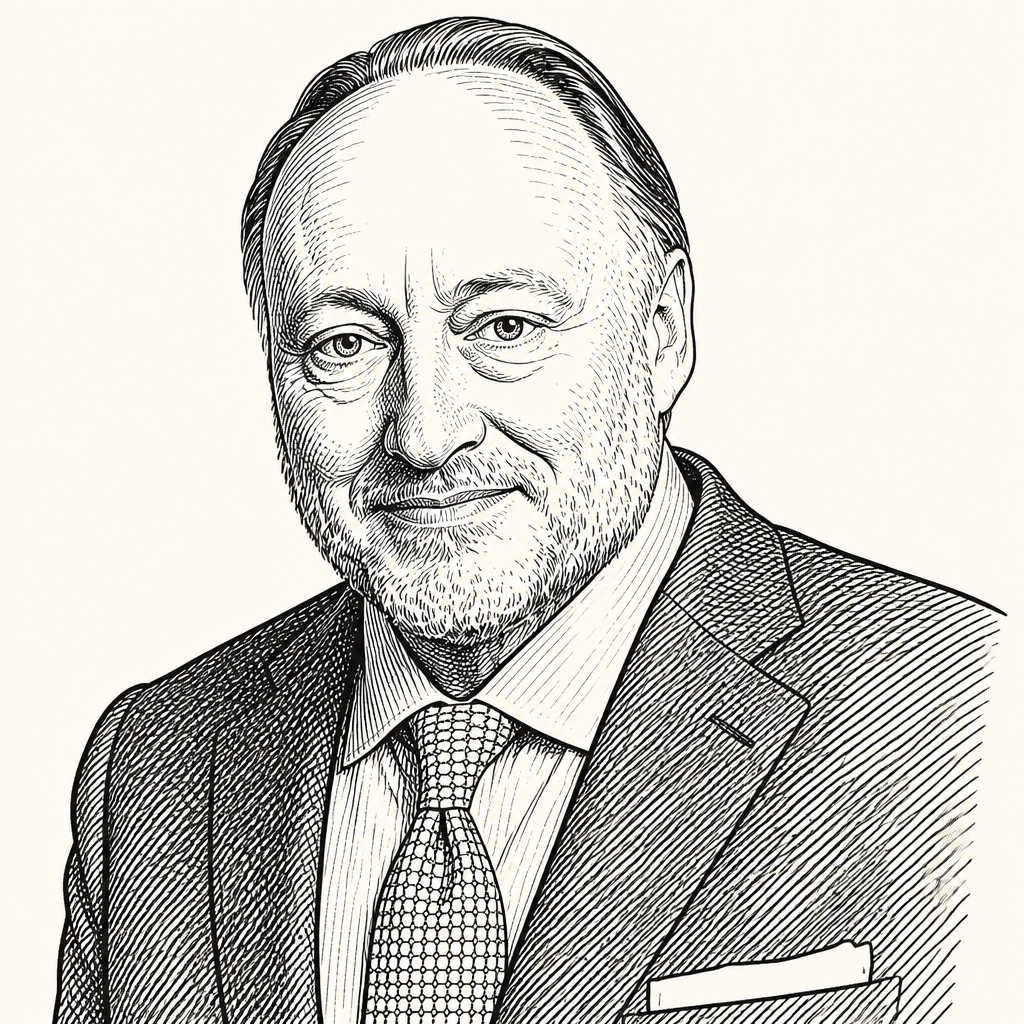

After the war, examinations were democratized and special routes were created for men who had fought without attending university. Ricketts, who joined the Foreign Office in 1974, recalls serving alongside veterans who had entered through those arrangements. He argues that the modern service remains highly selective, but is more socially diverse than its prewar predecessor. For an institution whose job is to understand foreign societies and make judgments under pressure, that diversity expands the experience available to the state.
Cadogan treated victory as a problem of political design
By the end of the war, British diplomats could see that power was moving toward the United States and the Soviet Union. They had lived through two world wars, first as young men and then as senior officials, and Ricketts describes them as realists rather than nostalgists. At Yalta and Potsdam, the imbalance was unmistakable.
Cadogan’s work on the Atlantic Charter captures the Foreign Office’s attempt to turn wartime necessity into principles for the peace. Ricketts recalls finding, in the Foreign Office archives, a typescript draft prepared by Cadogan aboard HMS Prince of Wales during Churchill and Roosevelt’s 1941 meeting at Placentia Bay. Roosevelt had asked Churchill for a declaration of principles for the future peace. Cadogan produced a draft, Churchill amended it, and the eventual statement emerged from negotiation.
Ricketts sees the essential principles as Cadogan’s. The episode matters because Cadogan was asked, far from London and without staff, to give concrete form to an emerging Allied conception of the world they were fighting to create. It also foreshadowed a more systematic effort to build arrangements that could prevent another war while giving Britain a continuing role within them.
Beginning in 1942, Cadogan asked Gladwyn Jebb, one of the department’s younger stars, to step away from immediate wartime crises and think about the postwar order. Jebb began, Ricketts says, from close to a blank sheet: how might another world war be prevented, and how could Britain retain a meaningful place in the system designed to do so?
They started to think about how not only to shape a better world when this Second World War ended but how Britain could preserve a role of influence in it.
British work developed in parallel with planning at the U.S. State Department. When the two were combined in 1943 and 1944, they became the blueprint for the United Nations. Britain’s permanent membership of the Security Council was one way Jebb and his colleagues ensured that Britain would retain formal influence despite its relative decline.
They understood the limitation built into the arrangement. A Security Council with veto powers could not act when the great powers locked horns. By 1944, the Foreign Office was therefore also considering European security arrangements that did not assume an indefinite American commitment to the continent.
- 1942Cadogan asks Gladwyn Jebb to develop plans for a postwar international organization.
- 1943–1944British and U.S. planning is combined into the blueprint for what becomes the United Nations.
- 1945Ernest Bevin becomes Foreign Secretary and begins building a European security framework.
- 1949The NATO treaty establishes the alliance whose architecture Bevin helped develop with George Marshall.
This thinking fed into Ernest Bevin’s postwar diplomacy: the Brussels Treaty, the Western European Union, and then NATO. Ricketts presents these not as a restoration of British primacy, but as an adaptation to a world in which Britain could exercise influence through alliances, rules, and institutions rather than unilateral command.
Planning for occupied Germany followed the same logic. A London committee chaired by Sir William Strang spent two years preparing a surrender document, zones of occupation, arrangements for Berlin, and other elements of the occupation regime accepted by Britain, the United States, and the Soviet Union. By Yalta, much of that structure was ready.
Ricketts argues that this preparation helped keep postwar Germany from descending into chaos, starvation, and communism. Drawing on his own role in the Iraq war effort in London in 2003, he contrasts that degree of advance planning with the inadequacy of later post-conflict preparation. Military success, in this view, did not settle the central political question: the aftermath had to be prepared before the fighting ended.
That is also why Ricketts rejects the idea that Britain could have negotiated its way out of Soviet predominance in Eastern Europe. The decisive fact at Yalta was the Red Army’s advance across the region and Stalin’s control of the ground, including almost all of Poland. Britain could argue, and the Foreign Office encouraged Churchill to press hard, but it lacked the military position needed to dictate the result. Roosevelt, Ricketts adds, appeared less concerned than Churchill.
Cadogan therefore represents more than an able civil servant in Ricketts’s account. He connected immediate decisions to a longer project: managing difficult allies during the war while helping devise arrangements for the peace that would follow.
The postwar order is fracturing, but its replacement will not be global
Ricketts sees the postwar settlement as both a major achievement and a historically contingent one. The UN, NATO, and international financial institutions have endured for close to 80 years. That longevity is substantial, he says, but no international order is permanent. Economic, demographic, and geopolitical shifts alter the balance between states.
He believes the system is now breaking down and does not expect a return to a globally agreed order. The opening for the institution-building surge after 1945 came from a global cataclysm. In a world divided and polarized among major powers, Ricketts argues, no comparable settlement is currently possible.
The more plausible future, in his view, is a set of arrangements among like-minded countries: regional security and economic groupings rather than a restored universal order. Even NATO raises a longer-term question about whether the United States and Europe can remain genuinely like-minded.
His counterfactual about Britain’s refusal to join the Schuman initiative in 1950 follows from the same concern with shaping arrangements before they harden. The proposal went on to become part of the European Community. Ricketts believes Britain’s decision to stay outside continued to shape its history because it surrendered early influence over one of the central organizing structures of postwar Europe.
Britain’s political imagination at the time still leaned toward the United States and empire. Bevin, who had been so important in building European security arrangements after 1945, was seriously ill. At the moment of decision, he was in hospital, Clement Attlee was on holiday, and acting Prime Minister Herbert Morrison said he did not think the Durham miners would accept the proposal.
Ricketts regards that as an inadequate basis for a strategic decision. Had Britain joined from the beginning, he believes, it might have helped shape European integration into a less French legal and administrative project and a more free-market one. The choice, in his telling, was not between preserving old power and accepting decline. It was whether Britain would help set the rules of an emerging order or encounter them later as an outsider.