Political Systems Fail When They Cannot Absorb Pressure


Conrad Black argues that political systems and empires endure not through concentrated power alone but through their ability to absorb pressure, accommodate opposition, and weigh the long-term consequences of statecraft. In his account, France’s pre-revolutionary order and the autocracies of 1914 failed because rulers lacked meaningful checks on their judgment, while parliamentary governments were better equipped to recognize the costs of war. Black also contends that settlements designed to defeat an immediate enemy—from Napoleon onward—can create more dangerous strategic problems in their wake.
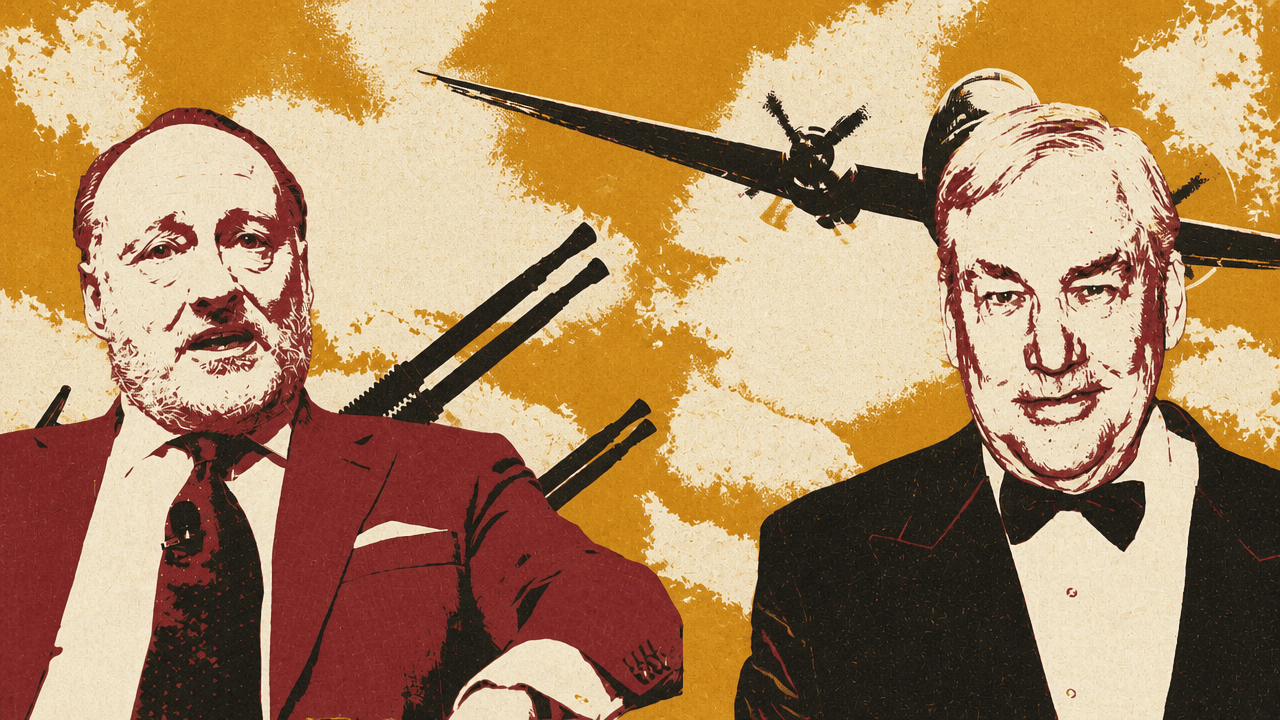
Political systems fail when they cannot absorb pressure
Conrad Black treats the French Revolution not as an inexplicable eruption but as the eventual consequence of a political system built to exclude meaningful consultation. Its worst features, he says, were avoidable; the larger rupture became inevitable once France had made no provision for serious public frustration to be heard and partially accommodated.


The contrast begins with the near-simultaneous accession of Louis XIV and restoration of the Stuarts. England’s monarchy, having experienced the execution of Charles I, moved toward parliamentary and representative institutions. France moved in the other direction, toward concentrated royal authority. Black’s explanation is not that French statesmen were simply blind to the virtues of consultation. Cardinal Richelieu had a coherent view: parliament was a self-interested, hypocritical talking shop that impeded efficient government. Richelieu’s France could operate effectively under exceptional administrators such as Richelieu himself, and later Mazarin.
The problem was succession. A system designed around exceptional competence has no answer when less capable figures inherit authority. Black points to the institutional condition created by the long absence of the Estates General: Richelieu addressed it as a young man in 1614, and it did not meet again for 175 years, until the Revolution. Consultation need not transfer sovereignty, in his view. It can allow rulers to recognize irresistible opposition and make concessions before a crisis becomes revolutionary.
Dictatorships like his would run well as long as there were brilliant men like him to run them, but you didn't always have such people.
That argument reaches its sharpest application in Black’s comparison of governments during the July Crisis of 1914. He does not suggest that parliamentary governments are inherently peaceful. French leaders included revanchists who saw an opportunity to recover continental standing against Germany. But Britain and France, in his account, confronted those ambitions alongside a serious reckoning with the costs of war.
In the roughly six weeks between the assassination of Archduke Franz Ferdinand and the declarations of war, British and French leaders understood the gravity of the choices before them. The Asquith government held prolonged emergency meetings and divided over what intervention would entail. French figures understood both the danger of continental war and the strategic case for resisting Germany. Britain’s calculation was stark: it did not want to enter a European war, but it could not accept the complete defeat of France and the emergence of a Germany powerful enough to threaten Britain directly.
The Kaiser and Tsar, by contrast, appear as rulers who believed they embodied their nations’ greatness but did not seriously understand their nations’ interests. Franz Joseph was, Black says, somewhat more sober; the German and Russian emperors were especially cavalier. His conclusion is unapologetically institutional: in this case, parliamentary democracy proved superior to autocracy and authoritarian rule.
- 1614Richelieu addresses the Estates General; Black says it would not meet again for 175 years.
- 175 years laterThe Estates General meets again at the Revolution after a long absence of meaningful consultation.
- 1914The July Crisis tests whether European governments can recognize the consequences of the war they are approaching.
Empire could create order while ruling without consent
Conrad Black agrees that large multinational empires often supplied a practical form of order. The Holy Roman, Ottoman, Austro-Hungarian, and British empires organized large territories that might otherwise have been divided among weaker and more quarrelsome states. But order was not consent, and the distinction is central to his account.
Empire grew, in Black’s description, from a very old political instinct: overpowering weaker neighbors, taking territory, and subordinating people who could not resist. As navigation improved, the target no longer needed to be nearby. British and French powers became especially adept at providing respectable justifications for expansion, including claims of civilizing activity. He allows that such claims sometimes had substance. Yet the underlying problem persisted: imperial powers established themselves in places where their presence was not welcomed.
The United States is a contrasting case. It built an immense continental power not primarily by imposing itself on unwilling overseas populations but by attracting migrants with promises of liberty, opportunity, and freedom—claims Black says were sometimes exaggerated. He sets that against the Russian imperial inheritance, in which Russian power absorbed territories that later became Soviet republics. The willingness of Ukrainians, Georgians, Latvians, and others to expel Russian rule when able demonstrates, for him, that this incorporation had not rested on consent.
Black’s defense of the British Empire is explicitly differentiated rather than universal. He rejects the proposition that colonialism was wholly bad, particularly in British and, to a lesser extent, French forms. Spanish conduct in Latin America, Dutch conduct in what is now Indonesia, and Belgian conduct in the Congo receive a far harsher judgment: he characterizes them as greedy, racist, exploitative, and frequently savage. The Portuguese, he says, were comparatively benign in Brazil, though not in Africa.
Britain and France, by contrast, had mixed motives but also made genuine efforts, Black contends, to develop institutions among local populations. British power in India rested on a strikingly limited number of British people—never more than 100,000, in his account—governing a territory extending from what is now Pakistan to Burma and including Sri Lanka. Its population grew from roughly 80 or 90 million to more than 400 million. Rule depended on arrangements with maharajas and other local authorities as much as on direct administration.
For Black, the durable residue includes the English language, parliamentary government, and a justice system he considers distinguished by the standards of countries at India’s economic level. He connects those inheritances to India’s present economic advance and to what he regards as prospective advantages in competition with China.
His own description nonetheless includes a grave qualification. The empire he judges institution-building was also made profitable, he says, by opium cultivated in India and sold in China against the wishes of Chinese regimes. Black calls that trade shabby and discreditable, and says its effects remain consequential.
They can cultivate opium in India if they want, but forcing it on the Chinese and degrading the Chinese population as opium use did, is something we're still paying for.
That admission does not lead Black to abandon his favorable overall judgment of British imperial rule. It establishes the tension within his framework: he sees institutional legacies that outlasted empire alongside practices he expressly judges discreditable. France’s record is similarly differentiated. Lacking Britain’s naval capacity, it often took what Black calls Britain’s “leavings.” Yet he argues that French rule performed significant services in some territories, pointing to an enduring French influence in Dakar, Saigon, and Casablanca.
Progress did not eliminate the need for restraint
Andrew Roberts presses Black on the apparent tension at the center of his history: the period from 1661 to 1914 contains extraordinary advances in industry, transport, communications, and political maturity, yet ends in the approach to total war. Black rejects the proposition that the catastrophes of the twentieth century require abandoning belief in progress. He also rejects a doctrinaire, Macaulay-style confidence that history moves cleanly toward a designed end.


His proposition is narrower. Human beings have, unevenly and imperfectly, become less likely to settle every dispute through immediate force. Early foreign policy, in his description, was largely an effort by groups to overpower neighbors, seize territory, and enslave those they could defeat. States and empires refined that impulse, often wrapping it in the language of civilization, order, or national interest.
Over time, both deterrence and moral restraint altered the calculation. Deterrence deserves no sentimental credit: increasingly destructive weapons could make war irrational for leaders who understood the consequences. But Black also detects an accumulated recognition that life has dignity and that disputes should not automatically be answered with violence. He credits Christianity with contributing to that moral development, while acknowledging the hypocrisies, compromises, and atrocities associated with Christian societies.
The absence of war between great powers for more than 80 years is, for him, evidence of qualified progress. There have been many wars, but not a total war among the most powerful states on the scale of the world wars.
The American Civil War had already shown contemporaries what industrial-scale violence could mean. Black cites 750,000 deaths in a country of 31 million people. British parliamentary debate could honor the courage of both sides while recoiling from the level of destruction within a single country.
Yet material progress could outrun political sophistication. By 1914, Black points to 60-mile-per-hour railway trains, 50,000-ton ocean liners, crossings between Southampton or Cherbourg and New York in roughly five days, and the beginnings of telephone and intercontinental telegraph communication. These were astounding achievements. They created unprecedented speed, capacity, and interconnection without ensuring caution among those who directed states.
The distinction matters because Black’s account of 1914 is not that Europe lacked intelligence, technology, communication, or even warnings. It lacked rulers willing and institutionally required to weigh the full costs of decisions made under pressure. Britain and France did not avoid catastrophe, but their debates at least reflected an understanding that they were gambling with a disaster of exceptional scale. The Russian and German emperors, he argues, did not bring comparable seriousness to the question.
The settlement that defeated Napoleon helped create Germany
Conrad Black calls Napoleon the greatest conqueror and perhaps the most talented historical figure he knows, with Julius Caesar as his closest rival. The judgment rests partly on Napoleon’s starting point. Alexander inherited a monarchy; Caesar belonged to the Roman establishment even if he did not inherit a kingdom. Napoleon was a Corsican whose accent was mocked, physically small, and without meaningful standing in Paris.
Napoleon’s range mattered as much as his military ability: writer, orator, politician, lawgiver, and commander. Black acknowledges grave errors, especially in Russia, but emphasizes how difficult Napoleon was to defeat militarily. Roberts identifies several moments in the 1812 campaign when a different choice might have limited the disaster: committing the Guard or cavalry at Borodino, burning the Kremlin, or withdrawing earlier toward Poland. Black takes Napoleon’s observation that “from the sublime to the ridiculous is a single step” as evidence of a mind capable of recognizing the grandeur and absurdity of his own collapse.
The larger question is whether Britain had to destroy him. Black places a possible Anglo-French accommodation around 1806 or 1807, after the Fourth Coalition war. Napoleon’s Continental System, and especially the invasion of Spain, were acts of overreach that he does not defend. But he believes Britain became too convinced that it could not coexist with Napoleon.
A settlement, he suggests, might have recognized that revolutionary France—despite its rivalry with Britain—was politically closer to Britain than the absolute monarchies of Russia, Austria, and Prussia. Britain instead pursued a European balance in which France would be reduced and the major continental states would remain more or less equal, leaving Britain free to maneuver among them.
The strategic failure, in Black’s retrospective view, was an over-fixation on the personal threat Napoleon represented. The victors pushed France back to what he describes as its natural boundaries and converted the hundreds of fragmented entities associated with the Peace of Westphalia into a confederation of 39 German states. In doing so, they helped create the conditions for German unification and ascent.
The settlement solved the immediate problem while worsening the next one. France was treated as Europe’s enduring danger; a unified Germany was not yet understood as the more consequential future threat. Black does not say the Napoleonic threat was imaginary. His argument is that statesmen can become so absorbed by the enemy in front of them that they construct a more dangerous strategic order behind them.
He advances a related counterfactual about the seventeenth century. A genuine Anglo-French alliance under Richelieu and Mazarin, he believes, might have produced a more peaceful European history. In both cases, the preferred alternative is not moral harmony but imaginative statecraft: recognizing that a rival can be accommodated when the coalition assembled against that rival may create a larger long-term danger.
The American founding turned legitimacy into military endurance
Conrad Black treats the American founding in deliberately deflationary terms without diminishing its eventual significance. The Declaration of Independence magnified what began, in his view, as a jurisdictional dispute over whether the British Parliament could levy taxes in America. American rights came primarily from British political inheritance rather than a spontaneous Enlightenment awakening.
Britain had emerged from the Seven Years’ War with a national debt more than doubled, Black says, after a conflict that included expelling the French from Canada. The colonists had sought that removal and were among the wealthiest Englishmen in the world. Britain’s demand that they contribute to the cost was therefore not inherently unreasonable in his telling. “No taxation without representation” became a powerful slogan, but he considers it a weak answer to the underlying fiscal issue.
The British failure was strategic as much as constitutional. London did not understand how difficult it would be to sustain an army across the Atlantic, indefinitely, in sufficient numbers to suppress an insurrection. British regulars were susceptible to desertion when they encountered colonists they understood as people much like themselves. German mercenaries filled part of the gap, but, as Black notes, mercenaries did not share the motivation of people fighting for national, ideological, or sectarian causes.
Legitimacy thus became a practical military asset. Washington’s attack at Trenton mattered not merely for its tactical outcome but because the revolutionary cause had been sagging. A Christmas-period offensive violated the customary expectations of campaigning and demonstrated purposefulness. Black calls it a turning point, while noting that the war continued for more than five years. French involvement, particularly the ability of the French navy to contest British troop movements, made a durable British victory still less likely.
Black gives Washington an exceptional place in the creation of the United States. As commander of the Continental Army and, with Benjamin Franklin, a convener of the Constitutional Convention, Washington may have contributed more than anyone to the country’s development. He nevertheless ranks Lincoln as the more distinguished president, though he calls it a close contest.
When Black describes “the patient man who was never weak” and “the haggard and sorrowed man who always kept his sense of humor,” he is describing Lincoln: the self-made president who, in his judgment, almost never became angry and explained his positions with unusual care and eloquence.
Black rejects both the claim that important figures are merely “scum on the wave” and the Carlylean proposition that history is simply a succession of great men’s biographies. Political leaders must navigate forces larger than themselves. But what happens is still, fundamentally, what people do. Individual decisions can change the direction and velocity of the larger historical current.
Russia’s argument over its identity remains unresolved
Conrad Black identifies a long-running Russian conflict between Western emulators and nativists. He presents Peter the Great as the model Westernizer: a ruler who wanted Russia to catch up with Western Europe and be accepted as a great European power. Peter was broadly successful in that ambition. But older Russian political and cultural habits, Black says, proved harder to shed.
Western chancelleries have repeatedly oscillated between two conceptions of Russia: a civilized great power with which one can deal, and an Asiatic menace that must be held at Europe’s frontier. Russian conduct has fluctuated in corresponding ways. Catherine the Great could be friendly with Voltaire while maintaining fierce rivalry with Frederick the Great. The aspiration to Western standing coexisted with a nativist sense of Russian distinctiveness.
Black sees the same unresolved argument in contemporary Russian self-presentation. Putin’s gestures toward rustic authenticity and invocations of Russian heroism against Napoleon belong, in his view, to a nativist mythology. Yet he believes that, when Russians can genuinely choose, most sensible Russians would prefer to live as Westerners rather than as “ancient Russians.”
This is not an argument that national character mechanically dictates policy. It is an argument about the political identities available to rulers: whether Russia defines its security and greatness through Western integration, or through resistance to the West and recovery of an older national ideal. The contest for the heart and mind of “Holy Mother Russia,” Black says, continues.