Charles Murray’s Evidence-Based Case for Taking Religion Seriously
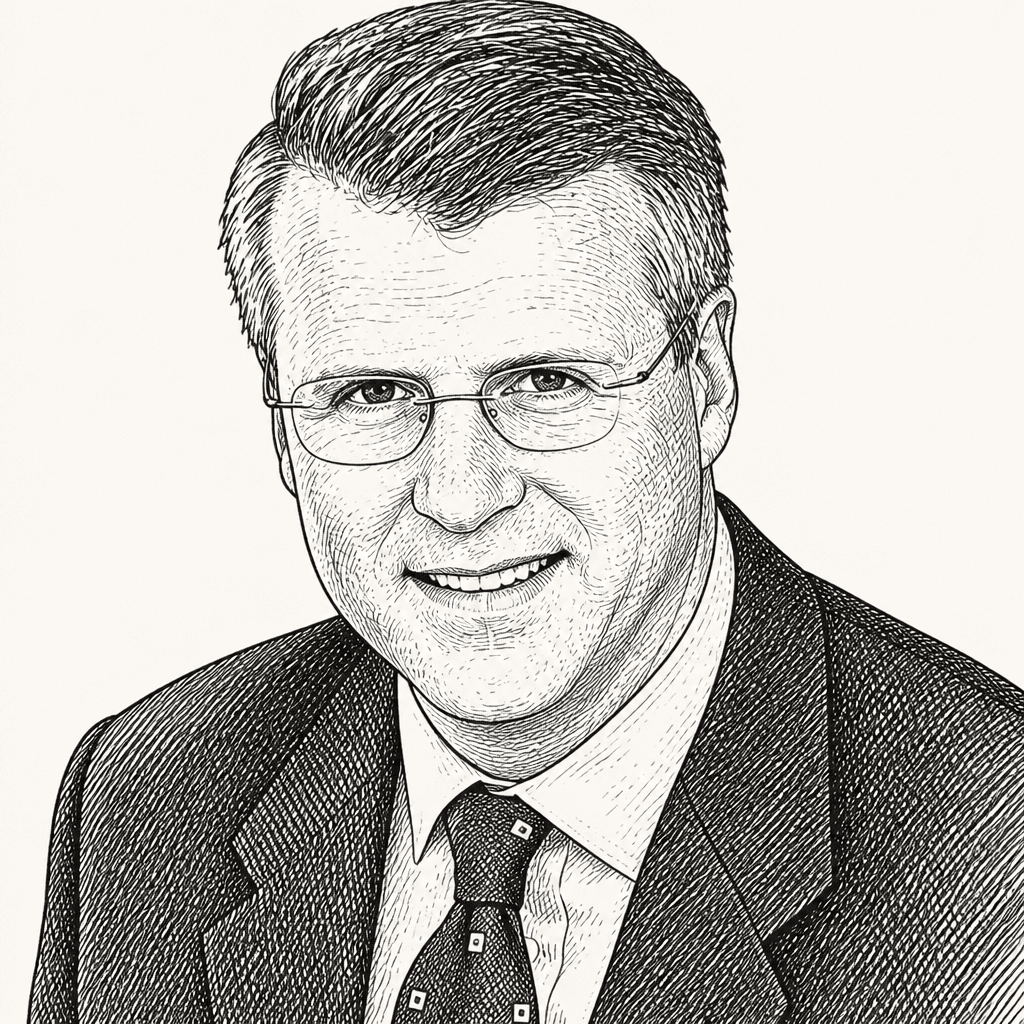
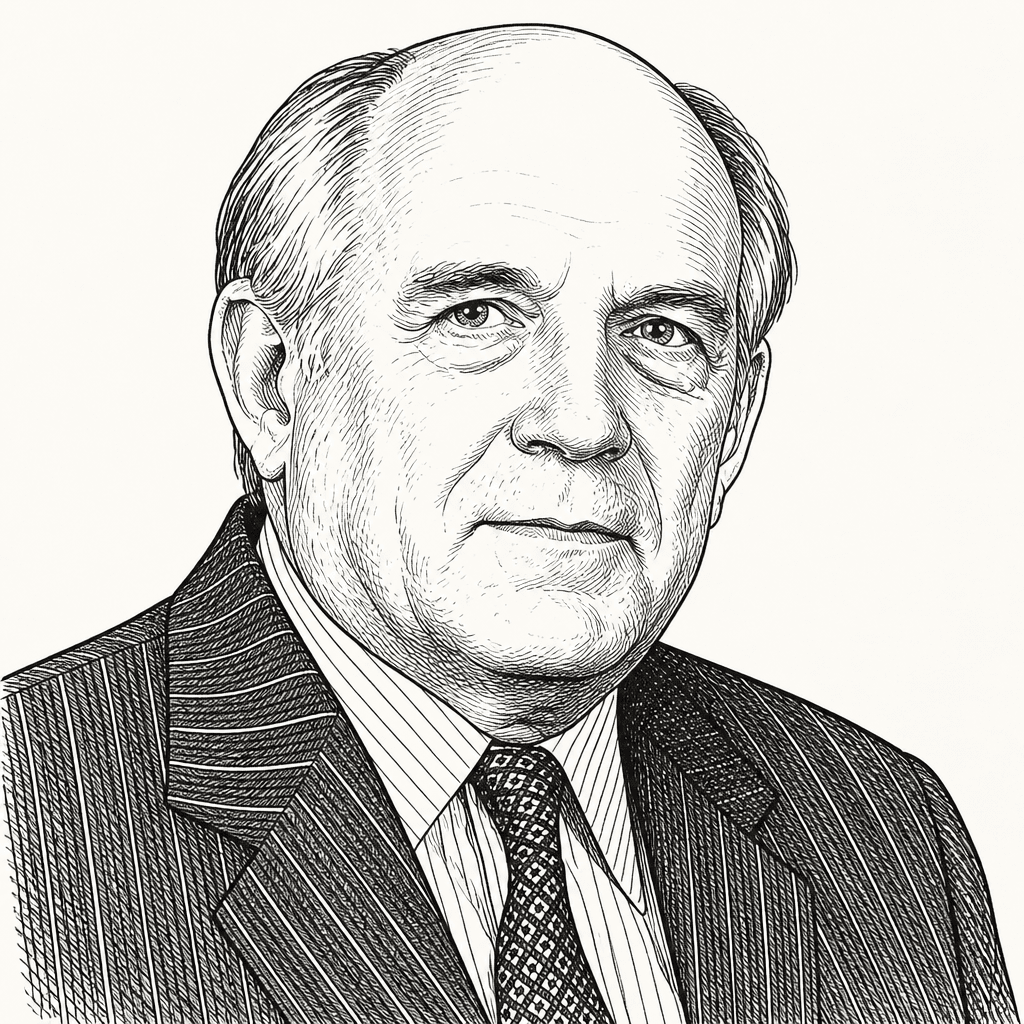
Charles Murray, the social scientist and author of Taking Religion Seriously, argues that a lifetime of casual agnosticism has become intellectually untenable. In a conversation with Peter Robinson, he says evidence and questions that materialism does not resolve—especially consciousness, near-death experiences, the historical grounding of the Gospels, and the Shroud of Turin—have led him to take God and Christianity seriously, though not to claim settled faith. Murray’s case is cumulative: religious belief, he argues, should be judged for its truth rather than defended merely for its civic utility.
The argument begins with a perceived incapacity
Charles Murray does not describe his movement toward religion as a conversion propelled by revelation, crisis, or a sudden capacity for faith. He describes it as an intellectual pilgrimage undertaken by someone who believes he has unusually little natural access to spiritual experience.
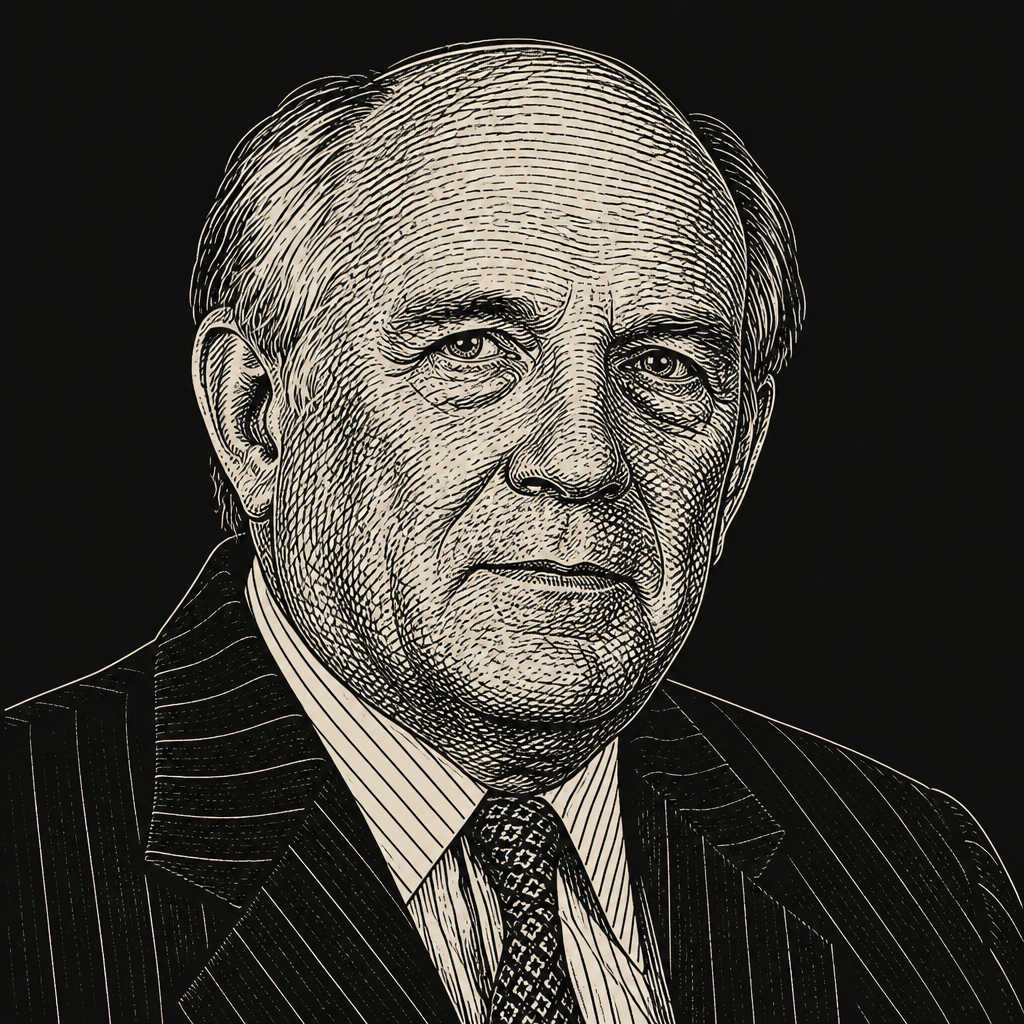
For most of his life, Murray was what he calls a casual agnostic. He had grown up going to church in Newton, Iowa, but at Harvard he was “thoroughly socialized to be secular.” Religion, when it arose among professors and friends, was treated dismissively or humorously. His wife Catherine later compressed the lesson of that world: “I went to college and I learned that smart people don’t believe that stuff anymore.”
Murray now thinks that conclusion mistook a limitation of perception for a settled intellectual result. Some people, he says, possess spiritual perceptiveness in roughly the way a trained musician hears music differently from an untrained listener. Others may be spiritually “tone-deaf,” just as some people are colorblind and must take others’ testimony that red, blue, and purple exist. In his characteristic language, he says spiritual perceptiveness may form a bell curve—and places himself near its lower end, perhaps the equivalent of an IQ of 75 or 80.
That is why he resists treating his own route as exemplary. Peter Robinson contrasts Murray’s slow, evidence-driven approach with his own inability to disbelieve: as a student at Dartmouth, Robinson tried atheism for two weeks, then found that he could not look at the world without sensing God’s presence. Murray says Robinson has the preferable condition. Faith is called a gift, he says, for a reason. Being able to judge competing explanations as more or less plausible is not the same as possessing the inner assurance that believers describe.
This is a book by a guy who has no natural talent for this, but who had come to realize that there is something there that I wanted to tap into, having watched my wife tap into it.
The tone of Taking Religion Seriously follows from that claim. Murray says he wrote earlier books on welfare policy and intelligence with confidence because they rested on years of professional study. Religion is different: scripture, theology, and church history are fields of immense and contested scholarship, and he considers himself an amateur. His purpose is not to tell readers that his judgment settles those questions. It is to show fellow agnostics with similar presumptions why the questions became difficult for him to ignore.
Catherine’s faith supplied an early nudge. After their daughter Anna was born in 1985, she found that she loved her “far more than evolution required.” She understood the evolutionary account of maternal attachment, Murray says, but felt that the love she experienced was not exhausted by its reproductive function. She experienced it as something greater, a love of which she was a conduit, and that experience pointed her toward God and toward finding a religious tradition.
Murray’s change has unfolded over decades. It has not felt like a steadily brightening light, as Catherine describes her own evolving faith. Instead, conclusions and feelings have sometimes appeared unexpectedly: reverence for Jesus during a middle-of-the-night reflection, or a sense of forgiveness for long-held guilt. These did not begin, in his telling, as conclusions he willed himself to reach.
Consciousness is the challenge that puts the soul back in play
Murray’s central inference is that consciousness may not be reducible to the physical brain. If that is true, he argues, a materialist account of human beings no longer fixes the boundaries of what can plausibly be said about souls, sin, redemption, or a personal God.
His case for taking God seriously is cumulative rather than deductive. Mathematics, cosmology, consciousness, and personal experience each made a materialist account of reality seem less complete to him. Mathematics was an early source of unease: he is struck by the elegance and precision with which simple relations describe physical reality. There is no apparent a priori reason, he says, that physical laws should take forms as clean as rather than being irreducibly messy. The fit between mathematical beauty and the physical world did not move him far, but it suggested an order that looked, to him, as though it had been planned.
The more direct metaphysical question is why anything exists at all. Murray says cosmological accounts often seem to put aside what he regards as the central mystery: the initial existence of a universe. “Why is there something rather than nothing?” remains, for him, a question that natural explanation has not dissolved. He has read arguments against the need for a creator, including arguments whose mathematics he says he could follow, but did not find them persuasive.
He does not take the familiar response—who created the creator?—as decisive. In his view, it assumes that God must be comprehensible in human causal terms. God is “essentially unknowable” in any detailed sense, Murray says; to posit an infinite regress of creators risks anthropomorphizing the reality under discussion. The origin question, for him, ends in an acknowledged mystery rather than a fully intelligible mechanism.
Murray also invokes the fine-tuning of the universe. He says the physical parameters that permit galaxies, stars, solid bodies, and life are extraordinarily unlikely, characterizing the odds as trillions to one. Universes consisting only of black holes, or radiation without solid bodies, would be more probable, in his telling. The multiverse is often offered as an answer: if there are vast numbers of universes, a life-permitting one need not be surprising. Murray rejects that move as a larger leap of faith than intentional creation. Robinson cites physicist John Polkinghorne’s view that multiverse theory contains no physical evidence and is a mathematical construction; Murray agrees.
But Murray treats those arguments as preliminary. What matters most to him is evidence he believes bears on consciousness outside the brain: near-death experiences and terminal lucidity. Terminal lucidity refers, in the cases he emphasizes, to people with advanced dementia who appear near death to recover lucid recognition, memories, and personality for a limited period. Murray stresses that the relevant reports are not mere flashes of apparent rationality. They include people recognizing spouses or children they had failed to recognize for years, recalling friends, and seeming recognizably themselves for periods that may last an hour.
There are simply too many well-documented cases out there which do not seem to admit of any explanation except consciousness existing independently of the brain.
Steven Pinker disputed this argument in a Wall Street Journal opinion column, “Charles Murray’s Unscientific Case for the Soul,” focused on terminal lucidity. Murray emphasizes that he likes and admires Pinker, a former colleague and longtime acquaintance. But he says Pinker did not confront the body of evidence Murray had in mind, instead treating advocates of terminal lucidity as willing to seize on any glimmer of rational behavior.
Murray’s disagreement is not that every strange report establishes a soul. It is that evidence he says was collected by serious researchers under safeguards should not be dismissed as hallucination, sentiment, or fluff without grappling with its details. His conclusion is methodological as well as theological: materialism should not, in his view, be protected from evidence that could challenge it.
The historical question is whether the texts are close to events
Having come to believe in God, Murray turned to Christianity through arguments for both its intellectual seriousness and the historical proximity of its foundational texts.
A lunch with Pete Wehner in 2004 or 2005 led him to C.S. Lewis’s Mere Christianity. Lewis mattered because he seemed to anticipate objections as they formed in the reader’s mind. The book helped persuade Murray that serious people could still make a reasoned Christian case. Richard Bauckham’s Jesus and the Eyewitnesses then became more important to the historical question. Its thesis, as Murray presents it, is that the Gospels are closely enough linked to the people who transmitted the stories that they can be treated as eyewitness testimony; Mark, on this account, substantially records Peter’s testimony.
Murray places this against what he calls revisionist history: the view that the New Testament emerged through something like a game of telephone across the Roman Empire, with accounts augmented and redacted over decades until their relationship to events became uncertain. He describes that as a dominant approach in many divinity schools. His contrary test is straightforward: do the texts contain the kinds of incidental and time-sensitive details that make better sense if they are close to people and places they describe?
The dating of Acts is one such detail. Acts is generally understood to continue the Gospel of Luke, and it ends with Paul alive in Rome, spending two years in rented quarters and preaching. It does not mention the persecution of Christians or Paul’s martyrdom. Murray regards that omission as difficult to reconcile with an account written substantially after Paul’s death. A later author, he and Robinson argue, would have had reason to include the martyrdom—especially in a work interested in Christian endurance and fulfilled prophecy. Murray therefore infers that Acts ends where it does because Paul had not yet died.
He treats the Mary-and-Martha passages as another kind of evidence. Luke depicts Martha as busy with household work and irritated that Mary sits listening to Jesus. John depicts Martha as the sister who goes out first to meet Jesus after Lazarus’s death, speaks directly and forcefully to him, then calls Mary, who had stayed home. Murray sees a consistent contrast across separate accounts: an active, outspoken Martha and a contemplative, devoted Mary. The point is not that this proves the theological content of either text. It is that such incidental personal consistency looks, to him, more like testimony about real people than a late literary construction designed around doctrine.
Bauckham’s work on names supports the same inference. Murray says the distribution of Palestinian Jewish names in the first century differed from that of Jewish names elsewhere in the empire. The correspondence between Gospel names and the Palestinian pattern is, in his view, quantitative evidence that would be unexpectedly accurate for someone inventing a Palestinian cast at a distance.
Murray’s conclusion remains narrower than a complete defense of Christian doctrine. He does not claim that every historical question is resolved. He argues instead that the Gospels should not be treated as the distorted residue of anonymous transmission, because they bear what he considers substantial marks of historically rooted testimony.
The Resurrection and the Shroud test what skepticism can set aside
For Murray, historically rooted Gospel testimony changes how one approaches the Resurrection. He begins with what he calls established starting points: Jesus was a historical figure, he was crucified, and Christianity spread around the Mediterranean world within decades. Something transformative, he argues, happened to Jesus’s followers after the crucifixion. The question is what account of that transformation best fits the evidence.
He says familiar naturalistic explanations become less easy once their assumptions are made explicit. The claim that disciples stole Jesus’s body and fabricated a resurrection requires a particular account of devastated followers’ psychology, their capacity to organize and preserve a deception, and their willingness to maintain it under persecution. Robinson puts the implication starkly: they would have gone to their deaths for a lie. Murray says the tradition of disciples refusing to recant under torture or death makes that explanation less persuasive to him.
The Resurrection remains, in his words, a “mammoth miracle.” The Shroud of Turin does not resolve that problem for Murray; it is a second case in which he believes a skeptical dismissal demands more explanation than it usually receives.
The Shroud is shown as a long, narrow linen cloth bearing faint sepia front-and-back impressions of a body. A second image, a high-contrast photographic negative, makes the facial and bodily features dramatically more detailed. Murray says the cloth entered the unambiguous historical record around the fourteenth century. The Catholic Church permits its veneration without declaring it authentic, Robinson notes.
Murray’s inference rests primarily on what he says are the image’s physical properties, not on the proposition that the shroud can be conclusively dated to Jesus’s time. Carbon dating is often said to place the cloth in the Middle Ages. Murray says an author associated with technical research on the shroud has argued that the tested sample was not from the original cloth, and he mentions cellulose-deterioration dating that he says points toward an age of roughly 2,000 years. But he does not make dating his central point.
Instead, he cites a 1978 examination by scientists from Los Alamos and major universities whose task was to determine how the image was formed. As Murray recounts their findings, the image has no associated pigment, lacks the directionality expected of an applied image, and affects only the uppermost two microns of individual fibers. A micron, Murray notes, is a millionth of a meter. He also mentions pollen he says is associated with Palestine and plants not found in Europe, but treats the image’s material characteristics as the harder question.
We understand what the image is, we haven't even a plausible hypothesis for how it was created.
Murray does not claim that an unexplained image establishes that the cloth wrapped Jesus’s body, or that it compels belief in the Resurrection. His claim is more limited: a cloth whose image appears to correspond closely to crucifixion accounts, yet lacks what he considers a plausible explanation of its formation, cannot simply be brushed aside as a medieval fraud. Like terminal lucidity, it is a body of evidence he believes readers should engage rather than dismiss in advance.
Religion’s civic usefulness cannot substitute for its truth
Stop making the pragmatic case that a free society needs religion and focus on the truth value of religion.
Charles Murray has long been capable of making the pragmatic case. He agrees with the founders’ concern that self-government requires people capable of governing themselves, and he does not think secular humanism offers a sufficiently firm moral ground for that task. On those terms, he says, the weakening of religious foundations is dangerous for the United States.
Robinson frames that argument through Martin Luther King Jr.’s claim that his life would not be in vain if he did his duty “as a Christian ought,” and George Washington’s proposition that national morality cannot prevail apart from religious principle. Murray adds John Adams and Thomas Jefferson, saying Jefferson also believed a free society could not endure without religious belief.
But Murray regards this as inadequate to his present project. He says that he and other conservative observers had often made religion’s expedient case while retaining a degree of contempt for people who held deep beliefs. His question now is not whether religion stabilizes a republic. It is whether its claims are true.
That shift occurs against what Murray sees as a changed intellectual climate. In the early 2000s, he says, Richard Dawkins and Christopher Hitchens were public-intellectual stars and aggressive atheism was fashionable. Murray contrasts that period with one in which openly religious figures including Ross Douthat, David Brooks, Arthur Brooks, Ayaan Hirsi Ali, and Niall Ferguson are prominent in public life. He does not suggest this has reversed falling church attendance or the increase in Americans reporting no religious affiliation. He sees an unresolved tension between declining religious practice and renewed willingness among some intellectuals to take belief seriously.
Murray and Robinson both object to the secular educational culture that made the Christian tradition seem unworthy of serious attention. Robinson describes encountering Aquinas and Augustine later in life and feeling that an intellectual inheritance had been withheld. Murray shares his admiration for Aquinas and speculates that many Harvard faculty members during the latter two-thirds of the twentieth century may never have seriously reckoned with the Christian tradition’s intellectual depth.
Plausibility has not yet become the joy of faith
Murray’s willingness to take Christianity seriously has not brought him doctrinal completion. Peter Robinson presses him on the Trinity, contrasting a childhood minister’s image of Jesus as “as much God as you can get into a human jar” with the Nicene Creed’s declaration that Christ is “true God from true God,” consubstantial with the Father.
Murray does not claim to have followed the matter to the church fathers’ conclusions. He says he lacks the competence to master all the scholarship and conceptual work behind the doctrine, and that the divinity of Jesus remains difficult for him to understand. The human-jar image works for him as a heuristic: something beyond human comprehension can nonetheless be present in human life.
He has also grown more comfortable using the word “sin” and has come to feel that he has received forgiveness. He traces that feeling partly to reconsidering something he did in his twenties, for which he had spent years refusing to forgive himself. It eventually seemed self-important, he says, to treat himself as the sole authority entitled to decide whether forgiveness was possible. The sense that forgiveness comes from beyond the self has become real to him, though he does not claim more than that.
For a young person from a place like Newton, Iowa, headed for Harvard, Murray begins half-jokingly: do not go to Harvard. More seriously, he recommends a good state university, perhaps through an honors program, where students encounter a broader range of people than they would in an elite and socially narrower intellectual environment. For his grandson, however, he does not insist that religious questions be settled by 22. The important thing is to have examples—Catherine and Charles Murray among them—of adults who take those questions seriously.
Murray still describes himself as outside the fuller experience of faith he sees in others, but not as permanently excluded from it.
I'm not done trying to join the party. Perhaps the door will open eventually. But even if it doesn't, I have much to be grateful for. My haphazard pilgrimage has already led me to believe that I live in a universe made meaningful by love and grace. That's a lot.