Beijing Seeks to Weaken Taiwan’s Resolve Without Starting a War

Bonnie Glaser, managing director of the German Marshall Fund’s Indo-Pacific Program, argues that Beijing is intensifying pressure on Taiwan to make resistance appear futile, while avoiding the costs and risks of war. Chinese military and government operations around the island, alongside cyberattacks and political influence efforts, are normalizing a greater Chinese presence and testing Taiwan’s control. Glaser says an invasion is not set for 2027: that date refers to the military’s target for being capable of taking Taiwan, not a timetable for doing so.
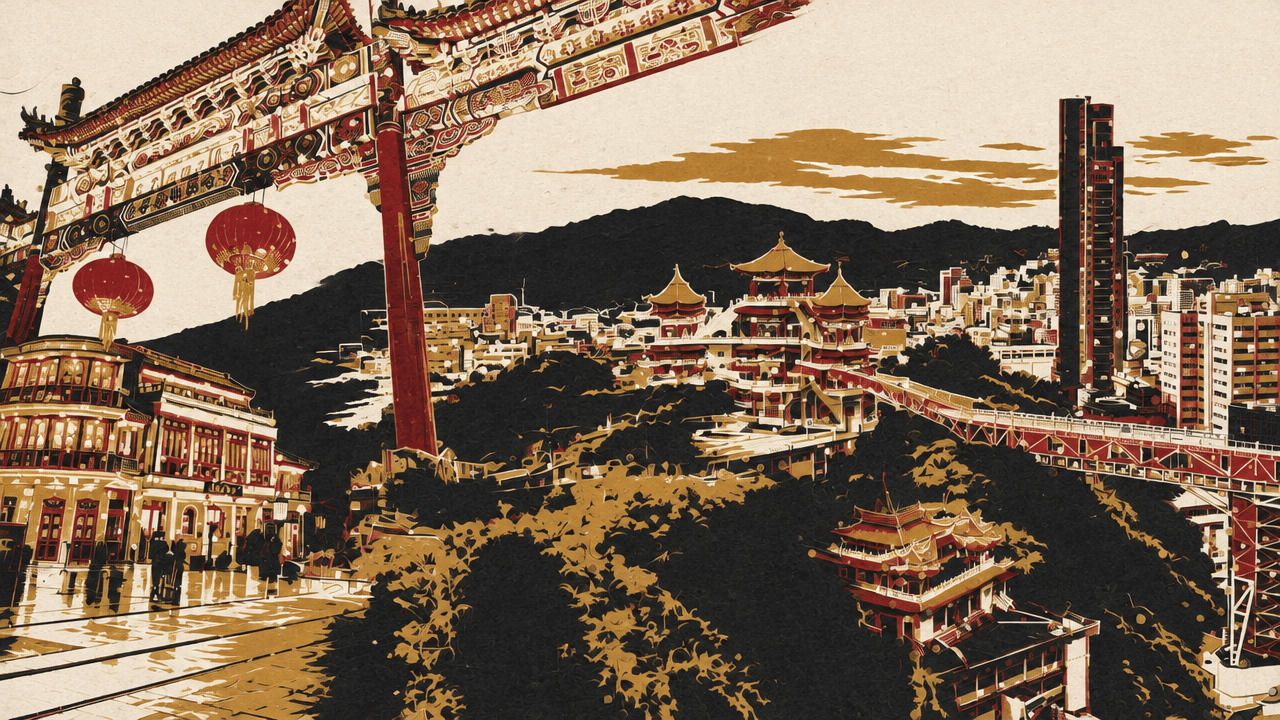
Beijing is trying to make resistance seem futile without starting a war
Bonnie Glaser says tension in the Taiwan Strait is markedly higher than it was five to ten years ago. The change is not only a matter of more Chinese military activity. Beijing has broadened the pressure it applies and made operations around Taiwan more routine, testing the boundaries of Taiwan’s control without crossing directly into open conflict. The stakes extend beyond the island: Elizabeth Economy describes Taiwan as part of the first island chain, a major US trading partner, a source of more than 90 percent of the advanced semiconductors the United States needs for industry and defense, and a democracy of 23 million people.


Before Nancy Pelosi’s August 2022 visit to Taiwan, Glaser says, the People’s Liberation Army largely stayed on its side of the median line, established in practice by the United States in the 1950s. There were no large-scale encirclement drills or blockade rehearsals of the kind Admiral Paparo now describes. PLA Navy vessels were not operating inside Taiwan’s 24-nautical-mile contiguous zone. Today, Chinese Coast Guard and other government vessels routinely operate around Taiwan’s smaller islands—including Kinmen and Matsu near the mainland, and Pratas and Itu Aba in the South China Sea. Glaser says these operations harass and intimidate Taiwan while challenging its jurisdiction over surrounding waters.
China has also stepped up patrols off Taiwan’s east coast, which Taipei views as practice for a maritime blockade involving military, paramilitary, and civilian assets. Alongside these operations, Glaser cites increased cyberattacks, daily information manipulation, and occasional cuts to subsea cables. In her account, the effect is to normalize a greater Chinese presence around the island and shrink warning time. Beijing can expand its presence and test Taiwan’s response while staying below the threshold that might prompt a forceful response from Taiwan or the United States.
Glaser identifies four drivers of the pressure: Xi Jinping’s instruction that the military be capable of seizing and controlling Taiwan by 2027; Beijing’s deep distrust of Taiwan’s president, Lai Ching-te, and his Democratic Progressive Party; efforts to warn the United States against crossing Chinese red lines; and Beijing’s confidence that it can gain ground through gray-zone tactics without triggering a forceful response.
The 2027 target, she stresses, is a goal for military capability, not a declared timetable for invasion. Economy notes that the so-called Davidson window was often read as a prediction that Xi intended to take Taiwan by force by 2027. Glaser agrees that this interpretation was wrong, and says it was unfortunate that the distinction took so long to become clear in US public discussion. In the meantime, she says, the US defense establishment prepared for what it understood as a high likelihood of a Chinese invasion or major use of force in that year.
Xi’s goal, Glaser says, is unification on Beijing’s terms. He has tied it to the “Great Rejuvenation of the Chinese Nation,” whose target date is 2049. Glaser believes Xi wants measurable progress toward unification during his tenure, but would prefer to avoid war, which is costly, risky, and uncertain. In her account, the strategy is to make resistance look futile, make the United States appear unreliable, and bring Taiwan’s leaders to negotiations.
Military exercises serve both to build capability and to send a psychological message. Beijing wants Taiwanese citizens to believe the island could be strangled at will, and Washington to doubt that it could intervene at an acceptable cost. A second element is political and psychological pressure—what Chinese officials call cognitive warfare. Glaser describes a shift away from simply promoting pro-China sentiment and toward stoking distrust of Taiwan’s government, leaders, and military. Recurring narratives say that the United States will abandon Taiwan, that it is hollowing out TSMC, and that Taiwan has no choice but to accept Beijing’s terms eventually. If accommodation is inevitable, the argument goes, Taiwan should accept it sooner.
A third element is political division. Beijing does not engage with the governing DPP, Glaser says, but courts the opposition. She points to Xi’s meeting in April with KMT chair Zhu Lilun, the first leader-level meeting between the Chinese Communist Party and the Kuomintang in a decade. Xi spoke of “one Chinese family” rather than “one country, two systems.” Glaser reads that language as an effort to present Taiwan as politically divided, frame cross-strait relations as an internal Chinese matter, and encourage political talks under a One China framework.
The fourth element is a set of legal, economic, and diplomatic tools intended to erode Taiwan’s sovereignty incrementally. Beijing has threatened punishment under Chinese law for people it calls “die-hard separatists,” and uses Coast Guard operations to assert enforcement authority in waters Taiwan regards as its own. Economic inducements target Taiwanese businesses and young people, while threats imply that access to China and its benefits could be cut off. Glaser considers the economic component less significant than the other elements. Diplomatically, Beijing continues to squeeze Taiwan’s international space and press other governments to adopt language supporting the One China principle and opposing Taiwan independence.
The strategy does not require the Taiwanese public to embrace unification immediately. It depends, in Glaser’s account, on weakening confidence in Taiwan’s institutions and in US support, so that entering talks on Beijing’s terms appears more viable than resistance. She does not believe unification itself is necessarily a “must achieve” legacy issue that Xi has to settle before leaving office. She thinks he needs to demonstrate progress, but not necessarily complete the process.
One possible sign of progress would be a KMT president prepared to revive existing cross-strait agreements, now effectively frozen, and begin talks about the future of the relationship. Those talks could address Taiwan’s status, what unification might entail, what Taiwan would demand, and what Beijing would offer. Glaser says Xi would want real political negotiations, not simply more academic discussion.
The discussion already includes a possible Taiwan-specific version of “one country, two systems.” Glaser traces the proposal to Xi’s January 2019 speech, in which he called for thinking about a plan for Taiwan that would not simply replicate Hong Kong’s arrangement. Chinese scholars have written about what such a plan might look like, and Taiwanese scholars have also entered the debate. Glaser says that is not enough for Xi: he would want political negotiations. Nor does she treat the discussion as evidence that Taiwan’s public accepts the framework; she says support for “one country, two systems” in Taiwan is tiny.
Progress would not necessarily require Washington to end arms sales. Asked whether the United States would have to stop selling weapons, Glaser says the more likely target would be Taiwan’s own choices. Beijing might seek a commitment from a Taiwanese government not to ask the United States for weapons. The United States would not have to formally change its policy; Taiwan’s government would simply stop seeking arms. Economy agrees that such a shift would be significant.
Glaser says Beijing has not given up on this approach. She says Chinese scholars interpret some Taiwanese polling as evidence that young people are more open to exchanges and better cross-strait ties, even though that does not mean they support unification under China’s current government. The KMT’s political position is another potential opening: Glaser says Chinese observers see its chair, Zhu Lilun, as a source of hope about who might come to power in Taiwan.
Force would carry costs Xi could not easily contain
Bonnie Glaser says Xi must weigh the benefits of military action against its costs, and doubts he has confidence in the PLA. Since 2022, more than 100 senior military officers have been sidelined in purges. An invasion would be an exceptionally complex amphibious operation: forces would have to cross roughly 100 miles and land on rugged terrain, while facing a Taiwan that is acquiring capabilities intended to inflict significant damage.
Failure would carry political consequences. Glaser argues that a failed invasion could weaken Xi’s position and undermine the legitimacy of Communist Party rule. She treats that possibility as a serious constraint: this is not an operation from which Xi could easily recover if it went badly. A war could also involve the United States and Japan, potentially preventing a takeover or producing a prolonged regional conflict that could escalate to the nuclear level.
The economic risks are substantial as well. Glaser says conflict could threaten China’s energy supplies, financial stability, access to technology, and trade relationships with major partners. Those costs reinforce her view that national rejuvenation—not unification at any price—is Xi’s highest priority. If an attempt to unify Taiwan undermined China’s ability to continue on the path toward national rejuvenation, that too would count against using force.
Glaser also argues that Beijing has not given up on achieving its objectives through pressure and political change. Many observers point to Taiwanese polling showing a large increase, compared with ten or twenty years earlier, in the share of people who identify exclusively as Taiwanese. That trend has plateaued in recent years, she says, but remains pronounced. Chinese scholars, in her account, may read other polling differently: they see young people becoming more favorable to exchanges with China and potentially better cross-strait ties. Glaser stresses that this does not mean young people support unification under the current Chinese government or favor “one country, two systems.”
The difference between wanting unification and accepting war is central to the discussion of mainland public opinion. Economy asks whether ordinary Chinese people consider unification a priority and whether they would accept the risks of war. Glaser cautions that surveys in China are difficult to conduct and their reliability is uncertain. With that caveat, she cites a poll conducted earlier that year by the Carter Center and Emory University.
In the poll Glaser describes, 38 percent agreed that Taiwan should not be unified by force under any circumstances, while 47 percent disagreed. Thirty-two percent supported a full-scale invasion if Taiwan declared formal independence, while 54 percent supported a negotiated peace agreement. Glaser says the figures show that support for unification does not answer whether people would accept the costs and risks of war. The answers also differ by question: the 47 percent who disagreed that Taiwan should never be unified by force did not, by that answer alone, express support for an invasion in any particular circumstance.
The poll does not show a straightforward generational divide on the use of force, Glaser says. Respondents with more education were somewhat less likely to oppose military force under all circumstances, while lower-income respondents were more likely to take a dovish position. She says she does not know how to interpret those differences. Economy suggests that some people may be thinking about whether their own children would be sent to fight. Glaser adds that many Chinese families have only one child.
The limits of the polling matter as much as the numbers. Glaser warns that, in an authoritarian country, what people express publicly may not reflect what they believe privately. She also thinks public opinion is unlikely to decisively constrain or embolden Chinese leaders unless the leadership perceives a risk of social instability. Nationalism is powerful and has been encouraged by the regime, but endorsement of unification does not establish willingness to accept war. Glaser adds that Chinese citizens may be told or may believe that the military could take Taiwan easily and that China would not suffer great costs; she suggests their views might change if that understanding changed.
Taiwan’s preparations affect the other side of Xi’s calculation. Economy says that during a visit to Taiwan she saw greater seriousness about the threat than she had observed two years earlier. She points to higher defense spending, the extension of mandatory military service from four months to a year, and greater attention to civilian resilience.
Glaser agrees that Taiwan is changing how it prepares for war. She cites more realistic military exercises, greater emphasis on reserve mobilization, civilian resilience as a priority for President Lai, and increased defense spending. But she distinguishes commitments from results. The test is whether Taiwan continues to fund its priorities, fields the weapons it needs, trains its forces, and sustains operations under attack.
Some of the necessary changes are institutional. Glaser says Taiwan’s military has more flag officers than it needs and has traditionally concentrated decision-making at the top. The military is working to decentralize authority so that noncommissioned officers can make decisions. Glaser describes this as difficult because the existing culture and institutional inertia are powerful.
She identifies several measures to watch. Can Taiwan sustain defense-spending increases over multiple years despite political disagreement? Glaser says the KMT will retain its legislative majority until the next elections in 2028, while local elections this year do not affect the legislature or presidency. Can Taiwan continue funding its priorities across that political landscape? Is it procuring weapons suited to deterrence and defense? Glaser says the answer is increasingly yes. Can the military move beyond a focus on stopping a PLA landing and prepare for urban warfare and a prolonged conflict? That work remains in progress.
A further test is resilience in the face of a quarantine or blockade. Taiwan needs adequate ammunition, energy, food, water, medical capacity, emergency communications, and cyber resilience. Glaser offers an example from work on Taiwan’s whole-of-society defense program: officials found that Taiwan was buying its blood bags from China. Taiwan identified domestic companies and now produces them locally in large numbers. The example shows one vulnerability that officials identified and addressed; Glaser also names food, energy, water, medical capacity, and communications as areas relevant to resilience.
Taiwan’s ability to withstand a blockade also depends on public resolve. Glaser is increasingly inclined to think that Taiwan’s people would fight, but says public behavior in a crisis is difficult to predict. Polling on whether people would defend Taiwan is not enough. Their willingness to resist would also depend on whether they believe resistance could succeed, trust their leaders, and trust the United States to support them.
The same uncertainty applies to TSMC. Economy raises several possibilities: China might seize the company; Beijing might not need it because it is developing its own chipmaking capacity; or the facilities could become inoperable if key personnel, software updates, equipment, or other support were unavailable. Glaser says the idea that China might invade primarily to obtain TSMC would misunderstand Beijing’s priorities. She describes unification as principally a political objective, tied to ending what Beijing calls the century of national humiliation and incorporating what it considers the last piece of China that remains outside its control.
China would like to control TSMC, Glaser says, but she doubts it could keep the company operating over a long period. TSMC relies on imported inputs and equipment. Suppliers might stop shipping, and access to chipmaking equipment—including equipment associated with ASML—would be uncertain. Whether China could retain the talent and obtain the equipment it needs remains unresolved. Glaser’s narrower point is that TSMC could matter to Beijing, but is not, in her view, the driver of a decision to use force.
Deterrence depends on whether the United States looks willing and able to act
Bonnie Glaser describes the second Trump administration as sustaining US security engagement while introducing greater uncertainty into regional relationships. She cautions against judging policy through a single fact. The administration has sold Taiwan an $11.1 billion arms package—more than any previous president, in her account—but has also frozen a $14 billion arms sale. Both belong in the assessment.
US military exercises in the region remain robust, and cooperation between US allies and partners and INDOPACOM is strong, Glaser says. At the same time, she believes regional allies are less certain that US commitments will remain reliable. Tariffs and other trade policies have raised doubts about Washington’s standing as a close economic partner, while security relationships have occasionally been linked to economic demands.
The administration’s public response to Chinese pressure has also been uneven in Glaser’s assessment. She points to strong US rhetoric when China bullied the Philippines, but relative silence in the case of Japan. Overall, she says, Washington has offered less public support for allies and partners, including Taiwan, than it did under the Biden administration.
Countries in the region still favor US engagement as a counterweight to Chinese power, Glaser says. She does not see them newly accommodating Beijing or making a major shift away from the United States. Instead, they are strengthening their own capabilities and diversifying partnerships—an existing trend that, in her view, has accelerated.
Glaser sees a broader cost in the administration’s inconsistent approach to China: weaker cooperation with allies in the strategic competition. She says the United States is working with Japan, but finds fewer partners working closely with Washington beyond that, including in Europe. Cooperation on critical minerals is stronger than coordination about how allies might respond to Chinese force against Taiwan. Under the Biden administration, she says, officials discussed working with Europe on sanctions in that event; those discussions are no longer active.
The effect is not the same across the Atlantic and Indo-Pacific. Glaser says Japan, South Korea, Australia, and Taiwan have little alternative to relying on the United States against threats from China and North Korea. Economy adds that Japanese officials told her there was “no Plan B” for Japan. European governments, by contrast, are strengthening ties with one another and are more willing to criticize Washington openly. Economy suggests that Asian partners have, in some cases, taken a more measured approach to managing the administration, in part because they see fewer alternatives.
For Taiwan, uncertainty is not limited to policy decisions. Glaser says Trump’s comments about arms sales as a negotiating chip, and his observation that Taiwan is 9,500 miles away and just off China’s coast, have undermined confidence that the United States would defend the island. US officials have said that policy toward Taiwan has not changed, but Glaser says Taiwan remains nervous. She believes the administration has done damage, while saying it is difficult to know how extensive that damage will be or how long recovery would take.
US military readiness is another part of the calculation. Economy asks whether weapons stocks have been depleted to the point that Washington could not respond credibly to Chinese aggression. Glaser distinguishes the effects of the wars in Ukraine and Iran. Ukraine has put pressure on the United States to replenish weapons provided to sustain a prolonged war, though the United States is not using those weapons itself and is now providing them through other countries. The conflict with Iran has directly consumed US long-range strike weapons and air-defense interceptors that would also matter in a conflict with China.
Glaser refers to CSIS work estimating that it would take at least three years to replenish pre-war inventory levels for weapons depleted in the Iran war, including Tomahawks, THAAD, and Patriot systems. She sees the shortfall as a potential vulnerability in deterrence, while distinguishing replenishment from the temporary movement of ships, missile-defense assets, and other capabilities out of the Indo-Pacific. Those deployed assets would likely return after the war ends; the weapons already expended will take longer to replace. Glaser says the US defense industrial base cannot be transformed quickly enough to erase that vulnerability.
The shortfall does not, by itself, make Chinese action inevitable. The crucial question is whether Xi would see the period of reduced US readiness as an opportunity worth taking. Glaser says she does not think Xi is simply opportunistic. For him to use force, she argues, he would have to conclude that time was no longer on China’s side, that psychological pressure was failing, and that unification had become an urgent legacy objective. He would still have to judge that military action could succeed at an acceptable cost.
Nor does Glaser treat Taiwan’s 2028 election as an automatic trigger. The outcome would depend on who controls the legislature, what Lai says in an inaugural address, whether Beijing thinks he would take more assertive steps in a second term, who becomes US president, and whether Chinese leaders view US policy as encouraging or restraining Taiwan. The PLA’s capabilities and Xi’s estimate of the costs would also matter.
Asked whether China’s challenge will lead to a crisis, Glaser rejects an answer based on Chinese military capability alone. The outcome depends on decisions in Beijing, Taipei, and Washington. A crisis could emerge from what she calls a “perfect storm”: a Taiwanese leader seen as independent or pro-independence; a Chinese leader—Xi or a successor—who decides unification must happen now and accepts the risks of force; and a US president who abandons Taiwan or signals that the United States would not intervene, weakening deterrence.
Glaser says that if all three sides act in their own interests and rationally, they should recognize that war serves none of them. But she does not rule out misperception and misunderstanding, and says she can see multiple pathways to a hot military conflict. She considers the chance non-zero while believing that, at present, all three sides want to avoid that outcome.
Her account makes reassurance part of deterrence, not a substitute for military strength. Effective deterrence, she says, requires credible military threats as well as credible reassurance. That is also why her advice to the US president is to strengthen alliances: competing with China increasingly requires pooling resources and working together. In Glaser’s view, weakening US alliances has been a gift to Beijing and an American “own goal.”