Sweden Rebuilds Total Defence to Make Deterrence Credible

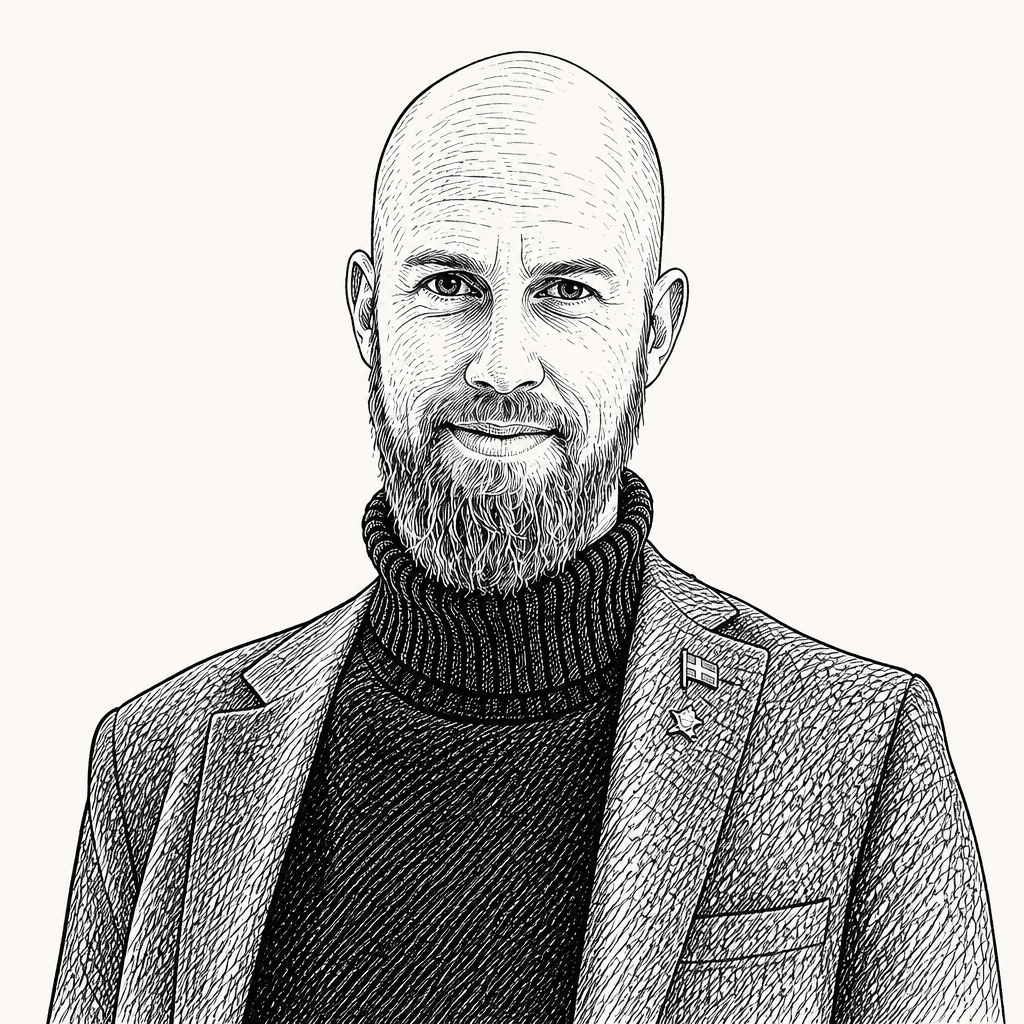
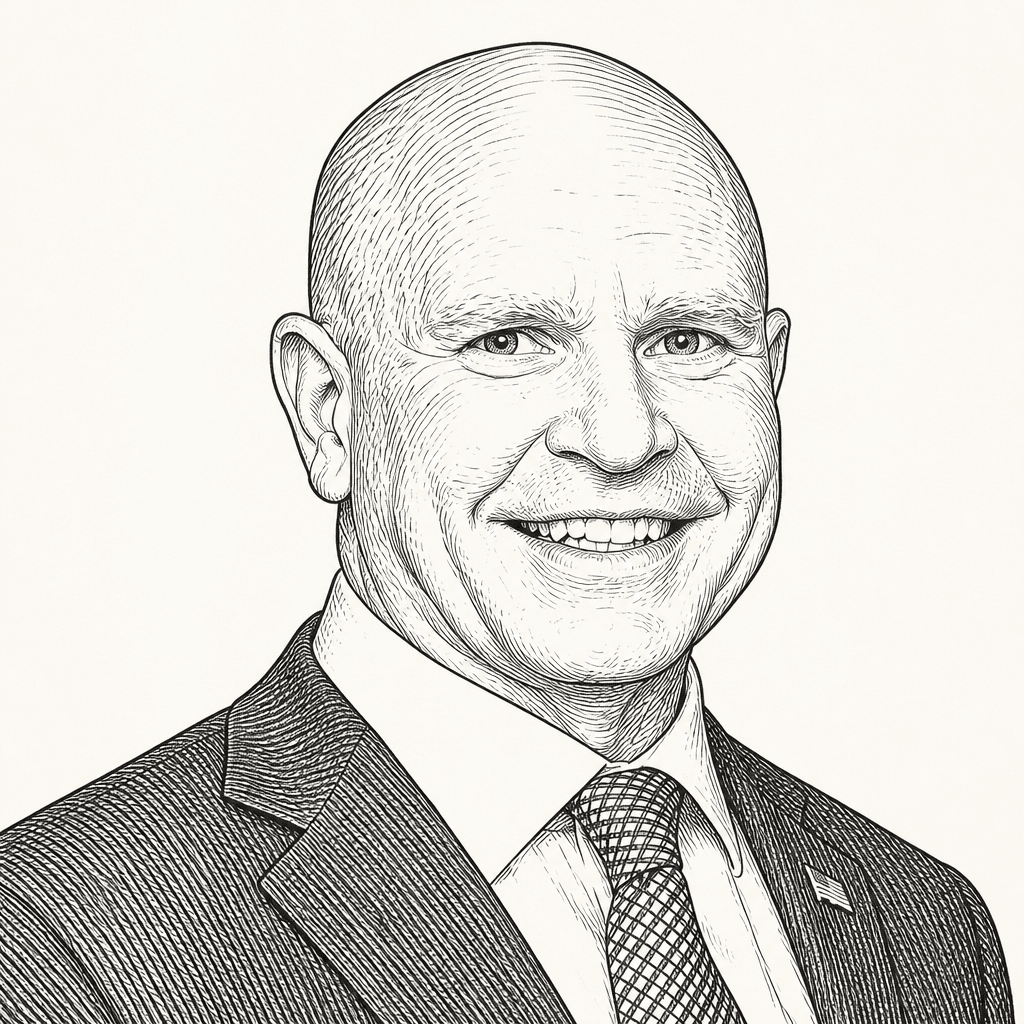
Sweden is rebuilding total defence around the premise that military deterrence is credible only if the society behind it can keep operating under attack. Civil Defence Minister Carl-Oskar Bohlin argues that resilient energy, communications, healthcare, supply chains, businesses and households are necessary to sustain a war effort and counter coercion below the threshold of open conflict. He presents the programme as Sweden’s contribution to NATO: not a claim on allied protection, but a capacity to provide security in the High North.
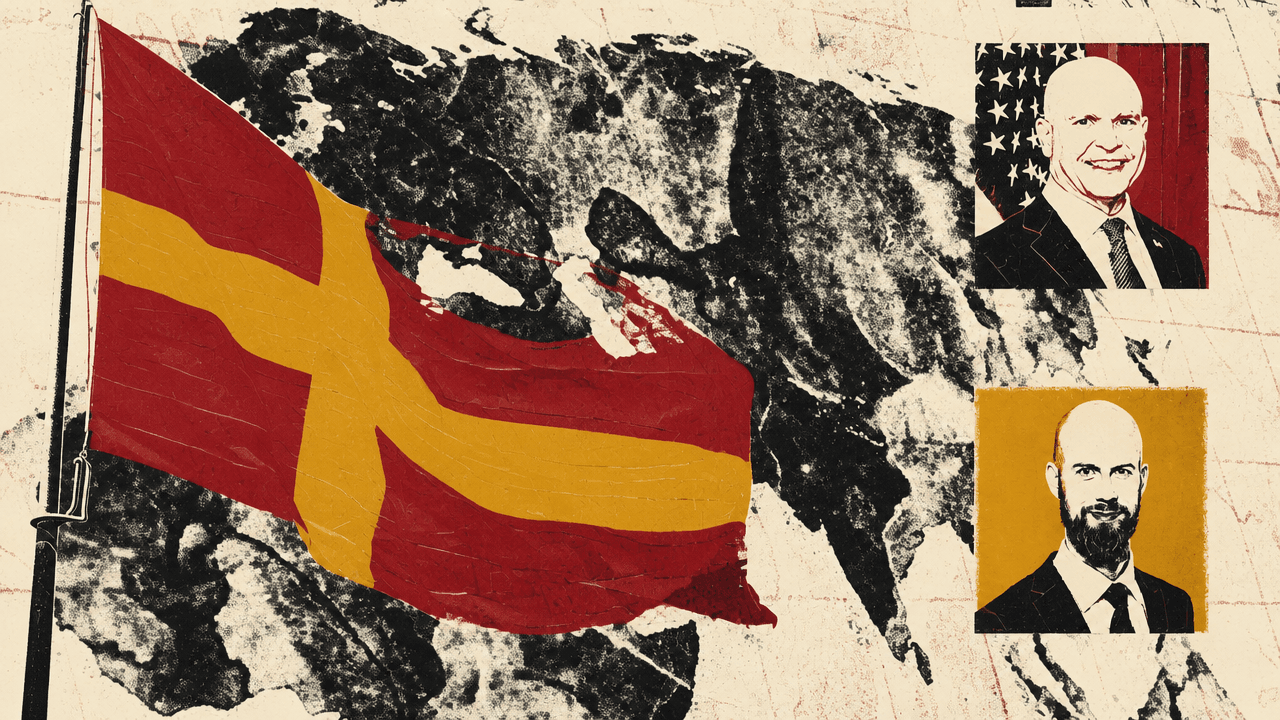
Civil defence is meant to make military deterrence believable
Carl-Oskar Bohlin defines Sweden’s total defence as “everything that is required to prepare Sweden for war.” It has two components: military defence, and civil defence—everything outside the military that a society needs to sustain itself and the war effort under attack.
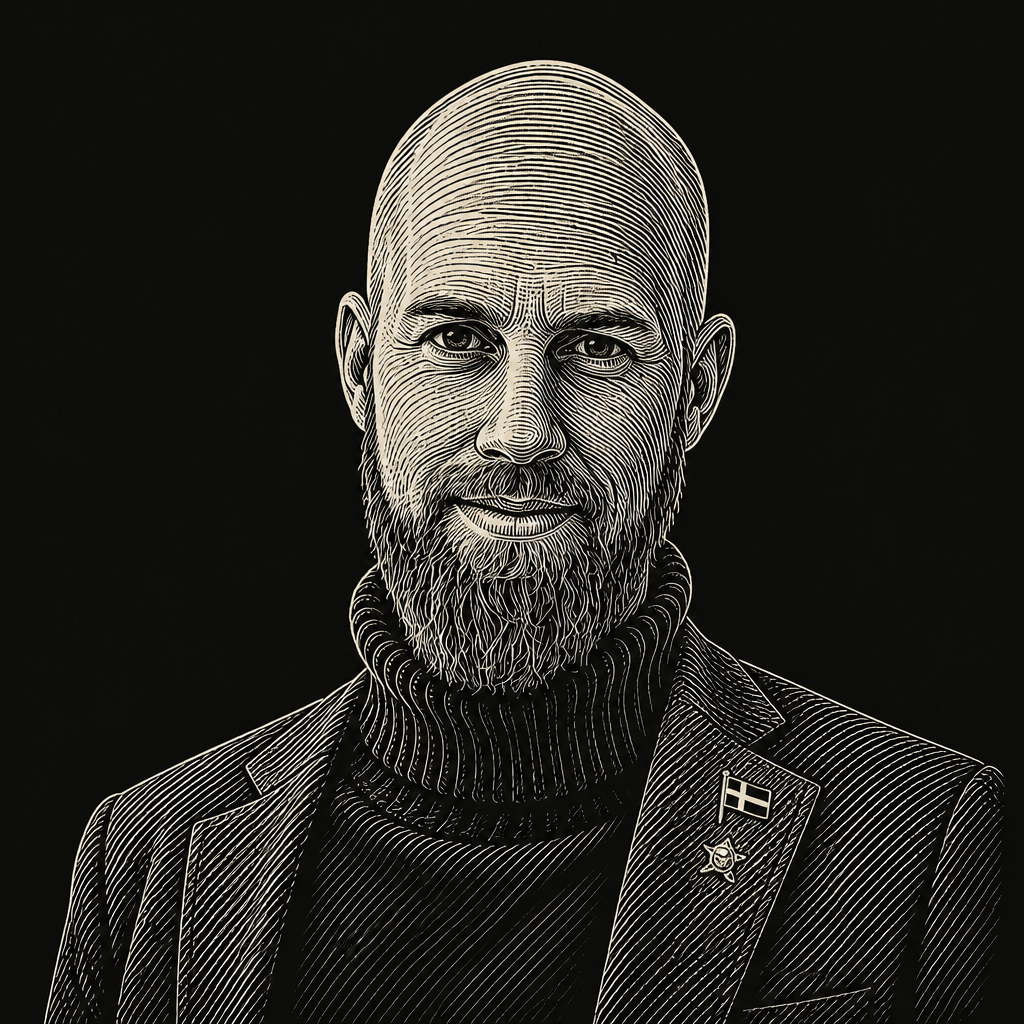
That definition deliberately makes the portfolio expansive. It includes the capacity of energy systems, transport, electronic communications, healthcare, emergency services, supply chains, government agencies, businesses, and households to function under the conditions of war. Civil defence is not a residual category for disaster response. Its defining task is to ensure that Sweden can maintain a war effort for as long as needed.
For Bohlin, this is a deterrence function, not merely consequence management. An adversary has to believe not only that Sweden possesses military forces, but that those forces can be supported and that the country will keep functioning under pressure. A society unable to power its grids, communicate, treat casualties, supply essential goods, or protect its population cannot make its military strength fully credible.
Should Sweden be attacked, we would never give up. Well, then we must present a society that is being prepared to never give up.
The public-facing side of that commitment is unusually explicit. Sweden has distributed a brochure, In case of crisis or war, to its residents. It warns that armed conflict, terrorism, cyberattacks, and disinformation campaigns are already part of the regional environment, and tells people that everyone has a role in defending Sweden’s independence and democracy. Its preparedness guidance assumes scenarios in which electricity, internet access, water, payment systems, and ordinary communications fail. It asks households to be able to manage for seven days.
The brochure also communicates the legal obligations behind the broader social contract. From the year a person turns 16 through the year they turn 70, Swedish citizens and foreign nationals living in Sweden can be required to serve in total defence. In a heightened state of alert, people may be assigned military or civil duties; others can be required to continue their ordinary work or perform other tasks necessary to keep the country operating.
The rebuilding effort turns 12 civilian sectors into a war-capable system
Sweden’s Cold War total-defence system was built around national resistance: the population would resist, society could move rapidly onto a war footing, and national resources could be directed into the defence effort. After the Cold War, that system was dismantled. Civil preparedness became focused on peacetime contingencies such as floods and wildfires rather than sustaining a country through war.
After Russia’s 2014 annexation of Crimea, Sweden’s parliament decided to restore total defence. But Carl-Oskar Bohlin says the early effort moved slowly because it came without additional funding. The government that entered office in 2022 created a dedicated Minister for Civil Defence—the first such portfolio in 80 years—and moved the role into the Ministry of Defence. Sweden retained institutional memory of total defence, Bohlin says, but had lost the practical system that made it work.
Civil defence is organized across 12 thematic sectors, six of which Sweden has designated as priorities because they underpin the functioning of the rest. The Ministry of Defence coordinates the departments and agencies responsible for these systems. Bohlin describes it as the “spider in the middle of the web”: energy, transport, communications, healthcare, and other sectors retain their ordinary missions, but must also be prepared to operate under attack.
Energy, communications, and rescue services illustrate the approach. Sweden is investing in a more redundant energy grid, including the ability to run portions of it as islands. It is building reserve cell towers to preserve electronic communications. And it is expanding rescue services that Bohlin says had been sized for peacetime emergencies over the preceding two decades, rather than for the effects of armed conflict.
The practical challenge is that civilian agencies have day-to-day responsibilities that are not national defence. Clear political direction, Bohlin argues, is needed when those responsibilities conflict with preparations for total defence. The government has also increased civil-defence expenditure sevenfold, from roughly €270 million when it took office to almost €2 billion, according to Bohlin. The money is intended to make investments in redundancy and robustness feasible rather than simply adding another obligation to agencies’ existing work.
Civil conscription is intended to provide surge capacity in sectors likely to face the greatest strain. Sweden has reactivated conscription for civil roles including rescue services and the energy grid.
These personnel are meant to form an additional echelon if Sweden faces acts of war, rather than requiring services to improvise reinforcements after the fact.
New civilian institutions are built for coercion already under way
Sweden has put several measures in place that treat civilian systems as contested before a conventional war begins. It is building a new National Cyber Security Center; it has operated an Agency for Psychological Defence since 2022; and it has revived civil conscription to reinforce services that could be overloaded by conflict.
Carl-Oskar Bohlin describes Ukraine as a central source of lessons. Ukrainian rescue services, he says, have faced two or three times their normal peacetime workload. If a sector carrying that burden is overwhelmed, the rest of society cannot continue functioning. That is the rationale for creating trained reserve capacity in rescue services, energy, and other essential functions before a crisis starts.
The cyber center responds to what Bohlin says is a shift in Russian activity toward more destructive attacks on critical infrastructure. Earlier activity had more often involved distributed denial-of-service attacks and other comparatively less damaging operations. The newer concern is targeting operational-technology systems. Those efforts have not succeeded so far, he says, but Sweden treats them as a present threat rather than a hypothetical future one.
The broader threat model includes activity below the threshold of open war: the Coast Guard’s work against the “shadow fleet,” cyber activity, sabotage, and information operations. These are not primarily military problems in Bohlin’s account. They target infrastructure, institutional capacity, and social cohesion, and demand capable civilian authorities able to respond before a larger confrontation develops.
Resilience requires abandoning the assumption that efficiency is enough
In Bohlin’s formulation, the just-in-time society was the pandemic’s “first victim.” Lean production and distribution systems drove efficiency, but their disruption exposed the risk of having too little slack when essential goods are urgently needed.
Carl-Oskar Bohlin says Sweden is rebuilding stockpiles and examining vulnerabilities in supplies of critical raw materials and essential goods for healthcare, energy, and other sectors. The work will take time, but he regards private-sector participation as indispensable. Nothing in a prolonged total-defence effort can be carried out without it.
That role goes beyond supplying weapons or ammunition. Businesses provide the goods and services on which civilian life, public services, and military support depend. The question is which capabilities must exist in Sweden or among allies even if ordinary trade is interrupted or used coercively.
Bohlin says Sweden remains an advocate of free trade, but argues that a country cannot be naive when adversaries use economic links against it. He cites the government’s purchase of a domestic antibiotics factory that risked moving abroad. The government considered that production capability necessary to retain in Sweden. The objective is not self-sufficiency in everything, but the capacity to preserve what is essential across the full threat spectrum.
Psychological defence is designed to counter foreign influence without policing domestic speech
The operational safeguard in Sweden’s approach to psychological defence is a clear division between foreign influence operations and domestic argument. The Agency for Psychological Defence is not meant to moderate Swedish political discussion, Carl-Oskar Bohlin says. Swedish citizens debating one another remain subject to ordinary freedom-of-speech law; the agency’s remit is foreign states, state-backed actors, and state-like actors conducting malign information operations.
That boundary is what allows psychological defence to be part of national resilience without becoming a mechanism for domestic speech control. Sweden had a form of psychological-defence institution during the Cold War, though its mission was principally wartime and would have been activated in the event of a Soviet invasion. The modern agency has a peacetime role because, Bohlin says, the information environment is now persistently contested.
The preparedness brochure describes the methods citizens are asked to recognize: false narratives, including material that is partly true but stripped of context; fabricated images, videos, or voice recordings; and content engineered to elicit strong emotions and intensify worry or suspicion. Its advice is practical: be mindful of material that provokes a strong reaction, share information only when its source is reliable, verify it through several sources, and seek official government messaging.
The guidance treats individual judgment as part of collective resilience rather than assigning the task exclusively to the state. Sweden has also added total defence to the national curriculum. Bohlin says this will teach young people how the system works and what obligations may follow. For many people, participation in a heightened state of alert would mean continuing ordinary work, potentially for longer hours, so society can function. Others could be conscripted into military or civil roles.
Bohlin says straightforward Russian narratives against Ukraine have found limited traction in Sweden because support for Ukraine is strong. Instead, he says, Russian-linked actors have acted opportunistically: taking real events and reframing them in ways that can deepen division. During Sweden’s NATO-accession process, he points to Quran burnings that were portrayed online as acts directed by the Swedish government against Muslims. Bohlin says that claim was false, and that Russian-connected actors supported a narrative initially driven by Islamist actors.
NATO membership is presented as a contribution, not a guarantee
Sweden’s case to its allies is that it did not join NATO simply to receive protection. It joined, Carl-Oskar Bohlin says, to provide security through military capability, its defence-industrial base, and a total-defence model intended to support collective defence.
Sweden did not join NATO to enjoy a free lunch; we joined NATO to provide security.
Bohlin says Sweden would be glad to export its total-defence concept to other allies. He has presented the proposition to NATO ambassadors under the heading “Making Deterrence Credible.” His alliance-level argument is that military expenditure alone does not determine whether deterrence will hold. Military forces depend on the civilian economy, infrastructure, workforce, and institutions behind them.
He puts the point in economic terms: Sweden spends 3% of GDP on military defence, he says, but total defence rests on the other 97% as well. If war reaches Sweden, the wider economy and society must be capable of supporting the defence effort. That requires investments before a crisis, so essential systems do not collapse under pressure, and a public understanding of what resistance would demand.
Bohlin’s criticism is that Europe failed to respond properly to Russia’s annexation of Crimea, and that weakness helped produce the current security environment. The response he advocates is not only higher military expenditure, but a societal capacity to sustain and employ that military capability under attack.
This is why he treats civil defence as a civic project as well as an institutional one. National security should be a baseline, he argues, rather than a temporary surge of attention that later recedes. Sustained defence and resilience spending require public understanding: “Your foreign policy or your defense policy is only as good as 50 percent of the people understand it to be.”