Communications Has Become Part of How Political Power Is Exercised
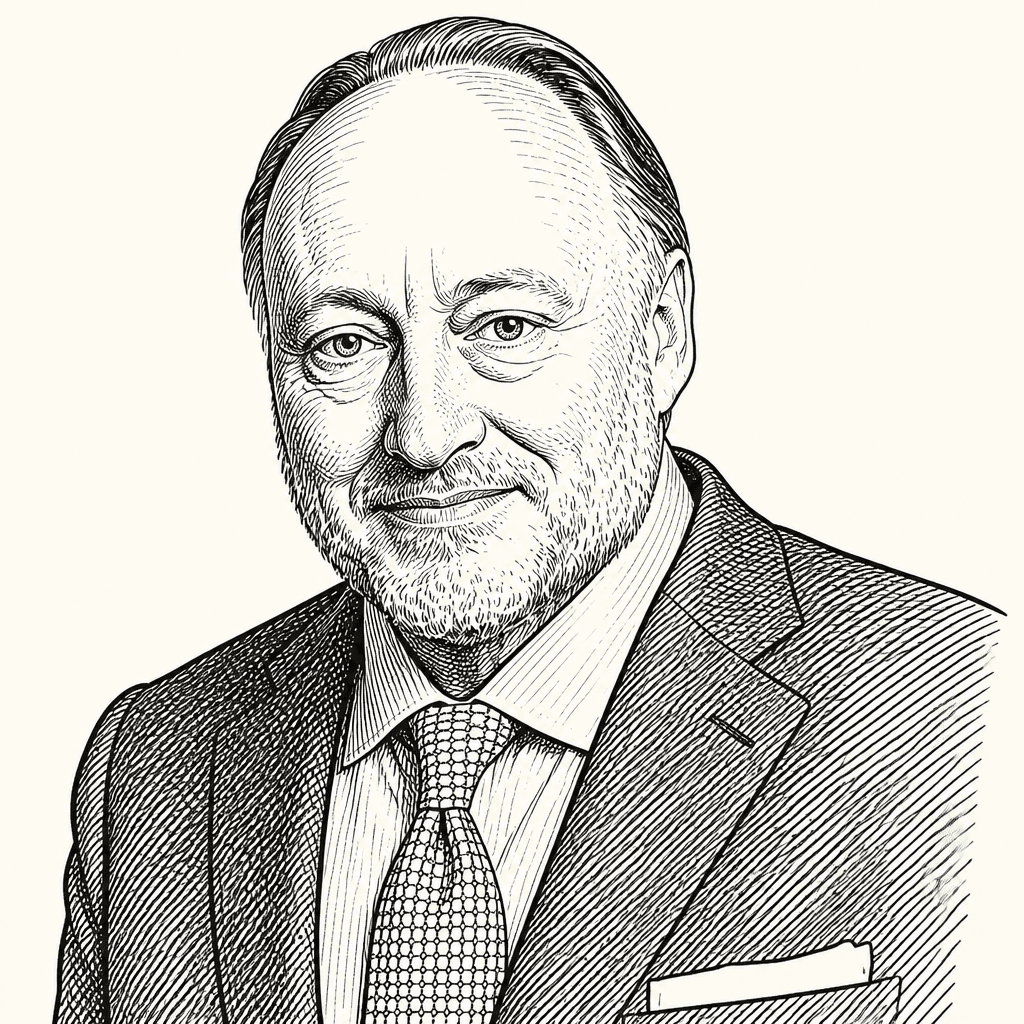
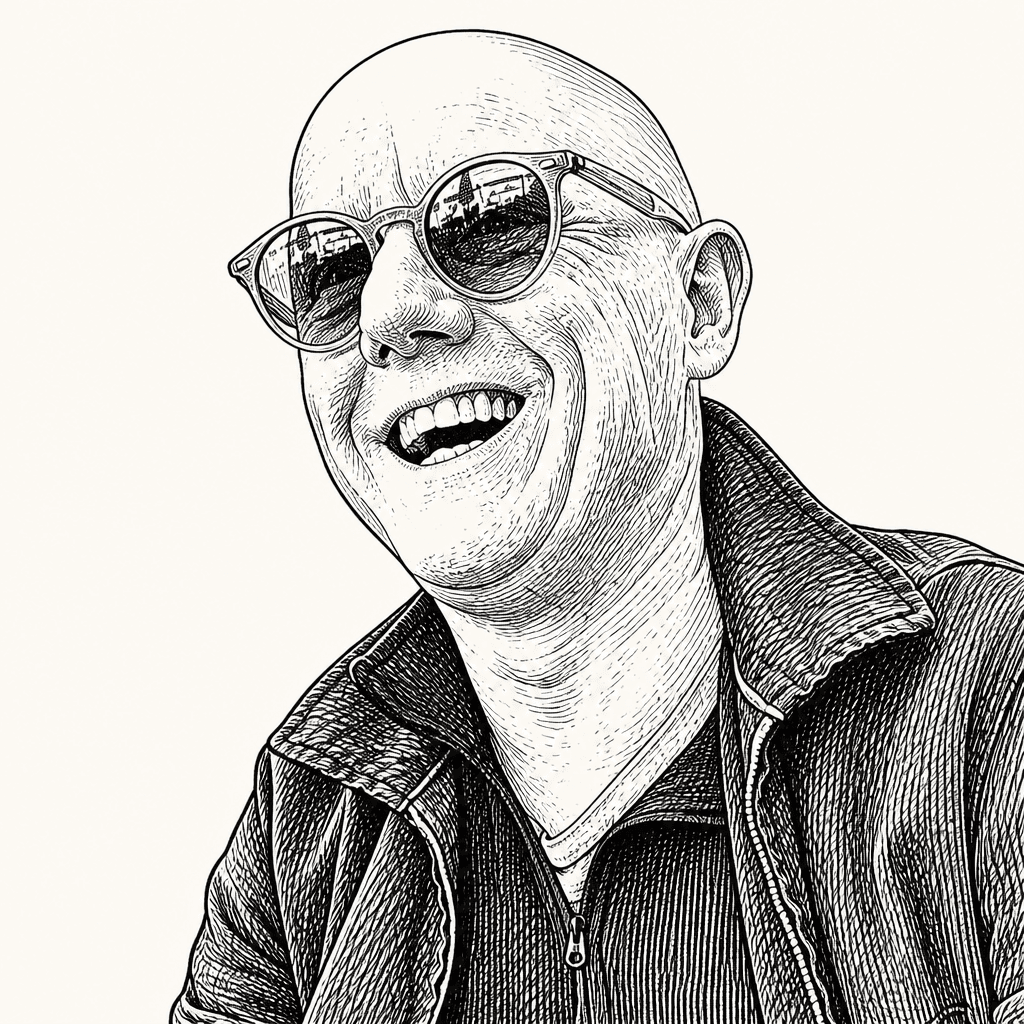
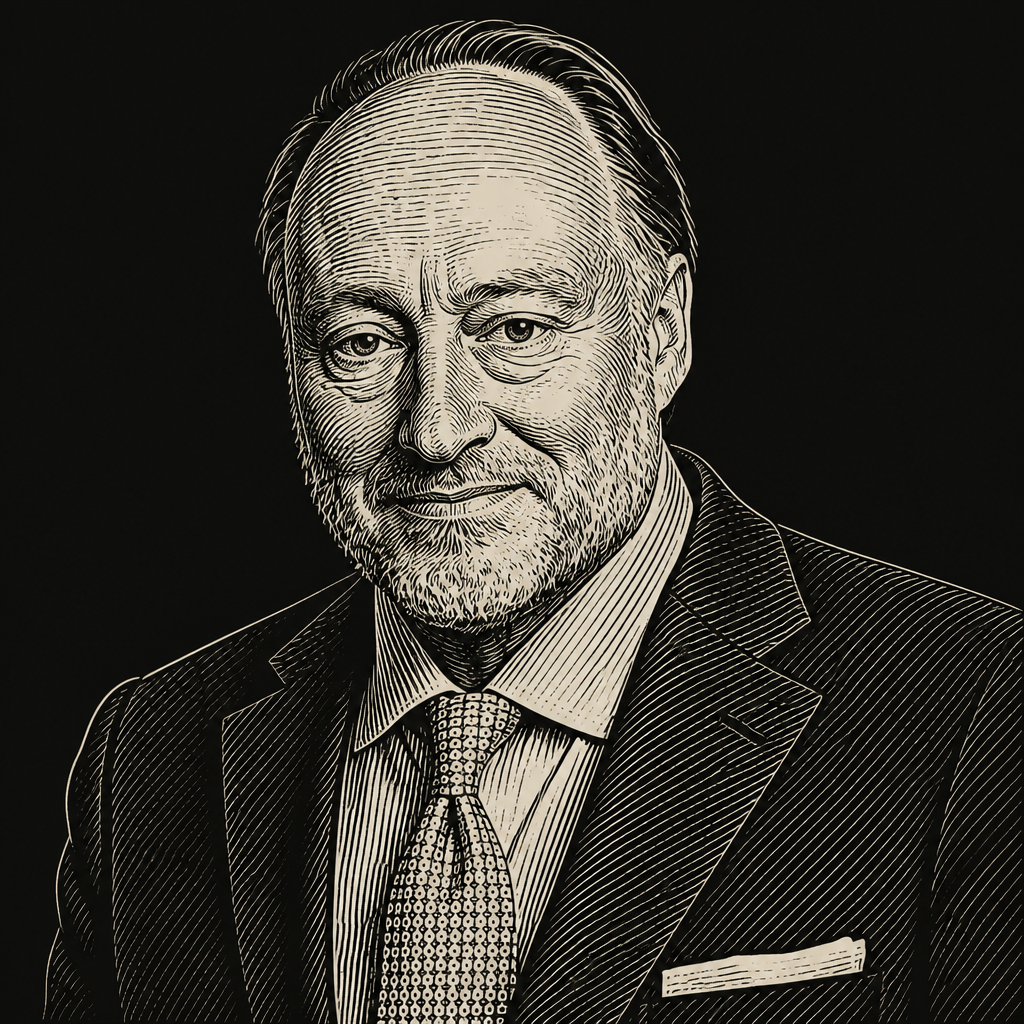
David Yelland, the former Sun editor turned communications adviser, argues that public relations has become part of the machinery of power rather than a layer applied after decisions are made. In conversation with Andrew Roberts, he says the collapse of mass tabloid influence, the rise of financial media and digital platforms, and the speed of modern politics have made communication central to how governments, companies, monarchies, and foreign states exercise authority. His recurring test is whether the principal is credible enough to lead that process, because even the strongest advisers cannot rescue a leader the public does not believe.
The machinery between power and the public is now part of the story
David Yelland describes modern public relations not as a peripheral trade but as “the marzipan layer” between powerful institutions, the public, and the media. His point is not simply that politicians and companies hire advisers to polish language. It is that the work of those advisers increasingly determines what the public sees when it turns on the news: the chosen words, the timing, the manner of explanation, the way a crisis is framed, and the way a leader’s intentions are made legible or obscured.


What I call the marzipan layer, that layer between the powerful and the rest of us and the media, which is often just called PR or whatever, is actually the story.
Andrew Roberts presses him on whether this is more than manipulation or presentation. Yelland’s answer is that the communications layer has become an industry larger, at least in London, than the newspaper business itself: it employs more people, makes more money, and is more profitable. That comparison matters because Yelland spent roughly 20 years inside media and another 20 outside it, including as editor of the Sun and later in corporate communications. From that vantage point, the people “in the wings” — figures such as Pierre Salinger around John F. Kennedy, in Yelland’s example — are no longer merely adjacent to politics. They help constitute how politics is experienced.
The industry’s growth is also tied to the collapse of an older media order. When Yelland edited the Sun from 1998 to 2003, its circulation was just under four million in a country with about 40 million adults. Roberts notes that this meant one in ten Britons was buying the paper, with more reading it. Asked what the figure is now, Yelland says the paper has stopped publishing the number, but “we think it’s about half a million, maybe less.”
That decline is not evenly distributed across all media. Yelland says the mass-market tabloids are now “completely powerless” and have “no influence,” while the upmarket press — the Times, Telegraph, Financial Times, and similar institutions — still matters to business and political power. A company chairman forced out, a major corporate restructuring, a financial-market question: in those settings, what the heavyweight papers, Bloomberg, Reuters, Dow Jones, the Financial Times, or the New York Times say can still shape outcomes. But the mass-circulation tabloid capacity to reach a decisive share of the public directly has gone.
Yelland’s historical comparison is blunt. In Margaret Thatcher’s time, he says, a prime minister could address a problem by calling David English at the Daily Mail and Kelvin MacKenzie at the Sun. Between those two editors, he estimates, she could reach about 60 percent of the population. That model depended on a concentrated national print market. It has been replaced by a cross-border information system controlled not by newspaper proprietors but by the owners and operators of digital platforms.
The promise of the early internet, in Yelland’s account, was that power would be democratized and given to users. “It hasn’t quite worked out that way.” Instead, he argues, around five or six men — he names Elon Musk, Mark Zuckerberg, Google, and Amazon among the relevant centers of power — control much of the world’s information flows, algorithms, data, and digital infrastructure. Unlike newspapers, these platforms cannot easily be avoided. One could choose not to buy a Murdoch paper; one cannot easily transact in modern commerce or media without passing through the systems of Amazon, Google, Meta, X, and related infrastructure. Yelland gives a British example: even the BBC’s iPlayer depends on Amazon’s technology; if Amazon pulled it, he says, iPlayer “would collapse in a minute.”
That power is not just American or British. It is international. It crosses borders, markets, and regulatory systems. Yelland does not offer a solution, but he calls it “a real problem” and potentially “a massive problem depending on how they behave.”
The principal has to be able to communicate
Yelland returns repeatedly to one governing rule: advisers matter, but the leader cannot outsource communication entirely. Whether the organization is a country, a company, or the monarchy, “the principal” has to be good at it.
That is how he distinguishes Andy Burnham, Tony Blair, and Keir Starmer. Burnham, in Yelland’s view, is “very good at PR himself,” as Blair was. Starmer is not. Yelland is careful to separate communication skill from governing quality: Burnham being a strong communicator does not mean he would be a good prime minister. On Roberts’s hypothetical assumption that Burnham might become prime minister, Yelland expects the communications operation to be “much better” than Starmer’s.
The difficulty is not merely whether Burnham speaks well. Yelland says “a lot of extremely well-paid people in London” are trying to point out that Burnham is much more left-wing than people assume. He also reports a more personal warning from people who have worked with Burnham in government: “all of those people I know that work with him in government brief against him.” Roberts draws out the implication — the closer people get to him, the more they brief against him — and Yelland says that does seem to be the case. He compares this pattern to Sadiq Khan, while adding that Khan’s problems include some caused by racism. For Yelland, the issue is partly team behavior: saying one thing privately and another publicly, and whether a leader is experienced as a team player by those close to him.
Roberts asks whether the communications burden itself has become impossible, given 24-hour news and the pressure for Number 10 to comment on everything. Yelland rejects the fashion for declaring powerful jobs impossible. He says the job of prime minister is not impossible, but it demands a different posture in an environment where algorithms and platforms such as X can be manipulated and where the tempo of information is relentless.
The only operation he thinks has fully adapted to that world is the current White House. Whatever one thinks of Donald Trump, Yelland says, the Steve Bannon approach of “flooding the zone” with information and changing the narrative almost moment by moment confuses the media enough to let the political operation control the narrative. By contrast, Starmer’s problem is not only competence but belief: Yelland says “nobody believes him,” and adds that Starmer “almost doesn’t believe it himself.”
You need to lead communication. You need to just go for it and set out what the agenda is and not be put off by breaking news.
Yelland points to Giorgia Meloni and, in France, to examples he thinks have handled communication better. His prescription is not to chase every breaking-news cycle. It is to lead through communication: set the agenda, keep going, and avoid being so reactive that governing becomes impossible.
Royal communications work when the public manner matches the private person
David Yelland’s view of the monarchy is striking because he resists treating royal communication as a superficial exercise. He says King Charles is “very, very good at PR,” but then immediately reframes that as public bearing and communication rather than spin. In his view, Charles’s speeches in Washington — to Congress and at the state dinner — worked because they matched the man: funny, self-deprecating, smart, and not pretending.
The palace operation also matters. Yelland identifies Tobyn Andreae, the King’s communications director, and describes the King’s wider team as “very tight” and “very good.” Their task is not easy. The monarchy has to manage pressure from Andrew Mountbatten-Windsor, including the possibility of a criminal case if he were charged, while also sustaining the institution in a world where social media and speed threaten public institutions generally. Yelland says he sees signs that Prince William is also strong at this work, and he agrees with Andrew Roberts that Princess Kate has shown a sense of dignity.
Yelland emphasizes that he is not a flag-waving royalist, though he favors the institution because he does not see what Britain would replace it with. His judgment of Charles comes partly from having had “a little bit to do” with him over decades. “What I see on the telly is what I see in real life,” he says. For Yelland, that congruence is essential: effective public communication is strongest when it reflects actual character.
Harry and Meghan are a different problem in his analysis, and he approaches them through his own family history. His first wife died of cancer 20 years ago, and he raised his son, now 28. Because he knows something of death in a family with young sons, he says he has always wanted to be on William and Harry’s side. But he believes Harry reacted to family trauma by building “a wall around himself” rather than bridges to the world around him.
Yelland says many people have tried to help Harry and that he has not allowed them to do so. He regards some of what Harry and Meghan have done and said as “deeply problematic,” and says the palace does not feel it can fully trust them because private things have ended up public. He describes the situation behind the scenes as “far worse” than people realize.
His long-term concern is institutional rather than tabloid. If William becomes king in 20 or 25 years and Harry remains estranged in California, with grown-up children speaking to American media, Yelland thinks the split could become unsustainable for the monarchy. In his view, rebuilding bridges is necessary. At the same time, he says the British press has been “unbelievably cruel” to Meghan, and he does not blame Harry for wanting to defend her. His conclusion is that “it could have been so different with better advice.”
Corporate communications became a survival function
David Yelland says communications has become a bubble around global companies. Some of it is internal — communications directors and their teams — and some is external, in advisory firms. His example is Diageo, which he describes as “the British biggest drinks company in the world based in London but completely global.” A company like that, he says, might have 150 internal PR people and another 150 or more externally. If one looked at the CEO’s diary, communications advisers would be among the five or six most important people in daily life.
The reason is not reputation management in the abstract. It is that a company of that scale constantly has consequential decisions or rumors to explain: perhaps a split, perhaps the sale of a major part of the business, perhaps market-sensitive developments. Yelland says that if a CEO has four or five major things a month to communicate, getting them wrong can threaten survival; getting them right can help the company prosper.
This is a major shift from an older relationship model. Twenty-five years ago, he says, BP would have had a communications director in the office next to the CEO who maintained 30 or 40 relationships with business editors in London and around the world. The job largely depended on those relationships: “basically you had lunch with them.” Today, the pace of markets and financial media means companies may need to keep the market informed hour by hour.
That is why Yelland rejects a simple story of media decline. The media has declined in many areas, but financial media has grown better and bigger. He names Dow Jones, the Financial Times, Reuters, and Bloomberg as examples. In Yelland’s phrasing, Mike Bloomberg “turned himself into the richest man in New York” by building a financial information company. As financial media expanded, the communications industry serving it expanded as well.
The same logic shapes his view of technology companies, but with a harsher judgment. Asked by Andrew Roberts about social media restrictions for under-16s, Yelland says that whether or not a ban is inevitable, reform is. As the father of a 13-year-old daughter, he says he does not have a problem in his own home but knows many people who do. He believes reform is coming in part because the West Coast technology companies’ PR has been “dreadful.”
His criticism is not that the technology leaders are stupid. It is almost the opposite. He says when he has pitched advisers to such companies, the attitude coming back across the table is: “What do you know that I don’t?” Underneath that, he hears: I am worth billions, younger than you, and already successful. What they lack, in his view, is “a little touch on the tiller,” some reaching out to the world, and “noblesse oblige.” They are the new aristocracy, he says, but they do not behave like it. Rupert Murdoch, by contrast, was brought up to behave that way, and Yelland thinks that partly explains his success.
They don’t understand they are the new aristocracy and they don’t behave like it.
On artificial intelligence, Yelland says the effects are already profound and changing almost minute by minute as people begin using it in their lives. He has used it much more in the previous two or three months. But for him, PR is “almost one of the last things to worry about.” The larger issue, in his view, is that figures such as Sam Altman and Elon Musk are building systems in a world not fit to regulate anything across borders. AI is another case where the communications question points back to power, infrastructure, and the weakness of regulation.
Covid rewarded trust, public service, and national habits
David Yelland’s assessment of Covid communication is less a scorecard than an argument about trust. Shortly before the pandemic, he was asked to see Chris Whitty, Britain’s Chief Medical Officer. In Whitty’s office, he noticed a white coat on a hanger with “Chief Medical Officer” written on it and wondered when anyone would ever need to go out visibly bearing that title. The pandemic supplied the answer. Yelland describes Whitty as “the essence of a public servant,” and links that to his family background: Whitty’s father, he says, was a diplomat killed by terrorists in government service.
Yelland thinks Britain did “okay” on communications, while acknowledging mistakes. The biggest advantage, in his view, was the British people. Born in 1963, he says he grew up feeling as if he had lived through the war because adults around him were still speaking about their wartime experience. Andrew Roberts, also born in 1963, completes the familiar phrase: Britain “calm and carried on.” Yelland thinks that inherited public memory still matters. In a crisis, people revert to those cultural habits.
He is proud of Britain’s Covid performance in part because of the Oxford vaccine. He recalls doing a small amount of work at the Jenner Institute in Oxford and laughing at the building because it was “typically British” — a rather tired 1960s structure — with students lined up to volunteer for tests. The physical modesty of the place sits, in his account, beside a major national contribution.
He also says crises reveal character. Some wealthy people, including some clients, disappeared to the Gulf or to the American West Coast and then tried to return for vaccination. But as a country, he thinks Britain “just about held it together.” The BBC, despite its faults, had “a very good Covid,” and health editor Hugh Pym played an important role because people trusted him.
The American case, in Yelland’s view, was harder. He calls the United States a young country, built less on reliance on government than on standing on one’s own feet. Combined with disinformation, that made it difficult to hold the system together. In parts of the United States, he says, the system began to break down.
Post-Trump politics will not simply return to normal
David Yelland warns against assuming that Trump’s communications style is an interruption after which liberal normality resumes. He thinks the root causes run deeper than technology. The system is not working for many people. Average incomes, he says, have not really risen over the past 20 years in Europe, Britain, or the United States. If the American dream no longer feels attainable to most people, voters will listen to candidates who say extreme things or at least give them a chance.
For Yelland, it would be a mistake for liberals to assume things will go “back to normal,” either immediately or ever. But he also draws a distinction between the United States and Britain. Britain, he says, is a strange country, and he loves it more as he gets older. If the extreme right were to get into power in Britain, he suspects it would not actually be as extreme as people fear, for the simple reason that the country is British. Britain may be angry, but he argues it is more tolerant than it is given credit for.
His evidence is partly experiential. As Sun editor, he read thousands of letters from readers. He remembers Tony Blair telling him that Britons are “a little bit Daily Mail about 8:00 in the morning”: angry, rushed, worried about children and bills. But by about 11:00, Blair said, they are veering back toward the center. Yelland thinks that is true.
Andrew Roberts agrees that programs such as BBC Question Time now reward anger. He says he stopped watching and appearing on it because audiences seem built to go for each other, with politicians incentivized to be the angriest person in the room. Yelland says culture has changed, but his remedy is deliberately ordinary: if he starts thinking Conservatives or Reform figures are a danger to society, he tries to have a cup of tea with one. He usually discovers more common ground than expected.
He is not sentimental about the liberal elite. Labour, he says, has failed to deliver what it said it would deliver. He also jokes that the Guardian Christmas party is grim while the Spectator party is much more fun. Though naturally liberal, he says he reads the Spectator eagerly because it is brilliantly written and makes him laugh, while the New Statesman depresses him. The broader claim is that the right has benefited culturally as well as politically because it has often been more enjoyable to read.
There are limits to rescue communications
Andrew Roberts tests the boundaries of PR with the example of Peter Mandelson. Could brilliant communications advice save him? David Yelland’s first answer is that Mandelson was saved many times, principally by himself. He calls him one of the most talented communicators he has encountered. When Yelland edited the Sun, Mandelson was fired twice by Tony Blair and came back both times. “Without him,” Yelland says, “there would have been no Tony Blair. He created New Labour.”
Yelland recalls the night Matthew Parris publicly outed Mandelson on Newsnight. Everyone in Westminster knew Mandelson was gay, Yelland says, and he does not think it was really a secret, but the public statement created a news decision. Mandelson called him while Yelland was having dinner with columnist Richard Littlejohn, who hated Mandelson. At one point, Littlejohn grabbed the phone and told Yelland to leave Mandelson alone. Mandelson nearly persuaded Yelland not to put the story on the front page. Yelland did run it, deciding it was the biggest story of the night.
On Mandelson’s friendship with Jeffrey Epstein, Yelland’s judgment is that a comeback would be extremely difficult. He qualifies the point rather than writing Mandelson off entirely: he says he is not aware Mandelson has broken any laws, and says Mandelson was not responsible for abuse within Epstein’s circle. But the Epstein association, in Yelland’s view, overwhelms even Mandelson’s unusual powers of persuasion.
Yelland applies a similar test to political emotion. Politicians can cry, he says, if the emotion belongs to a historical moment and communicates empathy rather than self-pity. Roberts notes that Winston Churchill cried frequently in public during the Second World War and remained beloved. Yelland agrees that a great leader can do this. But if a politician under pressure cries in a way that seems about them, rather than about the public moment, the effect is different. “Self-pity is never a good look.” Nor does he think voters necessarily accept emotional displays over historical revisionism, such as apologies related to slavery, because people may not believe the emotion even if the action is right. “People are not stupid,” he says. “They can see through fake emotion.”
Russian manipulation has made communications a security question
Asked whether communications can affect war, David Yelland distinguishes between Ukraine, Russia, Israel, and Gaza, but his underlying claim is that information management can shape how societies understand conflict and politics.
On Russia, he says the manipulation of information flows around Britain has gone on for a long time and has been “extremely effective.” He places dirty tricks inside the broader umbrella of PR and communication management, then says even that phrase understates the matter. What he is really describing is the use of intelligence tools and intelligence communities to distort how societies see events through social media. He says this has had a profound effect on Western elections and other political outcomes.
He points to public warnings from the heads of Britain’s intelligence agencies — MI6, MI5, and GCHQ — and says they are increasingly saying the same thing in public: Britain is in a state of war, or “soft war,” with Russia. His concern is that the public is not choosing to read what those agencies are saying. In this account, Russia’s PR is not ordinary press handling; it is the manipulation of information flows as part of a wider conflict.
On Israel, Yelland speaks as someone who describes himself as extremely pro-Israeli. He wrote hundreds of editorials supporting Israel while at the New York Post and in London. Precisely for that reason, his criticism is sharp. Israelis, he says, have historically been wonderful communicators, but they have lost control with younger demographics around the world. He criticizes PR people close to the prime minister’s office who “scream and shout” at journalists and accuse them of having an agenda. Some journalists do have agendas, he says, but most do not; and even when they do, they often have a right to hold views.
Yelland says Israel’s coalition politics complicate the situation because extreme figures in the coalition say things the Western media then pick up. It is not all Benjamin Netanyahu’s fault, he says, “but a lot of it is.” He also raises a domestic British tension: he respects Britain’s Chief Rabbi, but believes his alignment with the state of Israel has made it impossible to criticize Netanyahu without being accused of antisemitism. “That can’t be right,” Yelland says.
At the same time, he does not minimize Jewish insecurity in Britain. He says many Jewish friends do not feel safe, and he recalls taking his daughter to a bat mitzvah in Wimbledon, seeing security at the entrance, and thinking: “this isn’t right.” His conclusion is deliberately limited: with better PR, Israel “could be in a better situation than they are.”
Zelensky is the opposite case. Yelland says Volodymyr Zelensky is “brilliant” at PR, though he does not claim expertise on whether Zelensky is brilliant at other aspects of leadership. His handling of the White House confrontation with the president and vice president was, in Yelland’s view, masterful. Zelensky operates, he says, less like a conventional prime minister than like a campaigner or charity chief — nearer to Greta Thunberg than to a head of government — moving around the world, lauded and cheered.
British support for Zelensky also reflects Britain’s collective memory of the Second World War. Britain instinctively sides with someone being invaded. Yelland says the United States does not have the same “muscle memory” in the national psyche.
The old press may be too weak to regulate; the platforms may be too strong
David Yelland once supported press reform, and Andrew Roberts calls that “poacher turned gamekeeper.” But Yelland now thinks that ship has sailed in Britain. The tabloid and mass-market popular press had a dark period of abuse of power, he says, but its power has declined so far that there is little point regulating it now. The bigger regulatory questions are elsewhere.
The question is whether the enormous platform companies can be treated like the robber barons of the early twentieth century and broken up or constrained through antitrust-style interventions. Yelland says yes in principle, because these companies control information technologies in the United States and “therefore the world.” But he thinks it will be very difficult.
He points to the image of Trump’s inauguration, with the technology leaders gathered in the rotunda, as historically significant. His inference is that Trump will not regulate those people. He also says the relevant American regulators, including the Federal Communications Commission, will not constrain them. AI, in his view, has been built so fast that it will be built during Trump’s second term and effective regulation will arrive too late.
That leaves nation states and the European Union to regulate what they can, particularly around mobile phones and children. Yelland believes this is politically potent. A party that made a serious case for keeping children safe or safer from phones and social media could win votes. Every parent he knows with children at school, he says, would respond to a credible program in that area.
Roberts notes that he has been voting for such measures in the House of Lords and that Conservatives have embraced regulation for under-16s, with Lord Nash leading the parliamentary push. Yelland expects that if the issue proves politically popular, other parties will also adopt it; they will not allow an electoral arbitrage opportunity to remain with one side.
Murdoch’s world shows how quickly communications power can ebb
David Yelland’s reflections on Rupert Murdoch are personal, historical, and unsentimental. Working for Murdoch was “the best of times and the worst of times,” he says. Murdoch changed his life by taking him from deputy editor of the New York Post, where Yelland was in his early thirties, and making him editor of the Sun in London — then, in Yelland’s words, the biggest daily tabloid in the world and one of the highest-profile jobs in British media.
That appointment took place during Tony Blair’s premiership, when the Sun was, uniquely in its history, a Labour paper and, in Yelland’s description, “very liberal.” He says he sometimes has to remind himself that this actually happened: that Rupert Murdoch was, until relatively recently, a liberal in political terms. Yelland had come back from ten years in New York, where the New York Post had endorsed Rudy Giuliani, Bill Clinton, and Mario Cuomo, and he says one could not live in New York for a decade and return to Britain without adopting positions he regards less as “liberal” than as basic tolerance. Andrew Roberts notes that Yelland ended the Sun’s practice of outing closeted gay men and took other progressive stances.
Inside the Sun, Yelland says, he was “an outsider in my own newspaper” by design. The organization wanted a Blairite, and there were no Blairites in the newsroom. The paper had a Thatcherite reputation, including the famous Belgrano headline during the Falklands War. Yelland acknowledges that British red-top tabloids deserved their reputation for ruthlessness at times, and that things sometimes got completely out of control. But he also says those times have long gone.
The decline of that world is why the Murdoch material belongs with the platform argument rather than as nostalgia. The power Yelland entered was proprietor power: editors, newspaper owners, circulation, political access, and the capacity to reach millions through a front page. The power he now describes is infrastructure power: algorithms, data, devices, financial information flows, and platform dependence. Murdoch’s career sits across the transition.
The Murdoch family’s current state, as described in a Gabriel Sherman book Yelland is reading, makes him sad. He knows that many people do not want to hear sympathy for Murdoch, but Murdoch was very good to him, and he finds it “incredibly sad” that the family has ended up in court in Reno, Nevada, with nobody speaking to anyone else. The book, he says, tells a story of power in the United States and Britain over the past 30 or 40 years, but by the final chapters it becomes clear that the power has ebbed away. Fox News remains important, but not as important as it was, and there are new entrants.
Roberts asks about the television series Succession. Yelland loved it, though he does not think it was initially all that close to reality. But he says reality has since begun “aping Succession.” In the book he is reading, members of the Murdoch family — he mentions Liz Murdoch speaking to James — quote Succession characters when thinking through their own actions. Fiction, in that sense, has fed back into the conduct of the powerful family it was widely assumed to resemble.
Yelland’s historical counterfactual, Gordon Brown’s decision not to call an early election after becoming prime minister in 2007, also turns on timing, confidence, and the management of political momentum. Brown was well ahead in the polls for the first year, Yelland says, and could have won. Roberts adds that George Osborne’s embrace of abolishing inheritance tax at the Conservative conference was the key moment that put doubt in Brown’s mind. Yelland agrees that it was a major, under-discussed moment.
Asked whether Burnham might similarly jump at a brief opening, Yelland says politicians rarely throw away power. A new prime minister with more than two years available would be unlikely to take a massive risk, and would not want to go down in history as the second-shortest-serving prime minister after Liz Truss. Perception can open a door, but power usually waits for more than a blip before staking itself on the public mood.