A $1 Million Prize Aims to Reward Academic Courage Without Rewarding Contrarianism
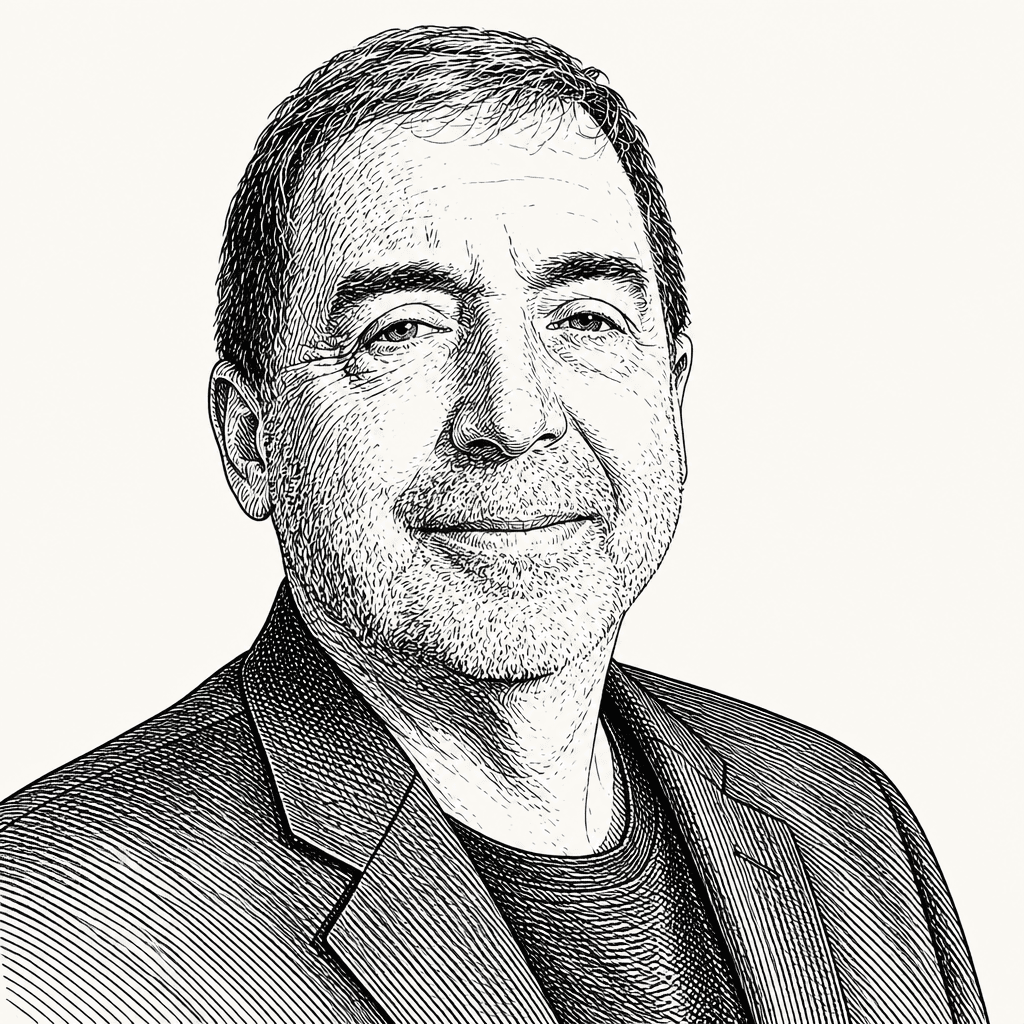
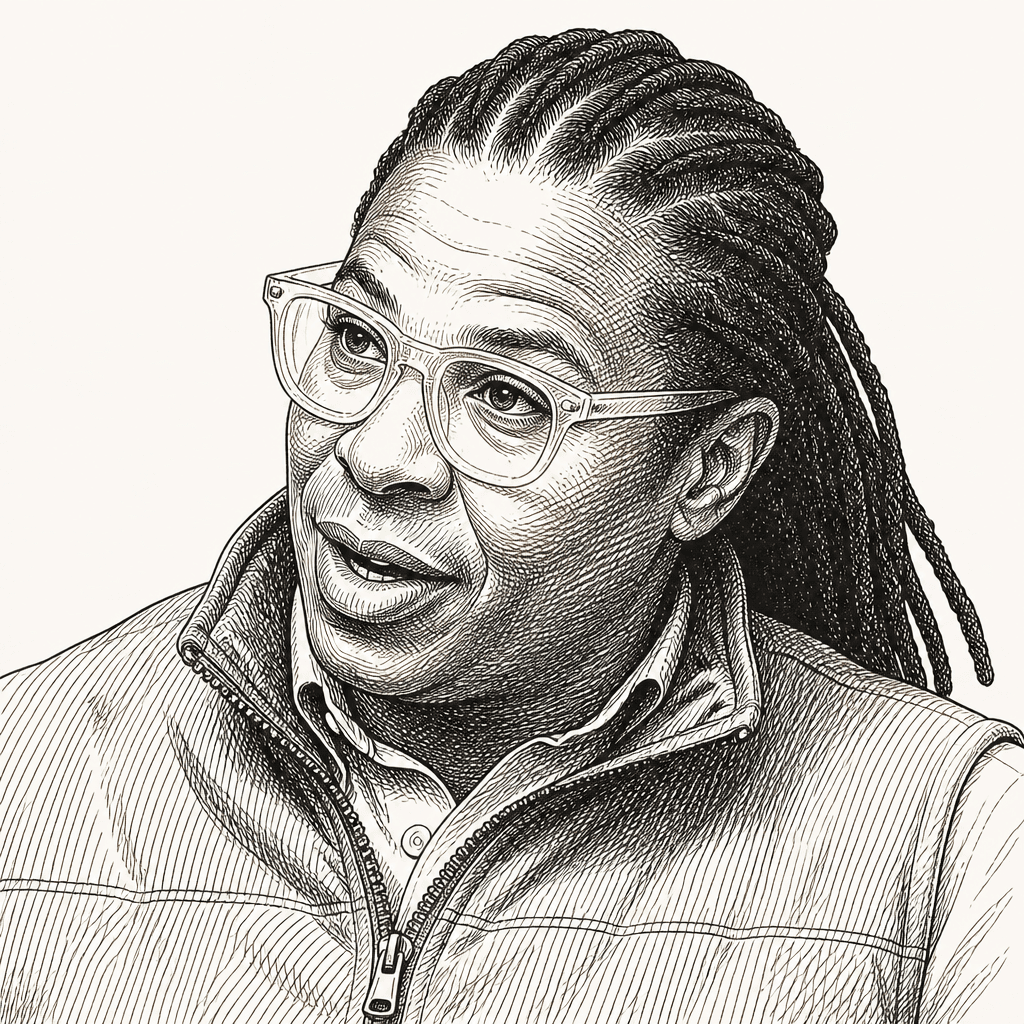
Harvard economist Roland Fryer says researchers’ fear of professional and personal costs can keep consequential questions from being studied and leave potentially useful policies undeveloped. In an EconTalk conversation with Russ Roberts, Fryer describes the $1 million Carob Trust Prize for Academic Courage, which he is developing with investor Bill Ackman, as an effort to reward scholars for honest, careful work on controversial questions—not for reaching a particular conclusion. He argues that academic courage means following the evidence, even when the findings are unwelcome.
The prize is meant to keep costly questions from going unasked
When scholars fear the consequences of pursuing an unpopular question, the loss is not only theirs: potentially useful research and policies may never be developed. That is the problem the Carob Trust Prize for Academic Courage is meant to address. Roland Fryer says the prize, which he is developing with investor Bill Ackman, is a $1 million prize that will provide up to five awards per year to social scientists. He did not describe five separate million-dollar awards.
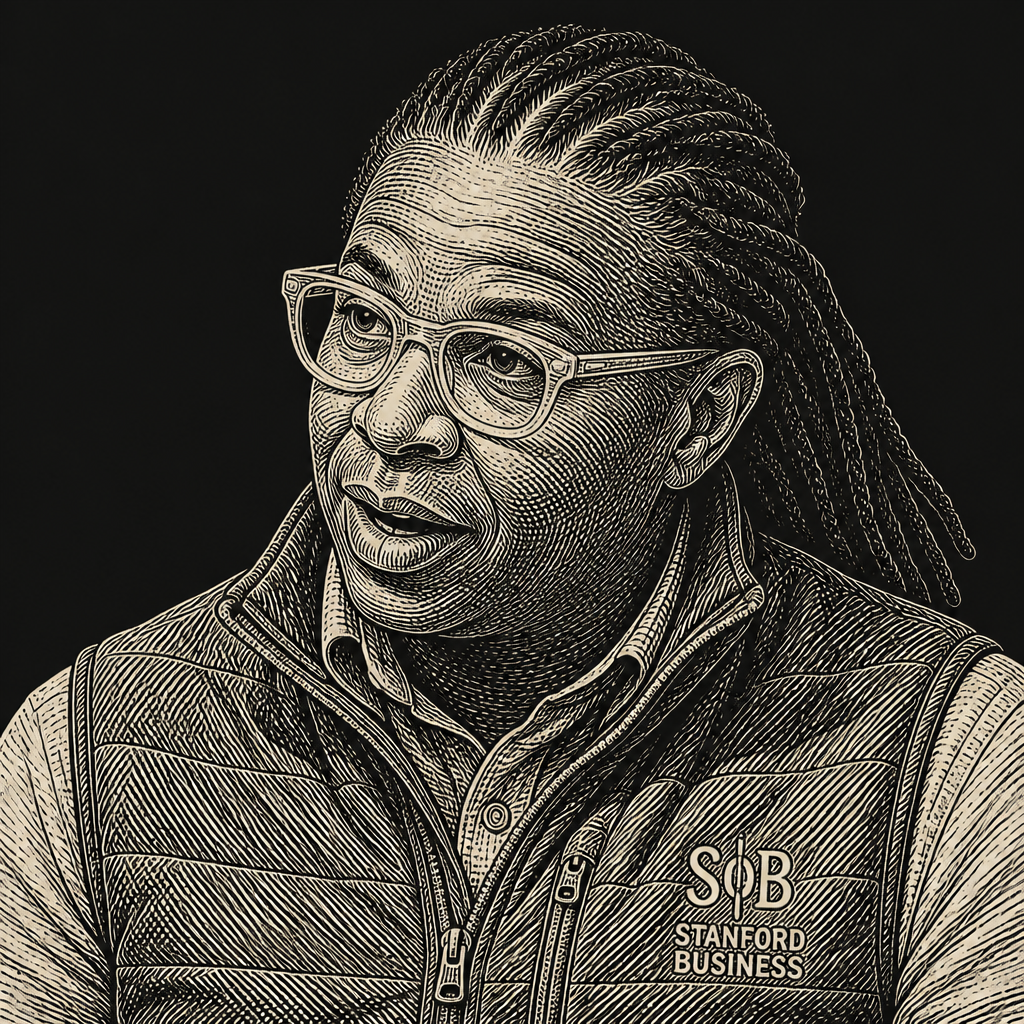
The prize is meant to recognize scholars who pursued an important, controversial question with care, faced costs for doing so, and whose work later proved to be an honest effort—perhaps, in Fryer’s shorthand, one that “turned out to be right.” He describes a prize for work considered over time, rather than a grant to fund a researcher starting a project. That suggests the organizers will be looking beyond controversy alone when they assess a candidate.
Fryer is careful to distinguish courage from contrarianism. A provocative claim is not evidence of courage or quality by itself. He says the prize is for an earnest attempt to get to the bottom of a consequential question, especially when others discount the work, discourage the inquiry, or impugn the researcher’s motives simply for asking. In his account, the prize is about whether the researcher made an honest effort—not about rewarding a particular answer.
Fryer gives the example of research into whether racial differences in police shootings reflect discrimination by officers. Suppose a researcher tests that question and finds no evidence of discrimination, and the result is unwelcome. Fryer says that, if later work using other datasets supports the conclusion, the initial inquiry might be the kind of work the prize should consider. The point is not that a particular answer deserves a reward. It is that the question should be open to investigation, and that researchers should be able to report what their data show without the result alone disqualifying them.
He says he has been asked why anyone would want to study race and genetics. His answer is, “What are you afraid of? I’m not afraid.” But the prize is not a general endorsement of every controversial research project. Fryer’s description points to an honest effort on a serious question, and to the costs a scholar may face for engaging with it. Controversy itself, on his account, is not enough.
The concern behind the prize is not only what happens to individual researchers. It is what happens to the questions that never get studied. Fryer says students have asked him about shading, obscuring, or discarding results because they did not fit a preferred narrative, or because students feared the consequences of saying something publicly. When he arrived at Harvard 23 years ago, he says, he did not hear people discussing the personal cost of reporting what a dataset produced. He now worries that academic work too often becomes a political exercise rather than an academic one.
That concern became vivid in a classroom. Fryer recalls asking roughly 100 students who arrived early to class where they had difficult conversations. When he was an undergraduate, he told them, some of his most valuable learning came from arguing late into the night about religion, social norms, and other subjects. He recalled debating a woman from India who explained the benefits of arranged marriage, a view that initially struck him as impossible to defend. In another exchange, a fellow student challenged his confidence that he could identify a racist person on sight, mocking the idea rather than treating it as something he was entitled to believe. Fryer says the conversation changed his perspective.
The students told him they did not have conversations like that. When he asked why, they described the risk of being labeled for asking questions about subjects such as racial differences in academic achievement. Fryer’s worry is not that every difficult conversation will produce a useful result. It is that if bright students avoid asking questions because they fear personal costs, fewer people will try to develop policies that might help disadvantaged communities. “Where do the policies come from?” he asked them. They had no answer.
Fryer sees controversial questions as a route to ideas that can eventually become ordinary. He points to his early work on paying students to learn. In 2007 or 2008, he says, he had the audacity to test financial incentives in schools. Now, he says, people regularly contact him about companies built around incentivizing students. The change does not prove that every initially unpopular idea will be vindicated. It does show how an idea that once seemed beyond the boundaries of acceptable discussion can become a routine subject for experimentation.
Fryer also worries that the range of research questions has narrowed. He says he used large language models to examine the political bent of empirical papers on social topics in economics journals over the past decade, comparing them with the previous decade. His reading of that exercise is that the likelihood of seeing an unorthodox paper has dropped dramatically. He offers the observation as a concern about the range of questions being pursued, not as a case for rewarding one political position over another.
The prize is intended to reward scholars, shift the calculation at the margin for researchers considering risky questions, and support a community in which people can ask those questions without having to agree on the answers. The selection committee includes people such as economist Eric Maskin and sociologist Stefanie DeLuca. Fryer says the members need not agree on particular topics. What matters, as he describes it, is a shared belief that pursuing knowledge is worth defending.
Fryer’s answer to hostility is to keep the work larger than the institution
Russ Roberts asks Roland Fryer how researchers can endure hostility without becoming bitter. Roberts compares him with economist Milton Friedman, who, Roberts says, faced years of mockery and marginalization over his work on the money supply while remaining outwardly cheerful. Fryer’s own research on education and policing, Roberts notes, drew hatred rather than respect for a long time.
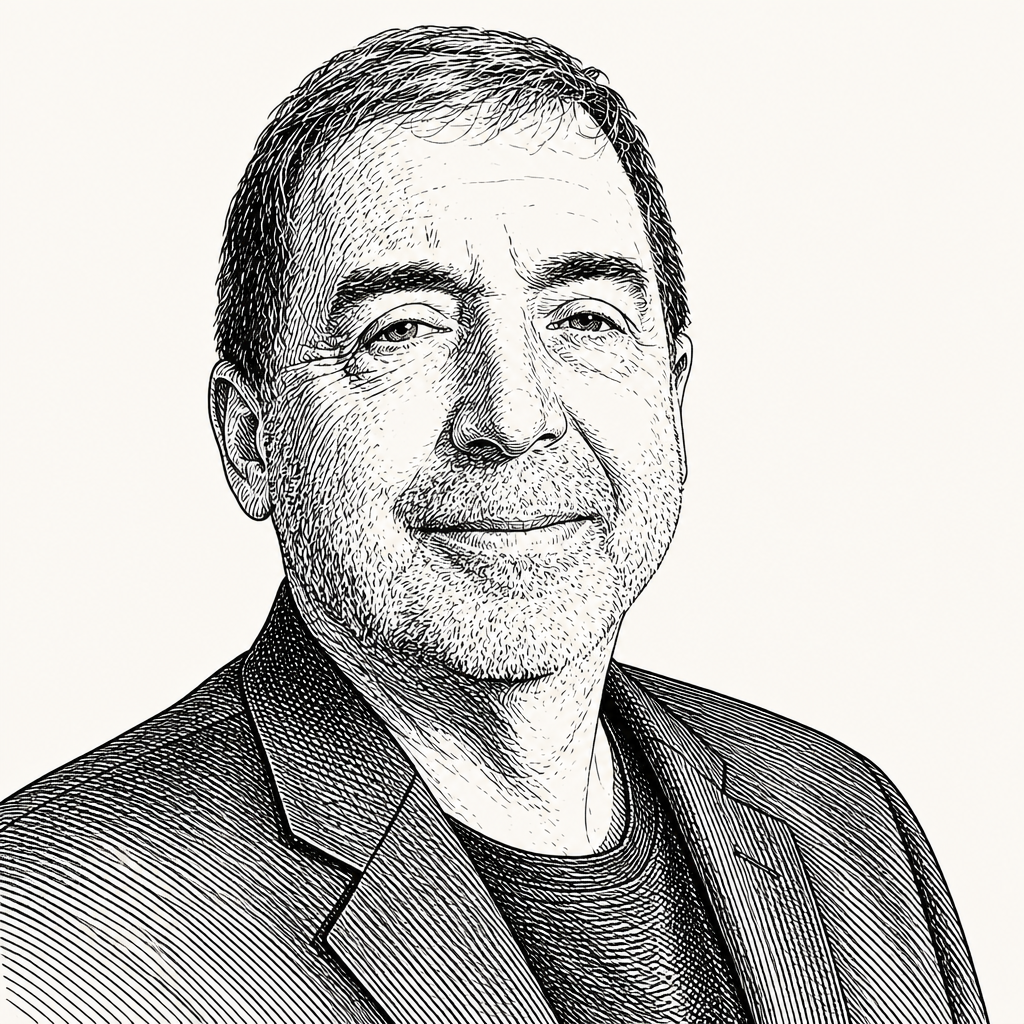
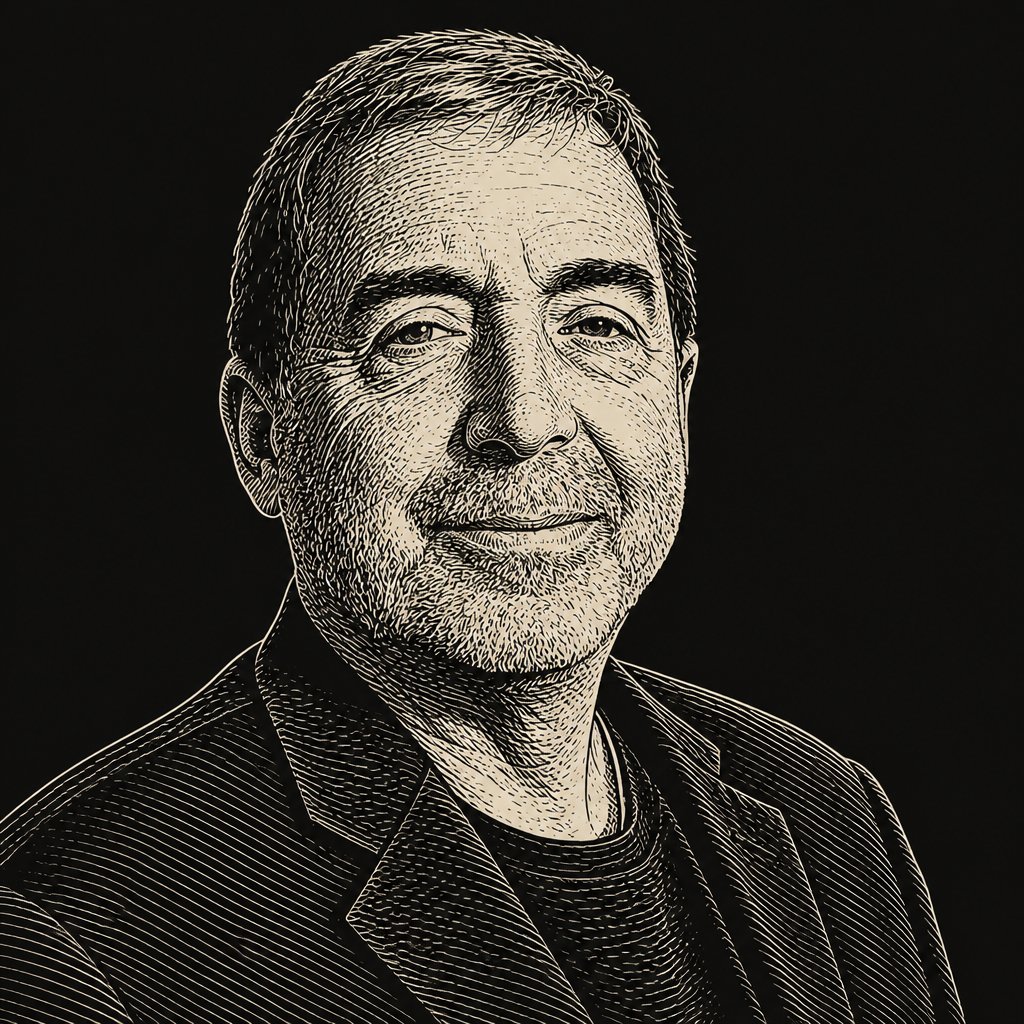
Fryer says he once told a Harvard administrator that nothing the university could do would stop him from smiling every day. He had promised himself, and his grandmother, that he would not covet what people at Harvard covet or get upset about what he calls “middle-class problems.” His happiness, he says, does not depend on those things. Asked what goes through his mind at night, he answers that he is thinking about what he will do the next day to address the problems he studies.
He jokes with students that every day he fails to close the gap between the advantaged and disadvantaged, but every morning he wakes up thinking, “today’s the day.” The optimism is less a claim that the work is succeeding than a reason to continue it.
Fryer resists treating his resilience as exceptional. He says that if his life had turned out differently—if he were still working at McDonald’s, for example—he might be bitter. Instead, he has had extraordinary opportunities and generous mentors. Gary Becker spent time talking economics with him; Steven Levitt once called him at five in the morning on his commute, and Fryer says they could spend nine hours together discussing the subject. He describes himself as someone who learns by sitting with smart, wise, kind people and asking questions, rather than mainly by reading big books.
That habit began well before his academic career. Fryer learned from his grandmother, who helped integrate schools in Florida in 1969. She told him about leaving her car and having rocks thrown at her, or being spat on, as she tried to get to work teaching sixth-grade students. He also listened to older Black women describe their experiences. He carried that kind of listening and questioning into his time at the University of Chicago and elsewhere.
The work, for Fryer, is not ultimately for journals or for Harvard, even if Harvard employs him. He says he works for children who were dealt a bad initial hand by the accident of birth. A question that connects much of his work is how to make the market for talent more like a real market. He has seen people he considers exceptionally smart become homeless, while people he considers less capable occupy positions of status. He finds it absurd to call early admission to elite schools a test of merit when children have had such unequal starting points.
Fryer says he can speak for himself, but not for Friedman or other researchers. His own account is that focusing on the question—whether the money supply or racial inequality—can make the outside noise recede. What keeps him going is the pursuit itself and the feeling that the work is unfinished.
Teaching matters most when it makes ambition feel possible
Russ Roberts asks whether Roland Fryer’s teaching changes students not only by conveying economics, but by showing them how to care about a problem. Fryer says that is not usually at the front of his mind, but he hopes students learn that it is possible to be both technically rigorous and optimistic—and that wanting to change the world is not a form of naïveté they have to outgrow.
One of Fryer’s courses is called Using Markets to Solve Social Problems. It addresses a subject he says receives less attention than how governments might help: how markets themselves can be used to address social problems. He wants students to see that it is possible to do well and do good—to run an investment fund that earns returns while also measuring its positive effects.
Fryer thinks students often arrive at Harvard with a desire to make a difference. In their effort to become sophisticated, he says, some lose that fire. His hope is that his teaching might rekindle it for a few of them. That does not mean he thinks a lecturer should set out to transform students directly. Roberts cautions that inspiration may work best as an indirect effect of serious teaching. Fryer agrees that the outcome is hard to measure.
He describes a lecture he gives in Harvard’s introductory economics course about the economics of education and the failures and successes in his attempts to change schools. It is among his favorite teaching experiences. The course was transformative for him when he was a student, and he sees the early undergraduates in the room as people who may still believe they can use their education to improve the world. At the end, he invites them to bring him any social problem they care about—climate, gender, race, inequality, affordability, immigration—and promises to talk with them. Pursuing these things can be lonely, he says, and he wants students to know they have someone willing to listen.
That invitation is connected to what he received from mentors. Fryer recalls people who took his early ideas seriously, including Becker and Levitt, and says students who approach him with their own ambitions can restore the energy of someone who has been at the work for years. Teaching is not only an occasion to pass on knowledge; it is also a way of encountering students’ optimism.
Fryer says he has increasingly tried to make the research journey visible: not only what a study finds, but how the question arose, what went wrong, and what paths the work might have taken. He says he used to think teaching meant keeping students from slacking off and ensuring that struggling students were taken care of. He has come to see that as a fool’s errand. He cannot assume a course will engage everyone. But a few students may take something from it in ways he cannot predict.
That view shaped a change in how he teaches data analysis. He says that last year, for the first time, he used large language models as a key part of his teaching. Rather than spend an hour presenting his account of a topic such as racial differences in police shootings, he gave students a 15-minute introduction, handed them the data, and told them to try to prove him wrong using an AI model. The students could choose a model and examine the dataset themselves.
Fryer enjoyed watching them struggle to get the model to take the data and confirm their prior beliefs. He describes one student bringing him a result on his screen. When Fryer asked him to explain what he had found, the student said Fryer could see it for himself. Fryer asked him to put the result into a sentence. The student did not want to say it aloud.
Fryer says large language models lower the barriers to data analysis and discovery on one’s own. The classroom example was part of his account of giving students data and asking them to test his claims; he does not say whether the student ultimately explained the result or what the students took away from the exercise.
Fryer frames that experiment against a broader question about what teaching is for. If facts can be retrieved through models and other tools, reciting facts is not the central task. He says he does not teach so students can memorize the best linear unbiased estimator. He wants to share a discipline he loves, and to show students how ideas such as Becker’s economics of crime or theory of rational addiction can make sense of problems that might initially seem contradictory. The value lies partly in seeing how an idea works, and partly in seeing what a person can do with it.
Peer review has serious failures, but removing it could restore older biases
Russ Roberts describes peer review as slow and uneven: sometimes a reviewer improves a paper, sometimes the process amounts to hoops, and sometimes reviewers may favor or dismiss work based on their views of its author. He raises an argument made by psychologist Adam Mastroianni that peer review is failing and should be abandoned, while acknowledging that the alternative is uncertain.
Roland Fryer initially says he has thought more about rejection than about the system as a whole. After Roberts clarifies that he is not claiming peer review is especially good at identifying who deserves honors, Fryer agrees that the process is broken. He cites delay and bias, but is not ready to throw it out. One reason is that peer review can help strong work by researchers outside the most prestigious institutions become visible. He points to John List’s papers before List joined the University of Chicago as an example of work whose quality, Fryer believes, the process helped establish.
That does not make peer review a reliable filter for every kind of work. Fryer says the system is particularly difficult for nonstandard research, because reviewers often begin by looking for reasons to reject a paper. That instinct may be useful for identifying weaknesses, but Fryer thinks it is unhealthy when it becomes the default response to unusual ideas. His own experience has been hard to predict: papers he thought had no chance were accepted quickly, while others he expected to succeed were rejected multiple times before finding a journal.
Anonymity, in Fryer’s view, is both a protection and a liability. In economics, reviewers commonly know who wrote a paper, while authors do not know who reviewed it. Roberts points out that this can allow a junior scholar to criticize a powerful senior economist without revealing themselves. Fryer agrees that anonymity may protect that kind of criticism. At the same time, it can make personal or nasty comments easier to write.
Fryer raises signed referee reports as a trade-off, not as a proposed fix. If reviewers had to sign their reports, he suggests, they might be less likely to make personal or needlessly harsh comments. But a junior scholar might also be less willing to criticize the work of a senior scholar if the criticism were attached to their name. The feature that protects candor in one case can enable bad behavior in another; removing anonymity could curb one problem while worsening the other.
He has considered whether a committee-based system, like those used to assess some grant applications, might make decisions more efficiently or fairly. But he is not confident that resource allocation by the National Science Foundation or the National Institutes of Health is working particularly well either. A different decision-making structure would not automatically solve the underlying problem.
Large language models may make the process harder to navigate. Fryer says researchers are already using them to anticipate referee objections and revise papers before submission; reviewers, in turn, are using models to help write reports. That could produce a recursive exchange in which an author uses a model to strengthen a paper and a reviewer uses a model to assess it. Roberts jokes that a model might recognize its own earlier suggestions. Fryer imagines a future in which one model’s revisions are returned to another model for judgment, but says he has no quick fix.
The limits are practical as well as conceptual. Papers are sent repeatedly to a relatively small pool of reviewers. Fryer recalls having a dozen manuscripts on his desk at once. Careful reading takes a long time, and the system depends on people who already have other work to do. For him, that makes peer review a hard problem to solve—not a reason to pretend the process is working well.
Still, Fryer thinks eliminating peer review would probably lead back to a more biased, more elite-focused system for deciding which papers are accepted. The difficulty is not simply choosing between a flawed process and a clean alternative. It is that the proposed alternatives have their own risks, while the existing process shapes the incentives of the profession. He does not offer a quick remedy, but rejects the idea that its failures settle the question of whether it should exist.
The prize’s test is whether it can support inquiry without becoming a faction
Roland Fryer wants the Carob Trust Prize to alter the incentives facing scholars at the margin, broaden the range of research and policy ideas, and give people working on difficult questions a community of support. The community need not agree with a researcher’s conclusions. It should share a belief that asking the question is legitimate.
He recalls turning to Jeff Canada, founder and former chief executive of the Harlem Children’s Zone, while working on incentives and school reform in Houston. Canada did not need to endorse every project, Fryer says; his willingness to encourage the pursuit of knowledge helped. Fryer wants the prize to offer a similar form of support to researchers who find the work isolating. The prize is not meant to create a community that confirms its members’ views. Its point is to make it easier for people with different views to keep asking questions.
That isolation, he says, has become harder to interpret. At the best of times in his tenure at Harvard, he felt the university had his back when his research drew objections. Now, he says, it is harder to know where friction will come from. A prize and a community cannot remove disagreement, but they might make it less costly for people to continue working.
Fryer says the prize must not be captured by either the political right or the left. He says there are already prizes associated with both, but he knows of none whose purpose is simply to reward truth-seeking. That aim is difficult to separate from the challenge he described earlier: recognizing work that was controversial and later judged an honest effort, without turning “academic courage” into a proxy for a political position.
The selection committee is one part of that challenge. Fryer describes it as a group whose members, including Eric Maskin and Stefanie DeLuca, agree on little beyond the value of pursuing knowledge. He says he and Ackman probably agree on almost nothing else, but share the belief that science does not make progress when people are silent. Agreement about the right to ask a question, in Fryer’s account, does not require agreement about what the answer should be.
The stakes, in his view, are not mainly the comfort or reputations of academics. When research is never pursued, or findings are put away because an author fears publishing them, the people who might have benefited from a better policy are left with the consequences. Fryer names children in disadvantaged communities and people trapped in bad schools as the most important potential victims of scientific silence.
Science does not make progress by people being silent.