Public-Health Trust Depends on Evidence, Dissent, and Accountability
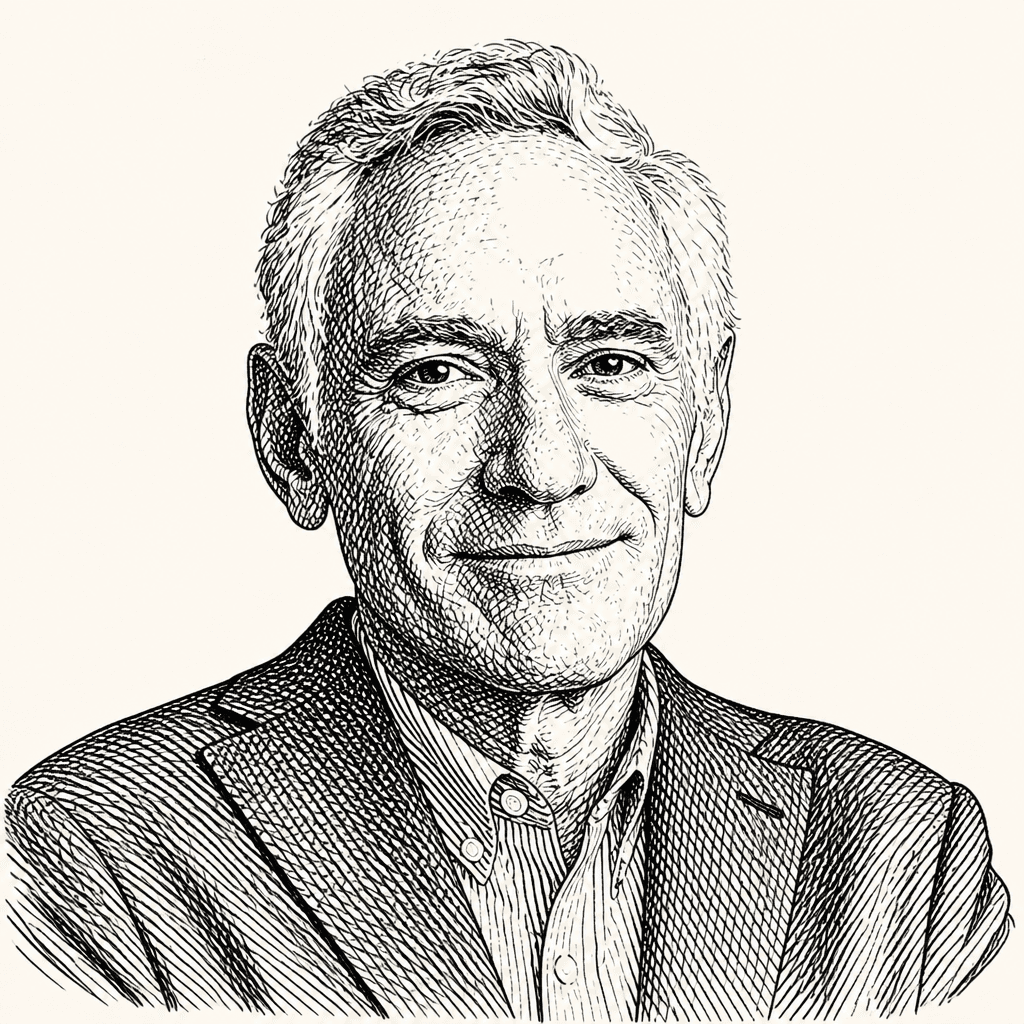
Scott Atlas argues that public health can rebuild trust only by showing greater discipline under uncertainty: testing evidence, admitting limits, and permitting dissent rather than enforcing consensus. He says COVID-era officials and physicians too often substituted conformity and fear for judgment, then failed to revisit the assumptions behind prolonged restrictions. Atlas extends that critique to prevention policy, arguing that government should inform people about health risks but not use aid programs or emergency authority to direct private choices.
For Atlas, trust is earned by conduct under pressure
Scott Atlas treats public-health trust as a consequence of institutional behavior, not something officials can restore by asking the public to defer to expertise. In his account, leaders facing uncertainty must assess evidence rather than repeat unexamined claims, allow disagreement rather than suppress it, and recognize limits on the state’s authority over personal choices.
That standard is demanding precisely because crises create fear. Atlas says he can understand why ordinary people were frightened during the early stages of COVID-19. But he draws a sharp distinction between fear among the public and fear among people entrusted with decisions. Leaders are needed in difficult circumstances, he argues; acting from fear or ignorance when evidence is uncertain is therefore not an adequate defense of their choices.
The problem is that when you're in charge, you can be neither of those. You can't be afraid. Otherwise, you're not capable of being a leader.
Atlas applies the same standard especially strongly to physicians. Patients, he says, extend doctors a kind of “blind trust,” rooted in respect for professional authority and in the assumption that physicians possess knowledge patients cannot reasonably acquire themselves. That trust creates an obligation to know the evidence, question it, and acknowledge uncertainty where it exists.
His criticism is not that people should never make mistakes in an emergency. It is that professionals and institutions, as he sees it, too often treated conformity as a substitute for judgment. Atlas says many doctors repeated claims without understanding or investigating the data behind them, and he points to physicians refusing to see patients during the period when vaccines became available as another failure of professional responsibility.
He describes the underlying social problem in more severe terms: cowardice. People in positions of authority, Atlas says, should be willing to say what they believe is true even when doing so carries professional or personal costs. Fear may explain a response, but for leaders it is “an excuse, not an argument.”
A short pause was defensible only until the evidence changed
Asked for the strongest critique of his own COVID arguments, Scott Atlas grants that an initial, brief interruption of normal activity could have been reasonable if officials accepted the early fatality figures coming from the World Health Organization. The “15 days to close the spread” approach could have been understood as a temporary effort to assess the threat and prepare hospital capacity.
Atlas does not endorse that response. Still, he distinguishes a limited attempt to get a handle on an unfamiliar situation from the case for prolonged restrictions. In his telling, the initial rationale depended on accepting alarming fatality figures at a moment when officials said they did not yet know enough.
He argues that the early calculation of the infection-fatality rate was flawed because it counted deaths against a population limited to people sick enough to seek medical care. The relevant figure, he says, is the percentage of all infected people who die. Once infections outside the medically visible group were considered, Atlas argues, the denominator could not support the fatality framing used to justify the initial response.
His objection is therefore not simply that officials imposed restrictions. It is that an emergency premise that might explain a very short pause was not re-examined when, in his account, the premise itself quickly became untenable. He says a leader cannot invoke uncertainty indefinitely after the underlying numbers have become available for scrutiny.
That is why Atlas ties the lockdown question to his broader criticism of professional authority. The problem, as he presents it, was not only the initial reaction to frightening information. It was the failure to interrogate the fatality-rate calculation, revise conclusions, and leave room for people who challenged the prevailing account.
Prevention does not justify control over private purchases
Christina Lazar asks how policy might encourage healthy food, activity, and other healthy choices while preserving innovation and managing the relationship between public health and drug companies. She describes Canadian personal spending accounts that can sometimes cover activities, presenting them as one approach to supporting preventive care.
Atlas agrees with the premise that prevention matters. He calls healthy lifestyles and healthy foods important, identifies obesity as a serious health problem, and says people should be educated about what foods contain and the harms those foods may cause. He also says these choices require personal responsibility.
But he sees a separate question behind prevention: what government is entitled to direct. Atlas’s preferred distinction is between informing people and controlling them. Government may educate consumers, he says, but it should not use public assistance to prescribe poor people’s diets.
His example is food assistance in the United States. Atlas says he supports providing help to people who cannot afford food. Yet he opposes rules that would determine which foods recipients may purchase with that assistance, including restrictions aimed at soda, candy, or other foods he regards as unhealthy. He characterizes such rules as an overreach by people with more power and money into the choices of poorer households.
We're either a free country, like we're supposed to be a free country.
Atlas says he reviewed food-receipt data and found no difference between recipients and nonrecipients in the share of spending devoted to soda, candy, and similar products. On his account, food-assistance recipients do not display a distinct pattern that would justify targeted restrictions; they buy those products at rates comparable to other consumers.
His concern is also about precedent. Once the government treats food assistance as grounds to dictate acceptable purchases, he argues, the line can move from soda to other disfavored foods: white flour, pasta, bread, or dessert. The logic becomes that recipients must submit private choices to official moral supervision because public money is involved.
Atlas roots that objection partly in his experience growing up poor, when fast food was an occasional family treat. But the argument he advances is broader: aid can be justified without making recipients’ purchases conditional on an official dietary hierarchy. He is not endorsing what he calls “garbage food”; he is rejecting the idea that government should decide which legal foods poor people may buy.
That skepticism also shapes his view of current nutrition debates. Atlas says he is not in favor of food dyes, but does not consider them among the country’s most important health concerns. He rejects the claim that the oil used in fast-food fries is the central explanation for obesity; in his example, someone eating two Big Macs and an extra-large order of fries has a more obvious problem than the particular oil used for the fries.
For Atlas, prevention should be pursued through information and personal responsibility rather than expanded government direction.
Open debate and accountability are the remedy he proposes
A prospective physician asks whether entering medicine means complying with consensus and remaining silent. The questioner says doctors in their family felt they understood the pandemic early but were shut down by schools and hospitals, and alleges that some physicians at Cedar Sinai were placed on leave over vaccine disputes.
Scott Atlas calls the concern real. His proposed remedy is not principally a new emergency protocol or revised administrative structure. It is the restoration of the free exchange of ideas: ending censorship and treating debate as necessary to deriving truth.
He says pandemic mismanagement included censorship, cancel culture, the generation of public fear, and pressure that encouraged people to turn on neighbors. Those conditions, he says, prevented competing interpretations of evidence from being heard and weakened trust among fellow citizens.
Atlas is particularly concerned that the country will simply “turn the page.” He says that when he presents what he describes as the pandemic data around the country, many audience members tell him they had never heard it. Moving on without public awareness or accountability, he warns, leaves the conditions for repetition in place during the next emergency.
The remedy also has a personal dimension. Atlas does not say every individual must become a public dissident—“the tip of the spear” is not for everyone. But he argues that a person who speaks can make it easier for colleagues, friends, neighbors, and students to say what they had privately thought.
The most important part of speaking up is that you empower others to speak up.
COVID, in his formulation, exposed rather than created this dynamic. The practical demand is to speak despite the possibility of disagreement, because if everyone is afraid to do so, Atlas says, contested claims disappear from public view.