Low Real Rates Were No Basis for Treating Government Debt as Cheap
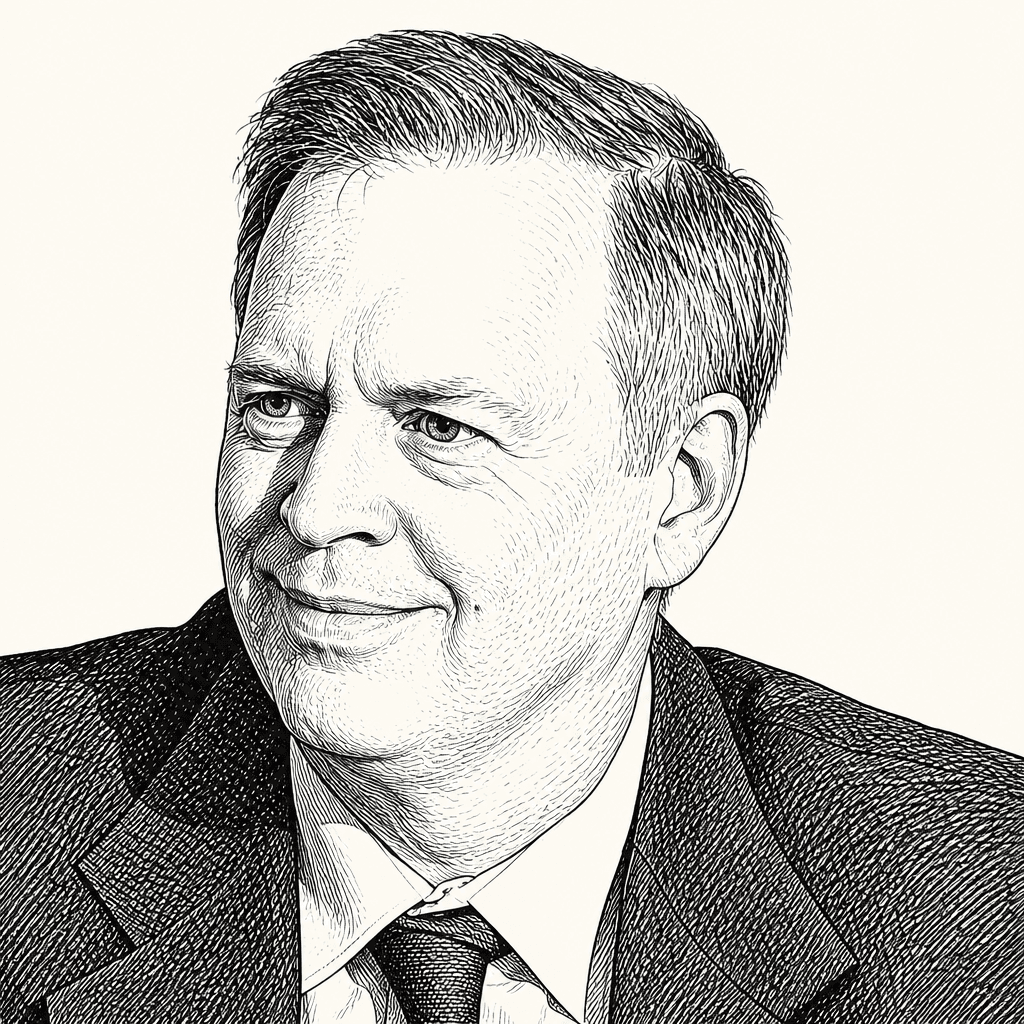
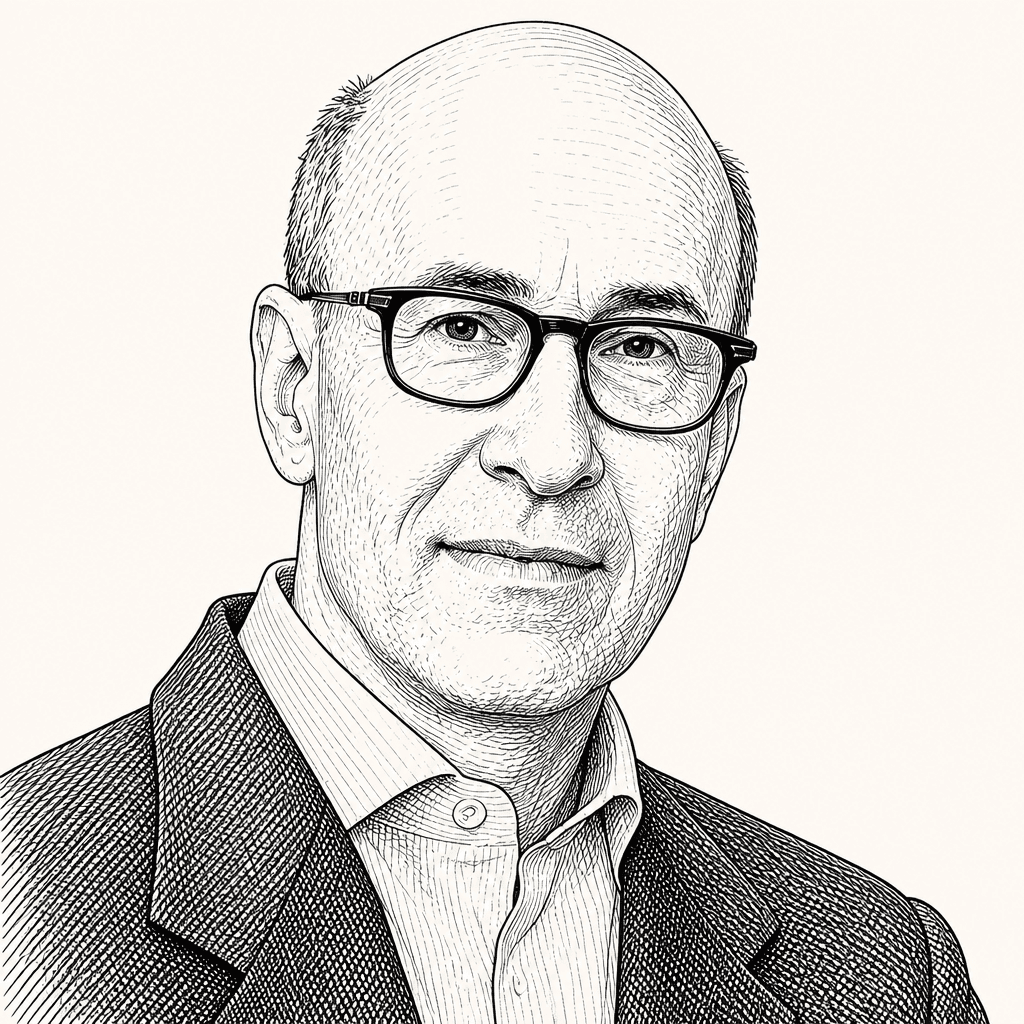
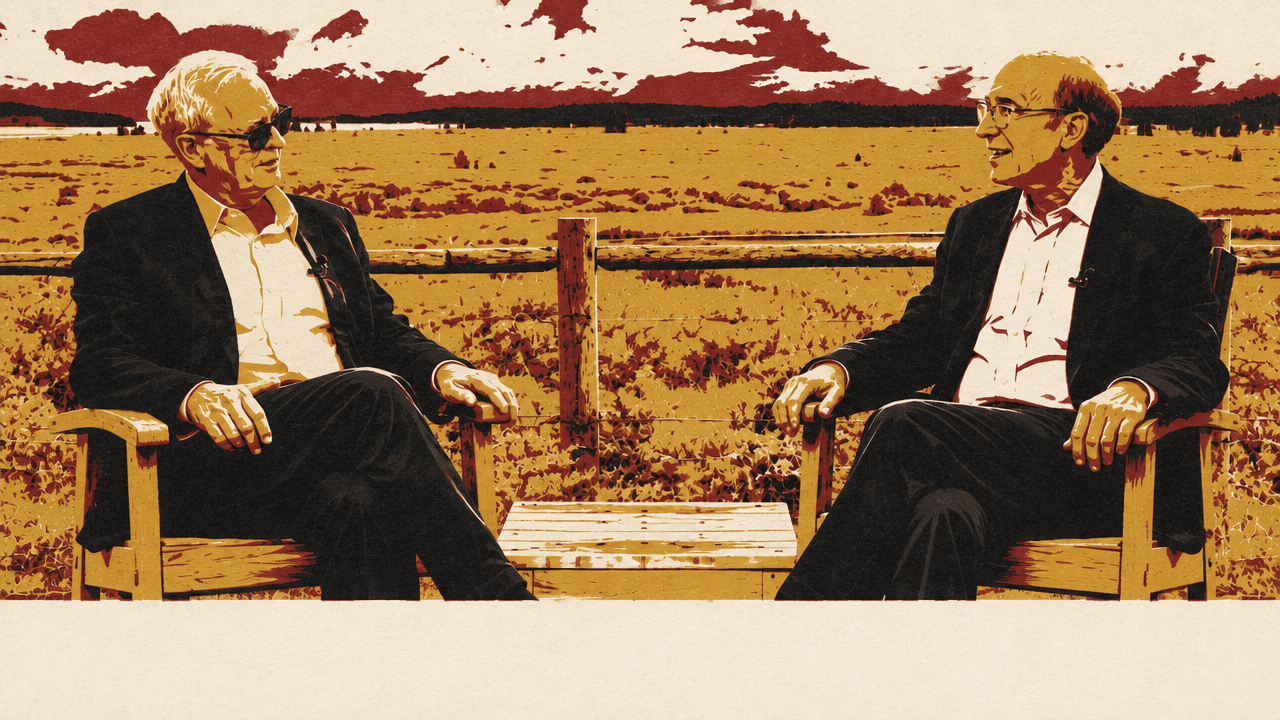
Kenneth Rogoff argues that policymakers mistook a decade of low real interest rates for a durable feature of the economy, despite the historical volatility of rates and the difficulty of forecasting them. In a discussion with Steven Davis, he says that uncertainty should make governments wary of treating cheap borrowing as a reason to let debt rise without limit: higher rates can increase servicing costs and leave less room to respond to future shocks. Rogoff’s case is for fiscal prudence, not a ban on borrowing.
A decade of low rates was not a safe forecast
Kenneth Rogoff’s criticism of the low-interest-rate consensus is not that economists had no plausible explanations for low rates. It is that plausible explanations were treated as a dependable basis for policy.
During the 2010s and into the pandemic, Rogoff says, investors, central bankers, and academic economists widely expected real interest rates to remain low indefinitely, perhaps to fall further. Models linked that outlook to factors such as demographics, inequality, and productivity. Rogoff credits this work with advancing economic science. But explaining a period of low rates is not the same as establishing that low rates will persist far into the future.
His standard for judging that leap is historical. Rogoff points to long-run evidence on real interest rates and government debt, including research spanning centuries. A comparison with rates in one recent year, he argues, cannot establish what is normal. Over longer stretches, rates move back toward their average—but the more basic lesson is that they can be highly volatile.
Rogoff says history should make policymakers wary of turning a temporary pattern into a permanent rule:
Real interest rates are sometimes high, they’re sometimes low, until they’re not.
For him, the claim that rates would keep falling amounted to an unusually confident theory of how the world would work from then on. He called it a “this time is different” view.
The distinction matters because the interest rate that makes borrowing appear cheap can change. Rogoff says real rates collapsed during the financial crisis and are now much higher. That volatility complicates the Federal Reserve’s effort to judge where policy rates should settle. A central bank can use a framework such as the Taylor rule to help map policy decisions, but it still has to estimate the real, or neutral, interest rate—a rate Rogoff says is difficult to pin down.
Steven Davis connects that uncertainty to the problem facing Kevin Warsh: the question is not only how far to adjust the federal funds rate from where cuts began, but where it should ultimately land. Rogoff says policymakers may be operating in a higher-rate world. That possibility matters for decisions made on the assumption that borrowing will remain cheap.
A useful model is not automatically a policy rule
Kenneth Rogoff’s broader objection is to treating a successful explanation of one factor as a reliable prediction of a complex financial variable. Demographics may push rates down; inequality may push them down; productivity may matter. But isolating one mechanism does not settle how real interest rates will behave when multiple forces and shocks interact.
He recalls the difficulty economists have had explaining movements in real interest rates with productivity data, and mentions earlier work by Thomas Sargent and James Hamilton as examples of how hard the problem has been. Sargent, Rogoff says, wrote early in his career about the possibility that real interest rates behave like random walks. Hamilton examined productivity and found that it did not readily explain the rate movements he was studying. Rogoff allows that this work may be wrong; his point is that the problem is difficult, not that it has been solved.
Models that isolate demographics, inequality, or another mechanism can advance the profession’s understanding without giving policymakers a robust instruction. The policy question is not simply whether a theory can account for low rates. It is whether governments and central banks should rely on those rates remaining low when making decisions with long-lived consequences. Rogoff rejects extrapolating ten or fifteen years of data a century into the future.
His answer is caution, not certainty in the opposite direction. Economists advising policymakers need humility, especially when discussing variables whose future path they cannot know. Policymakers still need an opinion, he says, but an opinion should not be presented as settled knowledge.
You have to have an opinion. But you don’t have to be sure about your opinion.
That applies directly to estimates of the neutral interest rate, which Rogoff says can shift in response to major events. He names artificial intelligence, the pandemic, the global financial crisis, and Donald Trump’s tariff wars as disruptions that make the rate difficult to infer. A policy framework built around a single confident estimate can therefore mislead. Rogoff says policy needs to be robust to uncertainty, and points to attention to inflation as part of the approach Kevin Warsh discussed.
Rogoff’s concern is how forcefully economists translate uncertain analysis into public advice. He describes Larry Summers as an exceptional mind and debater, while arguing that Summers’s advocacy for persistently low rates was more confident than the evidence warranted. Rogoff also criticizes Paul Krugman’s public arguments, including what he regards as inconsistency on deficits across political administrations. Davis observes that Summers did not reverse his position with the same forcefulness with which he had initially argued it; Rogoff agrees.
The disagreement is therefore not only about forecasting. It is about how much uncertainty should be visible in policy advice. Rogoff says an economist can offer a best judgment without claiming certainty, particularly when the variable in question is hard to explain and vulnerable to shocks.
Low borrowing costs do not erase the cost of debt
Steven Davis puts the fiscal implication plainly: real rates can rise, and when they do, debt-servicing costs rise with them. That exposure matters when federal debt is roughly equal to annual GDP, as Davis describes it. Rogoff agrees that this argues for prudence, but he is careful about what prudence means.
Kenneth Rogoff says he and Carmen Reinhart were accused of advocating austerity when their point was narrower: borrowing is not a free lunch. They did not argue that governments should never borrow or run deficits, nor did they predict that the United States, Britain, or Spain would collapse. Their claim, as Rogoff restates it, was that more debt increases the risk that a future shock will leave governments with less room to spend, and that growth may be slower than it otherwise would have been.
The risk is conditional, not a timetable for crisis. When something happens, Rogoff says, a government carrying more debt has less capacity to respond. The precise timing and nature of the shock are unknown; the exposure grows with the amount owed. His claim is about the cost of having less fiscal room when a shock arrives, not a prediction that a particular country will fail.
That framing pushes back against arguments that low interest rates make debt irrelevant. Rogoff recalls the claim that advanced economies could tolerate debt reaching 200 percent of GDP because the carrying cost was negligible. He says he sees little practical difference between that message and arguments that debt can rise still further, even when their proponents reject modern monetary theory. In political debate, he argues, telling officials that the limit is far away can amount to permission to stop treating the risk seriously.
Rogoff does not say that debt should never rise. He gives European rearmament as an example of borrowing that may be warranted despite the risk. In his view, European countries should strengthen their militaries even though they already carry substantial debt. When Germans ask how they can take on more, he answers that a genuine security emergency can justify the cost. The distinction is between accepting risk for a compelling reason and dismissing it because borrowing currently appears cheap.
Political incentives may postpone adjustment
Kenneth Rogoff points to politics as one reason prominent economists offered confident reassurance about deficits, while saying political alignment is not the whole explanation. He accuses Paul Krugman of changing his position on deficits when control of government changed parties. At the same time, Rogoff says the low-rate environment itself helped make the reassuring view persuasive.
His distinction is between recognizing a risk and deciding that another priority justifies taking it. A policy can be important enough to warrant the fiscal exposure, he says, but that does not make the exposure disappear. European rearmament is his example of a compelling reason to accept risk; treating debt as costless because rates are low is not. The case for prudence, in this account, is not a blanket rule against borrowing but a demand to account for its costs when choosing what to fund.
The political constraint is also why Rogoff doubts that governments will correct course simply because economists warn them. In discussing his forthcoming book, whose working title he gives as Our Donald, Your Problem, he links the risks from AI to a larger point: technological progress will not remove human or political problems. Even if AI makes people richer, Rogoff says, human capacity for “mischief” remains. Greater prosperity is not a guarantee of sound public choices.
He returns to the fiscal outlook he says he laid out in his previous book: interest rates are rising, debt is not falling, and deficits are not falling. Rogoff does not expect the political system to respond in time. Politicians, he says, may accept the economic argument privately and still conclude that acting on it would cost them an election. Davis agrees that this is a political problem, not simply a question of whether policymakers have heard the warning.
Rogoff expects some kind of crisis to force change, though he also allows for a gradual rise in debt-servicing costs until the pressure becomes politically painful. He predicts a crisis eventually; his reasoning is that adjustment may be difficult to win through ordinary electoral incentives. Faster growth, even if AI delivers it, does not by itself resolve that political problem.