The Trump Doctrine’s Durability Depends on Institutions Beyond Trump
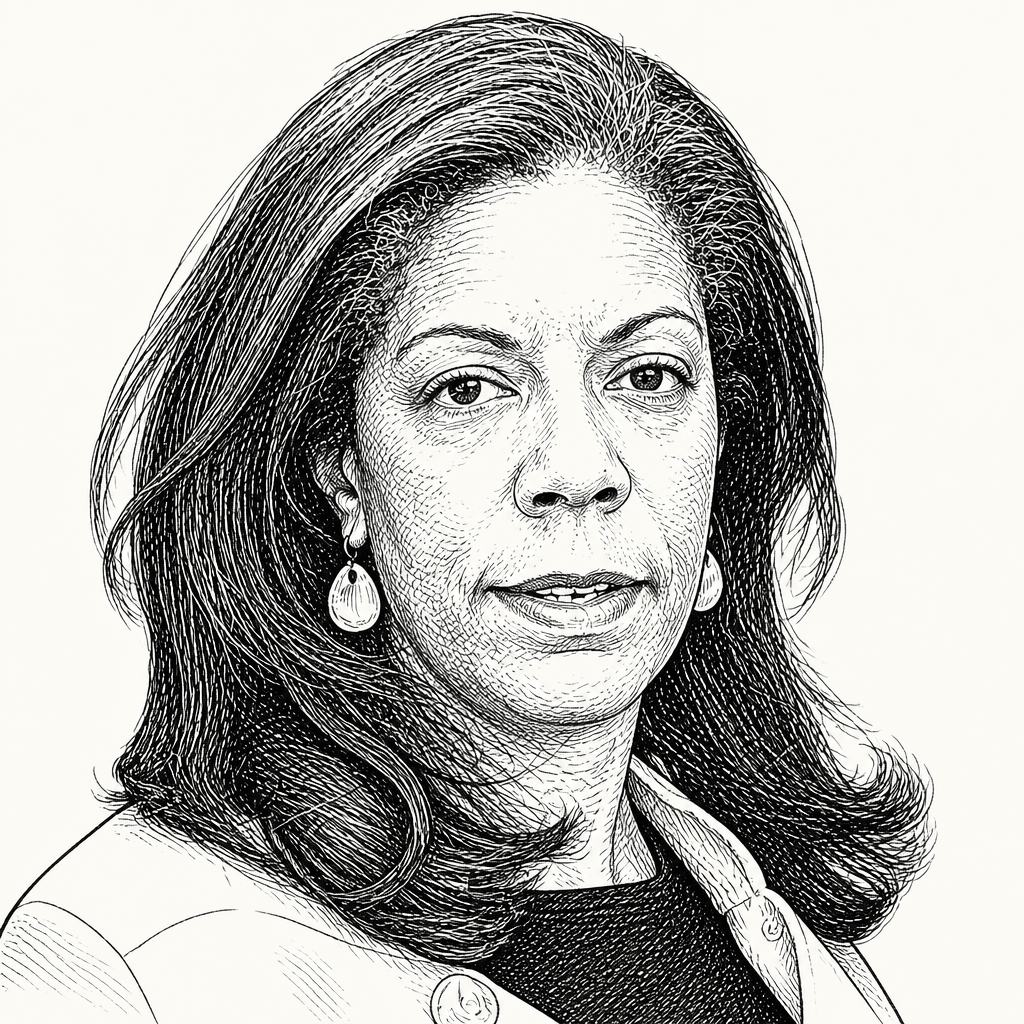
Kiron Skinner argues that the Trump Doctrine seeks to make U.S. power more durable by replacing aid conditioned on U.S. social and political preferences with trade and investment, pressing allies to bear more of their own defense, and abandoning Cold War assumptions about how to compete with China. She contends that China’s integration into global commerce makes a democratic coalition model inadequate, while U.S. institutions remain poorly equipped for long-term strategy. Skinner acknowledges that the doctrine’s soft-power framework and several of its policies remain unfinished, and says its durability will depend on whether the political coalition behind it outlasts Trump.
Skinner’s doctrine substitutes trade and investment for aid-led influence
Kiron Skinner casts the rollback of government-led foreign aid as a defining choice of the Trump Doctrine. The administration’s cancellation of USAID and reductions in AIDS funding for Africa, in her account, are not simply cuts to particular programs. They signal that “global philanthropy” will no longer be a major instrument of U.S. foreign policy.
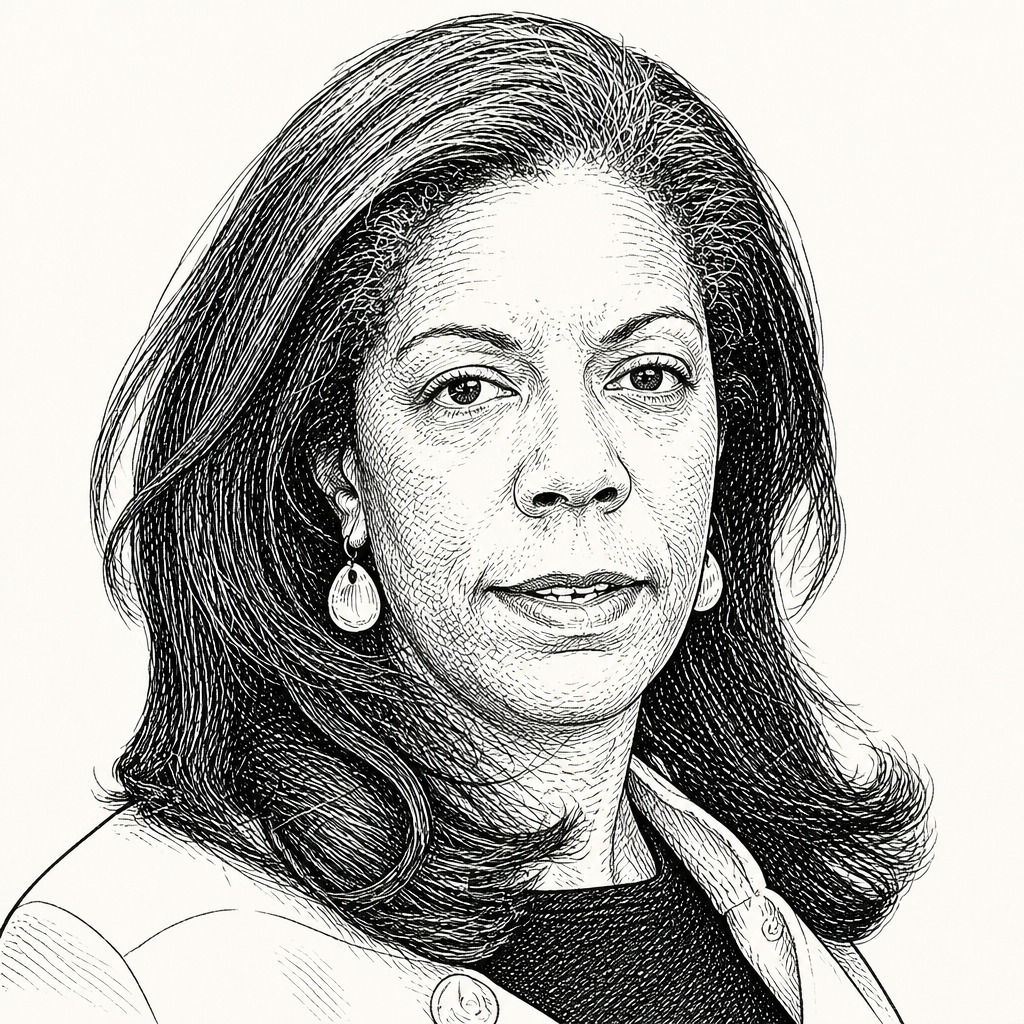

That change raises an obvious strategic problem. The United States is competing for influence in developing countries where China and Russia are also active. Skinner’s answer is that U.S. assistance has too often imposed Washington’s social and political preferences on recipients. She offered the example of a Ugandan who might welcome not having to accept a U.S. “trans policy” in return for what she characterized as a low level of aid.
The alternative is trade and investment. Skinner acknowledges that the transition could hurt U.S. influence in the short term and says the approach may not work. But she sees it as a necessary experiment: remove foreign assistance as a vehicle for what she calls social engineering, and compete commercially rather than through conditional programs designed to reshape other societies.
Skinner contrasts this approach with the George W. Bush-era Millennium Challenge Account, which tied assistance to political liberalization, and with USAID programs she says reflected bureaucrats’ views of how recipient countries should govern themselves. China’s Belt and Road Initiative, she argues, is a debt trap, but it does not make comparable ideological demands. If the United States stops attaching its own social agenda to economic engagement, Skinner believes it can compete with China on more level terms.
Her distinction is not between generosity and indifference. USAID, she said, was repositioned rather than wholly abolished, with functions moved into the State Department’s Foreign Assistance Bureau, known as the F Bureau. Some programs were put “on ice” and are gradually returning; entrepreneurial initiatives, she expects, will reappear in some form.
Nor does she expect American philanthropy to disappear. Americans’ private charitable culture, she argues, is unusually durable. The problem begins when a national impulse to be bighearted becomes an attempt to “fix” other people. Skinner describes that tendency as a longstanding weakness in U.S. engagement with China: Americans have repeatedly approached China through an idea of what the country ought to become rather than through an understanding of its culture, imperial ambitions, and strategic tradition.
China makes the Cold War coalition model inadequate
Kiron Skinner rejects the idea that the United States can answer China by rebuilding a Cold War-style coalition of democracies. Asked why the administration has not more aggressively mobilized OECD countries against China, she said the underlying conditions are too different.
She pointed to the Helsinki Accords of 1975 as an example of a mechanism that, in her telling, “basically neutralized” the Soviet Union. More than 30 nations in Europe, along with the United States, Canada, and the Soviet Union, signed an agreement that addressed territorial and political claims surrounding the Second World War. Its human-rights provision, known as Basket 3, enabled scientific exchanges and helped Jewish refuseniks leave the Soviet Union for Israel or Western countries. Ronald Reagan initially railed against the agreement, Skinner said, but later used it in office; Mikhail Gorbachev had benefited from the exchange process before becoming Soviet leader.
For China, Skinner sees no equivalent mechanism. Asian economies are deeply tied to China, often as their leading trading partner. She argues that China is far harder to decouple from than the Soviet Union was, and that a new Helsinki process, however desirable, is not currently possible.
That constraint, in Skinner’s account, makes China a more profound challenge than the Soviet Union. Her argument is not merely that China is a stronger competitor. It is that the United States is confronting a power embedded in global commerce while still misunderstanding the society and strategic culture with which it is dealing.
Countries in the Global South, the Non-Aligned Movement, and BRICS Plus may still be politically fragile, she said, but they are politically mature: they do not want to choose cleanly between the United States and China. They want something from both. Washington, in her view, has not learned how to operate effectively in that setting.
A changing world demands strategy, but the United States struggles to sustain one
Kiron Skinner grounds her case for a new doctrine partly in a harsh assessment of U.S. strategic resilience. September 11, she said, redirected American resources, energy, and attention at home and abroad with extraordinary force. COVID had a similar effect. External shocks are hard for any country to absorb, but Skinner argues that the United States is particularly exposed because it has global responsibilities, a fast-moving international environment, and a government organized around immediate demands.
“It is easy to derail us,” Skinner said. The State Department, White House, and Defense Department do not, in her account, have functioning long-term planning offices protected from day-to-day operational work. When strategic-planning functions do exist, their staff are pulled into crises. Cabinet officials have little incentive to spend time preparing for future contingencies when immediate problems continually require action.
She also sees a constitutional problem. The U.S. president is commander in chief, chief executive, and the holder of ceremonial responsibilities that other democracies may distribute across several offices. The framers wanted energy in the executive, Skinner said, but the result is a presidency with too much authority and too much to manage.
The Trump Doctrine is, in her view, an attempt to respond to a world that is reorganizing outside the categories of the post-Cold War order. She cited an Atlantic strategy developed in part through the Trump White House’s National Security Council Africa directorate, linking common interests among roughly 80 littoral countries in Europe, Africa, and the Western Hemisphere. She also pointed to the Middle Corridor in Central Asia and the Three Seas Initiative in Central Europe as examples of older regional routes and groupings becoming newly relevant.
Countries are redefining themselves as well. Bangladesh has traditionally been regarded as part of South Asia, Skinner noted, but some Bangladeshis want closer identification with Southeast Asia. These are not merely shifts in maps or institutions. International relations is ultimately “about people,” she argues, and structural theories can overlook the agency of countries and populations deciding their own affiliations.
The Trump Doctrine is the first U.S. doctrine in this century to start moving in the direction of what’s actually happening around the globe.
The coalition may outlast Trump, even if the doctrine’s policies do not
Kiron Skinner argues that the Trump coalition reflects a structural realignment rather than a temporary expression of Donald Trump’s personality. She compares it to the replacement of the New Deal coalition and says Trump would not have been elected if the political establishment had recognized the domestic and international changes it was ignoring.
In this view, frustration with NATO is not fundamentally an argument for American withdrawal. Skinner said she does not believe Trump wants to leave the alliance. Her complaint is that NATO became a protectorate, with the United States carrying burdens that European allies could have assumed. She pointed to roughly 20 members meeting the 2 percent defense-spending pledge and moving toward 5 percent as evidence that more responsibility could have been taken earlier.
The broader claim is that a great power will “crash” if it must carry everybody and everything. Skinner cited U.S. extended nuclear-deterrence commitments around the world alongside domestic strains, particularly in health care. Her trauma-surgeon sister, she said, believes U.S. hospitals have not recovered from COVID. Skinner contrasted that condition with what she characterized as Congress’s attention to overseas commitments, including funding for the war in Ukraine.
Skinner does not deny that the present looks chaotic. She referred to immigration enforcement, job losses, and institutional disruption. Nor does she claim that each pillar of the doctrine will work. But she believes the coalition rests on a wider sense that the existing system was failing and that domestic burdens had been deferred too long. Trump’s personality, she said, helped set the movement in motion; it is not sufficient to sustain it.
Any candidate who will win the nomination in 2028 will have to believe in these principles, or he or she won’t make it.
She expects the Republican coalition to grow, including among nonwhite voters—what she called “the browning of America”—and said this strength was visible in Trump’s performance across seven swing states. A future nominee who wins and then abandons the coalition’s principles would create a problem. Still, Skinner believes an establishment effort to reverse the realignment will weaken if the movement wins again in 2028.
Trade cannot yet answer the question of how America exercises influence
Kiron Skinner does not argue that every America First policy will succeed. Challenged on the national debt, economic uncertainty, stock-market volatility, and cuts to institutions associated with long-term growth, she said she understood and agreed with the concern.
A strategic doctrine is not automatically right in every application, she argued. She described containment as disastrous in some respects because it expanded far beyond George Kennan’s original conception; Kennan, she noted, considered Vietnam the wrong war. Skinner said she could explain why each pillar of the Trump Doctrine might fail. Her response to critics is that the relevant comparison is not perfection but the viability of the status quo.
The public is now watching “the sausage be made” in real time, she said, partly because of social media. That process is disorderly and often unattractive. Rather than treating Trump’s instincts as a finished policy program, Skinner suggested that critics help turn his “hunches and instincts” into hypotheses.
The unresolved issue is soft power. Asked how the administration’s pauses or cuts to cultural exchange, citizen-diplomacy, Fulbright, Critical Language Scholarship, and related programs fit the doctrine, Skinner said she did not know whether Trump’s soft-power component had been figured out.
She expressed sympathy for the U.S. Institute of Peace and for some affected elements of USAID, Fulbright, and other exchanges. But she also argued that many cultural-exchange programs had ceased to be genuine cultural diplomacy and instead made America itself the problem. In her view, that requires a deeper examination of what those programs were actually doing before restoring or redesigning them.
Trump, Skinner said, is not naturally strong on soft power. Trade and investment are central to her alternative to aid-led influence, and she expects private American philanthropy to remain substantial. But she does not present those as a completed official architecture for cultural diplomacy. The doctrine’s test is therefore not only whether commercial engagement can replace ideological conditions attached to aid; it is whether a reduced aid and exchange infrastructure can still support durable American influence.