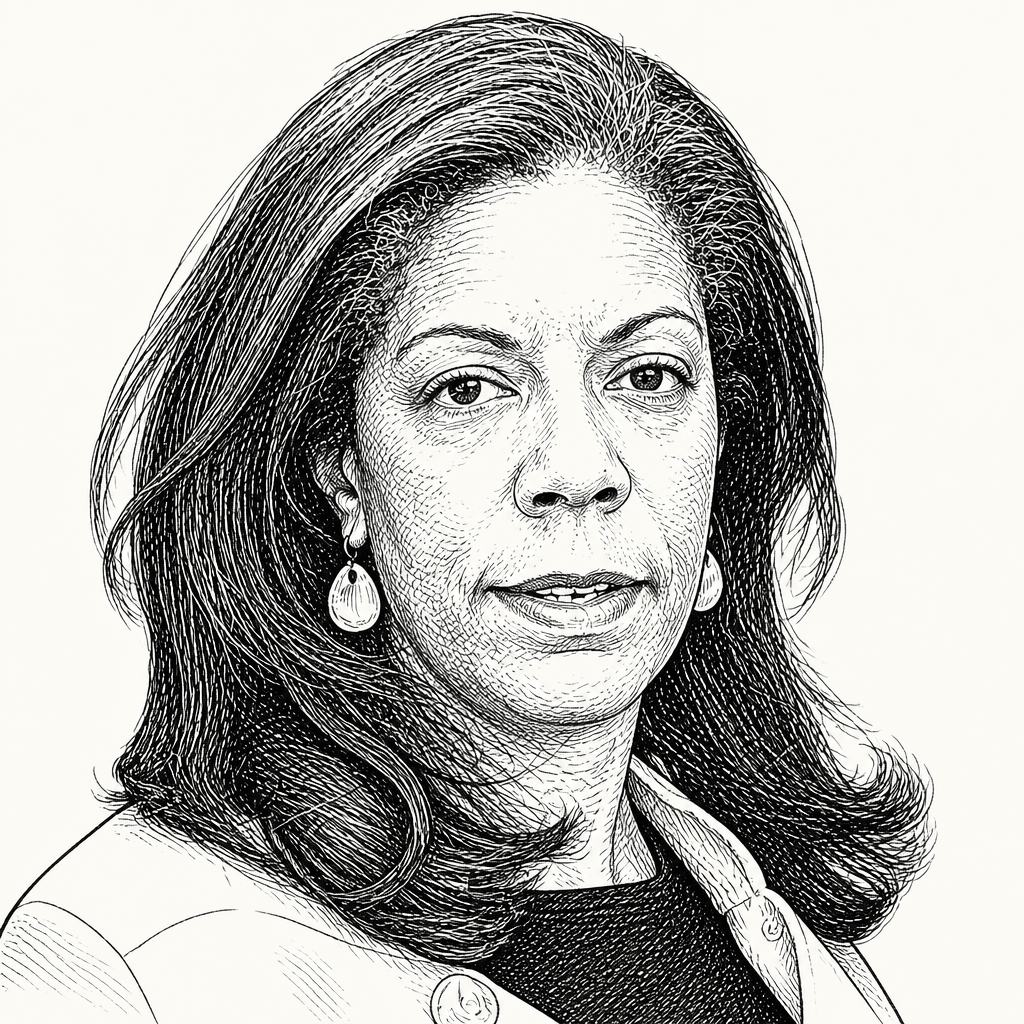
Kiron Skinner
Kiron Skinner is the W. Glenn Campbell Research Fellow at the Hoover Institution and Taube Professor of International Relations and Politics at Pepperdine University. Her work focuses on international relations, international security, US foreign policy, and political strategy; she previously led the US State Department’s Office of Policy Planning from 2018 to 2019.
The Trump Doctrine’s Durability Depends on Institutions Beyond Trump
Kiron Skinner argues that the Trump Doctrine seeks to make U.S. power more durable by replacing aid conditioned on U.S. social and political preferences with trade and investment, pressing allies to bear more of their own defense, and abandoning Cold War assumptions about how to compete with China. She contends that China’s integration into global commerce makes a democratic coalition model inadequate, while U.S. institutions remain poorly equipped for long-term strategy. Skinner acknowledges that the doctrine’s soft-power framework and several of its policies remain unfinished, and says its durability will depend on whether the political coalition behind it outlasts Trump.
Containment’s Collapse Opened the Way for a Trump Doctrine
Kiron Skinner argues that U.S. foreign policy has lacked an organizing doctrine since Cold War containment, even as the postwar order built under exceptional American power has frayed. She casts Donald Trump as the political figure who, in her account, made a strategic break possible by recognizing the rise of competing powers and constituencies alienated from the old order. Skinner’s case identifies the exhaustion of that framework more clearly than it defines the commitments of an emerging Trump doctrine.
Sovereignty, Burden-Sharing, and China Define the Trump Foreign-Policy Doctrine
Kiron Skinner argues that Donald Trump’s foreign policy was organized around sovereignty: states should secure their own borders, bear a greater share of their own defense, and deal with one another on reciprocal terms rather than through open-ended U.S. commitments. In her account, that logic drove Trump’s pressure on NATO, preference for flexible regional partnerships over new permanent alliances, and rejection of nation-building. It also recast China as a strategic competitor rather than a country expected to converge with the liberal international order through economic integration.