Ukraine’s Winter Endurance Could Determine the Path to Peace

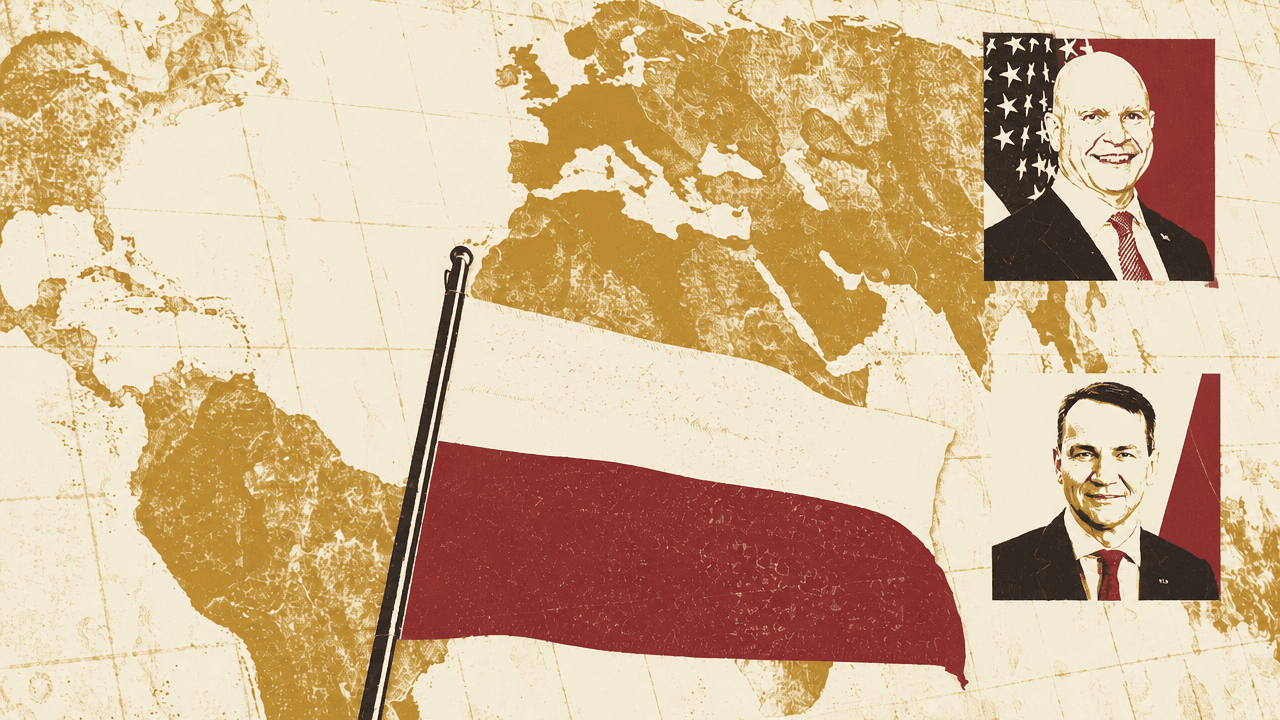
Polish Foreign Minister Radosław Sikorski argues that Ukraine’s ability to withstand Russia’s attacks on power and heating infrastructure this winter could determine whether peace becomes possible next year. He presents Poland’s response to Russian aggression as a wider strategy: strengthen NATO’s eastern flank with permanent U.S. forces, raise European defense spending, sustain Ukraine financially and militarily, and reduce dependencies that leave Europe vulnerable to coercion.
Ukraine’s ability to endure the winter may determine the path to peace
Radosław Sikorski sees the coming winter as a decisive test in Russia’s war against Ukraine. Vladimir Putin, he says, has knocked out four-fifths of Ukraine’s electricity-generating capacity. Sikorski characterizes the strikes on heating and power infrastructure as an effort to impose civilian hardship while, in his assessment, leaving Ukraine’s military ability to fight substantially intact.
His assessment of the war is not one of steady momentum for either side. Russia had the initiative at the outset; Ukraine counterattacked in 2023; Russia then advanced through the previous year and winter at what he describes as an enormous cost in people and matériel. The present condition, in his view, is “a draw,” albeit one with some hopeful elements for Ukraine.
At sea, Sikorski says, Ukraine remains able to export grain, while Russian forces have been badly damaged by Ukrainian sea drones. In the air, both sides can strike one another’s territory with drones and cruise missiles, though Russia also uses ballistic missiles; neither has achieved air dominance. On land, he says, the frontline shifts back and forth, while Ukraine has achieved fire control over the land bridge connecting Donbas and Crimea.
The distinction Sikorski draws is between the strategic effect of Russian and Ukrainian deep strikes. Russia attacks population centers, heating facilities, and electricity plants—conduct he calls illegal, cruel, and strategically misguided because, he says, it creates hardship without stopping the Ukrainian army from fighting. Ukraine, by contrast, strikes refineries, which he says affects both Russia’s economy and its military capacity.
And so if he can't break Ukraine's will over the coming winter, then I think we have reasonable prospects of peace next year.
In Sikorski’s account, Russia is betting that deprivation can achieve what battlefield pressure has not. If Ukraine absorbs that pressure without yielding, he believes, the prospects for peace the following year improve.
Poland is trying to turn threat perception into usable military power
Radosław Sikorski describes Russia as having waged a hybrid war against the West for more than a decade, one that many Western governments did not fully recognize until Russia’s invasion of Ukraine. The methods he identifies are broad: arson, political interference, disinformation, espionage, attempted sabotage, cruise-missile incursions, and drone incursions. Sikorski says Russia tried to blow up a moving train.
That diagnosis explains the scale of Poland’s defense commitment. Poland had spent roughly 2% of GDP on defense for two decades, Sikorski says, but now spends 4.8% on “hard defense.” Including dual-use investments and civic protection, he puts the figure at 7%.
The country has placed more than 120 contracts in the United States, worth $65 billion, according to Sikorski. It expects to field the world’s second-largest Apache fleet, alongside hundreds of Abrams tanks and HIMARS systems. Poland already operates F-16s and has received its first F-35s. Sikorski also points to domestic capacity: Poland produces short-range antiaircraft missiles that he says have a better kill ratio than Stingers, while Anduril recently signed a contract to produce deep-strike weapons in his hometown.
But the procurement catalogue is not the main point. The harder problem, Sikorski says, is extracting lessons from the Russia-Ukraine war and incorporating them into procurement, the art of war, and training. Buying platforms is not the same thing as learning to employ them under the conditions that war has revealed.
Poland’s urgency is rooted in both geography and historical experience. Sikorski describes a state partitioned out of existence for 123 years, jointly invaded by Nazi Germany and the Soviet Union in 1939, and then subjected to communist rule after the Second World War. Poland regained freedom through the convergence of Solidarity, the Catholic Church, and support from political forces across the West. Its subsequent economic growth, he argues, has made Poland an example of democratic and free-market success—but also gives it more to defend.
Forward deployment must follow the threat east
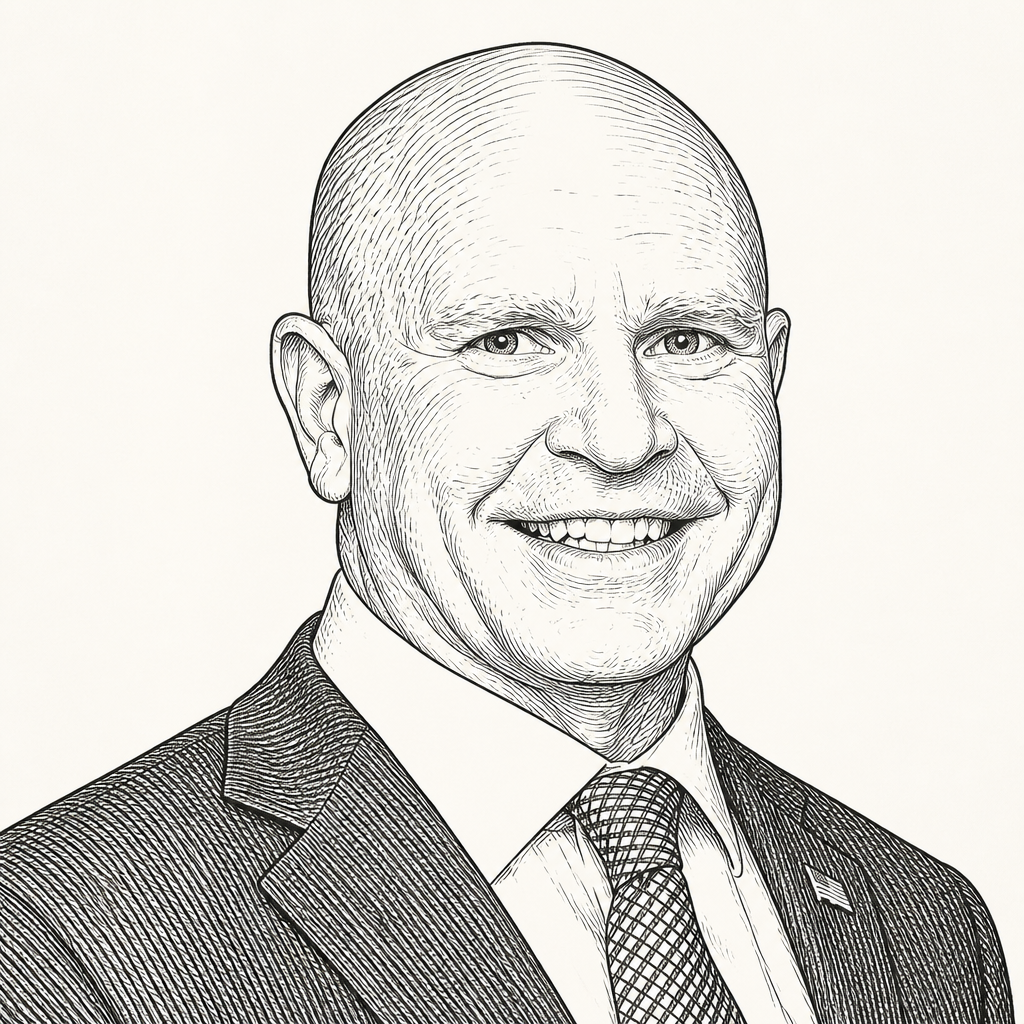
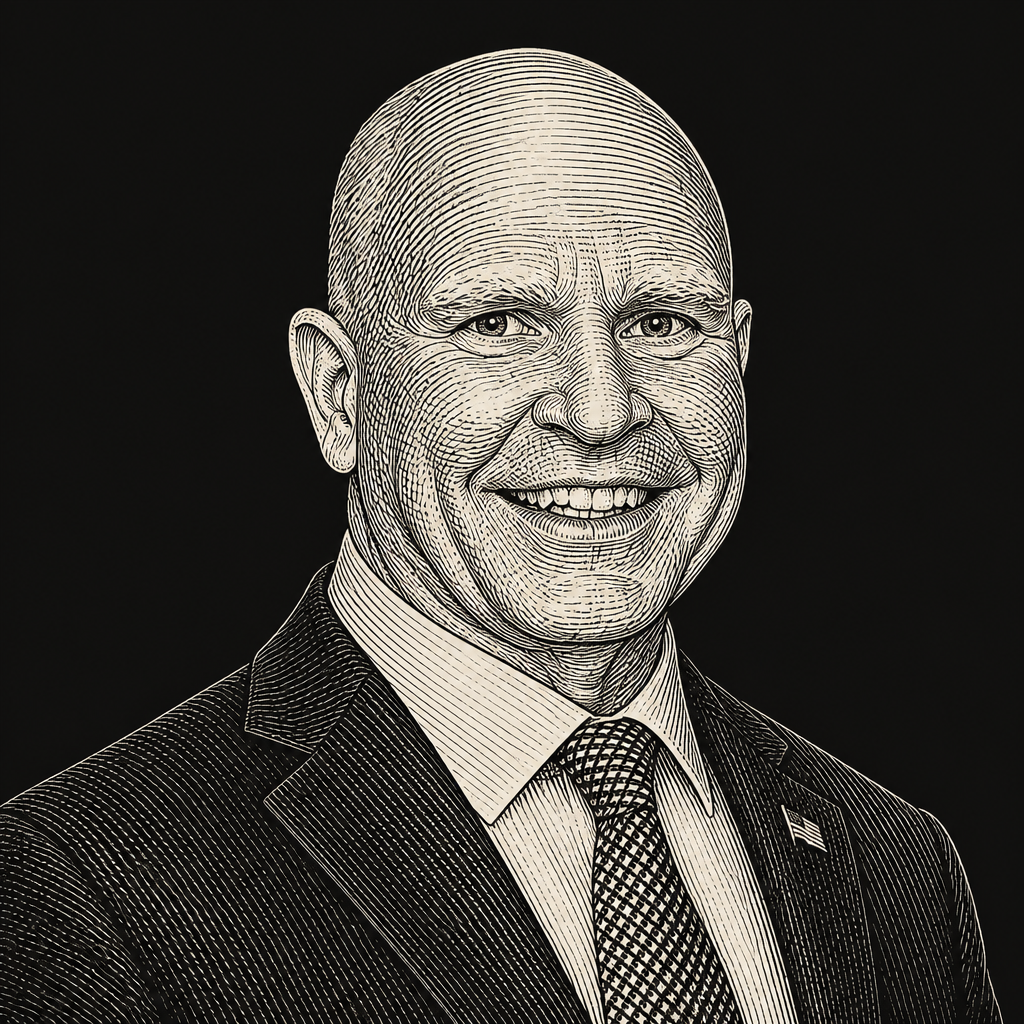
Herbert McMaster frames forward-positioned U.S. forces as a central mechanism of deterrence: capable troops stationed with allies on the frontier make potential aggressors doubt that force can accomplish their aims. Sikorski agrees with the premise and argues that U.S. deployments in Europe should be aligned with the location of the threat.
The U.S. presence, he says, reassured Europeans about the peaceful character of democratic Germany after the Second World War and introduced uncertainty into Soviet, and later Russian, calculations about the result of an invasion. That uncertainty is precisely what deterrence requires. But the relevant frontier is now farther east.
“The threat is not in Italy or Spain or even in Germany,” Sikorski says. “The threat is on the eastern flank.”
Poland already hosts a permanent U.S. missile-defense base and, on a rotational basis, between 6,000 and 10,000 U.S. troops. Sikorski says the United States appears interested in placing a brigade-sized force permanently in Poland, and that Warsaw is prepared to supply the logistics and facilities needed for it.
He also makes a financial argument intended for an American audience. Poland pays roughly $15,000 per U.S. soldier per year, he says, making it less expensive for American taxpayers to station and exercise those troops in Poland than in the United States.
Sikorski’s larger view of NATO is that Russian aggression and U.S. pressure on defense spending have jointly restored the alliance’s sense of purpose. He credits President Trump with achieving something prior U.S. appeals did not: inducing allies to spend more. Increased European defense spending, he argues, is necessary for self-protection and because it will command more respect in Moscow and Washington.
The geography of urgency is uneven. States nearer Russia spend more because they feel the danger more directly, Sikorski says. He identifies the Council of Baltic Sea States, together with Romania and Turkey, as the core of countries most serious about deterring Russia.
Europe’s economic capacity has become part of deterrence
Radosław Sikorski rejects the idea that the European Union is merely a free-trade zone. He calls it a confederation, comparable in one respect to the United States after independence but before the Constitution. The practical importance, in his account, is collective capacity: a market of 450 million relatively affluent consumers can negotiate more effectively with China, Brazil, and other trading partners than individual European states can.
The single market also matters to American firms, Sikorski argues. It offers one set of rules across the bloc; the alternative is not no regulation, but 27 national regulatory systems. Its purpose extends beyond eliminating tariffs, he says, because member states become an internal market in which companies can sell directly with less cross-border bureaucracy.
Sikorski disputes the idea that this arrangement is inherently undemocratic, noting that the European Parliament is elected, member states appoint the Commission, and national leaders sit in the European Council. Some regulations go too far, he acknowledges, but he treats that as a political question to be corrected within the system.
The more consequential shift is that a project built to prevent Europeans from fighting one another has acquired a defense role. Sikorski says European money now sustains the Ukrainian state and its defense budget, supports production of millions of Ukrainian drones, and purchases U.S. weapons. McMaster cited a recently transferred $19 billion that had been delayed by Hungary; Sikorski said Ukrainian pensions and salaries would have stopped without it.
Energy security fits the same strategic logic. Sikorski says Germany’s earlier faith in “transformation through trade”—the expectation that a large Russian gas relationship would moderate Moscow—proved mistaken. Poland opposed pipelines bypassing Central Europe because they would facilitate coercion and attempted subjugation. Russia’s capabilities have proved lower than expected, he says, but its intentions worse.
China presents a different form of exposure. Poland maintains a pragmatic relationship with Beijing and recognizes the One China policy; Sikorski says China has not harmed Poland as Russia has. But he argues that Europe cannot be naïve about Chinese industrial and trade policy. He cites a new EU transactional tax on small parcels, saying a system intended for personal gifts had been used to send 4.6 billion parcels annually into Europe and undercut small industry.
The larger concern is dependence on Chinese processing and refining of rare earths, permanent magnets, and other critical materials. Such leverage could become “a kind of weapon of mass destruction” if used for blackmail, Sikorski says. He welcomes allied coordination initiated in Washington and says Poland plans a follow-up conference in Warsaw. For him, supply chains, energy, Ukraine financing, and military spending are interlocking parts of Europe’s ability to resist coercion.
Poland’s growth has not closed the innovation gap
Radosław Sikorski presents Poland’s economic transformation as visible in both infrastructure and its growing technology sector. Visitors who remember communist-era Poland are often astonished, he says, by what has been built. He points in particular to first-class infrastructure and says Poland has ten times as many fast trains as the United States.
But Sikorski does not present Poland’s economic progress as complete convergence with the United States. After meeting Polish entrepreneurs in San Francisco, he says, he heard a practical comparison: regulation is easier in the United States and access to capital is better. Poland and the EU, in his view, need to learn how to foster more creativity.
That constraint matters alongside the larger strategic argument. Sikorski describes Poland as a successful free-market democracy with a substantial technology sector, but one that still needs more favorable conditions for entrepreneurs to turn ideas into companies at the scale available in the United States.
The transatlantic relationship is broader than its disputes
Radosław Sikorski accepts that Europe had defense spending to make up, but argues that some U.S. criticisms of the economic relationship misread its balance. The United States may have a slight goods-trade deficit with Europe, he says, partly because its large budget deficit draws goods from abroad. But America also has a substantial surplus in services: European spending on Netflix, Hollywood films, social-media platforms, and other U.S. services flows back to the United States.
He adds that European pensioners send $300 billion of savings to Wall Street each year. Count goods, services, and investment together, he argues, and the relationship is roughly balanced.
Sikorski does not suggest that transatlantic disagreements are inconsequential. He says Poland dislikes interference in its domestic politics and maintains that allies should respect one another’s political processes. But he urges an approach grounded in the larger field of shared interests. Invoking Ronald Reagan, he offers the formulation: a country that agrees with you 80% of the time is “an 80% friend,” not a 20% enemy.
That principle also informs his view of international order beyond Europe. Poland recognizes Israel’s right to exist within secure, internationally recognized borders and recognizes Palestine, because Sikorski sees a two-state settlement as the eventual way for seven million Israelis and seven million Palestinians to live alongside one another in peace. Poland’s own experience of having been deprived of statehood, he says, gives it solidarity with both peoples.
On Iran, Sikorski distinguishes between legitimate national-security interests and exporting a revolutionary system to other countries. Poland wants freedom of navigation through the Strait of Hormuz and a return to the prior status quo, he says. Allowing one country to annex an international waterway would, in his view, create a dangerous precedent for other strategic passages, including the Danish Straits, the Dardanelles, Malacca, and the Taiwan Strait.