Peru’s Security Crisis Requires Targeted Enforcement, Not a Military Crackdown
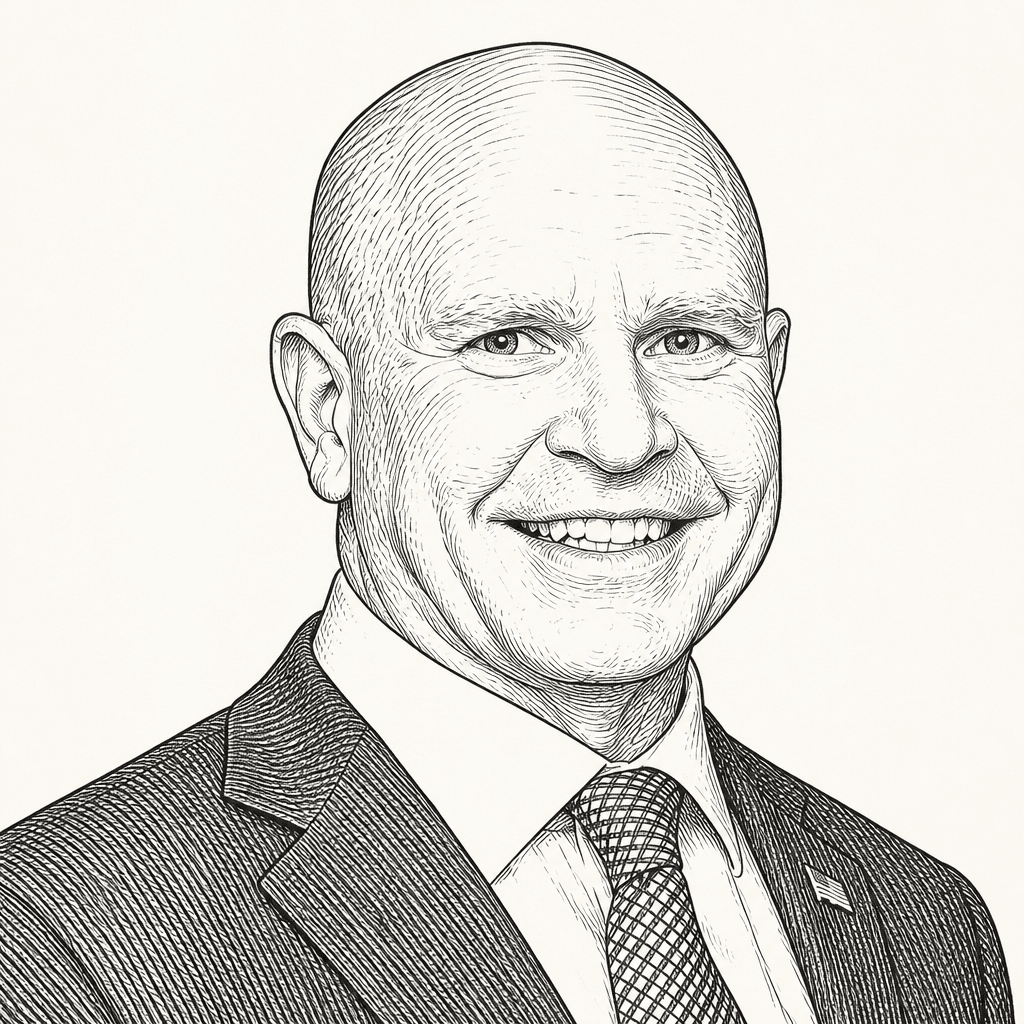
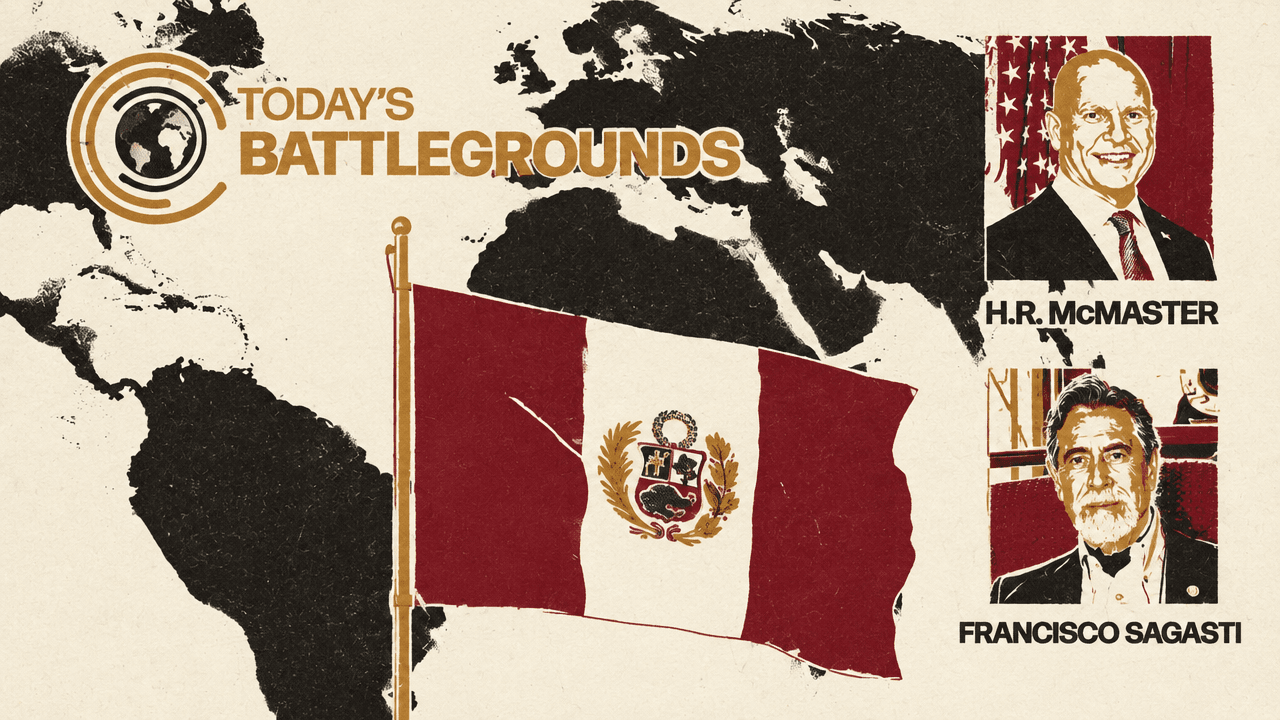
Former Peruvian president Francisco Sagasti argues that governing requires preparation, a clear program and leaders who understand both the limits and obligations of power. In a discussion with Hoover fellow H.R. McMaster, he says Peru’s mineral-led stability rests on external prices and coexists with illegal mining, while organized crime demands more than a show of force. Sagasti also contends that democratic governments can rebuild trust only by responding to people’s needs and working effectively within the law.
Preparation is part of the exercise of power
Francisco Sagasti’s assessment of Peru’s new administration was blunt. In the first 60 days of Keiko Fujimori’s presidency, he said, it had become apparent that her team had no clear program and had not been assembled in advance. He found it baffling that someone who had spent 20 years seeking the presidency, and who had observed power from inside the presidential palace while her father was in office, seemed to have arrived without a governing plan.
Sagasti questioned whether Fujimori should bring three of her election adversaries into her cabinet. Building bridges is important, he said, but ministers with different agendas who had lambasted a president during the campaign cannot simply be expected to act loyally in her government. His example was about the practical demands of governing: assembling a team means choosing people who can work toward the government’s program.
In response to Herbert McMaster’s question about what Fujimori’s victory might mean for Peru, Sagasti described the early months as “business as usual,” rather than a break from the country’s recent pattern. He cited the conduct of presidents who had followed his short term: one, he said, was jailed after an attempted coup; another was under investigation over what Sagasti characterized as unusual and possibly corrupt maneuvers; and a third had been seen meeting Chinese business representatives outside the government palace. These were Sagasti’s examples of why he thought recent leadership had not met the country’s needs. He said Peruvians had hoped for a significant change in the way power was exercised, but he had not yet seen signs of it.
The question of preparedness connects with a broader lesson Sagasti drew from Sir Francis Bacon, the subject of his book Knowledge is Power: The Twilight of Sir Francis Bacon’s Epoch and the Prospects for Humanity. Sagasti said the book was the result of roughly 45 years of thinking and writing. He had once considered a three-volume treatment, but ultimately condensed the work to about 200 pages.
Bacon mattered to Sagasti not only as a philosopher who renewed ideas about how knowledge is generated, but as someone who connected the production of knowledge to its use in improving human life and exercising authority. Bacon was also a legislator, royal adviser, and Lord Chancellor, Sagasti noted: he worked in intellectual and political life at a time when combining those roles was unusual. His writing, as Sagasti presented it, addresses both how society can use knowledge and what leaders owe the people they govern.
Leadership, in Bacon’s account, was not permission to act on whim. People in high office had responsibilities to society as a whole. Sagasti also recalled Bacon’s advice about differences in age and temperament: young people, in Bacon’s formulation, were better at execution than reflection, while older people were better at reflection than execution. Sagasti presented this as a practical observation about how to work with people.
He also remembered a warning about dealing with unsavory figures in government: sometimes one has to work with such people, but should make sure one is using them rather than being used by them. For Sagasti, that advice spoke to the compromises and judgments involved in political office. The need to deal with difficult people does not remove the responsibility to understand the relationship and retain control over one’s own decisions.
McMaster connected Bacon’s ideas to the American founding, emphasizing the combination of older and younger leaders and what he described as the value of virtue and selfless service. Sagasti added that Thomas Jefferson had a portrait of Bacon in his office and Benjamin Franklin quoted him. He also recalled a recent reference to Bacon by a founder of Palantir, whom Sagasti said had described Bacon as a “closet atheist” and precursor of the Antichrist—a characterization Sagasti considered out of place. These examples, he argued, show that Bacon is still invoked in contemporary debates as well as remembered as a historical figure.
The point was not that a seventeenth-century thinker supplied a ready-made political program. It was that questions about how knowledge informs power, how leaders judge whom to work with, and what obligations accompany authority remain current. Sagasti’s own move from scholarship and public service to the presidency made those questions more than theoretical for him.
Mineral wealth supports stability, but not a durable economic base
Sagasti described Peru’s economy as stable but exposed to conditions the country does not control. High prices for mineral exports, especially gold, had helped produce a large budget surplus and economic stability. He also credited the central bank president with maintaining price stability. But, he said, the benefits primarily reach a relatively small group connected to exports, while the prices behind the country’s strong economic position depend on external demand—including demand associated with the energy transition and a flight to gold as a safe asset.
The same high prices that support export earnings have also strengthened illegal activity. Sagasti said independent observers estimate that about half of Peru’s gold exports are mined illegally. In his account, that estimate helps explain the tension in the country’s economic position: elevated mineral prices support stability while also making gold production more attractive to illegal miners and crime syndicates. He did not describe this as a durable foundation. Peru’s reliance on prices it does not control, he argued, makes the current situation vulnerable over the longer term.
McMaster raised allegations that Fujimori had received illegal funds connected to Odebrecht. Sagasti rejected the allegations as invented, saying he had learned from childhood to be honest and state things as they are, even when that approach is out of fashion in politics. He then turned to a wider concern: revelations from Bolivia, he said, suggested that groups engaged in illegal activity were also trying to influence elections across the region, including through social media and online networks. He framed this as a troubling intersection between illicit activity and political influence, not merely a problem of individual graft.
Crime is not an insurgency, and force alone will not solve it
For Sagasti, Peru’s security problem is often misdiagnosed. Treating the present threat as a continuation of the Shining Path insurgency, he argued, leads to the wrong tools. Shining Path had an ideology, a vertical structure, and the objective of taking power. Organized crime and everyday extortion operate differently: they may be decentralized, improvised, embedded in ordinary social relations, and connected across borders.
To illustrate the difference, Sagasti described a hypothetical form of extortion within an apartment building: one neighbor learns that someone on another floor has a large amount of money and begins demanding payment. That kind of threat does not resemble an insurgent army. Nor, he argued, is it addressed by sending the military into the streets. Armies are trained to defend territory and sovereignty; protecting citizens from diffuse criminal networks requires a different and more sophisticated structure, as well as international cooperation when criminal activity crosses borders.
The danger is not limited to narcotics. Sagasti said illegal mining was the main illegal activity in Peru and returned to the estimate that about half of the country’s gold exports came from illegal mines. Rather than concentrate enforcement on miners alone, he argued, authorities should trace the supply chain: gold has to be refined, transported, and sold, creating intermediaries who can be investigated. He made a similar point about illegal logging. In his view, enforcement should focus on the networks and commercial links that allow illicit goods to move, rather than assume that a show of force at the point of extraction will dismantle them.
Extortion, meanwhile, can be carried out by small, loosely organized groups. Sagasti described young people, some as young as 13 or 14, obtaining guns and demanding payments from bus companies. He said at least half a dozen bus drivers had been killed in recent weeks for refusing to pay. He characterized the groups as numerous and disorganized, rather than as a single organization with a central command. The example matters for policy: a strategy designed to defeat a large, structured organization may not address small groups that emerge locally, acquire weapons, and target businesses and workers.
The flow of weapons also makes the problem international. Sagasti argued that attention to drug supply should be matched by attention to the supply of illegal arms, which he said came from the north. McMaster called this a two-way trade. Sagasti agreed with the substance while saying he had to be diplomatic. His broader argument was that security policy should account for the routes and markets connecting criminal activity across borders, rather than treat each country’s problem as if it began and ended within its own territory.
Sagasti was skeptical of “mano dura”—a strong-hand approach—as a default response. People understandably demand security, he said, but the slogan does not amount to a strategy. He cited the work of Peruvian-Chilean scholar Lucía Dammert as a useful analysis of security in Latin America, and said that her work and his experience in government reinforced the seriousness of the threat. Taking the problem seriously, for Sagasti, meant distinguishing kinds of crime, tracing the chains that sustain them, protecting people from extortion, and cooperating internationally. The threat is grave; that is why he rejected reflexive measures that do not fit it.
He also described a political risk. In his view, some extremist right-wing governments need enemies to remain in power. They can cultivate fear at home and antagonism abroad, including through nationalist rivalries. Sagasti worried that such rivalries would make it harder for governments to work together against transnational crime. McMaster widened the comparison, describing regional politics as a pendulum swinging between the far left and far right, and suggesting that the swings may reflect declining confidence in democracy.
Trust depends on governments responding to people’s needs
Sagasti did not explain disenchantment with democracy as a simple ideological shift from left to right. He described it as anti-incumbency: voters turn against governments across the political spectrum because those governments have not solved basic problems such as inequality and quality of life. A change of party or direction may therefore register dissatisfaction without restoring confidence in the system itself.
He called the underlying problem a crisis of trust. People do not trust one another, sometimes for good reason, he said. His proposed response begins at a small scale: people must learn to trust others and themselves. He compared individual acts of confidence to a stone dropped into a pond, with effects that spread gradually. This, for Sagasti, was one condition democratic government needs if it is to function.
He described the relationship as reciprocal: trust is needed to move towards democracy, and democracy is needed to strengthen trust. Autocrats, in his account, rely on fear—fear of groups inside the country or of an external threat. Democracies can inspire trust, but that possibility depends on citizens believing that public institutions can respond to their needs. Sagasti said democracy, with significant changes, was the only form of government with even a faint chance of doing so.
Those changes, he suggested, must begin with a clearer grasp of the world in which governments now operate. He named advances in science and technology, demographic change, demand for materials, inequality and concentrated wealth, and developments in genetic engineering. He also described social media environments in which people can end up in relatively self-contained groups, listening mainly to others who share their views. Unless policymakers understand such changes and how they affect their own countries, he argued, they will struggle to design suitable economic, security, or social policies.
Sagasti connected that argument to The Art of Governance: Updating an Ancient Art, a book he said he was writing. He described it as an effort to rethink governance for a post-Baconian era. The link to Knowledge is Power is direct: if knowledge is essential to the exercise of power and authority, then governing well requires not only access to information but the ability to understand changing conditions and act on them.
Partnership with the United States need not exclude other partners
The discussion of regional politics led to how Peru should relate to the United States and China. Sagasti welcomed greater American attention to Peru and Latin America, and also described Chinese involvement as important. Neither relationship, he said, is without problems. The task is to understand each partner and manage the relationship, rather than treat foreign policy as a choice between exclusive camps.
Sagasti stressed that Chinese businesses are not all alike. He distinguished among the central government, provincial and local authorities, state-owned enterprises, and businesses described as private. In his account, bribery and unfinished infrastructure projects were especially associated with lower-level regional and local companies, particularly in construction and infrastructure. He cited roads in Peru that had been left unfinished. Large investments such as the Chancay port, he said, were handled more carefully. He also agreed with McMaster that a major infrastructure project in Ecuador had gone badly, while noting that it involved a regional organization.
His argument was not that Chinese investment is harmless or that concerns about it are misplaced. It was that analysis should be precise enough to distinguish actors and practices. Sagasti said that understanding China’s political system and the differences between its levels of government and types of enterprise was necessary for dealing effectively with them.
He made a parallel point about the United States. American investment had done important things for Peru and remained essential, but U.S. involvement in Latin America had not been uniformly beneficial to democracy. Sagasti recalled the history of U.S. involvement in the region, including what he had seen in the 1970s and 1980s, and argued that the relationship’s political history, as well as its economic value, had to be considered. The United States also faces a structural disadvantage in mobilizing investment: unlike the Chinese government, it cannot simply direct private companies to invest in particular places. Those companies must expect a return.
That is why Sagasti proposed what he called a “Bolivar-San Martin Doctrine”: Latin America and the Caribbean should act for the benefit of Latin Americans and Caribbeans. He set this against a regional politics defined by the Monroe Doctrine or by the assumption that countries must choose one great power over another. Latin American countries, he argued, should work with the United States, China, the European Union, India, and others according to their own interests.
He supported a mixed economy in which private initiative and private property matter, while governments use their power to steer activity towards the common good. That approach rejects both the assumption that everything should be left to the market and the assumption that every problem calls for state control. It also makes room for multiple partnerships rather than a single, exclusive alignment. Supply chains and security problems, Sagasti argued, require cooperation across regions.
McMaster raised the U.S.-organized Shield of the Americas, which he described as involving 15 countries, including Peru. Its stated aims included cooperation against narcotics trafficking, intelligence sharing, stronger supply chains, and reducing vulnerability to coercive economic power.
Sagasti said he had read the initiative’s initial document and statements and had seen later versions. His assessment was that the proposal reiterated cooperation that already existed and relied heavily on rhetoric and declarations of intent. He contrasted those statements with the end of USAID support, which he said had removed assistance for alternative crops. He called for renewed financial support for alternative livelihoods and stronger cooperation with police and intelligence services.
His concern was not that regional cooperation was undesirable. He supported revitalizing cooperation through the Organization of American States and welcomed work in multiple directions. The problem, he said, was the gap between stated goals and action. If governments speak of supply chains and cooperation while removing support for activities that contribute to those aims, the commitments need to be measured against what happens on the ground.
That standard also shaped his response to migration policy. Sagasti agreed that illegal migration should not be tolerated, but insisted that illegal actions cannot be used to stop it. He objected to killing citizens without authorization or justification. “You don’t do illegal things to stop illegal things,” he said. Governments, in his view, must use effective, democratic, legal means to stop illegality. For Sagasti, the means matter because a policy that violates the principles it claims to defend undermines its democratic purpose.
Young people need evidence that public service can work
Sagasti’s appeal to young people was rooted in his own brief presidency. He urged people in their twenties and early thirties to get involved in politics rather than dismiss it as too dirty or complicated. Quoting Plato, he recalled the warning that the price of refusing to participate in politics is being governed by worse people. Public service, he said, is an obligation that comes with privilege.
The example matters as much as the argument. Sagasti said that during a recent visit to Arequipa, he spoke to about 150 young leaders considering public service. Afterward, a young woman stopped him and said, “Mr. President, thank you for giving me back faith in our country.” He described the moment as deeply moving. His point was that people can recover some confidence when they see someone’s actions match their words.
He presented his presidency as evidence that democratic and effective government can be possible, even under severe constraints. Sagasti took office amid the pandemic, an economic crisis, social protests, and an election six months away. He said his government managed to act while respecting human rights and democratic rules and keeping the common good in view. “I did it,” he told people who said governing democratically and effectively was impossible. The term was short, but for him it demonstrated a possibility rather than offering a formula for every administration.
Sagasti argued that leaders should demonstrate integrity, commitment to facts, consistency, and service. Restraint matters too: public officials must recognize the limits on what they can do and refrain from acting arbitrarily. These standards are not only personal virtues. They are ways of showing younger people that public institutions can be used in the service of others.
His closing lesson from Bacon was perseverance. Writing Knowledge is Power had taken him 45 years, he said, and he had kept working on it. Improving political life may take years or decades, but that is not a reason to give up. Sagasti ended by quoting Marguerite Yourcenar’s Memoirs of Hadrian: catastrophe and disorder will come, but order can return; the words “humanity, liberty, and justice” can regain their meaning.