Nuremberg’s Forgotten Women Helped Build the Case Against Nazi Crimes
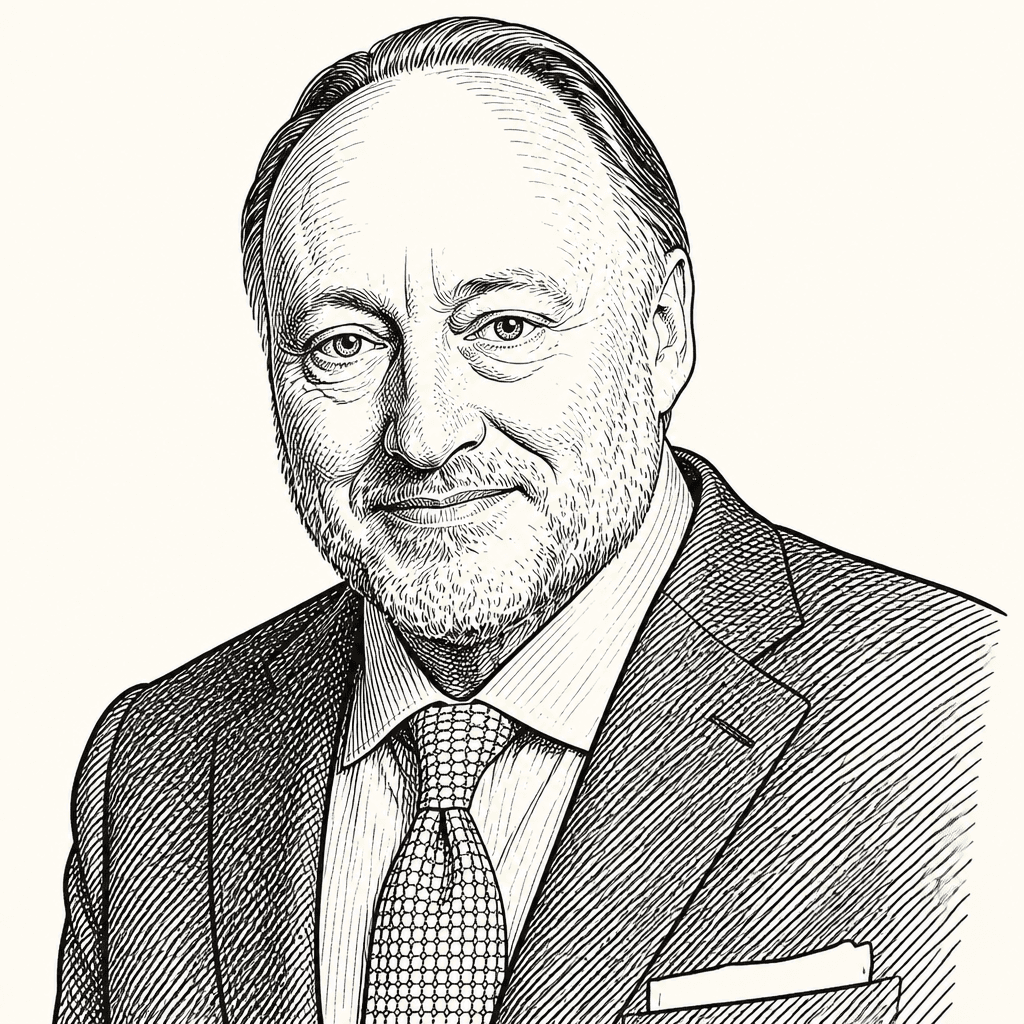

Historian Natalie Livingstone argues that women helped shape the Nuremberg trials but were largely written out of their familiar history. In her book *The Nuremberg Women*, she traces the work and experiences of eight women, from lawyer Harriet Zetterberg, whose case against a Nazi official was presented by a male colleague, to French Resistance survivor Marie-Claude Vaillant-Couturier, whose testimony brought the camps’ atrocities before the court. Livingstone says their stories illuminate both the limits placed on women’s authority and the trials’ insistence on evidence and truth.
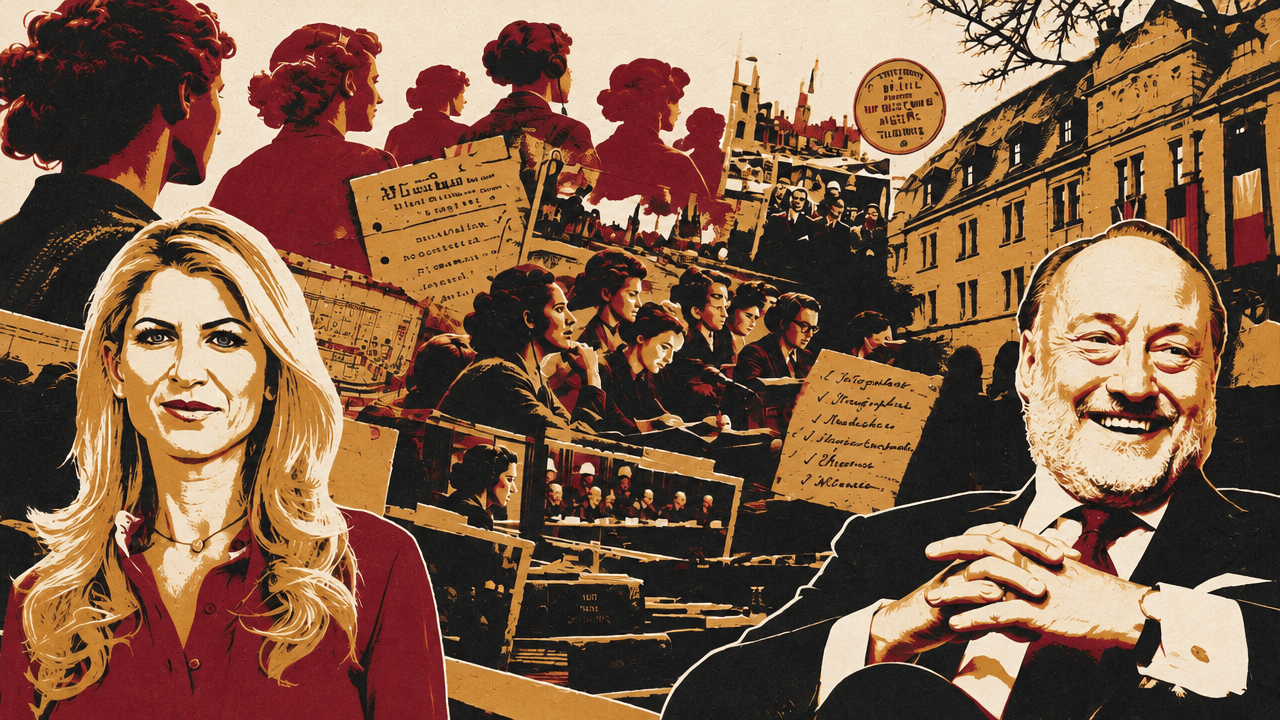
Women were present at Nuremberg—and written out of its familiar image
The painting that opens Natalie Livingstone’s account of the Nuremberg trials presents the courtroom as a world of men: male judges, lawyers, defendants and soldiers. But the scene extends beyond the courtroom’s walls into the wreckage of war—rubble, smoke, twisted metal and corpses. Its artist, Dame Laura Knight, is there too, though easy to miss: her signature sits in the lower left, and she painted herself out of the picture.
For Livingstone, that omission captures a larger paradox. Women were present at Nuremberg and helped shape how it was understood, yet were marginalized in the historical record. Her book, The Nuremberg Women, follows eight of them: lawyers, journalists, witnesses, translators and a housekeeper. Their experiences bring into view both the work women did and the limits placed on their authority.
Knight’s painting is more than an image of the courtroom. Livingstone says Knight broke through the courtroom’s “fourth wall,” showing the devastation beyond it. The painting joins the trial to the destruction it was meant to confront, while the artist’s barely visible signature makes the women’s place in that history easy to overlook. Knight’s own life at Nuremberg also resists a single, solemn image: Livingstone says she went out for cocktails, sometimes “literally swinging from the chandeliers.”
One of the clearest limits on women’s authority was explicit. Harriet Zetterberg, who studied law at Yale and became the first woman to win its Sterling Scholarship for Law, joined the American prosecutorial team soon after qualifying. Livingstone says she found Zetterberg in a footnote in the memoirs of assistant trial prosecutor Telford Taylor. Zetterberg wanted a career in public service rather than a lucrative position in a New York firm.
Her legal mind earned her a consequential assignment: assembling the case against Hans Frank, the Nazi governor-general of occupied Poland, whom Livingstone describes as responsible for the deaths of more than four million people. Zetterberg built the dossier from Frank’s own letters, speeches and diaries. Livingstone says the material led to Frank’s conviction. But when the case was first brought before the bench, Zetterberg had to hand her dossier to a male colleague. In Livingstone’s account, a woman in an American court in 1946 could not advocate without a waiver of disability—the “disability” being that she was a woman. Zetterberg sat by while a man read her work aloud.
Livingstone says Zetterberg was largely forgotten, despite the work she did to prepare the case.
Testimony brought the camps into the courtroom
Marie-Claude Vaillant-Couturier stands at the center of Livingstone’s account. Before the war, she expected to become a photojournalist; her mother edited French Vogue and her father was a publisher. After the German occupation of France, she joined the Resistance. Arrested in 1942 for smuggling weapons, she spent nine months in solitary confinement, then was deported to Auschwitz in Convoy 31000 with 228 other female resistance fighters. Livingstone says only 49 of the 229 survived. Vaillant-Couturier was later sent to Ravensbrück and, after its liberation, stayed for three months to care for people too ill to travel home.
On January 28, 1946, she testified at Nuremberg for two hours. Livingstone describes her account as a clinical, detailed explanation of deaths from cold and starvation, sexual violence, the murder of children and babies, and the purpose of the extermination camps. Vaillant-Couturier distinguished those camps from labor camps and described what she had seen without visible emotion. Livingstone says her testimony left the courtroom in no doubt about the barbarity of Nazi crimes and the Nazis’ intent to liquidate the Jewish population.
Afterward, Vaillant-Couturier told journalists she felt she had spoken for people whose voices had been taken away, restoring names to those reduced to numbers. She then looked each defendant in the eye. Livingstone sees that act as part of a reckoning with those on trial, following the testimony she had given.
The contrast with what happened at Ingeborg Kálnoky’s Witness House makes the stakes of testimony vivid. Kálnoky, a Hungarian aristocrat, fled Budapest in 1944 after the Nazis took power there. She spent nine months travelling through war-ravaged Europe with three children while pregnant with a fourth. After giving birth in a hospital amid Nuremberg’s rubble, an American soldier approached her about managing a house for witnesses. Livingstone says returning to Hungary was not a viable alternative for Kálnoky, given the sexual violence Soviet troops inflicted, particularly on aristocratic women.
The house accommodated witnesses for both the prosecution and the defense, including concentration camp survivors and Nazi perpetrators. Among the latter were Karl Haushofer, Rudolf Diels and Hitler’s photographer Heinrich Hoffmann. Kálnoky’s diary records the strain of having survivors and perpetrators under one roof, sometimes sharing a dining room.
Livingstone recounts one incident in which Hoffmann approached four Lithuanian concentration camp survivors and taunted them. He claimed Hitler had known nothing about the Holocaust and loved children. When the survivors asked whether he knew their names, Hoffmann said he knew them only by their numbers. Kálnoky separated the Nazis and survivors at dinner, Livingstone says, but that did not prevent the confrontation. She describes the Witness House as a “twisted sociological experiment.”
The diaries expose complicity, denial and the pressures of the Cold War
The women who recorded Nuremberg did not all stand on the same moral ground. Ursula von Kardorff was a Prussian journalist who remained in Germany during the war and wrote for Nazi newspapers. She told herself she had not been complicit, but her articles covered munitions factories and women’s roles in the Third Reich. At the end of the war she was one of 16 German journalists sent to cover the trials.
Her diary registers the difficulty of being German in Nuremberg: “Nowhere is it more painful to be German than in Nuremberg.” Her articles were considered too pro-Nazi, and at one point she was barred from the courtroom. Yet Livingstone also finds in the diary a lingering admiration for Nazi wives and their children. Von Kardorff remarks on their clothes and manners and describes feeling her heart open to them. Livingstone finds that response striking in light of the crimes being discussed at the trial.
Twenty years later, von Kardorff published a heavily edited version of her diary as Diary of a Nightmare. Livingstone says the memoir overstated von Kardorff’s role in the Nazi resistance without removing the record of her denial. In its 1968 epilogue, von Kardorff wrote that she had barely noticed the changes Nazism brought to Germany: some Jewish friends had left, she said, but others came. Livingstone presents the diary as a record of how a person could live alongside persecution and explain it away.
Erika Mann’s trajectory was different. The daughter of Thomas Mann, she began as a celebrated, hard-partying figure in German high society. In 1932, she saw the Nazi influence in her country and turned to political opposition. Her satirical work The Peppermill angered Joseph Goebbels, Livingstone says, and led to her exile. Stateless, Mann needed a marriage to acquire a nationality. Christopher Isherwood declined her request; his friend W. H. Auden agreed. What began as a marriage of convenience became a lifelong friendship.
Mann spent the war reporting from the front lines, speaking at rallies and on the radio. At Nuremberg, she wrote emotionally about being German while rejecting the country she called her “alien homeland.” The conditions for women journalists made their lower status plain: they were put in a small dower house with one urinal, while men stayed in a large castle. Mann complained in her diary about the morning bathroom queues. Livingstone recounts the indignity without suggesting it kept Mann or the other women from doing their work.
The young Soviet translator Tatiana Stupnikova faced a different set of dangers. At 22, she was taken from bed by Stalinist authorities, given Western clothes and brought into the courtroom to translate Nazi crimes in real time. As she listened, she learned about crimes committed by her own country, including the massacre of tens of thousands of Polish soldiers at Katyn and the deliberate cover-up. Livingstone says Stupnikova concluded in her diary, which she could publish only in the 1990s, that Nazism and Stalinism were “two sides of the same coin.” She also had to reckon with the risk of contradicting Stalinist authorities: Livingstone says a misstep could cost her life, as it had for other members of the Russian delegation.
Nuremberg’s meaning rests on evidence, despite its failures
Reporting on the verdicts for The New Yorker, Rebecca West saw the trials as both flawed and momentous. Nuremberg had failures and inaccuracies, Livingstone says, but West understood that the trials had happened against the odds. Their existence represented a victory for justice and truth over lies. In Livingstone’s view, West became not only a witness to the proceedings but a voice for what they meant.
West’s time in Nuremberg also brought a personal reawakening. She began an affair with Judge Biddle, the chief American judge, after what Livingstone describes as 16 years in a loveless marriage. That private story sits alongside West’s reporting on a public reckoning: both, in Livingstone’s telling, marked a return to life and feeling.
Livingstone says she was surprised by the levity around the trials. She recounts Knight’s nights out and West’s affair, as well as her understanding that the bikini was first debuted at Nuremberg: members of the French delegation wore two-piece swimsuits at a pool party celebrating Biddle’s 60th birthday. These episodes do not lessen the gravity of the crimes. They restore some of the private lives and ordinary human behavior around a courtroom often remembered only through its proceedings.
Livingstone’s family history helped draw her to the subject. Her grandparents were Hungarian Holocaust survivors who came to England after the war, and an uncle was born in Hungary as the Nazis were being driven out. The crimes judged at Nuremberg, she says, were never simply history in her family. Researching the women made the trials feel more human to her: not only a record of atrocity, but a story of hope, creativity and love in the ruins.
That human dimension is not a reason to soften the history. Livingstone argues that the trials mattered because they made a case through documentation, film footage and witnesses. They were not only about punishment; they were also a way to prevent the crimes from dissolving into myth, memory or political convenience.
The Nuremberg trials were not only about punishment, they were about the truth.
Roberts raises the contemporary context by pointing to increasing antisemitism and threats to Jews on the streets of London, and asks what the trials mean 80 years later. Livingstone answers that Nuremberg insisted on evidence: documents, film footage, facts and human testimony. She contrasts that commitment with what she calls a post-truth age, in which outrage can spread faster than truth, social media can substitute slogans for explanation, and conspiracy and misinformation can flourish. The lesson she draws is the need to distinguish truth from lies, evidence from incitement, and hatred from humanity.
The counterfactual question is whether the Nazis might have been shot rather than tried. Roberts says Stalin favored executing 60,000 senior Nazis and describes Churchill as having briefly supported the idea before changing course. Livingstone responds that, if the victors were going to pursue execution, 60,000 would not have been enough; Roberts says 12 defendants were executed, 19 were incriminated and three acquitted. The exchange turns on what a courtroom made possible that vengeance could not: a public reckoning based on evidence.
Roberts argues that Nuremberg helped produce a peaceful, liberal-democratic Germany, which he calls a model democracy for the 80 years after the war, while noting current problems with the far-right AfD. Livingstone agrees that Nuremberg’s ideals and aims were noble, but cautions that justice changes when it is placed in human hands. She points to Robert Jackson’s appeal to “stay the hand of vengeance” and his description of the trials as “the most significant tribute that power has ever paid to reason.” For her, the proceedings were an imperfect instrument given an impossible duty; that they took place at all was a symbolic choice of a courtroom over vengeance.