Elizabeth II Turned Royal Restraint Into Diplomatic Power
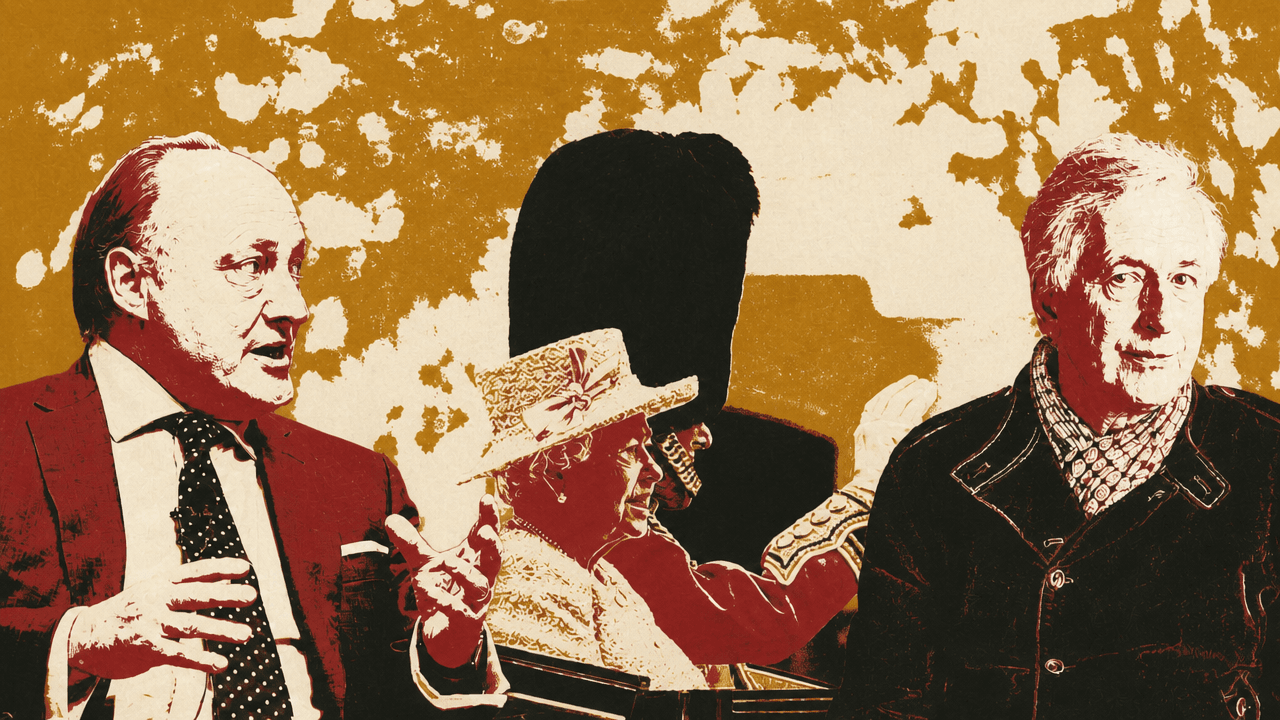
Royal biographer Hugo Vickers argues that Elizabeth II’s statecraft rested on restraint: saying little, appearing above politics, and using ceremony to create room for ministers and officials to act. In this Secrets of Statecraft conversation with Andrew Roberts, Vickers extends that argument to King Charles III, casting monarchy’s diplomatic value as the ability to open doors without seeming to negotiate policy. His account presents the Crown not as an alternative government, but as a constitutional instrument whose power depends on discipline, ambiguity, and the public weight of duty.
The diplomatic value of monarchy is opening political space without seeming to conduct politics
Hugo Vickers presents monarchy’s diplomatic usefulness as a function of restraint, ceremony, and constitutional ambiguity. A sovereign can help create room for political movement because the sovereign is not, formally, a politician. In Vickers’s account, the monarch’s value is not that he or she negotiates policy directly, but that a royal visit can alter the atmosphere in which ministers, officials, and businesses later act.
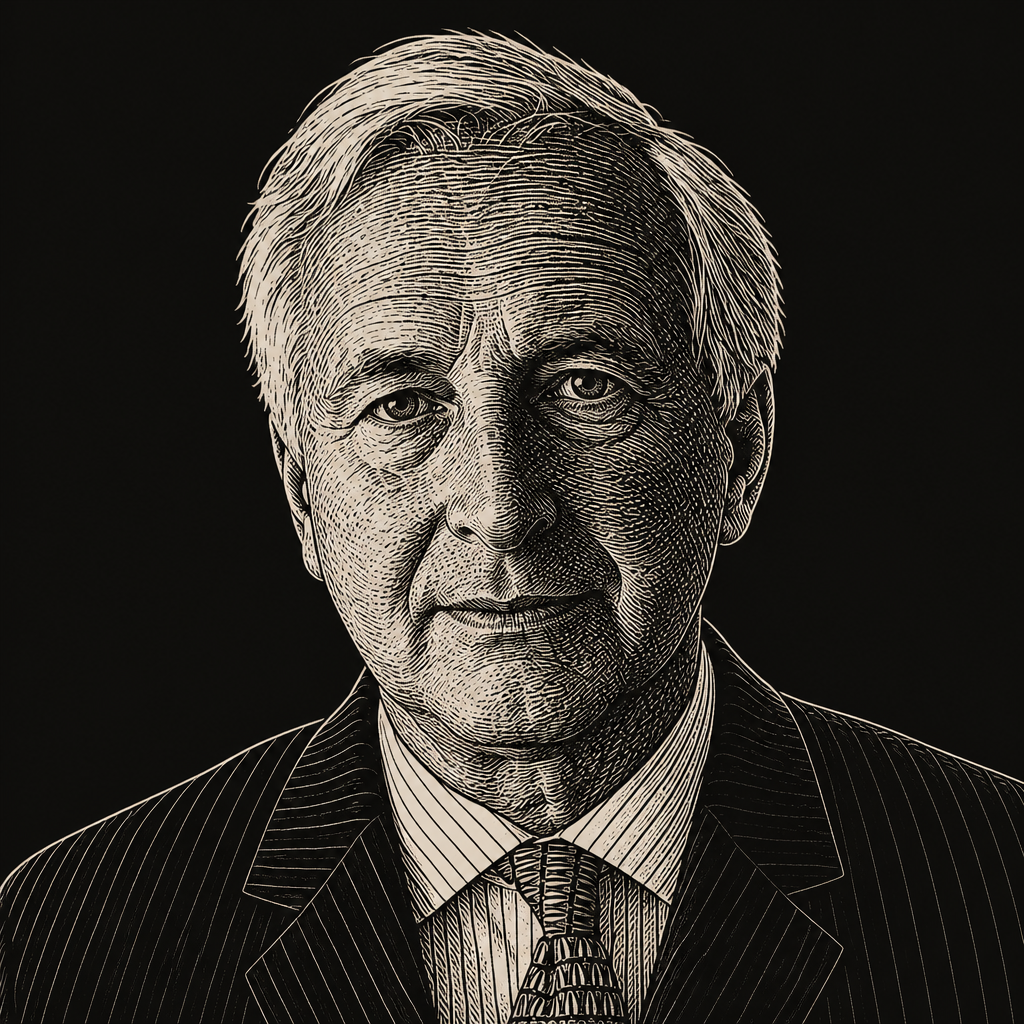
That is how he reads King Charles III’s visit to the United States. There had been controversy over whether Charles should go at all, and Vickers says that when he was in Washington, British Embassy officials were preparing for a visit whose date still had not been fixed. The uncertainty made the eventual success more striking to him. He says Charles was “about the only person in this country that President Trump really respected,” and therefore about the only British figure who could deliver what Vickers calls an “interesting,” “slightly at times almost political,” and “slightly provocative” speech with “tremendous aplomb” and “get away with it.”
Andrew Roberts adds a concrete claim of consequence: Trump “went further by taking the tariffs off Scotch whisky,” which Roberts describes as a direct financial benefit to the Scotch whisky industry and as something unlikely to have happened had Britain “just sent over a British president to Washington.” Vickers agrees with the distinction Roberts is drawing. The monarch’s part, as he describes it, is not to negotiate the trade deal or perform the politician’s job. It is to open a door.
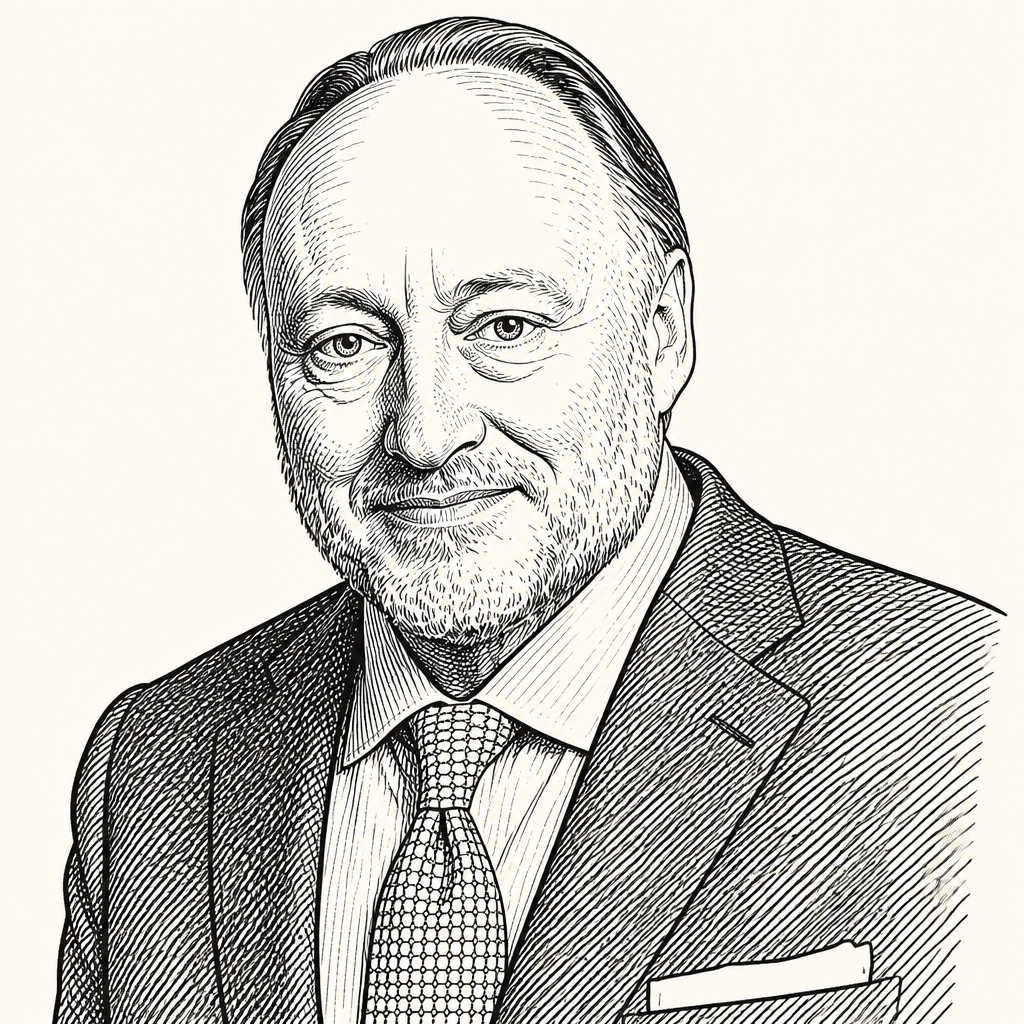
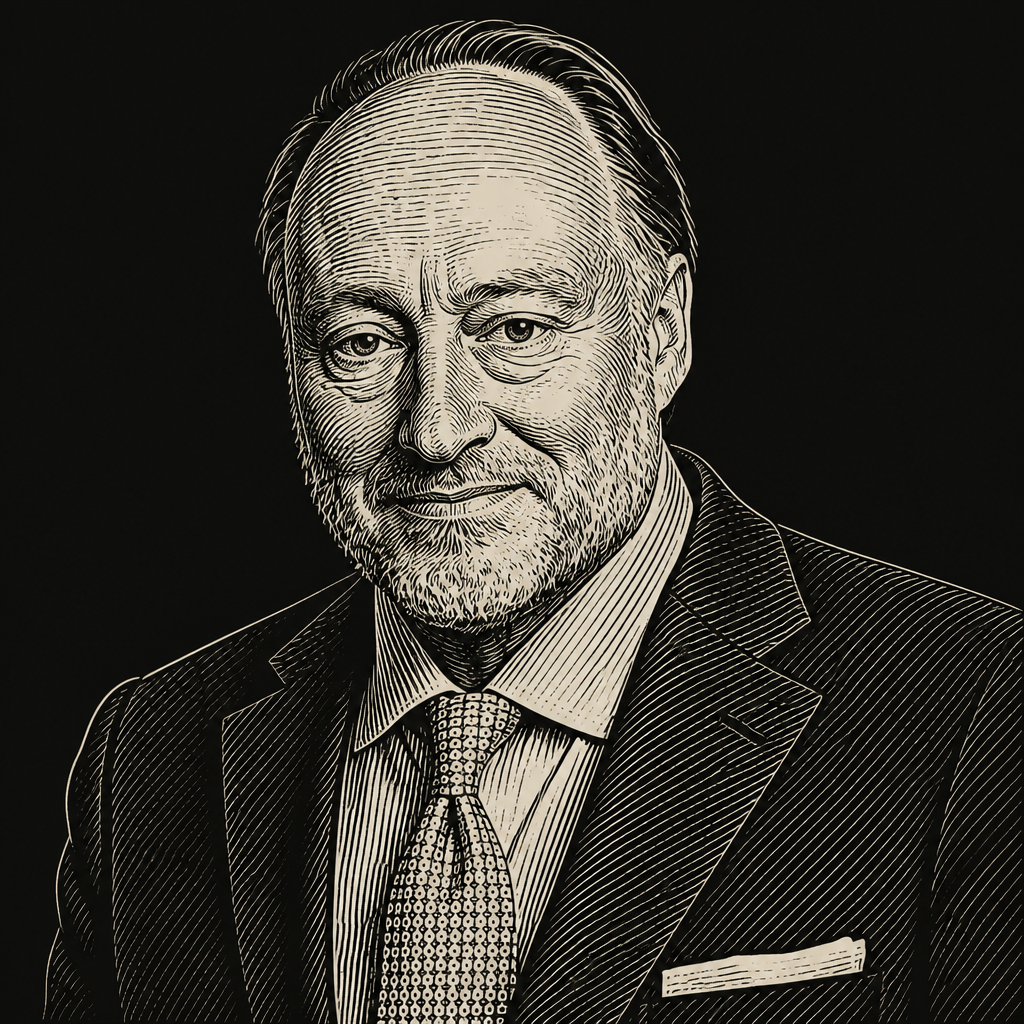
When the Queen, for example, went to Russia and places like that, that this was the door being opened, and as I say, the politicians and businessmen can follow, and trade deals can be done.
The visit is primarily diplomatic, even where it has a political undertone. That model is also how Vickers reads Elizabeth II’s work of reconciliation after the Second World War. When President Theodor Heuss of West Germany came to Britain in 1958, Vickers says the Queen and the government were “way ahead of the general public” in welcoming a German president so soon after the war. Heuss, he notes, was a particularly suitable postwar figure: not involved with Hitler, his books burned, “an academic” and “a good chap altogether.” The Queen’s role was to make a future-oriented gesture before public opinion was entirely ready for it.
Vickers identifies a consistent line in her diplomacy: the past could not be changed, but it should not be allowed to govern the future. He hears the same thought in her approach to Germany, later Japan, and most memorably Ireland. Her skill, in his view, was not confession or litigation of historical guilt, but bridge-building: “looking to the future and trying to move things on for us diplomatically.”
That is why Vickers is critical of the Foreign Office’s decision to send Charles, when he was Prince of Wales, to Barbados to apologize for slavery. He says the speech described slavery as “a great stain” on British history, but that it “opened a way” for arguments about reparations. In his judgment, that was the wrong emphasis for the monarchy: slavery was not Charles’s fault, and Britain also abolished slavery and was “very much to the fore” in that effort. The point is characteristic of Vickers’s broader argument. He sees Elizabeth II’s diplomatic strength as forward-looking, not as a royal willingness to assume blame.
The constitutional balance remains opaque. Roberts asks whether either Elizabeth or Charles ever went “above and beyond” what the Foreign Office wanted. Vickers does not claim to know. He says it would be interesting to learn whether Charles exceeded Foreign Office expectations in Washington, but “we probably won’t find out.” What he did find in researching Queen Elizabeth II: A Personal History was the formal choreography of royal speeches: Martin Charteris, the Queen’s private secretary, would ask the Foreign Office for its views and drafts, while warning that the Queen “may make substantial changes.” Vickers assumes this often meant idiom and words she felt comfortable using. Still, when he mentioned the point in Washington to someone involved in preparing Charles’s speech, he says it “rang a bell.”
Vickers is not describing independent royal policy-making. His account is narrower but still consequential: the sovereign works with government, speaks from above party politics, and can sometimes alter the conditions under which political actors later operate.
Elizabeth II’s discipline was often the discipline of not saying the quotable thing
Roberts identifies one of Elizabeth II’s central constitutional habits as “her ability to go out of her way to say nothing quotable.” Hugo Vickers accepts the premise and makes it larger: he would like to know when she realized “that she had more to gain by saying nothing than by saying something.” Most people, he says, feel obliged to comment, “and it’s sometimes a mistake.” Elizabeth often substituted a neutral word such as “interesting,” or simply smiled.
She realized that she had more to gain by saying nothing than by saying something.
The example Vickers gives is pointed because it involved both Canada and the limits of royal candor. At the unveiling of a Jubilee Walkway or Commonwealth Walkway panel outside Canada House, Vickers told the Queen he knew she had wanted to make Vincent Massey a Knight of the Garter but that the Canadian government would not let her. The point, he says, had been published, but the Canadian High Commissioner and Governor General were standing behind her. “She just smiled.” Andrew Roberts calls it “a great response for a constitutional monarch, and the Queen of Canada.”
Vickers links that silence to one of her favorite biblical lines: “And Mary kept all these things and pondered them in her heart.” He sees in that line a working method. There are moments when the sovereign absorbs, remembers, and withholds.
The Scottish independence referendum is Vickers’s clearest case of a royal intervention that worked because it remained deniable. Outside Crathie Church, “mysteriously some cameras appeared,” and the Queen was asked about the referendum. Her response was that people should be “very careful” about what they might do. Vickers translates the meaning by analogy: if someone is standing on the edge of a cliff and the Queen says to think carefully about what they are about to do, “she’s not advising you to jump.” Roberts notes that the Scottish Nationalists could not fairly criticize her for saying it. Vickers agrees: that was exactly the point.
This self-restraint coexisted with simple moral language. Roberts cites the phrase associated with her: “Do your best and say your prayers at night.” Vickers does not pretend that it is dazzling rhetoric. Its force, for him, is precisely that it is simple and usable as a “yardstick” for life. “Do your best every day and say your prayers at night,” he says. “Can’t go wrong.”
Two better-known quotations help define the outer edges of her public voice. The first came after 9/11: “Grief is the price we pay for love.” Roberts calls it beautiful, arresting, and thought-provoking. Vickers agrees, and adds personal context. The Queen was close to her racing manager Lord Carnarvon, who died while watching television coverage of 9/11. Vickers says he was told this was the only time when, for a few days, she did not do her red boxes “with quite the same alacrity as normal.” He wonders whether the line carried something personal as well as public.
The second is her 21st-birthday pledge from South Africa to serve the Empire and Commonwealth, whether her life was short or long. For Vickers, the significance lies less in the sentence than in its fulfillment. He reckons she may be the only person to have made such a promise and kept it faithfully for 75 years.
Roberts calls her “the personification of the concept of duty,” and Vickers’s account repeatedly returns to that premise: Elizabeth’s public authority rested on the fact that she did what she said she would do.
The monarchy had to learn how to manage public emotion
The days after Diana, Princess of Wales, died in Paris were, in Hugo Vickers’s view, the moment when royal reticence collided with a new media environment. Andrew Roberts asks how dangerous the crisis was for the monarchy, especially under tabloid pressure such as The Sun’s “show us you care ma’am.” Vickers calls it “a very bad time indeed” and says the Queen herself described it as “a very bad experience.”
His reconstruction of the crisis is sequential but not merely narrative. First came the global shock of Diana’s death; then the paparazzi chasing the car; then the drunk chauffeur; then, finally, the question “where was the Queen?” Vickers argues that most people now understand what he says he understood at the time, though he was attacked for saying it: the Queen was in Scotland consoling her grandchildren. Had the accident happened while she was in London, he says, she would not have gone to Scotland; the problem was that she happened already to be there.
Vickers remembers Martin Charteris saying, “we were a day late.” He regards the episode as the only time Elizabeth was forced by “media aggression” to change her plans and come down to London earlier than intended. Yet he also emphasizes the power of the eventual broadcast from the Chinese Dining Room. When she spoke, Vickers says, “you could have heard a pin drop” in television studios, pubs, and wherever people were watching. It was, in that sense, a recovery — but not a return to the old conditions.
“A little bit like a war,” he says, things were never quite the same afterward. The crisis gave people in the Queen’s household, including Robin Janvrin, the opportunity to ask where they had gone wrong, what could be improved, and what should be done differently. Vickers says “a great number of things changed,” and that some of those changes “perhaps needed to.”
One practical lesson concerned the press. Vickers says that when the Queen Mother died, “formulas” had been put in place that did not exist in 1997. The Queen and Prince Philip came out to look at flowers; photographers were told to be at Windsor Castle at a particular time, got their pictures, and had their front pages. The system had learned how to satisfy the press more effectively. Vickers also says press officers became more sensible in entertaining journalists, “good and bad,” even if there were some he personally would not have wished to entertain. “Giving them a glass of champagne every now and again maybe helped a little bit.”
The monarchy also experimented with public engagement. Vickers mentions “theme days” after 1997: publishing would be recognized as a sector, with the Queen and Prince Philip visiting publishing offices, seeing books printed and packed, and hosting a reception in the evening. Roberts says he attended such receptions and loved them. Vickers recalls the authors arriving skeptically and leaving happy. At a media reception at Windsor Castle, he says, journalists drank more of the Queen’s alcohol in two hours than at any other time in the reign. More revealingly, cynical journalists began “totting up” which royals they had spoken to — Prince Philip, Princess Anne, Princess Alexandra — a sign that access still worked.
Vickers’s aphorism on institutional adaptation is that monarchy is “either a step ahead or a step behind,” and “usually better, frankly, if it’s a step behind and then sort of catches up.” He is not arguing for stasis. He is arguing for delayed adjustment: change, but not too fast and not in a way that makes the institution look as if it is chasing the moment.
The Queen supported elected prime ministers, but that did not mean she had no views
On domestic politics, Hugo Vickers begins with the hereditary nature of the office. Elizabeth “came there by accident of birth”; she did not “climb the slippery pole of politics.” Because of that, he says, she understood that her role was to support the elected prime minister “in whatever way she could.” He doubts anyone would have dared to be rude about a prime minister in her presence.
This leads to his rejection of the idea that Elizabeth and Margaret Thatcher were locked in serious personal conflict. Thatcher herself, Vickers notes, said the press could not resist trying to pretend there were difficulties between them. He believes there were not. They may have differed on specific questions, including the Commonwealth, but he says the Queen was “certainly very supportive” of Thatcher.
He goes further, while making clear that the claim rests on private reporting. Vickers says he knows the Queen was extremely upset by the way the Conservative Party removed Thatcher. Andrew Roberts presses: “We know that for certain, do we?” Vickers answers that he does because he had “a mole somewhere” — a particular friend to whom the Queen spoke privately and who sometimes told him things. According to that friend, the Queen felt that even if Thatcher was tired, “that was a terrible thing to do.” Vickers also says the lawyers for his book made him tone down what he thought the Queen had said about Michael Heseltine.
That legal caution becomes a window into Vickers’s method as a royal biographer: he relies on observed scenes, diary entries, private reports, and remembered speech, then has to decide what can be responsibly printed. He says he had to fight over “a line here and a line there,” which he found annoying, and that although he won most of the disputes, he did not win all. One contested passage involved Harold Macmillan speaking about Patrice Lumumba in the Congo and saying he was worried they might “kill him or eat him.” Vickers’s objection to the lawyers was that he was quoting what Macmillan said, not endorsing it. The compromise was to add that the language “jars in today’s climate.”
Another legal question concerned whether Princess Margaret had made certain remarks specifically for his book. Vickers says she had not; he was not writing the book in 1993. But she said the remarks at a dinner party, he wrote them in his diary, and he chose to quote them. His analogy is Kenneth Rose’s diaries: if private remarks could not later be published because they were not originally said for publication, such diaries could not be published at all.
The exchange briefly moves to Lumumba’s murder, and Vickers and Roberts do not fully align. Vickers says Lumumba was killed and that “it’s thought by the CIA”; Roberts responds that although that is said, he thinks Lumumba was actually killed by Moïse Tshombe. Vickers then recalls, outside the book, remarks he attributes to Eisenhower and Alec Douglas-Home, and contrasts them with Douglas-Home’s later condemnation in the House of Lords of the murder of the Congo’s first democratically elected president. The aside underlines the same biographical problem rather than opening a separate argument: private speech, public posture, and historical quotation do not sit neatly together.
The working monarchy, in Vickers’s view, is too thin
Hugo Vickers is skeptical of the idea of a “slimmed down monarchy.” His objection is operational, not sentimental. The sovereign cannot do everything, and the public role of the monarchy depends on people who quietly support the monarch, take on duties, serve as colonels of regiments and patrons of charities, and “do as they’re asked.” If there are not enough working royals, too many roles go uncovered.
He points first to familiar examples: Princess Anne and Edward and Sophie, the Duke and Duchess of Edinburgh. But he is at pains not to stop there. On the day of the conversation, he says, the Duke of Kent, aged 90, was in St. Paul’s Cathedral with the King as Chancellor of the Order of St. Michael and St. George, “still going out doing his bit.” The Duke and Duchess of Gloucester also matter in this account. Vickers says the Duke of Gloucester, aged 82, did about 212 engagements the previous year — more than Prince William, as it happens — and that the Gloucesters stepped into the breach when both the King and the Princess of Wales were ill.
That workload frames his concern about succession within the working family. Andrew Roberts asks how long it will be before the next generation can “pick up the slack,” if an 82-year-old is doing 212 engagements. Vickers says the York princesses should, in his view, be used much more: “They’re very nice girls,” though he concedes the association is controversial. He also mentions Lady Louise Windsor, Edward’s daughter, who is at St. Andrews, is discussed as someone who could be brought forward, and has interests including carriage driving and some kind of military path.
Vickers is enthusiastic about the Wales children, but his argument does not depend on them being deployed soon. Prince George loves cricket; Princess Charlotte is, in his phrase, “a grown up masquerading as an 11-year-old”; and Prince Louis, he says, should not be reduced by the media to “a scamp.” He reads Louis instead as “very, very bright,” citing the boy’s observed imitation of his brother’s head toss. He also recounts meeting Louis at Kensington Palace: the child ran over and said, “Good morning, sir.” Vickers says his thought was, “I ought to be calling you sir, really.”
This discussion of service also shapes Vickers’s view of Prince Harry and Meghan, Duchess of Sussex. Asked whether there is a way back, he gives the formal answer that reconciliation is always possible if both sides are prepared to reconcile. But he does not see it happening “very eminently.” He says he would be surprised if Meghan wanted to return to Britain. Harry, he argues, is now a distraction: when he appears, the story becomes Harry doing one thing and William doing another, diverting attention from the King and the working royal family.
Vickers says Harry would do well to reconcile with his father while his father is still alive, but thinks William “might be rather more difficult to crack.” The difficulty, in his view, is not only institutional but personal. The brothers were once “incredibly close,” and when such a rift comes, he says, “it’s very bad.” Comments Harry made about Catherine, Princess of Wales, have “obviously not gone down at all well” in William’s household.
Vickers also links Harry’s withdrawal to Elizabeth II’s own life story. The abdication had a profound effect on her and on her father, so, he says, the thought of Harry “opting out” did not appeal to her. He says the Queen told one friend, “What is he now? He’s just a childminder for Archie.” Vickers adds his own harsher formulation: “You can’t be Captain General of the Royal Marines if you’re lying barefoot under a tree in California.” He also stresses that Elizabeth initially gave the Sussexes a year to try their new arrangement and return if they wanted. Only when they decided not to come back did Harry step down from official patronages, presidencies, colonelcies, and other roles. “I don’t think she was very impressed, frankly,” Vickers says.
On Prince Andrew, Vickers is careful to present his assessment as his view of the Queen’s view. Roberts asks about criticism that she went along with Andrew’s settlement with Virginia Giuffre, while noting that Andrew denies all wrongdoing. Vickers says he thinks the Queen did not believe her son was guilty of the accusations being made and was very worried about what would happen to him. After the Emily Maitlis interview, Andrew was asked to step down from public life and largely did so; Vickers contrasts that with Harry’s book Spare. His final judgment is personal rather than evidentiary: “It’s a mercy that she didn’t live to see what actually did happen in the end.”
Prince Philip’s abrasiveness was part of how he engaged
Prince Philip appears in Hugo Vickers’s account as a counterweight to the Queen’s restraint. Where Elizabeth avoided upsetting people and often said very little, Philip “liked to have a go.” Vickers does not present this as mere rudeness, though he plainly acknowledges the abrasiveness. He sees argument as Philip’s mode of engagement and consensus-building.
He offers two rules for understanding Philip. The first comes from Philip’s cousin Crown Prince Pavlos of Greece: when Philip said, “What the devil are you doing here,” that was his way of saying, “How extremely nice to see you.” The second, Vickers says, is the main thing one should know about him: after Diana’s death, when Prince William was not keen to walk behind his mother’s coffin because of the press, Philip took the long view and told him he might regret it when older if he did not do it — “and I will walk with you.”
Vickers says Philip argued because argument revealed what people thought. If everyone agrees, “you don’t know what anyone’s thinking particularly.” Philip would press: have you thought about it this way; what about that way; here is another idea. One could win the argument, Vickers says, but Philip liked the process. He also “realized that even if you lived to be nearly a hundred, there’s such a very short time to get it all done.”
Andrew Roberts asks whether Philip was argumentative with his wife. Vickers answers immediately: “Oh, I bet he was.” Roberts distinguishes public behavior, where Philip was always respectful. Vickers agrees, but rejects the common assumption that Philip must have resented walking two steps behind the Queen. Philip had been raised as a minor member of the Greek royal family and understood hierarchy. The difference was temperamental: she was reserved; he engaged by challenge.
The hypothetical Vickers gives is a painting. Philip could say “what a nice picture,” but was more likely to ask why the painter had made the sky green when everyone knew it was blue. If the painter responded that it was six o’clock, the sun hit the wall, and the sky appeared green, Philip had achieved engagement. The apparent affront opened a real conversation.
Vickers also locates the Queen’s happiness partly outside constitutional duty. He believes she was happy to have done her duty — he quotes a description of her at 40, with a “calm, level gaze conscious of duty fulfilled” — and contrasts photographs of her at 88, with sparkling eyes at the State Opening of Parliament, with the Duke of Windsor at 70, whose eyes he describes as dead. In Vickers’s comparison, one had pursued perceived happiness and dereliction of duty; the other had done her bit.
But when Roberts asks when Elizabeth was happiest, Vickers’s answer is not Parliament. It is horses. She loved equestrian life, corgis, and having grandchildren and great-grandchildren around her, including during her last summer in Scotland. If forced to choose one setting, he says it would probably be a day at the races, a day at the Sandringham stud, or watching horses go through their paces.
Ceremony depends on people who remember how it works
Andrew Roberts describes Hugo Vickers’s book as full of “personal sketches” and “Proustian” stories about people around Elizabeth II: family, courtiers, and members of her circle. Vickers says that was intentional. He was not claiming to write a critical biography — “not that there’s very much to criticize,” he adds — but wanted readers to feel they were getting to know what was going on and who the surrounding people were.
His own path into royal life began early. His mother took him to see the Shah of Persia’s state visit in 1959; he enjoyed it so much that he insisted on seeing General de Gaulle the following year. At first, he says, it was like stamp collecting or trainspotting. A school visit to St. George’s Chapel, Windsor, deepened it. The chapel’s information “went straight into my head,” unlike other things his prep school headmaster tried to teach. At Eton, he went up to St. George’s Chapel on Saturdays and Sundays when he could, became a chapel guide in 1966 at age 14, and was later given an Evensong to mark 60 years of connection with the chapel. St. George’s Chapel and Windsor Castle, he says, are integral to the royal family: burials, the Garter ceremony, royal weddings, and state visits all pass through that world.
The point of these recollections is not only personal access. Vickers’s anecdotes show how monarchy is carried by remembered forms: how to approach, how to wait, how to acknowledge rank without overacting it, how ceremony works because enough people know the grammar.
His story about the Duke of Norfolk at Ascot in 1974 is a miniature of that grammar. The Duke, who had arranged the coronation and Churchill’s funeral, was only 64 but looked “about 100,” sitting under a tree with a stick. The Queen entered the paddock. Vickers sensed she knew he was there but did not acknowledge him. The Duke rose and walked slowly toward her. As he neared her, he moved his stick from right hand to left, took off his top hat with his right hand and passed it to his left, and arrived exactly as she turned, allowing him to give his “Coburg bow” and shake her hand.
Roberts stops him to ask what a Coburg bow is. Vickers explains that it is the thing films get wrong: not a bow from the waist, but “a quick nod of the neck.” If the monarch is walking past, one acknowledges the presence but remains able to look directly at the monarch if addressed. Vickers says that when he worked occasionally on films such as The King’s Speech, he tried to stop actors bowing from the waist and make them use the Coburg bow. Roberts presses why it is called Coburg. Vickers guesses it came in with Prince Albert and the Coburgs, but admits he does not know.
Even the Queen’s humor, in Vickers’s telling, worked through social calibration. If someone’s mobile phone rang in their pocket, she might say, “You better answer that, it might be somebody important.” Vickers thinks this was a brilliant put-down and also a way of putting the person at ease. Roberts disagrees: he says it would be the most embarrassing moment of his life and would give him nightmares.
The best-known comic story concerns a walk in Scotland with her protection officer Dick Griffin. Some Americans asked whether she lived nearby. She said she had a holiday home there. Asked how long she had been coming, she said 80 years. Asked whether she had met the Queen, she said, “I haven’t, but he has,” pointing to Griffin. The Americans wanted a photograph with Griffin and asked what the Queen was like. Griffin, knowing he could get away with it, said she was “quite cantankerous, but she has a good sense of humor.” He then suggested they take a picture with his friend. Afterward, the Queen said she would love to be a fly on the wall in California when they showed the pictures and perhaps realized who she was. Vickers says those Americans have never come forward with the photographs.
These details can look ornamental, but in Vickers’s argument they are part of the machinery. A constitutional monarchy depends on more than statutes and public appearances. It depends on private knowledge, small forms of deference, controlled wit, and people who know how much to say, how much to withhold, and when to let the symbol do the work.
The Crown, for Vickers, fails because it turns juxtaposition into fabrication
Hugo Vickers’s strongest criticism is reserved for The Crown. Andrew Roberts asks whether people are right to take their understanding of the royal family from the series. Vickers says the problem is that it is lavishly produced, well acted, well written, and beautifully set — and “fundamentally dishonest.” His charge is specific: it takes two things that “kind of did happen” and clashes them together to create something that “absolutely didn’t happen.”
He says he has enjoyed taking apart all 60 episodes and cataloguing errors. One of the worst examples, in his view, is the portrayal of Prince Philip as responsible for the death of his sister, including a scene in which Philip’s father says, “It’s because of you, boy, I’m burying my favorite child.” Vickers calls that “absolutely monstrous” and “really odious.”
He also dissects a Thatcher scene. Geoffrey Howe wakes up, goes to the House of Commons, and delivers his speech; Thatcher sits on the front bench looking depressed; ministers say they will support her but there are rumblings on the back benches; Denis Thatcher says, “The game is up.” Vickers accepts that those elements are plausible or known. But then the series has Thatcher decide to ask the Queen to dissolve Parliament to save herself. “Why on earth did that happen?” he asks. Roberts suggests it reflects Peter Morgan’s hostility to Thatcher and republican sympathies. Vickers’s objection remains historical: how can one invent something that “absolutely didn’t happen”?
He gives a smaller but telling example from the first episode. In Kenya, a native chief is shown wearing a Victoria Cross, and Prince Philip challenges his right to wear it. Vickers froze the frame and discovered that Philip was wearing a 1953 coronation medal in 1952. It is a minor medal error, but for Vickers it illustrates carelessness precisely in a scene about medals.
A more consequential distortion, he says, concerns Ghana. The show places the Kennedys’ dinner and the Queen’s trip to Ghana in relation to each other in a way that implies the Ghana trip was intended to upstage Mrs. Kennedy. Vickers says this is ridiculous: the Queen went to Ghana “in order to keep Ghana in the Commonwealth, simple as that.”
Roberts says someone had told him Vickers found 1,000 factual errors across the series and suggests that such a number should undermine any show’s credibility. Vickers identifies the defense he rejects: the phrase from the show’s historical adviser that “there is the truth, and then there is the emotional truth.” To Vickers, that means: “if you don’t like the truth, just make it up.”
The abdication remains the counterfactual shadow over Elizabeth II’s reign
Hugo Vickers chooses the counterfactual implied by much of the discussion: what if Edward VIII had not abdicated? He says Edward’s memory has been “traduced in many ways.” Vickers does not personally accept the Nazi charge against Edward, though he says Andrew Roberts does. He even allows that Edward “might even have been quite a good king,” a proposition Roberts immediately rejects.
On Wallis Windsor, Vickers is clearer. He does not think she would have worked as queen. Yet he is sympathetic to her in a limited sense. He believes Edward did not really want to be king and, unless he was “stupider” than Vickers thinks, must have realized Wallis would not be accepted. Subconsciously, Vickers suggests, Edward found a way out by marrying her. In doing so, he turned her into “the most hated woman in the world,” which was not how she saw herself.
Vickers gives Wallis credit for what followed. She looked after Edward “pretty well” in her stylish American way for the rest of his life, giving him better food and more beautiful surroundings than he had known earlier. She also had to keep busy a man who had “absolutely nothing to do at all.” One can call it a pointless life, Vickers says, but “full credit to her for doing it.”
His account darkens after Edward’s death. Monsieur Martin, in the Paris house, told Vickers that until the Duke died, Wallis “knew everything” — if someone dropped a plate, she knew about it even from elsewhere. Afterward, “she knew nothing.” Vickers interprets that as the collapse of her role: she no longer had to sustain “the myth of the greatest love story of the 20th century,” and “she kind of just lost it.” He then alludes to the “sinister story” in his own Behind Closed Doors about her lawyer, Maître Blum, locking her up and putting her on a life-support machine.
The counterfactual matters because Vickers frames Elizabeth II’s reign as the opposite path: not escape from duty, but lifelong adherence to it. In his telling, duty did not make Elizabeth less human. It made her authority possible, gave her restraint its force, and allowed the monarchy to function as an instrument of statecraft without becoming just another arm of politics.