Wildlife Mandates Built for Scarcity Now Struggle With Abundance
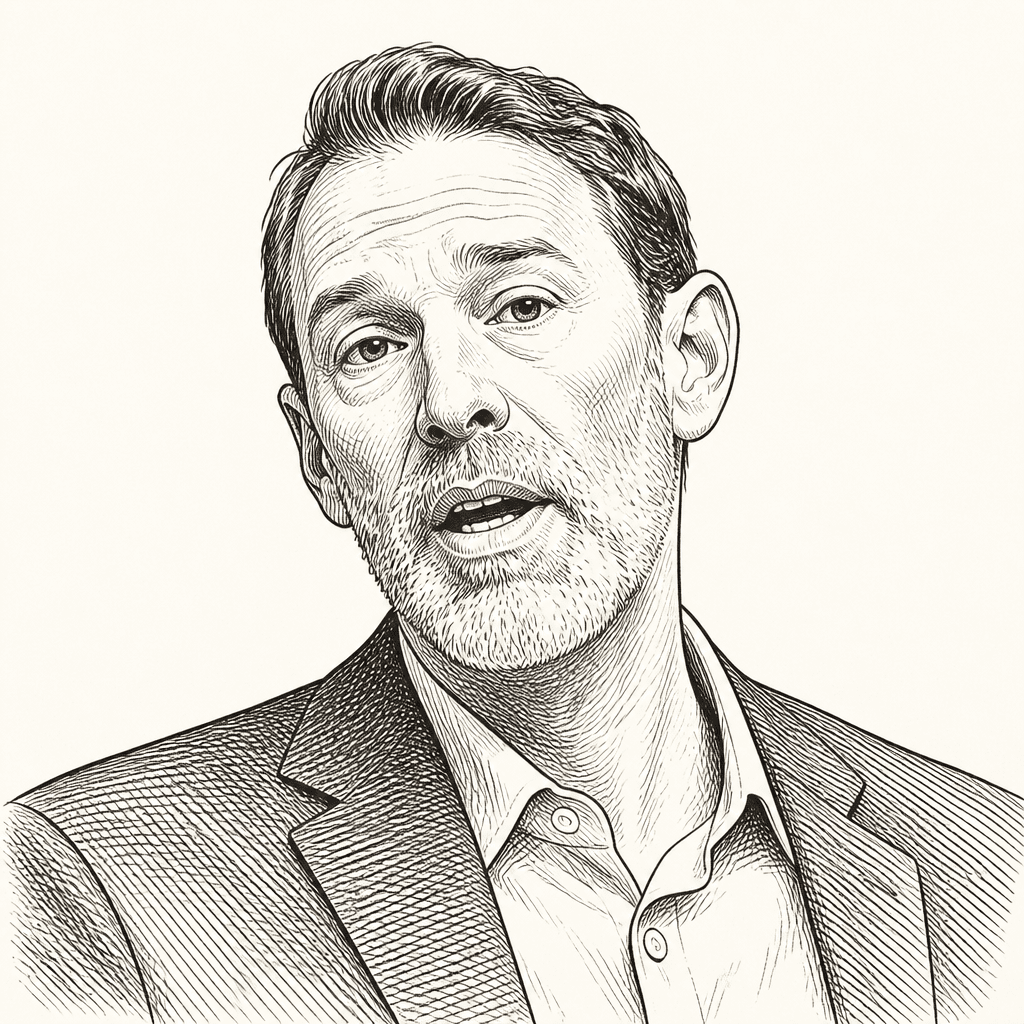

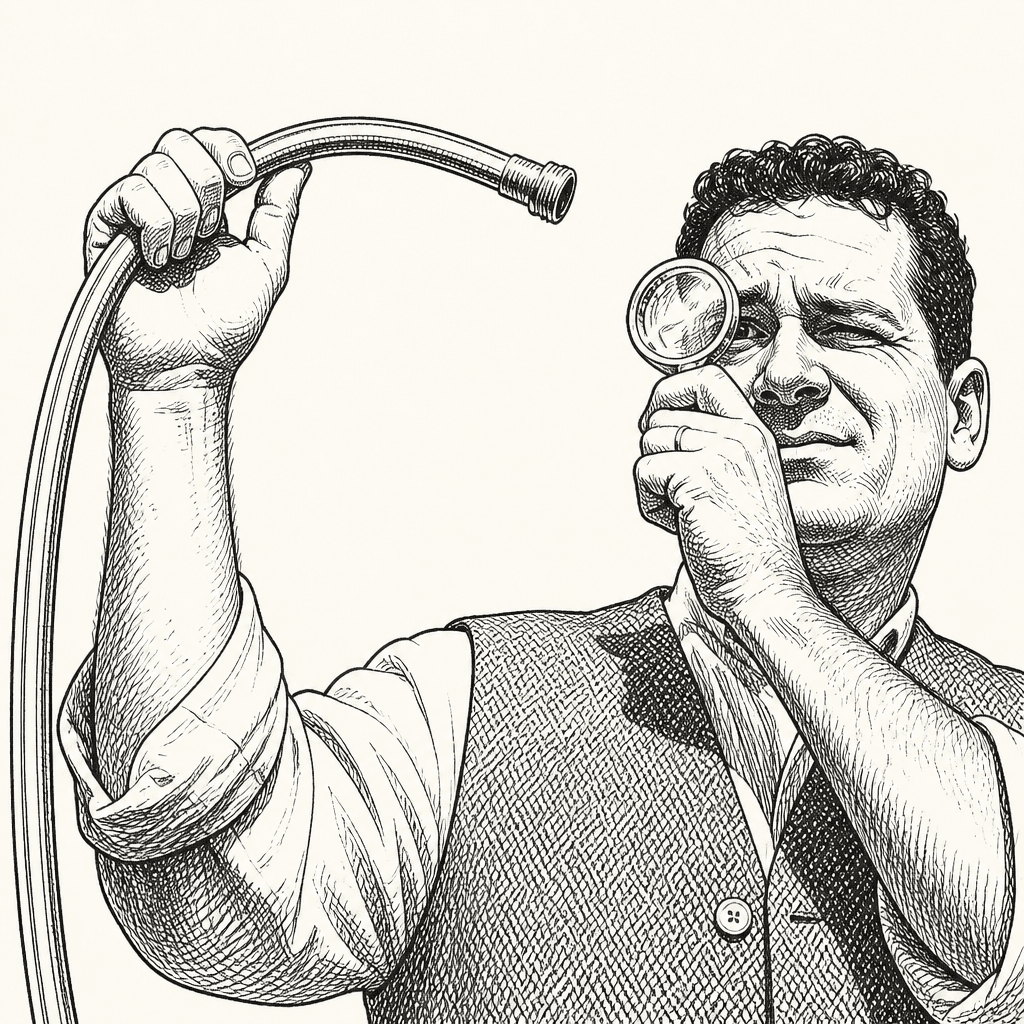
At a Hoover Institution session on markets and mandates in conservation, Dominic Parker and James Workman argued that wildlife policy is now confronting problems created partly by its own successes. Parker said land-based mandates that helped restore game species such as deer are poorly suited to managing overabundance, shrinking hunter participation, and conflicts over predators such as wolves. Workman made the parallel case at sea: commercial catch shares rebuilt some fisheries, but recreational anglers increasingly sit outside the monitoring and incentives that made those systems work.

The old mandate worked, and that is now part of the problem
Dominic Parker framed the wildlife story as the legacy of “America’s first major environmental mandate”: the 1900 trade ban on commercial sale of wildlife products, paired with the rise of state game agencies. His question was not whether the system mattered. It was whether a mandate designed for scarcity can handle abundance.
Parker’s account began with a sharp distinction. Commercial markets were the proximate cause of the nineteenth-century collapse of many wildlife populations, but open access was the underlying cause. European settlers encountered wildlife abundance that seemed inexhaustible: passenger pigeons so dense they obscured the sky, woods full of deer, elk, geese, turkeys, beavers, songbirds, and bison. Between roughly 1850 and 1900, during what Parker called an “age of extermination,” many of those species were driven to the brink. The passenger pigeon disappeared entirely; the last one, Martha, died at the Cincinnati Zoo in the early twentieth century. Deer, now ordinary in much of the United States, fell from more than 20 million in 1850 to fewer than 500,000 by 1900.
The institutional failure, in Parker’s telling, was that landowners lacked clear rights against trespass, local law enforcement capacity was weak, population growth was rapid, and laws on the books were often unenforced. Private conservation efforts existed, including hunting clubs, but they were difficult to scale without enforceable exclusion. The federal response, through the Lacey Act of 1900, banned commercial hunting and sale of wildlife products. States also created game agencies to regulate recreational hunting, enforce rules through game wardens, and, for much of the twentieth century, remove predators, especially wolves.
That structure still shapes American wildlife governance. In most states, Parker noted, a person needs a license even to hunt on private land. That differs from systems in many other countries where private landowners effectively own wildlife.
For game species, Parker called the result “without a doubt” a stunning success. Deer are the clearest example because the data are strongest. The population fell to roughly 500,000 by 1900 and has returned to about 35 million, approximately its estimated level in 1700, despite the continental United States now having 300 million more people. Parker added a comparison: there are about 27 million beef cattle, meaning there are now more deer than beef cattle.
The rebound, Parker argued, came from “single-minded management” of game species for recreational hunting. Hunters were critical advocates for the conservation mandates, but they also came to dominate the policy regime. That success has produced a new problem: a system built to restore game populations is poorly adapted to managing overabundance.
Parker illustrated that point with his own collision with an elk in Montana in 2022. Neither he nor his passenger was seriously hurt, but the animal was killed. When police arrived, they told him it was the third collision on that same stretch of road that day. He used the story to introduce the broader scale: about 2 million deer-vehicle collisions occur in the United States each year, causing roughly 30,000 injuries and 200 fatalities annually. He put total U.S. costs at about $20 billion per year and said deer-related crashes amount to about 10 percent of total accidents, with higher shares in rural areas.
The costs are not limited to roads. Parker cited deer involvement in the spread of Lyme disease and damage to crops, timber, and gardens. Nor are concerns about deer abundance new: Aldo Leopold was writing about them in the 1940s. What is new, Parker argued, is that the main population-control mechanism built into the system — recreational hunting — is weakening. About 10 percent of the U.S. population hunted in the 1980s; now the figure is about 5 percent, with especially steep declines among young men, the traditional cohort for recreational hunting.
The result is a mandate that solved one crisis but now resists adjustment. Parker’s formulation was that mandates can deal with crises well because they can produce quick, measurable effects. Over time, however, this one has become rigid, inflexible, and poorly attuned to tradeoffs.
Venison markets would require undoing a taboo built by conservation success
One option Parker put on the table was simple in concept and legally difficult in practice: bring back commercial markets for deer meat. “Venison at grocery stores” would create stronger incentives to hunt, potentially provide a lower-cost alternative to beef, and make use of animals that otherwise impose growing costs. Parker noted that health influencers already praise venison as a lean protein source, while beef prices have risen relative to overall consumer prices.
But the proposal runs directly into the moral and political settlement that followed the nineteenth-century collapse. Parker said bringing back such markets “would require a legal change given the Lacey Act,” and that recreational sportsmen’s associations seem opposed. He did not dismiss that opposition, but he questioned whether the conflict is as large as assumed. “We don’t need to eat trophy animals,” he said, suggesting that animals targeted for meat and those prized by recreational hunters may not be the same.
The tension surfaced again in the audience discussion, when a questioner said market hunting remains close to a religious boundary in American hunting culture. The North American wildlife model has taught generations that market hunting was the evil that “almost killed everything.” The question was whether culture inside hunting could shift now that deer are abundant.
Parker was cautious. He did not claim the shift would be easy. But he argued that the stakeholder structure has changed. Game agencies now answer to a broader set of interests than they did in the mid-twentieth century, while recreational hunters are a shrinking and therefore more concentrated group. That group, he suggested, may eventually decide that preserving what it values requires concessions.
He again emphasized that meat production and trophy hunting may not be in direct conflict. Commercial venison culling would likely target different animals and require a different management process than recreational trophy hunting. Demand may also push change. Parker pointed to imported venison from New Zealand, which he said costs more per pound than cattle yet still finds buyers. Combined with rising beef prices and abundant deer, he saw “a lot of forces that can change things.”
Barton Thompson raised a different market-adjacent alternative: why not simply pay people to shoot deer? Parker said that is already happening in some places, particularly suburban areas where recreational hunting is impossible and deer are especially problematic. But those “bounty hunts,” as he described them, are expensive, often involving highly trained specialists working in urban and suburban settings. Paying people to cull deer in rural areas could also become costly. And if the meat cannot be sold without legal change, Parker said, the system still lacks the benefit of using the meat, which “feels wasteful” relative to a commercial market.


The deeper point was that hunters are not perfect substitutes for predators or markets. Bounty hunters can reduce numbers at particular sites. A commercial market can create broader incentives and recover value from meat. Predators may change behavior across landscapes in ways human hunters cannot.
Wolves may reduce road deaths by making deer afraid of roads
Dominic Parker’s second option was to bring back predators, especially wolves. Reintroduction and recovery are already occurring in Europe and the United States, including Colorado’s voter-approved wolf reintroduction. Livestock producers are major opponents. Recreational hunters have mixed views. Parker argued that the spread of wolves creates an opportunity to study ecological and economic effects, including effects on deer and other prey.
In Wisconsin, Parker and coauthors used the spread of radio-collared wolves to study deer-vehicle collisions. Their data tracked wolf packs expanding across northern and central Wisconsin between 1980 and 2010. Parker compared counties eventually colonized by wolves with counties that were not. In the non-wolf counties, deer density rose and deer-vehicle collisions rose. In wolf counties, deer density was more stable and deer-vehicle collisions, if anything, fell. Other types of vehicle collisions stayed roughly stable.
Based on those data and econometric estimates, Parker said wolves decreased deer-vehicle collisions by about 24 percent. The mechanism, he argued, is only partly direct predation. The larger effect appears behavioral. Wolves create what he called a “landscape of fear.” Because radio-collared wolves travel along linear corridors, including roads, deer appear to learn to avoid those areas. “If true,” Parker said, “this is not a thing that human hunters who are temporarily in the landscape could easily replicate.”
Parker then described a replication effort using a different setting and empirical method: a natural experiment in Quebec. North of the Saint Lawrence River, wolves have remained present; south of the river, they have been absent for more than a century. Because the river is difficult for wolves to cross, Parker and coauthors used it as a discontinuity, comparing animal-vehicle collisions on each side. The setting includes both deer and moose.
They found a large difference: just along the river, Parker said, the north side with wolves had 38 percent lower deer-vehicle collisions. He estimated about $30 million in annual savings along that border and said extrapolation across North American wolf habitat suggested potential savings of about $6.5 billion annually from avoided damage, injury, and related costs.
Parker did not present wolves as costless. Livestock losses are serious, and livestock producers are primary opponents in both the United States and Europe. But he argued that verified livestock losses appear small relative to the deer-vehicle collision benefits alone.
He also complicated the usual accounting of wolf costs. Wolves that prey on cattle may be displacing other predators that also prey on livestock, including coyotes, cougars, and bears. In recent work, Parker said, the net effect of adding wolves to livestock losses appears much smaller than the direct wolf losses suggest — perhaps close to zero — once displacement of other predators is included. Coyotes, like deer, can be overabundant.
Barton Thompson pressed him on whether ranchers are overreacting to wolves. Parker rejected that framing. If an economist concludes that people on the ground are irrational, he said, “you better revise your analysis.” He separated two effects that are often bundled together.
The first is regulatory. When wolves are legally protected, livestock owners cannot use lethal action to protect their animals. That constrains their choices, raises the cost of defense, and is likely deeply frustrating. The problem extends beyond wolves: ranchers accustomed to lethally controlling coyotes or other predators may worry that ordinary predator control could incidentally violate endangered-species law if wolves are present. Parker called this regulatory effect “unambiguously negative.”
The second is ecological. Wolves may push out coyotes and other predators, and that ecological effect could help ranchers, hurt them, or be neutral. Parker’s point was not that ranchers should welcome wolves. It was that wolf policy combines a negative regulatory constraint with an ecological effect whose sign is uncertain.
An audience question broadened the issue to reintroduced species generally, including beavers, and to engineering solutions such as wildlife overpasses. Parker said the regulatory/ecological distinction applies beyond predators. A reintroduced beaver may create ecological benefits or harms, but if landowners cannot trap or shoot it while managing their land, the regulatory effect is negative for them.
On overpasses and other engineering responses to deer collisions, Parker said many have proven either ineffective, highly site-specific, or costly. Clearing a hotspot may work at that hotspot. Overpasses can be expensive. Predators, by contrast, appear to operate across broader geographic areas. He also acknowledged guard dogs as an important nonlethal livestock-protection tool, used in places such as France.
The institutional implication was market design. Parker suggested that those who benefit from wolves — drivers, insurance companies, wolf advocates, environmentalists — could compensate those who lose, especially landowners. Compensation for losses already exists, but he argued that new technologies could support more direct payments for wolf presence. The goal would not be a mandate replacing markets, but a mandate that creates conditions under which markets can allocate costs and benefits more honestly.
Catch shares turned commercial fishing from a race into an asset
James Workman told the ocean side of the abundance story as a parallel to Parker’s land story: first abundance, then extraction, then mandates, then market design. Where Parker’s collapse came by bullet, Workman said, the ocean collapse came by hook.
He began with a cultural premise: the New World offered free meat and fish in quantities that shaped American expectations. Cod was central to the early republic. Workman described Alexander Hamilton and Thomas Jefferson as representing competing visions: Jefferson’s yeoman farmer or fisherman catching enough for a family and selling the surplus; Hamilton’s view that fisheries needed capital, concentration, commerce, trade, and markets. George Washington pushed them to work together, and Workman characterized the resulting fisheries policy as the first U.S. stimulus package, aimed at rebuilding fisheries after the Revolutionary War.
That early policy, he said, relied on “sharesmen” — balancing labor’s stake in the outcome with capital. The incentive structure worked. Too well, in the long run.
The twentieth-century version was the Magnuson-Stevens Act, now at its fiftieth anniversary in Workman’s telling. It pushed Soviet and Japanese fleets out of American-claimed waters 200 nautical miles offshore, a model other countries replicated. This created national rights to fish, but not necessarily incentives to conserve fish. The race continued at the national level and within fisheries: if one boat did not catch the last fish, someone else would.
Technological improvements intensified the problem. Workman pointed to post-World War II sonar and radar repurposed into fish finders. Managers tried command-and-control responses. If nets were restricted, fishermen developed long lines with thousands of hooks. If seasons were shortened from a year to three months, effort compressed into three months. If shortened to two weeks, effort compressed further. In halibut, he said, the season was compressed to two days with a starting gun. The result was not conservation but a faster, more dangerous race, producing gluts and disasters associated with fisheries such as crab.
Catch shares changed the incentive structure. Workman described the basic mechanism: managers set a total catch, reserve some portion as protected stock, and allocate shares to vessels, individuals, groups, or communities. A fisherman might hold 0.3 percent or 1.1 percent based on historic catch. Because no one else can catch that share, the owner can fish year-round, sell before going out, avoid gluts, and seek better prices. The fisherman now has reason to want marine protected areas because they function like fish banks. Data sharing becomes less threatening because competitors are no longer racing for the same unclaimed fish.
The economic analogy was capital and interest. Overfishing is like withdrawing principal from a bank account. Catch shares create incentives to harvest interest while leaving enough stock to grow. Workman said the system has produced more fish in the sea, more fish on the plate, and more prosperity. He described it as a bipartisan success exported to other countries, including New Zealand, Iceland, Namibia, and Belize. In some places, territorial use rights for fishing apply the same principle spatially: from one ridge to one reef, that area is assigned to a group that manages it.
Workman cited modeling by Chris Costello at Santa Barbara suggesting that if rights-based sustainable fishing were adopted globally, it could reverse the negative trend. The modeled gains he presented relative to business as usual were 23 percent more harvest per year, 315 percent more profit per year, and 112 percent more fish biomass in the water.
| Metric | Projected change relative to business as usual |
|---|---|
| Harvests | 23% more per year, +17 MMT/year |
| Profits | 315% more per year, +$90 billion USD/year |
| Fish biomass | 112% more in the water, +782 MMT/year |
Commercial catch shares, in Workman’s telling, made fishing safer, more productive, more precise, and cleaner. The problem is that commercial fishing is no longer the only serious pressure.
Recreational anglers have become the unmanaged frontier
James Workman argued that the threat to rebuilt fisheries increasingly comes from “people like me” — recreational anglers. In the Great Lakes, he said, the people hammering whitefish are not commercial operators but recreational fishermen. In the Gulf of Mexico, the conflict is especially visible.
Workman introduced two figures from his red snapper story: Buddy Guindon, a commercial fisherman out of Galveston, and Scott Hickman, a charter operator across the road. They once hated each other. Hickman saw Guindon as a pirate depleting fish and forcing recreational fishermen farther offshore. Guindon dismissed the accusation. Then the red snapper fishery moved into a catch-share system. The fishery rebuilt to twice and then three times its earlier biomass, and commercial fishermen had data showing they were underfishing. At that point, Workman said, the commercial side could ask the recreational side: what data do you have? Hickman had to concede they had little.
That is the governance gap. Commercial boats in catch-share systems are monitored. They may have cameras, electronic systems, and transparent accountability. Recreational fishing remains comparatively opaque. Its motivation is also different. Commercial fishing harvests meat to sell. Recreational fishing is experience, status, family, friendship, and identity — “me against the sea,” as Workman put it.
Yet the boundary between recreation and commerce is blurry. Workman gave the example of party boats out of Half Moon Bay adding crab to a trip, with passengers receiving what he described as about $300 worth of crab on a $150 fishing trip. He also described Alaska trips marketed in part around customers returning home with perhaps $1,000 worth of meat. In his telling, those examples make the trip easier to justify to family because it is not only leisure; it also brings home substantial food value.
At the same time, recreational fishing has political and economic clout. The economic-impact figures Workman used put total U.S. commercial and recreational fisheries impacts in 2022 at $321 billion in sales, 2.3 million jobs, and $148.9 billion in value-added. Commercial fishing and seafood, including imports, accounted for $183 billion in sales and 1.6 million jobs; recreational fishing accounted for $138 billion in sales and 700,000 jobs. Value-added was nearly even: $74.0 billion commercial and $74.9 billion recreational.
| Measure | Commercial | Recreational | Total |
|---|---|---|---|
| Sales | $183B | $138B | $321B |
| Jobs | 1.6M | 0.7M | 2.3M |
| Value-added | $74.0B | $74.9B | $148.9B |
Workman warned that one future is recreational capture of fisheries: millions of recreational anglers versus a few hundred commercial operators, with votes, money, and lobby strength on the recreational side. He cited redfish, striped bass, and spotted seatrout as fisheries where commercial access has been pushed off the menu, and said halibut, rockfish, flounder, and snapper are among new targets.
The question is whether society wants halibut, snapper, and similar fish removed from restaurant menus in favor of recreational access only. If not, Workman argued, managers need a way for both sectors to thrive while rebuilding stocks. That requires asking how recreational fishermen can be monitored, how they can be incentivized to fish more precisely, and how their norms can shift.
The hardest catch-share problem is the boat without a camera
James Workman saw promise in extending catch-share logic into recreational fishing, but not by copying commercial monitoring onto private anglers. Commercial fishermen accepted cameras and electronic monitoring because the trade made economic sense: it helped them earn more, prove compliance, and ensure competitors were not cheating. Putting cameras on 3 million private recreational vessels is implausible. Families fishing for a few hours do not want cameras watching them or inspectors opening coolers on deck.
Some tools remain coercive. Workman described remote sensing along the coast: identifying boats going out, reading licenses, and checking them when they return. AI, apps, and remote sensing can help estimate effort, identify species, monitor vessels, and automate alerts. NOAA Fisheries’ catch-estimation formula, as presented in the materials Workman used, was simple: catch rate multiplied by effort equals total catch. But Workman’s more interesting claim was that recreational fishing has a different currency: status.
Because many anglers want photos, bragging rights, and social media proof, the act of showing off can become a data source. Workman pointed to innovations in Florida and elsewhere that use angler reporting and public display to reveal norms and outcomes. In some places, anglers emphasize catch and release and fish abundance is higher; in others, fish go into coolers and the experience is poorer. The visibility of those differences can become self-correcting.
He acknowledged skepticism about self-regulation. But he argued that status incentives matter because recreational fishermen are often not maximizing money. They are maximizing the experience, the story, and the photograph.
Barton Thompson asked directly how to change recreational norms. Workman used fly fishing as the example. The cultural memory of A River Runs Through It is fly fishing as religion, but Workman noted that historically it was also meat production: anglers caught as many fish as they could. Only later, as rivers and lakes became overfished, did norms shift toward fair chase, crimped hooks, catch and release, and the idea that a fish is too valuable to be caught just once.
He sees a similar offshore shift beginning. Recreational anglers who catch large fish may still want the “glory shot,” but then increasingly want the fish returned to produce more offspring. Workman referred to “BOFFs” — big old fertile or fecund female fish — as especially valuable breeders. The ethical frame changes from “one for the cooler” or “one for the wall” to: I got my ego reward, now the fish goes back.
The biological details matter. Some deepwater fish die when thrown back because of barotrauma: they cannot tolerate rapid movement from depth to surface. Workman said fishermen are learning ways to mitigate this, including puncturing the swim bladder when it protrudes or lowering fish back down so they can survive rather than become chum.
The strongest institutional example he offered was a headboat catch-share pilot. Charter or party boats received allocations and could trade quota. Because they could fish year-round, they had an incentive to monitor themselves, put cameras on board, prevent high-grading, and stay accountable. Workman said the system worked well: operators made more money, used catch more efficiently, and helped rebuild the fishery.
The most durable designs mix mandates with markets
James Workman’s “unlikely allies” example was the arrangement between Scott Hickman and Buddy Guindon. Hickman leases quota from Guindon. He takes recreational anglers out for a full day, letting them catch snapper by hook and line within the commercial quota. The anglers return sunburned and satisfied. They commit to buying some of the fish through Guindon’s market, while Guindon receives the rest. Hickman is not simply selling a fishing trip in the ordinary way; Workman said the legal design requires care, including offering the “catch share adventure” for free while tying it to a fish purchase.
The arrangement gives each side something it values. Recreational anglers get the full-day experience and high-quality fish. The commercial quota holder gets labor and product while staying within limits. The fishery gets accountability rather than an unmonitored recreational overrun.
Barton Thompson asked whether catch-trading systems normally include both commercial and recreational participants. Workman said it is a design issue and that the Hickman-Guindon model has not been fully institutionalized. He thought halibut would be a promising target and rockfish might be as well. The Gulf is a natural setting because recreational anglers may catch their limit too quickly. A parent and child can catch their quota in the first 20 minutes, after which further fishing becomes ethically problematic if released fish die. A quota-leasing design could extend the experience while keeping total catch accountable.
Thompson then asked whether recreational fishermen might simply buy out the entire commercial fishing industry if allowed to purchase quota. Workman said commercial fishermen have effectively invited that test: if recreational interests believe they can generate more value from fish than commercial supply chains can, they should “put your money where your mouth is.” But he recognized that such a pure market solution would change the politics. He compared it to auctioning wolf permits either to hunters or to a celebrity who wanted to keep the wolf alive. The market would reveal value, but it would also reshape the social contract.
That social-contract question connected the two presentations. Dominic Parker’s land story began with open access, moved through a mandate, and now faces abundance, shrinking hunter participation, predator conflict, and the possibility of new markets. Workman’s sea story began with abundance, moved through technological overharvest and command-and-control failure, then found success in catch shares — only to face an expanding recreational sector outside the same incentive structure.
Neither presented markets as a substitute for rules. Catch shares require catch limits, allocation, monitoring, and accountability. Wolf markets require legal frameworks, verified presence, and compensation mechanisms. Venison markets, in Parker’s account, would require legal change to reopen commercial pathways closed by the conservation settlement that followed the nineteenth-century collapse. The common claim was narrower and more practical: mandates can stop a crisis, but if they freeze the original problem in place, they can become obstacles to managing the next one.