Japan Recasts Economic Security as Deterrence Against Coercion

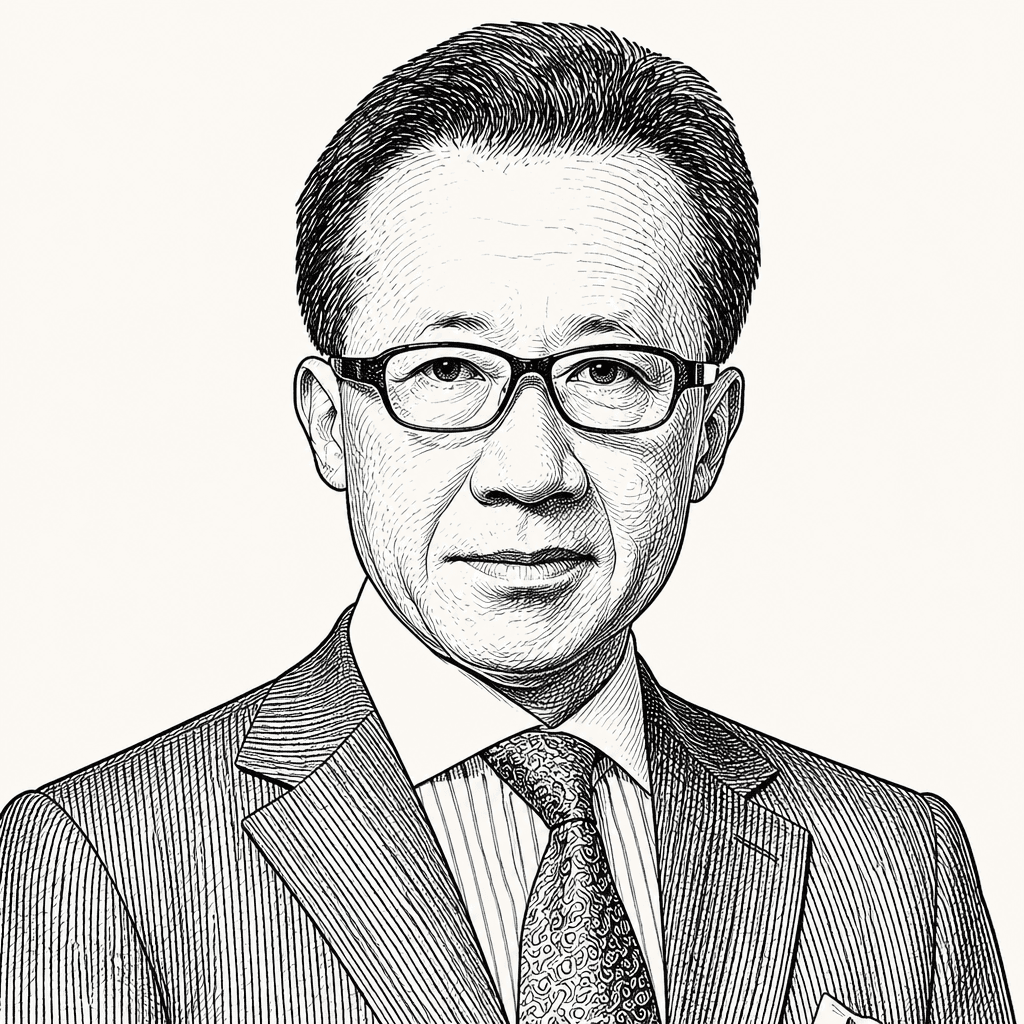
Former Japanese national security adviser Shigeru Kitamura argues that Japan must treat military deterrence, economic resilience, technological protection and alliance coordination as parts of a single strategy against coercion that begins well below the threshold of war. With China’s military expansion and economic leverage reshaping the regional balance, he says Japan should reduce one-sided dependencies while building technological and industrial capabilities that make it strategically indispensable. The US-Japan alliance, in his account, must turn that approach into coordinated action on supply chains, critical technologies, energy and defense capacity.

Japan’s answer to coercion is an integrated strategy, not a single capability
Japan’s strategic shift begins from the premise that conflict now develops well before open warfare. Shigeru Kitamura argues that the relevant contests run through military deterrence, economic dependence, technology, intelligence, information, and supply chains at once. Japan’s answer, accordingly, cannot be a single military capability. It requires counterstrike capacity and alliance coordination alongside economic resilience, technological protection, a stronger defense industrial base, and institutions prepared for coercion below the threshold of war.
Two concepts organize that strategy. Strategic autonomy means reducing one-sided dependencies in the foundations of economic life: critical materials, supply chains, infrastructure, and essential technologies. Strategic indispensability means building and protecting capabilities that others need, particularly at technological choke points, so that economic coercion imposes costs on the coercer as well. The first is defensive; the second is a proactive form of statecraft.
China is the principal driver of this reassessment. In the early 2000s, Kitamura says, Japan’s gravest concern was North Korea’s missile and nuclear program. Since roughly 2010, China has taken that place—not only because of its proximity or military expansion, but because it has become an economic and military power capable, in his judgment, of revising the international order as a whole.
The maritime balance is central to that judgment. Kitamura points to the People’s Liberation Army Navy’s status as the world’s largest by hull count, its multiple aircraft carriers, and the Fujian’s electromagnetic catapults. The significance is not merely fleet size. China is moving from a force oriented around coastal and regional defense toward a blue-water navy able to operate in the Western Pacific and Indian Ocean. Its carriers transit the waters between Okinawa and Miyako and operate routinely in the Pacific, which he reads as a deliberate normalization of Chinese presence beyond the first island chain.
A second problem is the regional missile balance. China, unlike the United States and Russia, was not constrained by the now-defunct Intermediate-Range Nuclear Forces Treaty, Kitamura says, and could develop ground-launched intermediate-range missiles without comparable restrictions. The result is what he calls a Far East missile gap with no equivalent elsewhere. Systems including the DF-21D—often called the “carrier killer”—and the DF-26, or “Guam killer,” are designed to keep US forces beyond the second island chain and deny them access within the first.
Japan’s response cannot rest exclusively on intercepting incoming ballistic missiles. Missile defense cannot reliably handle saturation attacks or irregular flight paths, Kitamura argues. Japan therefore needs standoff-defense and counterstrike capabilities: the ability to strike an adversary’s launchers and command nodes. He presents that not as a departure from Japan’s defense-oriented policy, but as a deterrent complement to the US-Japan division of labor. An adversary that expects to be struck in return, he argues, is less likely to strike in the first place.
The third pressure point is the East China Sea gray zone. China’s coercion around the Senkaku Islands sits below the threshold of overt war but still creates operational and legal demands for Japan. Kitamura identifies a weakness in the Japan Coast Guard’s mandate and rules on the use of weapons, particularly when compared with China’s Coast Guard Law. The problem is not only military capacity; it is whether Japan has legal authorities, command arrangements, and civil capabilities suited to persistent coercion short of a conventional attack.
A Taiwan contingency begins before the first visible attack
The geography connecting China, Taiwan, the East China Sea, and Japan’s Ryukyu, or Nansei, Islands makes Taiwan inseparable from Japan’s security problem. A regional map displayed by the Hoover Institution places Taiwan between China and the Philippine Sea, with Japan’s island chain extending along the northeastern edge of that maritime space. The point is not cartographic detail: a crisis around Taiwan would unfold along waters and islands immediately connected to Japanese security.
Shigeru Kitamura cautions against focusing only on visible, kinetic signals such as PLA warships circling Taiwan, repeated crossings of the median line, encirclement exercises, or ballistic missiles landing inside Japan’s exclusive economic zone. Those events are serious, he says, but they are not the entirety of a coercive campaign.
Drawing on what he calls China’s doctrine of unrestricted warfare, Kitamura argues that the contest would begin by mobilizing every available instrument of statecraft and proxy: cyberattacks, disinformation, and economic pressure, with military force as a final lever.
A Taiwan contingency, in other words, would very likely open as an invisible warfare well before it becomes a visible one.
For Japan, a conflict would unfold across the Taiwan Strait, East China Sea, and South China Sea, along a strategic fault line whose front edge includes Japanese islands. That geography, coupled with the integration of military and nonmilitary forms of conflict, is why Kitamura believes a Taiwan contingency could meet the threshold for Japan to exercise collective self-defense.
Diplomacy with Beijing and deterrence over Taiwan are not mutually exclusive in his formulation. China has not renounced force: its 2005 Anti-Secession Law provides for nonpeaceful means, and Xi Jinping has linked “complete reunification” to national rejuvenation. Japan should keep diplomatic channels stable and open as a matter of prudent statecraft while making the cost of coercion unmistakably high through deterrence, alliance coordination, and resilience.
Economic resilience must be built before coercion arrives
Economic dependence becomes coercive when it is concentrated enough for one state to turn commercial links into political leverage. Herbert McMaster points to Chinese export controls, restrictions on Japanese seafood imports, encouragement of airline cancellations, and critical-mineral restrictions as examples of pressure directed at Japan. Shigeru Kitamura frames the response as broader than any individual retaliatory measure.


The liberal expectation that commercial interdependence itself guarantees peace, Kitamura says, has been collapsing since the early 2010s. Interdependence is not value-neutral when a country’s dependence is concentrated in one state; that asymmetry can be converted into political pressure.
Japan’s defensive task is to harden the foundations of ordinary economic activity and services essential to citizens. The tools include securing stable supplies of critical minerals, diversifying sources, stockpiling, developing alternatives, and de-risking supply chains with allies and like-minded partners. Friend-shoring belongs in this effort to reduce exposure before a crisis.
The complementary task is to preserve and expand the areas where Japan matters to global production. Kitamura’s point is not that dependence disappears, but that it should become less unilateral. Where Japan occupies a technological choke point, coercion can impose costs on the coercer as well.
The Economic Security Promotion Act is the institutional mechanism for this approach. Kitamura presents diversified tourism and seafood export markets as evidence that resilience must precede coercion. Japan’s tourism sector continued to grow and seafood exporters had already broadened their markets, he says, because China was understood to be an unreliable market. The diversification was deliberate, not accidental: a reduction of asymmetric dependence undertaken before the pressure arrived.
The timing is the point. Resilience built after coercion starts is improvisation; resilience built beforehand is standing national policy.
Semiconductors offer Kitamura’s clearest application of this logic. Japan’s 2022 National Security Strategy explicitly places supply-chain resilience, next-generation semiconductor development and manufacturing, and critical materials such as rare earths within national security. Investment in Rapidus, including the Japanese government’s announced $1 billion commitment to facilities and research and development, should therefore be understood as security policy rather than a return to traditional industrial policy.
The rationale is the technological character of modern conflict. Space, cyber, and the electromagnetic spectrum depend heavily on advanced technologies. AI and quantum technologies reshape national security broadly, including military capacity, Kitamura says. Domestic advanced-logic-chip production supports missile defense, surveillance, autonomous systems, and the defense industrial base.
But chip fabrication itself is only part of the picture. Japan’s existing positions in semiconductor-manufacturing equipment, high-function materials such as photoresists, and precision-machining inputs are strategic assets as well. Advanced fabrication cannot operate without them. Japan’s task is to reduce dependencies where it is exposed while preserving the inputs on which other advanced manufacturing depends.
That requires protection as well as production. Technological capabilities and supply-chain advantages can be lost through leakage and theft, making intelligence and counterintelligence part of industrial strength.
The defense buildup is intended to make Japan a security provider
Japan’s stated objective is no longer simply to be protected by the United States, but to assume a larger share of the region’s security burden. Shigeru Kitamura resists reducing that change to a percentage of GDP, though he accepts that the numbers matter. The 2022 National Security Strategy, he says, set an objective Japan had never stated so explicitly: by 2027, Japan should be capable of taking primary responsibility for repelling an invasion with allied support. The accompanying budgetary target was tied to that goal.
The intended change is structural. Japan aims to become a net provider of security, not simply a country protected by the United States.
The original target of defense spending at 2% of GDP was, in Kitamura’s formulation, the beginning of an “abnormal-times buildup.” Pressure for 3% or 3.5% reflects an environment that has deteriorated faster than Japan’s original plan anticipated. Japan now faces China, Russia, and North Korea simultaneously. Fighter scrambles, the concentration of military power around Japan’s islands, and the missile imbalance all support the need, he argues, for layered missile defense, counterstrike capabilities, intelligence, and surveillance.
The defense industrial base matters as much as the budget line. Herbert McMaster points to Japan’s lifting of its longstanding ban on lethal-weapons exports and to interest from partners including Australia, the Philippines, New Zealand, and Indonesia. Kitamura sees the industrial dimension as a practical way to make security cooperation operational rather than declaratory. A Japan able to supply warships and other capabilities to partners within frameworks grounded in the rule of law and freedom of navigation becomes an active implementer of regional security.
China’s criticism of these changes as a return to Japanese militarism misses their character, Kitamura argues. His preferred description is continuity rather than rupture. Japan’s postwar model separated economics from security: it relied heavily on the United States for defense and pursued prosperity under a constitutional posture associated with pacifism. That model delivered peace and prosperity for decades. But its underlying assumptions have changed amid great-power competition and the widening gap between US and Chinese spheres of influence.
Japan is a mature democracy taking up a proportional share of the burden of upholding a free and open order.
In Kitamura’s view, Japan’s normalization proceeds through transparent and legitimate democratic processes, in coordination with allies and within the rule of law. But democratic legitimacy cannot be assumed. Public support for serious defense investment depends on “candor and competence”: citizens need to understand why threats formerly treated as risks are now present dangers.
This is why he assigns unusual importance to intelligence, disinformation, a free and responsible press, fact-checking, and public information literacy. Where the boundary between peace and contingency is blurred, public support is not merely a domestic political question. It is itself a front in invisible warfare.
North Korea reinforces the case for a more integrated Japanese posture. Kitamura says its threat has developed beyond nuclear weapons and intercontinental delivery vehicles. Russia’s war against Ukraine has changed the situation: he says North Korea has supplied 40% to 60% of the ammunition used by Russia, generating foreign currency that Pyongyang can use to build conventional military capabilities. Combining strengthened conventional forces with nuclear weapons makes North Korea more dangerous, in his view.
Japan continues to rely on US deterrence, Kitamura says, and regards that doctrine as one that must be upheld. Yet he notes that discussion continues around a revised National Security Strategy, nuclear-powered submarines, the three principles governing nuclear arms in Japan, and the idea of nuclear sharing with the United States that Shinzo Abe raised after leaving office. He does not present Japan as having adopted those positions; rather, he identifies them as part of a live strategic discussion.
Regional partnerships should offer capacity without demanding alignment
Southeast Asian states should not have to choose between economic ties with China and security cooperation with democratic partners. Herbert McMaster describes a recurring message from governments in the region: do not ask us to choose between Washington and Beijing. He frames the underlying choice instead as one between sovereignty and servitude. Shigeru Kitamura agrees that regional states should not be pressed into bloc politics.
Japan’s Free and Open Indo-Pacific concept, or FOIP, does not require ASEAN members to choose between China and the United States or Japan, Kitamura says. Its premise is inclusion rather than bloc-building. Japan has worked to align FOIP with the ASEAN Outlook on the Indo-Pacific and to offer cooperation that remains useful regardless of a country’s economic relationship with China: quality infrastructure, maritime security, capacity-building, and resilient supply chains.
Japan’s cooperation with the Philippines and Vietnam supplies the practical model. The Japan Coast Guard works with them through patrol-vessel transfers, training, and joint maritime-surveillance exercises, including against illegal fishing. The approach is intended to be demand-driven, rule-of-law based, and concrete rather than ideological.
The same logic informs Kitamura’s view of the Quad—Japan, the United States, Australia, and India. He rejects two opposite characterizations: that it is an embryonic Asian NATO, and that it is merely a symbolic forum. It should be a flexible, results-oriented vehicle for making a free and open Indo-Pacific tangible.
Since 2020, he says, the Quad has expanded cooperation in infrastructure, maritime security, climate, and vaccine supply. Its value lies in strengthening regional architecture rather than competing with it, and in delivering maritime-domain awareness, quality infrastructure, capacity-building, and supply-chain resilience.
For Kitamura, this is an exercise in “norm-formation power.” Japan should help export standards associated with a free and open order—rule of law, freedom of navigation, transparency, and sustainability—in a way that reaches the Global South rather than dividing the region into opposing camps. ASEAN can remain internally divided without making FOIP impossible, provided the offer rests on universal interests rather than demands for political alignment. The objective is to widen the open order, not partition Asia.
Article 2 makes execution an alliance responsibility
The US-Japan alliance’s next task, in Kitamura’s account, is execution: turning broad agreement on security into institutional coordination across economic policy, technology, energy, supply chains, and industrial capacity. Shigeru Kitamura locates that task in Article 2 of the US-Japan Security Treaty, not only in the more familiar defense and consultation provisions of Articles 3 and 4. Article 2 speaks to economic cooperation and removing friction in international economic policy. In present conditions, he argues, it must become the basis for a high-implementation phase of the alliance.
For Washington, that means treating supply chains, critical technology, energy, and the defense industrial base as integral to deterrence rather than as separate commercial matters. For Tokyo, it means breaking down ministerial silos and putting economic security at the center of national strategy.
Kitamura’s formulation is DIMET: diplomacy, intelligence, military capability, economics, and technology. The point is operational rather than rhetorical. A supply-chain policy that cannot be linked to intelligence about vulnerabilities, an industrial policy disconnected from defense needs, or a technology strategy without protection from theft and leakage will not meet the form of competition he describes.
Japan should also combine two kinds of influence. One is norm-formation power: using FOIP and high-standard frameworks such as the Comprehensive and Progressive Agreement for Trans-Pacific Partnership to advance liberal economic rules. The other is alliance-implementation power: the ability to turn commitments into coordinated industrial, technological, and security action.
A nation’s power, untethered from ideals, is mere violence that cannot endure. But ideals without power ring hollow against the rough seas of international politics.
The alliance, on Kitamura’s account, is therefore not simply a commitment to respond in a military crisis. It is a mechanism for ensuring that vulnerabilities in minerals, energy, advanced manufacturing, cyber systems, and critical technologies do not become instruments of coercion in the first place. The United States and Japan can achieve outcomes neither could secure alone, he says, but only if they operate the partnership as an integrated whole rather than a set of separate transactions.