Iraq’s Sovereignty Depends on Fighting Corruption and Curbing Armed Groups
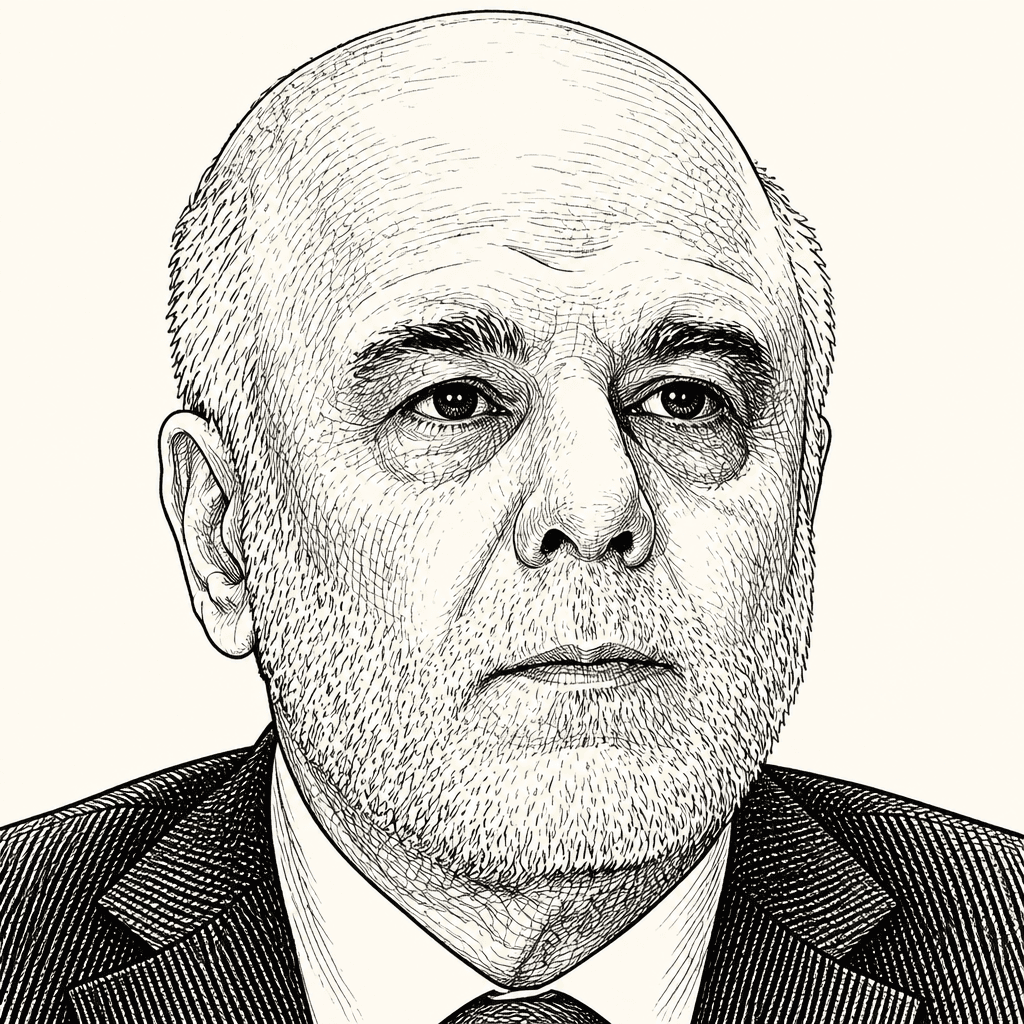
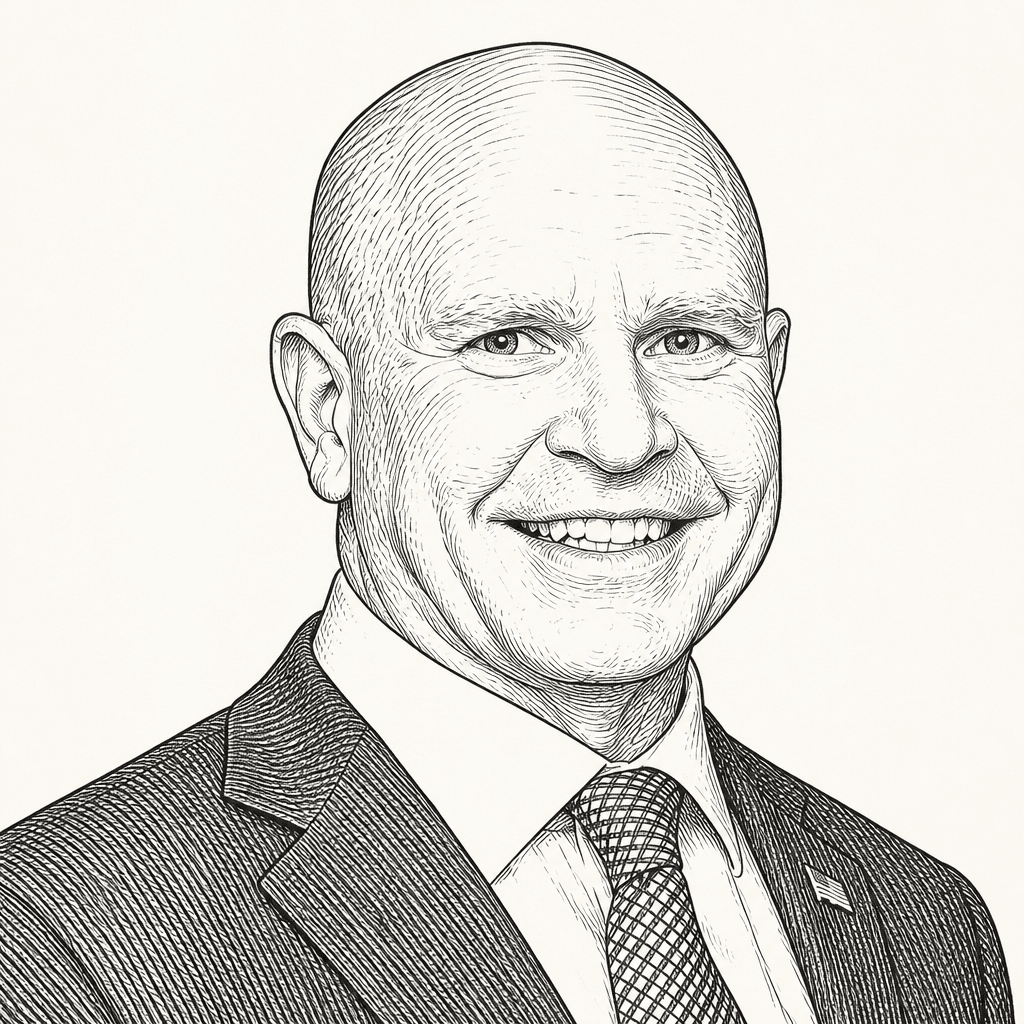

Former Iraqi prime minister Haider al-Abadi argues that Iraq’s central threat has shifted from ISIS to the corruption, patronage, and armed networks that weaken the state from within. He says Baghdad should use the relative respite to strengthen the judiciary, bring wartime militias under legal authority, and prevent elite theft through more transparent institutions. In his account, a durable partnership with the United States and deeper regional economic links should support Iraqi sovereignty—not substitute for it.
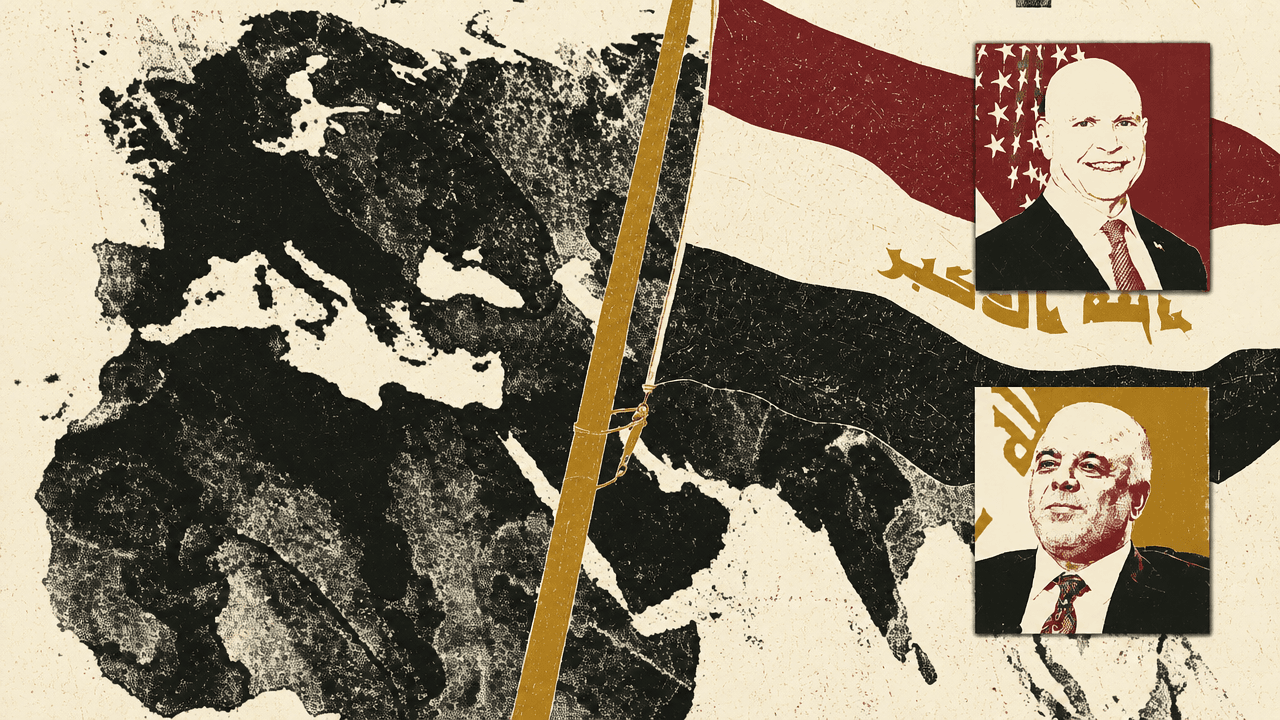
Corruption is now the threat Iraq must confront to survive
For Haider al-Abadi, corruption is no longer a governance problem that can wait until after the security crisis. Iraq has no immediate military threat comparable to the ISIS offensive, he said. Terrorism remains dangerous as an ideology, but the government now has room to reform political parties, public institutions, the judiciary, and the investment environment. Without that reform, he argued, the state itself remains at risk.
The “theft of the century” is his example of how far the problem has gone. When reports first appeared on social media, al-Abadi said, he did not believe them. The alleged theft involved $2.5 billion—3.8 trillion Iraqi dinars—taken as cash. After checking with the finance minister, he concluded the reports were true.
What disturbed him was not merely the size of the theft but its apparent mechanics. Funds moved from the Central Bank of Iraq to Rafidain Bank, a major state-owned bank, and people came month after month to collect hundreds of millions of dollars, or their dinar equivalent, in cash. The arrangement continued for nearly a year before it was exposed.
That raised an institutional question: where were the checks and balances? Al-Abadi asked where oversight had been from the Central Bank, the Finance Ministry, integrity and accountability bodies, the prime minister’s office, and parliament. A scheme on that scale, he argued, has moved beyond corruption that can be addressed simply by arresting visible participants after the fact.
A person who steals millions can accept a five- or 10-year sentence, serve less time, and leave prison with substantial wealth, he said. The priority must therefore be prevention. Iraq should make investment, business formation, and dealings with the government easier, more transparent, and governed by law. Reducing arbitrary obstacles to legitimate commerce would, in his account, sharply reduce opportunities for bribery and extraction.
He said he had pursued reform as prime minister but under conditions that limited what he could risk. ISIS was still near Baghdad. Political blocs controlled parliament and significant parts of the state. A fight against every network implicated in corruption could have destabilized the capital while Iraq was fighting for survival. The war required caution: reforms had to be constrained by the need to preserve political stability and sustain the campaign against ISIS.
Those constraints do not remove the political difficulty now. The question for the current prime minister, al-Abadi said, is whether anti-corruption efforts will move vertically toward the people directing corrupt schemes or remain horizontal, focused on lower-level officials. Iraqis naturally suspect that jailed figures answer to people above them. But pursuing those people could cost the prime minister parliamentary support and potentially his government.
The judiciary is central to whether reform can be credible. Political leaders ultimately bring their disputes to the courts, al-Abadi said. If judicial institutions are caught up in the same corrupt processes, they cannot provide judgments that citizens regard as just. Some reform, in his view, has to begin inside the judiciary itself.
Citizens can be patient when a government cannot immediately deliver everything it promises, he argued, provided they believe it is acting fairly. They will not accept a system in which jobs and public opportunities go to friends, party members, and insiders while others are told there is no room for them. Al-Abadi invoked a principle attributed to Imam Ali: when people suspect their ruler, the ruler should be open and clear with them.
“We have fought the terrorism, we sacrificed a lot of blood, a lot of resources because it was a must to retain Iraq as a country, as a nation. And I think now fighting corruption is a must to retain the nation and the country,” al-Abadi said.
His concern about democracy belongs to the same argument. Iraq’s political system is imperfect, he said: arms remain outside the state, threats persist, and institutions are compromised by patronage. But Iraqis have lived with freedoms unavailable under Saddam Hussein—the ability to speak, air grievances, and express ideas. He rejected the proposition he attributed to Tom Barrack that the region is better governed by dictators than democracies. Iraqis, he said, would not accept a return to rule through fear.
A post-withdrawal partnership should leave Baghdad in charge
Al-Abadi wants the next phase of U.S.-Iraq relations to move away from a primarily military relationship and toward civilian, economic, financial, and cultural cooperation. The condition is Iraqi agency. Washington can be an important partner, but Iraq cannot organize its survival around a foreign power whose departure might expose the state to collapse.
That is the lesson he draws from the anti-ISIS campaign. When al-Abadi became prime minister in 2014, ISIS had taken Tal Afar, all of Nineveh, much of northern Iraq, and western Iraq. A decade earlier, he and Herbert McMaster had worked around Tal Afar during an effort to suppress al-Qaeda and restore local life. By 2014, that earlier success had been reversed.
Al-Abadi said Iraq could not simply recreate the arrangement of the earlier occupation period, when the United States “was almost controlling everything in Iraq”: the skies, the land, and the principal military effort. Baghdad had a government, he said, but little practical role in security or armament. The partnership needed in 2014 had to be different. Iraqi forces and Iraqi society would carry the main burden, while the United States and coalition partners supplied bounded support against a threat that crossed Iraq’s borders.
“I was very careful not to be too much dependent on the US,” al-Abadi said. “Because you know where the fault line will be, like Afghanistan once the US withdrew, the whole thing collapsed. We didn't want Iraq to end up like the same.”
The United States was fundamental to defeating ISIS, he said, but dependence was not a strategy. Iraq needed support that was “limited, calculated, and to the interest of both countries.” Establishing that balance was difficult. President Obama had campaigned on withdrawal from Iraq, al-Abadi noted, and returning militarily after ISIS’s advance was politically difficult for his administration. Iraqi officials were receiving promises while Iraqi forces were fighting and civilians were dying.
He described broad pessimism about Iraq’s prospects. Foreign policymakers, he said, were discussing what might follow if ISIS established a lasting “caliphate” extending through North Africa and the Arabian Peninsula, with its own currency and passports and perhaps a route into Spain. Some treated ISIS as effectively unstoppable. Iraqi leaders around him also asked whether continued resistance would simply cost more lives and resources without producing victory.
ISIS’s reach made the war more than a military contest in al-Abadi’s telling. Fighters had come from more than 100 countries, he said. ISIS supporters used social media to portray the group as freedom fighters and nationalists while spreading fear in Baghdad about an impending massacre. He said he pressed the anti-ISIS coalition to respond to that propaganda as well as to the group’s territorial campaign.
His answer to those urging resignation was that submission was not an acceptable option. McMaster agreed, calling war a contest of wills and arguing that the United States did not need to solve every regional problem itself in order to remain engaged with partners fighting militant organizations.
The scheduled completion of the U.S. military withdrawal makes the question immediate again. Al-Abadi said there were probably fewer than 2,500 U.S. troops in Iraq and that they were expected to leave by the end of September. A constructive relationship between Iraq’s prime minister and President Trump could help shift the relationship away from security, he said, if Washington concludes that Iraqi stability serves U.S. interests.
Wartime fighters must be brought into legal order, not discarded
The practical test of sovereignty is whether Iraq can bring armed groups under state authority while recognizing the people who fought ISIS. Haider al-Abadi did not describe those fighters as a single bloc. He credited many with saving Iraqi communities and sacrificing for the country; some, he said, were nationalists who put Iraq first.
He also argued that the war required fighters able to confront an ideological movement that regular armed forces might struggle to fight on its own terms. ISIS was itself ideological, drawing recruits from around the world. Iraq needed people willing to counter it, but those people had to operate differently from the militants they fought.
They could not be fighters, judges, and governors at once. They had to follow the law, protect Iraqis without sectarian distinction, and understand that the state exists to protect all citizens. Many had not come through military academies and did not naturally understand the legal limits on force, al-Abadi said. The task was to control and educate them, not merely command them during wartime.
He compared the problem to postwar Italy, other European countries, and Japan, where armed political groups and criminal networks retained influence after the Second World War. A stronger state gradually brought such people under order, he said, in part by offering jobs, legitimate institutions, and recognition. Fighters who had helped save the country should not simply be told to go home with nothing.
Al-Abadi acknowledged Iran’s role in the anti-ISIS war without presenting it as altruism. Iran is Iraq’s neighbor, ISIS came close to the Iraqi-Iranian border, and Tehran had a direct interest in stopping the group. Iraq should similarly act from its own interests—not serve another state’s interests at the expense of Iraqis.
“If they serve their interest and we serve their interest, not our interest, there is no point to meet,” al-Abadi said. “It will only lead to more conflict, more fighting in the future.”
McMaster framed the problem more directly. He argued that Iranian-backed militias have contributed to sectarian violence, penetrated Iraqi institutions, and weakened Iraqi sovereignty. A weaker Iran, he suggested, could give the new government an opportunity to reduce the influence of armed networks associated with foreign powers and restore the state’s authority over force.
Al-Abadi resisted the idea that regional change automatically makes that easier. Iraq borders Iran and Turkey, two major regional powers with long histories in Iraq and the wider region. Iraq can become a site of fragmentation and proxy conflict, he said, or a bridge among different civilizations and interests.
The two men differed over how to understand Iran’s conduct. Al-Abadi said Iranian leaders saw the U.S. overthrow of Saddam Hussein, together with American hostility toward Iran and Syria, as a potential prelude to an attack on Iran. The eight-year Iran-Iraq war had intensified that fear. In his account, Tehran sought to ensure that Iraq would not again become a base for hostile action against Iran and to prevent the United States from fully consolidating control in Iraq.
McMaster objected that this risked making Iran’s conduct seem inevitable. He emphasized the ideology of Iran’s revolution and argued that Iran and Syria had been hostile not only to the United States but to Iraq. Iran, he maintained, continues to work against Iraqi sovereignty.
Al-Abadi’s reply was that understanding Iranian threat perceptions was not an excuse for interference. Iraqis, too, had been victims of Saddam Hussein’s aggression. Iraq should not remain trapped in a history “full by blood and aggression.” His prescription is to keep Iraq out of wars among larger powers: not a springboard for attacking Iran and not a partisan force in regional conflicts.
Shared infrastructure would make regional conflict costlier
Haider al-Abadi sees regional economic integration as an alternative to permanent balancing among rival powers. Iraq, in his account, could become a hub for electricity grids, oil pipelines, and gas pipelines connecting the Gulf, Syria, Turkey, Iran, and Arab states.
The point is political as much as commercial. Shared infrastructure would create interests across borders substantial enough that future leaders would face real domestic costs if they sought conflict with a neighbor. Al-Abadi invoked postwar Europe, where countries emerging from two global wars built networks of common interest rather than returning to earlier antagonisms.
“We have to establish this self-interest and common interest for our nations, for our countries, so that no leader in the future will talk about trying to have a fight with this neighbor or with that neighbor because there's so much he will lose,” al-Abadi said.
That ambition is also why he wants U.S.-Iraq ties to become more economic and civilian. McMaster cited Prime Minister al-Sudani’s statement to President Trump that Iraq needed its fair share within OPEC after absorbing $400 billion in war damage while fighting ISIS. Al-Abadi did not address that figure. He instead stressed that Iraq has substantial opportunity if it can plan carefully and overcome the institutional failures that prevent public wealth from producing development.
The country should act bravely, he said, but bravery without a plan can be disastrous. Reformers must not “wreck the boat so hard that it may sink and collapse.” Iraq must navigate its political constraints while changing the arrangements through which patronage networks and corrupt officials capture public resources.
Regional integration is not a substitute for caution about the region’s instability. Al-Abadi described Syria as especially uncertain. He welcomed what he characterized as openness in the current Syrian government’s posture toward neighbors and the international community, while warning that its base of power includes militias that had fought in Iraq and carried a terrorist ideology. He also pointed to Turkish ambitions, Israeli policy toward Syria, and the unresolved consequences of the war involving Iran as overlapping risks.
For Baghdad, the answer is not to wait for those rivalries to disappear. It is to build relationships and infrastructure that give all sides a stake in Iraq’s stability.