Hamas’s Weakening Opens a Narrow Path to Civilian Rule in Gaza

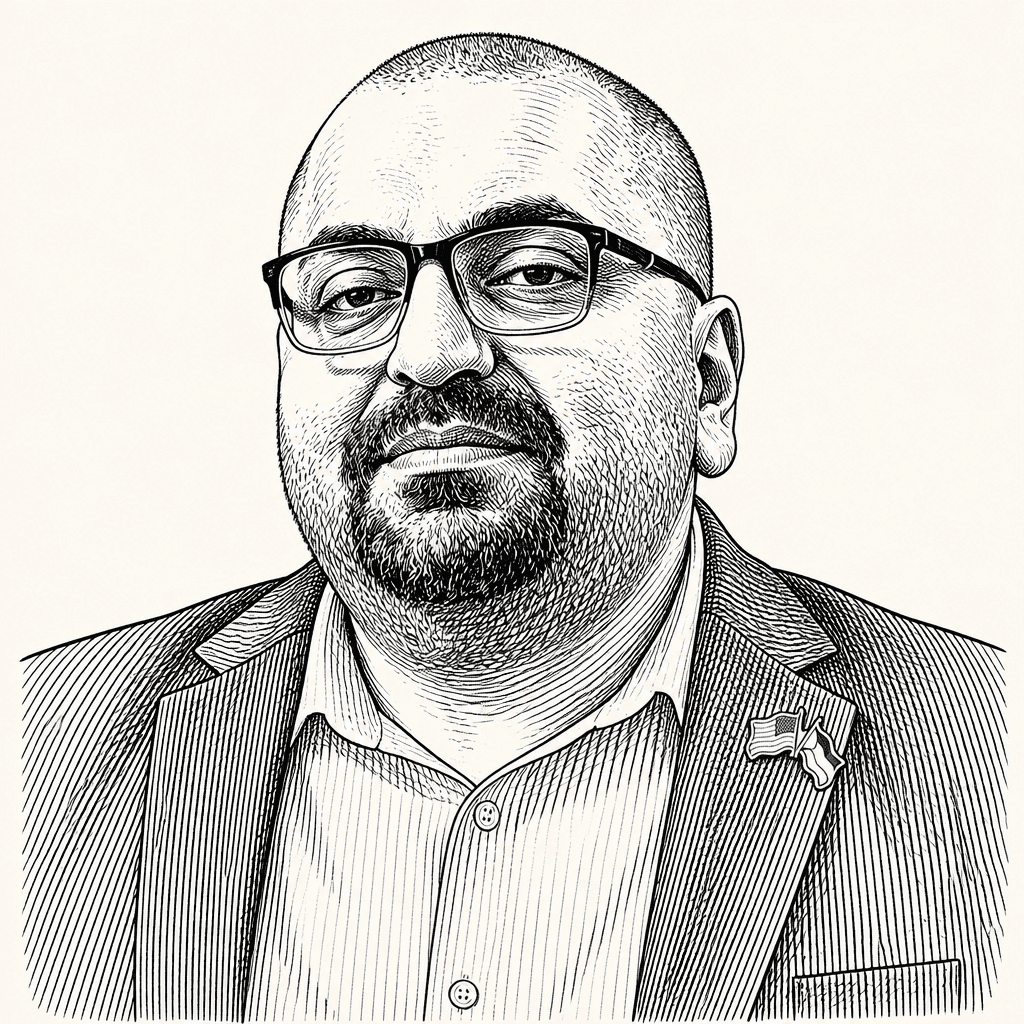
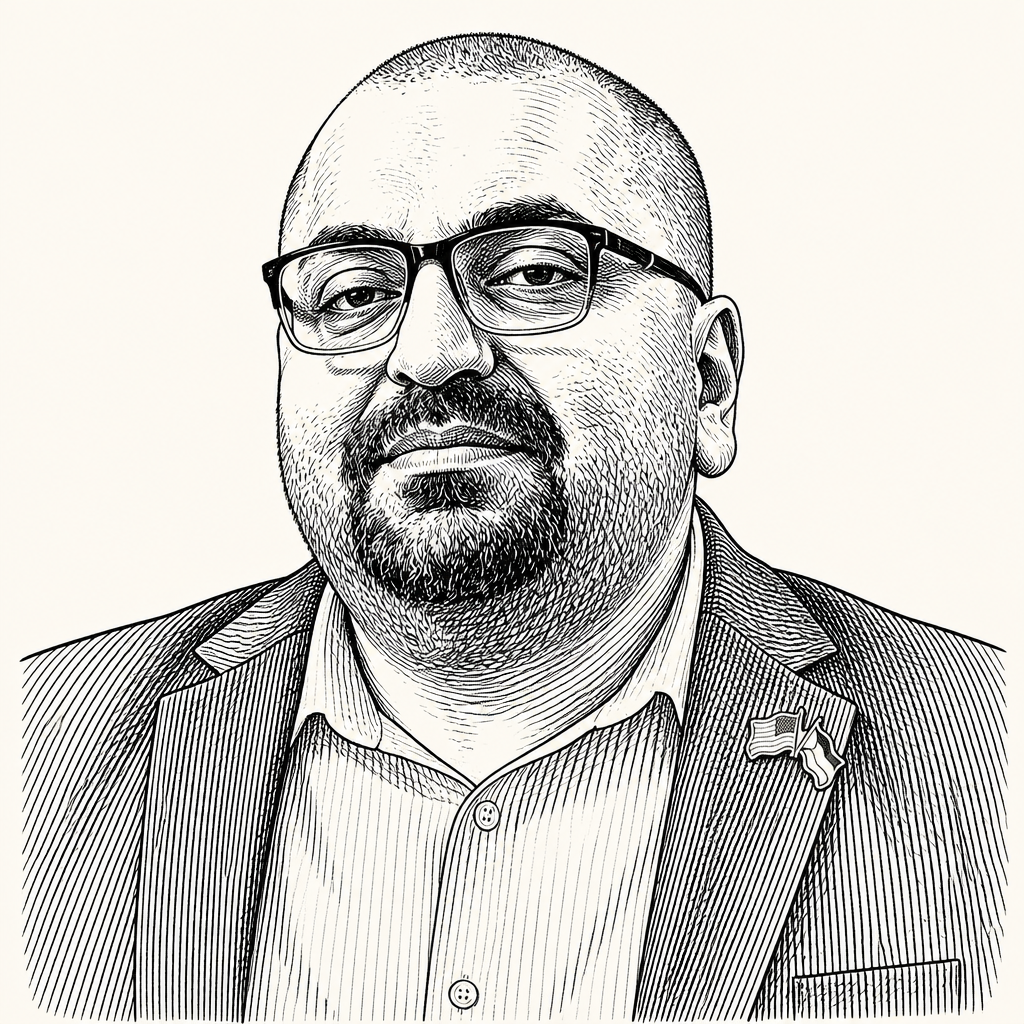
Ahmed Fouad Alkhatib, a Palestinian from Gaza, argues that the territory’s future depends on stripping Hamas of its capacity to govern, rearm and intimidate, allowing civilian leaders to replace armed rule. While holding Israel responsible for settlement expansion and policies that weakened Palestinian moderates, he says Palestinians must also confront Hamas’s role in Gaza’s destruction and build a politics around work, security and self-government. Alkhatib proposes a demilitarized Gaza run by nonpartisan technocrats and a 100-day halt to violence as a basis for direct Israeli-Palestinian engagement; host Russ Roberts questions whether Hamas would genuinely disarm.
Gaza’s opening, Alkhatib argues, depends on Hamas’s weakening
Ahmed Alkhatib argues that Gaza’s future depends less on another abstract peace plan than on whether Hamas can no longer govern, rearm, intimidate, or define Palestinian politics. His claim is not that Gazans have become pro-Israel, or that they have broadly embraced the form of peace Israelis might want. It is that a substantial opening has emerged: many people in Gaza, he argues, have concluded that Hamas’s rule and its October 7 attack brought catastrophe without advancing Palestinian interests.
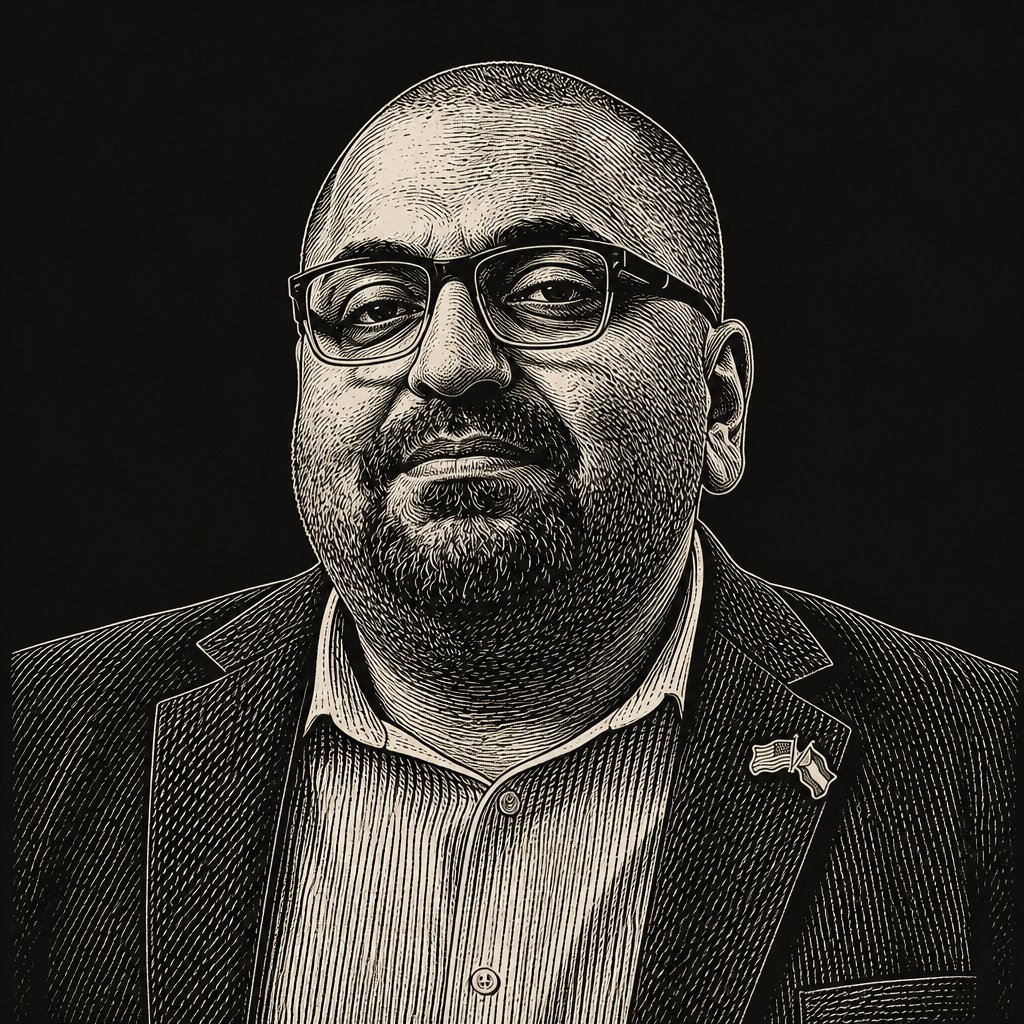
That opening is the basis for Alkhatib’s guarded optimism. He describes Hamas as tactically and strategically weakened inside Gaza: it has lost many trained fighters, almost all of its senior military leadership, and some political commanders. Iran is less able to support it; Hezbollah is consumed with its own circumstances; Qatar is constrained; and Hamas cannot easily replenish weaponry through smuggling. In his view, the prospect of even phased or partial disarmament—previously inconceivable—is now plausible.
The majority of Gaza are or have turned against Hamas due to the consequences of October 7th, due to the totality of Hamas’s rule over 20 years, due to the behavior of the terror organization during and after the war.
The opposition, as Alkhatib describes it, has several overlapping sources. The first is immediate anger that Hamas’s “suicidal nihilism and jihadi adventures” brought destruction that ordinary Gazans must endure. The second is resentment over its wartime conduct. Hamas members, influencers, and supporters, he argues, used aid, foreign fundraising, and opportunities to leave Gaza to enrich themselves while urging those who remained to resist and persevere.
A third source is retrospective judgment on Hamas’s political project. Alkhatib sees Hamas as having spent three decades attacking the premise that negotiation and a two-state arrangement could achieve anything. He points to wartime remarks by leaders including Khalil al-Hayya, Ghazi Hamad, and Khaled Mashal as evidence that Hamas figures have, in his reading, “basically accepted” a two-state horizon—even where their language remains contradictory or qualified. To him, that is an indictment rather than a resolution: Hamas consumed lives and resources, arrested the evolution of the Palestinian national project, and may ultimately accept under pressure what earlier Palestinian leaders had already concluded.
The fourth source is direct experience of repression. Alkhatib cites Gazans who lost jobs, businesses, or homes; were tortured or summoned for interrogation over Facebook posts and comments; and lived under intrusive social controls. He recalls a young woman questioned by Hamas security officers while meeting a man in a public café to discuss a scholarship opportunity. Hamas’s effort to restrict women smoking hookah on beaches, to require male-guardian approval for women leaving Gaza, and to introduce Sharia-based criminal punishments were, in his account, parts of a gradualist Islamist project. He calls it “ISIS and Taliban lite”: more attentive to public relations and foreign funding than those groups, but still capable of narrowing normal civic life and making open dissent dangerous. Even secular or anti-Hamas Palestinians, he says, could feel compelled to attach ritual deference to “the resistance” when criticizing Hamas.
Alkhatib disputes wartime polling on several grounds. He alleges that Hamas manipulated polling conducted by Khalil Shikaki’s organization, including through interference reflected in documents Israeli forces said they found in Gaza in August 2024. He also says Hamas figures knew how Shikaki’s polling was conducted and encouraged supporters to understate their preferences before the 2006 election. Against wartime surveys showing overwhelming support for Hamas or October 7, he cites polling attributed to the Tony Blair Institute and Jim Zogby that, he says, found 93% of Gazans wanted Hamas gone and 86% blamed Hamas equally for Gaza’s destruction. His point is not that every Gazan shares a reconciliatory politics. It is that declared support under Hamas’s coercive conditions cannot be read straightforwardly.
For Alkhatib, a young and enclosed population is not simply a security problem or a pool of permanent radicalization. Nearly two-thirds of Gaza’s people are under 30, he says, and have known Hamas as their governing reality and the outside world largely through smartphones. Many want work, travel, higher education, medical treatment, commercial access, and a life no longer defined by war.
That is why demilitarization matters as more than a security outcome. Without Hamas’s ability to govern, run intelligence and counterintelligence, recruit infiltrators, and punish cooperation, Gazans could express interests that armed rule has suppressed. The relevant comparison is not between perfect trust and distrust. It is between individual gestures of cooperation beneath a violent organization’s shadow and a territory in which that organization no longer has coercive power.
Russ Roberts shares the hope but not the confidence. He sees little reason to assume Hamas would genuinely disarm. A group that believes disarmament could mean the end of its power—or its members’ lives—has a powerful incentive to make concessions only cosmetically, perhaps by changing its name or preserving its capabilities under another structure.


Alkhatib does not deny the danger. His case is comparative: risk will not become zero, but a Gaza without Hamas’s army, intelligence apparatus, recruitment capacity, and governing authority would be fundamentally different. A transition period and new civilian leadership could, he thinks, reduce the risk to a manageable level. That, rather than a sudden conversion of society, is the condition for a different political future.
The Gaza–West Bank divide made moderation harder to defend
The Hamas takeover did more than create an armed enclave. In Alkhatib’s telling, it set two competing models of Palestinian governance against one another—and then left the more moderate model too weak and discredited to demonstrate what Palestinian self-government might otherwise have achieved.
Ahmed Alkhatib left Gaza for the United States at 15, shortly before Israel’s 2005 disengagement, on what was intended as a one-year exchange-student program. He could not return after Hamas abducted Israeli soldier Gilad Shalit, border access deteriorated, and fighting intensified between Hamas and Fatah. He subsequently received political asylum in the United States amid Hamas’s 2007 violent expulsion of the Palestinian Authority from Gaza.
His childhood spans the contrast that structures his analysis. He remembers the late Oslo era as a period in which a path to statehood seemed plausible: Gaza receiving its first landlines and cell phones, institutions beginning to emerge, and his family deciding to return. After the failure of the 2000 Camp David talks and the Second Intifada, he saw violence, the deepening of occupation, the appeal of armed resistance, and Hamas’s ascent.
Alkhatib says the 2006 Palestinian election was held despite warnings from the Palestinian Authority that it was not ready and that Hamas might win. He alleges that Hamas deliberately understated its support in polling to avoid giving the United States a reason to halt the vote, and says Hamas leader Mahmoud Zahar later boasted of that deception to a PLO official. Hamas’s electoral appeal was not only ideological. Its familiar Muslim Brotherhood line—“Islam is the solution”—was paired with an anti-corruption appeal: voters who disliked Hamas could nevertheless use their vote to reject the Palestinian Authority.
The election was held in both Gaza and the West Bank, and Alkhatib stresses that Hamas received the larger absolute number of its votes in the West Bank. But Hamas’s rule in Gaza and the Fatah-dominated Palestinian Authority’s administration in the West Bank became distinct tests of Palestinian politics.
In Gaza, Hamas pursued a model organized around armed resistance and, Alkhatib says, sustained civilian life through an influx of international aid, UN activity, NGO support, and external money. Hamas was not financially capable of ordinary governance on its own, he argues. The resulting arrangement let the international community bear responsibility for Gazans’ welfare while Hamas directed resources toward its own priorities: tunnels, rockets, smuggling, attacks, and control of the local population.
In the West Bank, the Palestinian Authority and PLO accepted a different premise: security coordination, negotiation, and state-building. Alkhatib is not broadly pro-PA; he regards it as necessary but compromised and frequently ineffective. Still, he credits Mahmoud Abbas with maintaining security cooperation and negotiations, and former Prime Minister Salam Fayyad with professionalizing police and security forces, building institutions, and establishing some measure of accountability. The intended security apparatus was not simply a collection of veteran revolutionaries. It was meant to be a professional force capable of maintaining order.
Alkhatib’s counterfactual is that the West Bank could have become a “South Korea-like” demonstration of Palestinian self-government while Gaza became, in his phrase, a “North Korea” of isolation and armed rule. Such a contrast, he believes, could have created space for more capable Palestinian moderates to emerge and weakened Hamas’s claim to represent the future.
Instead, he argues, Israeli settlement expansion—especially under Benjamin Netanyahu—undermined the legitimacy the PA required to persuade Palestinians that cooperation and diplomacy could deliver anything. He believes Israeli policy choices contributed to Palestinian radicalization and says that was intentional. Palestinian agency remains essential in his analysis, but it does not absolve Israel of political choices that, in his view, weakened Palestinian moderation.
Russ Roberts frames this as a trap that shaped both societies. Suicide attacks and intifadas made Israeli voters less willing to take risks for a two-state solution; at the same time, Palestinian leaders who cooperated with Israel could be portrayed as collaborating with the occupier. The question of who would restrain radical actors—the Israeli military or Palestinian security forces—was never merely administrative. It exposed Palestinian authorities to charges of betrayal while leaving Israelis doubtful that Palestinian autonomy could provide security.
Alkhatib agrees that Israel’s rightward turn did not happen independently of Palestinian violence. But he thinks Palestinians must confront the way Hamas made the Israeli argument more persuasive. Even someone who believed in armed resistance, he says, should have recognized that it no longer made sense in Gaza after the 2005 withdrawal. Gaza should have concentrated on its Mediterranean position, a gas field, an airport and seaport, tourism, and regional integration. Instead, Hamas transformed it into a citadel of instability.
October 7, he says, reinforced Israeli fears that autonomy could become a platform for violence. Hamas did not create every factor behind Israeli skepticism, but it supplied two decades of evidence that Israelis could reasonably interpret as a warning against concessions. Reversing that inference requires institutions able to govern without an armed faction retaining veto power over public life, economic ties, or political contact.
A normal life is a political constituency, if it can be protected
The constituency for post-Hamas governance, in Alkhatib’s view, is rooted first in material interests: people who want ordinary work, education, mobility, commerce, and family life to be possible without factional control or recurrent war.
Ahmed Alkhatib divides that constituency into overlapping groups. The largest, he believes, wants stability on economic grounds alone: jobs, decent housing, travel, and no more war. Another has concluded that Israel is not going away. Hamas’s recurring prophecies of Israel’s imminent collapse—whether in 2020, after 80 years, or through October 7—have lost credibility, he says. The failure of those fantasies is producing a mindset that accepts Israeli permanence even where it does not create affection or resolve every political grievance.
A further group wants direct access to Israeli institutions and society: business relationships, medical treatment, universities, academic collaboration, and cultural exchange. Alkhatib describes a Palestinian woman from Gaza who became an advanced cancer researcher at Hebrew University and had to conceal aspects of her work with an Israeli team from Hamas. Her career, he argues, represents a larger class of relationships made invisible or dangerous by the prevailing politics.
The same logic applies to commerce. Gaza’s economic renaissance, Alkhatib says, will need Israel more than Egypt. Gaza can reach Egypt through the Sinai, but Israel is immediately adjacent and offers access to imports, global markets, and capital. A Gazan business operating locally needs functional relationships with Israelis simply to participate in wider economic life.
Russ Roberts raises the most difficult objection: October 7 included people who had crossed into Israel for work or received medical care there, and who used familiarity with Israeli communities to participate in violence. That history makes Israelis understandably reluctant to revive prewar arrangements. Goodwill gestures alone cannot answer the security problem.
Alkhatib replies that those attackers were a small group within Gaza’s prewar population of 2.3 million. More importantly, he argues, individual cross-border relationships cannot flourish while a disciplined armed organization retains the capacity to train, govern, gather intelligence, recruit infiltrators, and coordinate attacks. Removing that structure would not eliminate risk, but it would change the terms on which commercial and civic ties could resume.
The institutional vehicle he supports is a nonpartisan technocratic administration, which he associates with the proposed National Committee for the Administration of Gaza. Gaza should not be handed to another factional contest among Hamas, Fatah, Palestinian Islamic Jihad, or leftist groups. It needs professional, politically unaffiliated administrators.
The people required for that task already exist, he argues: teachers, academics, professionals, civil servants, and administrators, perhaps numbering in the tens or hundreds of thousands. They are not presently empowered, and neither he nor Roberts can name them. But Alkhatib expects they could rise quickly if the environment allowed them to exercise authority without being marked as collaborators, targets, or factional rivals.
That future cannot consist simply of towers, beachfront projects, and a new elite. Alkhatib rejects what he calls the crony capitalism of the West Bank, in which oligarchic networks have contributed to the PA’s weakness. He wants capitalism that improves life broadly rather than a Gaza maintained indefinitely by humanitarian assistance, UNRWA, and NGOs. His objection is not to aid in an emergency but to a durable political economy in which dependency replaces development and Hamas or other elites can treat civilian provisioning as someone else’s responsibility.
Palestinian agency requires an identity built for more than opposition
A functioning civilian order could protect the material interests Alkhatib identifies. Sustaining it, he argues, would require a different ideological project: a Palestinian identity defined not principally by opposition to Israel, resistance, or inherited political symbolism, but by what Palestinians intend to build.
Ahmed Alkhatib is trying to make a case he knows many Palestinians and pro-Palestinian activists regard as betrayal: Palestinians must practice self-criticism without treating themselves as uniquely responsible for a profoundly unequal conflict.
He rejects the idea that acknowledging Palestinian agency is “blaming the victim.” Israel has greater power, he says, and that imbalance is real. Palestinians have also been used as pawns by outside powers and have endured extraordinary hardship. But none of that eliminates Palestinian choices, responsibility, accountability, or the need for “soul-searching.” On the contrary, he sees agency as the beginning of empowerment, not a denial of Palestinian suffering.
His own standing is often attacked on the grounds that he left Gaza as a teenager. He regards that criticism as selectively applied. A person who had barely lived in Gaza but endorsed Hamas or armed resistance, he says, would be celebrated as authentic; his Gaza experience is dismissed because he presents an inconvenient argument. He notes that an Israeli bomb left him largely deaf in his left ear, that he lost childhood homes and many family members, and that close relatives remain connected to Gaza’s medical and humanitarian life.
Distance, he argues, has not severed his connection. It has given him the freedom to communicate with Israelis, Hamas figures, international organizations, and Gazans in ways that would have been harder from inside. A decade earlier, he tried to develop an internationally run, Israeli-approved airport in Gaza and communicated through channels reaching Hamas leaders as well as Israeli officials.
The deeper project is to redefine Palestinian identity. Alkhatib says Palestinian self-understanding has become too heavily defined by opposition to Israel, conflict, resistance, and symbols whose practical meaning is often left unexamined. He invokes the grandfather’s key, the keffiyeh, and the right of return as examples of symbols or phrases that can be repeated reflexively without answering what they would mean in practice.
He does not deny Palestinian attachment to the land. He asks what positive, modern national identity Palestinians can build across radically different circumstances: Gaza, the West Bank, East Jerusalem, Lebanon, Jordan, Syria, Latin America, Europe, Australia, the Arab world, and North America. The diaspora, in his view, should help articulate that identity. He compares the task, cautiously, to the diaspora-based modern Zionist movement’s role in imagining a Jewish identity that later became Israeli statehood. Palestinians need something “akin to a Zionist movement,” he says—not an imitation, but a project able to gather disparate Palestinian experiences into a forward-looking national vision.
That is also why he distinguishes being a representative from being a leader. A representative, in his formulation, follows the political wind: when Hamas is popular, evading direct condemnation; when limited criticism becomes safe, calling only for a ceasefire. A leader says what people may not want to hear and moves the public without getting so far ahead that it loses them. He points to Anwar Sadat’s decision to seek engagement with Israel after the Yom Kippur War as a model of acting against a prevailing regional mood because perpetual war offered no future.
Alkhatib sometimes worries he is ahead of Palestinian public opinion, but he rejects the idea that he is alone. He says there are hundreds or thousands of Palestinians prepared to pursue a different path if they are given the opportunity. The wider pro-Palestine movement in the United States and Europe is, to him, a different problem: it often calls itself pro-Palestinian while operating as an anti-Israel movement, doubling down on armed resistance or de-Zionization just as many Gazans are reassessing what survival and stability require.
A hundred days without violence could make direct politics possible
If Gaza is to become a demonstration of viable Palestinian self-government rather than another permanently aid-dependent territory, Alkhatib believes the first requirement is not a final-status agreement. It is a visible interruption in violence with specific obligations from the actors able to reduce it.
Asked what he would want from a hypothetical Israeli prime minister without Netanyahu’s political baggage, Ahmed Alkhatib proposes a 100-day “Great Reset.” He worries about the phrase’s association with unrelated conspiratorial politics, but the substance is a three-month period designed to lower the temperature and make direct Israeli-Palestinian engagement imaginable again.
In the West Bank, he would want Israel to restrain violent settlers, whose attacks and the imagery they generate, he says, continually radicalize Palestinians. Israel should ease some restrictions on Palestinian Authority security forces, while the PA should use existing cooperation mechanisms to pursue violent and terrorist actors and impose law and order. The practical benchmark is demanding: three months without a terror attack, killing, or other violent incident in the West Bank.
In Gaza, Alkhatib would seek concrete initial steps toward Hamas disarmament and an Israeli military commitment to cease attacks unless Israel can provide compelling evidence that it is repelling an incoming threat. The desired result is another three-month period with no Israeli, Jewish, or Palestinian loss of life.
If we stop the violence, the future will begin.
For Alkhatib, this would not be a ceremonial exercise or a promise that the hardest issues could suddenly be resolved. It would alter the daily political environment: fewer deaths, different headlines, less public reinforcement of fear, and a basis for a new practice of politics.
After that interval, he proposes a transparent Israeli-Palestinian committee for mutual cooperation, with possible separate bodies for Gaza and the West Bank. Saudi Arabia, the United Arab Emirates, Egypt, European states, and the United States could support or observe it, but he wants Palestinians and Israelis speaking directly rather than through layers of intermediaries.
The committee’s early purpose would be procedural rather than grandly substantive. It would make the act of direct engagement public and normal; introduce new Palestinian and Israeli participants beyond the established PA cadre and conventional Israeli negotiating teams; and let each side articulate what it wants in full view of its publics. The old mechanisms, he says, have exhausted their credibility. Mahmoud Abbas and veteran Palestinian negotiators no longer command much attention, while top-down Israeli diplomacy carries its own baggage.
Russ Roberts does not present this as an easy path or a likely near-term outcome. His earlier doubt remains: Hamas may have reasons to treat disarmament as a threat to its survival and therefore to preserve its capacity in altered form. But he imagines the distance between the present and a day when he and Alkhatib might have coffee in a flourishing Gaza City, then meet again in Jerusalem.
The exchange ends on a shared premise, even as they disagree over how realistic the first steps are. The future they describe cannot begin with a perfected agreement. It begins with whether violence can be interrupted long enough for Gazans and Israelis to act as neighbors rather than permanent enemies.