American Strategy Fails When Untested Assumptions Become Policy

H.R. McMaster argues that American strategy often fails not for lack of information but because officials allow untested assumptions to become policy. In a Hoover Institution discussion, the former national security adviser says U.S. approaches to China, Iran, Russia and Afghanistan repeatedly projected Washington’s hopes onto adversaries rather than examining their motives, ideology and incentives. His remedy is a more disciplined process: define the problem on its own terms, test assumptions, present leaders with real options, and weigh the risks of inaction as seriously as the risks of acting.
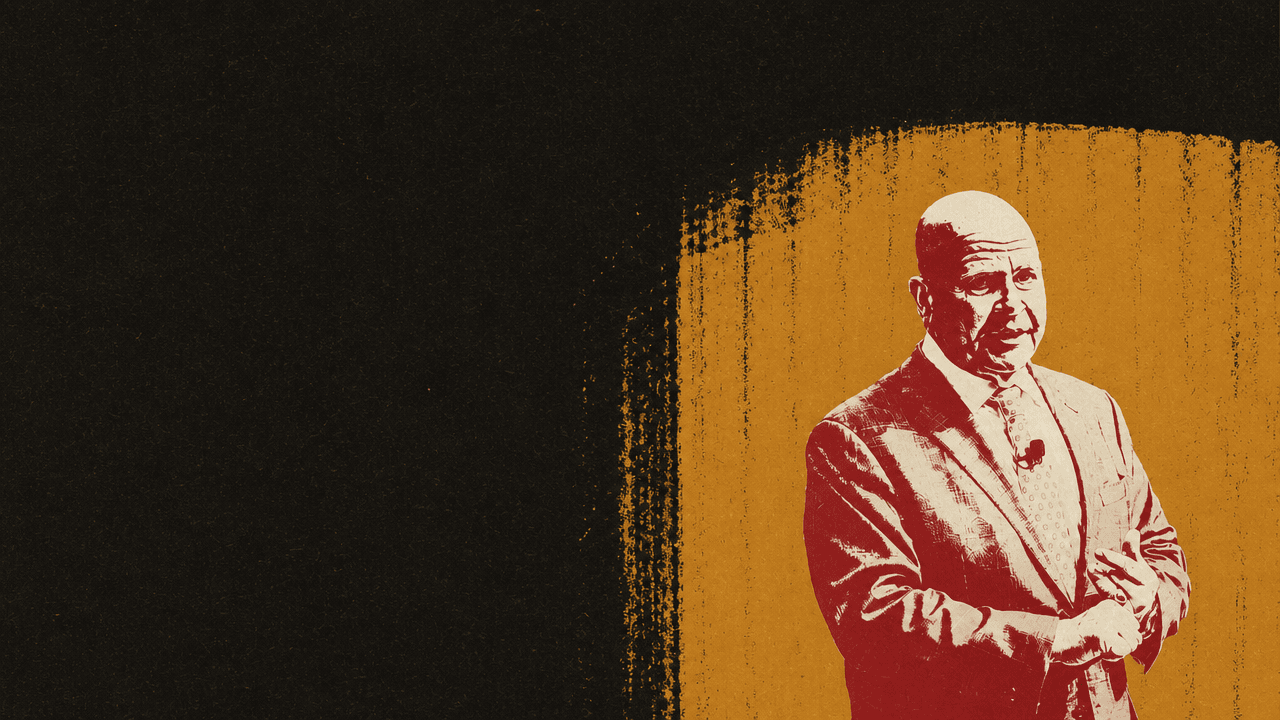
Strategy fails when assumptions harden into policy
Herbert McMaster treats strategic failure less as a problem of insufficient information than of untested belief. The discipline he emphasizes is simple but demanding: identify the assumptions on which a strategy rests, and challenge them before they become policy.


What I think is really important is to try to always identify the assumptions on which your strategy is based and to challenge those assumptions.
That warning is aimed especially at the post-Cold War habits of American statecraft. McMaster argues that the United States carried forward broad assumptions from the “unipolar moment”: that history favored free and open societies, that great-power competition had become a relic, and that American technological prowess would guarantee security. Those ideas did not remain abstractions. They shaped concrete policies toward China, Iran, and Russia across multiple administrations.
On China, McMaster says the persistent assumption was that welcoming Beijing into the international order would induce it to “play by the rules,” liberalize its economy, and eventually liberalize its form of governance. His verdict is blunt: that did not happen.
On Iran, McMaster says a comparable mistake was the belief that reintegration into the global economy, or a more conciliatory Western posture, would fundamentally shift the theocratic regime’s hostility toward the United States, Israel, and the West. In his account, the recurring idea that Iranian “moderates” would gain influence over revolutionaries was not just wrong but part of an Iranian deception operation that the United States continued to accept.
McMaster does not argue against history as a strategic tool; as a historian, he says studying history is “really important.” But he draws a distinction between applied history and the abuse of history through shallow analogies. His example is Afghanistan, where the phrase “graveyard of empires” became a familiar shorthand. For McMaster, such phrases can mislead when they substitute inherited slogans for serious analysis of a current problem.
Russia was misread as a security problem
Herbert McMaster’s Russia example is his most developed case of what happens when policymakers misidentify what drives an adversary. He argues that under multiple administrations, American leaders acted as if Vladimir Putin’s aggression could be moderated by allaying Russian security concerns.
McMaster places several leaders inside that pattern: George W. Bush’s early confidence in Putin, Barack Obama’s outreach after Russia’s invasion of Georgia and tradeoff over missile defenses in Poland, Donald Trump’s belief that he could bring Putin “in from the cold,” Angela Merkel’s effort to integrate Russia economically into Europe through energy ties, and Joe Biden’s Geneva summit with Putin. In McMaster’s account, Biden’s steps before Russia’s full-scale invasion of Ukraine — including withdrawing U.S. ships from the Black Sea, listing limits on support for Ukraine, suspending lethal assistance, evacuating advisors, and scuttling the embassy — looked like “a green light for an invasion.”
The core analytic error, McMaster says, is that Putin is not primarily driven by NATO-related security concerns. He is driven by “honor lost” after the collapse of the Soviet Union and by an obsession with restoring Russia to national greatness. McMaster adds that Putin, like Xi Jinping and other dictators, is also preoccupied with staying in power. In Putin’s case, he says, amassed wealth is accessible only if he remains in power.
That distinction changes how McMaster evaluates policy. If policymakers define Putin’s problem as insecurity, they reach for reassurance and integration. If they define it as lost imperial status and regime survival, those tools rest on a flawed premise. McMaster argues that Russia cannot compete with the United States on American terms: he describes Russia’s economy as roughly the size of Italy’s, says Putin has “trashed” it, and claims Russia is spending 50 percent of its budget on defense.
McMaster also points to labor shortages, lack of diversification, and cash reserves that cannot be converted. In that setting, he says, Putin’s theory of victory is to drag others down and be “the last person standing.”
Strategic empathy is a guardrail against projection
The alternative McMaster proposes is what he credits Zach Shore with calling “strategic empathy”: the ability to view complex challenges from the other side’s perspective, with particular attention to the emotions and aspirations that drive and constrain an adversary.
In McMaster’s argument, the point is to avoid projection. His critique of past China, Iran, and Russia policy is that American officials too often assumed rivals would respond to incentives as Washington hoped they would, rather than as their ideology, ambitions, fears, or regime interests suggested they might.
He pairs that warning with a bureaucratic one: optimism and groupthink can distort intelligence and advice. Policymakers, he says, have a tendency to receive the intelligence they prefer, and intelligence can bend toward policy preference. He points to recent assessments about Iran and its nuclear program, and says he has seen many other cases where the intelligence community shaped analysis around desired policy.
His Afghanistan example is vivid. When McMaster became national security advisor and asked for a paper on the situation there, he says he wrote across the top: “Did we outsource this to the Taliban?” The paper, in his telling, included claims that the Taliban was separate from al-Qaeda, more willing to share power, and likely to treat women better if it gained power. McMaster presents those claims as analysis that had absorbed wishful assumptions rather than tested them.
The practical instruction to younger staffers is to resist the pull of the preferred answer. McMaster urges them to provide alternative perspectives and guard against groupthink, especially when the organization’s incentives favor telling senior leaders what they already want to hear.
Leaders need real options, including the option not to act
McMaster’s warning about groupthink leads into a second bureaucratic failure: “contriving consensus.” He describes a recurring tendency inside government to resolve disagreements before they reach the president, producing a single agreed option rather than a meaningful choice.
His historical example is the run-up to the Vietnam War. McMaster says Lyndon Johnson wanted a Vietnam strategy that would protect his domestic political priorities: the Great Society agenda and his 1964 election prospects. What emerged was a strategy of graduated pressure, broadly endorsed and presented to the president.
The lesson McMaster draws is that strategic competence requires developing multiple options for a leader. Comparing options makes visible the long-term costs and consequences that a single consensus option can hide. Options should be differentiated by risk, resources, and other consequential tradeoffs.
That same logic applies to decisions about action and inaction. McMaster says the risks of action are usually easy to imagine. In the case of Iran’s nuclear program, he lists possible Iranian responses: activating what remains of its regional threat network, attacking U.S. bases or personnel, conducting international terrorist attacks, using cyber capabilities, attacking shipping in the Gulf, or launching drones against Saudi oil facilities.
But McMaster argues that decision-makers must apply equal rigor to the risks of inaction. In his scenario, if the United States does not act against Iran’s deeply buried nuclear capabilities, and Iran retains latent capacity after Israel’s 12-day campaign, Tehran might be able to dash toward some form of nuclear device. McMaster’s point is not that action is always right; it is that inaction is itself a choice with risks that should be made explicit.
The checklist starts before policy preferences take over
McMaster closes with a framework meant to discipline policy formation before assumptions become invisible. The sequence begins with defining the national security challenge on its own terms: What is the nature of the challenge? What is driving it? What emotions and ideology shape the other side’s behavior and constraints?
From there, policymakers should identify vital interests: what is at stake and why the United States should care, usually in terms of American security, prosperity, or influence. Those interests become the lens for setting an overarching goal and more specific objectives. McMaster emphasizes the need to answer the “so what”: why the problem matters enough to warrant a strategy.
His checklist can be reduced to a few tests:
- Define the problem on its own terms, not through analogy or preference.
- Identify the vital U.S. interests at stake.
- Set goals and objectives that answer why the issue matters.
- Name the assumptions behind the plan.
- Use history to deepen understanding, not to substitute slogans for analysis.
- Examine what could go wrong, including costs, risks, and the consequences of inaction.
McMaster says the Trump administration tried to apply this structure to China policy in 2017, before President Trump’s April summit with Xi Jinping at Mar-a-Lago. Departments and agencies collaborated on a five-page framing paper for a new China strategy. McMaster says he brought prior China-policy papers into the meeting and read from the Obama administration’s policy, identifying the assumption that China would liberalize after being welcomed into the international community.
For McMaster, the point of the anecdote is that strategic shifts require naming the old premises and judging them against reality. He says the new assumptions were effectively the opposite of those that had underpinned previous policy. The broader lesson is that new strategy requires more than new rhetoric: it requires building policy on assumptions that can survive contact with adversaries as they are.